Best Insoles for Snowboard Boots of 2026
Snowboarding puts a lot of pressure on your feet. The right insoles can make a big difference in comfort and support. They help reduce foot pain, absorb shock, and keep your feet warm. Whether you’re a beginner or a pro, good insoles improve your ride. Snowboard boots alone often don’t offer enough cushioning. That’s where insoles come in. They provide better fit, balance, and stability on the slopes. Some are made for warmth, others for support. Choosing the best ones depends on your needs. In this guide, we’ll look at the best insoles for snowboard boots. We’ll help you find the perfect pair to keep your feet happy all day.
1. Superfeet Winter Support Insoles

- Trim-to-Fit Design: Easily cut to match your boot size for a custom fit.
- All-Arch Support: Offers support for all arch heights.
- Deep Heel Cup: Cradles the heel for added stability and balance during turns.
- Thermal and Moisturewick Top Cover: Adds warmth and controls odor.
The Superfeet Winter Support Insoles are a great way to upgrade your snowboarding or ski boots without buying new ones. These professional-grade insoles are made for both men and women and can be trimmed for a perfect fit. Even though trimming is suggested, many users find they fit perfectly right out of the box. Once in place, they add noticeable comfort, especially on long days in the snow. The arch support works for all foot types, which helps reduce strain and improves balance and control on turns.
One standout feature is the deep heel cup. It keeps your foot in place and reduces unwanted movement inside the boot. The top cover offers a bit of warmth, which is great on cold mountain days, and it helps keep boots smelling fresh after use. These insoles made such a difference that some skiers are sticking with their older boots instead of buying new ones. With better control, warmth, and stability, these insoles can truly extend the life of your gear while boosting comfort.
Pros:
- Great arch support for all foot types
- Helps with warmth and odor control
- Improves balance and control
- Fits easily into most boots
Cons:
- May require trimming to get the right fit
- Slightly expensive compared to basic insoles
See the Superfeet Winter Support Insoles
2. Shred Soles Maximum Performance

- ShredTech High-Density Gel: Positioned in the heel for shock absorption and energy dissipation.
- ShredBed Microcellular Urethane: Reduces vibration and chatter under the forefoot.
- DynArch2 Support System: Snowboarding-specific arch support to minimize strain and increase foot control.
- ShWedge Posture Alignment: Improves stance by aligning ankles, knees, and hips for balanced riding.
Shred Soles Maximum Performance insoles are built specifically for snowboarders seeking better comfort, impact absorption, and balance. These insoles feature advanced materials like high-density ShredTech gel in the heel and a soft ShredBed layer under the forefoot. Combined, they help reduce foot fatigue and lessen chatter while riding. The DynArch2 support system provides excellent arch support, helping to reduce strain from long sessions. The ShWedge design also encourages a more natural stance, which can lead to better posture and smoother performance on the slopes.
However, sizing can be a real issue, especially with certain snowboard boots. The insoles didn’t work in Burton Step On boots due to limited space and a wide heel cup that caused a poor fit. But when moved to a pair of Vasque hiking boots, they completely transformed the experience. The support and balance they added were described as phenomenal—especially by older users who appreciated the boost in comfort. While these insoles may not suit all snowboarding boots, they still offer outstanding quality and value in the right footwear.
Pros:
- Excellent shock and impact absorption
- Improves posture and riding stance
- Reduces chatter and foot fatigue
- Great performance in hiking and casual boots
Cons:
- May not fit tightly sized snowboard boots
- Wide heel can cause issues with specific models like Burton Step On
See the Shred Soles Maximum Performance
3. MASTERFIT EZFit QF

- Auto-Adapt Technology: Shapes the insert to your specific arch and heel for a personalized fit.
- Poron Cushion Heel Pads: Absorb impacts and reduce vibration for improved control on hard snow.
- Comfort Cradle and Support Shell: Provides balance, warmth, and foot stability throughout long winter sessions.
- Versatile Volume Options: Available in low and regular volumes to suit both tight and loose-fitting winter boots.
The MASTERFIT EZFit QF insoles are built to improve boot fit, stability, and control for skiers and snowboarders alike. With its auto-adapt technology, the insert molds to your heel and arch, helping reduce fatigue and keeping your foot stable. The Poron cushion under the heel does a good job of dampening vibrations, especially on icy runs. While they aren’t super soft, they’re not meant to be — ski boot insoles need to be firm for control and power transfer. These insoles fit right into a size 8 women’s ski boot without any trimming, offering an easy out-of-the-box solution.
That said, they may not fill as much internal space in looser boots as some might hope. They improved heel lockdown but didn’t eliminate the need for thicker socks to achieve a snug fit. Foot warmth wasn’t noticeably improved, but good wool ski socks already handled that well. If you’re looking for arch and heel support without extra bulk, these work well — just know they’re more about performance than cushion. Overall, the EZFit QF is a reliable choice if you’re focused on better boot fit and enhanced control rather than plush comfort.
Pros:
- Personalized fit adapts to heel and arch shape
- Improves balance and ski control
- Fits well without trimming
- Available in two volume types for different boot fits
Cons:
- Doesn’t fill large boot gaps
- Feels firm rather than cushioned
- Slightly pricey for a basic insole
4. CURREX EdgePro
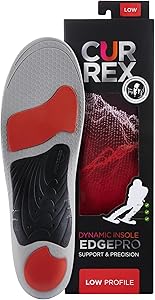
- 3D Dynamic Arch Technology: Strong midfoot arch support and a decoupled heel cup for optimized power transfer in tight boots.
- NEO Touch SuperGrip Heel: Anti-slip design keeps the heel stable during sharp turns and technical terrain.
- Multi-Layer Fleece Insulation: Helps regulate temperature and keep feet warm in cold conditions.
- Moisture & Odor Control Foam: Manages sweat while keeping boots fresh and feet dry all day.
The CURREX EdgePro insoles are built for serious winter athletes who demand better comfort and performance from their boots. Designed for skiing, snowboarding, and even inline skating, these insoles feature a multi-layer build that adds warmth, cushioning, and control. The 3D Dynamic Arch Technology supports the midfoot beautifully, while the decoupled heel cup improves balance and power transfer during aggressive turns. They’re especially helpful in tight boots where precise fit and movement control are critical. You’ll also appreciate the fleece insulation, which keeps your feet cozy on cold lifts or long days in the backcountry.
Beyond support, the EdgePro does a great job managing sweat and odors. The moisture-wicking foam helps your feet stay dry, even during intense activity, and the odor control keeps boots from getting musty. The heel grip design also prevents your foot from slipping inside the boot, adding confidence in both high-speed carving and technical terrain. Whether you’re an intermediate or seasoned pro, these insoles can make long days more comfortable and improve your performance at the same time. They’re especially ideal for those with medium to high arches needing solid support.
Pros:
- Excellent arch and heel support for better control
- Warm and breathable with fleece insulation
- Reduces foot fatigue and absorbs shock
- Keeps boots dry and odor-free
Cons:
- May feel snug in very tight-fitting boots
- Pricier than basic insoles
5. Sidas 3Feet Winter Insoles

- Arch Type: High arches
- Topcover: Velvet for durability and sock integration
- Forefoot Layer: EVA foam with aluminum insulation sheet
- Heel: Stabilizing heel cups for ankle support
Sidas 3Feet Winter Insoles are specifically engineered for snowboarders and skiers with high arches who demand reliable support and warmth on the mountain. The strategic EVA shell in the midfoot is slightly higher and features more foam than standard insoles, which helps reduce fatigue and correct possible supination. This design ensures optimal pressure distribution across the foot, allowing you to ride longer without discomfort. The velvet topcover adds durability and creates a seamless transition between your socks and the insole, preventing unwanted friction or bunching inside your boot.
Under the forefoot, a thin aluminum sheet acts as a barrier against the cold, keeping your toes warmer and helping maintain performance when temperatures drop. The engineered EVA foam layer in the forefoot provides all-day cushioning, while the heel cups stabilize your feet and ankles for increased precision and control. Whether you are carving groomers or navigating powder, these insoles deliver the support and insulation needed for winter sports. They are an excellent upgrade for high-arched riders seeking comfort and responsiveness in their snowboard boots.
Pros:
- Excellent arch support for high arches
- Effective insulation from aluminum layer
- Durable velvet topcover
- Stabilizes heel and ankle
Cons:
- Only designed for high arches
- May be too bulky for some boot fits
- Higher price than basic insoles
See the Sidas 3Feet Winter Insoles
How to Choose Insoles for Snowboard Boots?
When you’re carving down snowy slopes or tackling powder-covered trails, your feet take a beating. Snowboard boots are designed to be snug and stiff for control, but they often lack proper arch support, cushioning, and shock absorption. That’s where insoles come in. Choosing the right insoles for snowboard boots can make a huge difference in comfort, performance, and injury prevention. Whether you’re a beginner or a seasoned rider, here’s everything you need to know to find the perfect pair.
1. Why You Need Insoles for Snowboard Boots
Most snowboard boots come with generic footbeds that offer minimal support. They’re made to fit as many people as possible, not to provide custom comfort. Poor insoles can lead to heel lift, arch pain, cold feet, or even knee and back strain.
Upgrading to high-quality insoles can:
-
Improve arch and heel support
-
Reduce foot fatigue on long days
-
Enhance control and response
-
Add warmth and moisture management
-
Help prevent common injuries like plantar fasciitis or shin splints
Insoles are a small investment that can drastically improve your riding experience.
2. Know Your Arch Type
Before buying insoles, it’s important to understand your arch type. There are three main types:
-
Low Arch (Flat Feet): You’ll need insoles with strong, structured support to reduce overpronation and help with stability.
-
Neutral Arch (Medium): A medium-profile insole that offers balanced support and flexibility is ideal.
-
High Arch: Look for insoles that provide more cushioning and higher arch support to absorb shock and support the foot structure.
You can figure out your arch type by doing a simple “wet foot test” on paper or consulting a podiatrist.
3. Insole Volume and Fit
Snowboard boots have limited internal space, so it’s crucial to choose insoles that match the volume of your boot and foot:
-
Low Volume Insoles: Best for tight-fitting performance boots or narrow feet. These are thin and help prevent added pressure on the top of your foot.
-
Medium Volume Insoles: A good middle ground for average feet and boots.
-
High Volume Insoles: Thicker and often more cushioned, these are better for roomy boots or high arches needing extra support.
Make sure the insole doesn’t make the boot too tight or reduce blood flow to your toes. Insoles should fit snugly but comfortably.
4. Trim-to-Fit vs Pre-Sized Insoles
Most snowboard insoles come in a “trim-to-fit” format. This means you buy the size closest to your boot size and then cut along the guidelines to match your original insole shape.
Tips for trimming:
-
Use your old boot insole as a cutting template.
-
Start with small cuts; it’s easier to take off more than to fix over-cutting.
-
Try the insole inside the boot before finalizing the shape.
Some higher-end or custom orthotic insoles come pre-sized or molded to your foot shape and don’t require trimming.
5. Key Features to Look For
When comparing insole options, keep these important features in mind:
Arch Support
Proper arch support improves alignment and reduces stress on your feet and knees. Snowboarding involves a lot of side-to-side motion, and good arch support enhances stability and control.
Heel Cup
A deep, stable heel cup helps center your foot and reduce unwanted movement in the boot. This improves energy transfer and reduces heel lift.
Shock Absorption
Landing jumps, carving turns, and rough snow all put impact on your joints. Look for insoles with gel pads or cushioned foam layers in the heel and forefoot.
Moisture and Odor Management
Many snowboarding insoles include antimicrobial coatings or moisture-wicking layers to help keep your feet dry and odor-free throughout the day.
Warmth and Insulation
Thermal top covers or insulation layers help retain heat — essential when you’re riding in freezing temperatures for hours.
6. Types of Snowboard Boot Insoles
There are a few different styles of insoles to choose from, depending on your needs and budget:
Aftermarket Comfort Insoles
Brands like Superfeet, CURREX, and Masterfit offer high-quality insoles designed for skiing and snowboarding. These offer strong support, stability, and warmth.
Custom Molded Insoles
These are heat-molded or professionally fitted to your feet. They provide the best fit and performance but are more expensive and may require a boot-fitting specialist.
Shim and Volume Reducers
These aren’t full insoles but thin layers used under your existing footbed to take up extra space in the boot. Great if you’re in between sizes or your liners have packed out.
7. Common Mistakes to Avoid
Over-padding: Don’t choose overly thick insoles that make your boots uncomfortably tight. This can reduce circulation and cause cold feet.
Wrong arch height: Too much arch support for your foot type can be just as uncomfortable as too little. Choose the correct profile for your foot.
Skipping break-in time: New insoles, especially those with stiff support, can feel odd at first. Give them a few days of riding to adjust.
Not testing fit properly: Always try your insoles with your actual snowboard boots before hitting the slopes. Walk around in them for a while to check comfort and fit.
8. Top Brands to Consider
Here are some trusted brands known for quality snowboard boot insoles:
-
Superfeet Winter Support – Excellent heel support and thermal properties; trim-to-fit.
-
CURREX EdgePro – Great arch support, shock absorption, and anti-slip heel for better control.
-
Masterfit EZFit QF – Firm, supportive insoles for snug fit and stability.
-
Shred Soles – Snowboarding-specific posture alignment and cushioning.
-
Covey Sports Shims – Perfect for volume adjustment when boots are slightly too large.
9. Should You Upgrade Your Insoles?
If you experience:
-
Foot pain or numbness during rides
-
Cold toes even with good socks
-
Heel lift or shifting inside your boots
-
Fatigue after just a few runs
…then yes, it’s time to upgrade your insoles. You’ll immediately notice better support, comfort, and overall riding performance.
10. Final Thoughts
Choosing the right insoles for your snowboard boots isn’t just about comfort — it’s about performance, injury prevention, and getting the most out of your gear. Start by knowing your foot shape and arch type, then match that with the right volume and features. Don’t be afraid to try a few options until you find the perfect fit.
A great pair of insoles won’t turn you into a pro overnight, but they will keep your feet happy, warm, and supported all day long. And when your feet feel good, you ride better.