Best Ski Boots for Intermediate Skiers of 2026
Finding the right ski boots is key to enjoying the slopes as an intermediate skier. The boots should fit well and offer good support. You need something more advanced than beginner boots but not too stiff. Comfort, control, and warmth all matter. The right pair will help improve your skiing and boost your confidence. There are many options, and it can be hard to choose. That’s why we’ve made this guide. We looked at fit, flex, warmth, and price. Whether you like groomed runs or powder, there’s a boot here for you. Keep reading to find the best ski boots for your needs this winter.
1. K2 BFC 80
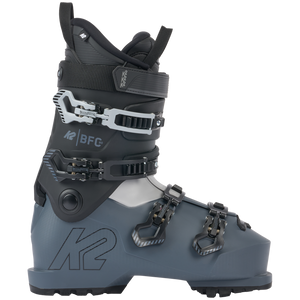
- Last: 103 mm
- Flex: 80
- Liner: CushFit Comfort
- Shell: Polypropylene
The K2 BFC 80 is designed specifically for skiers looking for maximum comfort without fighting their boots every morning. The high-volume 103mm last offers instant relief for wider feet, preventing the painful pinching common in narrower performance models.
Thanks to the softer TPU material in the instep, step-in and exit are completely hassle-free. Combined with a forgiving flex of 80 and a plush CushFit liner, it serves as an ideal choice for beginner or lighter riders who prioritize all-day ease on the slopes.
Pros:
- Very comfortable wide fit
- Easy entry and exit design
Cons:
- Soft flex limits high-speed control
2. Rossignol Track 70 – Women’s
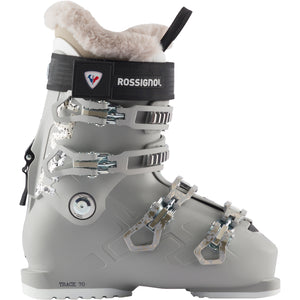
- Last: 104 mm
- Flex: 70
- Liner: Custom T4
- Hike Mode: Hike Mode 2.0
Tailored specifically for progressing female skiers, the Rossignol Track 70 combines forgiving performance with unmatched anatomy-specific comfort. The 104mm last provides plenty of room in the forefoot, while the tulip-shaped lower cuff comfortably accommodates natural calf shapes.
A standout feature is the Hike Mode 2.0 system, which offers a impressive 50-degree range of motion for easy walking around the resort. Paired with a soft 70 flex and a custom contouring liner, this boot delivers great power transmission and all-day ease.
Pros:
- Convenient walk mode feature
- Women-specific cuff geometry
Cons:
- Too soft for aggressive skiers
See the Rossignol Track 70 – Women’s
3. K2 Recon 100 MV
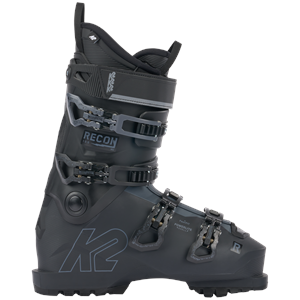
- Flex Index: 100 (Medium)
- Last Width: 100 mm (Medium Fit)
- Shell Material: Heat Moldable TPU
- Sole Type: GripWalk ISO 23223
The K2 Recon 100 MV is a standout choice for intermediate skiers who crave a balance of performance and comfort. Its standout feature is the fully heat-moldable shell and cuff, which allows for a truly customized fit that contours to your specific foot shape. The traditional four-buckle design provides a reliable, progressive flex that helps you maintain control without feeling overly restricted on the slopes.
What makes this boot particularly user-friendly is the FastFIT Instep, utilizing softer materials to ensure you aren’t struggling to get in or out of your gear at the car. Whether you are an athletic beginner looking to level up or a seasoned intermediate cruiser, the Recon 100 delivers a lightweight feel that doesn’t sacrifice power. It is a versatile “do-it-all” boot that excels in various snow conditions.
Pros:
- Highly customizable heat-moldable shell
- Easy entry and exit with FastFIT technology
Cons:
- 100mm last may feel tight for very wide feet
- Flex might be too soft for heavy, expert-level chargers
4. Lange LX 95 HV – Women’s
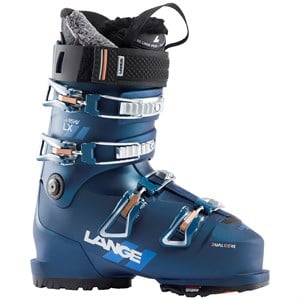
- Flex Index: 95 (Stiff)
- Last Width: 102 mm (High Volume)
- Liner: Dual 3D Performance with Thinsulate
- Sole Type: GripWalk
The Lange LX 95 HV is specifically engineered for advanced female skiers who have struggled with the “Lange pinch” in the past. By offering a 102mm high-volume last, Lange provides their legendary precision in a shape that accommodates wider feet and higher insteps. The 95 flex is stout enough for aggressive turns while remaining smooth and predictable through the transition.
Inside, the Dual 3D Performance liner is a highlight, featuring Thinsulate insulation to keep toes warm during those frigid January mornings. The Shin Control technology is a thoughtful touch, specifically designed to alleviate pressure on the lower leg during deep flexes. This boot proves that you do not have to sacrifice blood flow for high-level downhill performance on the mountain.
Pros:
- Excellent warmth thanks to Thinsulate lining
- Spacious 102mm last for wider feet
Cons:
- Too much volume for skiers with narrow ankles
- Stiff flex can be fatiguing for casual intermediates
See the Lange LX 95 HV – Women’s
5. Lange Shadow 85 LV – Women’s
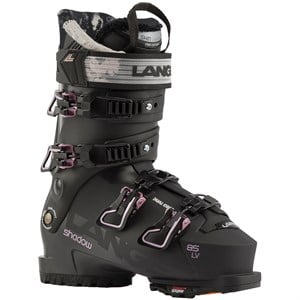
- Flex Index: 85 (Mid-Stiff)
- Last Width: 97 mm (Low Volume)
- Technology: Suspension Blade Dual Pivot
- Shell Material: Dual Core Polyurethane
The Lange Shadow 85 LV represents a major leap in boot engineering, moving away from the traditional bolted spine. By utilizing the Suspension Blade and Dual Pivot design, this boot allows for mechanical advantage, meaning you get more power transfer into the ski with less physical effort. It is perfect for lighter skiers or those who want a sophisticated, chatter-free ride.
The 97mm low-volume fit is designed for narrow feet, providing a “painted-on” feel that translates to immediate response. The inclusion of the Core Custom 3 liner with Shin Control ensures that despite the performance focus, the boot remains comfortable against the shin. It is an ideal choice for the technical skier who values finesse and modern innovation over brute force.
Pros:
- Innovative suspension design reduces vibration
- Superior power transfer for lighter-weight skiers
Cons:
- Low volume fit is very restrictive for average feet
- Design is more complex for local bootfitters to modify
See the Lange Shadow 85 LV – Women’s
6. Salomon QST Access 60 – Women’s
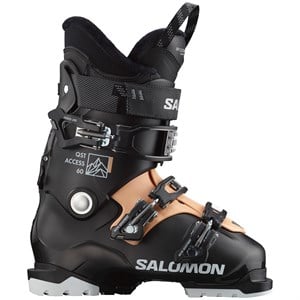
- Flex Index: 60 (Soft)
- Last Width: 104 mm (Wide)
- Feature: Hike and Ride Walk Mode
- Liner: Comfort Fit with Woolmetal
For those prioritizing comfort and ease of use, the Salomon QST Access 60 is a welcoming entry into the world of skiing. It features one of the widest lasts on the market at 104mm, ensuring that pressure points are a thing of the past for wider feet. The soft 60 flex is forgiving, allowing beginners to practice their technique without being punished by a rigid shell.
What truly sets this boot apart is the Hike and Ride walk mode. This system releases the backbone of the boot, making it significantly easier to walk from the parking lot to the lodge or even uphill. With Woolmetal insulation in the liner for maximum warmth and a simple three-buckle system, this boot is all about making the mountain experience as approachable and pain-free as possible.
Pros:
- Incredibly easy to walk in with Hike and Ride mode
- Extra wide fit provides immediate out-of-the-box comfort
Cons:
- Too soft for high-speed or aggressive carving
- Three-buckle system offers less fine-tuning than four
See the Salomon QST Access 60 – Women’s
7. Nordica Speedmachine 3 100
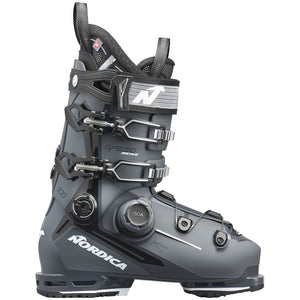
- Last: 100mm (medium width)
- Flex: 100 (ideal for intermediate skiers)
- Liner: 3D Cork Fit with PrimaLoft insulation
- Shell Customization: Infrared molding system
Nordica has built a strong reputation for making comfortable ski boots, and the Speedmachine 3 100 lives up to the name. This all-mountain boot strikes a nice balance between comfort and customization, thanks to its medium-width 100mm last and moldable shell and liner. The PrimaLoft-filled liner keeps things cozy even on cold lift rides, while Nordica’s infrared customization system allows precise tweaks for pressure relief or better fit. At a budget-friendly price, it offers a lot of value, especially for intermediate skiers who want a forgiving boot that still provides decent control.
The Speedmachine isn’t a powerhouse when it comes to hard charging, but for most casual and intermediate riders, it’s more than capable. The flex is smooth and predictable, and the shell’s honeycomb construction helps reduce weight without compromising strength. Four solid buckles and a 35mm power strap ensure a secure wrap around the foot. While skiers logging serious vertical may prefer something with a bit more stiffness or precision like the Salomon S/Pro, the Speedmachine 3 100 is still an excellent choice for those prioritizing comfort and adjustability. For skiers needing a bit more room, Nordica’s Sportmachine 3 line shares a similar build but with a wider 102mm last.
Pros:
- Great liner warmth and comfort
- Shell, liner, and hardware are heat-moldable
- Smooth flex that suits a wide range of skiers
- Excellent value at this price point
Cons:
- Lacks high-end performance for aggressive skiers
- Not ideal for expert-level control or racing
See the Nordica Speedmachine 3 100 See the Women’s Speedmachine 3 85
8. K2 BFC 90
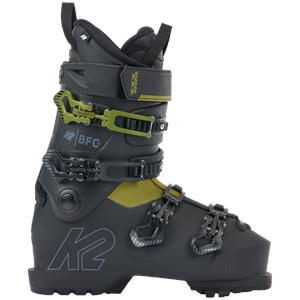
- Last: 103mm (wide width)
- Flex: 90 (best for intermediate skiers)
- Liner: CushFit Comfort with heat-moldable shell
- Weight: Approx. 3.8lbs
True to its name, the K2 BFC 90 (“Built For Comfort”) is a dream come true for skiers with wider feet or those simply tired of painful boots. With a high-volume 103mm last and an extra-padded liner, this boot prioritizes warmth and all-day wearability over aggressive performance. The 90 flex is ideal for intermediate or lighter advanced skiers, and at a reasonably price, the BFC 90 offers a comfortable, pain-free introduction to the sport without breaking the bank. For a bit more performance, stepping up to the BFC 100 adds walk mode functionality and increased stiffness.
While this boot shines in comfort, that plush feel does come at a cost to precision. The BFC 90 isn’t designed for hard carving or technical descents—it lacks the power transfer and response that aggressive skiers need. Additionally, the absence of a walk mode in the 80- and 90-flex versions limits its off-slope practicality. That said, for resort-focused riders who value warmth, ease of entry, and a roomy fit, it’s hard to beat. If your ski days are more about cruising than charging, and you have trouble finding boots that don’t pinch, the BFC line is absolutely worth considering.
Pros:
- Very comfortable and roomy for wide feet
- Heat-moldable shell improves fit and reduces pressure points
- Soft liner provides excellent warmth and step-in feel
- Great value for intermediate skiers
Cons:
- Lacks performance for aggressive skiing
- No walk mode in lower flex models
See the K2 BFC 90 See the Women’s BFC 85
9. Rossignol Alltrack 90 HV

- Last: 102mm (wide width)
- Flex: 90 (ideal for intermediate skiers)
- Walk Mode: Yes, with 50° range of motion
- Binding Compatibility: Alpine DIN only
The Rossignol Alltrack 90 HV is a versatile boot built for intermediate skiers who spend most of their time on groomers but occasionally like to explore beyond the boundary ropes. Its 102mm last offers a roomy fit for high-volume feet, while the 90 flex keeps things forgiving and easy to control. The real highlight is the built-in walk mode, which allows for a 50-degree range of motion—making hikes to sidecountry lines or even just walking through the lodge a lot more comfortable. The Alltrack 90 provides solid all-around value for the features it offers.
That said, this boot doesn’t really excel in any one area. It’s not light enough for dedicated touring, nor stiff or responsive enough for aggressive descents. But for newer or casual skiers who want a little extra mobility without committing to a full-on backcountry setup, it strikes a nice balance. The comfort level is also a plus, especially for wider feet, and Rossignol offers multiple options in both flex and width if you need to dial in a better fit. Overall, the Alltrack 90 HV is a reliable and affordable option for skiers looking to dip a toe into sidecountry terrain without giving up downhill comfort.
Pros:
- Walk mode is handy for sidecountry or lodge use
- Generous fit accommodates wider feet comfortably
- Smooth, forgiving flex for progressing skiers
- Competitive price for a hybrid design
Cons:
- Not compatible with tech bindings
- Falls short for serious touring or aggressive resort skiing
See the Rossignol Alltrack 90 HV See the Women’s Alltrack 80 HV
10. Dalbello Veloce Max 75
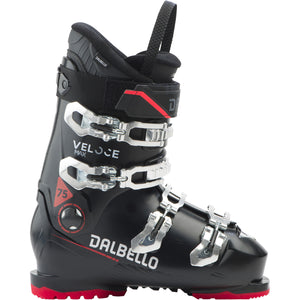
- Last: 104mm (high-volume fit for wide feet)
- Flex: 75 (soft, ideal for beginners)
- Liner: IF Sport Liner
- Sole: Alpine DIN (ISO 5355)
The Dalbello Veloce Max 75 is a comfort-focused boot built with beginners and occasional skiers in mind—especially those with wider feet. With a generous 104mm last, this boot offers a relaxed, high-volume fit that prioritizes all-day wearability over locked-in performance. The soft 75 flex is forgiving and easy to manage, helping new skiers build confidence on groomed terrain without feeling overpowered. The IF Sport liner adds a layer of cushion and warmth, making it ideal for those getting into the sport or skiing just a few times a season.
While it lacks the responsiveness needed for technical terrain or high-speed carving, the Veloce Max 75 does its job well for the right user. The lightweight DB Hyperlite shell and four easy-to-operate buckles make it a practical choice for those focused on comfort and ease of use. At around $300, it’s a great entry-level option that skips the painful break-in period most boots require. For casual resort days, rentals quickly become a thing of the past with the Veloce Max 75 on your feet. It’s not built for progression into aggressive skiing, but for mellow laps and learning the basics, it delivers where it counts.
Pros:
- Excellent comfort right out of the box
- Wide fit is ideal for high-volume feet
- Soft flex makes learning easy and non-intimidating
- Affordable price point for beginners
Cons:
- Not suitable for advanced or aggressive skiers
- No walk mode or tech fittings for added versatility
See the Dalbello Veloce Max 75 See the Women’s Veloce Max 65
How to Choose Ski Boots for Intermediate Skiers?
Finding the right ski boots as an intermediate skier can make or break your day on the slopes. The perfect pair should offer a balance between comfort, control, and performance. As an intermediate skier, you’re no longer a beginner, so you need more responsiveness. But you’re not yet an expert, so extreme stiffness or race-ready features might be overkill. This guide will walk you through everything you need to consider when choosing the best ski boots for your level—so you can ski with confidence, improve faster, and enjoy every turn.
1. Know Your Skill Level
Intermediate skiers are those who can ski blue runs with confidence, manage parallel turns, and explore some light off-piste terrain. You’re likely working on refining technique, increasing speed, and trying new terrain. That means you need boots that offer more support and precision than beginner boots but aren’t as aggressive or unforgiving as expert-level models.
Look for boots labeled specifically for intermediate to advanced skiers. These typically offer a good mix of flex, comfort, and control—helping you progress without punishing mistakes.
2. Understand Flex Ratings
The flex rating of a ski boot refers to how stiff the boot is when you lean forward. Flex numbers usually range from 50 (soft) to 130+ (very stiff). For intermediate skiers, the ideal flex is:
-
Men: 80–100
-
Women: 70–90
Boots in this range provide support for quicker turns and better edge control while still being comfortable enough to wear all day. If you’re more aggressive or athletic, you can edge toward the higher end of this range. Lighter or more cautious skiers should stay lower.
3. Choose the Right Boot Last
The boot last is the width of the boot at its widest point (usually the forefoot), measured in millimeters. A good fit means more control and comfort.
There are three general fit categories:
-
Narrow (97–98mm): Best for low-volume feet and skiers wanting a tighter fit.
-
Medium (100–102mm): Ideal for most intermediate skiers.
-
Wide (103mm and up): For high-volume feet or those who prioritize comfort.
If you’re unsure, go for a medium fit. Many intermediate boots now come with customizable liners that mold to your foot for a better fit after a few days of skiing.
4. Get the Right Size (Mondopoint)
Ski boots use the Mondopoint sizing system, which measures the length of your foot in centimeters. For example, if your foot is 26.5 cm long, your ski boot size is likely 26.5.
However, ski boots should feel snug, not loose. Your toes should lightly touch the front when standing straight and pull back slightly when you flex your knees forward.
Don’t size up for comfort. Loose boots lead to poor control and cold feet. If your boots feel slightly tight at first, they will usually pack out and become more comfortable after a few uses.
5. Prioritize Comfort and Fit
An uncomfortable ski boot can ruin your day, no matter how advanced the technology is. Pay attention to:
-
Liner comfort: Look for thermo-moldable liners that adapt to your foot shape.
-
Heel hold: Your heel should stay locked in place without lifting as you flex forward.
-
Instep height: If you feel pressure on the top of your foot, the boot may be too low-volume.
Try boots on with ski socks, walk around, and flex them forward. Many shops offer heat molding for a custom fit—worth doing if you plan to ski regularly.
6. Consider Your Type of Skiing
Even as an intermediate, your terrain preferences matter. Ask yourself:
-
Do you mostly ski on groomed runs?
-
Are you starting to explore off-piste terrain?
-
Do you ski fast or more casually?
If you like to go fast or carve on groomed snow, you’ll want a slightly stiffer boot. If you’re venturing off-trail or like comfort over power, go for a medium-flex boot with a bit more forgiveness.
7. Look for Easy Entry and Exit
As you progress in skiing, you’ll still appreciate boots that are easy to put on and take off—especially in cold weather. Features to look for include:
-
Overlap design: Offers good flex and warmth but can be harder to get into.
-
Cabrio design: Easier entry and exit, great for comfort-oriented skiers.
-
Walk modes: Some boots have a ski/walk switch that makes walking easier in parking lots or lodges.
8. Consider Boot Weight
Lighter boots are easier to walk in and more comfortable over long days. However, they can sometimes sacrifice performance. Intermediate skiers should aim for a good balance—light enough to avoid fatigue but solid enough to support aggressive turns.
9. Think About Customization Features
Many intermediate boots come with features that allow some customization:
-
Custom-fit liners: Mold to your feet for better comfort.
-
Adjustable buckles: Let you fine-tune the tightness and fit.
-
Canting adjustment: Changes the lateral angle to match your natural stance.
-
Power strap: Adds extra support at the top of the boot.
These features help fine-tune your boots as your skiing improves.
10. Try Before You Buy
Whenever possible, try on multiple pairs in a store or rent before buying. Ski boots from different brands fit differently. Some run narrow, others wide. Trying them on is the best way to know what works for your foot shape.
If visiting a boot fitter, bring your ski socks and any custom footbeds you use. A good boot fitter will measure your feet, assess your skiing needs, and suggest options that match.
11. Stick With Reputable Brands
Brands like Salomon, Atomic, Nordica, Tecnica, Rossignol, Lange, and Dalbello offer excellent options for intermediate skiers. Each brand tends to have slightly different fits, so it’s worth exploring several.
Final Tips
-
Don’t rush the buying process. Take your time to find the right fit.
-
Break them in. Wear your new boots around the house before hitting the slopes.
-
Pair with proper socks. Avoid thick cotton socks—use thin, synthetic ski socks for better comfort and warmth.
-
Upgrade gradually. As your skills improve, you can move toward stiffer and more precise boots.
Conclusion
Choosing ski boots as an intermediate skier is all about balance—between comfort and performance, fit and flexibility. The right pair of boots can transform your skiing, making it easier to progress while staying comfortable all day. Focus on fit, flex, and how the boot matches your skiing style. Try on several options, ask for expert help if needed, and don’t settle until you find a boot that feels just right. Once you do, you’ll enjoy skiing more and improve faster with every run.