
Best Freeride Ski Bindings of 2027
When it comes to freeride skiing, having the right bindings can make all the difference in your performance and safety on the mountain. Freeride ski bindings are designed to handle aggressive descents, steep terrain, and unpredictable snow, giving you the confidence to push your limits. They provide strong power transfer, reliable release, and stability, whether you’re charging through powder or tackling big mountain lines. With so many options available, it can be hard to know which bindings will suit your style best. In this guide, we’ll explore the best freeride ski bindings to help you choose the right pair for your adventures.
1. Marker Griffon 13 ID
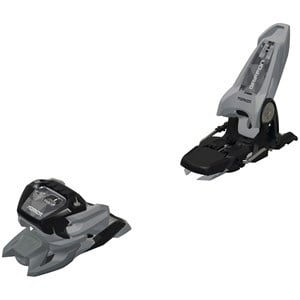
- DIN Range: 4-13
- Recommended Skier Weight: 80+ lbs
- Stand Height: 24mm
- Boot Sole Compatibility: Alpine, Touring, GripWalk, WTR
The Marker Griffon 13 ID has long been a go-to binding for all-mountain and freeride skiers who want a reliable connection to their skis without the bulk of a higher DIN binding. This model returns with a re-engineered Inter Pivot 3 heelpiece, which solves a common complaint by making step-in noticeably easier. The redesigned Triple Pivot Elite 3 toe now includes a handy metal rail to scrape off ice and snow from your boot soles before you click in. This attention to detail, combined with the binding’s ability to accommodate virtually any boot sole type thanks to Sole.ID technology, makes it a versatile and dependable choice for a wide range of skiers and boot setups.
Known for its excellent power transmission and impressive retention, the Griffon 13 ID performs exceptionally well under pressure. The horizontal spring in the toe and the inclined sole plate work together to absorb energy, reducing the chance of an unwanted early release. The large supporting surface of the toe piece ensures efficient power transfer to your skis, giving you a confident and connected feel on the snow. Whether you’re charging through choppy terrain or making high-speed carves, this binding provides the security and performance you need to push your limits with peace of mind. Its solid construction and updated features make it a top contender in its class.
Pros:
- Versatile Sole.ID technology fits multiple boot types.
- Improved step-in with the new Inter Pivot 3 heel.
- Excellent power transmission and retention.
- Built-in anti-ice rail is a convenient feature.
Cons:
- Lower DIN range may not suit the most aggressive or heaviest skiers.
- Slightly heavier than some competing models.
2. Salomon Strive 14 GW
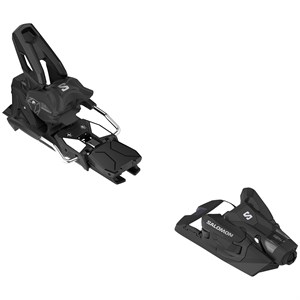
- DIN Range: 5-14
- Stand Height: 19.6mm
- Adjustment Range: 30mm
- Boot Sole Compatibility: Alpine, GripWalk
The Salomon Strive 14 GW is a lightweight and responsive binding designed for all-mountain and freeride skiers who prioritize a close-to-snow feel. Its revolutionary LDN (Low, Direct, Neutral) toepiece positions your boot lower to the ski, significantly enhancing your connection and feel for the snow. This design philosophy translates to more precise power transmission and a smoother, more intuitive skiing experience. The wide base of the toe piece further boosts responsiveness, ensuring that every movement is transferred efficiently to the ski’s edge. This binding allows you to feel more balanced and in control, as it preserves the natural flex and arc of the ski.
Built with a superlight design yet reinforced with metal in key areas, the Strive 14 GW offers an impressive blend of low weight and durability. With 45mm of elastic travel, it can absorb significant shocks and vibrations, reducing the risk of unwanted pre-release in rough terrain. A standout feature is the automatic toe adaptation, which adjusts to different alpine boot sole heights to maintain consistent release values, even with worn-out boots. The integrated locking brakes are a thoughtful addition, making it easy to carry your skis over your shoulder. Overall, the Strive 14 GW sets a new standard for performance, combining a low-profile design with the strength and responsiveness needed for aggressive all-mountain skiing.
Pros:
- Low stand height provides excellent snow feel.
- Automatic toe adaptation for consistent release.
- Lightweight yet reinforced construction.
- Elastic travel helps prevent pre-release.
Cons:
- Not compatible with touring boot soles.
- The lower profile might take some getting used to for skiers accustomed to higher bindings.
3. Look Pivot 2.0 15 GW
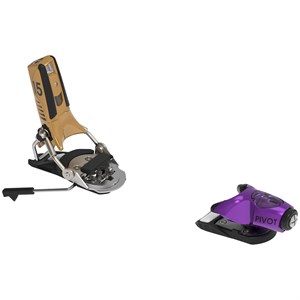
- DIN Range: 6-15
- Heel Elasticity: 28mm
- Adjustment: 15mm BSL
- Boot Sole Compatibility: Alpine, GripWalk
The Look Pivot 2.0 15 GW takes the legendary performance of the original Pivot and refines it with subtle yet significant upgrades. Trusted by pros and weekend warriors alike, the Pivot is renowned for its reliability and retention, and this new version maintains that reputation while adding new features. The all-metal aluminum race toe piece provides maximum power transmission and durability, making it suitable for all disciplines from racing to freeriding. The classic 180° multi-directional release and 45mm of elastic travel in the toe remain, ensuring top-tier safety and an unmatched ability to absorb shocks without pre-releasing. This binding is built to give you the confidence to push the limits of your skiing.
Look has also made impactful tweaks to the classic turntable heelpiece. The new Pivot 2.0 15 GW offers a generous 15mm of boot-sole-length adjustment, a new and improved DIN setting screw for easier tuning, and enhanced durability against ski edges and poles. These small changes make a big difference in terms of user experience and longevity. The shortest mounting zone in the industry reduces swing weight and allows the ski to flex more naturally, providing a deeper and more consistent feel on the snow. With the most vertical and lateral elastic travel on the market, the Pivot 2.0 offers superior shock absorption and reliable retention, cementing its status as a top choice for serious skiers.
Pros:
- Unrivaled elasticity and shock absorption.
- New features like BSL adjustment and improved DIN screw.
- Durable, all-metal toe piece.
- Short mounting zone for natural ski flex.
Cons:
- Premium price point.
- Heavier than many bindings in its class.
4. Marker Kingpin 13
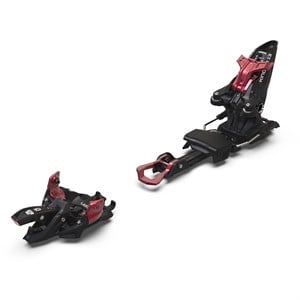
- DIN Range: 6-13
- Stand Height: 21.5mm
- Recommended Skier Weight: < 260 lbs
- Type: Tech
The Marker Kingpin 13 has established itself as the gold standard for backcountry freeride skiers who prioritize downhill performance. This binding is a true hybrid, seamlessly blending the lightweight efficiency of a tech toe piece with the powerful, secure feel of an alpine-style heel. The new “Intuitive Step In” (ISI) tech toe piece has been refined to make stepping in smoother and more reliable, even in difficult snow conditions. Anti-ice pads are strategically placed to prevent ice buildup in critical areas, ensuring consistent performance on the skin track and on the way down. The Kingpin’s design makes uphill travel a breeze, while its robust construction inspires confidence on the descent.
The real magic of the Kingpin lies in its revolutionary heel. Unlike traditional pin bindings, the Kingpin heel features extra-large power transmitters and wide sole contact points, providing a direct, lossless power transfer that rivals many alpine bindings. This translates to an incredibly powerful and responsive feel on the snow. The heel also offers independently adjustable vertical and lateral release, significantly enhancing safety compared to other pin bindings. With two climbing aid positions (7° and 13°) that are easy to engage with a ski pole, and integrated elastomer paddings to reduce noise, the Kingpin is meticulously engineered for a comfortable and efficient touring experience without compromising on downhill security. It’s the ultimate tool for backcountry enthusiasts who charge hard on the way down.
Pros:
- Exceptional downhill performance for a tech binding.
- Improved step-in with ISI toe piece.
- Independent vertical and lateral release in the heel for safety.
- Lightweight and efficient for touring.
Cons:
- Requires tech inserts in your boots.
- Higher price point compared to many alpine bindings.
5. Tyrolia Attack 14 GW
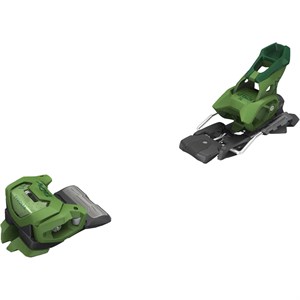
- DIN Range: 4-14
- Stand Height: 17mm
- Heel: NX FR
- Toe: FR PRO3
The Tyrolia Attack 14 GW is a top choice among expert freeride skiers, and it’s easy to see why. This binding is arguably the best bang for your buck on the market, delivering a high level of performance and security without the premium price tag. Its robust design provides ample retention for all but the most extreme skiers, and the low 17mm stand height gives you a fantastic, connected feel to the snow. This low profile allows for more direct power transfer and better feedback from your skis, which is a major advantage when navigating variable terrain or pushing hard in carves. The Attack 14 GW is also remarkably easy to step into and out of, a feature that’s often overlooked but greatly appreciated on the mountain.
The binding features a metal FR PRO3 toe with a GripWalk AFD, ensuring reliable release and compatibility with both traditional Alpine and modern GripWalk boot soles. The NX FR heel provides a solid hold and works seamlessly with the toe piece to offer impressive elasticity when you are pushing your limits. This binding is built for reliability and performance, holding up to the demands of aggressive skiing while maintaining a smooth and responsive feel. For skiers who want a dependable, no-nonsense binding that does everything it needs to without complaint, the Attack 14 GW is a fantastic choice. It’s a workhorse binding that has earned its reputation as a leader in its category for its perfect balance of price, performance, and durability.
Pros:
- Excellent value for the performance.
- Low stand height for enhanced snow feel.
- Durable and reliable for aggressive skiing.
- Easy to step into and out of.
Cons:
- Does not offer touring boot sole compatibility.
- Lacks some of the more advanced features of premium bindings.
6. Salomon Strive 12 GW

- Skill Level: Intermediate
- Boot Sole Compatibility: Alpine (ISO 5355) and GripWalk (ISO 23223)
- DIN Range: 4 to 12
- Recommended Skier Weight: 108-264 pounds
The Salomon Strive 12 GW ski bindings are built for skiers who want more power and control with a shorter response time. By lowering your center of gravity, these bindings help you feel every aspect of the terrain and get more performance out of your skis. The design keeps you closer to the snow, which translates to quicker edge-to-edge transitions and a more connected ride. Intermediate skiers looking to push their skills will appreciate the reliable release and solid retention this binding offers across varied conditions.
With a DIN range of 4 to 12 and a recommended skier weight of 108-264 pounds, the Strive 12 GW accommodates a wide range of riders. The 30 millimeter adjustment range makes it easy to fit different boot sole lengths, while the available brake widths of 90, 100, and 115 millimeters let you match the binding to your ski waist width. Weighing just 4 pounds 0.8 ounces per pair, it balances durability with a relatively light feel on the mountain. The GripWalk compatibility adds convenience for skiers who use modern walkable boot soles without sacrificing alpine performance.
Pros:
- Low center of gravity improves control and terrain feel.
- Wide DIN and weight range.
- GripWalk and Alpine sole compatibility.
- Multiple brake width options.
Cons:
- Not ideal for very lightweight or beginner skiers.
- Heavier than some freestyle-focused bindings.
- Brake width must be chosen carefully for proper fit.
7. Marker Squire 11

- Skill Level: Intermediate
- Boot Sole Compatibility: Alpine (ISO 5355) and GripWalk (ISO 23223)
- DIN Range: 3 to 11
- Recommended Skier Weight: 66-243 pounds
The Marker Squire 11 bindings have been completely redesigned to be lighter weight and easier to step into, making them a great choice for motivated freeride and freestyle newbies. The lower DIN range and lighter construction help newer riders build confidence as they explore new terrain, without feeling held back by heavy or difficult equipment. The step-in design is user-friendly, which matters when you are clicking in on uneven snow or after a fall in powder. These bindings are aimed at skiers who want a reliable, confidence-inspiring setup for park laps, groomers, and light off-piste adventures.
With a DIN range of 3 to 11 and a recommended skier weight of 66-243 pounds, the Squire 11 suits a broad range of intermediate skiers, including lighter adults and aggressive younger riders. The brake width options of 90, 100, and 110 millimeters cover most all-mountain and freeride ski widths. At 3 pounds 9.8 ounces per pair, they are noticeably lighter than many comparable bindings, which reduces swing weight and fatigue. Alpine and GripWalk sole compatibility means you can use them with traditional or walkable boot soles, adding versatility for skiers who split time between resort and sidecountry.
Pros:
- Lightweight and easy to step into.
- lower DIN range suits lighter skiers.
- GripWalk and Alpine sole compatibility.
- good brake width options for freeride skis.
Cons:
- Lower max DIN may not suit very aggressive or heavy skiers.
- Not designed for expert-level charging.
- Plastic components may feel less durable over time.
How to Choose Freeride Ski Bindings
Freeride skiing demands equipment that can handle the variable, unforgiving conditions found beyond the groomed runs. Whether you are dropping into steep chutes, navigating tight trees, or floating through deep powder, your bindings serve as the critical connection between your boots and skis. A poorly chosen binding can compromise your safety, dampen your ski’s performance, and leave you struggling on the skin track. This guide will walk you through the essential factors to consider when selecting freeride ski bindings.
Understanding Binding Categories for Freeride
Freeride bindings are not a monolithic category. They span a spectrum from traditional alpine designs built for aggressive inbounds charging to hybrid and tech systems that prioritize uphill efficiency. Your first decision is determining where you fall on that spectrum.
Alpine Bindings: Maximum Power and Retention
Traditional alpine bindings are the gold standard for downhill performance. They offer the most elastic travel, the most reliable release characteristics, and the highest retention for aggressive skiing on hardpack, crud, and at the resort. If your freeride adventures involve lift-accessed terrain, sidecountry gates, or short bootpacks, an alpine binding is often the best choice.
Bindings like the Look Pivot 2.0 18 feature a turntable heel that provides multi-directional release and 45mm of elastic travel in the toe, making it a cult favorite among aggressive freeskiers. The Marker Jester X 16 M-Werks combines a stout DIN 6-16 range with a low 9mm toe and 14mm heel stack height for rapid edge engagement. These bindings are not designed for touring, but they deliver uncompromising downhill confidence.
Hybrid Bindings: The 50/50 Compromise
Hybrid bindings attempt to bridge the gap between alpine downhill performance and tech-binding uphill efficiency. They typically feature a tech-style toe for touring and an alpine-style heel for skiing, or a convertible system that swaps toe pieces. The Salomon S/Lab Shift2 is the most established example, offering alpine safety certification and GripWalk compatibility while remaining light enough for moderate tours. The Tyrolia Attack Hybrid takes a different approach, using interchangeable toe pieces—a pin toe for the uphill and a full alpine toe for the descent.
Hybrids are ideal for the “50/50” skier who splits time between resort laps and backcountry missions. However, they are heavier than pure tech bindings and more complex than pure alpine bindings, so they represent a compromise rather than a perfect solution for either extreme.
Tech Bindings: Lightweight Touring Efficiency
Tech bindings, also known as pin bindings, use metal pins in the toe and heel to secure boots with tech inserts. They are dramatically lighter than alpine and hybrid options, making them the choice for long tours and weight-conscious backcountry skiers. However, traditional tech bindings offer less elastic travel and fewer release safety features than alpine bindings.
For freeride-focused tech bindings, look for models with higher DIN ranges and more robust construction. The Hagan Core FR 15 EVO offers a DIN 7-15 release range and brake widths up to 120mm, built for aggressive skiers who demand alpine-level power transfer from a tech binding. The Dynafit ST Rotation 14 features indexing to help center the toe piece when stepping in, icebreaker pins, and a bayonet positive lock at the heel for added security.
The DIN Setting: Your Release and Retention Baseline
The DIN setting is the standardized number that indicates how much force is required to release your boot from the binding. It is determined by five factors: your weight, age, height, skier ability level, and boot sole length. Getting this number right is critical for safety.
For freeride skiing, there is a constant tension between release and retention. You want the binding to hold you in during aggressive maneuvers, sudden impacts, and landings, but you also need it to release reliably in a fall to protect your knees and legs. Skiers who ski aggressively or in variable terrain often choose bindings with a DIN range that places their calculated setting in the middle of the binding’s range, rather than near the maximum. This ensures the spring has adequate travel and the binding operates within its designed optimal window.
Critical safety note: Never adjust your own bindings without proper training and testing equipment. DIN charts are a starting point, but only a certified technician with a binding testing machine can verify that your bindings release within the specified torque range. If your weight, height, boot length, or skiing ability changes, have your bindings re-evaluated.
Boot Compatibility: The Non-Negotiable Factor
Bindings and boots must be compatible. This is not a suggestion—it is a hard requirement that affects both safety and performance. There are several boot sole standards you need to understand.
Alpine (ISO 5355)
This is the traditional standard for flat-soled, hard plastic boots. Most dedicated alpine bindings are only compatible with this standard.
GripWalk (ISO 23223)
GripWalk boots feature a slightly rockered rubber sole for better walking traction. Many modern bindings, including the Marker Griffon X 13 M-Werks and Salomon Strive 14 MN, are GripWalk-compatible.
Touring (ISO 9523)
Touring boots have tech inserts and a rockered sole profile. They require tech bindings or multi-norm bindings specifically designed to accommodate this standard. Bindings marked “MNC” (Multi-Norm Certified) or “MN” typically work with alpine, GripWalk, and touring soles.
Before purchasing any binding, verify that it is compatible with the boots you own or plan to buy. Using an incompatible boot in a binding is dangerous and can lead to improper release or retention.
Weight vs. Performance: The Freeride Trade-Off
Weight matters in freeride skiing, but how much it matters depends on your priorities. If your freeride involves long tours and significant elevation gain, lighter is better. If your freeride is lift-accessed or involves short sidecountry excursions, weight is less critical than downhill performance.
Here is a rough comparison of binding weights per unit:
| Binding Type | Typical Weight (per unit) | Example |
|---|---|---|
| Lightweight Tech | 350–500g | Hagan Core FR 15 EVO (395g) |
| Freeride Tech | 600–700g | ATK HY 13 Free (675g) |
| Hybrid | 900–1,000g | Salomon S/Lab Shift2 (920g) |
| Alpine Freeride | 1,000–1,300g | Marker Jester X 16 M-Werks (1,130g) |
Lighter bindings generally sacrifice elasticity and retention. Heavier bindings offer more confidence and power transmission. The sweet spot for many freeriders falls in the hybrid or heavier tech binding range, where uphill capability is retained without completely abandoning downhill performance.
Brake Width: Matching Bindings to Skis
Freeride skis are typically wider than piste skis, and your binding brakes must be wide enough to clear the ski’s waist. When a binding releases, the brake arms deploy downward to stop the ski. If the brake is too narrow, it will not fully deploy and the ski may not stop.
The general recommendation is to select a brake width that is 5–10mm wider than your ski’s waist width. Some manufacturers allow up to 15mm wider. For example, if your ski has a 105mm waist, a 110mm or 115mm brake is appropriate. A 100mm brake would be too narrow, and a 120mm brake might drag on the snow during aggressive carves.
| Ski Waist Width | Recommended Brake Width |
|---|---|
| 95–100mm | 100–110mm |
| 100–110mm | 110–120mm |
| 110–120mm | 120–130mm |
| 120mm+ | 130mm+ (check availability) |
Key Features to Evaluate
Stack Height
Stack height is the distance between your boot sole and the ski. Lower stack heights provide better snow feel and more direct power transmission. The Marker Griffon X 13 M-Werks and Jester X 16 M-Werks both feature a 9mm toe and 14mm heel, among the lowest in their class. Higher stack heights can offer more leverage and clearance in deep snow, but they reduce the immediacy of your connection to the ski.
Elasticity and Travel
Elasticity refers to the binding’s ability to absorb energy without releasing. Bindings with more elastic travel are less likely to prerelease during hard landings, crud busting, or aggressive edge pressure. Alpine bindings generally offer more elasticity than tech bindings. The Look Pivot series is renowned for its elastic travel, with 45mm in the toe. The Tyrolia Attack Hybrid offers 30mm of lateral elasticity in the toe and 16mm vertical in the heel.
Climbing Aids and Touring Modes
If you plan to tour, evaluate the climbing aids. Some bindings offer multiple heel riser heights for different skin track angles, while others offer only one. Bindings with pole-flickable risers are more convenient than those requiring you to bend down and rotate the heel unit by hand. The Tyrolia Attack Hybrid offers a 0° and 9° climbing aid, which is simple but limited compared to bindings with three or more height options.
Brakes vs. Leashes
Brakes add weight but prevent runaway skis during transitions—a potentially dangerous scenario on steep terrain. Leashes save weight but create a risk in avalanches, as the ski remains attached to you and can act as an anchor. For freeride skiing, brakes are generally the safer and more practical choice.
Matching Bindings to Your Freeride Style
Your specific freeride objectives should guide your final decision:
- Resort and sidecountry charging: Prioritize retention, elasticity, and low stack height. Look at alpine bindings like the Look Pivot 2.0 18 or Marker Jester X 16 M-Werks.
- Mixed resort and backcountry (50/50): A hybrid binding like the Salomon S/Lab Shift2 or Tyrolia Attack Hybrid offers the best balance of uphill capability and downhill confidence.
- Backcountry-focused freeride: A robust tech binding like the Hagan Core FR 15 EVO or Dynafit ST Rotation 14 saves weight without completely sacrificing downhill performance.
- Ultralight touring with freeride aspirations: Bindings like the ATK HY 13 Free (675g) offer impressive weight savings while maintaining a DIN range suitable for aggressive skiing.
Final Recommendations
Choosing freeride bindings is ultimately about matching your equipment to your terrain, your skiing style, and your risk tolerance. The binding is your primary safety interface with the mountain, and it also determines how directly you can drive your skis. Do not compromise on boot compatibility. Do not guess at your DIN setting. And do not assume that the lightest option is always the best option.
If possible, demo different binding types before committing. The feel of a low-stack alpine binding versus a tech binding is dramatically different, and your preference will depend on what you value most: the effortless uphill glide or the unwavering downhill confidence. Invest in the right binding, have it professionally mounted and tested, and it will serve you reliably for seasons of freeride adventure.