Best Freestyle Snowboards of 2026
Freestyle snowboards are made for riders who love creativity, tricks, and fun on the mountain. Whether you’re hitting jumps, sliding rails in the park, or playing around on side hits, the right freestyle board can help you progress and enjoy every run. These boards are usually softer, lighter, and more playful than freeride or all-mountain boards, giving you the flexibility and control needed for spins, presses, and smooth landings. In this guide, we’ll look at the best freestyle snowboards available, covering their features, performance, and style. Our goal is to help you find the perfect board that matches your riding level and personality.
1. Season Kin Snowboard
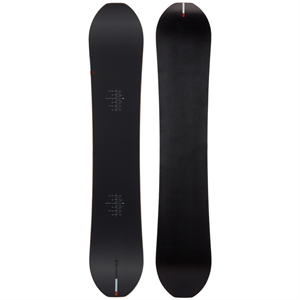
- Rocker Type: Symmetrical Camber
- Shape: Directional Twin
- Flex Rating: Soft, Playful Flex
- Core: Poplar / Paulownia / Bamboo Wood Core
The Season Kin Snowboard is built for the park family, but its versatile design lets it play all over the mountain. From rails and boxes to jumps and beyond, this directional twin board has a symmetrical camber that provides the grip and energy you need to stomp tricks and charge through all sorts of terrain. It’s designed with a playful, pressable flex, making it easy to pop and butter, while the durable construction ensures it can handle the day-to-day abuse that comes with lapping the park.
The core is a lightweight blend of poplar, paulownia, and bamboo, giving you a responsive and poppy feel underfoot. Paired with a biaxial fiberglass laminate and a durable sintered base, this board delivers a quiet, stable ride. It also features a unique progressive shaping that adjusts width and stance based on board length, making it a great fit for riders of all shapes and sizes. As part of the Season Eqpt. line, it also comes with the exclusive Season Pass service, which provides free maintenance and support to keep you on the mountain all season long.
Pros:
- Playful, pressable flex is great for freestyle riders.
- Durable construction stands up to park abuse.
- Symmetrical camber provides solid grip and pop.
Cons:
- Directional twin shape might not be ideal for those who ride switch exclusively.
- Soft flex may not be stable enough for high-speed, aggressive riding.
2. Rossignol Diva – Women’s
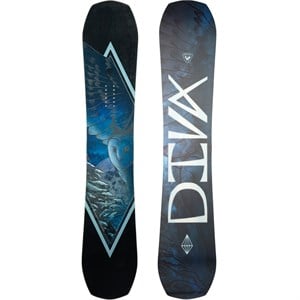
- Rocker Type: AmpTek Elite Rocker (60% camber/40% rocker)
- Shape: True Twin with RadCut
- Flex Rating: 7 (1 Soft – 10 Stiff)
- Core: Wood CBF2 with Basalt and Kevlar fibers
The Rossignol Diva Snowboard is built for women who demand top-tier performance on the mountain. This board is stiff, powerful, and ready to dominate any terrain. The AmpTek Elite Rocker profile, with 60% camber between the feet and 40% rocker at the tips, delivers explosive pop and superior stability for high-speed riding and big landings. Whether you’re charging through fresh powder or sending it off a massive kicker, the Diva provides the confidence and control you need to perform at your best.
The board’s construction is packed with advanced tech to enhance your ride. The Wood CBF2 core is reinforced with Basalt and Kevlar fibers along the edges for incredible stability and enhanced edge grip. L.I.T.E. Frame technology provides full-length shock absorption for a smooth, damp ride, while Aramid (Kevlar) acts as a vibration dampener to soften rough landings. The RadCut sidecut design adapts in real-time to your speed, giving you the perfect turn at all times. All of this combines to create a board that’s not just powerful, but also surprisingly agile and responsive.
Pros:
- Stiff flex and advanced construction provide powerful performance.
- Excellent stability and edge hold at high speeds.
- Dampening technology absorbs vibrations and softens landings.
Cons:
- Stiff flex is not ideal for beginners or riders who prefer a more forgiving ride.
- Advanced-level design may be too much for casual or intermediate riders.
See the Rossignol Diva – Women’s
3. CAPiTA The Outsiders
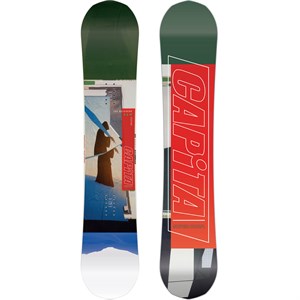
- Rocker Type: Park V1 Profile (Traditional Camber)
- Shape: True Twin
- Flex Rating: 6 (1 Soft – 10 Stiff)
- Core: FC Hover Core™ with Forged Carbon rods
The CAPiTA The Outsiders Snowboard is your go-to ride for freestyle domination. Built with a traditional camber and a true twin shape, this board is designed to give you the pop, stability, and control needed to confidently hit park features. The Park V1 profile retains the power of a cambered board but adds small zero-camber sections at the tip and tail for a more controlled, catch-free ride. It encourages you to push your limits and take on new challenges with a perfect blend of flex and edge hold.
The Outsiders is packed with high-end technology. Its FC Hover Core is enhanced with Forged Carbon rods for a lightweight and extremely strong feel with excellent dampening properties. The board also features Aramid Body Armor for impact protection, Technora + Flax Boosters for explosive turning and ollie power, and Holysheet Fiberglass for added strength without extra weight. The super-fast Hyperdrive base and durable steel edges ensure you can keep up the speed and tackle any freestyle challenge with confidence. This board truly is a park workhorse built for serious riders.
Pros:
- Traditional camber provides a powerful, responsive ride with tons of pop.
- High-end materials and construction for durability and performance.
- Excellent dampening properties absorb vibrations from hard landings.
Cons:
- Stiffer flex might be difficult for beginners to handle.
- Not the most forgiving board for riders who make mistakes.
4. United Shapes Horizon
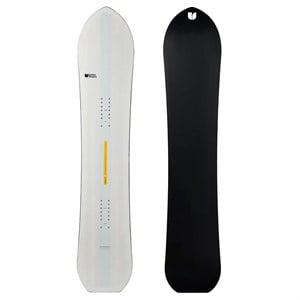
- Rocker Type: Camber
- Shape: Directional Twin with 4mm Taper
- Flex Rating: 5 (1 Soft – 10 Stiff)
- Core: Classic Core (Poplar, Paulownia, and Ash)
The United Shapes Horizon is a versatile board that excels both in the park and across the entire mountain. While its directional twin shape and medium flex make it capable of handling freestyle features with ease, this board truly shines when you take it away from the sculpted obstacles. It’s built to explore natural hits and enjoy all-mountain freestyling with a shape that provides plenty of float in powder and a smooth, stable ride in variable snow. The 4mm taper adds to its versatility, allowing for quick, responsive turns in any condition.
Under the hood, the Horizon is constructed with a Classic Core made from poplar and paulownia for a lively and durable foundation, while ash stringers provide a high-performance backbone for a smoother ride and better landing absorption. A unilateral center carbon stringer runs from tip to tail, giving it pop and stability without compromising maneuverability. The board also uses an environmentally-conscious bio-resin in its construction, which has the same structural properties as traditional resin but with a plant-based molecular range. It’s a board that lets you go anywhere and do anything with confidence.
Pros:
- Versatile design excels in both freestyle and all-mountain terrain.
- Medium flex is great for a wide range of riding styles.
- Durable and responsive core construction.
Cons:
- Not a dedicated park board, so it may feel less aggressive than some true twins.
- Directional twin shape might not be a first choice for riders who focus solely on switch riding.
5. Rossignol Myth – Women’s
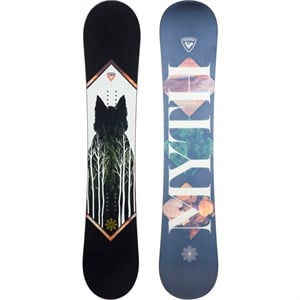
- Rocker Type: AmpTek Auto Turn Rocker (70% rocker/30% camber)
- Shape: True Twin
- Flex Rating: 3 (1 Soft – 10 Stiff)
- Core: FSC Certified Wood 5620
The Rossignol Myth Snowboard is a perfect choice for riders making the jump from beginner to intermediate. It’s designed to be forgiving and easy to ride, so you can focus on building your skills and having fun on the mountain. The AmpTek Auto Turn Rocker profile, with a 70% rocker and 30% camber blend, makes for effortless turn initiation and a catch-free ride that boosts confidence and makes progressing a breeze. The soft flex rating and true twin shape also make it perfect for learning basic freestyle maneuvers and riding switch.
This board is built with simplicity and durability in mind. Its FSC Certified Wood core provides a reliable and comfortable feel, while the biaxial fiberglass laminate adds stability and torsional resistance. The extruded 4400 base is easy to maintain and repair, so you don’t have to worry about minor scrapes and dings. With its focus on a playful and forgiving feel, the Myth dismantles the myth that snowboarding is difficult, proving that it’s all about getting out there and enjoying the ride.
Pros:
- Very forgiving and easy to ride, perfect for beginners.
- Soft flex is ideal for learning new tricks and turns.
- Durable construction and easy-to-maintain base.
Cons:
- Too soft for advanced riders who need a more responsive board.
- Lack of high-end features may limit performance at higher speeds or in challenging terrain.
See the Rossignol Myth – Women’s
6. Rome Artifact Pro
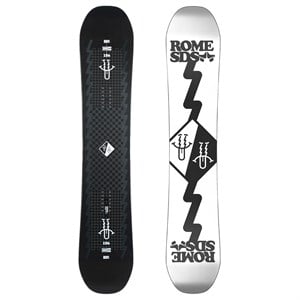
- Rocker Type: Stay Positive Camber
- Shape: True Twin with Double Kick
- Flex Rating: 5 (1 Soft – 10 Stiff)
- Core: Carbon HotRods
The Rome Artifact Pro is a park purist’s dream, engineered with a fully cambered twin shape that’s ready to stomp the biggest tricks in the park. This board is all about classic camber power, providing a predictable and stable ride with incredible pop and snap. The DoubleKick nose and tail feature a two-part rise that gives you the perfect blend of pressability for jibs and an aggressive pop for jumps and ollies. It’s a board that feels a little more at home in the park than the rest of the mountain, but it will still perform anywhere you need it to.
The Artifact Pro is built with features designed to handle the rigors of freestyle riding. The core is enhanced with Carbon HotRods, which are thin rods of carbon milled into the nose and tail to give it that extra boost of pop and power. Flax Impact Plates are placed under the binding packs to lessen impact and dampen chatter on landings, keeping your ride smooth and comfortable. A SinterStrong base is both fast and durable, ensuring you can keep up the speed and not worry about wear and tear. This is a board that’s itching to get out there and fly.
Pros:
- Full camber profile provides tons of pop and stability.
- DoubleKick nose and tail improve pressability and landing control.
- Durable construction with impact plates for park riding.
Cons:
- Full camber may feel less forgiving for riders who prefer a more relaxed ride.
- Less versatile outside of the park compared to all-mountain freestyle boards.
7. Bataleon Distortia – Women’s
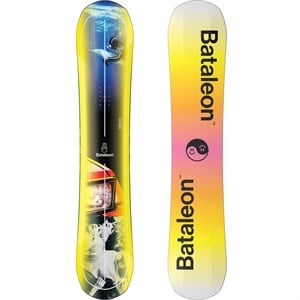
- Rocker Type: Medium Camber with 3BT™ and SideKick™
- Shape: True Twin
- Flex Rating: 4 (1 Soft – 10 Stiff)
- Core: Light Woodcore with Central Super Tube
The Bataleon Distortia is a lightweight twin board designed to help women progress in freestyle and all-mountain riding. Its unique 3BT (Triple Base Technology) and SideKick tips give it a catch-free feel that makes turn initiation smoother and dramatically increases float in powder. This combination of traditional camber and lifted side base points provides a stable platform for landings while also offering next-level agility for spins and butters. The medium flex rating makes it responsive enough for more aggressive riding, yet forgiving enough to help you build confidence on new tricks.
The Distortia’s core is a blend of paulownia and poplar woods, creating a lightweight yet strong foundation. This core is enhanced with a Central Super Tube, a hollow carbon tube milled into the bottom of the board that adds pop without increasing torsional stiffness. Biaxial fiberglass and carbon stringers provide a snappy, responsive feel, while ShockWalls, a urethane-infused sidewall technology, smooth out the ride and resist impacts. The Hyper Glide S sintered base is durable and fast, keeping you moving at top speed all day long. This board is a perfect blend of performance and forgiveness.
Pros:
- 3BT and SideKick tips provide a catch-free and forgiving ride.
- Unique core construction adds pop without excess stiffness.
- Versatile design is great for both park and all-mountain riding.
Cons:
- 3BT takes some getting used to for riders accustomed to a traditional camber board.
- Medium flex may not be stiff enough for advanced, hard-charging riders.
See the Bataleon Distortia – Women’s
8. CAPiTA Pathfinder Camber
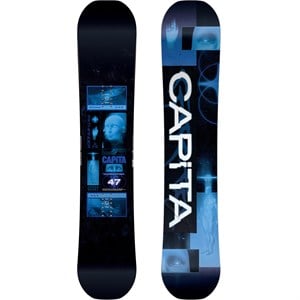
- Rocker Type: Park V1 Profile (Low-Rise Camber)
- Shape: True Twin
- Flex Rating: 4 (1 Soft – 10 Stiff)
- Core: FSC Certified Dual Core™
The CAPiTA Pathfinder Camber is a reliable and durable snowboard built for freestyle dreamers and resort riders who want a high-performance board without a high price tag. Its low-rise camber profile, known as Park V1, maintains the power and response of a traditional camber board while adding small zero-camber sections at the tip and tail. This gives it a more controlled, catch-free feel that’s perfect for intermediate riders honing their skills and experienced riders who want a mellow, fun-focused ride for lapping the park and cruising the resort.
This board is designed to be a workhorse. The FSC Certified Dual Core is made from a lightweight blend of poplar and beech, providing a consistent flex and zero irregularities for a dependable feel. The Special Blend Fiberglass and Magic Bean Resin add strength and durability while keeping the board responsive and poppy. The Superdrive EX base is a versatile and abrasion-resistant sintered material that provides a smooth glide. With its friendly flex and reliable construction, the Pathfinder Camber is an excellent choice for anyone looking to progress their freestyle riding without breaking the bank.
Pros:
- Low-rise camber is a great blend of forgiveness and performance.
- Durable construction with a consistent, reliable feel.
- Excellent value for the price, packed with trusted tech.
Cons:
- Softer flex may not be ideal for riders who prefer aggressive carving or high speeds.
- Lacks some of the more advanced features found on high-end park boards.
See the CAPiTA Pathfinder Camber
How to Choose a Freestyle Snowboard?
Choosing a freestyle snowboard can feel like a daunting task, but it doesn’t have to be. Freestyle boards are specifically designed for riders who love the park—hitting jumps, sliding rails, and getting creative with jibs. They are also incredibly fun for all-mountain riding, especially for riders who enjoy a playful, surfy feel on the snow. While the world of snowboards is vast, understanding a few key characteristics of freestyle boards will make your decision much easier. This guide will walk you through the essential factors, from shape and flex to profile and technical specs, helping you find the perfect board to take your freestyle skills to the next level.
First and foremost, it’s important to know what makes a snowboard “freestyle.” Generally, these boards are softer flexing, have a true twin shape, and feature a profile that blends camber and rocker for a mix of pop and forgiveness. However, there are many variations within this category, and the best choice for you depends on your riding style, ability level, and personal preference. Let’s break down the most important elements to consider.
Rocker Profile: The Heart of the Ride
The snowboard’s rocker profile, or camber, is the most crucial factor in determining how it rides. It dictates the board’s feel, pop, and forgiveness. For freestyle boards, you’ll typically find a few common profiles, each with its own advantages.
True Camber
This is the traditional and most powerful profile. A true camber board has an arch underfoot, with the contact points near the tip and tail. When you ride a camber board, it stores and releases energy like a spring, giving you maximum pop for ollies and jumps. It provides excellent edge hold and stability, making it great for aggressive riding and high-speed carves. While it’s the least forgiving profile—it’s prone to catching an edge if you’re not careful—it’s the top choice for advanced riders who want ultimate control and power in the park.
Rocker (Reverse Camber)
A rocker profile is the opposite of camber; the board is U-shaped, lifting the tip and tail off the snow. This profile is incredibly forgiving and catch-free, making it perfect for beginners and riders who love to butter and press. The lifted contact points make it easier to initiate turns and float in powder. However, rocker boards sacrifice some of the pop and stability of camber, so they can feel less responsive on jumps and at high speeds.
Hybrid Profiles (Rocker-Camber-Rocker)
This is where things get interesting. Most freestyle boards today use a hybrid profile to combine the best of both worlds. A common hybrid profile features camber between the bindings for pop and stability, with rocker at the tip and tail for forgiveness and float. This gives you the powerful feel of camber with the catch-free benefits of rocker. This profile is an excellent all-around choice for a freestyle board, providing a great balance for riders of all levels who want to ride the whole mountain and still hit the park.
Shape: True Twin for Symmetrical Fun
The shape of a snowboard is another fundamental element of its design. For freestyle riding, the unanimous choice is a true twin shape.
True Twin
A true twin board is perfectly symmetrical, meaning the nose and tail are the same length and width, and the flex pattern is identical on both ends. This design is essential for freestyle because it allows you to ride switch (with your non-dominant foot forward) with the exact same feel and performance as riding regular. Whether you’re landing a cab 540 or a switch tailpress, a true twin shape ensures you have a consistent and predictable ride every time. This symmetry is why they are so popular in the park and why they are the best option for those focusing on freestyle riding.
Directional Twin
While not a pure freestyle shape, a directional twin can be a great option for riders who spend more time on all-mountain terrain but still want to play in the park. These boards are typically symmetrical in shape but have a directional flex pattern, with a slightly stiffer tail and a softer nose. This gives you more power and stability for charging down the mountain while still allowing for switch riding and freestyle maneuvers.
Flex: Finding Your Sweet Spot
Flex refers to how stiff or soft a snowboard is, and it’s measured on a scale from 1 (soft) to 10 (stiff). Freestyle boards generally fall in the soft to medium range.
Soft Flex (Flex 1-4)
A soft flex board is ideal for beginners and riders who prioritize jibbing and buttering. The forgiving nature of a soft flex makes it easy to press and manipulate the board, giving you a playful feel on rails, boxes, and small features. They are also easier to turn and less punishing on landings. However, soft boards can feel unstable at high speeds and offer less pop for bigger jumps.
Medium Flex (Flex 5-7)
This is the most common flex for freestyle snowboards and offers a fantastic balance of performance. A medium flex board provides enough stability and pop for hitting jumps while still being pliable enough for jibs and butters. It’s a great all-around choice that can handle a variety of terrain and riding styles, making it suitable for intermediate to advanced riders who want a versatile park board.
Stiff Flex (Flex 8-10)
You’ll rarely find a pure freestyle board with a stiff flex, as these are typically reserved for big mountain and freeride boards. However, some advanced freestyle boards, particularly those designed for massive jumps and a pro-level rider, might lean towards the stiffer end of the spectrum. These boards provide maximum stability and power for stomping huge landings and maintaining control at high speeds.
Additional Features and Tech
Beyond the core components, many boards incorporate unique technologies to enhance their performance. While these aren’t essential, they can make a big difference in the ride.
- Core Materials: Most freestyle boards use a wood core, often a blend of poplar and paulownia for a lightweight and responsive feel. Some higher-end boards may include carbon or other composites to add pop and dampening without increasing weight.
- Base: The base of a snowboard comes in two main types: extruded and sintered. Extruded bases are more durable and easier to repair, but they are slower. Sintered bases are faster and more absorbent but require more waxing and are more difficult to repair. For freestyle, a durable extruded base is often a good choice for those who hit a lot of rails, but a fast sintered base is better for those who want to carry speed into jumps.
- Sidewalls: Some boards use urethane-infused sidewalls to absorb vibrations and resist impacts, which is particularly useful for park riding where you encounter a lot of chatter and potential dings.
Sizing and Your Stance
Finding the right size board is key to a great freestyle experience. A freestyle board should generally be a little shorter than a traditional all-mountain board. A shorter board is easier to spin and maneuver for tricks, while a longer board offers more stability. Your stance—the angle and width of your bindings—is also crucial. For freestyle, a centered stance with a moderate width is the norm, as it keeps you balanced for riding switch.
Ultimately, the best way to choose a freestyle snowboard is to think about what kind of rider you are. Are you a beginner who wants a forgiving board to learn on? Are you an intermediate rider looking for a versatile board that can do it all? Or are you an advanced park rat who needs a board with maximum pop and stability? By considering the rocker profile, shape, flex, and your personal riding style, you can narrow down your options and find a board that will help you progress and have a blast in the park and on the mountain.