Best Park Snowboards of 2026
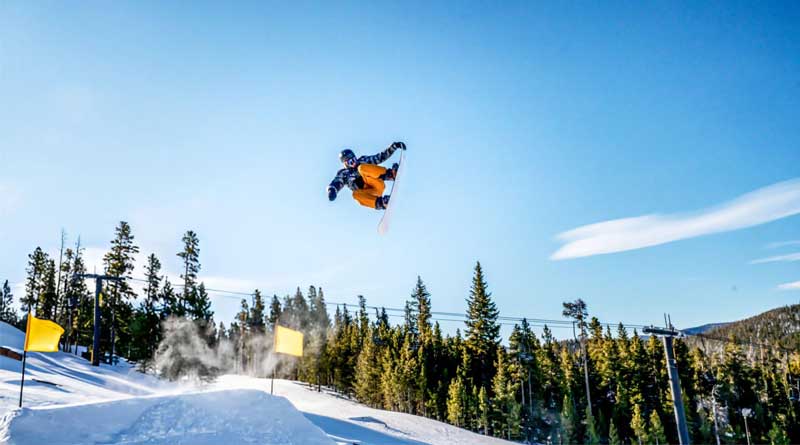
Park snowboards are designed for riders who love spending time in the terrain park, hitting jumps, rails, and boxes with style. These boards are built to be playful, lightweight, and responsive, making it easier to practice tricks, land smoothly, and keep control during spins or presses. Unlike stiffer freeride boards, park snowboards usually have a softer flex and twin shape for riding both regular and switch. Whether you’re a beginner learning your first 180 or an experienced rider going big on kickers, the right board can make a huge difference. In this guide, we’ll explore the best park snowboards to help you ride with confidence and creativity.
1. Season Kin
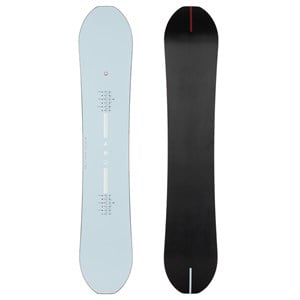
- Terrain: Freestyle, All-Mountain
- Ability Level: Intermediate-Advanced
- Rocker Type: Symmetrical Camber
- Flex Rating: Soft
The Season Kin Snowboard is designed for riders who prioritize a playful and creative approach to the entire mountain. Featuring a twin shape and a soft, pressable flex, this board excels in freestyle environments while remaining stable enough for daily all-mountain use. Its lightweight core, reinforced with bamboo and paulownia, provides a responsive and poppy feel that encourages experimentation on side hits and park features.
What sets this board apart is its commitment to longevity and rider support. Built with a durable seamless sintered base and 360-degree double damping sidewalls, it is engineered to withstand heavy use. Additionally, the inclusion of a lifetime service pass for waxes and tunes makes it a practical investment for dedicated riders who want a reliable, fun-focused deck that will last for many seasons to come.
Pros: Excellent pop, durable construction, and includes lifetime tuning services.
Cons: Might feel too soft for aggressive high-speed carving.
2. Rossignol Diva – Women’s
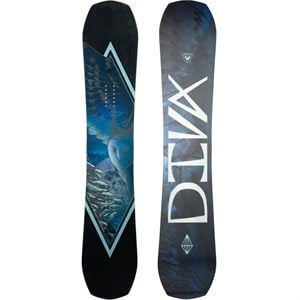
- Terrain: Freestyle, All-Mountain
- Ability Level: Advanced-Expert
- Rocker Type: AmpTek Elite (Rocker/Camber/Rocker)
- Flex Rating: Stiff (7/10)
The Rossignol Diva is a powerhouse designed specifically for women who demand high-level performance across the entire mountain. It utilizes the AmpTek Elite profile, which places significant camber between the feet for explosive pop and stability, while rocker at the tips ensures catch-free maneuvers. This combination allows advanced riders to charge hard in the park or through technical terrain with absolute confidence.
Technological integration is a highlight of the Diva, featuring Serrated Edges for superior grip on icy surfaces and L.I.T.E. Frame technology for shock absorption. The blend of Basalt, Aramid, and TPU in the laminates creates a ride that is damp, stable, and highly responsive. It is a true twin that feels balanced whether riding regular or switch, making it a versatile choice for aggressive freestyle enthusiasts.
Pros: Exceptional edge hold on ice and very stable at high speeds.
Cons: The stiff flex can be unforgiving for less experienced riders.
See the Rossignol Diva – Women’s
3. Salomon Oh Yeah – Women’s
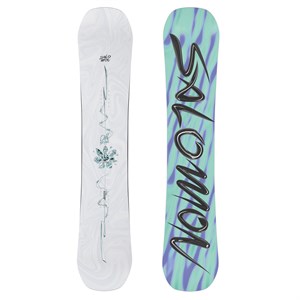
- Terrain: Freestyle, All-Mountain
- Ability Level: Beginner-Intermediate
- Rocker Type: Rock Out Camber
- Flex Rating: Soft
The Salomon Oh Yeah is a freestyle-focused board crafted to help progressing riders find their confidence in the park and on the groomers. It features the Rock Out Camber profile, which provides a flat stable zone between the bindings, camber near the feet for response, and rocker at the tips for easy pressing. This versatile profile makes it an ideal choice for those learning to jib and jump.
Comfort and durability are key aspects of this deck, highlighted by the Royal Rubber Pads inserted into the sidewalls to dampen vibrations and soften heavy landings. The EQ Rad sidecut offers a perfect balance of agility and fun, allowing for easy turn initiation. With its soft flex and forgiving nature, the Oh Yeah is built to turn every mountain run into a playful, progress-filled session.
Pros: Very forgiving flex and excellent vibration dampening for a smooth ride.
Cons: Lacks the stability required for expert-level high-speed charging.
See the Salomon Oh Yeah – Women’s
4. Salomon Kickback
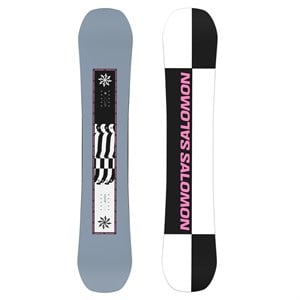
- Terrain: Freestyle
- Ability Level: Beginner-Intermediate
- Rocker Type: Rock Out Camber
- Flex Rating: Soft (1/5)
The Salomon Kickback is the ultimate tool for park progression, specifically tuned for riders who want an effortless, playful feel. With the softest flex rating in the lineup, this board makes locking into rails and buttering across the snow feel natural. The Rock Out Camber ensures that despite its soft nature, it still possesses enough pop and stability to handle small-to-medium jumps with ease.
Equipped with an Aspen Strong Core and Royal Rubber pads, the Kickback is built to soak up the chatter of the park while remaining durable enough for repeated hits. It also features a bio-based resin, reflecting a modern approach to sustainable manufacturing. This is the go-to board for anyone looking to spend their day perfecting freestyle tricks with a deck that is designed to be as fun as possible.
Pros: Extremely easy to press and very lightweight for air maneuvers.
Cons: Too soft for significant all-mountain riding or deep powder.
5. CAPiTA Pathfinder
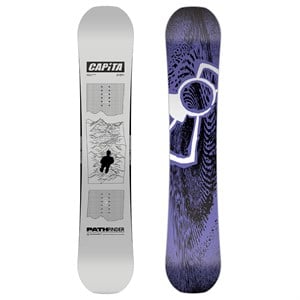
- Terrain: Freestyle
- Ability Level: Beginner-Intermediate
- Rocker Type: Rocker/Flat/Rocker
- Flex Rating: Medium (4/10)
The CAPiTA Pathfinder is an accessible, true twin snowboard designed for riders who want to explore freestyle terrain without breaking the bank. It utilizes the Park V2 profile, which features a flat section between the inserts for a stable, skate-like feel, and reverse camber at the tips for effortless turn initiation. This makes it a fantastic option for those learning to ride switch or perfecting their first park laps.
Despite its friendly price point, the Pathfinder is packed with tech like the Dual Core and eco-friendly Magic Bean Resin. The Superdrive ADV base is a “sintruded” hybrid, offering the speed of a sintered base with the low-maintenance benefits of an extruded one. It is a durable, poppy, and reliable deck that serves as a perfect entry point into the world of creative freestyle riding.
Pros: Budget-friendly price and very easy to maneuver for beginners.
Cons: The flat profile might lack the “snap” preferred by aggressive camber fans.
6. GNU Wagyu C3
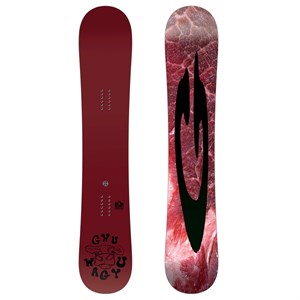
- Terrain: Freestyle, All-Mountain
- Ability Level: Intermediate-Advanced
- Rocker Type: Camber (C3)
- Flex Rating: Stiff
The GNU Wagyu C3 is a beefy, high-performance directional twin built for riders who treat the entire mountain like a freestyle park. It features a aggressive C3 camber profile that provides maximum edge hold, pop, and power. This board is designed to handle everything from massive side hits to high-speed park runs, offering a precise feel that experienced riders will appreciate during technical maneuvers.
A standout feature is the Magne-Traction edge technology, which uses seven strategically located serrations to provide “unreal” edge hold even on hardpack and ice. Hand-built in the USA with eco-friendly processes, the Wagyu C3 combines a lightweight Aspen/Paulownia core with a fast Co-Ex base. It is a rugged, responsive, and environmentally conscious choice for those who want a board that can devour any terrain with confidence.
Pros: Incredible edge grip on ice and high-energy pop.
Cons: The aggressive camber profile can be catchy for novice riders.
7. CAPiTA Dark Horse
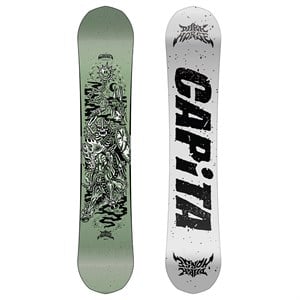
- Terrain: Freestyle, All-Mountain
- Ability Level: Intermediate-Advanced
- Rocker Type: Camber (Park V1)
- Flex Rating: Medium (6/10)
The CAPiTA Dark Horse is a freestyle-focused true twin that punches well above its weight class. Derived from the heritage of high-end park boards, it features the Park V1 camber profile, which provides the power and response of traditional camber with small flat zones near the tips for increased control. This makes it an excellent choice for intermediate riders looking to step up their game in the park.
Inside, the board is loaded with performance tech, including Carbon Aramid boosters for extra snap and a high-speed Superdrive ADV base. The construction uses eco-friendly Magic Bean Resin and a poppy Dual Core of poplar and beech. It offers a balanced, energetic ride that feels stable on jumps yet maneuverable on rails, making it a highly capable all-around freestyle weapon for the value-conscious rider.
Pros: Great value-to-performance ratio and very snappy response.
Cons: Not as damp or smooth in choppy snow as higher-end luxury models.
8. United Shapes Horizon
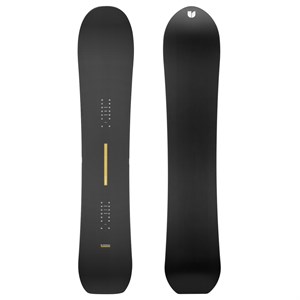
- Terrain: Freestyle, All-Mountain, Freeride
- Ability Level: Intermediate-Advanced
- Rocker Type: Camber (Early Rise)
- Flex Rating: Medium (5/10)
The United Shapes Horizon is a versatile all-terrain weapon that beautifully blends freeride soul with freestyle capability. Featuring a directional shape with a subtle 4mm taper, it offers excellent float in powder while remaining agile enough for park laps. The Energy Core—a blend of poplar, paulownia, and bamboo—provides an exceptionally lively and hyper-active feel that reacts instantly to rider input.
Technically advanced, the Horizon includes a center carbon stringer for longitudinal pop and Triax fiberglass for torsional stiffness. One of its most unique features is the “Deep Day” insert pack, which allows for a significant setback on those ultra-deep powder mornings. Whether you are carving groomers, dropping pillows, or hitting the park, the Horizon delivers a smooth and confidence-inspiring ride across the entire mountain map.
Pros: Highly versatile across all terrain types and excellent powder float.
Cons: Tapered directional shape makes riding switch less natural than a true twin.
9. Burton Blossom
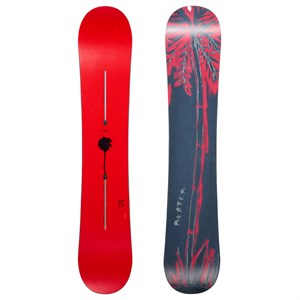
- Terrain: Freestyle
- Ability Level: Intermediate-Advanced
- Rocker Type: Camber
- Flex Rating: Medium
The Burton Blossom is a pure freestyle expression machine, born from the creative input of Burton’s elite team riders. This true twin is built with a classic camber profile that delivers the precise turning and spring-loaded pop that traditionalists love. At its heart is the Super Fly II 700G core, which uses specialized wood positioning to reduce weight while maximizing strength and response for high-stakes freestyle riding.
The board is packed with Burton-exclusive tech, such as the Channel mounting system for infinite stance adjustability and Infinite Ride construction, which ensures the flex and pop stay consistent for years. With a Carbon I-Beam for added snap and a recycled Sintered WFO base for incredible speed, the Blossom is a high-performance canvas designed for riders who want to spin, stomp, and jib with absolute precision and style.
Pros: Top-tier pop and highly adjustable mounting system.
Cons: Requires Burton-compatible or Channel-compatible bindings; traditional camber can be demanding.
10. Sims ATV
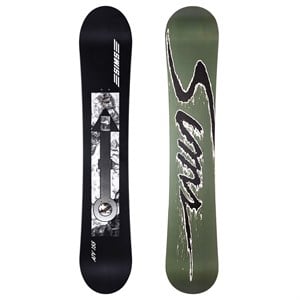
- Terrain: Freestyle, All-Mountain
- Ability Level: Intermediate-Advanced
- Rocker Type: Traditional Camber
- Flex Rating: Medium (5/10)
The Sims ATV (All-Terrain Vehicle) is a rugged workhorse designed to handle the entire mountain with a classic, energetic feel. It utilizes a traditional camber profile for explosive rebound and reliable edge hold, making it a favorite for riders who value precision. The long-nosed twin shape provides a balanced feel in the air while offering slightly better performance in deeper snow compared to a standard twin.
Performance is bolstered by the MOD 3 core and Double I Carbon stringers, which together provide impressive power transfer and high-speed stability. Additionally, Snake Bite Tech provides four extra contact points for exceptional grip on icy slopes. Whether you are launching side hits, carving corduroy, or exploring the park, the Sims ATV offers the versatility and control needed to treat the whole mountain like a playground.
Pros: Reliable edge hold on ice and very stable at high speeds.
Cons: Traditional camber requires more technical skill to avoid catching edges.
How to Choose a Park Snowboard?
Choosing the right snowboard for the park can feel like a daunting task, but it’s a decision that will directly impact your progression and enjoyment. A park board is specifically designed to handle the unique demands of freestyle riding, from hitting jumps and rails to mastering switch landings and buttering on flat ground. While almost any board can get you through a park lap, a specialized park board will make a world of difference, boosting your confidence and helping you stomp new tricks. This guide will walk you through the key considerations, from board shape and flex to profile and technical features, to help you find the perfect deck to take your freestyle skills to the next level.
Unlike all-mountain or freeride boards that prioritize stability and carving performance, park boards are all about maneuverability, pop, and forgiveness. They’re built to be playful and durable, capable of withstanding the repeated impacts of hitting features. By understanding the core characteristics of a park snowboard, you can select a board that not only matches your riding style but also helps you achieve your freestyle goals.
Understanding Park Board Characteristics
Park boards have a set of distinct features that differentiate them from other snowboard types. Here’s a breakdown of what to look for when you’re shopping for your new freestyle weapon.
Board Shape: True Twin is King
The first and most crucial characteristic of a park board is its shape. When it comes to freestyle riding, the true twin shape is the undisputed champion. A true twin board is perfectly symmetrical from nose to tail, both in its shape and its flex pattern. This means it rides identically whether you’re going regular or switch. For park riding, where landing and taking off switch is a constant, a true twin is non-negotiable. It provides a balanced, predictable feel that allows you to spin, land, and butter with confidence. Avoid directional shapes, as their asymmetry will make riding switch feel awkward and unstable.
Flex: Softer is Smarter
Flex is a major factor in how a board performs, and for park riding, a softer to medium flex is typically preferred. A softer flex offers several advantages:
- Forgiveness: It’s more forgiving on landings and less likely to punish you for minor mistakes.
- Pressability: A softer flex makes it easier to lock into presses on rails and boxes. This is essential for mastering jib tricks and adding style to your riding.
- Playfulness: A more flexible board is easier to butter and manipulate, allowing for creative freestyle maneuvers on the snow.
While a softer flex is great for jibbing and small jumps, riders who focus on bigger jumps and high-speed park laps might prefer a medium flex. A medium flex offers more stability at speed and a more powerful pop for launching off big kickers, but it’s not so stiff that it sacrifices the playful feel needed for rails and butters. Advanced or expert park riders might even opt for a stiffer board, but for most people, a soft to medium flex is the sweet spot.
Rocker Profile: Camber, Rocker, and Hybrids
The profile of a snowboard—how it looks from the side—is another critical component. Different profiles are suitable for different styles of park riding.
- Camber: A traditional camber profile offers a single arc that provides powerful pop and excellent edge hold. Camber boards are great for riders who want maximum pop for jumps and a stable, locked-in feel on rails. They are less forgiving and more prone to catching an edge, but they offer the most powerful performance.
- Rocker: A rocker (or reverse camber) profile has a banana-like shape, with the board curving up at the tips. Rocker boards are incredibly forgiving and catch-free, making them ideal for beginners and jib-focused riders. They are easy to butter and press but lack the powerful pop and stability of camber at higher speeds.
- Hybrid: Hybrid profiles combine elements of both camber and rocker. The most common hybrid for the park is a camber section between the bindings with rocker at the tips (often called camber-rocker-camber or similar names). This combination offers the best of both worlds: the pop and stability of camber underfoot and the forgiveness and float of rocker at the tips. This is a popular choice for all-around park performance.
Base and Core: Durability and Pop
A park board needs to be able to take a beating, so pay close attention to the base and core materials.
- Base: There are two main types of bases: extruded and sintered. An extruded base is more durable and easier to repair, making it a great choice for a park board that will inevitably get dinged up on rails. It’s also generally more affordable. A sintered base is faster and more porous, holding wax better for superior glide, but it is less durable and harder to fix. For most park riders, an extruded or a sintruded (a mix of both) base offers the best balance of speed and durability.
- Core: Park boards often have cores that are reinforced for durability and pop. Look for cores made with lightweight woods like poplar and paulownia, often with added materials like carbon, bamboo, or fiberglass stringers. These reinforcements provide a snappy, energetic feel for launching off jumps and ollieing onto features.
Matching Your Board to Your Riding Style
Now that you know the key characteristics, let’s consider how they apply to different types of park riders.
The Jib and Rail Rider
If your main goal is to slide on rails and boxes, you’ll want a board that is soft, forgiving, and durable. Look for:
- True Twin shape for riding and landing switch.
- Soft to very soft flex for easy presses and butters.
- Rocker or a soft hybrid profile for a catch-free feel.
- Extruded or sintruded base for durability and easy repair.
The Jump and Air Rider
If you live for the feeling of airtime, you need a board with powerful pop and a stable platform for landings. Look for:
- True Twin shape for spins and landings.
- Medium to stiff flex for stability at speed and a powerful ollie.
- Camber or a medium-stiff hybrid profile for maximum pop and edge hold.
- Sintered base for speed to clear bigger jumps.
The All-Around Park Rider
If you want a board that can do it all—hit jumps, slide rails, and carve up the groomers—a versatile board is the way to go. Look for:
- True Twin shape for versatility.
- Medium flex for a balance of playfulness and stability.
- Hybrid profile that combines camber and rocker for an all-around performance.
- Sintruded or sintered base for a mix of durability and speed.
Final Considerations: Size and Stance
Don’t forget about sizing. For a park board, many riders choose a board that is slightly shorter than what they would ride for all-mountain. A shorter board is easier to spin and more manageable on rails. However, if you are a jump-focused rider, you may want to stick with your typical size for added stability. Finally, make sure the board you choose has a 2×4 insert pattern, which is the industry standard for most bindings, allowing for plenty of stance customization.
By carefully considering these factors, you’ll be able to choose a park board that feels like an extension of yourself. The right board will give you the confidence to push your limits, helping you progress from one trick to the next and truly make the park your playground. Now get out there and start sending it!