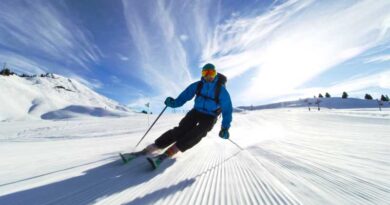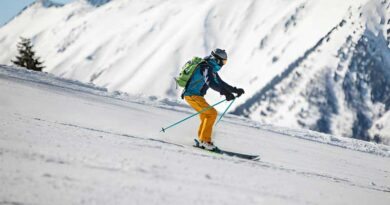

Best All-Mountain Skis of 2026
All-mountain skis are built to handle almost anything the mountain throws at you, from groomed runs to powder and even some off-piste adventures. They’re the go-to choice for skiers who want just one pair of skis that can do it all without switching gear. With so many models available, it can be tricky to know which ones offer the right mix of stability, float, and control. In this guide, we’ll highlight the best all-mountain skis to help you find your perfect match.
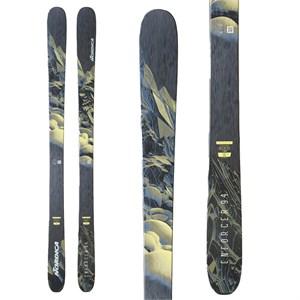
1. Nordica Enforcer 94
- Rocker Type: All Mountain Rocker
- Core/Laminates: Energy 2 Ti Pulse Core (Wood core, elastomer Pulse core, and two sheets of Titanal)
- Ability Level: Advanced-Expert
- Tail Type: Partial Twin Tip
The Nordica Enforcer 94 Skis are back with some subtle but impactful changes, maintaining their legendary status as a hard-charging all-mountain ski. The new wood core, combined with an elastomer Pulse Core sandwiched between two layers of Titanal, delivers a powerful and energetic feel without being overly demanding. This construction gives you the confidence to push your limits, whether you’re laying down high-speed carves on the groomers or navigating tricky, variable snow. The progressive shaping unlocks the tail, making the ski more nimble and easier to pivot in tight spots like bumps or trees, which was a welcome change for a ski known for its on-piste dominance.
While it’s still an ideal ski for aggressive frontside skiers who love to “cut crud,” the updated design makes it more versatile and forgiving. The added tail rocker means it releases from turns more easily, giving you a more playful feel than previous models. This makes the Enforcer 94 a true one-ski quiver for those who ski a wide variety of terrain but prioritize speed and stability. It’s the perfect choice for an advanced skier who wants a reliable, fast, and stable ski that can still have some fun and explore off the beaten path.
Pros
- Stable and reliable at high speeds
- More nimble and playful than previous models
- Versatile for a variety of terrain
Cons
- Can be demanding for less aggressive skiers
See the Nordica Enforcer 94 See the Women’s Santa Ana 92
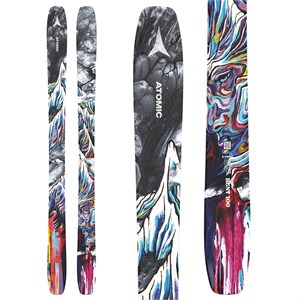
2. Atomic Bent 100
- Ability Level: Intermediate-Advanced
- Core: Light Woodcore
- Tail Type: Partial Twin Tip
- Rocker Type: All Mountain Rocker
The Atomic Bent 100 has earned its reputation as a playful all-mountain ripper, and the latest version continues this legacy with some thoughtful updates. The new eco-friendly materials and a Bent-specific HRZN 3D tip and tail enhance the ski’s performance, making it even more fun and versatile across the mountain. The light wood core provides a fantastic balance of shock absorption and stability, allowing you to confidently tackle variable conditions and side-hits. The HRZN 3D tips are a game-changer, giving the ski a more playful feel and making it easier to smear and butter through soft snow and freestyle terrain.
For a ski that thrives on being fun and energetic, the Bent 100 holds its own at higher speeds, proving to be a surprisingly capable and versatile ride. While it can feel a bit “bucky” or lively in chunky, firm snow compared to a more damp ski, this is a trade-off for its responsive and dynamic nature. It’s a ski that requires a bit more focus in less-than-ideal conditions but rewards you with a highly engaging and lively experience. It’s an excellent choice for an intermediate to advanced skier who prioritizes a playful feel and wants a ski that can handle a bit of everything with style.
Pros
- Very playful and fun
- Excels in variable and soft snow
- Lightweight and easy to maneuver
Cons
- Can feel a bit unstable in very choppy conditions
3. Völkl M7 Mantra
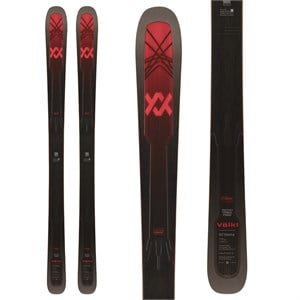
- Ability Level: Intermediate-Advanced
- Core: Multilayer Woodcore
- Laminates: Tailored Carbon Tips and Tailored Titanal Frame
- Sidecut: 4 Radius Drive
The Völkl M7 Mantra is a true all-mountain powerhouse, redesigned to be more accessible without losing its aggressive edge. The most significant update is the new 4 Radius Drive sidecut, which features a different radius for the tip, a stability radius under the boot, and an agile radius in the tail. This innovative design makes the M7 Mantra less “stubborn” at lower speeds and in tricky snow, allowing for more effortless turn initiation and a smoother feel. Despite this newfound versatility, the ski still delivers the legendary stability and guts that Mantra fans have come to expect when really pushing the limits on high-speed groomers.
This ski is perfect for advanced, all-mountain skiers who want a single ski that can confidently handle high speeds on groomers but also play around in various terrain. The Tailored Titanal Frame and Carbon Tips adjust the stiffness based on the ski length, ensuring that riders of all sizes and abilities can get the most out of the ski’s performance. The M7 is incredibly smooth, fast, and agile, making it a winner for anyone who wants a mid-stiff ski that balances raw power with playful maneuverability. It’s a fantastic option for those who like to “rip around” the entire mountain without being completely drained by the end of the day.
Pros
- Excellent stability at high speeds
- More agile and playful than previous versions
- Smooth and effortless turn initiation
Cons
- Aggressive nature might be too much for some riders
4. Völkl Mantra 88
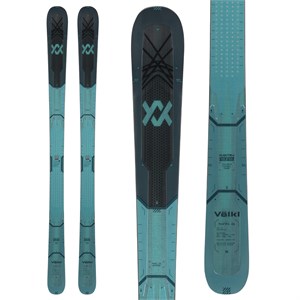
- Ability Level: Intermediate-Advanced
- Core: Multlayer Woodcore
- Laminates: Tailored Titanal Frame and Carbon Tips
- Sidecut: 3D Radius Sidecut
The Völkl Mantra 88 has been fine-tuned to be an even more dialed-in, hard-charging all-mountain ski. With subtle but effective changes to the carbon tips and the width of the Tailored Titanal Frame, this ski is now more stable and powerful than ever. The new carbon tip design allows the ski to engage into turns more smoothly, while the adjusted Titanal frame provides more torsional stiffness underfoot for direct power transmission and less at the tip for a more agile feel. This combination results in a ski with incredible power and edge hold that will satisfy the most demanding skiers.
As one reviewer noted, this ski is “super damp,” meaning it absorbs vibrations and smooths out the ride over crunchy, bumpy snow. The full sidewall construction and titanal laminate make it extremely stable and easy to get on edge, allowing you to lean into your turns with complete confidence. While it’s a phenomenal carving machine for firm groomers, it remains capable as a general all-mountain ski. The 3D Radius Sidecut adds to its versatility, allowing you to switch between long, sweeping arcs and quick, short turns at any speed. It’s the perfect ski for strong skiers who love to push the limits and demand a ski that can handle anything.
Pros
- Extremely stable and damp ride
- Excellent edge hold for carving
- Handles firm and bumpy snow with ease
Cons
- Less forgiving and playful than other all-mountain skis
See the Völkl Mantra 88 See the Women’s Mantra 88
5. Salomon QST 106
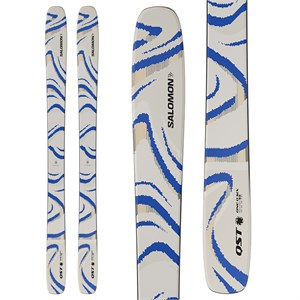
- Ability Level: Intermediate-Advanced
- Core: Full Poplar Woodcore
- Laminates: Basalt & Fiberglass Fiber
- Additional Features: Cork Damplifier Inserts
The Salomon QST 106 has long been an all-mountain favorite, and the latest iteration sees some notable updates. The new Basalt/Fiberglass construction, combined with a full poplar wood core, aims to create a more playful yet stable ride. Salomon has also included Cork Damplifier inserts in the tips and tails to absorb vibrations and provide a smoother, quieter feel on the snow. While the QST 106 is an iconic all-mountain and powder ski, the new version seems to have prioritized playfulness, which could be a double-edged sword for some riders.
Based on feedback, the increased playfulness of the ski seems to have come at the cost of some stability, particularly for heavier or more aggressive skiers. Some riders have noted more chatter on groomed runs and a slight lack of confidence in off-piste conditions compared to previous models. However, this shift makes the ski more accessible and forgiving for lighter or less aggressive riders, who will likely love its nimble and easy-to-manage feel. It’s a great choice for intermediates and beginners who want a versatile, wide ski for powder days that still handles a bit of everything else. It remains a solid option, but its best riders are those who prefer a more forgiving and playful ride over a hard-charging, stable one.
Pros
- More playful than previous models
- Good vibration dampening
- Versatile width for soft snow
Cons
- Sacrificed some stability for playfulness
- Can feel chattery on hardpack for aggressive skiers
6. Blizzard Rustler 10
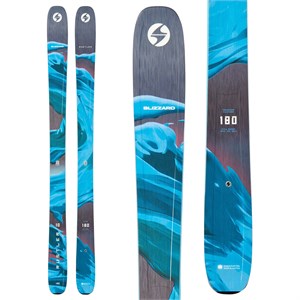
- Ability Level: Intermediate-Advanced
- Core: TrueBlend Freeride Core
- Laminates: FluxForm Titanal
- Terrain: All-Mountain
The Blizzard Rustler 10 is the go-to ski for many experts and shop employees who have access to a huge ski quiver, and for good reason. Its 102mm waist (104mm in longer sizes) strikes the perfect balance between all-mountain versatility and powder capability, handling everything but the deepest days with ease. The TrueBlend Freeride Core, a sophisticated mix of Beech, Poplar, and Paulownia woods, provides a precisely tuned flex that’s both stable underfoot and playful in the tips and tails. This makes the ski incredibly versatile—it holds a solid edge on groomed runs, carves like a narrower ski, and feels nimble in off-piste terrain.
Blizzard’s FluxForm Titanal construction is a key component, with two pieces of metal running along the ski’s length and a separate plate underfoot. This design dampens vibrations and provides precise edge grip where you need it most, while allowing the tips and tails to flex freely for a smooth ride through variable snow. The Rustler 10 also skis great switch, making it a fantastic choice for those who want to get a little playful on the mountain. It’s an ideal daily driver for advanced skiers who want one ski that can do it all, from laying down powerful carves to slashing through soft snow.
Pros
- Excellent versatility across all snow conditions
- Stable at speed and on groomers
- Playful and nimble in soft snow
Cons
- Not a dedicated powder ski for very deep days
See the Blizzard Rustler 10 See the Women’s Sheeva 10
7. Rossignol Experience 78 CA Skis + XP 11 Bindings
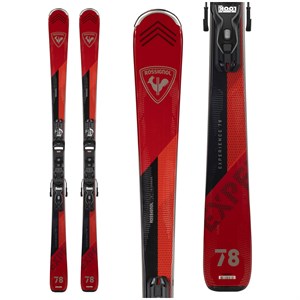
- Ability Level: Beginner-Intermediate
- Core: Poplar Wood Core
- Sidecut: All Trail Sidecut
- Rocker Type: Rocker/Camber
The Rossignol Experience 78 CA is designed to be a confidence-booster, perfect for skiers who are transitioning from the bunny slope to more challenging green and blue runs. The ski’s poplar wood core strikes a perfect balance between weight and stability, providing a forgiving yet responsive feel that helps you progress without feeling overwhelmed. The All Trail profile and sidecut are specifically engineered to make turn initiation smooth and easy, absorbing vibrations and ensuring a stable ride across varied snow conditions. This means you can focus on your technique and enjoy your time on the mountain, rather than fighting with your skis.
What sets the Experience 78 CA apart is that it’s not just a beginner ski you’ll outgrow in a season. While it’s incredibly user-friendly and well-suited for early-stage learners, it has enough performance to support you as you develop your skills and start to carve with more authority. The included Xpress 10 GW bindings are a reliable and convenient addition, making this a great value package for anyone looking to own their first set of skis. This ski is your partner in crime, helping you feel like a hero on the frontside without demanding pro-level abilities.
Pros
- Extremely user-friendly and easy to learn on
- Includes bindings for a great value package
- Forgiving yet stable enough for skill progression
Cons
- Fast learners might outgrow them quickly
See the Women’s Experience W 78
8. Line Skis Pandora 106
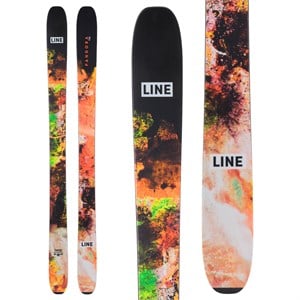
- Ability Level: Intermediate-Advanced
- Core: Aspen Veneer Core
- Sidewalls: Thick-Cut Sidewalls
- Terrain: All-Mountain, Big Mountain, Powder
The Line Skis Pandora 106 has been updated to be an even more capable all-conditions freeride ski. At 2mm wider than its predecessor, it features an Aspen Maple core, Bio-Resin layup, and Thick Cut sidewalls. These changes result in better energy transfer and a more engaged feel on edge, making the ski a true “no-brainer” for skiers in snowy climates. The Pandora 106 excels at everything from carving groomers to floating through deep powder, striking a beautiful balance between power and playfulness. It’s an ideal daily driver for those who see the entire mountain as their playground.
One of the most praised aspects of the new Pandora 106 is its fantastic turn initiation. The ski gets on edge with remarkable ease, making flying down groomers an absolute blast. While its width hints at a focus on soft snow, it also handles bumps and firm conditions with surprising finesse, proving to be a versatile and reliable companion no matter what the mountain throws at you. The balance of power and play is what truly makes this ski special. For an advanced all-mountain skier who wants a ski they can feel confident on in any condition, the Pandora 106 is a top-tier choice that will leave you grinning.
Pros
- Fantastic turn initiation
- Excellent balance of power and playfulness
- Versatile for a wide range of terrain and snow types
Cons
- May feel a little wide for some skiers who prefer a narrower waist
9. Blizzard Rustler 11
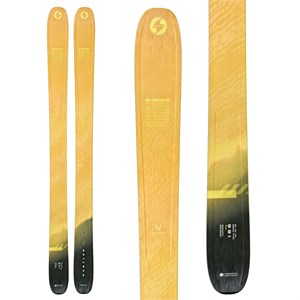
- Ability Level: Intermediate-Advanced
- Core: TrueBlend Freeride Core
- Laminates: FluxForm Titanal
- Terrain: All-Mountain
The new Blizzard Rustler 11 has been completely redesigned to blend the hard-charging DNA of the original with an even more capable and versatile feel. By moving the Titanal laminate to the outside rails and isolating it from the underfoot binding plate, Blizzard has created a ski that offers comp-worthy stability at speed while reducing tip chatter. The unique TrueBlend Freeride core, which uses a specific mix of Beech, Poplar, and Paulownia woods, provides a super strong and damp platform underfoot with the perfect amount of flex in the tips and tails for handling variable snow and tight technical terrain.
This ski truly “rips,” holding its own on big, arcing groomer turns despite its 114mm waist width. It’s smooth and playful through crud and chop, staying true to that planted, confidence-inspiring Blizzard feel. While it’s stable enough for an all-out hard charger, it also has a more forgiving and playful side, making it a great option for those who want a ski that can be pushed to the limit but still feel a bit more manageable. The Rustler 11 is an impressive piece of engineering, proving that a ski can be both stable and incredibly nimble, ready to tackle anything the mountain throws at it.
Pros
- Excellent stability at high speeds
- Smooth and playful through variable snow
- More nimble in tight terrain than its predecessor
Cons
- Wide waist may not be ideal for hardpack-only skiers
See the Blizzard Rustler 11 See the Women’s Sheeva 11
10. Elan Ripstick 96
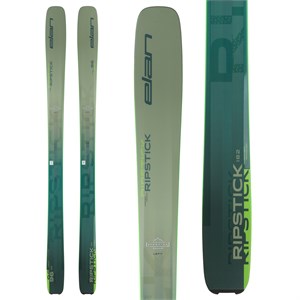
- Ability Level: Intermediate-Advanced
- Core: Tubelite Wood Core
- Rocker Type: Amphibio Profile (Asymmetrical Design)
- Laminates: UD Carbon and Flax Fiber
The Elan Ripstick 96 has long been a favorite for its lightweight yet stable feel, and the latest model is even better. It keeps the revolutionary Amphibio profile, where the skis are designed specifically for the left and right foot with a cambered inside edge and a rockered outside edge. This unique design provides an incredible blend of precision, edge grip, and stability while still being forgiving and easy to turn. The inclusion of new UD Carbon and Flax Fiber in the construction further enhances the ski’s performance, making it smoother and more confident on firm, chattery snow.
For a ski that is so lightweight, the Ripstick 96 holds an edge with surprising power, making it a joy to carve. The TubeLite Wood Core, with its hollow carbon tubes, provides excellent torsional stability and powerful rebound, giving the ski a snappy and energetic feel as you exit a turn. Its 96mm waist is wide enough to handle a decent amount of fresh snow, making it a legitimate one-ski quiver for those who ski a mix of conditions. While it’s a great ski for a wide range of skiers, more powerful or heavier riders might want to consider the black edition for some added stiffness.
Pros
- Excellent carving ability for a lightweight ski
- Very snappy and responsive
- Versatile as a one-ski quiver
Cons
- May not be stiff enough for heavier or more aggressive skiers
See the Elan Ripstick 96 See the Women’s Ripstick 94
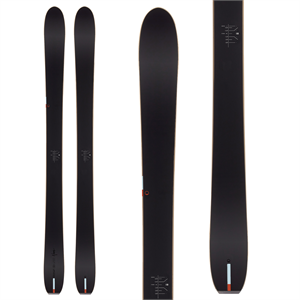
11. Season Nexus
- Ability Level: Intermediate-Advanced
- Core: Karuba Wood Core
- Terrain: All-Mountain
- Tail Type: Full Twin Tip
The Season Nexus is designed to be your reliable insurance policy against a bad snow day. With a mid-100s waist and a versatile all-directions tip and tail rocker, this ski is built to handle the full spectrum of reality—from glorious powder to the dreaded crud and mank. Despite its generous width, the Nexus is surprisingly quick from edge-to-edge and tracks exceptionally well on groomed snow. This makes it a great choice for skiers in snowy climates who need a ski that can perform even when the fresh stuff hasn’t arrived.
The progressive shaping and multi-radius sidecut allow for a smooth and intuitive ride. While it may not be the first choice for a complete beginner, as one reviewer found out, the ski is incredibly manageable and forgiving. Its lightweight Karuba wood core and biaxial fiberglass construction provide a responsive feel that makes learning and progressing a joy. The Nexus is a testament to the idea that a ski can be both playful and capable, and it’s a compelling option for anyone who wants a wide, do-it-all ski that can handle a variety of conditions and terrain without ever feeling like a liability.
Pros
- Handles a wide variety of snow conditions
- Surprisingly quick edge-to-edge
- Forgiving and easy to manage
Cons
- Maybe too wide for skiers who stick to groomers
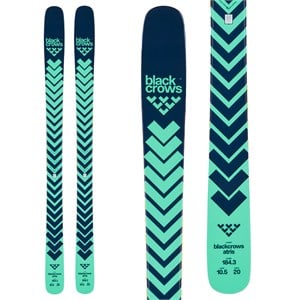
12. Black Crows Atris
- Ability Level: Intermediate-Advanced
- Waist Width: 105mm
- Rocker Type: Double Rocker
- Flex: Progressive Flex
The Black Crows Atris is a modern-day icon that has earned its reputation as a versatile and powerful freeride ski. With a 105mm waist, it finds the sweet spot between powder performance and hardpack capability. The ski’s double rocker profile provides exceptional maneuverability, allowing it to pivot and smear easily in tight terrain like bumps and trees. This makes it a great choice for all-mountain freestyle skiers who like to use the whole mountain as their playground, from blasting through glades to sending it on side hits. The classic medium camber underfoot ensures a solid and stable platform for powerful carving.
Despite its playful nature, the Atris is a hard-charging ski that loves to go fast. It’s burly and requires energy to get on edge, but once you do, it plows through anything in its path with remarkable composure. The ski’s precise yet progressive flex pattern provides a sturdy feel underfoot with a bit of playfulness in the tip and tail. This isn’t a poppy ski, but rather one that excels at maintaining speed and stability across a variety of conditions, from chopped-up crud to pristine groomers. It’s a powerful and reliable choice for better intermediate to advanced skiers looking for a definitive, do-it-all freeride tool.
Pros
- Excellent stability at high speeds
- Versatile for a wide variety of terrain
- Playful yet powerful
Cons
- Requires energy to ski actively
- Not a super poppy or freestyle-oriented ski
How to Choose All-Mountain Skis
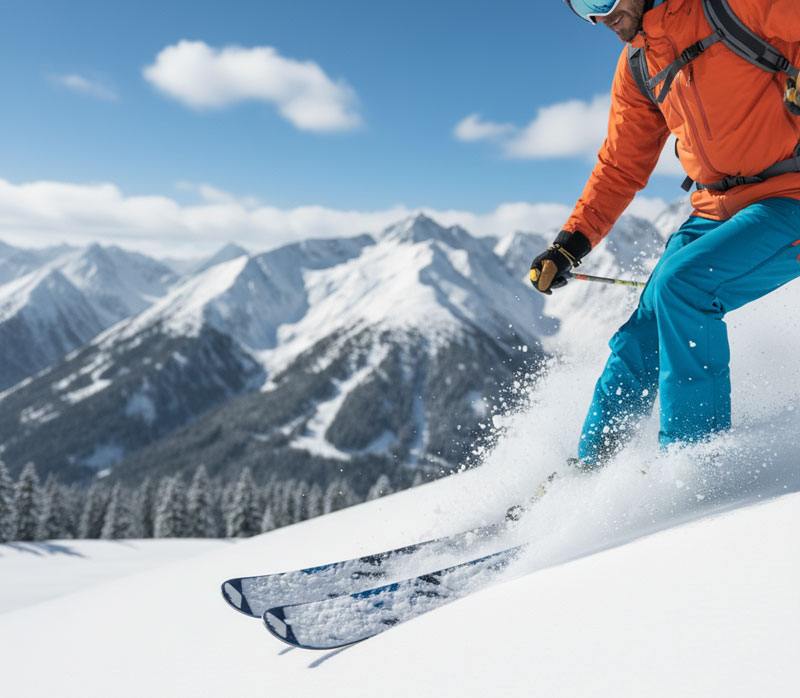
All-mountain skis are the most popular category of skis for good reason. They are designed to handle a wide range of terrain and conditions, from groomed runs and powder stashes to moguls, trees, and even park features. However, with hundreds of models on the market, choosing the right pair can feel overwhelming. This guide will walk you through the key factors to consider so you can find the perfect all-mountain skis for your ability, style, and home mountain.
1. Understand What “All-Mountain” Really Means
All-mountain skis typically have a waist width between 80mm and 100mm underfoot. They are wider than carving skis but narrower than dedicated powder skis. This width range offers a balance of flotation in soft snow and quick edge-to-edge transitions on hardpack. Most all-mountain skis also feature a rocker-camber-rocker profile, which combines camber underfoot for edge grip with rockered tips and tails for float and maneuverability.
However, “all-mountain” is a broad church. Some skis lean more toward frontside carving, while others are biased toward freeride and soft snow. Knowing where you fall on that spectrum is the first step.
2. Assess Your Ability and Terrain
Beginner to Intermediate
- Look for softer flex, narrower waist (80–88mm), and a forgiving shape.
- These skis are easy to turn and won’t punish mistakes.
- Examples: Rossignol Experience 80, Salomon QST 85.
Advanced to Expert
- Stiffer flex, wider waist (90–100mm), and often metal laminates for stability at speed.
- These skis reward aggressive skiing and handle variable snow well.
- Examples: Blizzard Bonafide, Nordica Enforcer 94.
Terrain Priorities
- Groomers and hardpack: Choose a narrower waist (80–88mm) with a larger turn radius and more camber.
- Powder and trees: Choose a wider waist (95–100mm+) with more rocker and a shorter turn radius.
- Park and freestyle: Look for a twin-tip design, softer flex, and a waist around 85–95mm.
3. Key Specifications to Evaluate
Waist Width
The waist width is the most important number. It determines how the ski performs in different snow conditions.
| Waist Width | Best For | Trade-offs |
|---|---|---|
| 80–88mm | Groomers, hardpack, occasional soft snow | Less float in powder, less stable at high speed in crud |
| 88–95mm | True all-mountain, mixed conditions | Compromise on both ends, but very versatile |
| 95–100mm+ | Powder, trees, soft snow, freeride | Slower edge-to-edge on hardpack, less precise carving |
Rocker Profile
- Full camber: Maximum edge grip, but not great in powder.
- Rocker-camber-rocker: The most common all-mountain profile. Camber underfoot for grip, rocker in tip and tail for float and easy turn initiation.
- Full rocker: Great in powder, but less stable on hardpack. Rare in all-mountain skis.
Turn Radius
Turn radius is measured in meters. A smaller radius (e.g., 15m) means the ski wants to make short, quick turns. A larger radius (e.g., 20m+) prefers long, sweeping turns.
- Short radius (under 16m): Good for moguls, trees, and tight terrain.
- Medium radius (16–20m): Versatile for most all-mountain skiing.
- Long radius (over 20m): Best for high-speed carving on groomers and open bowls.
Flex
Flex refers to how stiff the ski is. Softer skis are more forgiving and easier to bend at lower speeds. Stiffer skis are more stable at speed and in variable snow but require more skill and strength.
- Soft flex: Beginners, lightweight skiers, park riders.
- Medium flex: Most intermediate and advanced skiers.
- Stiff flex: Experts, heavy skiers, aggressive freeriders.
Construction Materials
- Wood core: The heart of most quality skis. Poplar, aspen, and paulownia are common. Denser woods like maple and ash add stiffness and dampness.
- Metal laminates (titanal): Add stability, dampness, and edge grip. Usually found in advanced/expert skis.
- Carbon fiber: Lighter and livelier than metal, but less damp.
- Fiberglass: Common in softer, more forgiving skis.
4. Consider Your Skiing Style and Preferences
Aggressive vs. Laid-Back
If you charge hard, ski fast, and seek out steeps and crud, you’ll want a stiffer, heavier ski with metal. If you prefer a more relaxed, playful style, a lighter, softer ski will be more fun.
Playful vs. Charging
- Playful skis: Soft flex, twin-tip, shorter turn radius. Great for butters, spins, and messing around.
- Charging skis: Stiff flex, directional shape, longer turn radius. Great for high-speed stability and carving.
Directional vs. Twin-Tip
- Directional: Traditional shape with a longer tip and shorter tail. Better for forward skiing and carving.
- Twin-tip: Symmetrical or near-symmetrical tip and tail. Allows for switch skiing and landing backwards.
5. Match Skis to Your Boots and Bindings
Skis don’t exist in a vacuum. Your boots and bindings play a huge role in how a ski performs.
- Boot flex: A stiff boot paired with a soft ski can overpower the ski. A soft boot with a stiff ski can’t drive the ski properly.
- Binding DIN range: Make sure your bindings are appropriate for your weight, ability, and ski width. Wider skis need wider brakes.
- Binding weight: Heavier bindings add stability but also swing weight. Lighter bindings are better for touring or playful skiing.
6. Demo Before You Buy
The single best piece of advice for choosing all-mountain skis is to demo them. Every skier is different, and a ski that feels amazing to one person may feel dead to another. Demo days at your local mountain or shop allow you to try multiple models in the same conditions.
- Try at least three different skis in different widths and flexes.
- Test them on the terrain you ski most often.
- Pay attention to how they feel in turns, at speed, and in variable snow.
- Take notes so you remember what you liked and disliked.
7. Don’t Forget Length
Ski length is typically based on your height, weight, ability, and skiing style. As a general rule:
| Skier Type | Recommended Length (relative to height) |
|---|---|
| Beginner | Chin to nose height |
| Intermediate | Nose to forehead height |
| Advanced/Expert | Forehead to above head height |
| Park/Freestyle | Chin to nose height (shorter for spins) |
| Powder/Freeride | Above head height (longer for float) |
Weight also matters. Heavier skiers should size up; lighter skiers can size down. If you’re between sizes, go shorter for maneuverability or longer for stability.
8. Budget and Value
All-mountain skis range from around $300 to over $1,000. More expensive skis typically use better materials, lighter cores, and more advanced construction. However, you don’t need to spend a fortune to get a great ski.
- Budget ($300–$500): Good for beginners and intermediates. Often heavier and less refined.
- Mid-range ($500–$800): The sweet spot for most skiers. Good materials and performance.
- Premium ($800–$1,200+): Top-tier construction, lightweight materials, and best performance for experts.
Consider buying last season’s model to save money. Ski technology doesn’t change dramatically year to year, and you can often find excellent deals on previous-year skis.
9. Common Mistakes to Avoid
- Buying too much ski: A stiff, wide ski can be exhausting and dangerous for a beginner or intermediate.
- Buying too little ski: A soft, narrow ski will hold you back as you improve.
- Ignoring your home mountain: If you ski icy groomers, don’t buy a 110mm powder ski. If you ski powder, don’t buy an 80mm carving ski.
- Skipping the demo: Never buy skis you haven’t tried unless you’re replacing an identical pair.
- Forgetting about boots: Great skis with ill-fitting boots will still ski poorly.
10. Final Checklist
Before you commit, run through this checklist:
- Waist width matches your most common snow conditions.
- Rocker profile suits your terrain and style.
- Flex is appropriate for your weight, ability, and aggressiveness.
- Turn radius matches your preferred turn shape.
- Length is correct for your height, weight, and ability.
- Bindings are compatible and appropriate.
- You’ve demoed at least two or three models.
- Price fits your budget without sacrificing essential performance.
Choosing all-mountain skis is a personal decision. There is no single “best” ski—only the best ski for you. Take your time, do your research, demo when possible, and don’t be afraid to ask questions at your local ski shop. With the right pair under your feet, you’ll unlock more of the mountain and have more fun every day you’re out there.