
Best Avalanche Probes of 2026
When heading into the backcountry, having the right safety gear can make all the difference, and an avalanche probe is one of the most important tools you should carry. Probes help rescuers quickly find someone buried under snow after an avalanche, working together with a beacon and shovel. They are lightweight, easy to pack, and can be deployed in seconds during an emergency. In this guide, we’ll look at the best avalanche probes available to keep you safe on your winter adventures.
1. BCA Stealth 270

- Probe Length (cm): 270
- Material: Aluminum
- Collapsed Length: 45 cm
- Weight (g): 10.7 oz.
The BCA Stealth 270 is built for deep-snow environments where every centimetre matters. It feels robust in the hand and the laser-etched depth markings are clear and useful when measuring burial depth. The Stealth Quick Lock hardware is simple to operate even with gloves on, and the 1.3 cm shaft diameter gives a reassuring stiffness that cuts through dense snow and crust without too much flex. For longer probes the extra weight is a trade-off, but in areas with serious avalanche runouts the additional reach is decisive.
It packs down to a compact bundle and nests well in larger ski packs or airbag backpacks. The probe’s build tolerances and straightforward design reduce snag points during deployment. For guides, patrols or serious backcountry groups the Stealth 270offers confidence at depth: it’s not the lightest tool but it’s engineered for reliability and repeatable performance in rescue scenarios where time and reach matter most.
Pros: Long reach for deep burials; durable aluminum construction; clear laser-etched markings; fast Quick Lock.
Cons: Heavier than shorter probes; bulkier pack footprint; not ideal for minimalists; slightly slower to swing than carbon models.
2. Black Diamond Quickdraw Pro 280

- Probe Length (cm): 280
- Construction: 6-section carbon with Kevlar cable
- Tip: Oversize alloy tip
- Feature: CordLock rapid securing
The Black Diamond Quickdraw Pro 280 is compact and purpose-built for low-snowpack conditions and spring touring. Its carbon segments keep weight low while the Kevlar cable provides a low-stretch tension system that locks up stiff and true. The oversize alloy tip increases probing sensitivity and helps cut through crust and refrozen layers without catching or bending. High-visibility 1 cm markings make depth readings fast and unambiguous, which is handy when multiple rescuers are coordinating a search.
Its short length makes it a terrific option for riders and skiers prioritising pack space and speed. The CordLock system eliminates extra cords dangling from the probe when stowed, and the rapid-deployment stuff sack integrates nicely with modern touring packs for single-pull readiness. If you frequently travel lighter or in terrain where deep burial is unlikely, the Quickdraw Pro 280 balances performance, speed and low weight very well.
Pros: Lightweight carbon build; compact pack size; fast deployment; sensitive probe tip.
Cons: Shorter reach for deep burials; carbon can be pricier to repair; less stiff than thicker aluminum at extreme depth; tip may need care on rocky terrain.
3. TerraWest Core 240
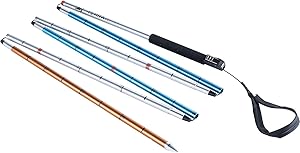
- Length: 240 cm (6 segments)
- Material: Aluminum 7075 T6
- Collapsed Length: 40 cm
- Weight (g): 299
The TerraWest Core 240 focuses on core rescue qualities: speed, stiffness and durability. Using 7075 T6 aluminium gives the pole a positive balance of lightness and rigidity that helps when punching through dense slabs or wind crusts. The coated steel tension cord keeps segment stretch to a minimum, so once locked the probe stays true under load. The included quick-lock carry bag and large probe tip make deployment and probing more efficient in stressful situations.
It’s especially suited to skiers and backcountry users who want a reliable, pack-friendly probe without the premium price of carbon models. The 40 cm collapsed length tucks easily into many touring packs, and the probe’s general feel is solid during probing. If your terrain rarely requires 3-metre reach, the 240 cm TerraWest Core gives a practical mix of strength, speed and everyday usability for group safety kits.
Pros: Robust 7075 aluminium; good stiffness for its weight; quick-lock bag included; large tip for penetration.
Cons: Slightly heavier than carbon options; not as long as 3 m probes; cord and fittings need periodic checks; finish can scuff in heavy use.
4. BCA Stealth 300

- Probe Length (cm): 300
- Material: Aluminum
- Collapsed Length: 43 cm
- Weight (g): 11.6 oz.
The BCA Stealth 300 is a versatile mid-length probe that fits a wide range of backcountry missions. It’s engineered with Quick-Lock hardware for fast, tangle-free deployment, and the top segment nesting design reduces the number of exposed segments when stowed. Laser-etched depth markings run the length of the shaft and are legible in low light or when gloved, which helps teams coordinate a measured excavation before shoveling in earnest.
At 300 cm it provides more reach than compact probes while staying manageable in weight and pack volume. The 1.3 cm diameter keeps it stiff enough for confident probing through variable snow layers. It’s a sensible choice for guides, adventurous tourers and patrols who want a dependable probe with predictable behaviour and quick deployment when seconds count.
Pros: Good mid-range length; fast Quick-Lock; clear depth markings; compact when collapsed.
Cons: Heavier than smallest models; not as light as carbon shafts; bulkier in very small packs; aluminium can dent if misused.
5. TerraWest Core Quick Lock 320
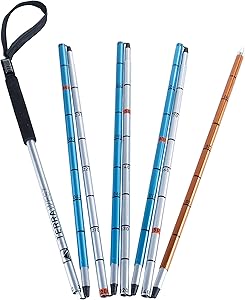
- Length: 320 cm (8 segments)
- Material: Aluminum 7075 T6
- Collapsed Length: 40 cm
- Weight (g): 400
The TerraWest Core Quick Lock 320 is aimed squarely at deep-snow environments and professionals who need reach without sacrificing deployment speed. The automatic quick-locking top speeds assembly so one rescuer can get full length up in one motion. Built from 7075 T6 aluminium with a coated steel tension cord, this probe stays stiff at depth and resists stretch, giving rescuers accurate feel and dependable penetration through dense slabs.
While heavier than shorter probes, the 3-metre length provides crucial extra range for ski patrols, backcountry guides and anyone operating in heavy continental snowpacks. The included release cover and strap integration eases one-handed extraction from a pack, which is helpful during chaotic rescue sequences. If long reach and quick deployment are priorities, the Core Quick Lock 320 is a practical, purpose-built solution.
Pros: 3 m reach for deep burials; quick automatic locking; solid 7075 construction; integrated release cover.
Cons: Heavier and bulkier; not intended for ultralight setups; slightly slower to repack; more expensive to ship/replace.
6. Mammut 280 Speed Lock
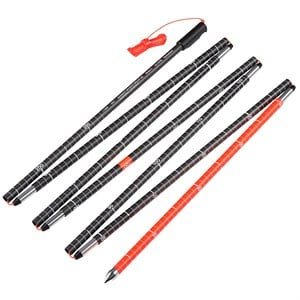
- Probe Length (cm): 280
- Material: Carbon
- Collapsed Length: 45 cm
- Weight (g): 275
The Mammut Carbon Probe 280 Speed Lock is designed for rescuers who want speed and low swing weight without sacrificing stiffness. The Speed-Lock tensioning system is fast and intuitive, locking each segment individually for a taut, dependable column. Carbon segments keep weight down and provide a responsive feel while probing; the drop-shaped tip and precise dual-sided scaling make probing more efficient and reduce wasted motion when locating a buried subject.
Its 280 cm length is a useful compromise: longer than compact probes but still manageable for solo tourers and guide teams. The probe’s ergonomics are well thought-out for gloved use, and the practical probe cover with an integrated emergency plan is a nice safety touch. For riders who prioritise quick deployment and light carry weight, this Mammut probe is a high-performance option.
Pros: Lightweight carbon construction; fast Speed-Lock system; precise scaling; glove-friendly features.
Cons: Carbon is more fragile on rock; higher price point; repair options are limited in field; slightly pricier replacement parts.
7. BCA Stealth 240
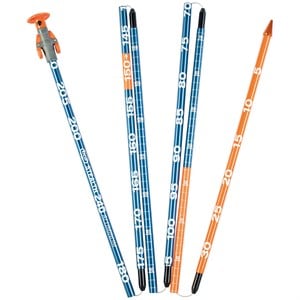
- Probe Length (cm): 240
- Material: Aluminum
- Collapsed Length: 40 cm
- Weight (g): 250
The BCA Stealth 240 is the compact option in BCA’s lineup, aimed at minimalist backcountry users and those who prioritize pack space. Its aluminum construction and 1.1 cm diameter keep weight low while still providing acceptable stiffness for typical touring situations. The Stealth Quick Lock system lets you deploy without fumbling loose cables, and the compact collapsed length makes it a natural fit for ski packs or small airbag compartments.
For day tours, spring laps and mixed-terrain objectives where deep burial is unlikely, the Stealth 240 offers a sensible balance of speed, cost and reliability. It won’t replace longer probes for big-mountain work, but for many recreational users it provides dependable probing performance with minimal compromise to packability.
Pros: Very compact when stowed; light; Quick Lock ease; affordable.
Cons: Limited reach for deep burials; less stiff than larger-diameter probes; not optimized for heavy-patrol use; aluminum can dent under extreme force.
8. Black Diamond QuickDraw Pro 320

- Probe Length (cm): 320
- Construction: Dual quickdraw ferrules, stainless steel cable
- Collapsed Length: ~48 cm
- Feature: Rapid-deployment stuff sack with pull cord
The Black Diamond QuickDraw Pro 320 stretches to 3.2 metres, making it an excellent choice where deep reach is necessary but you still want a modern deployment system. Dual quickdraw speed ferrules boost durability and alignment during assembly, while the stainless-steel cable reduces stretch and keeps the probe column stable under probing loads. The oversize alloy tip improves sensitivity by creating an efficiently sized hole through crust and icy layers.
Integrated rapid-deployment stuff sacks and the 1-pull readiness concept make this probe easy to extract and deploy in a hurry, which matters when multiple rescuers are coordinating. It’s heavier and bigger than mid-length models, but for patrols and teams operating in big-snow terrain the extra centimetres can save precious time during a search.
Pros: 3.2 m reach; strong ferrule system; rapid-deploy sack; stiff stainless cable.
Cons: Bulkier in small packs; heavier than carbon alternatives; higher storage footprint; may be overkill for light touring.
How to Choose Avalanche Probes
Avalanche probes are essential tools in backcountry safety kits, providing rescuers with the ability to quickly locate buried victims under the snow. Along with a beacon and shovel, the probe completes the fundamental trio of avalanche rescue gear. Choosing the right probe can make a significant difference in both safety and efficiency. This guide explains the important features, materials, lengths, and considerations you should evaluate before buying an avalanche probe.
Why Avalanche Probes Matter
When an avalanche occurs, every second is critical. Probes are used after the beacon narrows down a burial location, allowing rescuers to pinpoint the victim’s exact position. Without a probe, you risk wasting precious time digging in the wrong spot. A good probe is quick to deploy, strong enough to penetrate packed snow, and long enough to reach deep burials. Ultimately, choosing the right probe is about maximizing the chances of a successful rescue while also considering packability and weight for your regular backcountry tours.
Probe Length
One of the most important aspects to consider when choosing an avalanche probe is its length. Probes are available in several common sizes, typically ranging from 240 cm to 330 cm. The correct choice depends on your intended use and the snow conditions you expect to encounter.
Shorter Probes (240 cm)
Probes in the 240 cm range are compact, lightweight, and ideal for day trips or spring touring when snowpack depth is generally shallower. They are easier to carry and deploy, making them popular with recreational users. However, they may be insufficient for locating victims buried deeply in midwinter or in regions with significant snow accumulation.
Mid-Length Probes (270–280 cm)
Probes around 270 to 280 cm offer a balance between portability and depth. They provide more reach than a 240 cm probe without adding too much bulk or weight. This makes them a popular choice for ski mountaineers and those who spend more time in variable snow conditions.
Long Probes (300–330 cm)
Probes of 300 cm or longer are often preferred by professionals such as guides, ski patrollers, or anyone operating in areas with consistently deep snowpacks. These probes are heavier and bulkier, but their extra reach can be critical for rescues in high-snowfall regions or in situations with deep burial potential.
Materials
The material of your avalanche probe determines its strength, weight, and durability. There are two main options to consider: aluminum and carbon.
Aluminum Probes
Aluminum probes are the most common and widely used. They are affordable, strong, and durable enough for repeated use. They handle icy layers and hard snow well, offering stiffness during probing. The trade-off is that aluminum probes are generally heavier than carbon, making them less ideal for ultralight setups.
Carbon Probes
Carbon fiber probes are significantly lighter, making them appealing for ski mountaineers and weight-conscious backcountry travelers. Despite their lightness, they can still be very strong. However, carbon is more expensive and can be more vulnerable to damage if used improperly or against rocks and hard obstacles. Carbon probes are best suited for those who prioritize speed and minimal carry weight.
Locking and Deployment Systems
Speed and reliability of deployment are crucial during an avalanche rescue. Most modern probes use quick-locking systems that allow them to be assembled in seconds. Here are the main types:
Quick Lock Systems
These systems use a simple pull cord or automatic locking mechanism that clicks the segments into place with one motion. They are intuitive and fast, making them standard in modern avalanche probes. Quick locks eliminate the need for threading cords manually, saving valuable time.
Cord and Cable Tensioning
Some probes use coated steel cables or Kevlar cords for tensioning. Steel cords are durable and resistant to stretching, ensuring the probe remains rigid during use. Kevlar cords are lighter but can wear faster. Both systems provide the stiffness necessary for probing, but durability differs based on the material.
Probe Diameter and Stiffness
Probe stiffness is essential for effective probing through dense avalanche debris. The diameter of the probe shaft contributes significantly to stiffness.
Thinner probes, around 11 mm in diameter, are lighter and easier to pack but may flex in hard snow. Thicker probes, around 13 mm, are stronger and more rigid, giving a better feel when locating a buried victim. Professionals often prefer thicker probes because they handle repeated use and harsh snow conditions better, though they do add weight.
Markings and Visibility
High-visibility depth markings along the probe help rescuers measure the burial depth and plan the excavation accordingly. Laser-etched markings are more durable than painted ones, as they won’t wear off with use. Probes with large, visible numbers make it easier to read quickly, even in low-light or snowy conditions.
Many probes also feature brightly colored sections or tips, making them easier to see on the snow surface. This visibility can be critical when multiple people are working in a rescue scenario.
Probe Tips
The design of the probe tip affects how easily it penetrates dense avalanche debris. Oversized or drop-shaped tips are more effective at cutting through hard snow and ice layers. They also create a slightly larger hole than the shaft diameter, reducing resistance and making probing less tiring. A well-designed tip improves sensitivity, allowing rescuers to better detect changes in density that may indicate the presence of a victim.
Weight and Packability
Backcountry travelers must balance safety with efficiency, and weight is always a consideration. Lightweight probes, especially carbon models, are easier to carry and less noticeable in your pack. However, heavier probes are often stronger and more durable. Collapsed length also matters: shorter collapsed probes fit better into smaller backpacks and avalanche airbags. Standard collapsed lengths range from 40 to 50 cm, so make sure your chosen probe fits your pack comfortably.
Durability and Use Case
Durability becomes particularly important for professionals who may use probes repeatedly in training or real rescues. Aluminum probes tend to withstand rough use better than carbon. For recreational users who might only use their probe in rare emergencies, a lighter carbon option could be ideal. Think about your frequency of use, typical snow conditions, and whether you need a professional-grade tool or a recreational model.
Price Considerations
Price varies based on length, material, and brand. Aluminum probes are usually more affordable, making them accessible to most backcountry skiers and snowboarders. Carbon probes, while lighter, are more expensive and targeted at advanced or weight-conscious users. For beginners, an aluminum probe in the 240–270 cm range is a sensible and cost-effective starting point. As you gain experience or travel in deeper snowpacks, upgrading to a longer or lighter probe may be worthwhile.
Choosing the Right Probe for You
Selecting the right avalanche probe depends on your personal needs, terrain, and risk tolerance. If you primarily ski in areas with shallower snowpacks or take shorter tours, a 240 cm aluminum probe might suit you perfectly. If you venture into deeper terrain or work professionally in avalanche-prone areas, a 300–330 cm probe made of strong aluminum or lightweight carbon is more appropriate. Always consider deployment speed, durability, and comfort in handling.
Final Thoughts
An avalanche probe is not just a piece of gear; it’s a lifeline in emergencies. Choosing the right probe involves balancing length, material, stiffness, and packability according to your backcountry activities. No matter which probe you select, remember that it should always be part of a complete avalanche safety kit alongside a beacon and shovel. Equally important is practicing with your equipment regularly, so when the time comes, you can deploy and use it instinctively. The best probe is the one you are confident with and ready to use in the critical minutes that matter most.