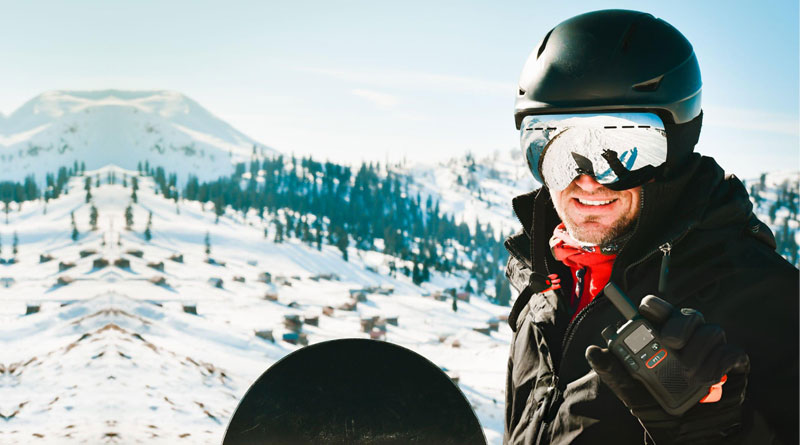
Best Walkie Talkies for Snowboarding of 2026
Staying connected on the slopes is important, especially when snowboarding with friends or family. Mobile signals often drop in the mountains, and that’s where walkie talkies come in handy. They let you talk instantly, even in remote areas, so you can stay safe and coordinate easily. The best walkie talkies for snowboarding are built to handle cold, snow, and long distances. In this guide, we’ll explore the top models that offer great range, durability, and clear sound — perfect for your next snow adventure.
1. Cobra RX680

- Number of Channels: 60
- Special Feature: Headphone jack, flashlight, weather alert
- Talking Range Maximum: 38 Mile (line-of-sight)
- Water Resistance: IP54 water resistant
The Cobra RX680 is a rugged, feature-packed option for snowboarders who want dependable comms on the mountain. Its long quoted range and weather-alert capability make it feel like a safety-first device, while the headphone jack is handy under a helmet. The integrated flashlight and VOX capability mean you can keep gloves on and still be heard. In practice you’ll find signal performance depends heavily on terrain and tree cover, but for mid- to high-mountain use the RX680 gives confidence and useful extras without being bulky.
Battery life from the included lithium polymer packs is reasonable and recharges quickly between runs. Controls are straightforward enough when wearing gloves, and the IP54 rating handles snow spray and light storms — not a submersion device, but fine for normal winter use. If you prioritize a weather-alert radio with long-range claims plus helmet-friendly audio, the RX680 balances features, durability, and convenience for everyday backcountry partners and guided groups.
- Pros: Long range, headphone jack, weather alerts, flashlight
- Cons: Not fully waterproof (IP54), range varies in trees/valleys
2. Rocky Talkie Mountain Radio

- Number of Channels: 128
- Special Feature: Rechargeable with included USB-C
- Battery Life: Up to 4 days (standby/low use)
- Included Components: Carabiners, leashes, spare batteries
Rocky Talkie’s Mountain Radio set feels tailored to alpine users. The expanded channel set and climbing-rated carabiners in the package show attention to backcountry needs, while the rechargeable lithium-ion batteries and USB-C charging are modern conveniences you’ll appreciate after a long day on the hill. The radios are compact, strap easily to a harness or jacket, and the included metal-reinforced leashes reduce the chance of accidental loss on steep terrain.
On-snow performance is solid for group coordination, and the quoted 35-mile maximum still depends on terrain and visibility. The long battery life claim (days, not hours) is realistic if used intermittently and helps on multi-day sessions. If you want a set that’s built for mountaineering with thoughtful accessories and simple recharging, Rocky Talkie is a strong choice for guided teams and avalanche-aware riders who value rugged convenience.
- Pros: Long battery life, many channels, useful accessories
- Cons: Real-world range reduced by terrain, slightly bulkier with accessories
See the Rocky Talkie Mountain Radio
3. Midland GMRS Two-Way Radio

- Number of Channels: 50
- Special Feature: Keypad lock, silent operation, weather alert
- Talking Range Maximum: 36 Mile (line-of-sight)
- Power: Uses 8 AA batteries (included)
Midland’s GMRS radio is a practical, no-nonsense communicator for snowboarders who want reliable performance and extended runtime. The ability to run on AA batteries is an advantage in cold conditions where swapping fresh cells is straightforward. The keypad lock and silent operation features are nice touches for avoiding accidental channel changes or noisy beeps while on lifts and in quiet zones of the mountain.
Weather alerts add a layer of safety for day trips and backcountry shuttles, and the unit’s slim dimensions make it easy to clip inside a pocket or chest harness. Expect solid mid-range communication in open alpine bowls, but remember that GMRS performance is line-of-sight dependent and will drop in wooded or steep terrain. Overall, this Midland is a dependable option for groups prioritizing runtime and clear controls.
- Pros: Long battery life with AAs, weather alerts, user-friendly
- Cons: Bulkier battery requirement, real-world range limited by terrain
See the Midland GMRS Two-Way Radio
4. Retevis Waterproof Walkie Talkies

- Number of Channels: 22
- Special Feature: Emergency alarm, license-free operation
- Water Resistance: Waterproof (suitable for snowy conditions)
- Power: Rechargeable 2× lithium-ion batteries (included)
Retevis offers a straightforward waterproof option for riders who need simple, rugged comms that survive wet conditions. The fully waterproof build is the standout here — it’s reassuring when you’re riding in wet snow, heavy spray, or unexpected storms. The emergency alarm is a valuable feature for alerting partners in case of separation or an incident, and license-free operation keeps setup quick and hassle-free for casual groups.
The radios are compact and feel solid in hand, with battery packs that recharge between runs. They won’t offer extreme long-range performance compared with larger GMRS units, but for group coordination on piste and near backcountry trailheads they shine. If you want a worry-free, weatherproof unit that keeps working through snow and slush, Retevis is a sensible winter companion.
- Pros: True waterproofing, emergency alarm, rechargeable batteries
- Cons: Limited channels and range compared with GMRS/long-range models
See the Retevis Waterproof Walkie Talkies
5. Midland FRS Walkie Talkies

- Number of Channels: 22
- Special Feature: Weather alert
- Talking Range Maximum: 2 Mile (best on open runs)
- Power: Uses 3 AAA batteries
Midland’s FRS set is a compact, budget-friendly choice for snowboarders who need straightforward on-hill coordination without complex features. The modest 2-mile quoted range is realistic for resort use — it’s ideal for staying in touch in chairlift zones, park areas, and small groups on groomed runs. Lightweight and easy to clip to a jacket, these radios keep things simple for families and friends who just want basic voice comms.
Weather alert functionality adds safety, but if you plan extended backcountry rides or needing to punch through dense trees and bowls, you’ll want a more powerful GMRS or mountain radio. For lively resort days, lesson groups, or casual riders who value compactness and long battery availability from common AAA cells, these Midland FRS units represent a reliable, no-frills option.
- Pros: Compact, inexpensive, weather alerts, easy to carry
- Cons: Short range, not ideal for remote backcountry
See the Midland FRS Walkie Talkies
6. Motorola Solutions Talkabout

- Number of Channels: 22
- Special Feature: Call alert for group coordination
- Talking Range Maximum: 20 Mile (open terrain)
- Power: Uses 2 AA batteries (included)
Motorola’s Talkabout line is a familiar and trusted choice for winter sports. This unit’s call alert and straightforward controls make it easy to grab attention on busy slopes, and AA battery compatibility is convenient when cold reduces rechargeable pack performance. The radio’s form factor fits neatly into jacket pockets or chest rigs, and it’s simple to operate with gloves on — important when you’re toggling channels between runs.
Range is decent for resort use and short backcountry shuttles, though heavy tree cover and steep terrain will limit signal. The Talkabout’s combination of user-focused features and sturdy build quality makes it a safe pick for riders who need a dependable, easy-to-use set that won’t require constant fiddling. For guided groups and families seeking a known brand with predictable behavior, this Motorola is a practical option.
- Pros: Trusted brand, easy controls, AA power option
- Cons: Limited advanced features, range varies with terrain
See the Motorola Solutions Talkabout
7. pxton Walkie Talkies
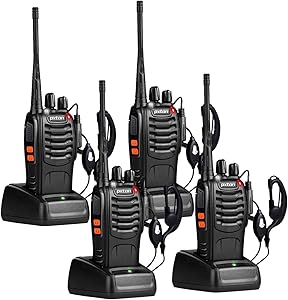
- Number of Channels: 16
- Special Feature: Long range (manufacturer claim)
- Talking Range Maximum: 3 Miles
- Power: 4× Rechargeable lithium-ion batteries included
pxton’s walkie talkies are lightweight, compact devices aimed at riders who want something small and simple in their pocket. With a quoted 3-mile range, they’re best suited to resort coordination, park runs, and short lift-to-lift communication. The included rechargeable battery set is convenient and avoids the need to carry spare disposable cells, but cold weather can reduce capacity so plan accordingly for long days.
The radios’ slim profile works well clipped to a strap or stuffed in an inner pocket, and basic controls keep operation fast when you’re wearing gloves. They aren’t a replacement for heavy-duty GMRS or mountain radios in remote terrain, but for urban resorts or family outings they provide an affordable, easy-to-carry solution that won’t weigh down your kit.
- Pros: Compact, rechargeable batteries, easy to carry
- Cons: Limited channels and modest range, battery life affected by cold
8. Wishouse Walkie Talkies

- Number of Channels: 22
- Special Feature: Adjustable sensitivity, emergency alarm, VOX
- Frequency Range: 462.5500–467.7125 MHz (GMRS/FRS bands)
- Talking Range Maximum: 5 Mile
Wishouse radios pack useful features like adjustable receiver sensitivity and VOX for hands-free use, making them a flexible option for snowboarders who want quick, glove-friendly comms. The emergency alarm and weather alert features add safety when you’re splitting terrain or coordinating large groups. The set’s quoted 5-mile range is suitable for many resort scenarios, though steep bowls and dense trees will cut that number down.
These radios are best for groups who want a mix of convenience and basic long-range capability without going full GMRS high-power. Note that the set is not rated waterproof, so store them inside a jacket or dry pouch during stormy conditions. For day-to-day resort communication and small backcountry outings where you keep radios protected from wet snow, Wishouse presents a strong feature set for the price.
- Pros: VOX, adjustable sensitivity, emergency alarm
- Cons: Not water resistant, real-world range limited by terrain
See the Wishouse Walkie Talkies
How to Choose Walkie Talkies for Snowboarding
When you’re snowboarding with friends or venturing into backcountry terrain, reliable communication can make a big difference in both safety and fun. Mobile coverage is often poor on the mountain, making walkie talkies an essential part of your snowboarding kit. But not all radios are made equal. From range and weather resistance to battery performance, the right walkie talkie depends on where and how you ride. Here’s a detailed guide to help you choose the best one for your next trip.
Understanding Why You Need a Walkie Talkie
Walkie talkies give instant, reliable communication when phones fail. Whether you’re coordinating runs with friends, calling for help, or navigating poor visibility, they allow quick contact without depending on cellular networks. In the backcountry, they can also help maintain line-of-sight communication between riders spread across large areas. Many modern models include emergency alerts, weather warnings, and hands-free operation — all of which add to safety and convenience on the slopes.
Key Features to Look For
1. Range and Frequency Type
Range is one of the most important factors to consider. Manufacturers often advertise maximum ranges of 30 to 40 miles, but in reality, snowy mountains, trees, and terrain obstacles can drastically reduce this distance. For snowboarding, a practical range of one to three miles is usually enough.
Walkie talkies use two main frequency types: FRS (Family Radio Service) and GMRS (General Mobile Radio Service). FRS radios are license-free and sufficient for resort or close-range communication, while GMRS units offer more power and range but typically require a license in some regions. If you spend a lot of time in the backcountry or large mountains, GMRS might be worth the extra effort.
2. Waterproof and Weather Resistance
Snowboarding involves exposure to snow, ice, and moisture, so weatherproofing is critical. Look for walkie talkies with at least an IP54 rating, which means they’re resistant to dust and splashes. Models rated IP67 or higher can withstand full immersion in water for a limited time — ideal if you often ride in wet snow or heavy storms. Waterproof models also tend to be more durable and resilient against cold, making them perfect for demanding conditions.
3. Battery Life and Power Source
Cold weather drains batteries quickly, so pay close attention to battery type and capacity. Many modern walkie talkies come with rechargeable lithium-ion packs that last several days on a single charge, but traditional AA or AAA-powered units can be more convenient for long trips since spares are easy to carry.
If you’re doing multi-day trips or camping near the slopes, choose a model that supports both rechargeable and replaceable batteries. This flexibility ensures you never run out of power, even when outlets aren’t available.
4. Size and Weight
For snowboarders, portability matters. You’ll want a radio that’s compact enough to slip into a jacket pocket or clip onto a harness. Lightweight designs reduce bulk and make it easier to maneuver without interference. However, very small units may have smaller buttons or lower battery life, so aim for a balance between compactness and usability.
5. Hands-Free Operation (VOX)
Voice-activated transmission (VOX) is an extremely useful feature for snowboarders. It allows hands-free communication without pressing buttons — ideal when your gloves are on or when you’re holding gear. Look for radios with adjustable sensitivity, as wind and background noise can sometimes trigger false transmissions. Combined with a helmet-compatible earpiece or microphone, VOX can make communication smooth and effortless on the move.
6. Durability and Build Quality
Snowboarding gear takes a beating, so your walkie talkie should too. Choose models with rubberized or reinforced casings to resist drops and impacts. A well-built radio should handle cold temperatures and moisture without freezing or losing buttons’ responsiveness. Avoid overly delicate models designed for casual indoor use; mountain conditions demand toughness.
7. Number of Channels and Privacy Codes
Having more channels allows you to avoid interference from other users on the mountain, especially in busy ski resorts. Look for radios offering at least 20 channels and hundreds of privacy codes. These codes help filter out unwanted chatter and keep your communication clear and private. Some high-end models even have automatic channel scanning and pairing features for quick setup with your group.
8. Emergency and Safety Features
Safety should always come first in snowboarding, especially in backcountry conditions. Walkie talkies with emergency alert buttons, NOAA weather channels, or built-in flashlights add extra layers of security. Some models also offer “roger beeps” or call alerts that confirm message receipt — handy in poor visibility or noisy environments. Weather alerts can warn you of incoming storms before you’re caught out on the slopes.
Matching the Walkie Talkie to Your Riding Style
For Resort Riders
If you mainly ride in resorts or groomed areas, you can opt for compact FRS radios. They’re lightweight, affordable, and easy to use, with enough range to cover lifts and trails. Features like VOX and call alerts are nice to have, but extended range and heavy-duty waterproofing are less crucial. Models like the Midland FRS or Motorola Talkabout are excellent choices for resort communication.
For Backcountry Snowboarders
Backcountry riders should prioritize durability, waterproofing, and long-range communication. GMRS radios or dedicated mountain radios like the Rocky Talkie Mountain Radio are ideal. These devices are built to survive harsh environments, with rechargeable batteries and accessories like carabiners and leashes for secure attachment. Emergency alerts and weather channels are must-haves in remote areas where help can be hours away.
For Families and Beginners
Families or beginners who snowboard together will benefit from simple, intuitive radios. Look for lightweight models with easy-to-read displays, few buttons, and automatic channel scanning. Brightly colored units are helpful for spotting lost devices in the snow. Basic FRS models with built-in weather alerts provide enough functionality without overwhelming new users.
Practical Tips for Using Walkie Talkies on the Mountain
1. Test Before You Ride
Always test your walkie talkies before heading out. Check channel alignment, battery charge, and volume levels. Practice using VOX mode if you plan to go hands-free. Familiarizing yourself with the controls in a warm lodge prevents fumbling with gloves in freezing conditions.
2. Keep Batteries Warm
Cold weather shortens battery life dramatically. Store radios inside an inner jacket pocket or insulated case to keep them warm. Bring spare batteries in an inner pocket close to your body, not in an external bag where they can freeze.
3. Use Clear Communication
Mountain conditions can make sound transmission unclear. Keep messages short and precise. Avoid talking over each other, and use call signs or names for clarity. Agree on a few key phrases with your group, especially if you plan to separate or explore different runs.
4. Attach Securely
Use clips, straps, or carabiners to attach your radio to your jacket or pack. Dropping a walkie talkie in the snow can mean losing it for good. Some models come with backup leashes — use them. Always keep the speaker and microphone ports covered to prevent snow or moisture buildup.
5. Know Local Regulations
Depending on your country, some frequencies (like GMRS) may require a license. In most places, FRS radios are free to use. Always check local communication rules, especially if you travel internationally for snowboarding trips.
Balancing Budget and Performance
Prices for walkie talkies vary widely. Basic FRS models cost under £50, while premium GMRS or mountain radios can exceed £200. For most snowboarders, mid-range options provide the best value — durable, weather-resistant, and offering a balance between range and simplicity. If you ride frequently or explore remote areas, investing in higher-end units pays off through reliability and safety.
Final Thoughts
Choosing the right walkie talkie for snowboarding isn’t about buying the most expensive model — it’s about matching your needs to your riding environment. For casual resort days, small FRS units with weather alerts are plenty. For deep backcountry missions, durable GMRS or waterproof mountain radios are indispensable. Prioritize range, battery life, and weather resistance above flashy extras, and you’ll have a dependable communication tool that enhances your safety and experience every time you hit the slopes.