Best Knee Braces for Skiing of 2026
Skiing puts a lot of pressure on your knees, especially when carving turns or landing jumps. A good knee brace can help protect against injuries, provide extra support, and keep you feeling confident on the slopes. Whether you’re recovering from a past injury or just want added stability, the right brace can make a big difference. In this guide, we’ve rounded up the best knee braces for skiing to help you stay safe, comfortable, and focused on enjoying your time in the snow.
1. EXOUS BODYGEAR Knee Brace

- Sizing: Measures thigh 3″ above knee, max 20″ (medium range)
- Attachment: Patented 4-strap anchor system for even compression
- Stabilizers: MCL & LCL flexible stabilizers for buttress effect
- Design: Reduced bulk behind knee for improved range of motion
The EXOUS BODYGEAR Knee Brace stands out for its mechanical 4-point strap system that truly feels engineered rather than improvised. On the slopes or during steep skintracks, the four anchor points pull compression evenly around the joint instead of relying on a single strap behind the knee. That gives a sense of whole-knee support which is useful for directional forces in skiing — especially when you need lateral stabilization on uneven terrain or after a minor sprain. The slimmer straps behind the knee reduce bulk and prevent the brace from catching under thicker ski pants or liners.
Sizing is critical with this model: the manufacturer asks you to measure 3″ above the kneecap and warns of a 20″ maximum thigh circumference. For most adults this lands in a medium range, and feedback suggests once it’s set the brace needs little adjusting during activity. If you want a robust, strap-driven brace that prioritizes mechanical stabilization over simple compression, EXOUS is a practical, function-first option for skiers who want secure support without excessive rear padding.
- Pros: Even compression, strong lateral support, low rear bulk, secure fit.
- Cons: Requires careful sizing, may feel firm for sensitive knees, not for children.
See the EXOUS BODYGEAR Knee Brace
2. Modvel Compression Brace

- Material: Nylon and latex blend, washable without shrinking
- Support: Compression sleeve for meniscus, ACL, arthritis support
- Breathability: Moisture-wicking fabric to reduce sweat and odor
- Sizes: Available XS to 3XL to cover a wide range
The Modvel Compression Brace is a simple sleeve-style support that works well as a lightweight companion for skiing and daily wear. Its nylon-latex construction balances compression with breathability, so you get soothing warmth and improved proprioception without overheating inside ski pants. The sleeve design makes it easy to slide on under a thermal liner and it won’t add bulk to your fit. For mild instability, postoperative swelling management, or arthritic soreness, this brace provides steady, even pressure rather than targeted mechanical restraint.
What sets Modvel apart is the inclusive sizing and practical materials: a broad XS–3XL range means you can get a close compression fit without guessing. It’s not a hinged or strap brace, so it won’t prevent gross lateral movement the way a hinged model would, but for everyday protection, ride comfort, or after-ski recovery, it’s an unobtrusive choice. If you want a low-profile sleeve to reduce pain and maintain knee warmth on long days in the mountains, Modvel is a solid, budget-friendly option.
- Pros: Lightweight, breathable, wide size range, easy care.
- Cons: Less mechanical stabilization, not ideal for major ligament injuries.
See the Modvel Compression Brace
3. NEENCA Professional Knee Brace

- Patella Pad: Anatomically contoured gel patella pad for kneecap support
- Stabilizers: Removable dual-side copper stabilizers for side support
- Fit System: Patented “X-Strap” fixing system for adjustable fit
- Medical: Class II medical device, FSA/HSA eligible
NEENCA’s Professional Knee Brace blends medical-grade elements with sport-ready design. The gel patella pad cradles the kneecap and the removable copper side stabilizers deliver targeted medial and lateral support — useful for skiers who need both patellar tracking control and reinforcement against twisting. The patented X-Strap system helps dial in tension so the brace hugs large or small thighs without excessive slippage, while vented fabric and open-patella/back construction reduce heat build-up during long ascents or aerobic training.
Because it’s classed as a medical device, NEENCA feels more like a recovery and protection tool than a casual sleeve. It’s comfortable enough for day-long wear and versatile for high-impact sports including skiing. The brace is particularly appealing if you want something doctor-recommended that can be used pre- or post-op, and the removable stabilizers give flexibility: remove them for lighter support or keep them in for aggressive days when torsional forces increase. Overall, NEENCA is a dependable, clinically oriented option for performance-minded skiers.
- Pros: Strong side support, adjustable X-strap, medical-grade, versatile.
- Cons: Slightly bulkier than sleeves, pricier than basic compression options.
See the NEENCA Professional Knee Brace
4. DR. BRACE ELITE Knee Brace
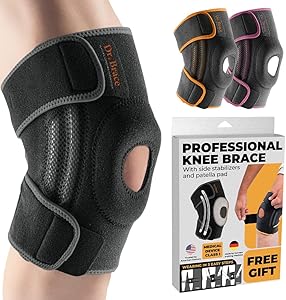
- Stabilization: Double side stabilizers and upgraded patella gel pads
- Anti-Slip: Non-slip silicone strips and high-elastic fabric
- Protection: 360-degree adjustable strap coverage for full support
- Care: Machine-washable at max 86ºF, air-dry only
Dr. Brace Elite is built with all-day comfort and dependable stabilization in mind. The combination of double side stabilizers and upgraded patella gel pads provides controlled support for patellar issues and mild ligament strains, while non-slip silicone and elastic fabric keep the brace locked in place during dynamic movement. For skiers, the 360-degree strap system helps maintain alignment when edging or absorbing uneven landings, and the breathable knit reduces heat buildup under ski layers.
The included knee strap and exercise guidance are thoughtful touches for users rebuilding strength after injury. Washing instructions are straightforward but important — machine gentle wash and air-dry to preserve the materials. If you want a comfortable, supportive brace that blends preventive protection with rehabilitative features, Dr. Brace Elite offers a sensible balance. It’s a user-friendly choice for recreational and fitness-oriented skiers who need reliable support without cumbersome hardware.
- Pros: Comfortable, reliable anti-slip, full-coverage straps, helpful extras included.
- Cons: Not as targeted as hinged braces, care instructions limit drying.
See the DR. BRACE ELITE Knee Brace
5. Bauerfeind Sports Knee Support

- Measurement: Measure thigh 14 cm above kneecap and calf 12 cm below
- Technology: Omega pad for even force distribution around kneecap
- Material: 3D Airknit compression knit; breathable and moisture-wicking
- Origin: Made in Germany, durable and machine washable
Bauerfeind’s Sports Knee Support is engineered with precision and quality manufacturing. The Omega pad and compression knit work together to redistribute pressure away from painful hotspots and to improve joint proprioception — a real advantage for skiers who rely on subtle balance cues. The anatomical, low-profile design fits well under ski pants and stays put during dynamic movement thanks to integrated grip technology, so it’s ideal for performance days when you want support without hardware.
This brace is a premium choice for athletes who value materials science and fit. The 3D Airknit fabric is lightweight yet supportive, wicking moisture and reducing the risk of chafing during long days on snow. If you split measurements between sizes, Bauerfeind’s guidance to select based on thigh circumference helps get the most accurate fit. Expect durable construction and reliable return policies — a practical investment for serious skiers who want clinical-level support paired with sporty comfort.
- Pros: High-quality materials, excellent fit, clinical design, durable.
- Cons: Higher price point, sizing needs careful measuring.
See the Bauerfeind Sports Knee Support
6. CAMBIVO Knee Braces

- Material: 65% nylon, 20% latex, 15% spandex with 3D knitting
- Compression: Ergonomic compression to improve circulation and relieve pain
- Anti-Slip: Double-lined silicone grip rings to prevent slipping
- Use: Designed for wide sports use including skiing and weight training
CAMBIVO knee sleeves are designed to be lightweight, breathable, and flexible while delivering consistent compression. The 3D knitting technology shapes pressure across the joint to stabilize and reduce stiffness, which helps on cold days in the mountains when joints can tighten. The double anti-slip silicone rings are effective at keeping the sleeve in place during vigorous activity, so you won’t constantly ride up inside your ski boot liners or under gaiters.
These sleeves strike a good balance for skiers who want warmth, light compression, and reliable fit without restrictive hardware. They’re easy to pull on and off, machine-washable, and comfortable for extended use. While they don’t provide hinge-level protection against severe lateral loads, they are excellent for preventing stiffness, supporting mild pain, and improving confidence on longer tours or multi-day trips where minimal bulk matters. CAMBIVO is a dependable everyday sleeve for active skiers.
- Pros: Comfortable, breathable, strong anti-slip, versatile for many sports.
- Cons: Not suitable for major ligament instability, latex content may concern some users.
7. Fit Geno Hinged
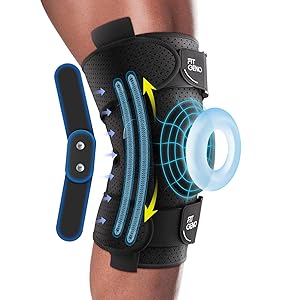
- Support: Dual aluminum hinges plus side stabilizers for maximum lateral support
- Material: Heavy-duty, medical-grade, latex-free construction
- Patella: Medical-grade patella gel pad for shock absorption and alignment
- Anti-Slip: Two silicone strips and four adjustable straps for secure fit
Fit Geno’s ReActive+ hinged brace is the most heavy-duty option in this list and is well suited to skiers who need genuine mechanical restraint for ligament issues or serious instability. The removable aluminum hinges provide strong medial and lateral protection while still allowing controlled flexion — useful when carving hard turns or landing jumps. The gel patella pad soaks up impacts and helps keep tracking central during dynamic movement on varied snow.
This brace is aimed at users who need surgical-level support without sacrificing mobility: the fabric breathes, straps keep it from sliding, and hinges can be removed if you need lighter support. It’s bulkier than sleeves but gives confidence when the terrain is demanding or when recovering from a significant sprain. If your skiing includes aggressive lines or you’ve been advised by a clinician to limit valgus/varus stress, Fit Geno is a robust choice.
- Pros: Superior stabilization, removable hinges, durable materials, clinician-focused.
- Cons: Bulkier under clothing, higher profile, may be overkill for mild pain.
8. MUELLER Sports Medicine Self Adjusting
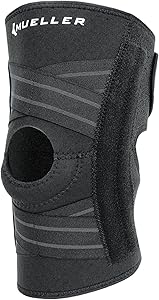
- Compression: Self-adjusting straps for targeted medio-lateral control
- Material: Neoprene design retains warmth for healing and flexibility
- Fit: One size fits most adults; fits 12″-20″ circumference
- Brand: Trusted Mueller Sports Medicine with 60+ years’ experience
Mueller’s Self-Adjusting Knee Brace is a classic, no-nonsense solution for skiers who want immediate, hands-on control of compression and stability. The self-adjusting strap system lets you dial in support on the fly — useful for changing conditions where you might want more stiffness on a technical run and a looser feel during warm-ups. Neoprene construction retains heat to keep joints limber in cold conditions, which can reduce the risk of strain on icy descents.
This brace is straightforward to use and comfortable for moderate wear, though it won’t replace a hinged, clinical-grade device if you have major ligament damage. Its one-size-flexible approach is convenient, but users with very large thighs or calves should double-check the fit range. For recreational skiers seeking inexpensive, practical stabilisation and warmth without complex setup, the Mueller Self-Adjusting brace is a reliable go-to.
- Pros: Easy to use, warms the joint, good targeted control, affordable.
- Cons: One-size may not fit everyone, less precise than medical braces.
See the MUELLER Sports Medicine Self Adjusting
How to Choose Knee Braces for Skiing
Skiing puts a tremendous amount of stress on the knees. The combination of twisting movements, sudden turns, and uneven terrain can lead to injuries or aggravate existing knee conditions. A knee brace can provide support, stability, and confidence on the slopes. But with so many options available, choosing the right knee brace for skiing can be confusing. This guide will help you understand the different types of braces, their benefits, and the key factors to consider before making your choice.
Why Use a Knee Brace for Skiing?
Knee braces are not just for injured skiers. Many use them as a preventive measure to reduce strain on the ligaments and joints. Skiing involves high-impact movements that can easily lead to ACL (anterior cruciate ligament) or MCL (medial collateral ligament) injuries. A good brace can provide added stability and help distribute pressure more evenly across the knee joint. It can also give you mental reassurance, especially after recovering from an injury.
Using a brace can help in three main ways: reducing the risk of injury, managing pain or swelling from an existing condition, and enhancing knee stability during turns or landings. For skiers with previous ligament tears, braces are often recommended by physiotherapists as part of ongoing protection.
Types of Knee Braces for Skiing
Knee braces come in several designs, each suited to specific needs and levels of support. Understanding the main types will help you decide which is best for your situation.
Sleeve Braces
These are made from elastic or neoprene material and slide easily over the knee. They offer mild compression, warmth, and light support. Sleeve braces are ideal for skiers who want to improve blood flow and reduce minor swelling or discomfort. However, they don’t provide structural support for ligament injuries.
Hinged Knee Braces
Hinged braces have metal or plastic supports on either side of the knee to limit side-to-side movement. They are designed for skiers recovering from ligament injuries, such as an ACL or MCL tear. These braces provide superior stability and are often prescribed by doctors for post-surgical recovery. Though bulkier, they offer the best protection against twisting injuries.
Wraparound Braces
Wraparound braces feature adjustable straps that make them easy to put on and take off. They offer moderate support and can be tightened to achieve a custom fit. This type is ideal for skiers who need stability but still want flexibility and comfort. Wraparound braces are great for managing chronic knee pain or mild instability.
Custom-Fitted Braces
Custom-fitted braces are made specifically for your knee’s shape and measurements. These are often recommended for skiers with significant injuries or unique knee conditions. Although they are more expensive, custom braces provide the highest level of comfort, fit, and protection. Professional athletes and advanced skiers often choose this option for maximum performance and confidence.
Key Factors to Consider
Before buying a knee brace for skiing, consider the following factors to ensure you get the right balance between comfort, support, and performance.
1. Level of Support
The amount of support you need depends on your knee’s condition. If you are skiing recreationally and have no history of injury, a compression sleeve or light support brace may be enough. For those recovering from ligament injuries, a hinged or custom brace provides the necessary reinforcement. Always consult a medical professional if you’re unsure about your level of need.
2. Fit and Comfort
A poorly fitting brace can cause discomfort and restrict your movement, defeating its purpose. Look for braces that fit snugly but don’t pinch or cut off circulation. Adjustable straps and anatomical designs can enhance comfort, especially during long skiing sessions. Try to wear the brace with your ski gear before hitting the slopes to ensure it fits comfortably under your pants and doesn’t shift during activity.
3. Material and Breathability
Most knee braces are made from neoprene, elastic, or lightweight synthetic fabrics. Neoprene offers warmth and compression, which can help with joint mobility in cold conditions. However, it can also trap moisture, making it less breathable. If you tend to sweat a lot, consider braces made from moisture-wicking materials to keep your knee dry and comfortable.
4. Mobility and Flexibility
Skiing requires a wide range of motion, so your brace should not be too restrictive. Hinged braces offer protection but may slightly limit flexibility. If agility and movement are your top priorities, choose a brace that provides moderate support with flexible side stabilizers. Testing your range of motion before purchasing is always a good idea.
5. Durability and Quality
Because skiing involves extreme weather conditions, your knee brace must withstand cold, moisture, and repeated use. Look for reinforced stitching, corrosion-resistant hinges, and high-quality materials. A durable brace not only lasts longer but also maintains its support over time, giving you consistent performance throughout the season.
Fitting a Knee Brace Correctly
Getting the right fit is crucial for a knee brace to work effectively. Measure your thigh and calf circumference as recommended by the manufacturer. Braces that are too tight can restrict blood flow, while those that are too loose may slide down during skiing. Most brands provide size charts to guide your selection.
When wearing your brace, ensure it sits comfortably around your kneecap without bunching or slipping. Adjust the straps evenly on both sides to distribute pressure. For hinged braces, make sure the hinge lines up with the natural bend of your knee to allow smooth movement.
When to Consult a Professional
If you’ve had a serious knee injury such as a torn ligament, it’s best to consult a doctor or physiotherapist before choosing a brace. They can recommend the right type and fit based on your medical history and skiing style. Custom braces may be necessary for complex injuries or post-surgical recovery. Professionals can also show you the correct way to wear and maintain your brace for maximum effectiveness.
Maintaining Your Knee Brace
Proper care can extend the lifespan of your knee brace. Always follow the manufacturer’s cleaning instructions. Most braces can be hand-washed with mild soap and air-dried. Avoid exposing them to direct heat or sunlight, which can damage the materials. Check regularly for signs of wear, such as fraying straps or loose hinges, and replace the brace when it no longer provides adequate support.
Final Thoughts
Choosing the right knee brace for skiing depends on your individual needs, comfort, and activity level. For general support and warmth, a sleeve brace works well. For injury prevention or recovery, hinged or custom braces offer the best protection. Pay close attention to fit, flexibility, and material quality to ensure comfort on the slopes. With the right knee brace, you can ski confidently, knowing your knees are protected and supported for every turn and jump.