
Best Step-in Snowboard Bindings of 2026
Step-in snowboard bindings make getting on your board quicker and easier, without the hassle of strapping in every time. They’re designed for riders who want more convenience on the slopes without giving up control or comfort. Whether you’re a beginner looking for simplicity or an experienced rider who wants to save time, step-in bindings can make a big difference. In this guide, we’ll look at the best step-in snowboard bindings available today, highlighting their key features, performance, and which riders they suit best.
1. Burton Step On
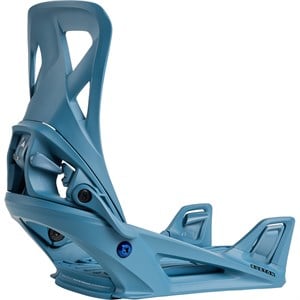
- Flex: Medium
- Baseplate: Single component 18% short-glass/nylon composite
- Cushioning: Re:Flex™ FullBED underfoot cushioning
- Compatibility: Must be used with Burton Step On™ boots; 2×4, 4×4, Channel
The Burton Step On delivers on its promise: effortless entry without compromising performance. Step On boots mate with the binding’s toe hooks and heel connection to create a rock-solid interface that feels immediate and predictable underfoot. The medium flex baseplate combined with Re:Flex FullBED cushioning makes long laps comfortable while still offering enough response for carving and playful park laps. The minimized footprint and living-hinge design let the board flex more naturally than older step systems.
For riders upgrading from strap bindings, the Step On system is a revelation — fewer fiddly moments at the lift, faster transitions, and consistent engagement. The system is best enjoyed with the matching boots; using non-compatible boots isn’t an option. If you like to switch boots often or want full micro-adjustability on-the-fly, this system requires committing to Step On boots. For most all-mountain riders who value speed and simplicity, the trade-off is worth it.
Pros:
- Instant step-in convenience
- Natural board flex and solid edge response
- Comfortable underfoot cushioning for long days
Cons:
- Requires Burton Step On boots
- Less traditional strap adjustability for custom micro-fit
2. Nidecker Supermatic
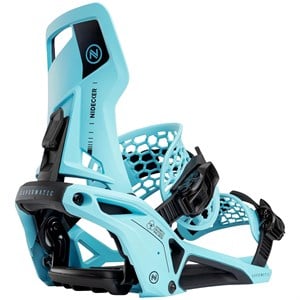
- Flex: Response 8 / Toe-Heel 8 / Lateral 8 (1–10)
- Baseplate: Asym rockered Matic-series with Nylon multidisk
- Entry System: Reclining highback, heel pedal automatic closure
- Compatibility: 2×4, 4×4, Burton 3D, Channel
The Nidecker Supermatic blends traditional strap feel with a clever drop-in mechanism that truly speeds up entry without sacrificing performance. Drop your boot in, step down, and the heel pedal snaps the highback and straps closed with three engagement clicks. The reclining highback and heelcup roller make entry buttery-smooth, while the self-cleaning engagement keeps the system reliable in variable conditions. The binding’s stiffness and high lateral response make it feel precise under power.
Riders who value direct energy transfer and a secure fit will appreciate the Supermatic’s stiff character and thoughtful ergonomics. The hybrid ExoFrame PowerStrap and Hexo toe cap deliver a locked-in, form-fitting hold once engaged. The system shows clear strengths for aggressive all-mountain and freeride use, though the mechanical complexity adds weight and may require occasional maintenance. If you want fast entry with traditional strap performance, the Supermatic hits a sweet spot.
Pros:
- Fast, reliable automatic entry
- Stiff response and precise edge control
- Self-cleaning engagement for snowy conditions
Cons:
- Mechanical complexity needs care
- Heavier than simple strap bindings
3. System MTN

- Closure Type: Step-in / rear entry
- Fit: Adjustable—sizes Medium (6–9), Large (9–11), XL (11–14)
- Packing: Full EVA padding on hi-back and high-density footbed damping
- Compatibility: Multidisc base plate fits 4-hole and Burton Channel EST
The System MTN is a solid, practical rear-entry binding aimed at riders who want reliable step-in convenience without committing to a brand-specific boot system. The adjustable size-based fit system offers a useful range of sizes and the 3D molded ankle strap covered with durable polyurethane gives immediate response and comfort. The full EVA padding and dampening footbed help smooth chatter on harder snow and aggressive rides.
Mounting flexibility is a highlight: the multidisc baseplate ensures compatibility with most boards including Burton’s Channel, which is handy if you own multiple setups. The MTN is an uncomplicated option for intermediate-to-advanced riders who want quicker transitions and less fuss, while still retaining a strap-like feel and decent control. It’s not as light or feathered as boutique race bindings, but it’s dependable day-in, day-out kit.
Pros:
- Easy rear-entry convenience
- Wide mounting compatibility
- Comfortable, damped ride
Cons:
- Heavier than minimalist bindings
- Less premium materials and refinement than top-end models
4. Burton Step On Genesis
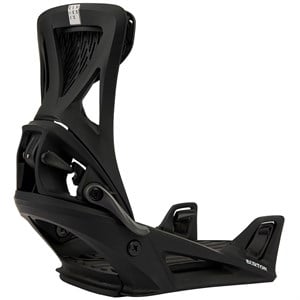
- Flex: Medium
- Baseplate: Single component 30% short-glass/nylon composite
- Highback: FLAD™ adjustable forward lean with Kickback Hammock
- Compatibility: Must be used with Burton Step On™ boots; 2×4, 4×4, Channel
The Burton Step On Genesis builds on the original Step On by increasing structural strength and response for riders who need a touch more performance. Its 30% short-glass composite baseplate and kickback hammock in the highback deliver a livelier, more controlled feel when loading turns or charging steeper terrain. The Re:Flex FullBED cushioning keeps things comfortable on long days while preserving a responsive connection to the board.
If you want a Step On system that leans toward more aggressive all-mountain riding without sacrificing the no-strap convenience, the Genesis offers the balance. It’s still simple to step into and intuitive at the lift, but the materials and construction add confidence at speed. As with other Step On models, the main limitation is boot compatibility — if you’re sold on convenience and have or plan to buy matching boots, Genesis is a compelling step-up.
Pros:
- Stronger, more responsive construction than basic Step On
- Comfortable cushioning for long sessions
- Simple, fast step-in system
Cons:
- Requires Step On boots
- Less fine-tune strap control than traditional systems
5. Burton Step On – Women’s
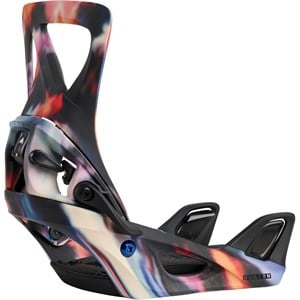
- Flex: Medium—balanced for all terrain
- Baseplate: Single component 18% short-glass/nylon composite
- Cushioning: Re:Flex™ FullBED for underfoot comfort
- Compatibility: Designed for Burton Step On™ women’s boots; 2×4, 4×4, Channel
The women’s Burton Step On keeps everything that made the Step On system popular but in a package tuned for female riders’ fit profiles. Entry is instant and reliable thanks to the improved toe hooks and heel interface, and the medium flex provides an approachable, confidence-inspiring ride across groomers, park, and light freeride. Re:Flex cushioning makes the binding forgiving on rough landings and reduces fatigue on long days.
This binding is ideal for riders who want to shave time off every lift line and prefer a simple, hassle-free setup while retaining a responsive, predictable feel. The only real caveat is the need for Step On boots, which means matching footwear is required to unlock the system’s potential. For women who prioritize convenience and consistent all-mountain performance, this is a smart, user-friendly choice.
Pros:
- Fast step-in convenience tailored to women’s fit
- Comfortable underfoot cushioning
- Versatile medium flex for varied terrain
Cons:
- Requires matching Step On boots
- Less micro-adjustability than strap systems
6. Burton Step On Escapade – Women’s
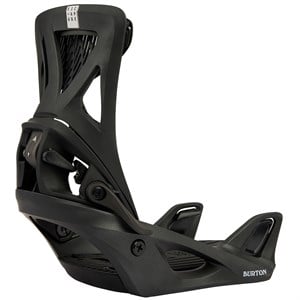
- Flex: Medium—performance-minded yet forgiving
- Baseplate: Single component 30% short-glass/nylon composite
- Highback: FLAD™ with Kickback Hammock for reduced vibration
- Compatibility: Step On boots required; 2×4, 4×4, Channel
The Step On Escapade for women tightens the performance dial while keeping the effortless entry that made Step On famous. The stiffer 30% short-glass composite offers better response and reduced vibration, and the Kickback Hammock adds a controlled rebound feel that helps in steeper terrain or faster carves. The medium flex keeps the binding approachable, making it a good match for riders who want a step-up in capability without moving to an outright race binding.
This is a great pick for women who ride aggressively but still want the convenience of step-in systems. The Escapade is lighter and more tuned than the basic Step On, translating to quicker edge-to-edge transitions and a more planted feel at speed. Like other Step On models, it requires matching boots, but for committed users the improved materials and responsiveness are noticeable and welcome.
Pros:
- Higher-performance materials and response
- Reduced vibration and improved rebound
- Maintains fast, strap-free entry
Cons:
- Boot compatibility requirement
- Less adjustable on-the-fly than strap systems
7. Burton Step On Cartel X EST
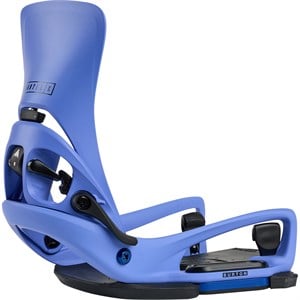
- Flex Rating: Stiff (6-9/10)
- Mounting System: Exclusive to Burton Channel™ boards
- Cushioning: SensoryBED™ dual-density EVA system
- Forward Lean: Tool-free DialFLAD™ micro-adjustment
The Burton Step On Cartel X EST represents the pinnacle of convenience for aggressive riders. By merging the legendary response of the Cartel X with the speed of Step On technology, Burton has created a binding that handles technical maneuvers and high-speed carving with ease. The EST construction allows for a more natural board flex and better feel underfoot, reducing rider fatigue during long days on the mountain.
This binding is specifically designed for advanced-to-expert snowboarders who want pro-caliber control without the hassle of straps. The single-component baseplate ensures consistent response across all terrain, while the plush cushioning settles your boot into a natural position. It is a performance powerhouse that proves you do not have to sacrifice hard-charging power for the simplicity of a quick-entry system.
Pros:
- Lightning-fast entry and exit
- Exceptional board feel via EST mounting
- Tool-free lean adjustments
Cons:
- Only compatible with Burton Channel boards
- Requires specific Step On boots
8. Union Atlas

- Flex Rating: Stiff (8/10)
- Baseplate: Duraflex CB with Hi-Flex HP EVA Bushings
- Heelcups: Extruded 3D Aluminum
- Hardware: High-strength Grade 8.8 Steel
The Union Atlas Step On bindings are a game-changer for riders who demand Union’s signature precision but want the speed of a strapless interface. Built with an Atlas Duraflex CB baseplate and ultra-strong aluminum heelcups, these bindings offer incredible edge-to-edge response. The addition of Grade 8.8 steel hardware ensures that the connection remains reliable even under the most intense pressure on steep faces.
Performance remains the priority here, as the integrated 2-stage FLAD allows for quick lean adjustments to suit your riding style. Whether you are navigating tight trees or charging through the park, the stiff flex provides the stability needed for high-speed stability. It is an ideal choice for intermediate to advanced riders looking for a robust, high-performance binding that eliminates fumbling with straps in the lift line.
Pros:
- Highly durable aluminum heelcups
- Compatible with both 2×4 and Channel mounts
- Superior energy transfer and response
Cons:
- Must be used with Step On compatible boots
- Very stiff flex may be too aggressive for beginners
How to Choose Step-In Snowboard Bindings
Step-in snowboard bindings are becoming increasingly popular among riders who want faster entry and exit without compromising performance. These bindings allow you to click in quickly without sitting down or strapping in manually, making them a great option for both beginners and experienced snowboarders who value convenience. However, choosing the right step-in bindings involves understanding how they work, their compatibility, and what features best match your riding style. This guide will walk you through everything you need to know before making a purchase.
Understanding Step-In Bindings
Step-in bindings are designed to make the process of getting in and out of your snowboard faster and easier. Unlike traditional strap bindings, which require manually tightening straps over your boots, step-in bindings use a locking mechanism that connects directly to a compatible boot. Once you step into the binding, it automatically locks your boot in place. To release, you simply use a lever or release mechanism—no bending down or fiddling with straps in cold weather.
Modern step-in systems, such as Burton’s Step On and K2’s Clicker, have improved significantly over older versions from the 1990s. They now offer better responsiveness, comfort, and control, making them a legitimate option for all-mountain, freestyle, and even backcountry riders.
Key Factors to Consider
1. Boot and Binding Compatibility
The most important factor when choosing step-in bindings is compatibility. Unlike traditional bindings, step-in systems are brand-specific. For instance, Burton Step On bindings only work with Burton Step On boots, and K2 Clicker systems are compatible only with K2 Clicker boots. You cannot mix and match different brands or systems. Before buying, make sure your boots and bindings are designed to work together. This ensures a secure connection, proper alignment, and consistent performance on the mountain.
2. Riding Style
Your riding style plays a huge role in choosing the right step-in bindings. All-mountain riders should look for medium-flex bindings that provide a balance of control and comfort. Freestyle riders often prefer a softer flex for easier movement and better maneuverability during tricks. On the other hand, freeriders and backcountry snowboarders typically opt for stiffer bindings that deliver more responsiveness and support on steep terrain. Consider where and how you ride most often to find the flex and design that fit your style best.
3. Flex and Response
Step-in bindings vary in flex—from soft and playful to stiff and aggressive. The flex rating affects how your board feels and responds. Softer bindings allow more freedom of movement, making them ideal for park riders and beginners who want a forgiving setup. Stiffer bindings, however, provide more precision and quicker edge-to-edge transitions, which are ideal for advanced riders tackling fast or technical terrain. It’s essential to match your binding’s flex to your boot and board for optimal performance.
4. Comfort and Cushioning
Comfort is key for long days on the slopes. Step-in bindings should offer adequate cushioning underfoot to absorb impacts from landings and reduce vibrations. Look for EVA foam padding or similar materials in the baseplate and heel area. Also, pay attention to the boot-to-binding interface—since there are no straps, all your comfort depends on how well your boot fits and locks into the binding. Make sure there’s no pressure point or heel lift when testing them out.
5. Entry and Exit Mechanism
Different step-in systems use unique mechanisms for locking and releasing the boot. For example, Burton Step On bindings use three locking points—two at the toes and one at the heel—for a secure hold and quick release via a side lever. K2’s Clicker system relies on toe and heel cleats that snap into place. Try stepping in and out of the bindings before buying to ensure the mechanism feels smooth, reliable, and easy to use even with gloves on or in deep snow conditions.
6. Adjustability
Although step-in bindings are designed for simplicity, they should still offer basic adjustability. Look for models that allow you to fine-tune the forward lean, stance width, and baseplate position. These adjustments can greatly improve comfort and control. Some bindings also let you tweak the tension of the locking mechanism for a more customized feel. Even though you don’t have straps, small adjustments can make a big difference in overall performance.
7. Weight
Step-in bindings tend to be slightly heavier than traditional strap bindings because of their locking mechanisms. However, newer designs are much lighter than early models. If you prioritize speed and agility, look for bindings made with lightweight materials such as composite or carbon-infused nylon. A lighter setup can help reduce fatigue and make your board feel more responsive, especially when carving or jumping.
8. Durability and Build Quality
Bindings take a lot of abuse, especially if you ride often. Choose bindings made from durable materials like reinforced nylon or aluminum. The locking mechanism should also feel sturdy and smooth without any loose parts. Some systems include metal components for added strength, while others use advanced plastics that can withstand cold temperatures without cracking. A high-quality step-in binding should last for several seasons with proper care.
Pros and Cons of Step-In Bindings
Advantages
- Speed and Convenience: You can step in and ride almost instantly—no sitting down or strapping in required.
- Consistency: Step-in systems provide a uniform fit every time you lock in, ensuring a consistent feel run after run.
- Ease of Use: Great for beginners or riders who have difficulty bending down to strap in.
Disadvantages
- Limited Compatibility: You must use boots and bindings from the same brand and system.
- Higher Cost: Step-in systems are often more expensive than traditional bindings.
- Less Adjustability: Fewer customization options compared to strap bindings.
Popular Step-In Binding Systems
Burton Step On
Burton’s Step On system is currently the most widely used and refined step-in setup. It features three locking points for a secure hold and instant release. The bindings are compatible only with Burton Step On boots, which come in various flex options for different riding styles. This system is known for its comfort, reliability, and natural board feel.
K2 Clicker X HB
K2’s Clicker X HB bindings use a two-point connection system with toe and heel cleats. They offer a slightly stiffer flex and are aimed at riders who want responsiveness and performance. The Clicker X HB also includes an adjustable highback for improved support and control. Like Burton’s system, these bindings require matching K2 Clicker boots.
Testing Before You Buy
Whenever possible, try out step-in bindings before committing. Many snowboard shops and resorts offer demo programs that let you test both boots and bindings together. Pay attention to how easily you can step in and out, how stable the connection feels, and whether the flex suits your riding style. Testing is the best way to ensure you’re getting the right combination of comfort, performance, and convenience.
Conclusion
Choosing the right step-in snowboard bindings comes down to understanding your riding needs, ensuring compatibility with your boots, and finding a system that feels secure and comfortable. While they may cost a bit more than traditional strap bindings, the speed and convenience they offer can significantly enhance your riding experience. Whether you go with Burton’s Step On or K2’s Clicker system, investing in quality step-in bindings can save time on the slopes and let you focus on what matters most—enjoying the ride.