Best Ski Poles for Women of 2026
Choosing the right ski poles can make a noticeable difference in balance, rhythm, and control on the slopes, yet they are often the most overlooked part of a ski kit. Women skiers benefit from poles designed with the right grip size, strap fit, and shaft flex to match their body proportions and skiing style. This guide reviews eight standout ski poles for women, covering everything from lightweight carbon race poles to adjustable backcountry options, followed by a detailed buying guide to help you pick the perfect pair for your next season on snow.
1. Faction Ski Poles
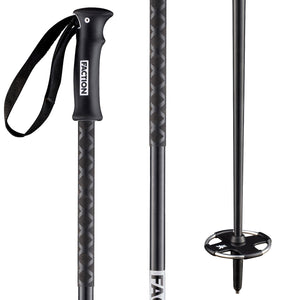
Shaft: 7075 Aluminum
Grip: Ergonomic Rubber Grip
Basket: Interchangeable Freeride Baskets, 60 mm and 80 mm
Tip: Carbide with PA Adapter
The Faction Ski Poles are built for freeride skiers who want a dependable pole that can handle variable snow conditions. The 7075 aluminum shaft offers a strong balance of durability and light swing weight, making these poles easy to plant quickly through moguls or powder without feeling sluggish.
The ergonomic rubber grip stays comfortable through long days, and the interchangeable basket system means the same pole can transition from groomers to deep powder with a quick swap. The adjustable strap adds a secure, glove-friendly fit. Overall, these poles suit intermediate to advanced skiers looking for versatility.
Pros:
- Durable 7075 aluminum construction
- Interchangeable baskets for different terrain
- Comfortable ergonomic grip
Cons:
- Not adjustable in length
- Heavier than carbon options
2. BCA Scepter Adjustable
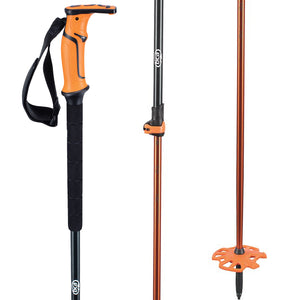
Shaft: 7075 Aluminum
Adjustability: 105 cm to 145 cm
Grip: BCA Scraper Grip with Releasable Strap
Tip: Carbide
The BCA Scepter Adjustable is designed with backcountry and touring skiers in mind. Its wide adjustable range of 105 to 145 centimeters allows skiers to fine tune pole length for skinning uphill or skiing technical descents, which is a huge advantage over fixed-length poles for mixed terrain days.
The scraper grip doubles as a tool for clearing ice from skins or bindings, while the releasable strap adds a safety feature during avalanche terrain travel. The EVA foam upper section provides a comfortable choke-up point. These poles are ideal for women who split their time between resort and backcountry skiing.
Pros:
- Wide length adjustability
- Built-in scraper grip function
- Releasable strap for safety
Cons:
- Adjustable mechanism adds weight
- Basket sold separately in some regions
3. Black Crows Furtis
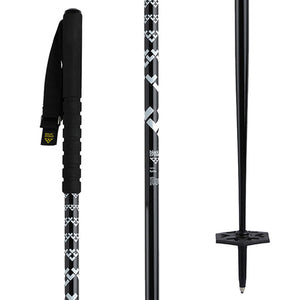
Shaft: 18mm Carbon Fiber
Grip: 38mm Extra Long EVA Grip
Basket: 90mm All Conditions Basket
Tip: Tungsten Carbide Tip
The Black Crows Furtis is a premium carbon pole built for skiers who want a lightweight yet responsive feel in variable snow. The 18mm carbon shaft dampens vibration well, which is especially noticeable on hardpack and icy conditions where a stiffer pole can feel jarring in the hands.
The extra long EVA grip allows for multiple hand positions, useful when skiing steep terrain or traversing. The 90mm all conditions basket keeps the pole from sinking too deep in soft snow. With a reinforced anodized aluminum top cap, durability is not sacrificed for weight savings, making this a strong choice for advanced skiers.
Pros:
- Lightweight carbon fiber shaft
- Extended grip for versatile hand placement
- Tungsten carbide tip for secure planting
Cons:
- Higher price point
- Carbon shaft less forgiving on impact
4. Salomon Polar
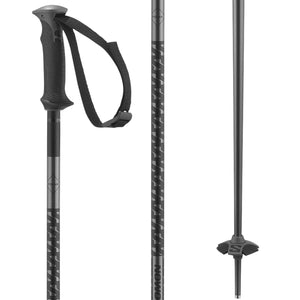
Shaft: Aluminum, 18mm Diameter
Grip: Dual Material Grip
Strap: Standard Strap
Basket: Interchangeable All-Mountain Basket
The Salomon Polar is a reliable everyday pole suited to skiers of all levels. The dual material grip is designed for better prehension, giving a secure hold whether hands are dry or slightly damp from snow, and the shape is adapted to fit a range of hand sizes comfortably.
The aluminum shaft offers dependable strength for resort skiing, while the interchangeable all-mountain basket adapts easily between groomed runs and softer snow days. This is a straightforward, no-fuss pole that performs well for beginner to intermediate women skiers who want consistent performance without a steep learning curve or high price tag.
Pros:
- Comfortable dual material grip
- Interchangeable basket system
- Reliable aluminum construction
Cons:
- Not the lightest option available
- Basic strap design
5. evo Overland Carbon
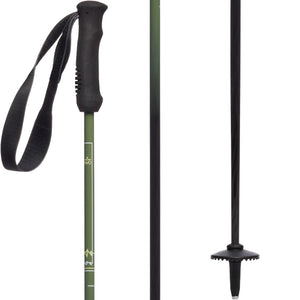
Shaft: Carbon Fiber, 13mm Diameter
Grip: EVA Foam Grip
Strap: Adjustable Padded Strap
Tip: Carbide Tip
The evo Overland Carbon is one of the lightest poles in this lineup, thanks to its slim 13mm carbon fiber shaft. This makes it an excellent choice for skiers who prioritize minimal swing weight, whether for racing, ski touring, or simply reducing arm fatigue on long resort days.
The EVA foam grip is soft yet supportive, and the adjustable padded strap adds comfort during extended use. The carbide tip bites reliably into icy or firm snow. While the thin shaft trades some durability for weight savings, it remains a great option for lighter, technically skilled skiers seeking a race-inspired feel.
Pros:
- Very lightweight carbon shaft
- Comfortable padded strap
- Reliable carbide tip grip
Cons:
- Thinner shaft is less impact resistant
- Not ideal for aggressive freeride use
6. Season Carbon Ultralight
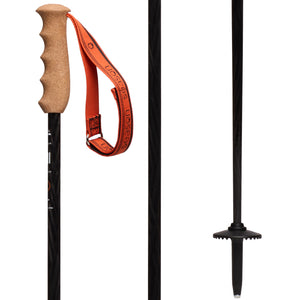
Shaft: 16mm Carbon Fiber
Grip: Ergonomic Natural Cork Grip
Strap: Season Strap
Basket: 65mm Basket
The Season Carbon Ultralight combines a refined aesthetic with genuinely lightweight performance. The natural cork grip is a standout feature, molding slightly to the shape of the hand over time while naturally wicking moisture, which keeps the grip feeling secure through long days on the mountain.
The 16mm carbon shaft strikes a good balance between weight savings and stiffness, giving confident energy transfer on firm groomers. The 65mm basket is best suited to resort skiing rather than deep powder days. Stylish and functional, this pole appeals to women who want performance paired with premium, understated design details.
Pros:
- Natural cork grip is comfortable and breathable
- Lightweight carbon shaft
- Attractive, minimalist design
Cons:
- Smaller basket not ideal for powder
- Premium price for the category
7. evo Refract
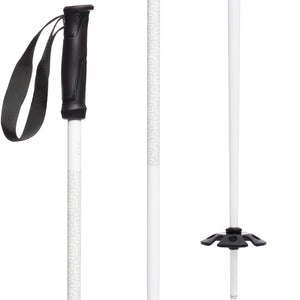
Shaft: 7075 Aluminum Alloy, 18mm
Grip: Rubber Grip
Strap: Adjustable Nylon Webbing Strap
Basket: 85mm Winter Basket
The evo Refract is a budget-friendly aluminum pole built to handle everyday resort skiing without compromising on core durability. The 7075 aluminum alloy shaft resists bending well, making it a solid choice for skiers who want a pole that can take some abuse on chairlifts and side hits.
The rubber grip offers dependable traction, and the adjustable nylon webbing strap allows a customizable, secure fit over gloves or mittens. The 85mm winter basket performs well in fresh snow, preventing the pole from sinking too far. This is a practical, no-frills option for beginner and intermediate skiers alike.
Pros:
- Strong, durable aluminum shaft
- Affordable price point
- Wide basket for soft snow
Cons:
- Heavier than carbon alternatives
- Basic rubber grip lacks cushioning
8. evo Merge
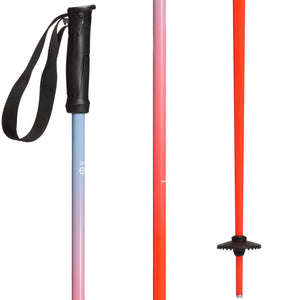
Shaft: 5083 Aluminum Alloy, 18mm
Strap: Adjustable Nylon Webbing Strap
Basket: Race Basket
Tip: Steel Tip
The evo Merge is a straightforward, entry-level pole designed for skiers who want dependable performance at an accessible price. The 5083 aluminum alloy shaft is slightly softer than 7075 aluminum, giving it a bit more flex and forgiveness if the pole is caught on a gate or obstacle.
The adjustable nylon webbing strap keeps hands secure, and the steel tip provides confident grip on hardpack and icy patches. The race-style basket is best suited for groomed terrain rather than deep snow. This pole is a great starting point for beginner women skiers building out their first full ski setup.
Pros:
- Budget-friendly price
- Slightly flexible shaft resists breaking
- Durable steel tip
Cons:
- No cushioned grip included
- Race basket not suited for powder
How to Choose the Best Ski Poles for Women
Ski poles may seem like a simple accessory, but choosing the right pair involves several factors that directly affect comfort, balance, and skiing efficiency. From shaft material to grip design, every detail plays a role in how a pole performs across different terrain and skiing styles. This guide breaks down the key considerations to help you find the ideal ski poles for your needs.
Shaft Material: Aluminum vs Carbon Fiber
The material of the pole shaft is one of the most important factors influencing weight, durability, and feel. Aluminum poles, such as those built with 7075 or 5083 alloy, are known for their strength and resistance to bending, making them a dependable choice for everyday resort skiing, beginners, or anyone who wants a pole that can withstand accidental impacts without snapping.
Carbon fiber poles, on the other hand, are significantly lighter and reduce fatigue during long days on the mountain or while touring uphill. They also dampen vibration better than aluminum, offering a smoother feel on hardpack or icy snow. However, carbon shafts are generally less forgiving on hard impacts and tend to be more expensive.
Quick Comparison
| Feature | Aluminum Poles | Carbon Fiber Poles |
|---|---|---|
| Weight | Heavier | Lightweight |
| Durability | High impact resistance | Can crack under hard impact |
| Vibration Dampening | Moderate | Excellent |
| Price | Budget-friendly | Higher cost |
| Best For | Beginners, everyday resort skiing | Touring, racing, advanced skiers |
Finding the Correct Pole Length
Pole length affects posture, balance, and how efficiently you can plant your poles while skiing. A pole that is too long can throw off your balance and cause you to lean back, while a pole that is too short may force you to hunch forward. The general rule is to hold the pole upside down under the basket, with your forearm parallel to the ground when your elbow is bent at a 90 degree angle.
General Height to Pole Length Guide
| Skier Height | Recommended Pole Length |
|---|---|
| 4’10” to 5’0″ | 40 to 42 inches |
| 5’1″ to 5’4″ | 42 to 44 inches |
| 5’5″ to 5’8″ | 44 to 46 inches |
| 5’9″ and taller | 46 to 48 inches |
For skiers who move between backcountry touring and resort skiing, adjustable-length poles offer added versatility, allowing the length to be shortened for uphill travel and lengthened again for descents.
Grip Design and Comfort
The grip is where your hand makes constant contact with the pole, so comfort and material matter a great deal. Rubber grips are common and offer solid traction, though they can feel stiff in cold temperatures. EVA foam grips are softer, more forgiving, and insulate better against cold, making them popular for long days on the mountain.
Cork grips are another premium option, offering natural moisture wicking and a grip that slightly molds to the shape of your hand over time. Extra long grips, sometimes extending 30 to 40mm below the standard grip position, allow skiers to choke up on the pole during traverses or steep terrain without needing to adjust pole length.
Strap Systems and Safety
Straps keep the pole secure in your hand and help transfer energy efficiently during each pole plant. Standard adjustable straps are common on most poles and allow a snug fit over gloves or mittens. Releasable straps, often found on backcountry-oriented poles, are designed to detach under pressure, reducing the risk of shoulder injury in the event of a fall or avalanche situation.
When trying on straps, make sure they fit comfortably over your gloves without pinching, and check that the adjustment mechanism is easy to operate even with cold hands.
Basket Size and Terrain
The basket, located near the bottom of the pole, prevents it from sinking too deep into snow. Basket size should match the terrain you plan to ski most often.
- Small baskets, around 60mm, work well on groomed runs and hardpack where sinking is not a concern
- Medium baskets, around 80 to 85mm, offer a versatile middle ground for mixed resort conditions
- Large baskets, 90mm or more, are ideal for powder and backcountry skiing where deep snow is common
Many higher-end poles feature interchangeable basket systems, allowing skiers to swap baskets depending on conditions rather than owning multiple sets of poles.
Tip Material
The tip is the point of contact with the snow and ice, so its material affects how securely the pole plants. Carbide tips are extremely durable and grip well on icy or hard packed snow, making them a popular choice among more aggressive or advanced skiers. Steel tips are also strong and cost-effective, offering reliable performance for everyday resort use, though they may wear down slightly faster than carbide over repeated use on rocky or hard surfaces.
Matching Poles to Skiing Style
Resort and Groomer Skiing
For skiers who primarily stay on groomed runs, a durable aluminum pole with a standard basket and comfortable grip is usually sufficient. Weight is less of a concern here, so prioritizing durability and value makes sense.
Backcountry and Touring
Backcountry skiers benefit most from adjustable-length poles with releasable straps and larger baskets suited for deep snow. Lightweight construction also matters more here, since poles are used during uphill travel as well as descents.
Racing and Performance Skiing
Racers and performance-focused skiers often prefer thin carbon shafts and race baskets, prioritizing minimal weight and aerodynamic profile over durability or adjustability.
Final Tips for Choosing the Right Pair
- Always try holding poles with the gloves or mittens you plan to wear while skiing
- Consider your primary skiing terrain before prioritizing weight over durability
- If unsure about sizing, err slightly shorter rather than longer for better control
- Factor in the cost difference between aluminum and carbon based on how often you ski
Selecting the right ski poles comes down to balancing weight, durability, comfort, and the type of terrain you ski most often. By considering shaft material, proper length, grip design, strap safety, basket size, and tip material together, you can confidently choose a pair of poles that enhances your performance and comfort on the mountain all season long.