
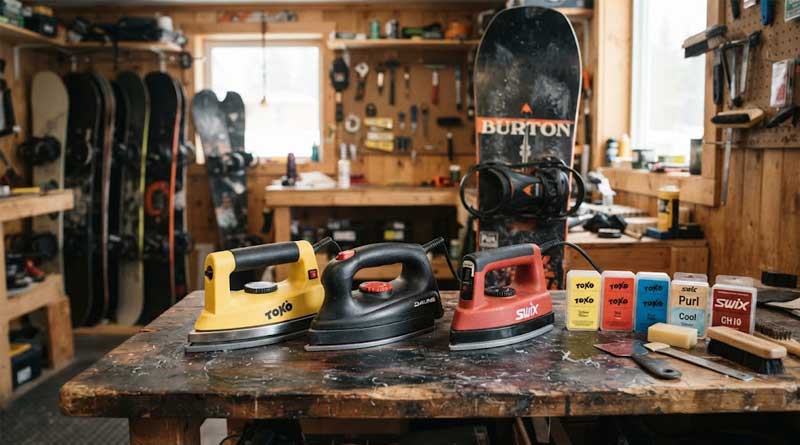
Best Snowboard Wax Irons of 2026
If you want your snowboard to glide smoothly on the slopes, the right wax iron makes a big difference. A good wax iron melts wax evenly, helping it stick to your board for better speed and control. But with so many options out there, choosing the best one can be tricky. In this article, we’ll look at the best snowboard wax irons available, so you can find one that fits your needs and budget.
1. Swix North Waxing Iron

- Base Plate: Heavy forged construction
- Temperature: Adjustable dial control
- Power: 110V North American plug
- Compatibility: Alpine, snowboard, cross-country
The Swix North Waxing Iron is built around a heavy forged base plate that holds heat steadily, which translates to consistent wax application without frustrating temperature swings. The adjustable dial covers the full range needed for universal and temperature-specific waxes, so you can move from cold-weather hard waxes to softer warm waxes without reaching for a different tool. It is part of the Swix North freeride and snowboard accessories line, giving it a cohesive look with other Swix gear.
Because it runs on standard 110V power, you can plug it into any North American household outlet without adapters. It works on alpine, snowboard, and cross-country base materials, making it a versatile choice for riders who maintain multiple types of gear. The forged plate is the standout feature here, as it resists the temperature drop that cheaper irons suffer when you press them against a cold base.
- Pros: Stable heat retention, versatile across ski types, no adapter needed
- Cons: Heavier than basic irons, premium price for casual users
See the Swix North Waxing Iron
2. Swix Economy
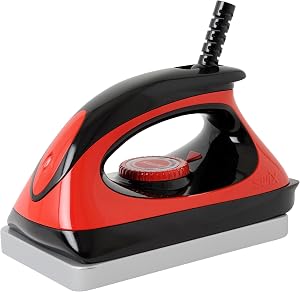
- Base Plate: Large wide surface area
- Temperature: Adjustable dial control
- Power: 110V North American plug
- Compatibility: Alpine, snowboard, cross-country
The Swix Economy iron uses a large base plate that covers more base per pass, which is a real advantage when you are waxing wide skis or snowboards. The wider surface means fewer strokes and less fatigue during a full tune. The adjustable dial covers the range needed for all universal and temperature-specific waxes, so it handles everything from cold hard waxes to softer warm blends without requiring multiple tools.
It runs on 110V power for standard North American outlets, and the classic red finish matches the brand’s professional tuning tool aesthetic. Like the North model, it works on alpine, snowboard, and cross-country base materials. The larger plate is the main selling point, but it also means the iron takes a bit longer to heat up and cool down compared to smaller models.
- Pros: Wide plate speeds up waxing, classic Swix red finish, versatile across disciplines
- Cons: Slower heat-up and cool-down, bulkier to store
3. RaceWax Waxing Iron

- Temperature Range: 80 to 170 C (176 to 338 F)
- Base Plate: 5/8 inch thick, 4.1 x 5.7 inches, grooved
- Power: 120V, 60Hz North American plug
- Warranty: One year, instructions included
The RaceWax Waxing Iron is a professional-grade tool that heats quickly and delivers a temperature range of 80 to 170 C, which covers the melting points of most waxes you will encounter. The thick baseplate measures 5/8 inch thick and 4.1 by 5.7 inches, and it is grooved to help distribute wax evenly across the base. That thickness is important because it holds heat well and resists the temperature drop that happens when you press a thin iron against a cold ski or snowboard.
The cord has a swivel in the handle so you can stand the iron on its end without the cord fighting you. It runs on 120 volts and 60 Hz as a North American model with a standard plug. The classic RaceWax colors and logo give it a professional look, and the one-year warranty plus included instructions make it a solid value for home tuners who want reliable performance without paying boutique prices.
- Pros: Thick grooved plate, swivel cord, fast heating, one-year warranty
- Cons: No digital display, basic dial control only
4. Dakine Adjustable Tuning Iron

- Material: 55% aluminum, 40% plastic, 3% steel, 2% copper
- Temperature: Adjustable temperature control
- Base Plate: Beveled edges
- Compatibility: All Dakine hot waxes
The Dakine Adjustable Tuning Iron is a straightforward tool designed for riders who already use Dakine waxes and want a matching iron. The adjustable temperature control lets you dial in the right heat for different wax types, and the beveled edges allow the iron to move smoothly across the base without catching or dragging. That smooth movement is important because it helps you keep the iron moving continuously, which prevents scorching and ensures even wax distribution.
The construction is mostly aluminum with plastic and small amounts of steel and copper, giving it a lightweight feel that is easy to handle during longer tuning sessions. It is imported and built specifically for use with all Dakine hot waxes. This is a focused tool rather than a universal one, so if you use other wax brands, you may want to verify compatibility, but for Dakine users it is a clean and simple solution.
- Pros: Beveled edges glide smoothly, lightweight, matches Dakine wax system
- Cons: Limited brand compatibility, basic feature set for the price
See the Dakine Adjustable Tuning Iron
5. Demon United
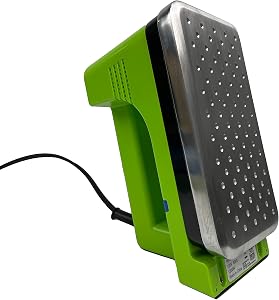
- Power: 120V 60Hz 1200W
- Weight: 2.5 lbs
- Soleplate Size: 186.5 x 108mm
- Soleplate Thickness: 17.4mm
The Demon United Commercial Grade Digital XL waxing iron is aimed at riders who want to take their tuning to the next level. With 1200 watts of power, it heats up quickly and has enough reserve to maintain temperature even when you are moving fast across a large snowboard base. The soleplate is a generous 186.5 by 108mm and 17.4mm thick, which gives it excellent heat retention and a large contact area for efficient wax spreading.
At 2.5 pounds, it has enough heft to feel substantial without being tiring to use. The digital interface suggests more precise temperature control than a basic dial, which is a nice upgrade if you wax often or work with expensive race waxes. The XL size makes it particularly well suited to wide snowboards and powder skis where a smaller iron would require too many passes.
- Pros: High 1200W power, large thick soleplate, digital control
- Cons: Heavy for some users, larger storage footprint
6. XCMAN Snowboard Waxing Iron

- Power: 120V, 800W, American plug
- Temperature Range: 100 to 180 degrees C
- Soleplate Size: 6.3 x 3.54 x 0.59 inches
- Cord Length: 94.4 inches (2.4 meters)
The XCMAN Snowboard Waxing Iron is a 120V, 800W tool that works for alpine, Nordic, and snowboard bases. The thick cast aluminum base plate holds heat well and is adjustable from 100 to 180 degrees C, which covers cold, warm, and universal waxes. The dimpled base is a clever touch that reduces surface contact and lets the iron move easily over the base, similar to how a golf ball’s dimples reduce drag.
The ergonomic body feels strong and durable, and the 2.4-meter power cord gives you plenty of reach around a tuning table. It is ETL certified and comes with instructions. One important note from the manufacturer: do not use an infrared thermometer to test the soleplate temperature because the polished, mirror-like surface reflects infrared rays and gives inaccurate readings, often showing only 55 to 60 C when the iron is actually much hotter.
- Pros: Dimpled base glides easily, long cord, ETL certified, wide temperature range
- Cons: Infrared thermometer gives misleading readings, no digital display
See the XCMAN Snowboard Waxing Iron
7. TOKO T8
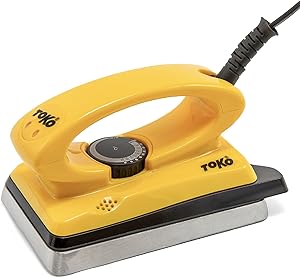
- Temperature Range: 212°F to 320°F
- Base Plate: Extra-strong aluminum pressure cast, curved rhomboid structure
- Power: 110V, 8-foot cord
- Compatibility: Alpine, Nordic, snowboard
The TOKO T8 simplifies waxing for alpine, Nordic, and snowboard gear with an adjustable temperature range of 212°F to 320°F. The extra-strong aluminum pressure cast plate features a curved rhomboid structure that helps distribute wax efficiently and applies gentle compression as you move. That combination of heat and pressure is what makes a good wax job, and the T8 is designed to make that process effortless.
The 8-foot power cord gives you plenty of flexibility around a tuning bench, and the 110V power supply suits USA outlets. TOKO is a proven name in snow sports tuning, and the T8 offers reliable, durable performance at a fair value. It is not the fanciest iron on the market, but it does the job consistently, which is exactly what most home tuners need.
- Pros: Proven brand, efficient heat distribution, long cord, good value
- Cons: Narrower temperature range than some competitors, no digital readout
8. WAVECUER Snowboard Wax Iron

- Temperature Range: 60°C to 180°C
- Voltage: Dual 100-125V or 220-240V switchable
- Base Plate: 16mm thick with grooves
- Cord Length: 1.8 meters
The WAVECUER Snowboard Wax Iron offers exact temperature control from 60°C to 180°C, letting you quickly set and maintain the ideal heat for cold, warm, or universal waxes. The dual-voltage switch makes it usable in both 100-125V and 220-240V regions, which is a big plus for travel, competitions, or riders who move between continents. The 16mm thick base plate and optimized heating system work together with bottom grooves to distribute heat evenly and melt wax quickly.
The iron stands upright securely and has a comfortable handle for easy handling and storage. The 1.8-meter power cord offers flexibility, and every unit undergoes strict quality testing. It is suitable for beginners and pros alike, reliably waxing all snowboards, alpine, and Nordic skis with precision. The combination of dual voltage and precise temperature control makes it one of the more versatile options in this price range.
- Pros: Dual voltage for travel, wide temperature range, thick grooved plate, secure upright stand
- Cons: Voltage switch requires attention, no digital display
See the WAVECUER Snowboard Wax Iron
9. WSD Snowboard Wax Iron
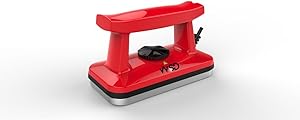
- Base Plate: 12mm (0.47 inch) thick solid soleplate
- Cord Length: 1.9 meters, coils around handle
- Temperature: Full adjustable dial
- Compatibility: Alpine, Nordic, snowboard
The WSD Snowboard Wax Iron comes brand new in a retail box and is designed for alpine, Nordic, and snowboard use. The 12mm thick solid soleplate retains heat longer for higher efficiency, and the full temperature adjustability lets you dial in the perfect temp for every wax type. The ergonomic handle works for both right and left-handed users and allows the iron to sit upright safely between passes.
The 1.9-meter power cord can be coiled around the handle for easy storage, and a notch in the rear of the handle keeps the cord out of the way both while waxing and when stored. The thick base plate is good for hardest waxes without smoking the softest ones. The compact design is great for traveling, and the adjustable temperature dial is simple to use. Just remember to keep the iron moving from tip to tail to avoid burning the base.
- Pros: Thick heat-retaining plate, ambidextrous handle, tidy cord storage, travel-friendly
- Cons: Basic dial control, no dual voltage
See the WSD Snowboard Wax Iron
10. TIANDAO Snowboard Iron

- Voltage: Dual 100-127V / 220-240V
- Temperature: Adjustable to 180°C (356°F)
- Power: 800W fast even heating
- Compatibility: Alpine, Nordic, snowboard
The TIANDAO Snowboard Iron is a dual-voltage tool compatible with both US and European outlets, so you do not need a converter for home use or travel. The adjustable temperature goes up to 180°C (356°F), letting you fine-tune heat for different wax types across all snow conditions from powder to ice. The 800W heating system uses a thick aluminum plate that heats quickly and holds a stable temperature for smooth, even wax coverage.
It is ideal for alpine skis, Nordic skis, and snowboards, helping keep base glide and edge control all season long. The compact, travel-friendly design includes an ergonomic grip designed for skiers and riders. It is not a fancy iron, but it covers the essentials well: dual voltage, adequate power, and a temperature range that handles most waxes you will use.
- Pros: Dual voltage, fast 800W heating, compact and travel-friendly, affordable
- Cons: Basic build quality, no digital temperature readout
See the TIANDAO Snowboard Iron
How to Choose Snowboard Wax Irons
Maintaining a snowboard is one of the most rewarding aspects of winter sports ownership. While many riders focus heavily on choosing the right board profile, stance, or binding flex, base care frequently determines your actual performance on the snow. Waxing your snowboard regularly ensures optimal glide, protects the base from drying out, prevents base burn, and extends the overall lifespan of your board. At the heart of any proper tuning setup is a dedicated snowboard wax iron.
Many beginners ask whether buying a specialized wax iron is truly necessary or if a standard household clothes iron will suffice. Understanding the subtle engineering differences between household appliances and dedicated tuning tools is the first step toward making an informed decision. This comprehensive guide explores every critical factor you must consider when choosing the ideal snowboard wax iron, from baseplate architecture and thermal retention to temperature accuracy, power specs, and ergonomic designs.
Why You Need a Dedicated Snowboard Wax Iron
To understand why specialized wax irons exist, it is helpful to look closely at how wax reacts to heat. Snowboard waxes are formulated using precise chemical blends of hydrocarbons, fluorocarbons, or bio-friendly additives designed to melt and absorb into the porous polyethylene (P-Tex) structure of your board’s base. Each type of wax—whether cold-temperature hard wax, warm-weather soft wax, or universal fluorinated wax—has an exact melting point.
Using an improper heat source poses severe risks to your equipment. Here is why purpose-built wax irons are essential for any serious rider:
- Accurate Temperature Stability: Dedicated wax irons feature heavy-duty heating elements and internal thermostats designed to keep temperatures steady without wide fluctuations that can burn wax or damage the board base.
- Smooth Baseplate Construction: Unlike household clothes irons, wax irons feature solid, dimpled, or grooved baseplates without steam holes. Steam holes collect melted wax, trap debris, and cause uneven heat distribution.
- Prevention of Base Damage: Snowboard bases can suffer permanent structural damage, known as base burn, if exposed to excessive localized heat. A dedicated iron distributes thermal energy evenly across the baseplate.
- Safe Thermal Gradients: Household irons experience dramatic heat spikes. While hot enough to melt wax at one instant, they may drop below the required temperature seconds later, forcing the user to press harder or wait longer on a localized area.
Household Irons vs. Dedicated Snowboard Wax Irons
Before investing in tuning equipment, compare how household appliances stack up against specialized wax tools across key operational metrics:
| Feature / Metric | Household Clothes Iron | Dedicated Snowboard Wax Iron |
|---|---|---|
| Baseplate Holes | Contains dozens of steam holes where wax accumulates | Solid, smooth, or grooved surface specifically designed for wax flow |
| Baseplate Thickness | Thin sheet metal (2mm to 4mm) causing rapid heat loss | Thick cast aluminum (8mm to 16mm+) for thermal retention |
| Temperature Precision | Coarse dial settings (e.g., Silk, Cotton, Wool) with 30°F+ variances | Precise degree increments (Celsius/Fahrenheit) with tight tolerances |
| Heating Element | Designed for intermittent steam creation | Designed for continuous, uniform surface heating |
| Risk of Base Burn | High, due to extreme hot spots and wide thermal swings | Low, when set to the manufacturer’s recommended temperature |
| Ergonomics & Safety | Awkward center of balance when held sideways on boards | Tailored handle angles, low center of gravity, and cord relief |
Key Features to Consider When Selecting a Wax Iron
When shopping for a snowboard wax iron, several technical attributes determine performance, durability, and user experience. Evaluating these key characteristics will help you match an iron to your tuning frequency and budget.
1. Baseplate Thickness and Material
The baseplate—often referred to as the soleplate—is the single most important component of a wax iron. Thickness matters far more than total physical size. A thick baseplate acts as a thermal heat sink. When you place a cold bar of wax against a heated iron, or when the iron touches a cold snowboard base, heat transfer occurs rapidly. A thin baseplate loses its surface temperature instantly, causing the internal thermostat to kick on violently and create large heat spikes. Conversely, a thick baseplate (typically 12mm to 16mm thick) holds a reservoir of heat energy, maintaining a steady, constant temperature even during continuous contact with cold bases.
Most baseplates are manufactured from cast aluminum because aluminum provides excellent thermal conductivity, lightweight handling, and resistance to corrosion. Higher-end models feature specialized textures, such as dimpled patterns or shallow longitudinal channels, which help break surface tension and promote an even layer of melted wax behind the iron.
2. Temperature Control Mechanisms: Analog vs. Digital
Wax irons utilize two main methods for regulating temperature: analog mechanical thermostats and digital microprocessors.
- Analog Dials: These models use a physical bimetallic strip or mechanical dial to set temperatures. As the plate heats up, the metal expands and breaks the circuit until it cools down. While lower in cost and highly durable, analog irons typically exhibit temperature swings of 10°C to 15°C above and below the target setting. They work well for basic universal waxes but require careful monitoring when using sensitive cold-weather or fluoro-free speed waxes.
- Digital Microprocessors: Digital wax irons utilize built-in electronic sensors coupled with a digital display screen. A microprocessor constantly monitors plate temperature and adjusts power delivery hundreds of times per minute. This keeps thermal variances within a tight range of 1°C to 2°C. Digital controls are essential for racing, extreme cold-snow waxes, and high-end fluorinated or ceramic additives that burn easily if overheated.
3. Wattage and Power Output
Wattage measures the electrical power output of the heating element inside the iron. Snowboard wax irons generally range from 500 Watts to 1000 Watts or higher. Higher wattage does not necessarily mean you should run the iron at a higher temperature; rather, it indicates how quickly the iron can reheat itself when thermal energy is transferred to a cold board.
For quick tuning sessions in cold garages, a higher wattage rating (800W to 1000W) prevents the iron from cooling down mid-pass. If you tune indoors or only service one board occasionally, a standard 500W to 800W iron is usually sufficient.
4. Ergonomics, Weight, and Cord Design
Waxing a snowboard requires multiple slow passes from tip to tail. An uncomfortable or poorly balanced iron can lead to wrist fatigue and uneven pressure distribution. Look for the following design considerations:
- Comfortable Grip: Ergonomic handles lined with rubberized grips or contoured molding reduce strain.
- Weight Distribution: A well-balanced iron allows you to glide effortlessly without pressing down hard. Let the mass of the thick baseplate do the work.
- Swivel Cord Relief: A long, durable power cord with 360-degree swivel joint prevents tangles across your workbench.
- Beveled Base Edges: Baseplates with rounded or chamfered edges glide smoothly across wax droplets without catching on structural base contours or side edges.
Categorizing Wax Irons: Entry-Level to Professional
To help narrow your choice, wax irons can be divided into three distinct categories based on user needs, technical capability, and price points.
| Category | Target User | Baseplate Thickness | Control Type | Typical Wattage |
|---|---|---|---|---|
| Entry-Level / Travel | Occasional riders, travelers, tight budgets | 6mm – 8mm | Analog Dial | 500W – 800W |
| Mid-Range / Enthusiast | Regular snowboarders, multi-board households | 10mm – 14mm | Precision Analog or Entry Digital | 800W – 1000W |
| Professional / Race | Tuning technicians, racers, perfectionists | 15mm – 20mm+ | Digital Microprocessor | 1000W – 1200W+ |
Step-by-Step Decision Guide
Selecting the right iron comes down to evaluating your personal tuning routine, environment, and equipment investment. Follow this logical process when selecting your model:
- Identify Your Tuning Frequency:
If you wax your board 2 to 3 times per season, a basic entry-level analog iron will meet your needs reliably for years. If you tune every weekend or care for boards for family and friends, invest in a mid-range iron with a baseplate at least 12mm thick.
- Determine Your Tuning Environment:If your tuning station is located in an unheated garage, shed, or basement during winter, choose an iron with high wattage (800W+) and a heavy baseplate to overcome cold ambient air temperatures.
- Assess the Waxes You Use:Universal all-temperature waxes have broad, forgiving melting ranges. However, specialty hard cold-temperature waxes (designed for extreme sub-zero conditions) require higher, precise heat without reaching the smoking point. If you use temperature-specific or specialty performance waxes, select a microprocessor-controlled digital iron.
- Check Travel Requirements:If you take annual snowboarding trips, consider compact models with dual-voltage capabilities (110V/220V switchability) so you can maintain your gear overseas without burning out internal electronics.
Proper Maintenance and Safe Operation of Your Wax Iron
Even the highest-grade wax iron can underperform or suffer damage if used improperly. Following basic operational protocols protects both your iron and your snowboard.
Safe Operating Procedures
Always set your iron to the temperature explicitly recommended on the wax packaging. When applying wax, dribble droplets evenly along the board, then move the iron smoothly from nose to tail in a continuous motion. Never leave a hot iron resting stationary on a snowboard base. Keeping the iron in one spot for even a few seconds can delaminate the base graphics, melt the core structure, or destroy the P-Tex surface.
If you notice smoke coming off your wax or iron baseplate, your temperature setting is too high. Smoke indicates that the chemical structure of the wax is breaking down and burning, which releases hazardous fumes and can scorch your base material.
Cleaning and Storing Your Iron
To ensure long-term performance from your equipment, maintain the baseplate regularly:
- Wipe Down Hot Baseplate: After turning off the iron and unplugging it, allow it to cool slightly. While still warm, gently wipe the baseplate with a clean fiberlene paper towel to remove leftover wax residue and dirt particles.
- Avoid Abrasive Cleaners: Never clean the baseplate with metal scrapers, wire brushes, or harsh chemical solvents that can scratch or pit the smooth aluminum finish.
- Store Safely: Once fully cooled, wrap the power cord loosely around the body (avoid tight bends near the stress relief joint) and store the iron in a clean box or protective bag to prevent dust buildup.
Final Recommendations
A quality snowboard wax iron is one of the best investments any snowboarder can make. By avoiding household clothes irons and choosing a purpose-built tuning tool with adequate baseplate thickness, stable temperature regulation, and high-quality ergonomics, you ensure fast, effortless glide every time you hit the mountain. Matching the technical capabilities of the iron to your tuning frequency and wax preferences will guarantee smooth riding, base protection, and reliable performance season after season.