Best Budget Ski Boots of 2026
Ski boots are a critical part of your skiing kit. But not everyone needs a $1000 high-end do-it-all pair of boots. Not all of us are Olympic athletes. Most of us are amateurs and some of us are beginners looking for fun without going broke. A budget option is sufficient enough to satisfy all our needs. If you are one of those who are looking to have fun and are on a budget, then look no further.
So here is the list of top ski boot models that you can get at an affordable price.
1. Salomon QST Access 70
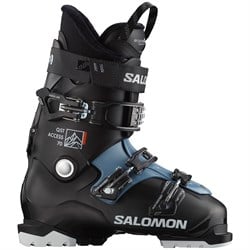
Last: 104mm
Flex: 70
Binding Compatibility: Alpine
Ability Level: Beginner-Intermediate
The Salomon QST Access 70 Ski Boots are as soft and cuddly as the Easter Bunny. They are designed to help you find the “Golden Egg” of comfort while learning to ski. With a 104mm wide last, these boots focus on comfort, making them ideal for wider and higher volume feet. The soft flex index of 70 is perfect for newer or less aggressive skiers. The My Custom Fit Comfort liner features a Woolmetal layer that keeps your feet warm all day. You won’t have to worry about cold toes while you enjoy your time on the slopes.
These boots are well-designed with a polyolefin shell and cuff, making them durable and easy to step into. The oversized pivot ensures excellent power transmission between the cuff and shell, enhancing your skiing experience. The patented Hike and Ride Walk Mode makes it easy to walk in the boots without sacrificing performance on the slopes. The two riveted Alumix buckles and one ratchet at the cuff ensure a secure fit, while the 360˚ 35mm power strap provides extra support. Overall, the Salomon QST Access 70 boots strike the right balance between comfort and performance, making them a fantastic choice for beginner skiers. With these boots, you can focus on enjoying your ski day instead of worrying about your feet.
What I like: The soft flex index of 70 is perfect for beginners or less aggressive skiers.
What I don’t: The soft flex may not provide enough support for more experienced skiers.
See the Salomon QST Access 70 See the Women’s QST Access 70
2. Rossignol Evo 70
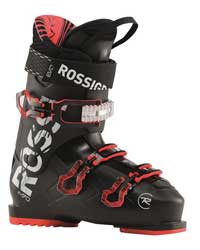
Last: 104mm
Flex: 70
Binding Compatibility: Alpine
Ability Level: Beginner-Intermediate
Inexpensive options are often entry-level and so is the Evo 70 by Rossignol. It is a great boot for those who are looking to jump out of the rentals and want a pair of boots. There is nothing fancy going on here and all the extras have been stripped off from this boot. Being a beginner boot, it should be obvious that this boot has a soft flex. You don’t get a heat-moldable liner like in the Cruise 70 above. But then, it is a few bucks cheaper than the Cruise 70. You get a generic liner that is fairly comfortable with nothing much to talk about.
The shell of the Evo 70 is nicely shaped. The shape of the boot makes it look attractive. The Evo 70 offers a 3 buckle setup. Thankfully, the buckles are aluminum instead of plastic which makes them reliable. The power strap is a reliable one and together with the buckles, it allows for a custom fit that makes the boot feel secure. Again, just like the Cruise 70 above, this is an entry-level boot. It provides entry-level performance. If you are a fast learner looking to progress quickly through your ski lessons, you should put in a few bucks and look for something more suitable for progressive riders.
What I like: Easy to put on and tighten down, comfortable, looks good
What I don’t like: Runs a little large but you can always use thicker socks
3. K2 BFC 90
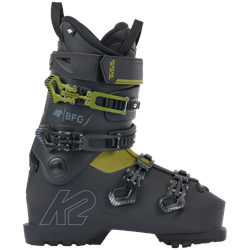
Last: 103mm
Flex: 90
Binding Compatibility: GripWalk
Ability Level: Beginner-Intermediate
The K2 BFC 90 Ski Boots are a great choice for skiers looking for comfort and fit. Right out of the box, they impress with a roomy 103mm last. This makes them perfect for wide and high-volume feet. The boots are made with Thermoplastic Urethane (TPU) and Polypropylene (PP), providing durability and flexibility. They have a classic 4-buckle overlap design, which ensures a secure fit. One of the best features is the FastFIT Instep. This softer TPU material allows for easy entry and exit, making it convenient for skiers of all levels.
For those who value comfort, the CushFit Plus liner stands out. It uses a blend of open-cell and EVA foam, creating a soft yet supportive fit. The boots have a medium flex rating of 90, ideal for intermediate skiers. They are also fully heat moldable, allowing for a custom fit tailored to your foot shape. The 40mm Velcro power strap adds extra support. Additionally, the GripWalk ISO 23223 outsoles make walking and standing easier, especially when navigating the slopes. While they may not be race boots, they perform well in various conditions, from moguls to groomers. After adding a custom footbed, many find they can ski all day without discomfort. These boots offer an impressive blend of comfort and performance on the mountain.
What I like: The roomy 103mm last accommodates wide and high-volume feet.
What I don’t like: Lacks the performance needed for advanced racing applications.
See the K2 BFC 90 See the Women’s BFC 75
4. Salomon S/Pro HV 100
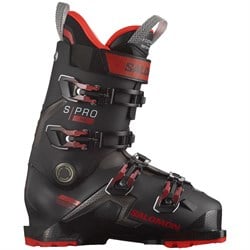
Last: 102mm
Flex: 100
Binding Compatibility: GripWalk
Ability Level: Intermediate-Advanced
The Salomon S/Pro HV 100 GW Ski Boots are a top pick for intermediate to advanced skiers who need a wider fit without compromising performance. With a generous 102mm last—expandable up to 108mm—the S/Pro HV 100 is ideal for those who struggle to find comfort in standard boots. The Custom Shell HD technology allows precise heat molding for a perfect fit, while the Dual Sensifit Inserts make stepping in effortless. Inside, the My Custom Fit 3D Seamless Pro liner eliminates pressure points and enhances warmth, ensuring all-day comfort. Together, these features create a boot that feels roomy yet secure, perfect for high-volume feet that still demand control and responsiveness.
Built with Core-Frame 360° construction and a medium 100 flex, the S/Pro HV 100 balances comfort with solid downhill power. The polyurethane shell reinforced with a fiberglass coreframe delivers excellent feedback and energy transfer, making carving turns or charging groomers a confident experience. The four micro-adjustable aluminum buckles and 35mm Sense Strap allow fine-tuning for personalized hold, while GripWalk soles offer added traction and ease when walking around the resort. Overall, the S/Pro HV 100 combines warmth, adjustability, and power in a boot that finally gives wide-footed skiers the precision and fit they’ve been missing.
What I like: Exceptionally comfortable fit for wide and high-volume feet.
What I don’t: Medium flex may lack stiffness for expert or aggressive skiers.
See the Salomon S/Pro HV 100 See the Women’s S/Pro MV 90
5. Rossignol Kelia 50 – Women’s
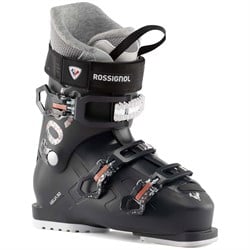
Last: 104mm
Flex: 50
Binding Compatibility: Alpine
Ability Level: Beginner-Intermediate
The Rossignol Kelia 50 Ski Boots are all about comfort, ease, and confidence for beginner to intermediate skiers. With a roomy 104mm last, these boots are a dream for those with wider or high-volume feet, offering a fit so relaxed it’s compared to standing barefoot in warm sand. The soft 50 flex keeps things forgiving and manageable, making them ideal for new skiers still mastering their turns. Built from lightweight Polyolefine plastic, the Kelia 50 feels nimble underfoot and less tiring to walk in — perfect for all-day comfort both on and off the slopes.
Designed with simplicity in mind, the three micro-adjustable alloy buckles and 35mm Velcro power strap make securing the boots quick and hassle-free. Inside, the Custom T4 liner provides a snug yet cozy feel that can adapt slightly to your foot shape for better comfort as you break them in. These boots may not be built for aggressive or high-speed skiing, but for learners and casual riders, they deliver exactly what’s needed — warmth, support, and all-day wearability. The Kelia 50 makes skiing approachable, letting you focus on enjoying the ride instead of worrying about sore feet.
What I like: Extremely comfortable fit, lightweight design, easy entry and exit, great for beginners.
What I don’t: Too soft for advanced skiers, limited adjustability with only three buckles.
6. Tecnica Mach Sport HV 90
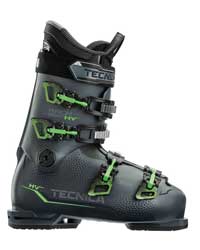
Last: 103mm
Flex: 90
Binding Compatibility: Alpine (optional GripWalk)
Ability Level: Intermediate-Advanced
Tecnica is a respected brand in the sports world. Their Mach1 is among the favorite top-end downhill models. Being a low-priced sibling, the Mach Sport HV 90 also gets some touches from the Mach1. The HV 90 is for those who are looking for ease of use and warmth in their boots. These are soft boots so you won’t be wasting half of the season breaking in these boots. They are comfortable out of the box. Just put them on and off you go to have fun. The HV 90 has a 103mm wide last which is smaller than 104mm but the fitting in the rest of the boot is generous. The generous all-around fitting makes it a problem to fit people with narrow legs. So, if you have wide toes and narrow legs, you are done!
In terms of flex, the HV 90 is a step up from the Mach Sport HV 80, having a flex rating of 90, hence the 90 in its name. The flex rating of HV 80 should be obvious now and so is the 70 in the boots above. But anyway, a higher flex rating makes it a great choice for fast learners who are looking for stiffer boots. A 4 aluminum buckle setup with micro-adjustment provides a secure, custom fit. It has a cozy liner that keeps the feet warm. The HV 90 comes with ISO 5355 replaceable soles but GripWalk soles are sold separately.
What I like: A good balance of price and features
What I don’t like: Advanced skiers may want a little more stiffness, too wide for narrow feet
See the Tecnica Mach Sport HV 90 See the Women’s Mach Sport HV 85
7. Dalbello Veloce Max 75
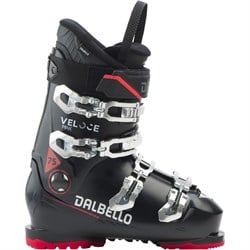
Last: 104mm
Flex: 75
Binding Compatibility: Alpine
Ability Level: Beginner-Intermediate
The Dalbello Veloce Max 75 Ski Boots are a fantastic option for beginner to intermediate skiers with wider feet who value comfort above all else. Featuring a roomy 104mm last, these boots are designed for high-volume feet, eliminating the pinching and pressure points that plague narrower models. The DB Hyperlite shell and cuff keep the boot lightweight yet supportive, while the IF Sport Liner adds a layer of warmth and cushioning for long days on the slopes. With a soft flex rating of 75, the Veloce Max 75 provides easy control and forgiveness, helping new skiers build confidence without fatigue.
Dalbello has equipped the Veloce Max 75 with four D6 buckles and a 40mm Velcro power strap for secure closure and simple adjustment. The ISO 5355 Alpine sole ensures solid compatibility with standard alpine bindings, offering reliable grip and stability. While these boots prioritize comfort and ease of use, they still deliver dependable performance for steady progression on groomed runs. Ideal for first-time buyers or casual skiers, the Veloce Max 75 makes skiing enjoyable and pain-free, letting you focus on improving your technique rather than battling sore feet.
What I like: Extremely roomy 104mm last for wide feet.
What I don’t: Too soft for aggressive or advanced skiers
See the Dalbello Veloce Max 75 See the Women’s Veloce Max 65
8. Nordica Sportmachine 3 80
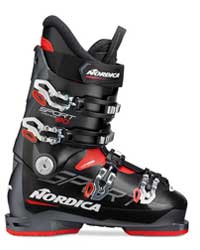
Last: 102mm
Flex: 80
Binding Compatibility: Alpine
Ability Level: Beginner-Intermediate
Nordica’s Sportmachine collection is a step down from its well-respected Speedmachine collection. Is Sportsmachine is Nordica’s mid-range lineup with an emphasis on comfort rather than performance as in Speedmachine. It has a soft flex but not the softest which makes it suitable for progressing beginners. It is also a good choice for skiers who are looking to dump the rentals and buy their first pair of ski boots. If you are one of those mentioned people, then Sportmachine 80 should be on your radar.
The Sportmachine 80 has a plush liner to make it comfortable. The tip of the boot features soft plastic which makes it easier to put on and take off. The boot also features a 4 buckle setup with aluminum buckles but without micro-adjustability. The last is 102mm so if you have wide toes, this isn’t for you. Like the Tecnica Sports HV 90, the Sportmachine 80 is also a stripped-out variation of high-quality resort boots. Tecnica gets a slight edge having better quality and a customizable shell, but the idea is the same. The overall setup of both the boots is similar. It should come down to fit and availability.
What I like: Good option for intermediate skiers with wide feet
What I don’t like: Average performance
See the Nordica Sportmachine 3 80 See the Women’s Sportmachine 3 65
9. Atomic Hawx Ultra 110 S GW
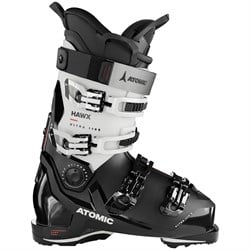
Last: 98mm
Flex: 110
Binding Compatibility: GripWalk
Ability Level: Beginner-Intermediate
The Atomic Hawx Ultra 110 S GW ski boots are a top choice for skiers with narrow feet. These boots stand out for their impressive fit and lightweight design, thanks to Atomic’s Memory Fit technology. This feature allows for custom heat molding, ensuring a perfect fit in minutes. Even if you have slightly wider feet, a good bootfitter can adjust them to fit comfortably. With a narrow 98mm last, they are designed to be snug but can be expanded up to 6mm in the forefoot and 10mm around the ankle. The warmth of 3M™ Thinsulate™ insulation ensures your feet stay cozy, even in cold conditions.
The True Flex technology maintains a consistent flex, no matter the temperature, providing a responsive skiing experience. The Prolite construction adds strength where it’s needed most, without adding unnecessary weight. The Energy Backbone further enhances power and lateral transmission, giving you better edge control on the slopes. The boots are comfortable, easy to walk in, and offer great support for your ankles. The addition of custom insoles is a great touch, and the 6000 Series Aluminum Buckles and 35mm Velcro strap add to the overall secure fit. Plus, they are easy to get on and off, which is a bonus for long days on the mountain.
What I like: Excellent custom fit with Memory Fit technology.
What I don’t like: Narrow 98mm last may not fit wider feet without adjustments.
See the Atomic Hawx Ultra 110 S GW See the Women’s Hawx Ultra 95 S GW
10. Rossignol Track 90 HV+
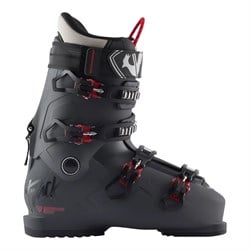
Last: 104mm
Flex: 90
Binding Compatibility: Alpine
Ability Level: Intermediate-Advanced
The Rossignol Track 90 HV+ GW Ski Boots are built for skiers who value warmth, comfort, and convenience above all else. With a roomy 104mm last, they cater perfectly to wider feet, offering plenty of space in the forefoot, toe box, and ankle area without losing that snug heel hold for control. The easy-entry plastic insert over the instep makes slipping in and out of these boots surprisingly effortless — a real blessing on cold mornings. Meanwhile, the Wintherm™ insulation keeps your toes warm even on frosty chairlifts, while the Sensor Matrix shell design trims weight and enhances energy transmission for solid downhill performance.
Performance-wise, the Track 90 HV+ delivers a well-balanced 90 flex, ideal for intermediate to advanced skiers who want responsiveness without sacrificing comfort. The Full Custom Liner allows for personalized fitting, eliminating pressure points and improving overall control as the liner molds to your foot shape. Add in 4 micro-adjust aluminum buckles and a 40mm power strap, and you’ve got a boot that feels secure yet easy to fine-tune. If you’ve struggled with tight boots in the past, this model provides a forgiving yet capable ride that lets you focus on the slopes instead of sore feet.
What I like: Roomy fit for wide feet, excellent warmth, easy entry/exit, customizable liner.
What I don’t: Not ideal for narrow feet, moderate flex may be too soft for aggressive skiers.
See the Rossignol Track 90 HV+ See the Women’s Track 70
Critical Ski Boot Considerations
Boots are an important component of your ski kit. You should put the extra time and the energy to find out what pair of boots better suits you. Everyone’s foot is unique and every boot fits differently to every person.
The features of your boot depend on your ability level, aspirations, height, weight, and other factors. However, ski boots are complex, and finding the right one does pose a problem because there are some parameters to keep track of. But this guide can help you clear some of the confusion and make it easy for you to be able to choose your ski boots.
Flex
Choosing the flex of your boot is a great way to start. Almost all ski boots come with a flex rating. The range of the flex rating starts from 60 and goes all the way up to 140. The lower the flex rating the softer the boot and vice versa.
Boots with a low flex rating are soft and comfortable and so are adequate for beginners. These boots are forgiving on the feet but they provide less support. Since beginners aren’t aggressive as the intermediates and experts, they don’t need that much support. Soft boots are a great way to allow beginners to get used to ski boots.
Boots with increased stiffness are more suitable for intermediate and experts. The stiffer the boot gets the more uncomfortable it becomes. But the support increases as the stiffness increases which is necessary at high speeds. Stiff boots are uncomfortable but they allow efficient energy transfer and produce an instant response to handle high speeds.
One other factor that contributes to the determination of boot flex besides skill level is body weight. If you are a heavy person, you are going to need a stiffer boot to support your body weight. Boots need to be stiff enough to support body weight when skiing. A heavier person would produce more momentum even at low speeds. The boots should be stiff enough to support the momentum.
The general recommendations of boot flex based on ability level are as follows:
- Beginner: 70-90
- Intermediate: 90-110
- Advanced: 100-120
- Expert: 120+
Size
Ski boots are not sized like regular boots. Ski boot size is based on a separate scale called the Mondopoint. It is the base length of the foot in centimeters. If the length of your foot measures 27cm, then your Mondo size is 27.
Conversion of street shoe size to Mondopoint is an option but it is not recommended. Shoe sizes change from brand to brand or often don’t fit precisely. The conversion is never ideal and it should only be used as a last resort.
Besides, your actual Mondo size may be smaller than the one you measure up to because ski boots are recommended with a tight fit. Ski boot liners also become soft over time and leave space inside the boot making the boot feel loose. It is recommended that you start with a small size.
Width or Last
The width of the boot is also known as the last of the boot. It is measured in millimeters and is based on the width of the forefoot. Manufacturers offer boots with varying lasts but generally, there are three categories of last; narrow, average, and wide.
The last of the boot matters because as you go downhill, your feet experience side-to-side motion. If you don’t have enough space in your forefoot to compensate for this motion, then it will become uncomfortable. You should also have enough room for your toes to breathe and not feel stuffed.
Liner
Ski boots have a hard plastic outer shell that provides shape to the boot. The inner liner of the boot provides comfort and insulation to keep the feet warm. The liner is removable in almost all the boots available today.
In most ski boots, the liner has a two-piece design for added comfort. The amount of foam in the liner varies depending on use. Contrary to natural belief, getting the most push liner isn’t ideal at all. A plush liner would provide comfort, but it won’t provide the support you need on the hills especially during high speeds.
A liner that balances comfort and support is a preferred liner. It is also worth noting that the liner conforms to the shape of the feet. A boot that felt snug at first will slowly start feeling relaxed after some time of use. But when buying a boot, the liner shouldn’t feel too tight.
Heat-moldable Liners
Heat-moldable liners are of two types; liners that use body heat to conform to your foot’s shape and liners that are baked in a special oven. The benefit of a heat-moldable liner is that it provides a custom fit. These liners are extremely comfortable because of the precise fit that they provide.
For liners that require external heat, you would have to take them to a shop that has the proper equipment. You can also do it at home, but that is not recommended. After heating the liners, you wear them – after they reach a safe warm temperature – so that they conform to your foot’s shape.
Another benefit of heat-moldable liners is that they cut down the break-in period to mere hours or even minutes. So, you don’t have to waste half of your season breaking-in hard boots.
Buckles and Straps
For a long time, the four-buckle system has been considered a standard for adults. Performance boots still have a four-buckle system. There are two buckles across the foot, one at the bend near the ankle, and one along the shin.
Boots with three buckles remove the buckle at the ankle to save weight. But it is important to note that a four-buckle system is not necessarily better than a three-buckle system. If a boot with fewer buckles can provide the right fit and stabilize the boot then that is a better option. It will cut down weight and give a smoother profile to your boot.
The benefit of four buckles, however, is that they provide more options for local loosening and tightening. In most boots, the buckle closest to the toe is only decorative. So, a four-buckle system isn’t necessarily superior to others.
When looking for a ski boot, you should prefer the fit of your boot over the number of buckles that your boot has. If the fit of your boot is right for you, then the role of the buckles is reduced to fine-tuning only.
The strap at the top of the boot is called the power strap. It keeps the leg and the top portion of the boot locked in place for better performance. Adding a strap is a better option than adding a 5th buckle as it saves weight and is more comfortable. The buckles and the strap work together to achieve an excellent fit. They also make it easier to accommodate varying sizes of legs and feet.
Soles
You will find the two most common types of soles in ski boots; ISO 5355 Alpine and GripWalk. ISO 5355 is flat underfoot and is released from the toe piece on a standard alpine binding. Walking is not recommended with ISO soles as their flat profile makes them slippery on smooth surfaces like hard ice or even washroom tiles.
GripWalk soles are the newer soles with a rockered profile. It uses a plastic/rubber compound for traction. GripWalk is commonly found on high-end boots. When buying ski boots, you would have to make sure that soles are compatible with your ski bindings. New bindings are multi-norm ready.
Warmth
There has been a lot of improvement in liner technology over time. Modern boots have liners that are better insulators and are comfortable. So, you don’t need heavy-duty socks to keep your feet warm.