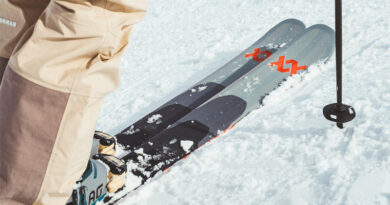
Salomon QST 94 vs QST 100: Ski Review
The Salomon QST collection has long been a staple for skiers seeking versatility, but the recent redesign for the 2026 season has sharpened the line’s focus. The introduction of the QST 94 and QST 100 replaces the previous QST 92 and QST 98, respectively, creating a clearer distinction between a firm-snow leaning all-mountain tool and a playful, soft-snow oriented freeride ski. While they share a family name and a similar construction philosophy, the 6mm difference in waist width translates to two very different on-snow experiences.
Construction and Shared DNA
Before diving into the differences, it is important to note what these skis share. Both models utilize a Full Poplar Woodcore, which aims to balance liveliness with vibration dampening. Both feature Salomon’s Cork Damplifier technology in the tips and tails, a material claimed to be three times more absorbing than Koroyd, helping to quiet the ride without adding excessive weight.
They also share a Full Sandwich Sidewall construction and a Titanal binding reinforcement underfoot. However, the QST 94 and QST 100 diverge significantly in their geometry, rocker profiles, and intended audiences. Notably, the QST 94 replaces the QST 92 and features a more squared-off, energetic tail, while the QST 100 replaces the QST 98 with a wider platform and a more progressive shape.
Specifications Comparison
The raw numbers provide the first clue into their distinct personalities. While the turn radius on paper looks similar, the effective edge and rocker profiles create very different turn shapes on the snow.
| Feature | Salomon QST 94 | Salomon QST 100 |
|---|---|---|
| Dimensions (Tip/Waist/Tail) | 133-134 / 94 / 119-120 mm | 134 / 100 / 122 mm |
| Turn Radius (approx.) | ~16.5 m @ 180 cm | ~17.5 m @ 180 cm |
| Rocker Profile | 20% Tip / 64% Camber / 16% Tail | 21% Tip / 62% Camber / 17% Tail |
| Weight (per ski, approx.) | ~3,040g (172cm) | ~1,880g – 1,944g (180cm) |
| Primary Terrain Focus | Firm Groomers, Moguls | Soft Snow, Trees, Playful All-Mountain |
On-Snow Performance: The QST 94
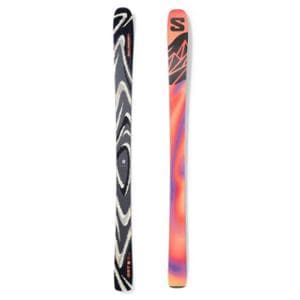
- Waist Width: 94 millimeters across all lengths
- Ski Camber: Tip and tail rocker with a partial twin tail
- Core: Full poplar woodcore with basalt and fiberglass laminate
- Sidecut Radius: 13.5 m (156 cm) up to 17.5 m (188 cm)
- Weight (Pair): 6 lbs. 11.2 oz. (156 cm) up to 8 lbs. 8.8 oz. (188 cm)
Firm Snow and Groomer Dominance
The QST 94 is, first and foremost, a firm-snow specialist. Testers note that it excels on groomers, offering a remarkably planted and stable feel on edge without the demanding, torsionally stiff nature of a dedicated frontside carver. The squared-off tail design provides excellent energy out of turns, making it snappy and engaging for short to medium-radius GS turns. It is an incredibly approachable ski for its category; getting in and out of turns is easy, yet it retains a high level of composure at speed on hardpack.
Moguls and Off-Piste Limitations
Where the QST 94 surprises is in the moguls. The same characteristics that make it fun on groomers—light swing weight and a forgiving flex—allow it to navigate chunky bumps with ease. However, it is not a powder ski. Reviews indicate that in fresh snow, it falls short of true freeride performance, and while it can handle variable terrain, there are better options if soft-snow flotation is a priority. It is best viewed as an advanced intermediate to expert ski for someone who spends 80% of their time on piste but wants the versatility to explore side hits and bumps.
On-Snow Performance: The QST 100

- Waist Width: 100 millimeters across all sizes
- Ski Camber: Tip and tail rocker with a partial twin tail
- Core: Full poplar wood core with cork Damplifier and basalt superlight fibers
- Sidecut Radius: 14.5 m (156 cm) to 17.5 m (180 cm)
- Weight (Pair): 6 lbs. 15.47 oz. (156 cm) to 8 lbs. 4.63 oz. (180 cm)
Playfulness and Soft Snow Versatility
The QST 100 leans heavily into the “fun” factor. It is described as the most playful QST ski yet, featuring a poppy tail and a lightweight construction that encourages jumps and tricks. At around 1,880 grams (180cm), it is notably lighter than many competitors in the 100mm class, which reduces swing weight and makes it feel incredibly nimble in tight trees and technical terrain. It is super surfy and loose, responding well to a centered stance despite a fairly traditional mount point.
High-Speed Stability and Charging Limits
The trade-off for this playfulness is high-speed composure. While the QST 100 has decent suspension for its weight, as speeds increase and turns get larger in challenging snow, the tips can feel twitchy, and strong skiers may overwhelm the shovels. It is not a ski designed for straight-lining big mountain lines or carving icy groomers at Mach speed. Instead, it is a ski that rewards a dynamic, light-on-your-feet style, prioritizing maneuverability over unflappable stability. It is an ideal “one-ski quiver” for a region where 8 inches of fresh snow is common, but it will feel out of its depth on bulletproof ice.
Key Differences at a Glance
- Turn Shape: The QST 94 favors short-to-medium radius GS turns with strong edge grip. The QST 100 prefers a looser, more pivoting style, excelling in tight spots and playful turn shapes.
- Weight and Swing Weight: The QST 100 is significantly lighter (approx. 1,880g vs. 3,040g), making it easier to throw around in the air and pivot in trees. The QST 94 feels more substantial and planted on edge.
- Snow Preference: The QST 94 is a firm-snow tool that can dabble off-piste. The QST 100 is a soft-snow tool that can survive on piste.
- Skier Style: The QST 94 suits a directional skier who drives the shins and carves. The QST 100 suits a more progressive, freestyle-influenced skier who stands centered and looks for natural features.
Which Ski Should You Choose?
Choose the QST 94 if:
You live in a region with firmer snow conditions, or you are a frontside skier who values precise edge grip and energy return on groomers above all else. You want a ski that feels stable and damp underfoot, and you only venture off-piste occasionally on soft snow days. It is an excellent choice for the advanced skier looking to progress their carving skills without being punished by a race-bred ski.
Choose the QST 100 if:
You prioritize playfulness, maneuverability, and soft-snow performance. You are the skier who sees the mountain as a playground and wants a lightweight ski that is easy to pivot in the trees, smear in powder, and pop off side hits. It is the better choice for a one-ski quiver for a skier who values versatility and fun over raw high-speed charging power, especially if you ski in areas that receive frequent moderate snowfalls.
Final Verdict
The Salomon QST 94 and QST 100 are not direct competitors; they are siblings with different talents. The QST 94 is the precise, energetic technician that thrives on the corduroy. The QST 100 is the playful, lightweight freerider that comes alive when the snow softens up. Choosing between them comes down to an honest assessment of your typical snow conditions and your preferred turn shape. If you want to carve, pick the 94. If you want to play, pick the 100.