
Best Skis for Heavy Skiers of 2027
Finding the right skis can be tough if you are a heavier skier. You need gear that stays stable at speed, holds an edge on hardpack, and does not fold under pressure. The skis in this guide are built with stronger cores and stiffer flex patterns to support more weight. Whether you love groomers, powder, or both, these options offer the control and confidence you need to ski your best all day long.
1. Nordica Enforcer 94

- Waist Width: 94 millimeters
- Ski Terrain: Groomed and powder
- Sidecut Radius: 16.5 to 18 meters depending on length
- Core: Wood/metal/Pulse core
The Nordica Enforcer 94 is a favorite among skiers who spend most of their time on trails, and it is easy to see why. The construction creates a smooth, stable ride that holds up well at speed, while True Tip technology keeps the ski playful and responsive when you want to mix things up. It is an exceptionally versatile option that handles groomed runs with confidence and still has enough float for powder days.
With a 94 mm waist and tip and tail rocker, the Enforcer 94 strikes a nice balance between carving precision and off-trail capability. The wood, metal and Pulse core adds dampness and power without making the ski feel overly demanding. It suits strong intermediate to advanced skiers looking for a dependable daily driver that can do a bit of everything.
- Pros: Smooth and stable at speed, versatile across terrain, playful tip design, strong edge grip
- Cons: On the heavier side, not the most forgiving for beginners, flat tail limits switch skiing
2. Nordica Santa Ana 92 – Women’s

- Waist Width: 92 millimeters
- Ski Terrain: Groomed
- Sidecut Radius: 15.5 to 16.5 meters depending on length
- Core: Wood/metal/Pulse core
The Nordica Santa Ana 92 is built for women who want to make powerful, precise turns with confidence. Stable construction and a 92 mm waist offer versatility for skiers who spend their time on the trails. The ski feels planted and predictable, making it a great companion for carving groomers from first chair to last lap.
Tip and tail rocker help the Santa Ana 92 stay nimble and easy to steer, while the wood, metal and Pulse core delivers a smooth, damp feel underfoot. It rewards good technique without punishing lighter skiers, and the flat tail provides solid support through the finish of a turn. This is a strong choice for intermediate to advanced women seeking a frontside-focused all-mountain ski.
- Pros: Precise and stable carving, confidence-inspiring edge grip, versatile 92 mm waist
- Cons: Limited float in deep snow, heavier than some rivals, flat tail restricts freestyle use
3. Völkl M7 Mantra

- Waist Width: 96 millimeters
- Ski Terrain: Groomed and powder
- Sidecut Radius: 15.2 to 25.7 meters (4 Radius Drive)
- Core: Wood
Built to excel on the slopes, the Völkl M7 Mantra delivers confidence-inspiring stability and control from first chair to last lap. The 4 Radius Drive tech makes it both easy to handle and stable, giving skiers a range of turn shapes to work with. It is a dependable all-mountain tool that feels composed whether you are carving hardpack or pushing into softer snow.
The 96 mm waist and tip and tail rocker create a versatile platform that transitions smoothly between groomed and powder terrain. The wood core keeps the ski lively and responsive, while the flat tail adds support and drive through the turn. Strong intermediate and advanced skiers will appreciate the Mantra’s blend of agility and calm, high-speed stability.
- Pros: Versatile 4 Radius Drive shaping, stable and smooth at speed, strong edge hold
- Cons: Demanding for lighter skiers, relatively heavy, flat tail limits switch skiing
4. Völkl M7 Mantra – Women’s

- Waist Width: 96 millimeters
- Ski Terrain: Groomed and powder
- Sidecut Radius: 12.2 to 23.9 meters (4 Radius Drive)
- Core: Multilayer wood
From powder to ice, the Völkl M7 Mantra for women inspires confidence with Titanal frames that combine agility with control. The 4 Radius Drive tech makes the ski both easy to handle and stable, so it adapts to changing conditions without feeling nervous. It is a capable all-mountain option for women who want one ski to cover a lot of terrain.
The 96 mm waist and tip and tail rocker provide float in softer snow and reliable grip on groomers. The multilayer wood core adds a smooth, energetic feel, and the flat tail supports strong turn finishes. Intermediate to advanced skiers will find it predictable and rewarding, particularly those who like to ski with speed and precision.
- Pros: Agile yet stable, versatile across groomed and powder, strong Titanal-backed control
- Cons: Fairly heavy for some skiers, requires solid technique, flat tail restricts freestyle
5. Elan Ripstick 96

- Waist Width: 94 to 96 millimeters depending on length
- Ski Terrain: Groomed and powder
- Sidecut Radius: 15.8 to 17.8 meters depending on length
- Core: Wood
On the groomers and in the powder, the Elan Ripstick 96 lets you fly down the hill. It redefines the all-mountain skiing experience with the versatility to excel both on and off trail. The ski feels light and lively underfoot, making quick direction changes easy while still offering enough substance for aggressive skiing.
The wood core and tip and tail rocker create a smooth, balanced flex that works well across conditions. With waist widths ranging from 94 to 96 mm, the Ripstick 96 floats reasonably well in soft snow and still carves confidently on hardpack. It is a great fit for intermediate to advanced skiers who want a playful yet capable one-ski quiver.
- Pros: Light and playful, versatile on and off trail, easy turn initiation, good float for its width
- Cons: Less damp at high speed, not ideal for heavy charger skiing, flat tail limits switch skiing
6. Elan Ripstick 94 – Women’s

- Waist Width: 92 to 94 millimeters depending on length
- Ski Terrain: Groomed and powder
- Sidecut Radius: 13.8 to 15.8 meters depending on length
- Core: Wood
From manicured groomers to slushy bumps to surprise powder days, the Elan Ripstick 94 for women performs. It redefines the all-mountain skiing experience with the versatility to excel both on and off trail. The ski is light and nimble, making it easy to pivot through bumps and trees while remaining composed on groomed runs.
The wood core and tip and tail rocker deliver a smooth, predictable flex that suits a wide range of ability levels. With a 92 to 94 mm waist, it offers a nice balance of quick edge-to-edge response and soft-snow float. Women looking for a forgiving yet energetic all-mountain ski will find the Ripstick 94 a fun and reliable choice.
- Pros: Light and easy to maneuver, versatile across conditions, forgiving flex
- Cons: Less stable at very high speed, not a dedicated powder ski, flat tail limits freestyle
7. Völkl Mantra 88

- Waist Width: 88 millimeters
- Ski Terrain: Groomed
- Sidecut Radius: 16.2 to 31.2 meters depending on length
- Core: Multilayer wood
Carve groomers or navigate variable terrain with precision and stability on the Völkl Mantra 88. Key updates dial up the fun with sharper turns and smoother flow, making this a strong frontside-focused all-mountain ski. It feels planted and confident underfoot, encouraging skiers to push their edges and ski with intent.
The multilayer wood core provides a lively, energetic feel, while tip and tail rocker helps the ski stay versatile in softer snow and choppy conditions. The flat tail adds support and drive through the turn. Intermediate to advanced skiers who spend most of their time on piste will appreciate the Mantra 88’s blend of grip, stability and smooth turn shape.
- Pros: Strong edge grip and precision, stable at speed, smooth turn flow, versatile rocker profile
- Cons: Narrow waist limits powder float, heavier build, flat tail restricts freestyle
8. Völkl Mantra 88 – Women’s

- Waist Width: 88 millimeters
- Ski Terrain: Groomed and powder
- Sidecut Radius: 11.9 to 23.5 meters depending on length
- Core: Wood
You won’t have to choose between piste and powder, moguls and groomers, with the Völkl Mantra 88 for women. It does it all with its versatile geometry. The wood core and Tailored Titanal Frame keep it stable, giving skiers a confident platform to build on across a range of conditions.
Tip and tail rocker help the ski stay nimble and forgiving, while the 88 mm waist provides quick edge-to-edge response on groomers and enough width to handle softer snow. The flat tail supports strong turn finishes. Intermediate to advanced women looking for a versatile, stability-focused ski will find the Mantra 88 a dependable companion.
- Pros: Versatile geometry, stable and smooth, quick edge-to-edge, handles groomed and soft snow
- Cons: Modest float in deep powder, relatively heavy, flat tail limits freestyle
9. Atomic Bent 100

- Waist Width: 100 millimeters
- Ski Terrain: Groomed and powder
- Sidecut Radius: 16.5 to 19.5 meters depending on length
- Core: Light Woodcore
Built for freeride and freestyle, the Atomic Bent 100 is a versatile do-everything quiver of one. Its rocker profile was designed to deliver more tail pop and easier transitions to switch, making it a fun and playful option for skiers who like to mix in tricks and creative lines. It handles groomed runs and powder with equal enthusiasm.
The Light Woodcore keeps the ski manageable and lively, while the twin tail and tip and tail rocker support a freestyle-friendly feel. With a 100 mm waist, it offers a nice balance of float and quickness. Intermediate to advanced skiers looking for a playful all-mountain ski that can do a bit of everything will enjoy the Bent 100.
- Pros: Playful and poppy, easy switch transitions, versatile across terrain, lightweight feel
- Cons: Less damp at high speed, not the most precise carver, twin tail can feel loose on hardpack
10. Salomon QST 106

- Waist Width: 106 millimeters
- Ski Terrain: Groomed and powder
- Sidecut Radius: 16.5 to 20.5 meters depending on length
- Core: Full Poplar Woodcore
A blend of the best of the last four generations of 106 skis, the Salomon QST 106 performs in all conditions. Its 106 mm waist and progressive freeride shape are perfect for corduroy and powder, making it a true all-mountain freeride tool. It feels confident and smooth whether you are carving groomers or floating through fresh snow.
The Full Poplar Woodcore adds a lively, energetic feel, while the tip and tail rocker and partial twin tail support playful skiing and easy turn release. The QST 106 is stable enough for aggressive skiers yet forgiving enough for intermediates pushing into freeride terrain. It is a strong choice for skiers who want one ski to handle a wide range of conditions.
- Pros: Versatile in groomed and powder, stable and smooth, playful partial twin tail
- Cons: Wider waist is slower edge-to-edge, heavier than some all-mountain options
11. Atomic Bent 110

- Waist Width: 110 millimeters
- Ski Terrain: Groomed and powder
- Sidecut Radius: 14.4 to 19 meters depending on length
- Core: Light Woodcore
Great for charging lift-served powder laps, the Atomic Bent 110 is perfect for deep days. HRZN Tech Tip and Tail give you playful performance and better float in blower without adding bulk to the skis. It is a fun, surfy option that encourages slashing and creative lines in soft snow.
The Light Woodcore keeps the ski maneuverable, while the twin tail and tip and tail rocker support freestyle-friendly riding and easy switch transitions. With a 110 mm waist, it floats well in powder and still handles groomed runs reasonably well for its width. Advanced skiers who want a playful powder-oriented ski will find the Bent 110 a blast.
- Pros: Excellent float in deep snow, playful and surfy, HRZN Tech tip and tail, easy switch transitions
- Cons: Wide waist is slower on groomers, less precise carving, twin tail feels loose on hardpack
12. Rossignol Sender 110

- Waist Width: 109 to 110 millimeters depending on length
- Ski Terrain: Powder
- Sidecut Radius: 16 to 20 meters depending on length
- Core: Wood
Send it anywhere the snow takes you, inbounds or out, with the Rossignol Sender 110. These full sidewall skis combine the playful response of powder skis with the confident grip of big-mountain boards. They feel stable and planted when conditions get variable, making them a trustworthy partner for aggressive freeride skiing.
The wood core and tip and tail rocker provide float and maneuverability in deep snow, while the twin tail supports switch skiing and playful moves. With a 109 to 110 mm waist, the Sender 110 is happiest in powder but can still hold its own on groomed runs. Advanced and expert skiers looking for a capable freeride ski will appreciate its blend of power and playfulness.
- Pros: Confident big-mountain grip, playful powder performance, stable in variable snow
- Cons: Heavy for some skiers, wide waist is slow on groomers, demands strong technique
13. K2 Mindbender 101

- Waist Width: 101 millimeters
- Ski Terrain: Groomed and powder
- Sidecut Radius: 20 meters
- Core: Wood
From pow stashes to groomer arcs, the K2 Mindbender 101 is your true freeride one-ski quiver. Dark Matter keeps the ride smooth when the snow gets chunky, while Titanal I-Beam adds the backbone you need at speed. It is a confidence-inspiring ski that encourages aggressive skiing across the mountain.
The wood core and tip and tail rocker create a versatile platform that handles both soft snow and groomed terrain. The partial twin tail adds playfulness and support for switch skiing. Strong intermediate to advanced skiers looking for a stable, smooth-riding freeride ski will find the Mindbender 101 a dependable choice for everyday use.
- Pros: Smooth in chunky snow, stable at speed, versatile across terrain, Titanal I-Beam adds power
- Cons: Relatively heavy, not the most playful, demands solid technique
14. Rossignol Soul 102 – Women’s

- Waist Width: 100 to 101 millimeters depending on length
- Ski Terrain: Groomed and powder
- Sidecut Radius: 14 to 15 meters depending on length
- Core: Wood
Extend your range with the Rossignol Soul 102 for women. In bounds and out, it has an effortless freeride feel that can go anywhere the snow takes you. The ski can cruise, charge and float as needed, making it a versatile companion for women who like to explore the whole mountain.
The wood core and tip and tail rocker provide a smooth, predictable flex that handles groomed runs and powder with equal ease. The partial twin tail adds playfulness and support for switch skiing. With a 100 to 101 mm waist, the Soul 102 offers a nice balance of float and quickness. Intermediate to advanced women seeking a do-it-all freeride ski will enjoy its effortless feel.
- Pros: Effortless freeride feel, versatile across terrain, playful partial twin tail, good float
- Cons: Relatively heavy, not the most precise carver, wide waist slows edge-to-edge on hardpack
15. K2 Reckoner 110

- Waist Width: 110 millimeters
- Ski Terrain: Groomed and powder
- Sidecut Radius: 22 meters
- Core: Pure aspen
Built for exceptional float and maneuverability, the K2 Reckoner 110 is a twin-tip ski that also provides a stable and powerful ride. You can use it to slash, jump and cut your way downhill. Its full rocker profile gives it a loose, surfy feel that shines in soft snow and creative terrain.
The pure aspen core keeps the ski lively and responsive, while the twin tail supports switch skiing and freestyle moves. With a 110 mm waist, the Reckoner 110 floats well in powder and remains manageable on groomed runs for its width. Advanced skiers who want a playful, powder-oriented twin-tip will find the Reckoner 110 a fun and capable choice.
- Pros: Exceptional float and maneuverability, playful twin-tip design, stable and powerful
- Cons: Full rocker reduces hardpack grip, wide waist is slow on groomers
How to Choose Skis for Heavy Skiers
Heavier skiers face a unique set of challenges on the mountain. A ski that feels lively and responsive for a 150-pound skier can feel like a noodle under a 220-pound skier, folding at speed and offering little confidence on hard snow. The good news is that ski manufacturers build models specifically designed to handle more weight and power. This guide walks you through the key factors—length, flex, width, and bindings—so you can find a setup that stays stable, holds an edge, and lets you ski the way you want.
Why Weight Matters in Ski Selection
Ski design is fundamentally about balancing forces. When you weigh more, you generate more force through your boots and into the ski. A lighter skier might flex a ski easily, but a heavier skier can overwhelm a soft flex, causing the ski to bend unpredictably or lose its shape entirely. Putting a heavy skier on a soft ski will often result in a broken ski, a bent tip, or a need for new skis every year.
This does not mean heavier skiers need the stiffest, most demanding planks on the wall. Modern ski construction allows for torsional stiffness (resistance to twisting) without requiring a brutally stiff longitudinal flex. The goal is a ski that supports your weight, maintains its camber and sidecut shape under load, and gives you predictable edge grip.
Choosing the Right Ski Length
The traditional height-based ski length charts are a starting point, but weight deserves equal consideration. Most sizing guides assume an average build, which means heavier skiers often need to size up.
As a general rule, heavier skiers should add length to whatever their height-based starting point suggests. A longer ski provides more surface area to distribute weight, which translates to better stability at speed and more float in soft snow. If you are heavier than average for your height, longer skis can provide the support and stability you need. If you weigh more than average for your height, go toward the higher end of the suggested length range.
For an advanced or expert heavier skier, this might mean a ski that reaches forehead height or even slightly above. A heavier intermediate skier should still lean toward the longer end of the intermediate range rather than the shorter end. The key is to avoid going too short: a short ski under a heavy skier will sink in powder, feel unstable at speed, and may not engage the edge properly on hardpack.
Flex: Stiff Enough to Support, Not So Stiff It Punishes
Flex is where heavier skiers need to be most deliberate. A ski that is too soft will collapse under a heavy skier’s weight, especially in the shovel and tail, leading to unpredictable performance and potential durability issues. A ski that is too stiff, however, can be exhausting and difficult to bend into a turn, particularly for intermediate skiers.
Look for skis described as having a “strong flex” or “stiff flex” in the tip and tail, with a supportive mid-body. Many all-mountain and freeride skis aimed at advanced skiers fit this description. The metal laminates and Titanal layers found in models like the Nordica Enforcer series or Völkl Mantra series add torsional rigidity without making the ski impossible to flex for a competent skier. Avoid entry-level or “soft flex” models unless you are a true beginner and plan to upgrade quickly.
Waist Width: Matching the Ski to Your Terrain
Waist width determines where the ski feels most at home. For heavier skiers, a slightly wider platform can also provide a bit more stability and float, but the primary consideration should still be your intended terrain.
| Waist Width | Best For | Considerations for Heavy Skiers |
|---|---|---|
| 75–90 mm | Groomers, hardpack, frontside carving | Quick edge-to-edge, but less float; choose a stiffer model for support |
| 90–100 mm | All-mountain, mixed conditions | The sweet spot for most heavier skiers; enough width for soft snow without sacrificing groomer performance |
| 100–110 mm | Freeride, soft snow, off-piste | Better float for heavy skiers in powder; slower on hardpack |
| 110+ mm | Deep powder, big mountain | Maximum float, but can be tiring on groomed runs; best as a dedicated soft-snow ski |
Heavier skiers or those who mostly ski powder should consider wider models in the 100–106 mm range for added soft-snow support. For a heavier skier who splits time between groomers and off-piste, a 95–100 mm waist is often the most versatile choice. If you ski mostly groomers, do not assume wider is better—a narrower, stiffer ski will carve more precisely and feel more responsive underfoot.
Construction and Materials to Look For
Heavier skiers should prioritize skis with robust construction. Here is what to look for:
- Metal laminates: Titanal or other metal layers add damping and torsional stiffness, helping the ski stay composed at speed and on hard snow.
- Wood cores: A dense wood core (poplar, beech, or ash) provides durability and a predictable flex pattern. Lightweight cores are fine for lighter skiers but may feel overwhelmed under a heavier load.
- Full sidewalls: Sidewall construction offers better edge grip and durability than cap construction, which is especially important for heavier skiers who put more force through the edges.
- Rocker profile: Tip and tail rocker helps with turn initiation and float, but make sure the camber section underfoot is substantial enough to support your weight. A ski with too much rocker and too little camber can feel vague and unsupportive.
Bindings: Do Not Overlook the DIN Range
Your bindings are the critical link between your boot and your ski. For heavier skiers, the binding’s DIN range must be sufficient to accommodate your weight and skiing style. A binding that maxes out at DIN 10 or 11 may not be appropriate for a heavy, aggressive skier.
The Fischer R 16 binding, for example, has a DIN range of 5 to 16 and is explicitly recommended for “aggressive skiers and higher body weights”. A heavy skier who skis aggressively may need a DIN setting in the 10–14 range depending on boot sole length and skier type. Check with a certified technician to determine your proper DIN setting, but ensure the binding you choose has headroom above that setting. A binding that runs at the very top of its DIN range is more prone to premature release or malfunction.
Also consider stand height. A lower stand height (like the 17 mm on the Fischer R 16) keeps your center of gravity closer to the ski, which can improve edge control and snow feel—a benefit for heavier skiers who want direct power transmission.
Boot Flex: The Often-Ignored Factor
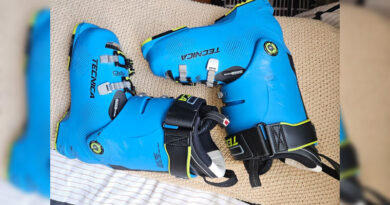
Your ski boots matter just as much as your skis. A heavier skier will flex a boot more easily than a lighter skier, which means a boot that feels appropriately stiff for a 160-pound skier may feel soft and unsupportive for a 220-pound skier. The more the skier weighs, the stiffer the boot needs to be to support the feet and legs correctly.
Heavier intermediate to advanced skiers should generally look at boots with a flex rating of 100 or higher (for men) or 90 or higher (for women). If you are an aggressive expert skier, a 120–130 flex may be appropriate. The goal is a boot that resists your forward pressure without collapsing, giving you a stable platform to drive the ski.
Putting It All Together: A Checklist for Heavy Skiers
- Length: Size up from your height-based starting point. Advanced heavier skiers may go forehead height or slightly above.
- Flex: Look for a ski described as stiff or strong flex, with metal laminates for damping and torsional rigidity.
- Waist width: 90–100 mm for all-mountain versatility; wider if you prioritize powder, narrower if you stay on groomers.
- Construction: Dense wood core, full sidewalls, and sufficient camber underfoot for support.
- Bindings: Choose a binding with a DIN range that gives you headroom above your actual setting. Do not max out the binding.
- Boots: A stiff enough boot to support your weight and transfer power without collapsing.
Heavier skiers do not need to accept compromised performance. By choosing a ski that matches your weight and power, you can enjoy the same stability, edge grip, and confidence that lighter skiers take for granted. The key is to be honest about your weight and skiing style, then select gear that supports both.