Best Mogul Skis of 2026
Mogul skiing is fast, fun, and full of sharp turns and quick bumps. To enjoy it, you need the right skis. Mogul skis are light, flexible, and made for control. They help you move fast and turn quickly between bumps. Choosing the best skis can be hard. There are many options with different features and prices. In this guide, we list the best mogul skis for all skill levels. Whether you are a beginner or a pro, we have a ski for you. We look at key features like flex, weight, and edge grip. Let’s find the perfect skis to match your style and improve your mogul runs.
1. K2 244
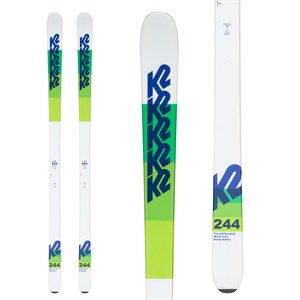
- Core: Fir / Aspen Core – combines power and energy with reduced weight
- Rocker Type: All-Terrain Rocker with gradual rise tip and short tail lift
- Laminates: Triaxial Braid for torsional strength and lively flex
- Sidewalls: DuraCap Construction for lighter weight and added durability
The K2 244 is one of the few true mogul skis still available for the public, and it fully embraces that niche. With a super narrow waist, full camber, and a firm flex, this ski is made to crush zipper lines. The All-Terrain Rocker provides just enough tip rise for control in variable snow, while the flat tail helps you finish turns cleanly. You’ll feel how quick and precise the ski is right away—it cuts through moguls like a knife. Whether the bumps are shallow or the size of Volkswagens, the 244 stays nimble and strong underfoot.
Around the rest of the mountain, the 244 remains surprisingly capable. It’s not a speed demon and can feel unstable above 45mph, but it still handles groomers and cruising with ease. The wood core blends fir and aspen to give it both strength and liveliness. You’ll need to lean into carved turns more than with wider skis, but it’ll hold the line once you do. Best of all, the 244 still brings that old-school mogul vibe that’s hard to find these days. If you’re serious about moguls and want a ski built for them, this is it. It’s fast, twitchy, and ridiculously fun.
Pros
- Exceptional control and quickness in moguls
- Strong edge hold with Triaxial Braid
- Built specifically for advanced bump skiers
Cons
- Not stable at high speeds on open terrain
- Lacks versatility outside of moguls
2. Blizzard Rustler 9
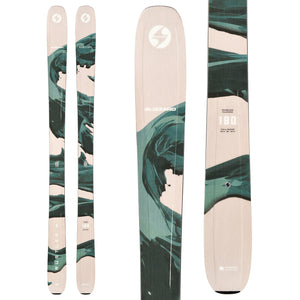
- Terrain: All-Mountain
- Core/Laminates: Wood, Metal
- Ability Level: Intermediate-Advanced
- Rocker Type: Rocker/Camber/Rocker
The Blizzard Rustler 9 is a dynamic all-mountain ski designed for intermediate to advanced riders who love exploring the entire mountain. Built with a wood and metal laminate core, it strikes a great balance between damp stability and playful responsiveness. The medium turning radius provides versatility across wide carving arcs and tighter maneuvers through trees or bumps.
Featuring a rocker-camber-rocker profile and a partial twin tail, the Rustler 9 pivots easily in soft snow while maintaining dependable edge control on hardpack. Since it comes without bindings, skiers can pair it with their preferred setup. It remains a top option for all-mountain skiers who want a playful yet stable daily driver.
Pros:
- Highly versatile performance across diverse terrain
- Playful turn initiation with a partial twin tail
- Solid high-speed dampening from metal laminates
Cons:
- Bindings are not included
- Slightly less carving grip than pure front-side skis
See the Blizzard Rustler 9 See the Women’s Sheeva 9
3. Völkl Peregrine 80
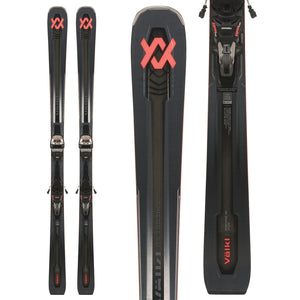
- Terrain: Carving, All-Mountain
- Core/Laminates: Wood, Metal, Carbon
- Ability Level: Intermediate-Advanced
- Rocker Type: Rocker/Camber/Rocker
The Völkl Peregrine 80 is engineered for intermediate to advanced skiers seeking a hard-charging groomer ski with front-side versatility. Featuring a wood core reinforced with metal and carbon, this setup offers exceptional edge hold and high-speed stability on firm snow. The short turning radius allows for effortless, precise turns, making it ideal for laying down sharp carves across groomed runs.
Equipped with integrated Lowride bindings, the Peregrine 80 delivers direct power transfer and immediate response. Its rocker-camber-rocker profile adds subtle tip and tail lift for smoother turn initiation and enhanced control when conditions become variable. Overall, it is a fantastic choice for skiers focused on front-side precision with all-mountain capability.
Pros:
- Excellent edge hold and carving precision
- Includes integrated high-quality bindings
- Lightweight yet stable wood, metal, and carbon construction
Cons:
- Flat tail limits freeride playfulness
- Less suitable for deep powder days
4. Atomic Maverick 88 CTI
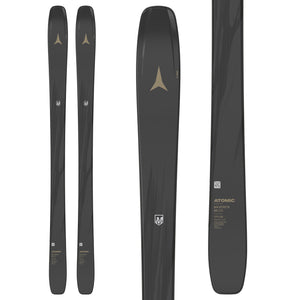
- Core: Power Woodcore (Ash and Poplar)
- Rocker Profile: All Mountain Rocker (20% Tip / 65% Camber / 15% Tail)
- Laminates: CTI Powered Carbon and Titanal
- Terrain: Carving and All-Mountain
The Atomic Maverick 88 CTI is a precision-engineered tool designed to dominate the frontside of the mountain. By fusing carbon fiber and Titanal around a robust ash and poplar core, Atomic has created a ski that feels incredibly stable at high speeds. It offers a significant upgrade in “snap” and responsiveness compared to its predecessors, making it a dream for those who prioritize clean, powerful carves on groomed runs.
While it excels on hardpack, the HRZN 3D tip technology ensures it doesn’t dive when you encounter a bit of fresh snow or afternoon slush. It is approachable enough for intermediate skiers looking to level up but possesses the backbone required for experts to charge with confidence. This ski sits in a league of its own for versatility in the sub-90mm category.
Pros
- Excellent edge grip
- Lightweight yet damp
- Improved slow-speed maneuverability
Cons
- Narrower waist limits deep powder performance
- Requires active input to stay on edge
See the Atomic Maverick 88 CTI
5. Elan Ripstick 96
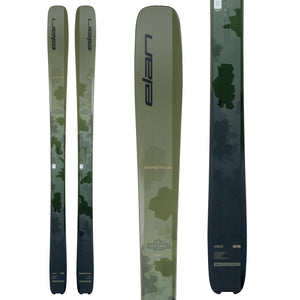
- Technology: Amphibio Profile (Asymmetrical Left/Right)
- Core: TubeLite Wood Core with Carbon Rods
- Laminates: Carbon Deck with UD Carbon and Flax Fiber
- Sidewalls: SST Slanted Sidewall Technology
The Elan Ripstick 96 continues its legacy as one of the most intuitive all-mountain skis on the market. The standout feature is the Amphibio profile, which utilizes a dedicated left and right ski to provide camber on the inside edge for grip and rocker on the outside for easy turn initiation. This version adds flax fiber to the construction, significantly reducing vibration and chatter on firm, uneven terrain.
Despite its lightweight feel, the internal carbon tubes provide a surprising amount of rebound and energy. It is a highly versatile daily driver that feels nimble in the trees and reliable on the groomers. For the skier who wants a poppy, playful ride that doesn’t feel like a workout by the end of the day, the Ripstick 96 remains a top-tier contender.
Pros
- Very lightweight
- Easy turn initiation
- Excellent vibration dampening
Cons
- Asymmetrical design means you can’t swap left/right skis
- Might feel soft for heavy chargers
See the Elan Ripstick 96 See the Women’s Ripstick 94
6. Blizzard Rustler 10
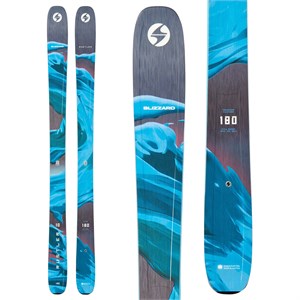
- Core: TrueBlend Freeride Core (Beech, Poplar, Paulownia)
- Laminates: FluxForm Titanal Construction
- Tail Type: Partial Twin Tip
- Waist Width: 102mm (scales with length)
The Blizzard Rustler 10 is a cult favorite for a reason, striking the perfect balance between a damp charger and a playful freeride ski. Using the TrueBlend Freeride core, Blizzard precisely tunes the flex so the ski is stiff underfoot for edge hold but softer at the extremities for buttering and powder flotation. This makes it exceptionally capable in everything from tight glades to wide-open bowls.
What sets the Rustler 10 apart is its FluxForm technology, which uses two pieces of Titanal running along the edges to provide stability without making the ski feel overly demanding or planky. It handles groomed runs with more poise than most skis in this width category while remaining fun and surfy in the deep stuff. It is a true one-ski quiver for the adventurous skier.
Pros
- Incredible versatility
- Stable at speed
- Easy to pivot in soft snow
Cons
- Heavier than carbon-focused alternatives
- Metal construction can be tiring in bumps
7. K2 Reckoner 92
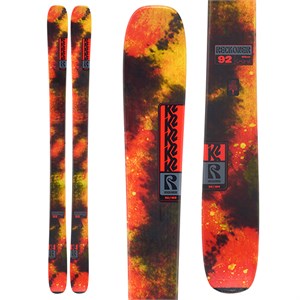
- Core: Aspen Micro Block Core for smooth, consistent flex and damp ride
- Rocker Type: All-Terrain Twin Rocker with early rise in both tip and tail
- Laminates: Triaxial Braid for torsional strength and lively flex
- Sidewalls: Hybritech Sidewall – a blend of cap and sidewall for edge hold and smooth turns
The K2 Reckoner 92 is the perfect middle ground for skiers who want a playful park ski that can also rip across the mountain. With its All-Terrain Twin Rocker and partial twin tip design, it’s nimble enough for spins and butters in the park while still offering solid edge grip for carving groomers. The Aspen Micro Block Core gives the ski a reliable flex and keeps the ride damp and stable on choppy terrain. Whether you’re hitting rails or just cruising with friends, this ski handles everything with a smooth, balanced feel. It’s forgiving enough for progressing skiers yet powerful enough to satisfy more advanced riders.
What really sets the Reckoner 92 apart is its versatility and fun factor. The Triaxial Braid construction adds strength without taking away the ski’s playful nature, while the Hybritech Sidewalls provide a great balance of edge precision and turn initiation. It’s light, poppy, and quick from edge to edge, making it ideal for skiers who like to mix tricks with all-mountain exploration. The sintered base holds speed well, and the overall build quality is excellent for the price. It’s not a powder specialist or race carver, but for everyday freestyle-inspired all-mountain skiing, the Reckoner 92 is a blast.
Pros
- Playful and versatile across park and mountain
- Smooth, damp ride with consistent flex
- Great edge hold and turn initiation
Cons
- Lacks stability at very high speeds
- Not ideal for deep powder or steep terrain
8. Armada Declivity 82 Ti
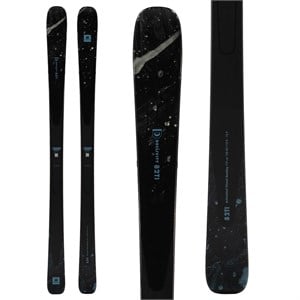
- Core: 100% Poplar Wood Core for smooth power and stability
- Laminates: Articulated Titanal Banding with carbon reinforcement for dynamic energy return
- Rocker Type: EST All Mountain Rocker with camber underfoot and tip/tail taper
- Sidewalls: AR100 Sidewall for maximum edge grip and precision
The Armada Declivity 82 Ti is a frontside machine built for speed and precision. With a narrow 82mm waist and full titanal reinforcement, this ski thrives on groomers and hardpack. The EST All Mountain Rocker profile combines subtle rocker at the tip and tail with camber underfoot, helping you initiate turns smoothly while maintaining edge hold through the carve. Armada’s Articulated Titanal Banding adds serious energy return, making the ski feel lively without feeling too demanding. It’s stiff where it needs to be, especially through the midsection and tail, and really comes alive when you lay it over at speed.
Despite its aggressive setup, the Declivity 82 Ti still feels composed and stable, thanks to its poplar wood core and carbon layers. It’s responsive, powerful, and surprisingly forgiving if your technique slips a bit. The AR100 sidewalls and 2.1 All-Mountain edges ensure great bite on ice and confidence on steeps. This ski is best suited for intermediate to advanced skiers who want to carve hard and move fast across the mountain. It’s not made for powder or park laps, but if your winter plans involve racking up vertical and arcing clean turns, this ski is a top choice. It’s a performance-focused tool that’s both smooth and sharp.
Pros
- Excellent edge hold on groomers and hardpack
- Powerful yet smooth flex pattern
- Fast, stable, and responsive at high speeds
Cons
- Too stiff for beginners or relaxed cruising
- Not ideal for deep snow or freestyle skiing
See the Armada Declivity 82 Ti
How to Choose Mogul Skis: A Complete Guide?
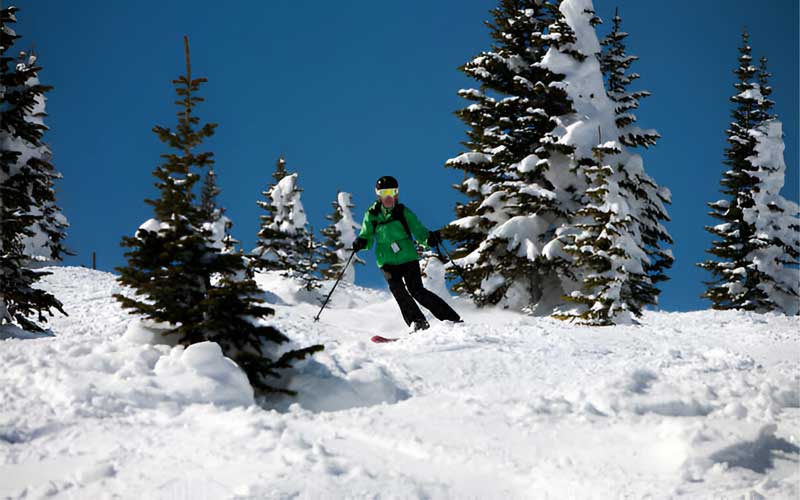
Skiing those tight, bumpy lines of snow lumps—requires a unique set of skills and gear. Mogul skiing is fast, dynamic, and technical. It’s not about floating in powder or carving giant arcs. It’s about control, quick reflexes, and edge precision. And to master moguls, you need skis that are built for the job. In this guide, we’ll explain what makes mogul skis different and help you choose the best pair for your style, skill level, and skiing goals.
1. What Are Mogul Skis?
Mogul skis are specifically designed to handle the rapid, repetitive turns and impacts involved in bump skiing. Unlike wide powder or all-mountain skis, they are typically narrow, lightweight, and stiff. Their narrow waist allows for fast edge-to-edge transitions, and their stiff flex provides better rebound and control.
They often feature a full camber profile or a rocker-camber-rocker shape to improve grip and quick turning. The tails are usually flat or only slightly twinned to reduce instability when exiting a turn.
In short, mogul skis aren’t built for deep snow or backcountry lines. They’re built to tackle the zipper line with precision and speed.
2. Key Features
When shopping, these are the most important features to consider:
a. Width (Waist Width)
The width underfoot (waist) is crucial for mogul skiing. Narrower skis are faster to maneuver and make it easier to stay in control.
-
Ideal waist width: 66mm to 85mm
-
Narrower = more responsive in bumps
-
Wider skis struggle to fit between moguls
If you’re serious about moguls, go narrow. If you want an all-mountain ski that can handle occasional bumps, you might prefer something around 80–85mm.
b. Length
These skis are usually shorter than your average all-mountain skis. A shorter ski is easier to pivot and control between tight bumps.
-
Recommended: Go 5–10cm shorter than your typical ski length
-
Shorter skis = faster turns and less tip catching
A shorter ski gives you better mobility and reduces the chance of the tips or tails hitting the bumps mid-turn.
c. Camber and Rocker
Mogul skis are often fully cambered or have a subtle rocker-camber-rocker profile.
-
Full camber gives strong edge grip and snappy turns
-
Rocker at tip and tail helps avoid catching edges and adds forgiveness
Choose full camber for a more aggressive, precise feel. Rocker-camber-rocker gives a bit more versatility and ease.
d. Flex Pattern
Mogul skiing demands a ski that can flex and rebound quickly.
-
Most mogul skis have a stiff flex in the midsection and tail
-
A softer tip helps absorb the bumps
-
Stiff tails improve stability and acceleration out of the turn
Look for skis with a medium to stiff flex rating (around 6–9 out of 10). Too soft, and they won’t hold up under pressure.
e. Sidecut Radius
Sidecut affects how the ski turns. Mogul skis usually have a short to medium turning radius.
-
Ideal turning radius: 12–18 meters
-
Shorter = quicker turns, which is key for tight bump lines
Elliptical sidecuts (longer underfoot, shorter at tip/tail) are great for moguls because they make the ski easier to pivot while still offering solid edge control.
f. Core and Construction
The materials in the ski impact weight, durability, and performance.
-
Wood cores (like poplar or birch) offer energy and stability
-
Fiberglass or Titanal laminates add torsional stiffness
-
Cap or hybrid sidewall construction helps with edge hold while keeping skis light
Choose lightweight yet strong materials. You want the ski to be nimble but still able to handle forceful skiing.
3. Mogul Skis vs. All-Mountain Skis
If you mostly ski moguls or want to compete in freestyle events, a dedicated mogul ski is your best option. They’re purpose-built and optimized for this unique style.
If you like to ski bumps but also want to float through powder, cruise groomers, or explore trees, a narrow all-mountain ski with decent flex and rocker could work. Just understand that it won’t perform quite as well in dedicated bump terrain.
4. Beginner, Intermediate, or Expert?
Your skill level should also guide your decision:
Beginners:
-
Look for skis with slightly more rocker and a softer flex
-
Slightly wider waist (75–85mm) can offer more stability
-
Prioritize forgiveness over speed
Intermediate:
-
Go slightly shorter in length
-
Choose medium flex and responsive sidecut
-
Narrower waist (~70mm–80mm) for better bump performance
Experts:
-
Look for narrow, stiff, highly cambered skis (66–75mm waist)
-
Fast edge transitions and strong rebound are key
-
You’ll want aggressive skis that match your technique
5. Recommended Mogul Skis
Here are a few skis worth checking out:
-
K2 244 – Classic bump ski, stiff, narrow, built for high-level mogul skiing
-
Faction Le Mogul – Lightweight and agile, great elliptical sidecut
-
Armada Declivity 82 Ti – A versatile frontside ski that can handle bumps and groomers
-
Rossignol Experience W 82 TI – Built for strong female skiers who want power and precision
-
Coalition Snow Rebel – Women-specific ski for carving and bumps, excellent edge grip
6. Don’t Forget Bindings and Boots
While choosing the right ski is crucial, make sure your bindings and boots match your setup:
-
Bindings: Should be light and have a solid release mechanism. Avoid heavy freeride bindings unless you need versatility.
-
Boots: Look for stiff, responsive boots with good lateral support. A tight fit will help you stay in control during rapid edge transitions.
7. Final Tips
-
Demo skis if possible. Try before you buy. Every ski feels a bit different.
-
Talk to a shop expert. They can help match your ski to your body size, skill level, and terrain preferences.
-
Maintain your gear. Sharp edges and smooth bases are critical in moguls.
Conclusion
Choosing mogul skis isn’t about following trends—it’s about picking the right tool for a very specific job. You need a ski that’s narrow, nimble, quick to edge, and stiff enough to hold up to rapid turns and repeated impact. Whether you’re just starting out or looking for your next competition ski, the right skis can transform how you ride the bumps. Take your time, try a few options, and enjoy the rhythm and flow that only mogul skiing can offer.