Best Budget All-Mountain Skis of 2026
If you only want to own one pair of skis that can do it all, the all-mountain category is an attractive choice. These skis can handle most resort days no matter what the circumstances. You can almost always have fun. Most beginners and casual riders look for all-mountain skis because they only want one pair of skis. A budget option makes the deal even better. So if you are looking for a budget option, we have compiled a list for you to consider.
1. Rossignol Experience 76
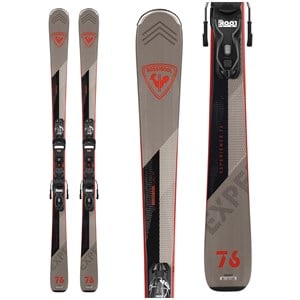
- Rocker Type: All Trail Profile (Rocker/Camber)
- Core: Poplar Wood Core — PEFC™ Certified
- Laminates & Tech: Fiberglass + Drive Tip Solution
- Included Bindings: Xpress 10 GW (DIN 2.5–10) — Unmounted
Light, forgiving, and surprisingly precise, the Rossignol Experience 76 is exactly what many beginners and progressing intermediates want: a ski that builds confidence every turn. The All Trail Profile and All Trail sidecut make the tip engage early and smooth out chatter, while the poplar core keeps weight down without turning the ski into a noodle. The Drive Tip vibration absorption does a great job at calming chatter at moderate speeds, so you get composed edge grip without fighting the ski. On firm groomers the Experience 76 tracks predictably; in softer, variable snow it feels playful and easy to manipulate.
This is a very approachable women’s or narrower-waist all-mountain option for skiers who want a single ski to own for most days. The cap construction and recycled-materials base add durability and eco-friendly cred, and the included Xpress 10 GW bindings are sensible for the target rider. It won’t satisfy aggressive, fast-carving experts, but for anyone building technique and wanting fun, confidence-first performance, the Experience 76 is a standout choice.
Pros:
- Easy, confidence-building turn initiation
- Lightweight and forgiving for long days
Cons:
- Limited at very high speeds or aggressive skiers
- Bindings come unmounted — shop tech required
See the Rossignol Experience 76 See the Women’s Experience 76
2. Atomic Bent 90
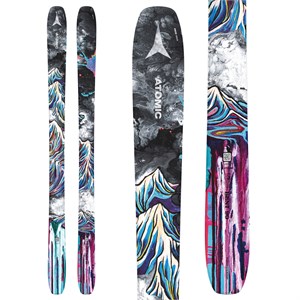
- Rocker Type: All Mountain Rocker (20% Tip / 70% Camber / 10% Tail)
- Core: Light Woodcore (Poplar) for low weight
- Tip/Tail: HRZN 3D Bent Tip & Tail for playfulness
- Construction: Dura Cap + Resist Edge Park (base edge 1.3°)
The Atomic Bent 90 wears two hats and pulls both off well: park-friendly styling with honest all-mountain chops. The HRZN 3D tips and tails lend extra surface and forgiveness for buttering and press tricks, yet the Light Woodcore and cambered midsection keep it stable enough on harder snow and quicker turns. Despite the park pedigree, these skis don’t feel fragile — the Dura Cap and thicker Resist Edge make them durable enough for mixed mountain riding. They’re lively underfoot and respond well to playful inputs, making short-radius turns and flat tricks a joy.
If you like to split time between laps in the park and laps on groomers, the Bent 90 is a superb compromise. It’s best for intermediates to advanced riders who appreciate a looser, poppy feel but still want a ski that can hold an edge when pushed. Not the stiffest or widest tool in the shed, but its versatility and fun-first personality make it a crowd-pleaser for a wide range of days.
Pros:
- Playful, park-ready shape with all-mountain performance
- Lightweight and lively for quick maneuvers
Cons:
- Not ideal for deep powder or very high-speed charging
- Sizing choices affect stability at speed
See the Atomic Bent 90 See the Women’s Maven 86
3. Rossignol Experience 78
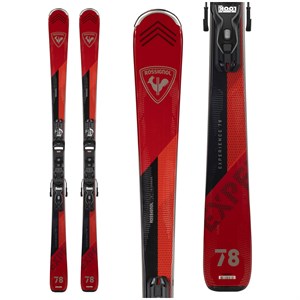
- Rocker Type: All Trail Profile (Rocker/Camber)
- Core: Poplar Wood Core — PEFC™ Certified
- Tech: Drive Tip Solution + Fiberglass laminates
- Included Bindings: Xpress 10 GW (DIN 2.5–10) — Unmounted
The Experience 78 CA sits between mellow comfort and front-side performance, making it a superb pick for skiers who want to up their game without intimidation. The poplar wood core offers a lively but forgiving flex, while the All Trail profile smooths chatter and encourages predictable turn entry. Compared to narrower beginner skis, the 78 gives a touch more stability at speed and better float in variable snow, yet it still feels light and approachable on long days. The fiberglass laminates blend elasticity and resilience for a ski that doesn’t punish small mistakes.
Overall this is a terrific everyday ski for beginner-to-intermediate riders who want a single quiver option for groomers, chopped-up snow, and occasional softer patches. The included Xpress 10 GW bindings are appropriate for the rider level, but remember to have them mounted by a certified technician. If you want a trustworthy, confidence-building ski that rewards improvement, the Experience 78 CA earns its stripes.
Pros:
- Very approachable with improved stability over narrower skis
- Eco-minded materials and solid durability
Cons:
- Not aimed at aggressive, high-speed shredders
- Bindings unmounted — additional service required
See the Rossignol Experience 78 See the Women’s Experience 78
4. Salomon QST 92
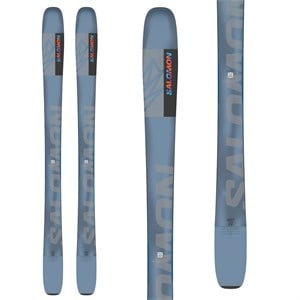
- Rocker Type: Freeride Rocker (18% Tip / Camber / 12% Tail)
- Core: Full Poplar Woodcore for stability and rebound
- Laminates: C/FX Carbon & Flax weave for dampening & weight savings
- Sidewalls: Double Sidewalls Technology for strong edge grip
The Salomon QST 92 is a rare all-mountain tool that truly bridges the gap between everyday versatility and higher-performance demands. The full poplar core keeps the ski planted and lively, while the C/FX carbon-flax layer adds both snap and vibration damping — a combo that makes the QST 92 confident on hardpack and forgiving in chopped snow. The freeride rocker profile gives a touch of float in soft conditions without compromising edge contact when the snow firms up. Put simply, it’s a ski that punches above its waist width.
Intermediate to advanced skiers will appreciate how the QST 92 balances nimbleness and stability: it carves crisply on groomers, tracks well through variable terrain, and still has the playfulness to romp off piste. It’s not a specialist powder twin, but for riders who demand one ski to do most jobs very well, the QST 92 earns high marks for its blend of tech and intuitive feel.
Pros:
- Excellent all-condition performance and edge hold
- Stable at speed with reassuring dampening
Cons:
- Not the best choice for very deep powder days
- Higher price compared to entry-level all-mountain skis
See the Salomon QST 92 See the Women’s QST Lux 92
5. Rossignol Sender 94
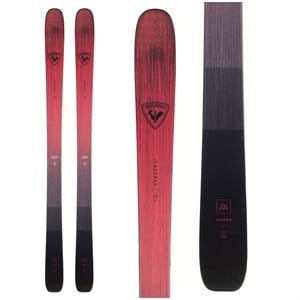
- Rocker Type: Twin Rocker for playful, surfy feel
- Core: Paulownia Wood Core — lightweight maneuverability
- Laminates & Tech: Air Tip + Titanal Beam + VAS for power and dampening
- Sidewalls: Rectangular Full Sidewall for edge precision
The Rossignol Sender 94 is an inexpensive all-mountain freeride ski built to feel at home from the avy chute to the groomer. Its twin rocker and progressive sidecut allow for effortless smear and playful turns while the paulownia core keeps swing weight down for easy, agile handling. When you want to dig in and charge, the Titanal beam and Vibration Absorber System (VAS) add the needed power and stability underfoot. The Air Tip shifts mass rearward for a lively, surfy sensation without making the tips feel clumsy.
If you split days between chasing fresh lines and lapping resort terrain, the Sender 94 strikes a balanced compromise: float and play in softer snow, and reliable edge grip on firmer snow. It’s geared toward advanced-expert riders who want a nimble, powerful ski that rewards aggressive skiing and creative moves. For performance-minded freeriders who still value playfulness, this is a very capable pick.
Pros:
- Lightweight yet powerful — great for long mission days
- Excellent mix of dampening and pop for varied terrain
Cons:
- More advanced design — can be lively for beginners
- Less ideal as a single deep-powder specialist
6. Line Skis Pandora 99
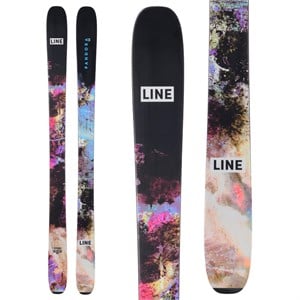
- Rocker Type: Rocker Profile (11mm Tip / 2mm Camber / 6mm Tail)
- Core: Aspen Veneer Core — snappy and lightweight
- Laminates: Bio Resin for improved bonding
- Sidewalls: Thick-Cut Sidewalls for strong edge hold
The Line Pandora 99 occupies the sweet spot of mid-wide, do-it-all skis that excel for both resort explorers and off-piste play. Its 99mm waist gives enough float for soft snow while staying narrow enough to be quick and responsive on groomers. The aspen veneer core produces a lively feel with good rebound, and the thick-cut sidewalls concentrate power over the edges for confident grip on harder snow. Bio-resin laminates are a thoughtful touch that helps the ski feel engaged underfoot while leaning into more sustainable construction.
For intermediate to advanced riders wanting a single ski for varied days, the Pandora 99 is a strong contender. It’s forgiving when you need it, poppy when you want to play, and stable enough to hold an edge at moderate speeds. Whether you spend most days lapping groomers or hunting mid-mountain powder, this ski is versatile and fun — especially for riders who like a playful but dependable ride.
Pros:
- Excellent mid-width versatility for mixed days
- Playful yet stable construction
Cons:
- Not a narrow front-side specialist
- Mid-width trade-offs for pure powder or pure piste focus
7. Nordica SUV 84
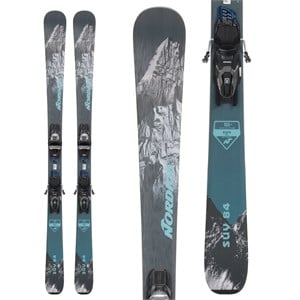
- Rocker Type: All Mountain Rocker (tip & tail rocker + camber)
- Core & Construction: Energy CA — wood stringers + carbon
- Included Bindings: TP2 Compact 10 FDT (DIN 3–10) — Unmounted
- Binding Plate: FDT Freeride Plate + RS for durability
The Nordica SUV 84 is a pragmatic, performance-minded package built for riders who want reliable handling across the resort and the occasional side-country spurt. At 84mm underfoot it’s narrow enough to be quick and responsive on shorelines and groomers, but the Energy CA layup gives a lively, confident platform that cuts through rutted or variable snow. The included Marker TP2 Compact bindings are robust and sensible for intermediate-to-advanced use, and the FDT plate system gives added stability and power transfer compared with bargain setups.
These skis suit riders who appreciate a no-nonsense all-mountain tool that won’t surprise you when conditions change. They’re not a powder specialist, but the SUV 84 will put a smile on riders who value edge hold, quick turn initiation, and a durable build. If you want a ready-to-go package for varied days, this is worth a close look — they sold fast last season for a reason.
Pros:
- Solid edge grip and quick handling
- Comes as a complete binding package
Cons:
- Narrower waist limits powder performance
- Bindings unmounted — pro mounting required
8. Rossignol Sprayer
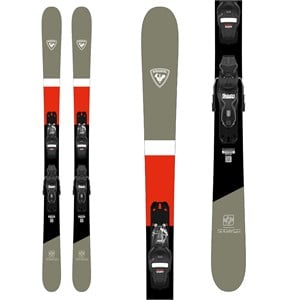
- Rocker Type: All-Terrain Rocker (70% Camber / 30% Low Tip Rocker)
- Core: Poplar Wood Core — poppy and durable
- Construction: Fiberglass lamination + Cap Construction
- Included Bindings: Xpress 10 GW (DIN 2.5–10) — Unmounted
The Rossignol Sprayer is a cheap, park-minded all-mountain ski that punches above its price. With an all-terrain rocker profile and poppy poplar core, it’s playful enough for press and jib sessions while still having the camber underfoot to hold an edge on firmer groomers. The cap construction adds durability for park abuse and everyday resort riding, and the slightly oversized sidecut gives carving power when you want it. It’s a do-it-all choice for riders who split time between park laps and general resort exploration.
For intermediate to advanced freestyle-leaning riders on a budget, the Sprayer is an appealing option. It’s not a precision race tool, nor a deep-powder specialist, but it delivers fun, resilience, and value. Keep in mind bindings come unmounted, and while adequate for the target rider, serious park rats might opt to upgrade hardware later.
Pros:
- Affordable and durable for park use
- Versatile rocker/camber mix for mixed days
Cons:
- Not optimized for high-speed hardpack performance
- Bindings require professional mounting
See the Rossignol Sprayer See the Women’s Trixie
9. Völkl Revolt 96
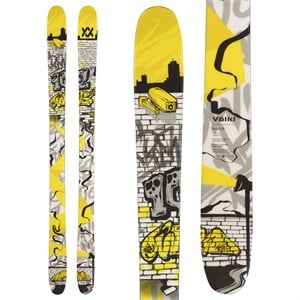
- Rocker Type: Tip & Tail Rocker with camber underfoot
- Core: Multilayer Woodcore (Beech + Poplar)
- Sidewalls: Full Sidewall underfoot + Mini Cap at tip/tail
- Base: P-Tex 3000 with brushed structure
The Völkl Revolt 96 is a hard-charging all-mountain freestyle ski that mixes solid park capability with real-mountain credibility. Its multilayer core layers harder beech underfoot for power with lighter poplar elsewhere to keep swing weight manageable. The tip and tail rocker make buttering and presses easy, while the cambered midsection gives a reliable rebound and edge bite when you want to lay in a carve. Construction is robust enough for aggressive use without feeling dead underfoot.
Intermediates and advanced riders who want a do-everything twin that can survive park abuse and still handle steep, variable lines will like the Revolt 96. It’s not a float-specialist for deep pow, but for skiers who demand a playful yet precise ski that can handle speed, hits, and varied terrain, the Revolt 96 is a very capable, confidence-inspiring option.
Pros:
- Durable, powerful construction with playful tips
- Great rebound and edge grip for mixed terrain
Cons:
- Not optimized for very deep powder
- Slightly heavier than ultralight park skis
See the Völkl Revolt 96 See the Women’s Secret 96
10. Armada ARV 100
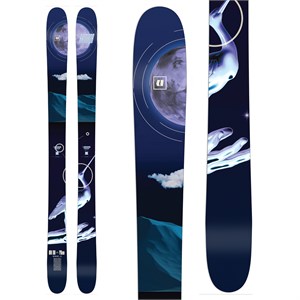
- Rocker Type: AR Freestyle Rocker (rockered tip/tail + camber)
- Core: 100% Poplar Core — predictable, smooth feel
- Construction: w3Dgewall + Ash Binding Inserts for durability
- Base & Edge: S7 Base + 2.5 Impact Edge
The Armada ARV 100 is a true twin-tip, mid-wide freestyle freeride ski that excels at playful resort days and park-to-pow transitions. The poplar core and balanced flex (Tip:6, Mid:6, Tail:6) give a consistent, predictable feel for presses, jumps, and technical maneuvers, while the w3Dgewall construction dramatically increases durability and edge connection. The AR Freestyle rocker encourages playful turn shapes and surfy behavior in softer snow, and the S7 base keeps things fast and low-maintenance.
If you’re an intermediate-to-advanced rider who loves to mix park laps with off-piste runs, the ARV 100 is built to handle that lifestyle. It’s durable enough to take park abuse and lively enough to be fun off jumps. Though not a pure powder specialist, its 100mm waist makes it a solid all-mountain option for riders who value versatility and a twin-tip platform.
Pros:
- Durable construction built for park and mountain abuse
- Versatile mid-width for varied resort days
Cons:
- Not a dedicated deep-powder shape
- Could be overbuilt for casual beginner riders
See the Armada ARV 100 See the Women’s ARV 84
Critical All-Mountain Ski Considerations
All-mountain is a non-specific term that covers a wide range of ski conditions. From groomer-oriented to powder-friendly, there is a lot that all-mountain skis should work on. When choosing affordable all-mountain skis, you should know the snow conditions that you are most likely to face.
Then there are certain things about the skis that you should be aware of. Like the waist width, rocker/camber profile, materials used in the skis, and the effects they have on the performance of the skis. Keeping track of such things can be confusing, especially, for beginners. But this small guide can help you.
Preferred Terrain
Despite being advertised as an all-mountain, skis can’t do everything. All-mountain skis are not designed to strictly work on a specific kind of terrain. They have a more generic design that works on all terrains which is why they are called all-mountain. However, the overall feature set of skis makes them more suitable for a certain kind of terrain than the others.
Before you choose your skis, you should be aware of the terrain you would most likely face. The terrain is based on your personal preference or availability based on region. You can prefer to stick to groomed surfaces or you can prefer to go off-piste. Your region also plays an important role in the kind of terrain you would most likely have throughout the season as discussed later.
Skis with a narrow waist width are more suitable for groomed or packed snow. They are nimble and allow quick turns but they have a planted feel. They are often called front-side skis or all-mountain front. Wider skis are better suited for powder. Their wider waist allows them to float. They are often called all-mountain back or all-mountain wide. Learn more about ski widths here.
Then some skis are somewhere in-between with a balanced design. Such skis can handle both, off-piste and on-piste terrains, reasonably. As stated earlier, ski conditions are also based on your region. For example, the US, East Coast, and Midwest have fewer powder days. If you are in these areas, you should stick with front-side skis.
The West of the US has a lot more snow, especially in the states of Colorado, Utah, Alaska, and California. If you are in one of these western regions, then you should stick with powder-focused or all-mountain back skis.
Ski Rocker and Camber Profile
Skis are not flat. You can tell that by the very first time you look at the skis. But you can also put the skis on a flat surface and test them if you don’t believe your eyes. But that is not a manufacturing fault. Skis are supposed to be like that.
You will come across two terminologies when buying skis; camber and rocker profile. It is important to know what they are and what their function is.
Skis with a camber have an upward arc. In such skis, only the edges touch the ground while the center stays above the ground. The flex generated by pressing these skis using body weight produces power. These skis have metal edges for grip when turning. Skis with a camber profile are traditional skis for groomed surfaces.
Skis with a rocker profile are the opposite of skis with a camber profile. Rockered skis are flat in the middle and raised at the ends. These skis float and maneuver on soft snow. But you won’t have fun with them on hard-packed snow.
In all-mountain skis, the rocker and camber are combined to make them versatile. The camber allows these skis to turn and maintain control on hard-packed snow. The rocker, on the other hand, improves floating on soft snow. Variations in camber and rocker profile make skis more suitable for either on-piste or off-piste riding.
The Right Ski Length
Ski length plays an important role in the performance of the skis. The same skis with different lengths perform completely differently. It’s like they have completely different personalities so, having the right ski length matters.
The starting point in determining the right ski length is the rider’s height. General charts are available at retailers and manufacturers that bring the height of skis to the rider’s nose. The length is then further adjusted based on the rider’s skill level.
For beginners, shorter skis are more suitable. Short skis are nimble and allow fast turning. But they are not built for speed. They become unstable at high speeds. Since beginners don’t go fast in the beginning, short skis become easier for them to manage.
Experts prefer longer skis. Longer skis produce more speed and float better on powder. At high speeds, they become harder to turn making them challenging to handle. But their high speed makes them fun. Off-trail skis have rockered front-end. The raised front end makes these skis shorter than they are, so, you would need to size them up.
Turn Radius
The rocker and camber profile refers to the side profile of the skis. The side cut or the turn radius refers to the shape of the skis. The turn radius is measured in meters. Modern skis are wider at the front and tail end and narrower in the middle which gives them a certain shape. The more pronounced this shape is the better the skis turn.
Skis that are significantly narrower in the middle have a lower turn radius. But they are not stable at speed and don’t float well. On-piste skis are narrower in the middle. Off-piste skis are wider in the middle which allows them to float on powder. But their turn radius is also larger. Based on turn radius, skis have the following categories:
- Carving skis: less than 16m
- All-round: 16-20m
- Turn in powder: 20+m
Ski Flex
How much flex your skis have is based on your skill level. Skis that have a soft flex are easy to turn and easy to control. They are suitable for beginners. Skis with moderate stiffness are stable at high speeds and have energy during fast turns. They are suitable for almost every skill level.
The stiffest skis, however, maximize power and top-end performance at higher speeds. They are fast and it’s hard to turn them making them challenging to ride. They are suitable for professionals and athletes. Manufacturers explicitly add the flex rating of their skis in the description.
Ski Cores and Laminations
Skis are complex equipment. Manufacturers use a lot of high-end materials and proprietary technologies to improve the performance of skis. Better materials improve performance but they also drive ski prices up.
High-end skis have Titanal in their construction which provides a boost and makes the skis fast. Carbon fiber is also used in the construction of skis. It is strong and lightweight and provides stability to the skis. Expensive skis also have a high-quality wood core.
Skis with foam or composite cores are not recommended. Skis with such cores don’t last long and deteriorate quickly. Metal components in the construction skis provide power, high-speed stability, and grip during turns.
Skis with Integrated Bindings
Skis with integrated bindings are different from skis that are offered as a package with bindings. They have an integrated plate that connects the bindings to the skis. They cut the time of separately choosing bindings and are usually a match in terms of performance. But for high-end performance, it is better to pair skis with bindings by yourself. It also gives you lots of options to choose from.