Best Budget Snowboard Boots of 2026
Snowboard boots aren’t as exciting, big, and flashy as your other snowboarding gear, but they are the most important. Boots should be your priority when buying gear for snowboarding. Snowboard boots are so important that you should put some time into researching the technical know-how of how they work. You can choose to be ignorant or indifferent, if I am being polite, save yourself time and the headache that goes into the research. But chances are that your ignorance will come back to bite you on the hills.
So here is the list of budget snowboarding boots that provide good value for money.
1. DC Phase

Flex: Medium
Lacing: Traditional
Ride Style: Freestyle
Ability Level: Beginner-Intermediate
DC Phase snowboarding boots are primarily aimed at beginners and veterans looking to see if they’ve got (or still got) what it takes. The idea is to have a decent pair of boots without putting too much money into them since you are just trying them out. These boots have a medium flex which is ideal for beginners. A medium flex means that the boots are forgiving on the feet of beginners. A soft forward flex makes it easier to lean forward during hard turns.
The Phase features Response Liner I which has multi-layer EVA memory foam along with a thermal regulation fleece lining. They provide a decent amount of comfort. The Foundation Unilite™ Outsoles are DC’s lightest outsoles made of 100% Unilite™ providing a good amount of shock absorption. The Phase features a traditional lacing system that allows you to tighten the boot just the way you want. You may have to tighten them now and then. It is a dependable boot for beginners or riders trying to improve their skills.
However, downsides are expected with a budget option. Lately, DC’s liners have been a disappointment even though their shells have always been great. But the liners are removable for easy drying after a day in the snow.
What I like: Solid flex for an inexpensive boot, snug fit, laces adjust easily
What I don’t: Runs small, colors are different from the pictures shown
2. K2 Kinsley – Women’s
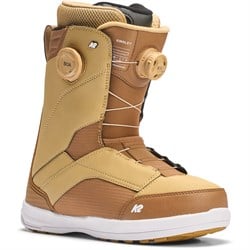
Flex: Medium
Lacing: Boa
Ride Style: Freestyle
Ability Level: Intermediate-Advanced
The K2 Kinsley Snowboard Boots strike a perfect balance between comfort, control, and performance for all-mountain riders. With a medium flex rating of 6, they deliver the ideal mix of response and forgiveness for intermediate to advanced snowboarders. The Intuition™ Control Foam 3D Liner molds precisely to your foot, offering plush cushioning and reliable heel hold with its internal and external J-Bars. A 3-Point Harness Liner Lacing System enhances ankle support and stability, reducing fatigue during long days on the slopes. Combined with the Articulating Cuff Upper made from HDR Premium Synthetics, these boots stay durable and flexible season after season.
Tightening is effortless thanks to the H4 / M3 Focus Boa® Fit System, which lets you adjust the upper and lower zones independently for a dialed-in fit. The TX3 Lacing, made from recycled PET, adds a touch of eco-friendliness and mimics the smooth feel of traditional laces. Underfoot, the This Grips! Premium Rubber Outsole and Harshmellow™ dampening ensure a stable, quiet, and shock-absorbing ride on any terrain. Whether you’re charging through powder, hitting side hits, or cruising groomers, the Kinsley delivers all-day warmth, comfort, and precision.
What I like: Dual-zone Boa® system, great support and comfort, strong traction, eco-friendly TX3 laces.
What I don’t: Slightly stiff for beginners, premium price compared to softer models.
3. Vans Aura OG
Flex: Medium
Lacing: Boa
Ride Style: Freestyle
Ability Level: Beginner-Intermediate

Vans Aura OG boots are designed for beginners to advanced freestyle riders. People who are a little bit advanced are really going to love these boots. You can also ride them on groomers or in the park as well. The boots have a little bit of softer feel and flex and they are comfortable right out of the box. The lacing system on Aura OG is Vans Boa Coiler. This system is better than the classic boa because it automatically retracts cable slack for quick and efficient closure. Vans has been making boots for 25 years and it is the longest-running snowboard boot brand that’s been using boa.
The shell of the boots is a synthetic style material and the upper is abrasion resistant. There’s a nice little loop to pull the boots on and there’s a little flex notch in the inset and then there’s a heat retention layer. This layer is not just underneath your footbed but also engulfing and encapsulating the toe box. This layer keeps the heat in and the cold out. The outsole, which is called V1 Waffle Lug, is pretty cool. It looks like a vulcanized escape outsole, which is actually pretty dope but it is rubber. It grips really well and gives you a lot of great board feel. On the inside, there’s a V1 UltraCush Liner, which is simple and gives comfortable and essential support in a streamlined design.
What I like: Easy to put on and take out, can be used every day, feels comfortable
What I don’t: The steel wire of the boa digs into your ankle while riding.
4. thirtytwo Shifty BOA

Flex: Soft
Lacing: Boa
Ride Style: Freestyle
Ability Level: Beginner-Intermediate
thirtytwo Shifty BOA is the most popular pair of boots by thirtytwo and for good reasons. It is suited for all-mountain riding making it a versatile option. This one pair of boots is all you need for different snowboarding conditions. Another plus point with these boots is that they are comfortable out of the box while other boots take around 10 days to break in. Although these boots do have a break-in period, they are still comfortable to wear from the first day. The boots become even more comfortable after use.
The boots have a medium flex which contributes to their versatility and makes them forgiving for the feet. Shifty BOA provides decent shock absorption and works even better with padded bindings so you can go on for longer times without getting fatigued.
As the name suggests, the lacing system is BOA with an upper and a lower dial. The two dials ensure that your boots remain tight. However, the two dials share the ankle which you might not like if you want more separation. After some adjustments, the BOA system makes sure that your heel is locked in place.
But thirtytwo boots aren’t the most reliable. There is a joke that thirtytwo refers to the number of days the boots last. But these boots are fairly durable. They are the only boots in thirtytwo lineups with rubber soles, which last longer than Single Mold EVA soles.
What I like: Out-of-the-box comfort, good value for money
What I don’t: Little support for bell-to-bell ride days, softer boots wear out quickly
5. System APX

Flex: Medium
Lacing: Traditional
Ride Style: All-mountain
Ability Level: Beginner-Intermediate
If you are looking to invest money rather than spend them on a pair of cheap snowboarding boots, then System APX is a pair to consider. The features it provides for the price are unmatched. It’s a lot of boot for decent money. The APX is known for its comfort and performance. With the new and improved design, it has been reinforced in almost every area. The boot now features double stitching for increased durability. The new design also gets a denser rubber sole for better shock absorption.
The new design of the APX also features an improved Thermofit Heat Moldable Liner which provides a better-customized fit. The liner eliminates pressure points by adapting to every curve of your foot and providing the comfort they are known for. The APX is among the lightest boots due to its small form factor.
The lacing system on the APX is the traditional loop lacing system with reinforced laces. Laces allow you to tighten the different sections of the boot with a different tension. It keeps your foot secure while still feeling comfortable. The special metal hooks prevent unintentional loosening for the entire day.
The stand-out feature of the APX along with many others is its durability of APX. This is a durable boot that will last for a long time. Even the manufacturer warranty period is 3 years. And the boot also has waterproof layering to keep the foot well-insulated.
What I like: Good comfort for an affordable boot, great performance in beginner to intermediate terrain, durable
What I don’t: Lacks adjustment in lacing
6. K2 Raider
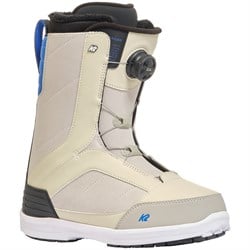
Flex: Medium
Lacing: Boa
Ride Style: All-Mountain
Ability Level: Beginner-Intermediate
The K2 Raider Snowboard Boots are a reliable go-to for riders who want simplicity, comfort, and performance in one clean package. With a medium flex rating of 5, they’re perfectly tuned for beginner to intermediate snowboarders looking to explore the entire mountain. The Intuition™ Comfort Foam 3D Liner molds to your feet for a snug, custom fit, while the internal and external J-Bars keep your ankles supported and your heels locked in. The Fast-In Liner Lacing system makes adjustments quick and secure, keeping you comfortable and focused all day long. Lightweight yet durable, the Raider hits that sweet spot between easygoing flexibility and dependable response.
The H4 Boa® Coiler lacing system adds convenience and consistency, tightening evenly with a simple twist. Underfoot, the RollSole™ Outsole enhances lateral mobility without sacrificing grip or support—perfect for riders who like a little extra freedom when carving or tweaking grabs. Meanwhile, Harshmellow™ dampening absorbs shock and smooths out vibrations for a more relaxed, fatigue-free ride. Whether you’re upgrading from rentals or just want a no-fuss boot that performs, the K2 Raider delivers all-day comfort, control, and confidence across varied terrain.
What I like: Comfortable custom liner, easy Boa® lacing, lightweight build, great shock absorption.
What I don’t: Limited stiffness for aggressive riders, not ideal for high-speed carving.
7. K2 Haven – Women’s
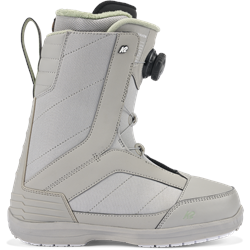
Flex: Soft
Lacing: Boa
Ride Style: All-Mountain
Ability Level: Beginner-Intermediate
The K2 Haven Snowboard Boots are an excellent choice for riders ready to move beyond rentals and invest in comfort and performance. With a flex rating of 4, they offer a soft, forgiving feel that’s perfect for beginners and intermediate riders looking to build confidence across the mountain. The Intuition™ Comfort Foam 3D Liner delivers a snug, heat-moldable fit that adapts perfectly to your foot while keeping you warm on cold days. Internal and external J-Bars add ankle support and improve heel hold, ensuring your feet stay locked in even through longer sessions. Combined with the Fast-In Liner Lacing, adjustments are quick and secure, keeping your focus on the ride, not your gear.
K2’s H4 Boa® Coiler System makes tightening effortless, giving you even tension and eliminating lace slack with a simple twist. Underfoot, the Rubber Light Outsole provides reliable grip and durability, while Harshmellow™ dampening absorbs vibration and impact for a smoother, quieter feel. Whether you’re carving groomers or venturing into soft snow, these boots balance comfort, control, and ease of use beautifully. Overall, the K2 Haven is a versatile, well-cushioned boot that helps newer riders progress quickly while staying comfortable from first chair to last run.
What I like: Comfortable heat-moldable liner, easy Boa® lacing, great shock absorption, beginner-friendly flex.
What I don’t: Too soft for aggressive riders, limited response at higher speeds.
8. Vans Hi Standard OG

Flex: Medium
Lacing: Traditional
Ride Style: Freestyle
Ability Level: Intermediate-Advanced
Vans Hi Standard OG has a timeless classic design with a lot of modern features. It is among the best-selling snowboard boots. Vans collaborated with team rider Kennedi Deck to produce this model. A pro-rider boot produced with the input of an actual pro rider should be a treat. The deck also inspired Vans to produce their first non-binary boots. So, whether you are a woman or a man, just put them on. The boot isn’t labeled.
Hi Standard OG is a versatile boot that can be used in different environments from parks to snow and urban environment. Under the classic old-school design, there are a lot of modern features to keep your feet comfortable throughout the day.
The boot features V1 UltraCush™ Liner that has a heat-moldable dual-density core that provides interior cushioning. The liner completely conforms to the shape of your feet eliminating pressure points. The resulting comfort is excellent. The V1 PopCrush Footbed has a 3D anatomical design to reduce fatigue along with excellent impact absorption. The lacing system is traditional and a limited edition also features art by Peter-Jhon de Villers from ShallowTree Colorway.
What I like: Adjustable lacing, comfortable, warm, and looks great
What I don’t: A bit of heel lift, runs small
9. Salomon Faction BOA
Flex: Soft
Lacing: Boa
Ride Style: All-mountain
Ability Level: Beginner-Intermediate

The Salomon Faction BOA is a very well-made beginner boot. It is soft and user-friendly. It comes in two styles, Faction BOA and Faction SpeedLace. Faction BOA is the more expensive version you would expect. The Faction has a soft flex which makes it comfortable. The boot has a 3-dimensional flex from the insole to the top of the liner. Inside is a heat-customizable gold liner which is extremely comfortable.
The liner has heat moldable foam placed in sensitive areas like the shin, ankle, and heels. The foam molds in these areas eliminate pressure points. You can ride hard all day in the snow without feeling fatigued. The outsoles are lightweight and they are low-profile. The outsoles add dampening which further adds to the comfort of the boots. It prevents your feet from aching.
As the name suggests, the Faction features an easy and quick BOA lacing system. But a single BOA dial tightens the whole boot and doesn’t provide any room for customization. And it’s not even as good as it is on the rest of the boots in the Salomon lineup.
What I like: Excellent comfort, effective lacing system, warm enough
What I don’t: Poor fit, sizing is a bit off
10. Burton Moto Moto
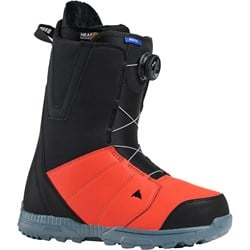
Flex: Soft
Lacing: Boa
Ride Style: All-mountain
Ability Level: Intermediate-Advanced
The Burton Moto Boa Snowboard Boots are a long-standing favorite, refined over 17 years to deliver unmatched comfort and performance for riders of all levels. With a soft flex rating of 3, these boots are ideal for beginners, park riders, or anyone who loves a smooth, playful feel. Burton’s 1:1 Soft Flex PowerUP Tongue ensures a precise fit, while Total Comfort Construction gives them that perfect “broken-in” feel right out of the box—no painful adjustment period needed. The NEW Imprint™ 1+ Liner with integrated lacing adds support and warmth, and the Snow-Proof Internal Gusset keeps your feet dry no matter the conditions.
The Boa® Coiler™ lacing system makes tightening quick and effortless, evenly securing your foot for reliable hold all day. A Level 1 Molded EVA Footbed cushions every landing, while Shrinkage™ Footprint Reduction Technology minimizes bulk to prevent toe drag and improve board feel. Whether you’re carving groomers or lapping the park, the Moto Boa provides that classic Burton blend of flexibility, durability, and all-day comfort. It’s no surprise this boot remains one of the best-selling soft-flex models on the market.
What I like: Instantly comfortable fit, lightweight design, easy Boa® lacing, excellent warmth and dryness.
What I don’t: Too soft for high-speed carving, not ideal for aggressive all-mountain riders.
How to Choose Boots for Snowboarding?
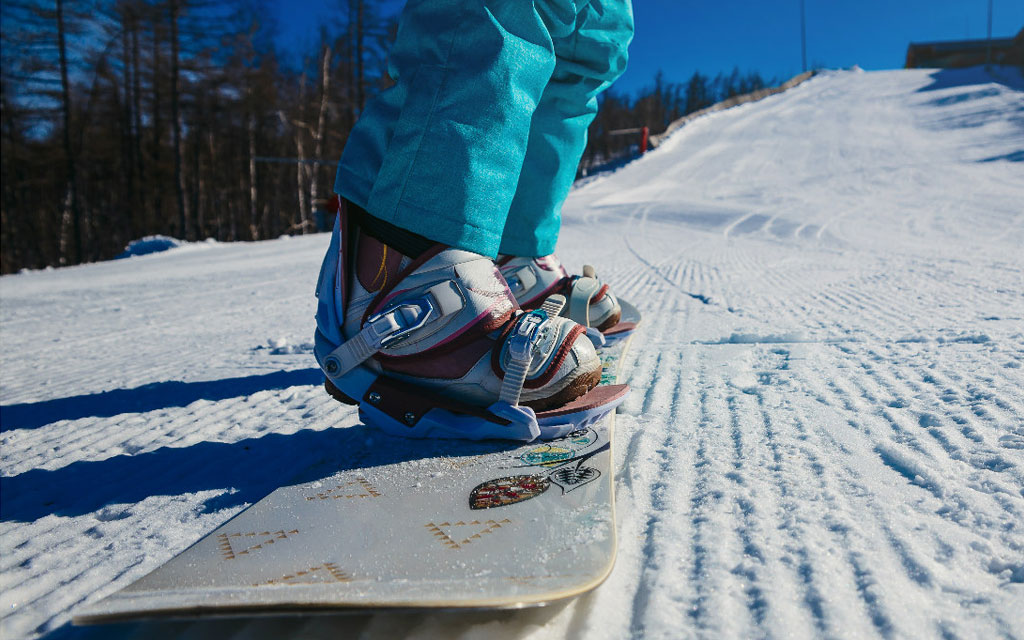
Snowboard boots are the most important part of your snowboarding gear. Understanding the boot’s fitting and performance is essential. When buying snowboarding gear, boots should be your priority, so much so that you should extend your budget for the boots rather than the snowboard.
A lot of people make mistakes when choosing their boots for snowboarding only to ruin their day. But this guide can help you make the right choice. Here are a few critical snowboard boot considerations.
Fit
Of course, first thing’s first, and that is the fit of the boot. The right fitting of the boot should be your primary concern. All the other gimmicks are secondary because if the boot doesn’t fit right, nothing else matters. A boot that doesn’t fit right can make your feet sore and may even give you blisters. But they are still uncomfortable at the very least. There are a few things that you should keep in mind while trying out the fitting of the boots.
The boots should have a snug fit at the toes and the heels. A heel lift is bad for performance. When you lean forward, your board should rise, not your heels. Boots have a break-in period and feel a little uncomfortable in the beginning, but then the liners soften up over time. Size your boots in the evening or afternoon when your feet are naturally a bit swollen. Furthermore, one size in one brand can be different from the same size of another brand. That’s why boots from one brand may suit you better than the other brand.
Boot Liners
A boot liner is a major contributor to how comfortable the boots are going to feel. It is like an inner boot within the boot and it provides cushioning stability and insulation. It is usually made up of lightweight moldable materials like Ethylene Vinyl Acetate (EVA).
There are three major types of boot liners available:
- Non-moldable liners are stock liners that provide generic padding and stability. Few boots have these liners these days. They take a longer time to conform to the shape of the foot. Boots with these liners have a longer break-in period.
- Thermoformable liners conform to the foot’s shape using the natural heat from the foot. They provide a custom fit. They have a very little break-in period and usually break in after a day or so of snowboarding.
- Heat moldable liners are placed in a special heated oven. They are then left to cool around the feet to achieve the best custom fit. You can mold these liners at home, but it is recommended that you get them done by a shop technician. That way, you would have less chance of ruining your boots.
A boot liner plays a key role in overall fit and comfort so choose the one that best suits your need.
Flex
The flex of your boots needs to match your riding style. It makes a difference in the performance of your boots. There are typically three categories that manufacturers use to define the flex of their boots:
- Soft flex is the most comfortable. Boots with soft flex are made of materials that are easy on the feet and provide the most amount of mobility.
- Medium flex provides a balance between mobility and support.
- Stiff flex provides maximum support for edge power and control at high speeds.
Brands include flex ratings of their boots. But flex is subjective, so, an in-store purchase would always be an advantage over online shipping.
Riding Style
There are three kinds of riding styles:
- All-mountain refers to gear that is suited for all types of terrain. The majority of the boots you will find are all-mountain with different flex levels. Novices choose soft boots because of their comfort. Experienced riders choose stiff boots because they require support for fast riding.
- Freeride refers to untracked backcountry terrain. It is also referred to as “big mountain” riding. Speed and precision are preferred during freeriding and so riders choose boots with a stiff flex.
- Freestyle is fun-focused. It is done in parks where you have high ramps and other obstacles around you so that you can perform different tricks and stunts. It requires maneuverability and quick responses. Mobility simply means that you would need boots with soft flex. Boots with a hard flex make it harder to maneuver and should be avoided in freestyle.
Boots are specific to riding style. You would have to do your due diligence to find out what kind of boot suits your riding style the best. The wrong boot for the wrong riding style would affect your performance and also make you feel uncomfortable.
Lacing System
Boots come with different types of lacing systems each with its advantages and disadvantages. There are three main types of lacing systems available.
- Traditional lacing system is based on the tried and tested system for fastening shoes. It has been used for centuries and is still around even in the age of technology. What else does a successful system sound like? Traditional laces provide the highest degree of customization where you can separately tighten the upper and the lower parts of your boots. They are easy to replace if broken and are a cheap option. However, the downside is that they loosen after some time. You would have to tighten them up now and then.
- Quick pull laces are faster than traditional laces. Boots with zonal lacing are better because they allow the forefoot and the ankle to be tightened independently of each other. Those without zonal lacing are at a disadvantage. Once you pull the laces will tighten the whole boot, which might be uncomfortable. There are many different types of quick pull lacing systems which all vary from company to company. They appear complex which is why some people might be intimidated by them if they see them at first. But they are very easy to use. They also have the same problem of loosening as traditional laces.
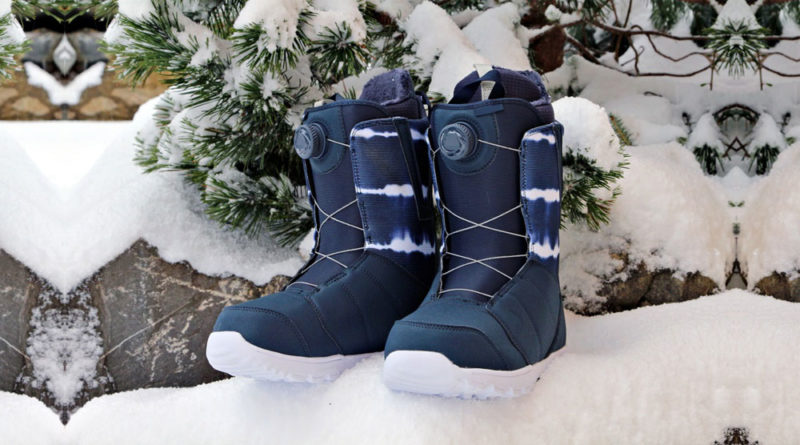
- BOA system is a modern system of tightening boots that involves a cable attached to one or more dial adjusters. A boot can have a single, double, or even triple dial system. More dials allow for independent tightening of upper and lower regions. A single dial tightens the whole boot equally. The dials allow for micro-adjustability so you can fine-tune the tension on your boots. They don’t loosen up during use as well. However, they are expensive as you would expect. Also, they are not easy to replace.
Which one to choose can be a preference thing. Usually, lower-end boots come with traditional lacing while high-end boots come with a Boa system.