Best Budget Snowboard Goggles of 2026
There is a saying, if you can’t see, you can’t ski. That is also true for snowboarding. There are often so many factors in the mountains that can lower visibility. These factors include high winds, fog, flat bright light, etc. Goggles allow you to have clear vision in a variety of low-light conditions. They also protect the eyes making goggles essential in the mountains. There are plenty of options available on the market and you can get one based on your skill level. But a budget pair is sufficient for most beginners and casual riders.
So here is the list of top budget-friendly goggles that you can get without breaking the bank.
1. OutdoorMaster PRO

- Frame: Large spherical frameless design for an unobstructed view
- Lens system: Interchangeable (supports 20+ lenses, extras sold separately)
- Compatibility: OTG friendly and universal helmet strap
- Protection: Anti-fog coated lenses with 100% UV400 protection
The OutdoorMaster PRO is built to perform. The large spherical frameless lens genuinely widens your field of view so you can spot terrain changes and other riders earlier. The lens clarity and anti-fog coating are impressive for the price point, and the OTG design means prescription glasses fit comfortably underneath without pressure on the temples. Fit is generous and the extra-long strap sits neatly over helmets.
Where this goggle shines is versatility: the interchangeable lens system makes it simple to prepare for changing light — swap in low-light or bright lenses when needed (though extra lenses are sold separately). Comfort is strong thanks to the multi-layer foam and breathable frame. If you want a high-visibility, budget-friendly performance goggle that plays well with helmets and glasses, the OutdoorMaster PRO is a solid choice.
Pros: Wide view, excellent OTG fit, easy lens swaps, good UV/fog protection.
Cons: Replacement lenses cost extra; premium optics not as refined as top-end brands.
2. Giro Method
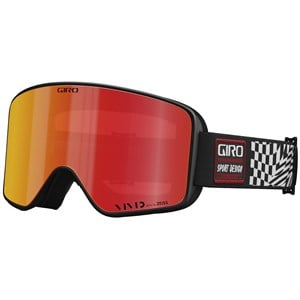
- Frame: EXV (Expansion View) frameless zones for max peripheral vision
- Lens: VIVID by ZEISS® lenses; two lenses included (sun + low-light)
- Interchange: Slash Seal quick-change lens system
- Ventilation: EVAK foam venting to reduce fogging
The Giro Method pairs modern styling with performance-driven optics. Zeiss VIVID lenses immediately lift contrast and definition on varied terrain, helping you pick lines and read the snow more confidently. The EXV frame design trims rim bulk and increases peripheral vision without sacrificing helmet compatibility — the result is a goggle that feels spacious and unobtrusive on the face.
Lens swapping is intuitive with the Slash Seal system and the inclusion of both sun and low-light VIVID lenses means you’re ready for most conditions out of the box. EVAK venting and the anti-fog coating work well together to keep views clear during heavier exertion. If you value optical refinement and a wide field of view, the Method is a top-tier all-rounder for riders who want premium clarity and convenience.
Pros: Outstanding optics, wide view, two lenses included, strong anti-fog venting.
Cons: Price is higher than basic models; some will prefer spherical over cylindrical shape.
3. Smith Reason OTG
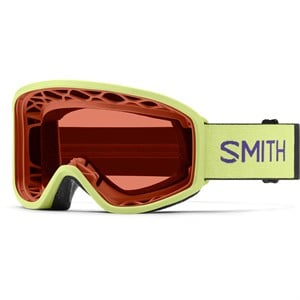
- Fit: Large OTG frame with floating foam membrane to relieve temple pressure
- Lens: Carbonic-X spherical lens with TLT optics for clarity
- Anti-fog: Fog-X inner lens (micro-etched, long-lasting)
- Strap: No-slip silicone-backed strap with QuickFit adjustment
Smith’s Reason OTG is purpose-built for riders who wear prescription glasses. The floating foam membrane removes pressure from eyeglass temples, making long days comfortable. Optical clarity is excellent thanks to Carbonic-X spherical lenses and TLT optics — edges look truer and contrast feels improved compared with many cylindrical goggles at this level.
Fog management is a standout; the Fog-X inner lens is physically treated so the anti-fog capability lasts and doesn’t degrade like some coatings. The strap system holds securely whether you ride with a helmet or hat. Overall, the Reason OTG balances thoughtful fit features and durable optics, making it a dependable choice for glasses wearers who want clarity without compromise.
Pros: Excellent OTG comfort, durable optics, reliable anti-fog, secure strap.
Cons: Large fit may feel bulky on smaller faces; premium lens tech ups the price.
4. findway Goggles
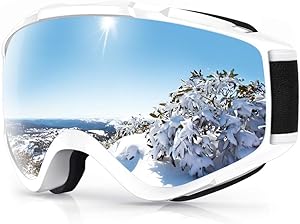
- Ventilation: Professional airflow system to reduce fogging
- Lens: Double spherical lens with Italian anti-fog inner layer
- Fit: Oversized OTG design fits glasses underneath
- Extras: Triple-layer foam, silicone-backed strap, 1-year guarantee
Findway’s goggles punch above their weight in ventilation and anti-fog performance. The engineered airflow channels move fresh air across the inner lens and expel moisture quickly, which — combined with the Italian-made inner lens — keeps fogging to a minimum during high-output runs. The spherical, frameless look gives a crisp, wide field of view for reading terrain.
The oversized OTG fit makes these goggles especially attractive for glasses wearers or anyone who prefers extra room inside the goggle. Comfort is good with triple-layer foam and the silicone-backed strap keeps the goggle from shifting during hard turns. Add in a friendly warranty and accessible price, and these goggles are a sensible value pick for everyday riding.
Pros: Strong anti-fog/ventilation, roomy OTG fit, comfortable foam, value-priced.
Cons: Optical precision not as refined as premium brands; lens color options may vary.
5. Dragon DX3 OTG
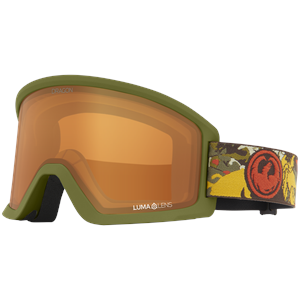
- Fit: Over-the-glass compatible medium frame for full coverage
- Lens: Thermal-formed cylindrical lens with LUMALENS® options
- Coating: Super Anti-Fog tech (200% stronger) and hard coating
- Face foam: Dual foam with hypoallergenic microfleece lining
The Dragon DX3 OTG blends retro styling with modern lens tech. Its cylindrical look offers a classic profile, while LUMALENS color optimization (on select colorways) noticeably improves contrast and depth perception — helpful in variable light. The goggle sits confidently over glasses, giving plenty of internal room without feeling loose on the face.
Dragon’s Super Anti-Fog coating and hard outer coating make this model rugged and reliable in damp or aggressive riding conditions. The hypoallergenic microfleece adds comfort for long days on the mountain. If you like the cylindrical aesthetic but want contemporary performance and excellent anti-fog protections, the DX3 is a dependable pick.
Pros: Strong anti-fog/hard coatings, comfortable OTG fit, durable construction, enhanced lens tech available.
Cons: Medium fit may be small for larger faces; some lens technologies reserved for select colorways.
6. Smith Blazer
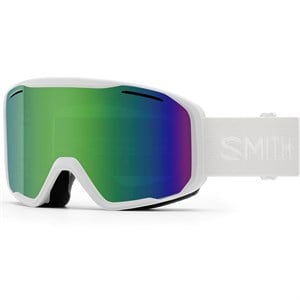
- Fit: Medium fit with Responsive Fit™ frame design
- Lens: Cylindrical Carbonic-X lens with Fog-X inner surface
- Ventilation: Built-in airflow technology for active ventilation
- Strap: Ultra-wide silicone-backed strap for secure fit
The Smith Blazer packs Smith’s core performance features into an approachable, mid-priced package. The Carbonic-X lens delivers solid impact resistance and optical clarity while Fog-X inner treatment keeps fogging under control without relying on fragile coatings. The Responsive Fit frame flexes to facial contours, making the Blazer comfortable on a wide range of face shapes.
Ventilation and strap quality help the Blazer hold its own during active days. It’s a great everyday goggle for riders who want trusted Smith technology without stepping up to higher-priced ChromaPop™ models. For helmet integration and dependable anti-fog performance, the Blazer is a practical and comfortable choice.
Pros: Reliable anti-fog tech, comfortable fit, strong strap, solid value.
Cons: Lacks ChromaPop contrast enhancement; mid-fit may not suit larger faces.
7. Oakley O Frame 2.0 Pro M
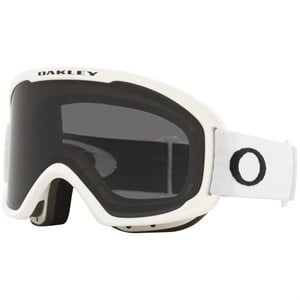
- Frame: O-Frame® 2.0 mid-size chassis for expanded peripheral view
- Lens: Plutonite® lens material blocking UVA/UVB/UVC and blue light
- Ventilation: Dual vented lenses with F2™ anti-fog coating
- Comfort: Triple-layer polar fleece foam and silicone-lined strap
Oakley’s O Frame 2.0 Pro M is a timeless performer: simple, strong, and built to last. Plutonite® lenses offer industry-leading UV and impact protection, and the optional Iridium® coating helps cut glare on bright days. Fit is comfortable and the low-profile frame integrates neatly with helmets, giving a clean look and reliable performance.
Ventilation plus Oakley’s F2 anti-fog keeps vision stable for long runs, while the polar fleece foam wicks moisture and stays soft in cold temps. The O Frame is a particularly good choice for riders who want proven durability, solid optics, and a classic silhouette that won’t let them down season after season.
Pros: Durable lenses, excellent UV protection, comfortable foam, proven reliability.
Cons: Not as wide a field of view as modern spherical frameless designs; fewer tint innovations.
See the Oakley O Frame 2.0 Pro M
8. Snowalva OTG Goggles

- Lens: Double-layer PC material with anti-scratch outer and anti-fog inner
- Design: Frameless, magnetic-interchange lenses (8 options available)
- Fit: OTG oversized fit with three-layer sponge for comfort
- Extras: Air filters to block dust and quick magnetic lens changes
Snowalva’s OTG are cheap snowboard goggles that are engineered for convenience and wide visibility. The frameless design opens up the sightlines and the magnetic lens system makes swaps fast and secure — great if you want to match lenses to changing light throughout the day. The double-layer lens construction balances scratch resistance with long-lasting anti-fog performance.
Comfort is prioritized with three-layer sponge and a roomy OTG cavity for prescription eyewear. Practical touches like air filters and multiple lens tints make these an appealing all-round option for riders on a budget who still want flexibility and fuss-free lens changes. For everyday resort use, Snowalva delivers strong value and ease-of-use.
Pros: Easy magnetic lens swaps, roomy OTG fit, good anti-fog protection, value-packed.
Cons: Magnetic system less premium-feeling than higher-end interchange systems; optical clarity varies by lens choice.
Critical Budget Snowboard Goggle Considerations
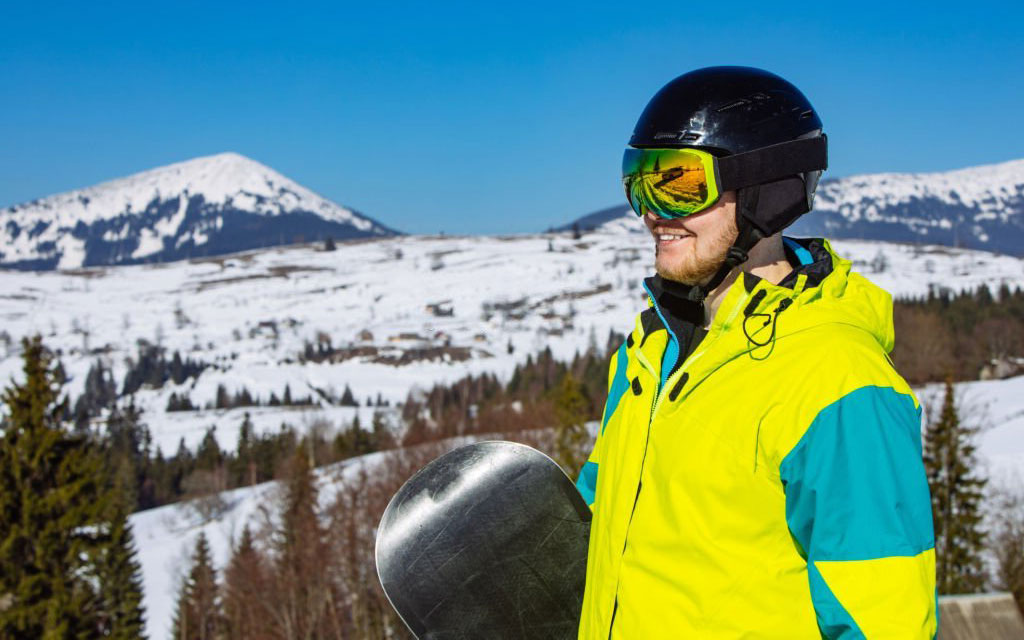
Air is thinner at high altitudes. It filters less UV light. The sunlight reflection on the snow is brighter and more intense which is harmful to the eyes. There is also wind, snow, and debris that can go into your eyes.
Goggles are essential protection in the mountains. Choosing affordable goggles is based on your conditions. But if you are confused about what to look for, this guide can help.
So these are the key things to consider when choosing inexpensive snow goggles.
Lens Shape
The lenses of goggles come in three shapes; cylindrical, spherical, and toric. Spherical and toric lenses have a slight advantage in terms of performance over cylindrical lenses.
Cylindrical
Entry-level goggles have cylindrical lenses mostly. Cylindrical lenses are curved across the face but they are flat vertically. These lenses are easier and cheaper to manufacture. They allow less peripheral vision and minor distortion at the top and bottom of the lens. These lenses also have more glare.
But the advances in lens technology are making cylindrical lenses better. Now, cylindrical lenses can be found even in mid-range and high-end goggles because they provide more clarity and field of view.
Spherical
Spherical lenses are curved horizontally as well as vertically. The curve of the spherical lens mimics eyeballs when looked at from the side. But they have a bubble-like shape that makes you seem like an alien. Spherical lenses have a slight performance advantage over cylindrical lenses. Spherical lenses have better peripheral vision. These lenses are found in high-end goggles.
Toric
The toric shape is relatively new in goggles. These lenses are similar to spherical lenses but the bubble-like shape is less pronounced. They are aesthetically pleasing with a decreased bug-eye look. Performance-wise, these lenses are similar to spherical lenses.
Lens Technologies
There are frequent innovations in lens technologies that result in improved quality and function. With time, there is less distortion, clear vision, accurate colors, and better protection to handle harsh conditions. Several lens technologies dictate the price.
Optical Enhancements
Lenses form a barrier between the eyes and the world. As a result, the optical quality drops. The colors seem faded or even different altogether due to different tints. Optical quality matters in recognizing things along the way, especially, during high-speed riding.
Companies have developed their proprietary technologies or have turned to third parties for optical clarity. Smith’s ChromaPop is the best optical enhancement in the industry. They provide great color richness and color contrast that feels almost natural.
Oakley’s Prizm technology is a rival of ChromaPop. Prizm also allows excellent optical clarity. It enhances item details for better recognition which matters during high-speed riding. Giro and Anon have turned to Zeiss for their VIVID and Sonar lenses respectively. They also develop their lenses in-house.
Optical enhancement is a good feature to have in your lenses. But it is not an essential feature. It only makes a difference in poor lighting conditions. For most riders, optical enhancements are useless. These enhancements are more suitable for committed riders.
UV Protection
Today, almost all goggles have 100% UV protection, even budget options. UV intensity increases with altitude which may cause eye fatigue or even damage to the retina. Eye protection becomes necessary under these circumstances.
Mirrored Lenses
Mirrored lenses are for bright conditions like sunny days. They have a reflective coating outside that allows a decreased volume of light and also decreases glare.
Polarized Lenses
Polarized lenses were originally designed for watery surfaces. But they were found to work well with snow as well. Light reflects intensely at certain angles from some surfaces, especially, vertical light. Polarized lenses cut down glare and provide visual clarity. These lenses also increase contrast and definition. But they are expensive and only found in high-end goggles.
Photochromic Lenses
Photochromic lenses automatically adjust to varying light conditions. These lenses become dark when exposed to strong light allowing less light to pass through. This versatility is an advantage and it is great if you don’t want to swap lenses. But it is better to bring two lenses instead of relying on one. The market is full of goggles that allow swapping lenses.
Lens Tint and VLT
VLT stands for Visual Light Transmission. It is the amount of light that is allowed through the lens. You may only want 10% light on bright sunny days and 100% light during the nighttime. It all comes down to VLT.
Lens tints of blacks, grays, and blues are on the low side of the VLT spectrum. They block out most light. Purple, red, and green tints are in the middle. Clear lenses and tints of yellow and blue are for overcast and gray days.
Double Lenses
Double lenses create a thermal barrier that significantly reduces fogging compared to single lens construction. They are common on all new ski and snowboarding goggles.
Anti-Fog Coating
The anti-fog coating is a hydrophobic chemical treatment on the inside of the lens which prevents fog collection. Poor goggle care can wipe out this coating. To protect the coating and make it last for a longer period, refer to the manufacturer’s directions.
Field of View
Older goggles used to be small which created a tunnel-like feeling. New goggles have a large size with wide and tall lenses and low-profile frames for enhanced peripheral vision. Large-sized frames with good optical quality provide the best view. But to summarize the whole issue, the more money you pay, the better field of view you get.
Lens Fogging
Fogging is a huge problem that has to be addressed in cheaper goggles. It completely blocks vision which can be dangerous during high-speed riding. But there are some things you can do to avoid fogging. Inspect the frame and look for vents. The more the air passes through the goggles, the less fogging you will have to face.
Make sure the helmet doesn’t block the upper vents. Avoid overdressing as it causes sweating which increases fogging in the goggles. Don’t keep the goggles on all day. Don’t move the goggles to the forehead. The sweat on the forehead can also cause fogging.
The anti-fog coating on the lens gets wiped out. Limit the times you wipe off moisture from the lens. Air drying the lens is a better way to protect the coating.
Frame or Frameless
There is a common argument that frameless goggles – also known as rimeless goggles – provide a better field of view. There is no difference in the performance of framed and frameless goggles. Frameless goggles may make it easy to swap the lenses. But that also depends on the mechanism.
Frame Size
Frame size correlated to head size. According to general guidelines, if you have a small helmet, then you should get a small frame. If you have a large or extra-large frame, you should get a large frame.
OTG Goggles
OTG stands for Over the Glasses. There are several OTG goggles on the market. The Anon Relapse is an OTG goggle on this list. OTG goggles have space between the lens and the face and notches on the side for glasses. But OTG doesn’t guarantee that your glasses will fit inside. Large-size glasses don’t usually fit inside. Small-size glasses are the ones to fit in most cases.
Foam Padding
Padding differs in models based on pricing. Basic goggles come with single-layer foam padding that retains moisture and smell and breakdown quickly. High-end models come with a multi-layer foam that is shaped perfectly for the face. They also have moisture-wicking capability. If you spend a lot of time on the slopes, then you should get the pricier comfortable models.
Helmet Compatibility
An incompatible helmet leaves a gap between the goggle or doesn’t fit at all. Most modern helmets and goggles fit together. But the safest bet is to stick with the same brand helmet as the goggles.