Best Directional Snowboards of 2026
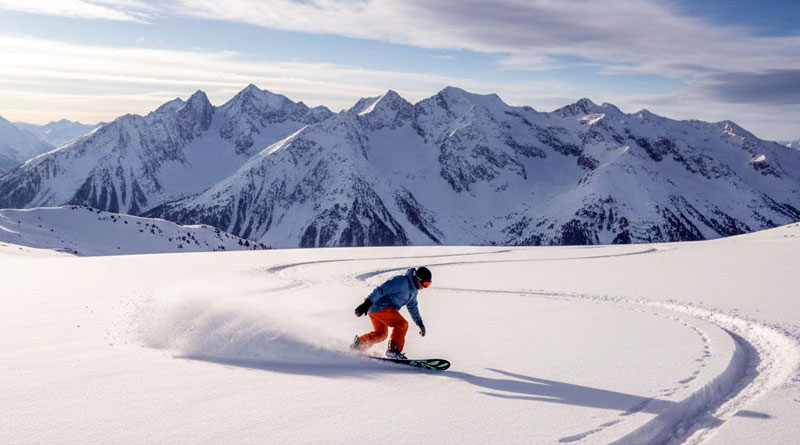
If you love carving fresh lines, cruising groomers, or floating through deep powder, a directional snowboard is made for you. These boards are built to ride mainly one way, giving you better control, speed, and stability on every descent. Whether you’re an intermediate rider exploring steeper slopes or an expert chasing big-mountain terrain, a directional board helps you stay balanced and confident. In this guide, we’ve rounded up the best directional snowboards of the year to suit every riding style and skill level.
1. Burton Ripcord
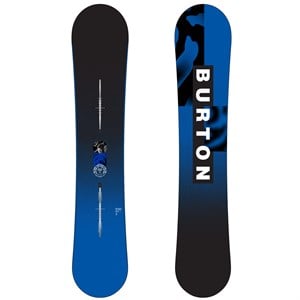
- Rocker Type: Flat Top™ with Easy Bevel
- Flex / Shape: Directional Flex / Directional, 5mm taper
- Core / Tech: Fly 900G Core with Squeezebox Low
- Base / Edges: Extruded Base with Easy Bevel
If you’re learning to link turns and want a board that makes progression feel inevitable, the Ripcord is a near-perfect coach on snow. Its Flat Top with early-rise tip and tail gives surprising stability between the feet while the Easy Bevel takes the edge-hang anxiety out of every turn. The Squeezebox Low core profiling smooths power delivery and lets you feel planted without having to muscle the board; that means you spend energy improving technique rather than fighting the deck. The directional flex and slight taper help the nose float and the tail snap without confusing a beginner learning weight distribution.
Ride it over a full season and the Ripcord continues to reward confidence-building sessions—carving groomers, dabbling off-piste, and even hopping small features feel friendly. The extruded base and forgiving torsional response mean low maintenance and fewer days stuck at the bench. For a rider moving past absolute beginner status and craving a predictable, playful tool that accelerates progress, this board hits the sweet spot between ease and capability.
Pros: Extremely forgiving, low-maintenance base, predictable progression, great stability for novices.
Cons: Lacks high-speed precision for advanced riders, softer flex limits pop for aggressive presses.
2. Salomon Bliss X – Women’s
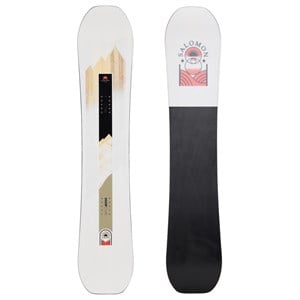
- Rocker Type: Cross Profile (Rocker-Camber-Rocker)
- Flex: Rating 4 (Medium playfulness)
- Core / Pop: Aspen Strong Core with Popster profiling
- Base / Sidewalls: Extruded EG base with Recycled ABS & Royal Cork Rails
The Bliss X is a beautifully balanced all-mountain board for ladies who want one deck that does a little of everything very well. The rocker-camber-rocker Cross Profile gives forgiving turn initiation with enough camber underfoot to deliver snap and edge hold when you ask for it. Popster’s milled shaping around the inserts adds a lively response to pedal into spins or quick directional changes, while the Aspen Strong core keeps flex predictable from cold mornings through slushy afternoons. The medium flex and biaxial fiberglass construction keep the ride playful, making the board easy to pivot but still stable enough to charge groomers and soft lines.
Salomon’s thoughtful eco touches — cork rails and recycled ABS — don’t just look good on paper; they smooth chatter on variable terrain and soften landings. The extruded EG base is forgiving to maintain yet glides well thanks to a medium stone finish. For a rider bridging beginner and confident intermediate terrain, the Bliss X offers approachable performance that rewards progression without penalizing mistakes.
Pros: Versatile all-mountain performance, forgiving yet responsive feel, eco-friendly construction, low maintenance base.
Cons: Medium flex limits very aggressive charging; not built for pro-level big-mountain speed.
See the Salomon Bliss X – Women’s
3. Rossignol XV
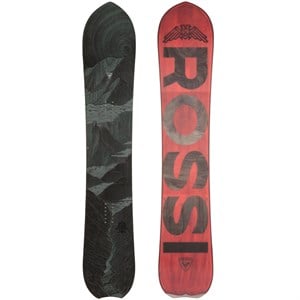
- Rocker Type: AmpTek Elite Rocker (60% camber / 40% rocker)
- Flex / Shape: Flex 9, Reverse Super Directional
- Core / Laminates: THC CBF² Triple Hybrid Core with Aramid & Basalt
- Base / Edges: Sintered 7500 with Tip Roller & 7M Serrated Edges
Built with Xavier De Le Rue input, the XV is unapologetically made for big lines and serious speed. It’s a stiff, confidence-inspiring board that thrives when the sketch factor rises: hardpack, variable snow, and steep faces are all handled with authority. AmpTek Elite’s camber-to-rocker balance gives the deck explosive pop underfoot while the rocker tips keep landings and spins forgiving. The Reverse Super Directional flex biases stiffness up front for control in high-speed charges and softens the rear slightly for maneuverability when the terrain turns technical.
Rossignol packs this model with damping and durability: basalt and aramid laminates calm chatter, the sintered base with tip roller keeps float effortless in pow, and the 7M serrated edges bite where you need them. This is not a playful park toy — it’s a precision freeride weapon for advanced riders who demand reliability at speed and in deep days.
Pros: Exceptional high-speed stability, superior dampening, excellent float and pop, aggressive edge hold.
Cons: Heavy and very stiff for lighter riders; overkill for casual resort laps.
4. Season Nexus
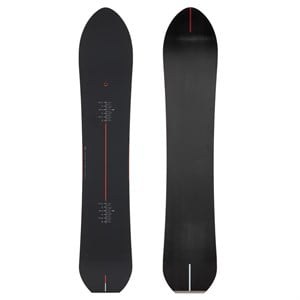
- Rocker Type: Entry Rocker / Directional Camber / Exit Rocker
- Core: Poplar / Paulownia Wood Core
- Laminates / Reinforcement: Biaxial Fiberglass with Basalt Stringers
- Base / Service: Seamless Sintered Base + Lifetime Season Pass
The Season Nexus is a dependable daily driver that balances liveliness and control for riders who want one board to handle it all. Its hybrid rocker/camber/rocker profile smooths turn initiation and gives forgiving tip release while camber underfoot restores snap and edge hold. The poplar/paulownia blend core delivers responsive feel without being overly stiff, and basalt stringers add subtle stiffness where needed for improved stability and pop. That combination makes the Nexus comfortable carving groomers, hunting side hits, and navigating mid-winter slush with a composed demeanor.
For riders progressing into more technical terrain, the Nexus’s medium-stiff character is friendly enough to practice freeride maneuvers yet robust enough to forgive errors at speed. The seamless sintered base helps maintain glide, and Season’s lifetime pass for waxes/tunes sweetens ownership value. If you want a reliable quiver option that doesn’t fuss when conditions change, the Nexus is an excellent, sensible choice.
Pros: Versatile daily performance, lively yet stable core, quality sintered base, value-added maintenance program.
Cons: Not as specialized for deep powder or park-specific tricks; slightly heavier than ultralight freeride boards.
5. Burton Counterbalance
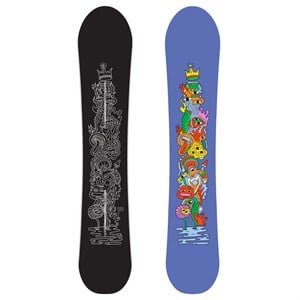
- Rocker Type: Directional Camber with rockered nose
- Flex / Shape: Directional Flex, 8mm taper, All Mountain Directional
- Core / Tech: Super Fly II™ 700G with Dualzone™ EGD™
- Base / Construction: Sintered WFO base, 45° Carbon Highlights
The Counterbalance is a versatile quiver-killer that balances park-friendly pop and powder-friendly float impressively well. Its directional camber profile gives camber stability and edge-hold underfoot, while the rockered nose grants extra lift in deeper snow. The Super Fly II core and Dualzone EGD deliver crisp snap and consistent edge pressure, and the carbon highlights refine torsional response so the board feels lively without being harsh. Burton’s Infinite Ride treatment also means the flex and pop stay far more consistent season-to-season compared to untreated boards.
This board is excellent for riders who split time between side hits, groomers, and deep days and want a single deck that stays fun across scenarios. The tapered outline keeps turn initiation predictable and the WFO sintered base retains wax well for long glide. If you want a balanced directional board that won’t force you into a strict park or powder-only role, the Counterbalance is a refined, reliable pick.
Pros: Excellent all-mountain versatility, durable sintered base, consistent long-term pop, carbon-tuned responsiveness.
Cons: Slightly pricey for a mid-flex all-mountain board; may not please riders wanting an ultra-specialized powder shape.
6. Season Forma
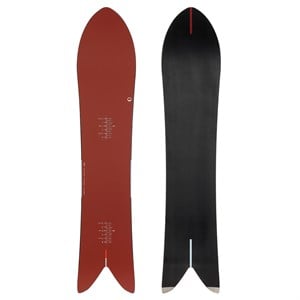
- Rocker Type: Entry Rocker / Directional Camber / Exit Rocker
- Core / Build: Poplar / Paulownia Wood Core with Bio Resin Epoxy
- Shape / Tail: Wide swallowtail, setback stance, stainless steel tail insert
- Base / Sidewalls: Seamless Sintered Base, 360 Double Damping Sidewall
The Forma is a powder-first freeride board built for deep days and confident line choice. Its wide swallowtail and setback stance keep the nose high and the tail engaged for controlled pivoting in steep or tight powder lines. The directional camber underfoot combined with entry/exit rocker keeps the deck playful when you need to slarve or skid out of tight spots while retaining the stability to charge at speed. The Poplar/Paulownia core balances responsiveness and low swing weight for quick maneuvering in deep snow.
Season’s construction upgrades — bio-resin and double damping sidewalls — reduce environmental impact while increasing durability and vibration absorption. This is not a park tool; it’s a focused powder weapon for advanced riders who want flotation and precision in big-mountain conditions. If your priority is surfy, confident float and reliable durability in deep days, the Forma is a specialized, high-performing choice.
Pros: Outstanding float in deep snow, strong damping and durability, eco-minded materials, surfy feel.
Cons: Narrow use-case—best in powder; less versatile on groomers or park setups.
7. K2 Commonwealth
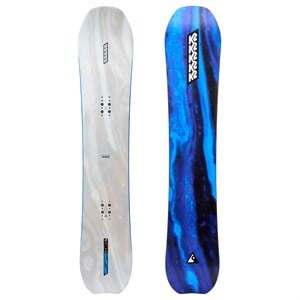
- Rocker Type: Camber (responsive traditional camber)
- Flex / Core: Flex 7 with A1 Core (bamboo, aspen, paulownia)
- Laminates: Triaxial Glass with Spectral Braid™ reinforcement
- Base / Topsheet: Wax-Infused Sintered 4001 Base, SnoPhobic Topsheet
The Commonwealth is a powerful freeride-focused board that blends snap and precision with excellent edge control. Its full camber profile delivers immediate response and precise pressure along the edge, ideal for committed carves and technical lines. K2’s A1 core brings snap and liveliness with strategic use of bamboo to boost edge-to-edge response, while paulownia reduces swing weight in the tip and tail. Spectral Braid adds tuned torsional control so the board feels lively and composed under aggressive inputs.
For riders who chase fresh tracks and want a do-it-all freeride tool, the Commonwealth’s wax-infused sintered base keeps speed between turns and the SnoPhobic topsheet helps prevent snow build-up on deep days. It’s a stiff, confident ride for intermediate-to-advanced freeriders who value precision, edge hold, and long-day durability.
Pros: Excellent edge hold and response, durable fast base, thoughtful core blend, strong big-mountain capability.
Cons: Stiffness can be unforgiving for lighter or less-technical riders; not ideal as a playful park board.
8. Arbor El Camino
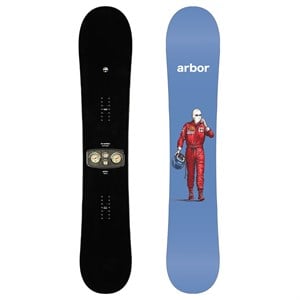
- Rocker Type: Parabolic Camber System
- Flex / Shape: Flex 8-9, Directional with 5mm taper
- Core / Laminates: Highland III Core with Double Carbon Stringers
- Construction / Base: Mixed glassing, 360° fully wrapped sidewalls, sintered base
Arbor’s El Camino is a pro-caliber freeride deck designed for aggressive lines and big air. The parabolic camber reduces catchy contact points while preserving effective camber underfoot for pop and precision. Double carbon stringers provide razor-sharp snap and landing durability so jumps and cliff drops feel controlled rather than buzzy. The Highland III core leans toward a lighter, high-performance feel courtesy of elevated paulownia content, helping the board flick through tight turns and hold composure on high-speed exits.
Arbor’s sustainability credentials shine through the bio-plastic topsheet, bio-resin, and recycled steel edges without compromising ride quality. Grip Tech contact points improve hold when edge pressure is critical. The El Camino is a solid choice for intermediate-to-advanced freeriders who want a stiff, responsive platform for steep chutes, airs, and commitment lines.
Pros: Powerful pop and snap, lightweight high-performance core, sustainable materials, excellent edge grip.
Cons: Stiffness makes it less forgiving for casual riders; specialized for aggressive freeride use.
9. Nitro Alternator x Hailey – Women’s
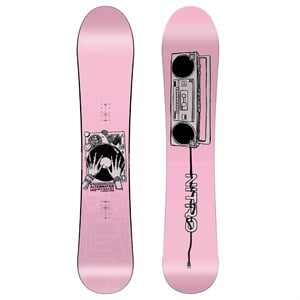
- Rocker Type: Trüe Camber (classic camber)
- Flex / Core: Flex 7 with Powerlite Core and Reflex Profile
- Laminates / Reinforcement: Tri-Lite Laminates with Diamond Band carbon
- Base / Edges: Sintered Speed Formula II Base, Recycled Steel Edge
Co-designed with Hailey Langland, the Alternator x Hailey blends playful surfy characteristics with confident all-mountain capability. True camber gives reliable pop and precision while Nitro’s Reflex core profile makes the board easy to steer and quick to pivot between turns. The Powerlite core keeps the overall weight down, which is especially helpful for progressive tricks, but the mid-stiff flex ensures the board still snaps hard when you load it for pop or speed.
Nitro’s attention to eco-friendly production and high-end base tech means you get a fast, durable foundation and peace of mind about materials. The deck shines for riders who split time between carving, backcountry sneaks, and playful freeride laps—offering a lively response without being overly harsh on landings.
Pros: Excellent balance of pop and maneuverability, lightweight core, fast sintered base, eco-conscious features.
Cons: Stiffer feel may be demanding for true beginners; camber-centric riders may want more rocker for deep powder.
See the Nitro Alternator x Hailey – Women’s
10. K2 Sky Pilot
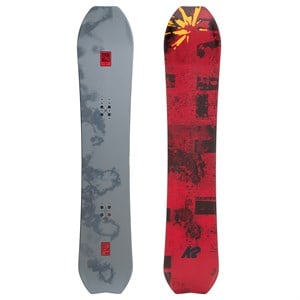
- Rocker Type: Directional Combination Camber Profile
- Flex / Volume: Flex 6 with Volume Shift™ (size down 3–5cm)
- Core / Laminates: S1 Core with Carbon Y-Beam and Triaxial Glass
- Base / Contour: 3D Base Contour with Wax-Infused Sintered 4001 Base
The Sky Pilot blends big-mountain capability with freestyle sensibility in Sage Kotsenburg’s signature freeride shape. The directional combination camber gives both pop and float while the Volume Shift platform concentrates volume underfoot for improved mobility — a clever design that lets the board feel shorter and more nimble without sacrificing stability. K2’s S1 core with bamboo stringers offers damp, responsive flex, and carbon Y-beam adds targeted snap and tail control for committed charging.
3D base contouring eases turn initiation and reduces catchiness on varied snow, making this board an excellent choice for steep chutes, pillow lines, and tight trees. It’s a mid-stiff, versatile deck for advanced freeriders who want a single board that performs across natural terrain features and playful freeride laps.
Pros: Great float-to-maneuverability balance, stable at speed, thoughtful volume-shift design, durable fast base.
Cons: Size recommendations mean careful sizing choices; not as soft for playful beginners.
How to Choose Directional Snowboards
Choosing the right directional snowboard can make every run more fun and safer. Directional boards are built to be ridden mainly one way, with a slightly longer or shaped nose and more power in the tail. That design helps with flotation in powder, stability at speed, and strong, predictable turns. This guide breaks down the main features to compare, shows how to size and tune a board to your riding style, and gives a simple checklist so you can pick a directional board that fits your goals and your local hill.
What is a directional snowboard?
A directional snowboard is shaped and tuned to perform best when ridden forward. It usually has a longer nose than tail, sometimes a setback stance, and construction that favors stability when moving in one direction. These boards excel in freeride, big-mountain, powder, and all-mountain riding where float, tracking, and stable landings matter more than switch riding or mirror-flat park tricks.
Why choose a directional board?
There are three main benefits to a directional design:
- Float in powder: A longer, wider nose helps the board stay on top of deep snow so you don’t sink.
- Stability at speed: Directional flex and shape reduce chatter and make straight-line runs feel more secure.
- Powerful turns: The tail often has more pop and snap, which helps you push off the tail and finish turns with authority.
Key features to compare
Shape and taper
Look at whether the board is directional (nose longer than tail) or directional twin (directional flex but more symmetrical shape). A tapered board (nose wider than tail) improves powder flotation and makes turning easier. If you ride mostly deep snow, choose more taper. If you want some park use, choose a milder taper or directional twin.
Rocker and camber profile
Rocker and camber control how the board feels on snow:
- Camber: Traditional camber underfoot gives pop, edge hold, and stable carving.
- Rocker: Rocker at the tip helps with float and makes the board less likely to catch an edge.
- Hybrid profiles: Rocker at the tip + camber underfoot + rocker at the tail are popular for directional boards because they blend float, power, and forgiveness.
Flex rating
Flex tells how soft or stiff the board is from tip to tail. Softer boards are easier to turn and forgiving for lighter riders. Stiffer boards hold an edge better at speed and feel powerful for big turns and drops. Directional boards for freeride and powder tend to be medium-stiff to stiff, while all-mountain directional shapes can be medium for versatility.
Length and volume
Length is not just about height. Volume and width underfoot affect how the board floats and turns. For powder days, many riders size up a few centimeters or choose a board with higher volume. For technical lines and tighter turns, choose a slightly shorter length. Always match length with your weight, riding style, and local snow conditions.
Width
Make sure the waist width prevents toe or heel drag. If you have larger boots, choose a board labeled mid-wide or wide. Too wide can slow edge-to-edge response; too narrow risks boot overhang and catching toes or heels.
Core and laminates
Cores balance weight, pop, and durability. Popular woods are poplar, paulownia, and bamboo blends. Carbon or basalt stringers add snap and reduce weight. Triax or biax fiberglass layups change torsional stiffness. For directional boards, look for cores and laminates that add stability and dampening at speed while keeping enough pop for turns and ollies.
Base and edges
Sintered bases are faster and absorb wax longer, but need more care. Extruded bases are low-maintenance and fine for casual riders. Serrated or special edge treatments improve bite on icy or variable snow. For big-mountain riding, a sintered base plus good edge geometry helps hold speed and control.
Matching the board to your riding style
Think about where and how you ride most:
- Powder-focused: Pick a wider nose, tapered tail, setback stance, and rocker in the tip.
- All-mountain: Aim for a medium flex, hybrid camber profile, and moderate taper for versatility.
- Freeride and steep terrain: Choose a stiffer board with strong camber underfoot and dampening materials for stability.
- Mixed park lines: Consider a directional twin that still lets you hit features and ride switch occasionally.
Sizing tips
Use these rules to pick length and width:
- Start with the manufacturer’s size chart — it accounts for board volume and profile.
- For powder, add 2–5 cm to your usual length or choose a board with more volume under the nose.
- If you have large boots, check waist width and step up to mid-wide or wide sizes.
- Rider weight matters more than height. Heavier riders need longer boards for proper float and stability.
Bindings and mounting
Check the insert pattern (Channel, 2×4, 4×4). Some mounting systems give more stance options and easier adjustment. Make sure your bindings are compatible and that your stance options let you set a setback for powder or a centered stance for mixed riding.
Durability and maintenance
Look for solid edges, reinforced tips, and quality sidewalls if you ride rocky or aggressive terrain. Plan to tune your board: wax a sintered base regularly, sharpen edges before icy days, and repair any core shots quickly. A well-maintained board rides faster, lasts longer, and is more reliable in tricky snow.
Budget and value
You can find excellent directional boards across price points. Entry-level boards with extruded bases and simpler cores cost less and still offer good performance for beginners. Higher-end boards use advanced cores, carbon stringers, and sintered bases for top speed, lower weight, and longer life. Think about how often you ride and where — frequent big-mountain riders benefit more from premium features.
Quick buying checklist
- Does the shape match your primary terrain (powder vs groomers vs mixed)?
- Is the length and waist width right for your weight and boot size?
- Does the rocker/camber profile fit your need for float or edge hold?
- Is the flex suitable for your skill level and preferred speed?
- Are the core, laminates, and base materials balanced for durability and weight?
- Are the inserts compatible with your bindings and stance preferences?
Final thoughts
Choosing a directional snowboard is about matching the board’s strengths to the way you ride. Focus on shape, profile, flex, and volume first — these define how the board will feel in powder, on groomers, and at speed. Consider materials and base type based on how much maintenance you want to do and how often you ride. With the right directional board, you’ll find better float, more stable high-speed runs, and stronger, more confident turns. Try demoing a board if you can; a short test ride is the best way to know if a directional board really fits your style.