Best Night Snowboarding Goggles of 2026
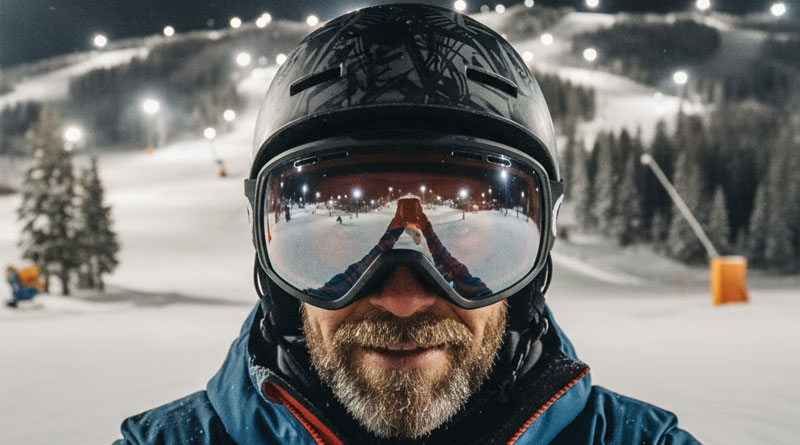
Night snowboarding is an amazing experience, but it comes with its own challenges — especially when it comes to visibility. The right goggles can make a big difference, helping you see clearly in low light while keeping your eyes protected from wind and glare. In this guide, we’ve rounded up the best night snowboarding goggles to help you ride safely and confidently after dark. Whether you want crystal-clear vision, comfort, or style, you’ll find the perfect pair for your next night session on the slopes.
1. Oakley Line Miner L
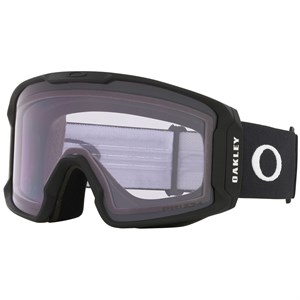
- Frame Size: Large, OTG
- Lens Type: Cylindrical, HDO®
- Compatibility: Helmet compatible, prescription-friendly notches
- Anti-Fog/Vent: Dual-pane lens with F3 anti-fog, 360° venting
The Oakley Line Miner L is built for riders who demand maximum peripheral and downward vision without sacrificing a snug, helmet-friendly fit. The closer-to-face design genuinely widens your field of view and makes scanning the trail or park effortless. The O Matter® chassis plus a rigid exoskeleton strikes a good balance — the frame remains comfortable and flexible in cold temps while the outer structure keeps the lens perfectly seated for distortion-free optics. HDO® clarity and Plutonite® protection make the lens feel like a serious upgrade even in flat light or night conditions.
Prizm™ color options (on select models) and simple lens interchangeability mean you can swap to a high-contrast night or low-light lens quickly, and the silicone-backed strap plus triple-layer foam keep the seal secure and comfortable for all-day use. If you wear glasses, the discreet temple notches are a welcome touch that keeps the goggle stable without pinching. Overall, the Line Miner L is a polished, performance-first goggle that works equally well for aggressive riders and casual cruisers who want top-tier optics and field of view.
Pros: Excellent peripheral vision, top-tier optics, helmet- and glasses-friendly, solid anti-fog system.
Cons: Large fit may overwhelm smaller faces, pricier than budget options.
2. OutdoorMaster Ski Goggles PRO

- Design: Frameless, large spherical lens
- Interchange: Interchangeable lens system (many extra lenses available)
- Protection: 100% UV400, anti-fog coated lenses
- Fit: OTG-friendly, long elastic strap for helmet compatibility
The OutdoorMaster Ski Goggles PRO are a strong value play for riders who want a wide, unobstructed field of view without spending premium dollars. The frameless large-sphere lens gives a very open sightline that helps at night and in low light when you need to pick up subtle terrain changes. The OTG design is practical — glasses fit comfortably under the foam seal — and the anti-fog treatment combined with generous venting keeps visibility steady on longer sessions.
What really sells these is the interchangeable lens ecosystem: you can tailor lenses for night, flat light, or sun and swap quickly when conditions change. The strap is long and grippy enough to marry well with helmets, and the included pouch and case are handy for travel. For riders who want versatility and low cost per lens, this goggle is a reliable companion; it won’t match the ultra-premium optics of high-end brands, but it gives excellent performance for the price.
Pros: Outstanding value, huge lens options, OTG compatible, helmet-friendly strap.
Cons: Optical clarity not as refined as premium lenses, replacement lenses sold separately.
See the OutdoorMaster Ski Goggles PRO
3. Smith Squad
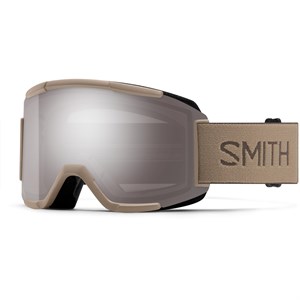
- Frame Size: Medium fit, semi-rimless Responsive Fit™
- Lens Tech: ChromaPop™ lenses with TLT optics
- Anti-Fog: Fog-X inner lens and 2-layer DriWix foam
- Strap: Ultra-wide silicone-backed strap with dual-slide adjust
The Smith Squad is a versatile, mid-sized goggle that blends reliable optics with a clean, streamlined profile. ChromaPop™ lenses really improve color contrast and help terrain pop in low light, which is handy for night shredding or dusk laps. The Responsive Fit™ frame molds slightly to your face for a secure seal without bulk, and the Fog-X inner lens is practically legendary for resisting moisture buildup through the day.
Comfort is solid thanks to the DriWix foam that wicks away sweat and keeps the fit consistent under a helmet. Lens interchangeability with included replacement sleeves makes switching to a low-light lens easy, and the strap system locks the goggle in place even during aggressive runs. If you want a dependable, mid-priced goggle that balances performance, clarity, and comfort, the Smith Squad is an excellent, well-rounded choice.
Pros: Great color/contrast, effective anti-fog, comfortable fit, solid helmet integration.
Cons: Medium frame may not suit very large faces, replacement lenses cost extra.
4. Smith Squad S – Women’s
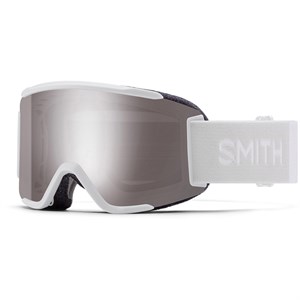
- Frame Size: Small, semi-rimless design
- Lens Tech: ChromaPop™ with cylindrical Carbonic-x lens
- Included: Replacement clear lens included
- Comfort: 2-layer DriWix foam and airflow ventilation
The Smith Squad S tailors the Squad’s performance to smaller faces and tighter helmet integration, making it a top pick for riders seeking a compact, comfortable goggle. The ChromaPop™ lenses enhance contrast and help define detail in low light, which is especially helpful for evening rides or variable weather. The included clear replacement lens is a thoughtful bonus that makes this a great out-of-the-box night-and-day solution.
Fit and integration are standout points — the smaller frame sits neatly under most helmets and the DriWix foam keeps moisture managed. Venting does a good job of preventing fog while the ultra-wide silicone-backed strap keeps the goggle locked to your helmet. For anyone wanting a smaller-profile goggle with the same optical advantages as the larger Squad, the Squad S is an attractive, budget-conscious option.
Pros: Compact fit, good low-light contrast, spare lens included, well-vented.
Cons: Small frame not ideal for larger faces, optical peak not as premium as top-tier spherical lenses.
See the Smith Squad S – Women’s
5. Oakley Fall Line L
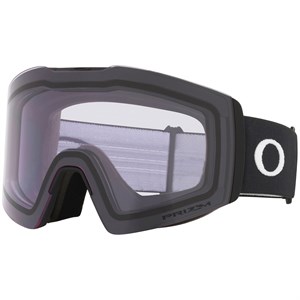
- Frame Size: Large, rimless for max peripheral
- Lens Type: Cylindrical with Prizm™ options
- Face Foam: Triple-layer polar fleece, moisture wicking
- Anti-Fog/Vent: Dual vents with F3 anti-fog coating
The Oakley Fall Line L is a spherical-inspired powerhouse that favors field of view and optical performance. The rimless design expands peripheral awareness, which is especially useful when riding at night or in flat light where seeing edges and shadow detail matters. With at least one Prizm™ lens included, contrast and terrain definition receive a noticeable boost compared with generic lenses — the result is easier read of bumps and transitions in low-light conditions.
Construction is thoughtful: the rigid exoskeleton holds the lens in perfect alignment while the soft inner O Matter® and polar fleece foam make the goggles comfortable for long sessions. The F3 anti-fog and dual venting keep the internal environment stable even during heavy exertion. If you want a big-view goggle that emphasizes contrast and comfort, the Fall Line L is a standout option for riders who prioritize visibility over minimal profile.
Pros: Massive peripheral view, Prizm contrast advantage, comfortable foam, strong anti-fog system.
Cons: Large footprint may conflict with small helmets, premium price point.
6. Anon M4S Toric
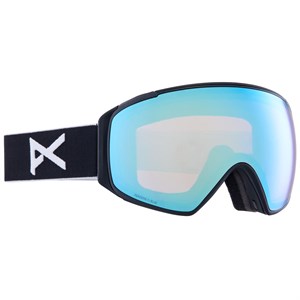
- Lens Type: Toric PERCEIVE lens for high-contrast clarity
- Change System: Magna-Tech™ magnetic quick lens change
- Ventilation: Full perimeter channel venting with ICT
- Extras: MFI® facemask included, OTG-compatible frame
The Anon M4S Toric is engineered for riders who value optical precision and fast lens swaps. The toric lens shape mimics the human eye curvature for reduced distortion and expanded peripheral vision, and the PERCEIVE coating enhances contrast in mixed light — both useful for night and variable lighting. Anon’s Magna-Tech™ magnetic system is genuinely fast and secure; lens changes are effortless even with gloves, which means you can adapt to shifting light without wasting laps.
Ventilation through the full-perimeter channel plus ICT anti-fog technology keeps the lens clear under sustained effort, while the MFI® facemask integration is a plus for cold, windy days. The frame is well-built, balancing a rigid outer shell with a flexible inner face for comfort. If you want one goggle that excels in clarity, changeability, and cold-weather performance, the M4S Toric is a high-function pick that feels premium in use.
Pros: Superb optics, fastest lens changes, excellent ventilation, facemask integration.
Cons: Pricey, replacement magnetic components can be costly if damaged.
7. Oakley Flight Deck M
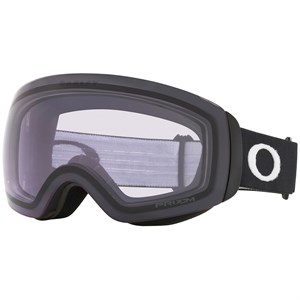
- Frame Size: Medium, small-to-medium fit, rimless design
- Lens Type: Spherical HDO® with Ridgelock change system
- Comfort: Triple-layer polar fleece foam, anatomical fit
- Standards: Meets ANSI Z87.1 and EN 166 impact requirements
The Oakley Flight Deck M delivers the signature “Top Gun” field of view in a scaled-down mid-size fit, ideal for riders who want max visibility without the bulk. The spherical HDO® lens gives excellent distortion-free clarity across the whole view, and the Ridgelock lens change system keeps swaps straightforward. The smaller profile eases helmet integration and nose clearance while preserving the broad sightlines that make the Flight Deck shape so popular.
Comfort and performance are both well-considered: 3D CAD/CAM engineering ensures a consistent seal, and the polar fleece foam keeps the fit cozy and moisture-managed. The F3 anti-fog paired with dual venting handles temperature swings and exertion well. If you want a Flight Deck experience in a more compact package — one that still delivers top-tier optics and compatibility with glasses — the Flight Deck M is an excellent compromise.
Pros: Exceptional spherical optics, compact helmet-friendly fit, reliable anti-fog, glasses compatibility.
Cons: Mid-size may still be large for very small faces, cost reflects premium features.
How to Choose Night Snowboarding Goggles
When the sun sets and the slopes quiet down, night snowboarding offers a unique thrill that daytime riding can’t match. But with lower light, changing temperatures, and glare from artificial lighting, your choice of goggles becomes even more important. Picking the right pair of night snowboarding goggles can dramatically improve your visibility, safety, and comfort on the mountain. Here’s a complete guide on what to look for when choosing goggles for night riding.
Why Night Snowboarding Goggles Matter
Night snowboarding goggles are specifically designed to enhance visibility in low-light conditions. Unlike bright, reflective daytime lenses, these goggles use lenses that allow more light to reach your eyes. The right lens color, coating, and technology can help you read the terrain, identify obstacles, and maintain depth perception — all while reducing eye strain from artificial lights and snow glare. A good pair doesn’t just make things clearer; it helps you ride more confidently and safely.
Understanding Lens Types
Cylindrical vs. Spherical vs. Toric Lenses
Snowboard goggle lenses come in three main shapes: cylindrical, spherical, and toric. Cylindrical lenses are flat across the vertical axis, offering a more traditional look and generally being more affordable. They perform well at night since distortion is minimal at lower light levels. Spherical lenses curve both horizontally and vertically, mimicking the natural shape of the human eye, which gives better peripheral vision and less glare. Toric lenses combine the benefits of both — they match the curvature of your eye more precisely and offer excellent clarity and depth perception.
For night snowboarding, all three types can work, but cylindrical and toric lenses are often favored for their balance of clarity and comfort in low light. The choice usually comes down to personal preference and budget.
Choosing the Right Lens Tint for Night Riding
Light Transmission and VLT
One of the most important features to consider is VLT, or Visible Light Transmission. This measures how much light passes through the lens, expressed as a percentage. Higher VLT (above 60%) means the lens lets in more light, which is ideal for night snowboarding or overcast days. Lower VLT (below 25%) is better suited to bright sunlight, where glare reduction is key.
For night riding, aim for lenses with a VLT between 60% and 90%. These lenses allow maximum visibility in dim conditions without over-brightening artificial lights. Clear, yellow, rose, or light amber tints are the most common and effective options.
Best Lens Colors for Night Snowboarding
- Clear: The best choice for true night riding with minimal lighting. Offers no color distortion and maximum brightness.
- Yellow or Amber: Enhances contrast and depth perception in low light, helping you spot changes in snow texture.
- Light Rose or Pink: Softens shadows and boosts definition, great for slopes with artificial lighting.
- Light Blue: Reduces glare from floodlights while maintaining visibility in darker areas.
Avoid dark or mirrored lenses, as these reduce the amount of light reaching your eyes — great for sunny days but dangerous at night.
Lens Technology and Coatings
Anti-Fog Coating
Fogging is a major concern during night snowboarding. Cold air combined with body heat can quickly cloud your vision. Choose goggles with an effective anti-fog coating on the inner lens, such as Oakley’s F3 or Smith’s Fog-X technology. Double-pane lenses also help by creating a thermal barrier that prevents condensation buildup.
Ventilation System
Good ventilation goes hand-in-hand with anti-fog coatings. Goggles with perimeter or dual vents allow fresh air to circulate, keeping moisture from collecting on the inside. Make sure the vent placement aligns with your helmet to avoid blocked airflow.
Lens Interchangeability
If you ride day and night, consider goggles with interchangeable lenses. Systems like Anon’s Magna-Tech or Oakley’s Ridgelock make switching between high and low VLT lenses quick and easy. You can use darker lenses during sunny days and swap to clear or yellow lenses for night sessions without needing a second pair.
Contrast-Enhancing Technologies
Modern brands offer advanced lens technologies that enhance contrast and definition even in low light. Oakley’s Prizm, Smith’s ChromaPop, and Anon’s PERCEIVE lenses fine-tune the color spectrum so that terrain features stand out more clearly. While not essential for night riding, these technologies can make subtle changes in snow texture more visible under dim lighting.
Frame Fit and Comfort
Frame Size and Shape
Goggles come in different frame sizes to suit various face shapes and helmet styles. Large frames offer a wider field of view, which can be beneficial at night, but they must fit comfortably under your helmet. Medium and small frames are ideal for tighter helmet fits or smaller faces. Women-specific and youth models often have narrower fits for better comfort and seal.
OTG (Over-The-Glasses) Compatibility
If you wear prescription glasses, look for OTG-compatible goggles. These have extra space around the temples and nose to accommodate glasses without pressure points. Some models include discreet notches in the frame to improve comfort and airflow.
Face Foam and Seal
Triple-layer face foam with moisture-wicking fleece lining offers the best comfort and warmth for night sessions. It ensures a tight seal against cold wind and snow while keeping your face dry. Avoid single-layer foam, which tends to absorb moisture quickly and can become cold or uncomfortable over time.
Helmet Compatibility and Straps
Always check that your goggles fit well with your helmet. Most modern goggles are designed with helmet integration in mind, featuring articulated outriggers or adjustable straps that distribute pressure evenly. Silicone-backed straps prevent slipping, especially when the helmet surface gets damp from snow. An adjustable strap system helps achieve a snug fit without squeezing your head or face.
Durability and Maintenance
Lens Material
Durable lenses are crucial, especially in cold conditions. Polycarbonate or proprietary materials like Oakley’s Plutonite offer strong impact resistance and protection from debris. They also block 100% of UVA, UVB, and UVC rays, which can still affect your eyes even under artificial lights or cloudy conditions.
Cleaning and Care
Always use a microfiber bag or lens-specific cloth to clean your goggles. Avoid wiping the inside of the lens when wet, as this can damage the anti-fog coating. Store goggles in a soft case to prevent scratches, and avoid leaving them near heaters or car dashboards, as heat can warp the frame or lens.
Budget and Brand Considerations
Night snowboarding goggles are available across a wide price range. Budget-friendly models like the OutdoorMaster PRO provide solid visibility and comfort at a fraction of the cost of premium brands. Mid-range options from Smith or Giro balance performance and affordability, offering features like anti-fog coatings and double lenses. High-end models from Oakley or Anon provide cutting-edge optics, contrast-enhancing technology, and top-notch comfort.
When deciding, consider how often you ride at night and whether you also need daytime performance. If you snowboard frequently under various lighting conditions, investing in a quality pair with interchangeable lenses or advanced optics is worth it.
Final Tips for Night Riding
- Choose lenses with a VLT between 60%–90% for clear vision.
- Ensure proper ventilation to avoid fogging during colder runs.
- Match your goggles and helmet for seamless fit and airflow.
- Keep your lenses clean and protected to extend their lifespan.
- Bring a backup clear lens or goggle if conditions worsen.
Conclusion
Choosing the right night snowboarding goggles can make all the difference between an enjoyable night on the slopes and a frustrating, blurry ride. Focus on lens clarity, VLT rating, anti-fog performance, and overall comfort. Whether you opt for clear lenses for true night riding or contrast-enhancing tints for lit slopes, your goggles should help you see better and ride safer. A well-chosen pair not only sharpens your view but also boosts your confidence to carve under the stars.