Best Ski Mountaineering Boots of 2025
Ski mountaineering is an exciting adventure that combines climbing mountains with skiing back down, but it requires the right gear to stay safe and comfortable. One of the most important pieces of equipment is a good pair of ski mountaineering boots. These boots are designed to give you support while climbing, flexibility for long approaches, and solid performance when skiing down steep or icy terrain. Choosing the best boots can be tricky, as they need to balance comfort, durability, and performance. In this guide, we’ll help you find the best ski mountaineering boots to match your needs and adventures.
1. Scarpa Maestrale RS
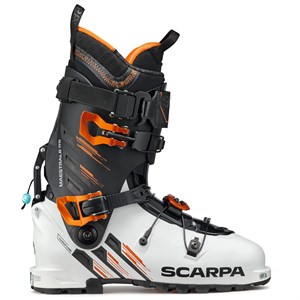
- Flex: 125, ideal for expert skiers.
- Last: 101mm, a comfortable fit for average to slightly wider feet.
- Shell: Carbon Grilamid® LFT construction for a stiff, yet lightweight boot.
- Walk Mode: 60˚ range of motion with Speed Lock Plus mechanism.
The Scarpa Maestrale RS is a top-tier choice for ski mountaineers who refuse to compromise on downhill performance. Its impressive 125 flex and supportive shell, crafted from a blend of Carbon Grilamid® LFT and other high-tech plastics, provide a powerful feel that rivals many dedicated alpine boots. This stiffness, combined with a remarkably low weight, makes it a favorite among professionals like patrollers and coaches who need a single boot that can handle both demanding in-bounds terrain and extensive backcountry tours. The boot’s design also prioritizes a great fit, featuring a 101mm last that accommodates a wide range of foot shapes and a heat-moldable Intuition® liner for a custom feel right out of the box.
Beyond its raw performance, the Maestrale RS is loaded with practical features that make a difference on the mountain. The innovative Wave Closure System secures the lower shell with the power of two buckles while saving weight, and the Vibram® Cayman PRO sole provides excellent grip for hiking and scrambling. The 60˚ range of motion in walk mode ensures a natural and efficient stride on the skin track. With its robust construction, versatile design, and superior downhill chops, the Maestrale RS stands out as a high-performance boot that perfectly balances touring efficiency with aggressive freeride capability, making it a true backcountry staple.
Pros:
- Exceptional downhill performance
- Lightweight for its stiffness
- Genuine Intuition liner for a great fit
Cons:
- One review noted a tech insert failure
2. Scarpa Gea – Women’s
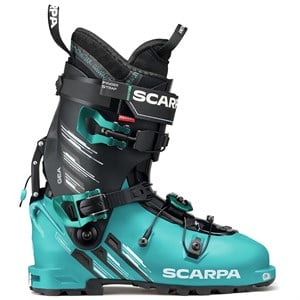
- Flex: 100, suitable for advanced skiers.
- Last: 101mm, a comfortable fit for average to slightly wider feet.
- Shell: Bio-based Pebax R-New® plastic for durability and sustainability.
- Walk Mode: 60˚ range of motion for efficient skinning.
The Scarpa Gea is a legendary women’s ski touring boot, widely considered a benchmark for its blend of uphill efficiency and downhill performance. Built with a 100 flex, it provides a supportive and responsive feel that confidently handles resort laps and backcountry descents alike. The shell is made from bio-based Pebax R-New® plastic, which not only offers great durability but also a more sustainable design. Its three-piece construction allows for easy entry and exit, and the Intuition® Cross Fit Pro Flex Women’s liner ensures a comfortable, heat-moldable fit that’s ready for long days on the mountain. This combination of a generous 101mm last and a versatile flex makes the Gea a go-to option for advanced female skiers.
Designed with the nuances of women’s feet and skiing styles in mind, the Gea is packed with features for a seamless experience. The Speed Lock Plus walk mechanism offers a substantial 60˚ range of motion, making kick turns and long ascents feel more natural and less fatiguing. The Wave Closure System on the lower shell provides the hold of two buckles with the weight of one, and the three-buckle setup is easy to adjust, even with mittens on. Whether you’re transitioning from resort skiing to touring or looking for a reliable, do-it-all boot for your next big adventure, the Scarpa Gea’s proven performance and comfortable fit make it a deserving favorite in the touring community.
Pros:
- Excellent balance of touring and downhill performance
- Comfortable fit right out of the box
- Bio-based plastic construction
Cons:
- No major cons noted in provided reviews.
3. K2 Mindbender 140 BOA
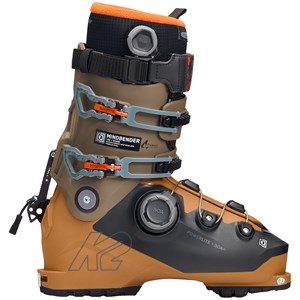
- Flex: 140, designed for the most aggressive expert skiers.
- Last: MultiFIT (97-100mm) with BOA® Fit System for a customizable fit.
- Liner: Intuition PowerFit Wrap BOA® for enhanced hold and energy transmission.
- Walk Mode: Powerlock Spyne mechanism with 50˚ range of motion.
The K2 Mindbender 140 BOA is an uncompromising freeride touring boot built for expert skiers who charge hard. With a formidable 140 flex, it delivers a level of power and response that instills confidence on the steepest and most technical terrain. The standout feature is the innovative BOA® Fit System, which replaces traditional lower buckles. This system allows for precise, micro-adjustments, ensuring a locked-in fit that eliminates pressure points and enhances feel. The combination of the BOA system and the MultiFIT Last—which spans from 97mm to 100mm—accommodates a wide range of foot shapes without the need for multiple boot versions, making it a truly versatile high-performance option.
K2 didn’t sacrifice touring functionality for downhill prowess. The Powerlock Spyne walk mechanism offers a solid 50˚ range of motion, and the Friction Free Cuff Pivot ensures smooth, unhindered hiking. The boot’s construction, featuring a heat-moldable shell with FastFIT Instep material, makes for easy entry and a personalized fit. Paired with a full-wrap Intuition liner, the Mindbender 140 BOA provides superior foot hold and energy transmission. This boot is a clear choice for those who prioritize aggressive skiing in both the resort and the backcountry, offering a powerful, precise, and highly adjustable experience that meets the demands of big-mountain freeriding.
Pros:
- Powerful 140 flex for aggressive skiing
- BOA Fit System for a precise, pressure-free fit
- Intuition liner with wrap design for superior hold
Cons:
- The very stiff flex may not suit all skiers
4. Phaenom Footwear fs 01 120
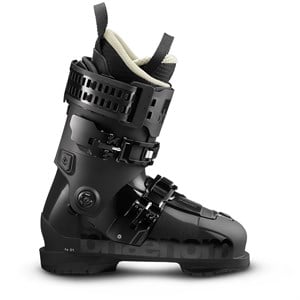
- Flex: 120, a stiff flex for advanced to expert skiers.
- Last: 102mm, a comfortable width for average to wider feet.
- Shell: Up to 30% recycled TPU with a unique “half-cab” design.
- Sole: GripWalk ISO 23223, with bio-based vibration-absorbing material.
The Phaenom Footwear fs 01 120 is a fresh and innovative entry into the ski boot market, built with a focus on simplicity, comfort, and sustainability. Unlike traditional two or three-piece boots, its unique “half cab” architecture and open shell design make for an incredibly comfortable fit right out of the box, with an impressive 102mm last that caters to a wide range of foot shapes. This boot proves that comfort doesn’t have to come at the expense of performance, as it delivers a responsive 120 flex suitable for advanced and expert skiers. Its design, which uses recycled and bio-based materials, showcases a commitment to environmental responsibility without compromising on durability or function.
This boot is packed with thoughtful features designed to improve the skiing experience. The liner is made from self-molding foam that conforms to your foot with use, and it incorporates recycled fabrics for a more sustainable product. The bio-based outer sole absorbs high and low-frequency vibrations, reducing foot and leg fatigue for all-day comfort. Oversized, 100% recycled aluminum buckles and a unique linear-flex power strap further enhance performance and fit. While not a dedicated touring boot, its GripWalk soles and overall design make it an excellent choice for resort skiers who prioritize comfort and a high-performance feel, all wrapped in a minimalist, eco-conscious package.
Pros:
- Extremely comfortable out of the box
- Excellent edge control and rebound
- Sustainable design with recycled materials
Cons:
- No tech fittings for touring
See the Phaenom Footwear fs 01 120
5. Tecnica Zero G Tour Pro
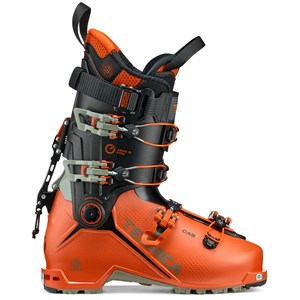
- Flex: 130, very stiff for aggressive expert skiers.
- Last: 99mm, a performance fit for average volume feet.
- Weight: ~100g lighter than previous models.
- Walk Mode: Improved Double Blocking Mechanism with 60˚ range of motion.
The Tecnica Zero G Tour Pro has long set the standard for blending ultralight touring efficiency with powerful downhill performance, and the latest iteration takes that a step further. This updated model maintains its reputation for being incredibly light while offering a 130 flex that rivals many alpine boots. The new design is not only lighter but also features an improved anatomical shape with more room in the toe box and instep, making it easier to put on and more comfortable for long days. The combination of a Grilamid shell and a co-injected carbon fiber cuff creates a Power Frame Construction that adds stiffness and precision where it’s needed most, without the extra bulk or weight.
Tecnica has refined every aspect of this boot for the modern ski mountaineer. The new Double Blocking Mechanism is lighter and enhances the boot’s touring capabilities, providing a full 60˚ range of motion. The four lightweight magnesium buckles are designed with hiking catches to stay in place when unbuckled for the ascent. The updated ISO 9523 touring sole and C.A.S. bootboard provide a solid connection to the ski while still offering comfort. The Zero G Tour Pro is a true quiver-of-one boot for the expert skier who demands an uphill advantage without sacrificing the power and precision needed to drive big skis through variable conditions.
Pros:
- Exceptional power-to-weight ratio
- Improved fit and ease of entry
- Robust and lightweight magnesium buckles
Cons:
- 99mm last is a performance fit and may not suit wider feet
See the Tecnica Zero G Tour Pro
6. Atomic Backland XTD Carbon 120
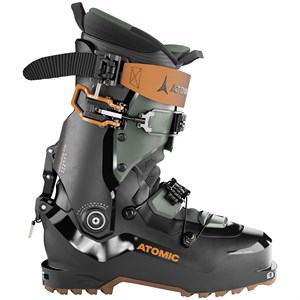
- Flex: 120, a stiff flex for aggressive skiing.
- Last: 100mm, a comfortable medium volume fit.
- Shell: Prolite construction with carbon-loaded polyamide.
- Walk Mode: Free/Lock 4.5 mechanism with 74˚ range of motion.
The Atomic Backland XTD Carbon 120 is a new boot that expertly combines the best features of two of Atomic’s popular lines, creating a touring boot that feels as comfortable as it is powerful. It’s built with a 100mm last, derived from the best-selling Hawx Prime series, which provides a comfortable and secure fit that’s perfect for long days. The innovative Prolite Construction builds up reinforcement in key areas of the carbon-loaded polyamide shell, ensuring a legit 120 flex without adding unnecessary weight. This unique blend of a plush liner and a strong shell makes it a contender for those who prioritize both uphill comfort and downhill performance.
Touring-specific features on the Backland XTD are top-notch. The boot boasts an impressive 74˚ range of motion from its Free/Lock 4.5 mechanism, making for an efficient and effortless stride on the skin track. The Cross Lace 2.5 closure system on the lower shell provides a phenomenal, uniform fit by wrapping the foot securely with a single lace, eliminating hot spots and improving support. The boot is also fully heat moldable with Atomic’s Memory Fit technology, allowing for a personalized shell and liner in minutes. The Backland XTD Carbon 120 is a versatile and high-performing boot for backcountry skiers, offering a unique combination of comfort and a powerful feel for all types of terrain.
Pros:
- Comfortable 100mm last and plush liner
- Exceptional 74˚ range of motion for touring
- Cross Lace 2.5 closure for a secure fit
Cons:
- Buckles can be difficult to release at their loosest setting.
See the Atomic Backland XTD Carbon 120
7. Dalbello Cabrio MV Free 120 IF
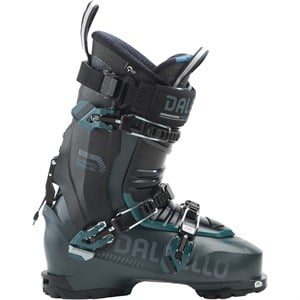
- Flex: 120, a stiff flex for advanced skiers.
- Last: 101mm, a comfortable average to wide fit.
- Shell: Classic Cabrio design with polyurethane construction.
- Sole: GripWalk ISO 23223, compatible with touring bindings.
The Dalbello Cabrio MV Free 120 IF brings the classic three-piece Cabrio design to the world of ski mountaineering, offering a unique blend of progressive flex and a comfortable fit. With a generous 101mm last, this boot is an excellent choice for skiers with average to slightly wider feet who often struggle with the narrow confines of high-performance boots. The 120 flex provides a stiff and supportive feel that’s great for aggressive skiing, while the Cabrio architecture ensures a smooth, consistent flex pattern that absorbs terrain variations. This makes the MV Free a versatile “quiver-of-one” boot, equally at home charging resort lines as it is on short backcountry missions.
Dalbello has incorporated touring-friendly features into this boot without sacrificing its downhill DNA. It includes tech fittings for use with modern touring bindings, and its GripWalk soles provide enhanced traction for walking and hiking. The three-buckle system and power strap offer a secure and adjustable fit, while the heat-moldable IF Hike Liner allows for a custom feel. The Cabrio MV Free 120 IF is a great option for advanced and powerful skiers who love the progressive feel of a Cabrio boot but need a wider last and touring capability. It’s a comfortable, high-performing boot that bridges the gap between dedicated alpine and touring footwear.
Pros:
- Cabrio design provides a smooth, progressive flex
- Generous 101mm last for wider feet
- Includes tech fittings for touring
Cons:
- May be heavier than dedicated touring boots
See the Dalbello Cabrio MV Free 120 IF
How to Choose Ski Mountaineering Boots
Ski mountaineering, or “skimo,” blends the aerobic challenge of hiking with the thrill of backcountry skiing. The right gear is crucial, and no piece is more important than your boots. A great ski mountaineering boot must be a master of two conflicting tasks: it needs to be lightweight and efficient for the ascent, yet stiff and powerful enough to drive modern skis on the descent. Choosing the right pair can feel overwhelming, with a dizzying array of flex ratings, last widths, and technical features. This guide will help you navigate the process, focusing on the key factors you need to consider to find the perfect boot for your needs.
Understanding the Core Trade-off: Uphill vs. Downhill Performance
At the heart of every ski mountaineering boot is a fundamental compromise between touring efficiency and skiing power. Boots optimized for climbing are incredibly light, with a massive range of motion in walk mode, but they often sacrifice the stiffness needed to ski aggressively. Conversely, boots built for pure downhill performance are heavy and stiff, making the skin up a grueling task. Your first step in choosing a boot is to honestly assess your priorities and skill level. Are you a minimalist who chases long distances and fast ascents, or are you a hard-charging freerider who earns their turns to access steep, technical descents?
Minimalist/Skimo Racing Boots
These are the lightest boots on the market, often weighing less than 1,000 grams per boot. They feature an incredible range of motion (often 70-80 degrees or more) and a simple, low-profile design. While perfect for fitness-focused skiers and racers, their soft flex and minimalist construction make them difficult to ski in challenging snow conditions or on wider, heavier skis. These boots are for those who view the descent as a reward for the climb, not the primary objective.
Lightweight Touring Boots
This is the sweet spot for many dedicated ski mountaineers. Weighing between 1,000 and 1,300 grams, these boots offer a great balance. They are light enough for long ascents and multi-day tours, with a very good range of motion (60-70 degrees). Downhill performance is surprisingly solid, especially with modern boot designs that use carbon fiber and Grilamid plastics to enhance stiffness without adding much weight. This category is ideal for the all-around backcountry enthusiast who wants to cover ground without feeling under-gunned on the descent.
Freeride Touring Boots
Built for skiers who prioritize downhill performance, these boots are essentially a marriage between an alpine boot and a touring boot. They weigh more, typically between 1,400 and 1,800 grams, but their powerful flex (120-140+) and robust construction allow you to drive wide skis and ski aggressively in all snow conditions. The trade-off is a heavier boot and a more limited range of motion (40-60 degrees) in walk mode, making long or steep ascents more challenging. This is the boot of choice for big-mountain skiers, professional ski patrollers, and anyone who spends a significant amount of time skiing in-bounds but needs the option to tour.
The Key Technical Specifications
Once you’ve identified your primary use case, it’s time to dig into the technical details. These specifications will help you narrow down your options within a category.
1. Fit and Last Width
A boot that doesn’t fit is a boot you won’t want to wear. The “last” is the width of the boot’s forefoot, measured in millimeters. Last widths generally fall into three categories:
- Narrow (97-99mm): Best for low-volume feet, offering a precise, performance-oriented fit.
- Medium (100-101mm): Fits the majority of skiers, providing a good balance of comfort and control.
- Wide (102mm+): Ideal for high-volume or wider feet, prioritizing comfort over a race-like fit.
Remember that the last is just a starting point. Features like heat-moldable liners and shells (such as those with Memory Fit or Intuition liners) allow for significant customization. A visit to a professional bootfitter is the single most important step you can take to ensure a comfortable and high-performing boot.
2. Flex Rating
The flex rating is a general indicator of the boot’s stiffness. Higher numbers mean a stiffer boot. While there is no industry standard for flex, and it can vary between brands, the general guidelines are:
- < 100: Softer flex, suitable for beginners or those who prioritize uphill travel.
- 100-120: Stiff, but versatile. Great for intermediate to advanced skiers.
- 120+: Very stiff, for advanced and expert skiers who need power to drive their skis.
A stiffer boot provides more control and power on the descent, but a boot that is too stiff can be uncomfortable and hinder proper skiing form. It’s often better to go for a slightly softer boot than one that is too stiff and unyielding.
3. Walk Mode and Range of Motion
This is arguably the most crucial feature for touring. A good walk mode allows the cuff to pivot freely from the shell, mimicking the natural motion of your ankle while walking. The “range of motion” (ROM) is the total angle the cuff can pivot forward and backward. A higher ROM makes for a more natural, less fatiguing stride on the skin track.
- 40-50 degrees: Standard for freeride touring boots.
- 60 degrees: A solid range for all-around touring.
- 70+ degrees: Excellent for long, efficient ascents.
Pay attention to the locking mechanism as well. A simple, reliable lever (like Tecnica’s Double Blocking Mechanism or Scarpa’s Speed Lock Plus) that is easy to engage and disengage is a huge plus, especially in cold weather.
4. Shell and Liner Materials
The materials used in a boot’s shell and liner directly impact its weight and performance.
- Plastics: Grilamid and Pebax are common plastics used in touring boots due to their low weight and rigidity. Carbon Grilamid LFT (long fiber technology) is a new material that increases stiffness without significant weight gain.
- Liners: A good touring liner, such as those from Intuition, is crucial. They are lightweight, comfortable, and most importantly, heat-moldable to your foot’s shape, ensuring a custom fit that prevents blisters and hot spots on long climbs.
Final Considerations and the Role of a Bootfitter
Once you have a few models in mind, the final step is to try them on. Remember that a boot that feels comfortable in a store might feel very different after a few hours of climbing and skiing. Don’t be afraid to walk around the store, engage the walk mode, and even practice a few steps to see how it feels. Pay attention to any pressure points, especially around the heel, ankle, and instep.
While this guide provides a solid framework for making a decision, there is no substitute for a professional bootfitter. A good bootfitter can measure your feet, assess your biomechanics, and help you select a boot that is the right shape and volume for you. They can also perform modifications like heat-molding liners and shells, and even grinding or punching the shell to address specific pressure points. This personalized attention can transform an average-fitting boot into a perfect one, making your ski mountaineering adventures more comfortable and enjoyable.
Ultimately, the right ski mountaineering boot is the one that allows you to confidently and comfortably pursue your passion, whether that’s chasing a personal best on a local ascent or finding powder stashes on a remote peak. By understanding your priorities and paying attention to these key specifications, you’ll be well on your way to finding your ideal partner for the mountains.