Best Snowboard Bindings for Park of 2025
Park snowboarding is all about creativity, style, and control. To really enjoy it, you need the right gear. That starts with bindings built for jumps, jibs, and smooth landings. Good park bindings feel light, flexible, and fun to ride. They let you move freely without losing support. Whether you’re learning tricks or going big in the park, your setup matters. Some bindings are too stiff or heavy for freestyle riding. Others just don’t hold up after hard landings. This guide picks out the best snowboard bindings made for park riders. We’ll help you find ones that match your skills and bring out your best moves.
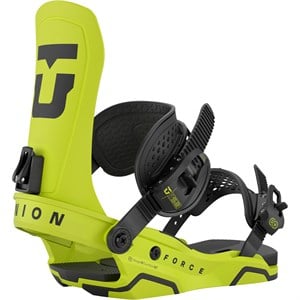
1. Union Force
-
Flex Rating: 7/10 (Stiff)
-
Baseplate: Stage 9 Duraflex ST with Molecular Bushing Suspension System
-
Highback: S19 Duraflex ST with Non-Stick HP EVA
-
Straps: ExoFrame 6.0 with Molecular Padding and TS 5.0 Forcegrip Toe Strap
The Union Force bindings are a versatile all-mountain workhorse built for riders who want durability, comfort, and high response. With a stiff flex rating of 7, these bindings excel in any condition—from deep powder to icy groomers—delivering top-tier energy transfer and edge control. The Stage 9 baseplate and Molecular Suspension System work together to reduce impact and increase board feel, while the heelcups are designed to minimize drag and hold your boot firmly in place.
One of the biggest strengths of the Union Force is how comfortable and consistent it feels over long sessions. The ExoFrame 6.0 straps offer excellent support without causing pressure points, and the tool-less FLAD system makes on-the-go adjustments easy. With sizing options up to XL, they’re ideal for larger boots and heavier riders. If you want a binding that’s responsive, comfortable, and can take a beating season after season, the Union Force is a standout.
Pros
- Excellent all-mountain performance
- High durability and shock absorption
- Great fit for large feet (XL available)
- Smooth and responsive straps
Cons
- May feel too stiff for beginners
- Slightly heavier than lightweight models
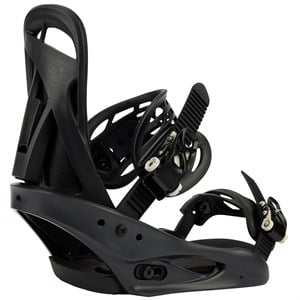
2. Burton Citizen – Women’s
-
Flex Rating: Soft
-
Baseplate: Re:Flex™ Polycarbonate with FullBED Cushioning
-
Highback: Single Component Hi-Back with MicroFLAD™
-
Straps: Reactstrap™ and Supergrip Capstrap™
The Burton Citizen bindings are a soft, forgiving option ideal for beginners and progressing riders. With a soft flex, these bindings help you stay comfortable and in control as you explore new terrain. The Re:Flex™ cushioning system underfoot reduces fatigue and absorbs shock, making them perfect for long days on the mountain. Plus, the Women’s True Fit design ensures a snug, ergonomic fit for smaller boots.
While these bindings are well-suited for entry-level riders, they do have limitations in adjustability. The baseplate may not allow fine-tuned boot positioning, which can cause toe overhang for those in between sizes. However, the smooth buckles and plush straps still offer a user-friendly experience that makes learning to snowboard easier. If comfort and simplicity are your top priorities, the Burton Citizen delivers.
Pros
- Soft and beginner-friendly
- Comfortable cushioning system
- Easy to adjust without tools
- True Fit design for women’s boots
Cons
- Limited stance adjustability
- Medium size may feel tight for size 8.5 boots
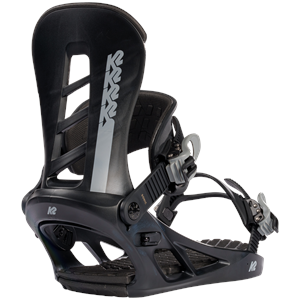
3. K2 Sonic
-
Flex Rating: 3/10 (Soft)
-
Baseplate: PC ProFusion™ Chassis with 3° Canted Footbed
-
Highback: AT PC Highback
-
Straps: P.I. Ankle Strap and Perfect Fit™ Toe Strap
The K2 Sonic bindings are ideal for new riders seeking value, comfort, and a soft flex. With a forgiving flex rating of 3, they make carving, cruising, and learning tricks feel smooth and approachable. The 3° canted footbed supports a natural stance, reducing leg fatigue and improving control, while the ProFusion™ chassis ensures a lightweight and durable base.
Strap comfort is solid for the price point, though the overall ride can feel a bit stiff in the footbed. Tool-less adjustment options make it easy to tweak your setup on the go, and the bindings can accommodate larger boot sizes—a bonus for riders with size 15 boots. While advanced riders may crave more responsiveness, beginners and casual cruisers will find the Sonic a reliable partner for progression.
Pros
- Great for beginners
- Tool-less strap and highback adjustment
- Budget-friendly pricing
- Wide fit for large boots
Cons
- Basic cushioning
- Lacks dampening for rough snow
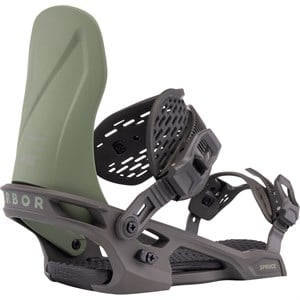
4. Arbor Spruce
-
Flex Rating: 3/5 (Medium)
-
Baseplate: Lightweight Single Mold with 2.5° Canted EVA Footbed
-
Highback: Asymmetrical Highback with 5° Pre-Rotation
-
Straps: Bow-Strap Adjuster and Stretch Single Durometer Strap
The Arbor Spruce bindings blend comfort and performance for beginner to intermediate riders looking to improve their skills. The medium flex delivers a nice balance of support and forgiveness, while the canted EVA footbed helps align your knees and reduce fatigue. The asymmetrical highback offers better mobility and ergonomic control, making these bindings a pleasure to ride all over the mountain.
Entry and exit are seamless thanks to Arbor’s patented Bow-Strap adjuster, and the tool-free strap adjustments mean you can fine-tune your fit on the fly. These bindings feel surprisingly responsive for their price and are durable enough for consistent use. Though not designed for high-impact freestyle, the Spruce is an affordable all-rounder that won’t hold you back as you progress.
Pros
- Comfortable and ergonomic design
- Easy to get in and out
- Canted footbed supports natural stance
- Great for progression
Cons
- Not ideal for aggressive freestyle
- Slightly less customizable than premium options
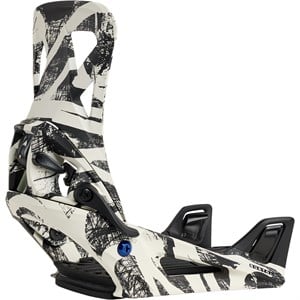
5. Burton Step On
-
Flex Rating: Medium
-
Baseplate: Short-Glass/Nylon Composite with Re:Flex™ FullBED
-
Highback: Tool-Free FLAD™
-
Binding System: Step On® boot-to-binding system with 3-point lock
The Burton Step On bindings redefine convenience and performance with a strapless design that allows you to simply step into your board and ride. Designed to work exclusively with Step On boots, this binding system locks in securely at the toe and heel for a responsive ride. With a medium flex, the bindings are ideal for all-mountain riders who want comfort and speed without sacrificing control.
What sets Step On apart is how fast and smooth the entire process feels—from setup to release. The cushioning underfoot adds to the overall ride comfort, and the flex feels supportive but forgiving. While traditionalists might miss the adjustability of straps, the sheer ease and consistency of the Step On system makes it a game-changer for anyone tired of fiddling in the cold.
Pros
- Fastest entry/exit system on the market
- Medium flex suits all-mountain riding
- Excellent response and board feel
- Great for riders with mobility issues
Cons
- Only works with Step On boots
- Less customizable than strapped bindings
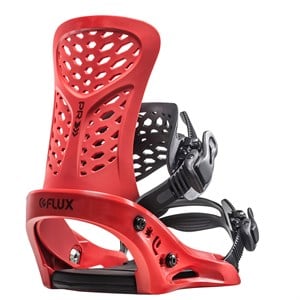
6. Flux PR
-
Flex Rating: 6/10 (Medium-Stiff)
-
Baseplate: Performance Blend with EZ Bed
-
Highback: Evo Highback with Micro Adjuster
-
Straps: Honeycomb Strap Ver2.0 and FTM Versa Toe Strap
The Flux PR bindings are built for intermediate riders looking for response, reliability, and a bit of stiffness for control. With a flex rating of 6, these bindings handle all-mountain terrain well, offering good edge response and foot support. The Performance Blend baseplate and durable EZ Bed footbed add a layer of stability, while the highback and micro-adjust system help fine-tune your lean and stance.
While the straps are solid in hold, some may find them stiffer than expected—especially when paired with soft boots. There’s also limited padding, so choppy snow may send more vibrations through to your feet. But for the price, you get a strong, no-nonsense binding that’s reliable and responsive across varying terrain, especially for heavier or more aggressive riders.
Pros
- Great response and stability
- Micro-adjustable forward lean
- Strong build quality for the price
- Fits larger boots well
Cons
- Straps feel stiff with soft boots
- Minimal cushioning on harsh landings
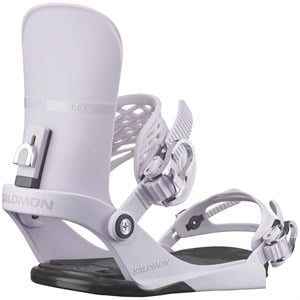
7. Salomon EDB
-
Flex Rating: 3/5 (Medium)
-
Baseplate: Recycled Nylon/Fiberglass Composite with Air Cush Rear Pad
-
Highback: EDB Ergonomic Highback with HB Filter
-
Straps: Power Lite Strap and Ultra-Fit Toe Strap
The Salomon EDB (Every Day Binding) is a versatile all-mountain option built for consistency and comfort. With a medium flex and solid cushioning features like the Air Cush rear pad and full EVA front pad, it offers a smooth ride over rough snow and solid control on side hits and carves. The baseplate design uses recycled materials without sacrificing durability, making this a smart choice for eco-conscious riders.
Performance-wise, the EDB feels snappy and supportive without being overly aggressive. The highback features Salomon’s HB Filter, which reduces unwanted vibration and leg fatigue, while the tool-free strap adjustments and buttery ratchets make fitting a breeze. Whether you’re linking park runs or lapping pow stashes, the EDB keeps you dialed in all day with comfort and clean performance.
Pros
- Comfortable with excellent shock absorption
- Great response and eco-friendly construction
- Smooth and easy-to-use ratchets
- Excellent fit for intermediate and all-mountain riders
Cons
- May not be stiff enough for advanced freestyle
- Slightly heavier than minimalist models
How to Choose Snowboard Bindings for Park?
Park snowboarding is where creativity meets skill. Whether you’re sliding rails, spinning off jumps, or dialing in tricks on boxes, your bindings play a key role in how well you perform—and how much fun you have. Picking the right bindings for park riding isn’t just about brand or style. It’s about finding a setup that matches your riding goals, body type, and board feel.
In this guide, we’ll break down everything you need to know to choose the best bindings for park riding. From flex and fit to features and budget, here’s what to look for.
1. Understand Your Park Riding Style
Not all park riders have the same goals. Some prefer rails and technical tricks, while others focus on jumps and airtime. Knowing your style helps narrow down your choices:
-
Jib-focused riders: Spend more time on rails, boxes, and small features. They need soft, forgiving bindings for maximum freedom and tweakability.
-
Jump-focused riders: Hit bigger jumps and need more support. They often prefer medium flex for added stability and shock absorption.
-
All-around park riders: Mix rails, jumps, and flat-ground tricks. They’ll want bindings that offer balance between flexibility and control.
Before you shop, ask yourself where you spend the most time in the park—and how you like to ride.
2. Choose the Right Flex
Flex is one of the most important factors when choosing bindings for the park. It affects how your board responds to your movements.
-
Soft Flex (1–4/10): Great for jibbing, presses, and playful riding. Offers maximum mobility but less support at high speed.
-
Medium Flex (5–7/10): Best for all-around park riding. Gives enough support for landings while still feeling tweakable.
-
Stiff Flex (8–10/10): Usually too rigid for park. Better for carving and big mountain lines, not freestyle.
Most park riders do best with soft to medium flex bindings. The sweet spot for most freestylers is around 4–6.
3. Look for Lightweight Construction
Weight matters when you’re spinning, tweaking, and jumping. Heavier bindings can slow down your movements and make tricks harder to control.
Many freestyle bindings use lightweight materials like composite plastics, aluminum heelcups, or minimalist highbacks. Lighter bindings also reduce fatigue, so you can stay in the park longer.
Don’t just look at the weight number—check how the binding feels on your board. Some minimal designs cut grams without sacrificing strength or comfort.
4. Pick Comfortable, Responsive Straps
Straps are where your boots meet your bindings, so comfort and hold are critical.
-
Ankle straps: Look for soft, cushioned straps that move with your boot. Wider straps offer better pressure distribution for park riding.
-
Toe straps: Most modern bindings use cap-style toe straps that wrap over the front of your boot. These give better control and response.
Make sure the straps are easy to adjust and don’t pinch or rub. Some high-end bindings offer tool-free strap length adjustments, which is super handy.
5. Check the Highback Design
Highbacks affect how your heel edge responds and how much lateral movement you get.
-
Shorter, softer highbacks: Great for freestyle riders who want more side-to-side flex. They allow easier tweaks and presses.
-
Canted or asymmetric highbacks: These follow your natural leg shape and improve comfort while boosting control.
-
Adjustable forward lean: This lets you fine-tune how much your highback leans forward. For park riding, less forward lean gives more freedom for tricks and landings.
If you ride rails often, a softer highback with minimal forward lean is ideal. If you’re into jumps, choose a slightly stiffer option for more support.
6. Think About Baseplate Cushioning
Landing flat or overshooting a jump can hurt your feet and knees. That’s why shock absorption is so important for park bindings.
-
EVA foam: This is a common material under the footbed that absorbs vibration and impact.
-
Gel pods or airbags: Found in premium bindings, these offer even better cushioning for big landings.
-
Canted footbeds: These tilt slightly inward to match your natural stance. They reduce fatigue and improve joint alignment.
If you’re hitting big features or riding hard all day, look for bindings with serious shock protection.
7. Match Binding Compatibility with Your Board
Bindings come with different baseplate mounting systems. Make sure the ones you pick will fit your snowboard:
-
4×4 and 2×4 hole patterns: Most common mounting systems.
-
Channel system (Burton): Requires bindings that are compatible with The Channel, like Burton EST or Re:Flex models.
-
Disc compatibility: Many bindings come with multiple discs to work with different setups.
Always double-check compatibility before you buy, especially if your board uses a non-standard system.
8. Don’t Overpay—Know Your Budget
You don’t have to spend a fortune to get good park bindings. Here’s a rough idea of what to expect:
-
$100–$160: Entry-level park bindings with basic materials and decent comfort.
-
$160–$220: Mid-range models with better straps, cushioning, and more adjustability.
-
$220+: High-performance bindings with lightweight builds, premium padding, and freestyle-specific features.
If you’re a beginner or casual park rider, a mid-range binding is often the best value. Save the premium stuff for when you’re progressing and riding hard.
9. Try Before You Buy (If You Can)
Nothing beats trying a binding in person. If possible, visit a shop or a demo day and see how they feel with your boots. Look for:
-
Fit and comfort
-
How easy they are to strap in and out
-
Overall flex and response
Bindings are all about feel. Even a highly rated model might not work for your feet or riding style.
10. Top Brands Known for Park Bindings
Here are some trusted names known for producing great park-focused snowboard bindings:
-
Union – Popular for freestyle bindings like the Contact Pro and Ultra.
-
Burton – Offers Re:Flex and EST bindings with smooth flex and great comfort.
-
Flux – Known for lightweight, tweak-friendly designs.
-
Rome – Offers playful bindings with tech features at reasonable prices.
-
Salomon – Solid performance and smooth straps for freestyle riders.
Stick with reputable brands, especially if you’re new to the sport.
Final Thoughts
The best snowboard bindings for park riding give you freedom, comfort, and confidence. You want a binding that moves with you—not against you. Focus on flex, strap comfort, and shock absorption above all else. If you’re new to park riding, go for a soft or medium-flex model and work your way up.
Take the time to match your bindings to your board, boots, and riding style. A good setup makes learning tricks easier, landings softer, and every lap through the park way more fun.
Now that you know what to look for, you’re one step closer to building the perfect freestyle setup.