
Best Snowboards for Beginners of 2026
If you’re new to snowboarding, choosing the right board can make a big difference in how quickly you learn and how much fun you have on the slopes. With so many options out there, it can feel overwhelming to know where to start. That’s why we’ve put together this guide to the best snowboards for beginners. We’ll help you understand what features to look for—like flex, shape, and size—and recommend boards that are easy to ride, stable, and forgiving for first-timers.
1. Season Primer
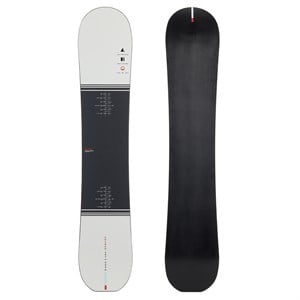
- Terrain: All-Mountain
- Ability Level: Beginner–Intermediate
- Profile: Rocker / Camber / Rocker
- Flex: Soft
The Season Primer Snowboard is built to make progression feel natural and confidence inspiring. Its directional twin shape combines relaxed turn initiation with a mild setback, giving riders a stable and predictable platform across groomers, park laps, and light powder days. The Entry Rocker into symmetrical camber keeps the board forgiving at lower speeds while still delivering solid edge control as confidence grows. Beginners will appreciate how easy it feels to get the board on edge, while progressing riders will enjoy how it encourages proper carving technique.
At the core, a full poplar wood construction provides a lively yet approachable ride. The Dual-Digressive Sidecut plays a major role in the Primer’s personality, staying calm and predictable during mellow cruising while becoming snappy and energetic when pushed harder. This makes it especially well suited for riders learning to link turns cleanly or experiment with freestyle riding. Added value comes from Season’s Lifetime Season Pass, offering free waxes and annual tunes that keep the board riding smoothly year after year.
- Pros: Forgiving flex, easy turn initiation, versatile all-mountain feel
- Cons: Not ideal for aggressive riders, limited stability at very high speeds
2. Roxy Dawn – Women’s
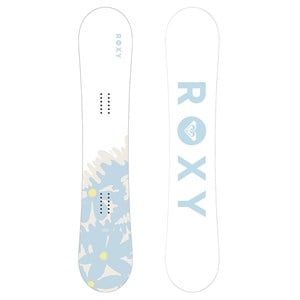
- Terrain: All-Mountain
- Ability Level: Beginner–Intermediate
- Profile: Rocker / Flat / Rocker
- Flex: Soft
The Roxy Dawn Snowboard is designed to make learning feel smooth, friendly, and unintimidating. With its Easy Rise contour, the board stays flat between the feet while gently rockering toward the nose and tail, creating a catch-free ride that helps new riders stay balanced and upright. The true twin shape makes riding switch feel natural, encouraging confidence whether you’re practicing turns or experimenting with basic freestyle moves.
A soft flex and Kind Hearted Core give the Dawn a mellow, forgiving feel that absorbs mistakes instead of punishing them. Magne-Traction edges add impressive grip on firmer snow, helping beginners feel secure even when conditions are less than perfect. The extruded base keeps maintenance simple and affordable, making this an easy board to own long term. Overall, the Dawn focuses on fun, comfort, and confidence, making it an excellent first snowboard for riders ready to progress at their own pace.
- Pros: Very forgiving, excellent edge hold, beginner-friendly profile
- Cons: Limited pop, not designed for advanced riding
3. Burton Instigator PurePop Camber
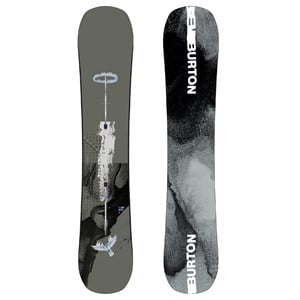
- Terrain: All-Mountain
- Ability Level: Beginner–Intermediate
- Profile: Flat / Camber / Flat
- Flex: Soft
The Burton Instigator PurePop Camber is built for riders who want an easygoing feel with a noticeable boost in response. The PurePop Camber profile blends a cambered midsection with subtle flat zones and early rise tips, creating a ride that feels playful yet controlled. It delivers added pop without sacrificing forgiveness, making it ideal for riders moving beyond the basics and looking to ride more confidently across the mountain.
Burton’s Super Fly 800G core keeps weight low while maintaining durability and snap. Features like Squeezebox Low and Biax fiberglass help smooth out the flex and reduce rider fatigue, allowing for longer, more enjoyable days on snow. Frostbite Edges add reliable grip without feeling overly aggressive, while the Channel mounting system offers easy stance adjustments. The Instigator balances comfort, performance, and progression, making it a dependable choice for riders leveling up.
- Pros: Lightweight, forgiving camber feel, smooth edge control
- Cons: Soft flex limits hard charging, less playful than full rocker
See the Burton Instigator PurePop Camber
4. Never Summer Easy Rider
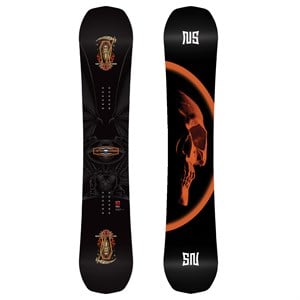
- Terrain: All-Mountain
- Ability Level: Beginner–Intermediate
- Profile: Camber / Rocker / Camber / Rocker / Camber
- Flex: Medium
The Never Summer Easy Rider blends relaxed cruising with impressive all-mountain control. Its Hybrid Triple Camber profile delivers multiple camber zones for strong edge engagement, separated by subtle rocker sections that keep the ride smooth and forgiving. This design provides confident grip without feeling catchy, making it approachable for progressing riders while still offering performance when conditions get firm.
A Superlite Wood Core combined with Carbon Max laminates gives the Easy Rider a powerful yet manageable feel. The Vario Power Grip Sidecut adds multiple contact points for precise turning, while R.I.P. Edge Hold Technology keeps the board tracking confidently across variable terrain. With balanced dampening and a true twin shape, the Easy Rider feels equally comfortable cruising groomers or exploring new lines, making it a versatile choice for riders who want progression without pressure.
- Pros: Excellent edge hold, smooth dampening, versatile profile
- Cons: Pricier than entry boards, medium flex may feel stiff to beginners
See the Never Summer Easy Rider
5. Salomon Bliss X – Women’s
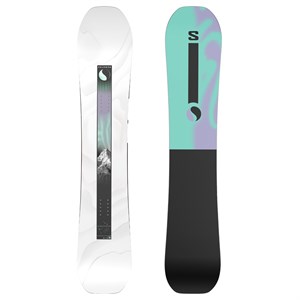
- Terrain: All-Mountain / Freeride
- Ability Level: Beginner–Intermediate
- Profile: Rocker / Camber / Rocker
- Flex: Medium
The Salomon Bliss X Snowboard offers a smooth, confidence-building ride wrapped in exclusive evo graphics. Its Cross Profile Camber places camber between the feet for control and stability, while rocker in the tip and tail improves float and forgiveness. The tapered directional shape feels intuitive, helping riders stay balanced while exploring groomers, trees, and soft snow.
An Aspen Strong Core with Popster profiling adds energy and responsiveness without feeling demanding. Quadratic sidecut geometry makes turns feel natural and fluid, reducing effort during long days on the hill. Royal Cork Pads in the sidewalls help absorb chatter, keeping the ride comfortable in variable conditions. Overall, the Bliss X is a playful yet dependable all-mountain board that encourages progression while keeping the ride fun and stylish.
- Pros: Smooth flex, stable camber feel, exclusive design
- Cons: Directional shape limits switch riding, not park-focused
See the Salomon Bliss X – Women’s
6. Salomon Pulse
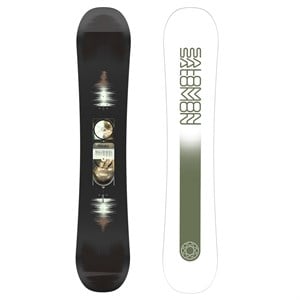
- Terrain: All-Mountain
- Ability Level: Beginner–Intermediate
- Profile: Flat / Camber / Flat
- Flex: Soft
The Salomon Pulse Snowboard is designed for riders focused on building skills with minimal frustration. Its Flat Out Camber profile keeps the board stable underfoot while adding camber response where it matters most. This creates a balanced ride that feels predictable at slow speeds yet supportive as confidence grows. The Directional Twin shape allows for freestyle exploration while maintaining control on groomers.
A full-length Aspen Core paired with low-density biax fiberglass keeps the flex light and forgiving. Bite Free Edge Bevels reduce the risk of catching an edge, making the Pulse especially friendly for newer riders. The extruded base is durable and easy to maintain, perfect for frequent use without extra upkeep. Overall, the Pulse is a reliable progression-focused snowboard that helps riders improve faster while enjoying every run.
- Pros: Very forgiving, easy to control, low maintenance
- Cons: Soft flex limits stability at speed, basic construction
7. CAPiTA Space Metal Fantasy – Women’s
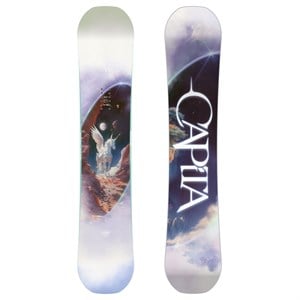
- Terrain: Freestyle
- Ability Level: Beginner–Intermediate
- Profile: Rocker / Flat / Rocker
- Flex: Medium
The CAPiTA Space Metal Fantasy is a playful, progression-focused snowboard designed for riders who want to build freestyle skills with confidence. Its Park V2 profile keeps the board flat and stable underfoot, while lifted contact points make turns quick and forgiving. This creates a skate-like feel that’s ideal for learning butters, presses, and spins without constantly worrying about edge catches. The true twin shape feels balanced riding regular or switch, making park laps feel natural and intuitive.
Under the hood, the Dual Core blends lightweight poplar with durable beech, giving the board a lively feel without sacrificing strength. Special Blend fiberglass and Magic Bean resin keep the flex energetic while reducing overall weight. The Superdrive ADV base delivers fast glide with low maintenance, standing up well to rails and repeated park abuse. From first tricks to stylish park lines, the Space Metal Fantasy offers a forgiving, fun ride that keeps progression exciting.
- Pros: Catch-free feel, lightweight construction, great for park progression
- Cons: Limited stability at high speed, not ideal for hard charging
See the CAPiTA Space Metal Fantasy – Women’s
8. Burton Rewind
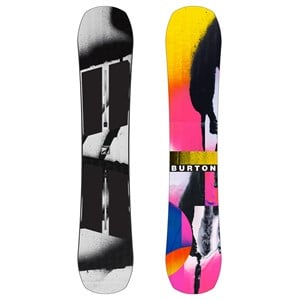
- Terrain: Freestyle / All-Mountain
- Ability Level: Beginner–Intermediate
- Profile: Flat / Camber / Flat
- Flex: Soft
The Burton Rewind is built for riders who want a forgiving freestyle board with enough pop to keep progression exciting. Its PurePop Camber profile blends a cambered midsection with subtle flat zones, creating a lively yet approachable ride. The true twin shape feels perfectly balanced whether riding regular or switch, making spins, jumps, and park laps feel natural and controlled.
A Super Fly 800G core keeps the board lightweight while delivering reliable pop, and women’s-specific Triax fiberglass softens torsional flex for smoother control. Off-Axis Frostbite Edges provide grip when needed without feeling grabby on rails or boxes. Finished with a sintered base and Burton’s Channel system, the Rewind offers speed, adjustability, and long-term durability. It’s a confidence-boosting board that encourages creativity without punishing mistakes.
- Pros: Balanced twin feel, poppy yet forgiving, strong edge control
- Cons: Soft flex limits stability at speed, park-focused design
9. Nidecker Merc
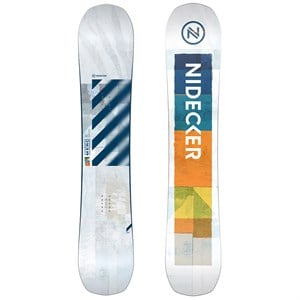
- Terrain: All-Mountain
- Ability Level: Beginner–Intermediate
- Profile: Rocker / Camber / Rocker
- Flex: Medium
The Nidecker Merc is a versatile progression board that helps riders feel comfortable from their first turns to more confident all-mountain riding. Its Standard CamRock profile blends camber underfoot with rocker in the tip and tail, delivering smooth turn initiation and reliable edge hold. The directional twin shape keeps things playful while offering extra control when riding forward.
The Merc’s Master Core uses a mix of premium wood species to balance weight, strength, and responsiveness. Carbon and Kevlar reinforcements add pop and dampening, giving the board a surprisingly capable feel as speeds increase. A durable N-5000 base keeps glide consistent in all conditions, while the Absorbnid topsheet helps smooth out chatter. Overall, the Merc adapts well as skills improve, making it a strong one-board solution for progression-focused riders.
- Pros: Smooth CamRock profile, strong construction, adaptable ride
- Cons: Not ultra-playful, less forgiving than softer boards
10. CAPiTA Pathfinder
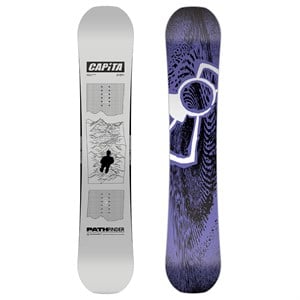
- Terrain: Freestyle
- Ability Level: Beginner–Intermediate
- Profile: Rocker / Flat / Rocker
- Flex: Medium
The CAPiTA Pathfinder is a budget-friendly freestyle board designed to help riders discover their style without overthinking it. Its Park V2 profile keeps the board stable between the feet with raised contact points that make turns forgiving and playful. The true twin shape supports riding switch and learning tricks, making it ideal for park laps and casual all-mountain cruising.
A Dual Core construction blends poplar and beech for a balance of light weight and durability. Special Blend fiberglass and Magic Bean resin give the Pathfinder a lively feel while keeping things forgiving. The Superdrive ADV base offers reliable speed with minimal maintenance, perfect for riders spending lots of time on rails and features. For riders looking to progress in the park without spending big, the Pathfinder delivers excellent value.
- Pros: Affordable, forgiving profile, great for park progression
- Cons: Limited edge hold at speed, freestyle-focused
11. Ride Agenda
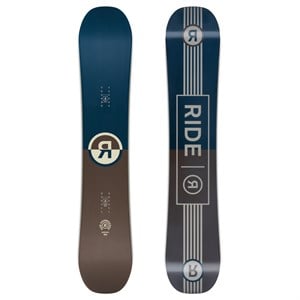
- Terrain: Freestyle / All-Mountain
- Ability Level: Beginner–Intermediate
- Profile: Rocker / Camber / Rocker
- Flex: Soft
The Ride Agenda is a mellow, confidence-building snowboard aimed squarely at riders learning tricks and dialing in fundamentals. Its twin standard camber profile blends stability with forgiveness, making it easy to control at slower speeds while still offering enough response for progression. The true twin shape feels balanced in both directions, encouraging freestyle creativity.
A Foundation Core and biaxial fiberglass keep the flex playful and approachable. Ride’s Slimewalls absorb impacts and chatter, creating a smoother ride and impressive durability for daily use. With an easy-to-maintain extruded base and solid construction, the Agenda delivers reliable performance at a friendly price point. It’s a great choice for riders who want to progress without overcomplicating their setup.
- Pros: Forgiving flex, durable sidewalls, excellent value
- Cons: Limited pop, not built for aggressive riding
12. Bataleon Chaser
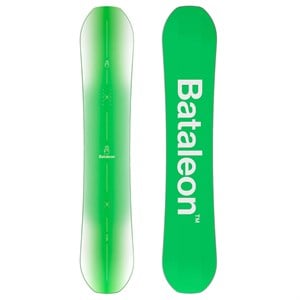
- Terrain: All-Mountain
- Ability Level: Beginner–Intermediate
- Profile: Camber
- Flex: Soft
The Bataleon Chaser is a forgiving all-mountain snowboard built to help riders explore more terrain with confidence. Its low camber profile combined with Triple Base Technology creates a smooth, catch-free feel that makes turn initiation easier and landings more forgiving. The directional twin shape offers versatility for cruising groomers, hitting side hits, or riding switch.
A poplar and beech core delivers dependable flex and durability, while biax laminates keep the board lively without becoming demanding. Flex Walls absorb vibration and chatter, helping maintain control on uneven snow. Finished with a fast Hyper Glide S base, the Chaser balances performance and affordability, making it an excellent choice for riders focused on progression across the whole mountain.
- Pros: Catch-free ride, smooth turn initiation, strong value
- Cons: Less precise than traditional camber, softer flex limits speed
How to Choose Snowboards for Beginners?

Snowboarding is an exhilarating winter sport that combines balance, coordination, and a sense of adventure. But before you hit the slopes, one of the most important decisions you’ll make is choosing the right snowboard—especially if you’re a beginner. The wrong board can make learning more difficult, while the right one can boost your confidence and accelerate your progress.
In this guide, we’ll walk you through everything you need to know to choose the best snowboard for your beginner journey—from sizing and shape to flex and profile.
1. Know Your Riding Style
Before diving into the technical specs, think about where and how you want to ride. For beginners, this typically means:
- All-Mountain Riding: Versatile boards that perform well across groomed runs, a bit of powder, and even small park features. Ideal for beginners.
- Freestyle: These boards are great for tricks and terrain parks but might feel less stable for first-timers.
- Freeride: Focused on off-piste or backcountry terrain, these are not beginner-friendly.
Recommendation: Stick to an all-mountain board when starting out. It gives you flexibility to explore different parts of the mountain as your skills grow.
2. Choose the Right Snowboard Length
Length is one of the most crucial factors. A board that’s too long will be harder to control. One that’s too short might feel unstable.
General Rule:
Stand the board on its tail. It should come up roughly between your chin and nose.
Other Factors That Affect Length:
- Weight: Heavier riders might need a longer board for better stability.
- Terrain: Shorter boards are better for park riding; longer boards offer more float in powder.
- Skill level: Beginners often do best with slightly shorter boards for easier turning.
Check the manufacturer’s size chart. They typically provide recommended rider weights for each board length.
3. Understand Snowboard Width
The width of your snowboard is measured at the waist (the narrowest point). It needs to match your boot size.
General Rule:
When strapped in, your boots should slightly overhang the board edges—but not so much that they drag in the snow.
- Men’s Size 10.5+ (US) or Women’s Size 9.5+ (US) usually need a wide snowboard.
- Standard width works for most beginners with average shoe sizes.
Tip: Dragging your toes or heels on turns (called “boot drag”) can ruin your experience—so get this right.
4. Decide on Snowboard Flex
Flex refers to how stiff or soft the snowboard feels. It’s typically rated on a scale from 1 (soft) to 10 (stiff).
For Beginners:
- Soft to medium flex (2–5) is ideal.
- Easier to turn and more forgiving of mistakes.
- Better at absorbing bumps and chatter on uneven terrain.
Stiffer boards are more stable at high speeds but less forgiving for beginners.
5. Choose a Snowboard Profile
The profile (also called camber or rocker) refers to the shape of the snowboard when you look at it from the side.
Common Profiles:
- Rocker (Reverse Camber): U-shaped. Great for float, easy turns, and forgiving edges. Excellent for beginners.
- Camber: Traditional arch shape. Good edge hold and pop, but less forgiving. Not ideal for true beginners.
- Flat: Flat base between the feet. Stable and predictable but can be catchy.
- Hybrid: Combines rocker and camber. Many beginner-friendly options fall into this category.
Best Choice: Look for a rocker or rocker-dominant hybrid board. They’re easy to learn on and less likely to catch an edge.
6. Pick the Right Snowboard Shape
There are a few shapes to consider, but for beginners, two stand out:
- True Twin: Symmetrical shape and flex, so you can ride in either direction. Great for learning and playing in the park.
- Directional: Designed to go mainly one way. Slightly longer nose and stiffer tail for carving and powder.
Recommendation: A true twin is great for beginners. It’s versatile and helps with balance and switch riding (going backwards).
7. Consider the Base Type
The snowboard base impacts glide and maintenance.
- Extruded Base: Lower maintenance, less expensive, and durable. A bit slower but perfect for beginners.
- Sintered Base: Faster and better at holding wax, but needs regular maintenance and is pricier.
Verdict: Stick with an extruded base to save money and hassle while you learn.
8. Don’t Overspend
It’s easy to get caught up in flashy features, but as a beginner, you don’t need a high-end board. In fact, some advanced features can work against you.
Here’s what to prioritize:
- Beginner-specific models
- Durable construction
- Reputable brands like Burton, K2, Salomon, Ride, and Arbor
Look for package deals (board + bindings + boots) to save money.
9. Rent Before You Buy
Not 100% sure what you want? Rent different boards on the mountain. Many resorts offer beginner-focused setups, and you can try a few styles before committing.
Once you find something that feels right, then consider buying your own board.
10. Ask for Help
If you’re buying from a shop or online retailer, don’t hesitate to ask for help. Most snowboarding staff are super knowledgeable and happy to make recommendations based on your:
- Height and weight
- Boot size
- Experience level
- Budget
- Riding goals
Also, check out snowboard forums or local groups for advice from experienced riders.
Quick Summary: What to Look for in a Beginner Snowboard
| Feature | Ideal for Beginners |
|---|---|
| Style | All-mountain |
| Length | Chin to nose height |
| Flex | Soft to medium (2–5) |
| Profile | Rocker or rocker-camber hybrid |
| Shape | True twin |
| Width | Proportional to boot size |
| Base | Extruded |
| Price | Mid-range or starter package |
Final Thoughts
Choosing the right snowboard as a beginner doesn’t have to be overwhelming. Focus on boards that are forgiving, flexible, and designed for easy control. Don’t chase speed or advanced features yet—your main goal is to build confidence and enjoy the ride.
Once you’ve mastered the basics, you’ll have a much better sense of your riding style and preferences. Until then, let your first board be your learning partner—and make sure it’s one that helps you grow, not hold you back.
Happy riding!