Best Wide Snowboards of 2025
Finding the right snowboard can be tricky, especially if you have bigger feet. A wide snowboard gives you more balance, better control, and prevents toe and heel drag on turns. These boards are built to handle deep snow and fast speeds without feeling unstable. In this guide, we’ll share the best wide snowboards that offer comfort, power, and smooth performance for riders of all levels. Whether you love carving groomers or floating through powder, these boards will keep you confident and in control.
1. Season Kin
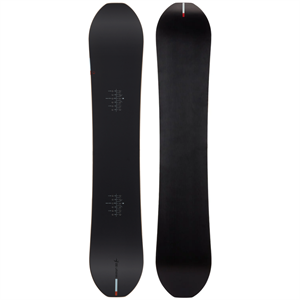
- Rocker Type: Symmetrical Camber
- Flex: Playful Flex
- Shape: Directional Twin
- Core/Laminates: Poplar/Paulownia/Bamboo, Biaxial Fiberglass
The Season Kin is a park-first board that still plays everywhere else, designed for riders who live to stomp one trick again and again. Its symmetrical camber gives reliable edge hold and snap, while the playful flex makes pressing, buttering, and pop-through jib sections forgiving and fun. Progressive shaping and width adjustments across sizes mean wide versions keep your toes and heels happy without feeling sluggish, so bigger-footed park riders get the same lively feel as smaller-footed friends.
Construction leans on a lively wood core blended for pop and low weight, with durable ABS sidewalls and a sintered base that stand up to daily park abuse. Stainless inserts and a durable layup help the board survive rails, boxes, and repeated tumbles. For anyone wanting a single deck that slides rails, spins, and still charges groomers, the Season Kin balances playful park personality with enough structure to stay dependable when the terrain opens up.
Pros: Playful pop and forgiving pressability; durable park-oriented build; consistent camber grip; progressive width options for larger feet.
Cons: Not for aggressive freeride charging; softer flex limits high-speed stability; may feel too playful for very stiff-leaning riders.
2. Burton Ripcord
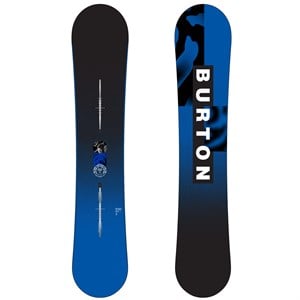
- Rocker Type: Flat Top™ with Easy Bevel
- Flex: Directional (Playful), Soft
- Shape: Directional with 5mm taper
- Core/Laminates: Fly 900G Core, Biax Fiberglass, Squeezebox Low
The Burton Ripcord is a textbook progression board for riders graduating from lessons to confident laps. The Flat Top profile between the feet adds stability and balance while the early-rise tip and tail reduce catches, so learners spend more time riding than flailing. Squeezebox Low core profiling gives a lively, efficient energy transfer without demanding advanced technique — ideal for someone wanting to build carving and turn control quickly.
With a forgiving flex and easy-bevel edges, the Ripcord lowers the learning curve and rewards effort with predictable behavior on groomers and mellow terrain. The extruded base keeps maintenance minimal, and Burton’s Channel compatibility makes stance tuning simple. If you want a board that accelerates progression while staying forgiving on mistakes, the Ripcord is a reliable and confidence-boosting choice for beginner-to-intermediate riders.
Pros: Extremely forgiving and catch-free; stable balance for learning; low-maintenance base; easy stance adjustment with The Channel.
Cons: Limited pop for advanced park tricks; not built for big-mountain charging; softer ride may lack precision at speed.
3. Season Primer
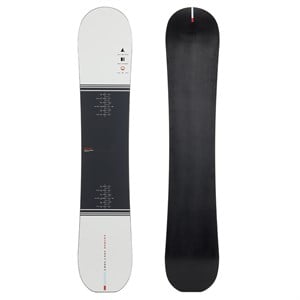
- Rocker Type: Rocker / Symmetrical Camber / Rocker
- Shape: Directional Twin with Dual-Digressive Sidecut
- Flex: Soft, forgiving
- Core/Laminates: Poplar Wood Core
The Season Primer is built to make all-mountain progression feel natural. Its hybrid rocker/camber/rocker profile smooths turn initiation while the dual-digressive sidecut gives relaxed entry and a tighter waist radius for snap when you lean in. That combination makes the board predictable at low speeds and surprisingly lively when you push edge angles, so riders can practice carving fundamentals without being punished for small errors.
Soft flexing poplar core means forgiving landings and friendly presses in the park, yet the directional twin shape keeps switch riding and freestyle moves comfortable. Lifetime Season Pass service sweetens the deal for regular riders with free waxes and an annual tune. For newcomers and intermediate riders chasing confidence across varied terrain, the Primer is a versatile, low-stress tool that accelerates development without demanding tech-perfect form.
Pros: Beginner-friendly progression shape; forgiving flex and easy turn initiation; useful service perks; versatile across terrain.
Cons: Soft flex limits high-speed edge hold; not optimized for expert freeride charging; lighter core can feel springy in aggressive landings.
4. Arbor Coda
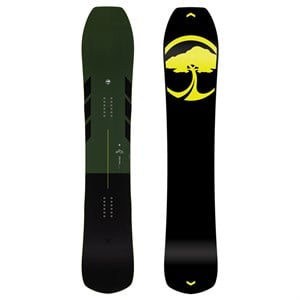
- Rocker Type: System Camber
- Flex: Medium (7/10)
- Shape: Directional with Grip-Tech contact points and 10mm taper
- Core/Laminates: Highland II Core (Poplar/Paulownia), Mixed Glassing
The Arbor Coda is a refined all-mountain freeride board tuned for charge and finesse. System Camber delivers crisp on-edge performance and pop while softening the leading edge for cleaner behavior in chop and mixed snow. Grip-Tech contact points add precise bite when you need aggressive turns, and the slightly directional profile with taper helps the Coda track and surf through chunder without feeling twitchy.
Arbor’s sustainability-forward build—real wood topsheet, bio-resin, recycled steel edges—pairs with performance features like a sintered base and triax-over-biax glassing for a durable, lively ride. This board suits advanced riders who want a versatile resort freeride tool that can hit big turns, lay trenches on groomers, and still be playful enough for the occasional park feature.
Pros: Excellent edge hold and carving ability; durable, eco-conscious build; balanced pop and stability; refined freeride geometry.
Cons: Medium-stiff flex may overwhelm lighter riders; not the best pick for pure park-focused tricksters; premium features add cost.
5. Arbor Rain
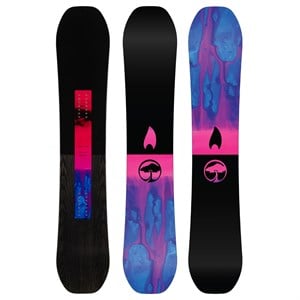
- Rocker Type: System Camber
- Flex: Stiff (7–8/10)
- Shape: Directional Twin with Double Carbon Stringers
- Core/Laminates: Highland III Core (Poplar/Paulownia), Mixed Glassing
The Arbor Rain is Pat Moore’s big-mountain freestyle weapon — stiff, powerful, and precise. Its System Camber and double carbon stringers load up for explosive pop off booters and jumps while still providing damped, controlled landings. Directional twin shaping keeps switch capability close at hand but leans into a freeride bias for stability at speed and confident holds through variable landings.
Top-notch materials like a sintered base, recycled steel edges, and bio-plastic topsheet give the Rain both longevity and eco-conscious credentials. If your priority is charging cliffs, stomping big airs, and feeling locked-in on steep approaches, this board delivers the horsepower and structural reinforcement to back up aggressive riding at the resort or in the backcountry.
Pros: Exceptional pop and landing durability; stiff, stable at speed; premium sustainable materials; versatile for big-mountain freestyle.
Cons: Stiffness requires solid technique; heavier riders will appreciate it more; not ideal for beginners or soft-park play.
6. CAPiTA Space Metal Fantasy – Women’s
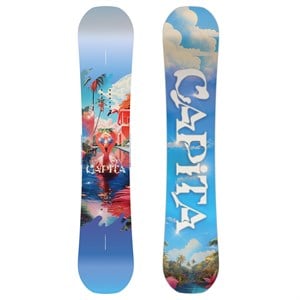
- Rocker Type: Park V2 (Rocker/Flat/Rocker)
- Flex: Twin Flex, Rating 4/10
- Shape: True Twin, Radial Sidecut
- Core/Laminates: FSC Dual Core (Poplar/Beech), Special Blend Fiberglass
The CAPiTA Space Metal Fantasy for women is a playful, park-focused board that also shines across the whole mountain. Its Park V2 profile gives a skatey, stable center with responsive elevated contact points for snap in presses and float in softer snow. The true twin layout and balanced flex make spins, switch laps, and rails approachable while the PLT topsheet and Superdrive base add durability for repeated park use.
This board is a great match for riders who want an approachable yet performance-minded twin. Lightweight but solid, the dual core maintains consistent flex and pop across the length, while Bitter End tuning and build quality keep the deck resilient through hits and jibs. For progressing freestyle riders who want a reliable, feminine-specific twin that doesn’t surrender mountain capability, the Space Metal Fantasy is a confident pick.
Pros: Excellent park playability; consistent pop and skateboard-like feel; durable base for jibs; twin shape for switch riding.
Cons: Softer flex reduces high-speed precision; not ideal for very heavy riders; park bias limits big freeride focus.
See the CAPiTA Space Metal Fantasy
7. Burton Process
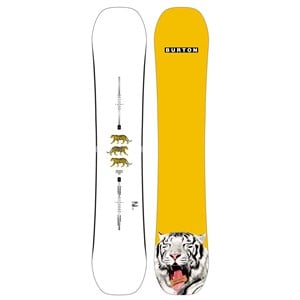
- Rocker Type: PurePop Camber (Rocker/Camber/Rocker)
- Flex: Twin Flex, Personality 2–5 (soft)
- Shape: Twin for balanced freestyle performance
- Core/Laminates: Super Fly II 700G Core, Triax Fiberglass, Squeezebox
The Burton Process is a versatile freestyle workhorse that handles park laps, side-hits, and playful all-mountain carving with equal enthusiasm. PurePop camber gives energetic snap and amplified pop while early-rise tip/tail sections soften presses and make switch landings friendlier. The Super Fly II core keeps the weight down yet provides focused power where you need it for ollies and bursts of acceleration.
Squeezebox profiling and Dualzone EGD increase edge hold and responsiveness without overburdening the rider, so you get snappy press performance and stable landings. Frostbite edges add bite for rail approaches and icy takeoffs. If you want a single board to film park laps, jump natural features, and still carve groomers, the Process blends liveliness and control into a dependable freestyle package.
Pros: Lively pop and balanced twin feel; lightweight yet stable; great for park-to-mountain versatility; proven build quality.
Cons: Softer personality may lack bite for aggressive big-mountain lines; premium tech can mean higher price.
8. Rossignol Jibsaw
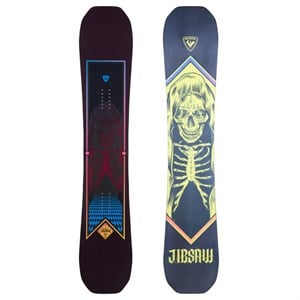
- Rocker Type: AmpTek Elite (Rocker/Camber/Rocker)
- Flex: Medium (6/10)
- Shape: True Twin Freestyle with Serrated Edges 7S
- Core/Laminates: THC CBF² Core, Basalt + Glass Fiber + Aramid
The Rossignol Jibsaw is a freestyle-focused true twin that feels at home on rails, jumps, and hardpack. AmpTek Elite combines stiff tips with a softer waist for reliable pop and catch-free landings, while Jibsaw’s 7S serrated edges bite into icy surfaces better than conventional edges — a real advantage when park features get icy. The hybrid core with basalt and aramid brings energy and vibration damping for smooth, powerful pop.
With a medium flex that sits between playful and stable, the Jibsaw is versatile enough for intermediates pushing into advanced tricks and for advanced riders wanting a dependable jibstick. ABS sidewalls and a sintered base deliver durability and longevity for season-long abuse. If your season includes icy rails and fast park laps, the Jibsaw balances grip, snap, and forgiving playfulness well.
Pros: Excellent edge bite on hard snow; balanced pop and dampening; versatile medium flex; durable construction for park use.
Cons: Not a powder specialist; more technical riders may want stiffer freeride options; slightly heavier for true park mini-shredders.
9. Burton Family Tree Alekesam
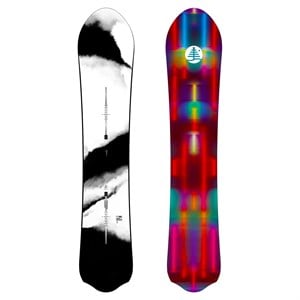
- Rocker Type: Directional Camber (Rocker/Camber blend)
- Flex: Directional Flex, Personality 5–8 (stiff)
- Shape: Directional with 15mm taper, Balanced Freeride Geometry
- Core/Laminates: Super Fly II 700G Core, Carbon I-Beam, Triax Fiberglass
The Burton Family Tree Alekesam is a surfy freeride shape built for floaty turns and confident big-mountain performance. Directional camber under the back foot offers drive and stability while a rocker-infused nose helps float deep snow. The substantial taper and balanced freeride geometry make this board an intuitive powder tool that still carves crisply on firm groomers when you want to lay trenches.
Carbon I-Beam and a high-spec core keep the weight sensible while adding snap and longitudinal stiffness for confident charging. WFO sintered base and Burton’s eco-minded resins round out a high-performance package for riders who favor surfy, directional riding and occasional freestyle tweaks. If your days lean toward deep lines, long boards, and surf-style turns, the Alekesam is a precision freeride partner.
Pros: Superb powder float and directional control; powerful drive from carbon backbone; durable high-performance base; great for big lines.
Cons: Stiffer flex isn’t forgiving for beginners; less suitable for park-centric riders; tapered shape reduces switch performance.
See the Burton Family Tree Alekesam
10. K2 Passport
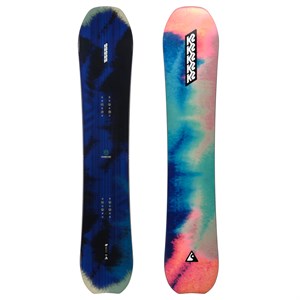
- Rocker Type: Directional Combination Camber (Rocker/Camber/Rocker)
- Flex: Stiff (7/10)
- Shape: Directional, Landscape Collection wide options
- Core/Laminates: A1 Core (Bamboo/Aspen/Paulownia), ICG™10 Triaxial Carbon Glass
The K2 Passport is a high-performance freeride board designed for riders who want precision and pop across big terrain. Its combination camber blends the best attributes of camber and rocker, giving crisp turn precision and dependable float in varied snow. The A1 core, with bamboo reinforcement and paulownia tip/tail lightening, keeps swing weight down while delivering a lively, responsive feel edge-to-edge.
ICG™10 carbon glass integrates tip-to-tail stringers that smooth power delivery and increase pop without deadening the board. A fast Sintered 4000 base soaks up wax and rewards riders who value speed and glide on long runs. If you’re after a stiff, responsive deck for freeride missions, deep lines, and precise carving at speed, the Passport slots into that role with modern material tech and wide sizing for larger-footed riders.
Pros: Powerful, precise freeride performance; lightweight yet snappy core; excellent glide from high-end base; wide options for larger boots.
Cons: Stiffness demands experience; less playful for park-centric riders; premium construction adds weight and cost.
How to Choose Wide Snowboards
Choosing the right wide snowboard can make a huge difference in your comfort, control, and performance on the slopes. Wide snowboards are designed to prevent toe and heel drag for riders with larger boot sizes, but they also affect how your board feels underfoot. If you’ve ever felt your toes scraping the snow during deep carves, a wide board might be exactly what you need. Here’s a complete guide to understanding when and how to choose the perfect wide snowboard for your riding style and body type.
Understanding Wide Snowboards
Wide snowboards are designed for riders with larger feet—typically US men’s size 11 and up. The extra width underfoot gives your boots more room, helping prevent toe or heel drag while carving or turning. A standard snowboard is usually around 246–255mm wide at the waist, while a wide board typically starts at 260mm or more. This slight increase in width can drastically improve control for riders with bigger boots.
However, wide boards aren’t just for large-footed riders. Some snowboarders prefer the extra surface area for stability or powder float. The added width can make landings feel more solid and help distribute your weight across a larger area, which improves balance and grip on soft snow.
When Do You Need a Wide Snowboard?
Check Your Boot Size
The most important factor is your boot size. Generally, if you wear a US men’s size 11 or larger, you’ll likely need a wide board. However, this depends on your boot’s actual outer sole length, which varies between brands. Some modern snowboard boots are more compact, allowing you to fit comfortably on a regular-width board.
Consider Your Binding Angles
Binding angles also influence whether you need a wide board. If you ride with a duck stance (like +15°/-15°), your boots sit diagonally across the board, which reduces overhang. But if you prefer a more forward stance (like +21°/+6°), your boots sit straighter, which increases the chance of toe drag. Riders with a more directional stance may benefit from a wider board even if they wear smaller boots.
Look at Your Riding Style
Freeriders and all-mountain riders who carve aggressively tend to benefit from a wider board because it allows deeper turns without boot drag. Park riders, on the other hand, may prefer standard widths for quicker edge transitions and lighter spins. If you often ride powder, a wide board can also enhance floatation and stability in deep snow.
Measuring the Right Width
The key measurement for determining snowboard width is the waist width—the narrowest part of the board, usually between your bindings. Ideally, your boots should hang over the edges just slightly (about 1–1.5cm on each side). This allows for efficient leverage and easy edge control while keeping your toes and heels clear of the snow.
If your boot overhang exceeds 2cm on either side, you risk toe or heel drag, especially during deep carves. On the other hand, if your boots barely reach the edges, you’ll struggle to apply pressure effectively, resulting in sluggish turns. Finding that balance is crucial for performance and comfort.
Pros and Cons of Wide Snowboards
Pros
- Eliminates toe and heel drag for larger boot sizes
- Offers greater stability on landings and high speeds
- Improves float in powder due to a larger surface area
- Better weight distribution for heavy or tall riders
Cons
- Slower edge-to-edge transitions, especially for smaller riders
- Heavier overall board weight
- Less nimble for quick freestyle maneuvers
- Requires more power and energy to turn sharply
For many riders with larger feet, the advantages far outweigh the drawbacks. The stability and control gained from a properly sized wide board improve confidence and technique on all terrain types.
Choosing the Right Board Type
Not all wide boards are created equal. The right type depends heavily on your riding preferences and the terrain you enjoy most. Here’s how to match board type with width needs:
All-Mountain Wide Boards
These are versatile and handle everything from groomers to light powder. If you ride a mix of terrains, an all-mountain wide snowboard like the K2 Passport or Burton Custom Wide is a reliable choice. They maintain stability without feeling overly sluggish and suit intermediate to advanced riders.
Freeride Wide Boards
Freeride boards are built for speed, stability, and powder. They’re usually stiffer, directional, and ideal for charging big terrain. Wide freeride boards like the Arbor Coda Wide or Jones Flagship Wide provide more float and control when carving deep lines or hitting backcountry slopes.
Freestyle and Park Wide Boards
Freestyle boards prioritize agility and pop. While wide boards are less common in the park, options like the Season Kin Wide or CAPiTA DOA Wide balance width with playfulness. Choose one only if you have large feet and still want to spend time on rails and jumps.
Powder Wide Boards
Powder boards naturally tend to be wider for better float. Many designs include volume-shifted shapes—shorter and wider boards that let you size down without losing surface area. If you ride deep snow regularly, a wide powder board enhances stability and control while keeping your back leg from burning out.
Matching Flex and Profile to Your Needs
Width isn’t the only factor that affects ride feel. Flex and camber profiles play major roles too. A wide board with the wrong flex can feel unresponsive, while a properly tuned one can feel lively and smooth.
Flex
Softer flex (4–5/10) is more forgiving and ideal for beginners or park riders. Medium flex (6/10) balances responsiveness with comfort for all-mountain riders. Stiff flex (7–9/10) suits freeride and high-speed carving where stability is key.
Camber Profile
Camber profiles affect edge contact and stability. Traditional camber offers powerful edge hold and pop. Hybrid camber blends rocker zones for forgiveness and float. Full rocker provides surf-like float in powder but less stability on hardpack. Wide boards benefit from hybrid designs, as they balance power with easy turn initiation.
Testing and Fine-Tuning
Whenever possible, demo a few wide snowboards before committing. Testing allows you to feel how each board reacts to your stance, weight, and riding style. Pay attention to how easily you can switch edges and how stable it feels during deep turns. Adjust your bindings slightly inward or outward to fine-tune boot overhang and comfort.
Also, remember that board width interacts with board length. A slightly shorter wide board can feel more responsive than a longer one of the same width. Many riders find they can size down 2–3cm when choosing a wide board without losing stability, thanks to the increased surface area.
Final Thoughts
Choosing a wide snowboard is about finding the balance between comfort, control, and responsiveness. If your boots hang over the edges too far, or if you feel instability when carving, it’s time to consider a wide model. Focus on waist width that suits your boot size, and pick a shape and flex that complement your riding goals.
Whether you’re a powder chaser, park shredder, or carving enthusiast, there’s a wide snowboard designed for your style. Take the time to match width with boot size, stance, and preferred terrain, and you’ll unlock smoother turns, better stability, and more confidence on the mountain.