Best Alpine Touring Skis of 2026
Alpine touring skis help you climb mountains and enjoy the ride back down. They are light, strong, and built for adventure. Whether you’re chasing powder, exploring backcountry trails, or just starting out, the right ski makes a big difference. Choosing the best one depends on your skill level, goals, and the terrain. Some skis are better for climbing, while others shine on the descent. This guide covers the best alpine touring skis available today. We’ve included options for all types of skiers. From beginners to experts, there’s something here for everyone. Read on to find the perfect pair for your next mountain trip. Let’s get started.
1. Atomic Bent 110
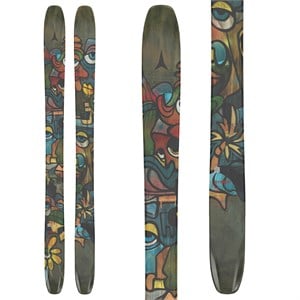
- Rocker Type: Powder Rocker (25% Tip / 50% Camber / 25% Tail)
- Core Material: Light Woodcore (Poplar)
- Waist Width: 110mm
- Ability Level: Advanced-Expert
The Atomic Bent 110 serves as the versatile centerpiece of the Bent family, masterfully bridging the gap between deep powder performance and daily resort capability. Its lightweight poplar construction combined with HRZN 3D tips provides a playful, surfy feel that remains incredibly nimble. Whether you are navigating tight glades or charging through afternoon chop, these skis offer a predictable yet energetic platform for creative skiers.
Equipped with Dura Cap sidewalls and high-density sintered bases, the Bent 110 is built to handle the rigors of both the backcountry and the ski hill. The 110mm waist provides ample float for most storm cycles without feeling sluggish on firmer transitions. It is an ideal choice for the one-ski quiver seeker who prioritizes freestyle flair and weight-conscious performance across varied terrain.
Pros: Excellent float-to-weight ratio; highly playful in freestyle terrain; durable edges and base.
Cons: Can feel deflected in very heavy, frozen crude; less edge hold on pure ice than narrower models.
2. Season Lolo Pass
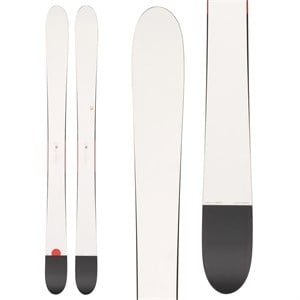
- Core: Paulownia Wood with Carbon Fiber Reinforcement
- Sidewalls: 360˚ ABS Sidewall for vibration damping
- Tail Type: Full Twin Tip
- Special Feature: Lifetime Season Pass (free tunes and waxes)
The Season Lolo Pass is a specialized tool designed for the modern freerider who demands uphill efficiency without sacrificing downhill backbone. By utilizing a Paulownia and carbon layup, Season has created a ski that feels light on the skin track but remains stable when you open up the throttle on the descent. Its float-forward shape makes it a joy in natural terrain and deep pockets.
What sets the Lolo Pass apart is its commitment to freestyle versatility in the backcountry. It is just as comfortable launching off natural pillows as it is carving through soft resort snow. The addition of the Lifetime Season Pass adds incredible value, ensuring your gear stays in peak condition for years of heavy use. It is a reliable, dampened, and stylish choice for the dedicated explorer.
Pros: High-end vibration damping; versatile twin-tip shape; exceptional long-term value with free maintenance.
Cons: Carbon layup may feel stiff for lighter riders; limited availability compared to major brands.
3. Atomic Bent Chetler 120
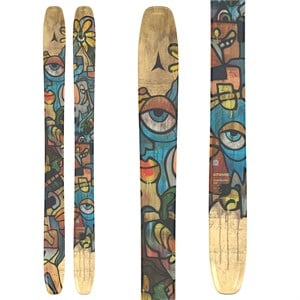
- Waist Width: 120mm
- Rocker Profile: 30% Tip / 40% Camber / 30% Tail
- Edge Angle: 1.0° Base / 87° Side
- Construction: HRZN 3D Bent Tip and Tail
The Atomic Bent Chetler 120 is a legendary powder ski that has defined the freeride category for nearly two decades. This “fatty” is designed for maximum surfiness and float in the deepest conditions imaginable. Despite its massive footprint, the Light Woodcore keeps the swing weight remarkably low, allowing for effortless pivots and spins in the air or among tight trees.
While primarily a powder hound, the 120 is surprisingly stout enough to handle big landings and stomps. The HRZN 3D tech provides extra surface area in the tip and tail without adding width, resulting in a ski that tracks beautifully through deep snow. For the advanced skier who lives for soft snow and creative lines, there is simply no substitute for this iconic model.
Pros: Unrivaled float in deep powder; very low swing weight for its size; iconic artistic graphics.
Cons: Too wide for daily use in firm conditions; requires aggressive technique to drive on groomers.
See the Atomic Bent Chetler 120
4. Atomic Backland 109
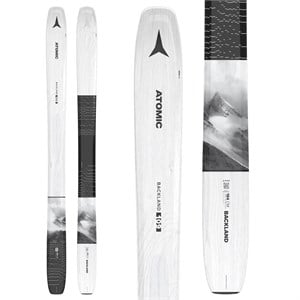
- Core: Ultra Light Woodcore (Poplar and Caruba)
- Sustainability: 26% reduction in CO2 emissions through reduced resin/fiberglass
- Edge Angle: 1.3˚ Base / 3˚ Side
- Tail Type: Partial Twin Tip
The Atomic Backland 109 is a masterclass in eco-conscious engineering and backcountry performance. By reimagining the construction with more wood and less resin, Atomic has created a ski that is lighter on the planet and the uphill climb. It features an Ultra Light Woodcore that provides a snappy, energetic feel while maintaining the stability needed for technical descents in mixed snow.
The 109mm waist is the sweet spot for a touring-specific ski, offering plenty of surface area for powder while remaining manageable on firm, wind-affected slopes. The HRZN 3D tip ensures the ski stays on top of the snowpack and initiates turns easily. It is an ideal choice for intermediate to advanced tourers who value sustainability as much as they do downhill performance.
Pros: Extremely lightweight for uphill efficiency; eco-friendly construction; great value for the performance.
Cons: Less damp than heavier alpine-focused skis; partial twin tip limits freestyle switch landings.
5. Armada ARV 116 JJ UL
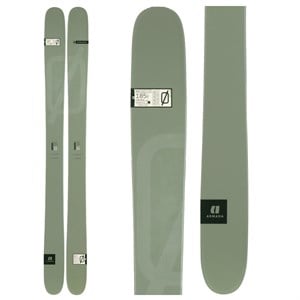
- Flex Rating: Tip 3 / Waist 5 / Tail 4
- Core: Caruba Core for ultralight performance
- Base: S7 High-speed Base
- Technology: Smear Tech 3D beveled base
The Armada ARV 116 JJ UL is the ultralight version of the legendary JJ, designed specifically for those who take their freestyle tricks deep into the backcountry. The Caruba wood core significantly reduces weight, making it one of the nimblest wide skis on the market. With its soft flex in the tips and tails, it is the ultimate tool for buttery transitions and surfing through cold smoke.
The inclusion of Smear Tech—a 3D beveled base—allows the ski to feel completely catch-free in deep snow and during takeoffs. This ski is at its best when the snow is light and deep, offering a playful and forgiving feel that encourages creativity. It is the perfect match for the advanced skier who views the entire mountain as a terrain park.
Pros: Incredibly low swing weight; catch-free Smear Tech tips; excellent for backcountry freestyle.
Cons: Very soft flex can feel unstable at extreme speeds; not designed for hard-pack performance.
6. Black Crows Draco Freebird
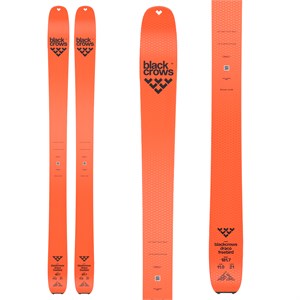
- Waist Width: 110mm
- Turning Radius: 21m (Medium)
- Core: Paulownia and Poplar
- Rocker Profile: Double Rocker with Slight Camber
The Black Crows Draco Freebird enters the lineup as the widest touring-specific ski in their range, replacing the Ferox. It is designed to be less demanding than its predecessor, featuring a smoother flex and a more traditional tip shape that excels in tight, technical spaces. Despite its generous width, it remains surprisingly manageable and lightweight for long approaches in the backcountry.
True to the Black Crows philosophy, the Draco does not sacrifice downhill integrity for weight savings. The Paulownia and Poplar core provides a balanced feel that is stable at speed but easy to pivot when things get narrow. It is a fantastic choice for mid-winter touring missions where you expect to find deep snow but still need a ski that can handle critical maneuvers.
Pros: Easier to handle in tight terrain than previous models; great downhill stability; beautiful minimalist aesthetic.
Cons: Still quite wide for technical spring ski mountaineering; semi-cap construction can be prone to topsheet chipping.
See the Black Crows Draco Freebird
7. DPS Pagoda Tour CFL 112
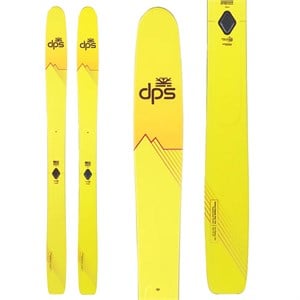
- Laminates: Carbon Fiber and Flax with Super Sap Bio-resin
- Turning Radius: 15m (Short)
- Rocker: 45% Tip and Tail Rocker
- Sidewalls: Algal Tech PU (derived from algae)
The DPS Pagoda Tour CFL 112 is a high-tech evolution of the classic RP shape, optimized for the ultimate powder touring experience. The introduction of flax into the carbon laminate helps dampen the “pingy” feel often associated with carbon skis, resulting in a smoother, more composed ride. With its short 15m radius, this ski is incredibly nimble and easy to turn in deep snow.
Environmental innovation is at the heart of this ski, featuring bio-based resins and sidewalls made from algae. The 45% rocker profile ensures you stay afloat in even the lightest powder, while the Paulownia core keeps the weight low for big vertical days. It is a premium, high-performance option for the skier who wants the best in technology and maneuverability.
Pros: Short turn radius makes it very agile; improved dampening from flax; sustainable component materials.
Cons: Premium price point; short effective edge can feel nervous on icy traversals.
See the DPS Pagoda Tour CFL 112
8. Black Crows Navis Freebird
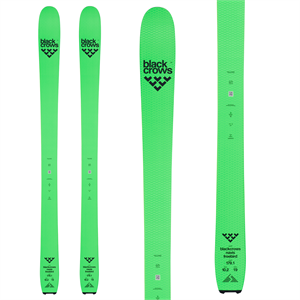
- Waist Width: 102mm
- Laminates: Glass and Carbon Fiber with Titanal Reinforcement
- Tail Type: Flat Tail
- Mounting Point: -9cm (Directional)
- Rocker: Progressive Front Rocker
The Black Crows Navis Freebird is widely considered the “gold standard” for all-season touring. At 102mm underfoot, it offers the perfect balance of float for powder days and edge hold for firm spring conditions. The directional freeride shape and flat tail provide a classic alpine feel that rewards precise technique and offers great stability when carving through mixed snow.
Equipped with a Titanal plate underfoot, the Navis is designed to handle modern hybrid bindings without adding unnecessary weight. The Paulownia and Poplar core keeps it light enough for high-alpine missions, while the carbon and glass laminates ensure it has the energy to power through turns. It is the quintessential do-it-all touring ski for the serious human-powered skier.
Pros: Extremely versatile 102mm waist; predictable directional handling; robust binding mounting area.
Cons: Not as playful as twin-tip models; requires more effort to pivot in deep, heavy snow.
See the Black Crows Navis Freebird
9. Faction La Machine 3 Mega
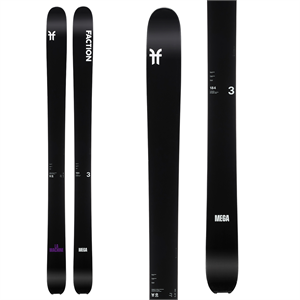
- Waist Width: 109mm
- Flex: Mustache Flex (Rating 6/10)
- Sidecut: Elliptical Sidecut (multi-radius)
- Construction: Full Carbon Weave with Paulownia Core
The Faction La Machine 3 Mega is built for the “freetouring” specialist who refuses to compromise on width when heading into the backcountry. With a 109mm waist and an aggressive rocker profile, it is designed to plane over hip-deep powder where narrower touring skis would struggle. The carbon-heavy construction ensures it remains light enough to beat the crowds to the top of the line.
The unique “Mustache Flex” provides stability underfoot for edge hold while maintaining a progressive, softer flex in the tips and tails to absorb terrain irregularities. The elliptical sidecut allows for a variety of turn shapes, making it surprisingly versatile for such a wide, rockered ski. It is a bold choice for the powder-focused tourer who wants a modern, surfy feel.
Pros: Outstanding float for its weight; very stable underfoot; unique multi-radius sidecut for versatility.
Cons: Significant tip rocker can flap at high speeds on hard snow; 109mm can feel wide for long icy side-hilling.
See the Faction La Machine 3 Mega
10. Völkl Katana V-Werks
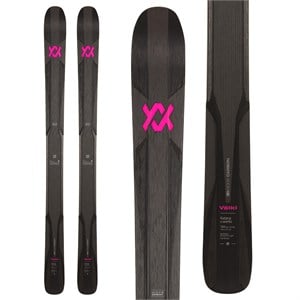
- Rocker: Full Rocker Profile
- Construction: 3D.Ridge Carbon with Full Carbon Jacket
- Topsheet: ICE.OFF (prevents snow buildup)
- Base: P-Tex 4500 Race Base
The Völkl Katana V-Werks is a marvel of engineering, featuring a razor-thin profile that packs immense power. Despite its lightweight construction, it remains one of the most stable and high-performing deep snow skis ever produced. The 3D.Ridge design concentrates mass in the center of the ski to reduce swing weight while ensuring direct power transmission to the edges.
The ICE.OFF topsheet is a standout feature, reducing weight in use by up to 30% by preventing snow from sticking to the ski during the climb. With a full rocker profile and a high-end race base, the Katana V-Werks offers a fast, smooth, and incredibly stable ride in the backcountry and at the resort. It is a premium tool for the expert skier who demands precision.
Pros: Incredible power-to-weight ratio; ICE.OFF tech is highly effective for touring; very fast base.
Cons: Very expensive; the thin construction requires careful handling to avoid impact damage.
How to Choose Alpine Touring Skis?
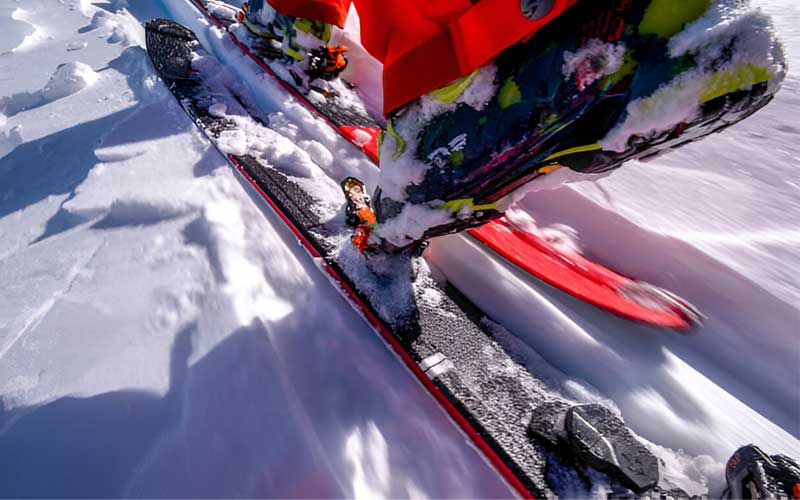
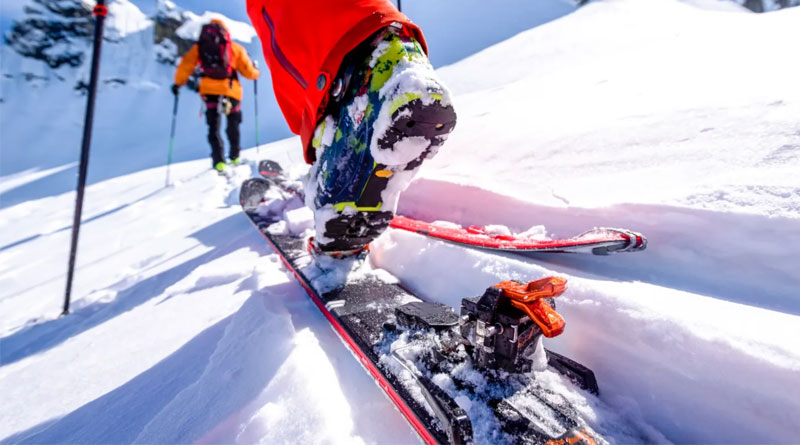
Alpine touring (AT) skiing combines the freedom of backcountry exploration with the thrill of downhill skiing. Unlike traditional alpine skiing, AT skiing allows you to climb mountains using climbing skins and touring bindings, then ski back down. But choosing the right alpine touring ski setup is not as simple as grabbing any lightweight ski. Your choice needs to match your style, terrain preferences, fitness level, and skiing ability.
This guide covers everything you need to know to choose the right alpine touring skis—from understanding ski types to important specs like weight, width, and rocker profile.
1. Understand Your Touring Style
Before looking at ski specs, start by identifying your goals. Alpine touring can range from fast-paced uphill missions to powder-chasing in remote zones. Here are some general categories:
-
Ski Mountaineering: Fast and light. You’ll want extremely lightweight skis for long ascents.
-
Backcountry Freeride: Focused on downhill performance. Skis should be wide and stable enough for steep descents and variable snow.
-
All-Around Touring: A mix of uphill efficiency and downhill fun. These skis balance weight, width, and versatility.
-
Resort-to-Backcountry: If you ski both inbounds and off-piste with one setup, look for a stiffer ski with some extra weight and durability.
2. Ski Width and Waist Size
Ski width is one of the most important factors when choosing AT skis. It affects both floatation in powder and ease of climbing.
-
<85mm: Best for ski mountaineering or spring corn. Super light and efficient, but less floaty in powder.
-
85–100mm: Ideal for all-around touring. A good balance between float, edge hold, and uphill efficiency.
-
100–115mm: Built for powder and downhill performance. These skis are heavier, but shine in deep snow.
-
>115mm: Only for deep snow specialists. Great downhill, but not efficient on long climbs.
For most people, a ski around 95–105mm offers the best blend of uphill comfort and downhill versatility.
3. Ski Weight
Weight is crucial in alpine touring. Heavier skis are more stable on descents, but lighter skis save energy on climbs.
-
Lightweight (<1,300g per ski): Great for long tours or fast climbs, but can feel twitchy at speed.
-
Midweight (1,300–1,600g): Balanced option. Light enough for most touring but with enough heft for solid performance.
-
Heavyweight (>1,600g): Designed for powerful descents. These are better if you prioritize downhill performance over long ascents.
Remember, you’ll also be carrying skins, boots, bindings, and avalanche gear—so every gram adds up.
4. Camber and Rocker Profiles
The shape of the ski—particularly the camber and rocker—affects how it handles in different snow conditions.
-
Camber underfoot: Helps with edge grip and control on firm snow and icy traverses.
-
Tip rocker: Improves float in powder and makes turn initiation easier.
-
Tail rocker: Adds playfulness and maneuverability, especially in soft snow.
-
Flat tails: Provide better skin adhesion and secure placements in snow, ideal for mountaineering or kick turns.
A rocker-camber-rocker profile is the most popular for touring, offering the best mix of stability and floatation.
5. Ski Construction
Different materials and construction methods affect performance, weight, and durability.
-
Core materials: Karuba, Paulownia, and Poplar are common in touring skis. Karuba and Paulownia are very lightweight, while Poplar adds strength.
-
Laminates: Carbon fiber reduces weight while improving strength. Titanal (aluminum alloy) adds stability but increases weight.
-
Sidewalls: Full sidewalls give better edge control. Cap construction shaves weight but reduces durability.
Look for skis with lightweight wood cores and carbon laminates if you want strength without the extra bulk.
6. Length of Touring Skis
In general, your AT ski should be slightly shorter than your alpine ski—especially if you prioritize climbing efficiency.
-
For technical terrain, trees, or tight chutes, shorter skis are easier to maneuver.
-
For powder or open bowls, longer skis offer better floatation.
As a rule of thumb:
-
Beginner or moderate tours: Ski length = height minus 5–10 cm
-
Advanced freeriders: Ski length = height or slightly shorter
Consider your own skill level, weight, and the terrain you’ll most often ski.
7. Tail Shape and Skin Compatibility
Touring skis often have notched or flat tails to help with skin attachment. Some have built-in skin clips or holes that match pre-cut skins.
-
Flat tails: Best for securing skins and plunging into firm snow.
-
Twin tips or rounded tails: More playful but less functional for mountaineering tasks.
If you already have skins, check compatibility. Otherwise, many brands now sell pre-cut skins designed specifically for their ski models.
8. Turning Radius
Turning radius influences how the ski feels in different terrain.
-
Short radius (<15m): Quick and easy to pivot. Great for trees or tight lines.
-
Medium radius (15–20m): Versatile for all-mountain skiing.
-
Long radius (>20m): Stable at high speeds, better for open faces and charging.
Touring skis typically fall into the medium-radius category to allow for flexibility in various terrain.
9. Price and Value
Touring gear can be expensive. High-end skis with carbon construction and modern tech often cost more than $800 without bindings.
Here’s a breakdown of what to expect:
-
Budget touring skis: $400–600. Heavier and more basic construction.
-
Mid-range: $600–800. Balanced options with carbon, solid edges, and good all-around performance.
-
Premium: $800+. Lightweight, tech-heavy builds, ideal for serious backcountry users.
Look for bundled deals with bindings and skins if you’re starting from scratch.
10. Don’t Forget the Rest of the Setup
Choosing the right ski is only one part of the touring equation. Your bindings, boots, and skins all need to work in harmony.
-
Bindings: Tech (pin) bindings are the lightest for touring. Hybrid bindings offer more downhill performance.
-
Boots: Match flex and walk mode range to your skiing style.
-
Skins: Choose ones that match the length and width of your skis. Nylon for grip, mohair for glide, or mix for both.
Everything must fit together for a safe and enjoyable experience in the backcountry.
Final Thoughts
Choosing alpine touring skis is all about balancing weight, performance, and versatility. Consider where you’ll ski, how often you’ll tour, and whether you prioritize climbing ease or downhill power. For many skiers, a mid-weight ski around 95–105mm with a rocker-camber-rocker profile offers the best of both worlds.
Take your time, read reviews, and—if possible—demo a few skis. With the right setup, you’ll be ready to explore the mountains beyond the resort and experience the freedom of alpine touring firsthand.