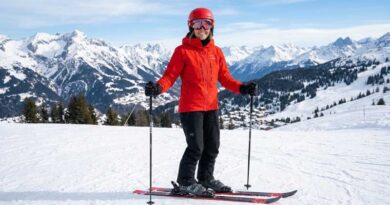

Best Big Mountain Skis of 2027
Big mountain skiing needs skis that can handle deep snow, steep slopes, and tough conditions. The right pair gives you control, float, and confidence on the mountain. In this article, we review the best big mountain skis to help you choose the perfect pair. We look at performance, stability, and value so you can find skis that match your style and keep you riding strong all season long.
1. Salomon QST 106

- Best Use: Groomed Runs and Powder
- Waist Width: 106 mm
- Camber Profile: Tip and Tail Rocker
- Core: Full Poplar Woodcore
The Salomon QST 106 skis are designed for skiers who want dependable performance across different snow conditions. Their 106 mm waist provides enough flotation for powder while remaining manageable on groomed runs. The progressive freeride shape helps you maintain control when moving between soft snow and firmer terrain. These skis combine the best features of the previous four generations of the QST 106, creating a versatile option for everyday freeride skiing.
The full poplar woodcore provides a responsive feel and balanced performance throughout the mountain. Tip and tail rocker help improve flotation, maneuverability and turn initiation, while the partial twin tail adds flexibility when skiing varied terrain. Available in lengths from 157 to 189 cm, the QST 106 offers different sizing options for various skiing styles. Bindings are not included, so you can choose a compatible setup separately. Overall, these skis are a strong choice for skiers who want one pair for groomers and powder.
Pros:
- Versatile performance on groomed runs and powder.
- 106 mm waist provides reliable flotation.
- Full poplar woodcore delivers a responsive ride.
Cons:
- Bindings must be purchased separately.
- Not as specialized as narrower skis on hardpack.
2. Atomic Bent 110

- Best Use: Groomed Runs and Powder
- Waist Width: 110 mm
- Camber Profile: Tip and Tail Rocker
- Core: Light Woodcore
The Atomic Bent 110 skis are built for skiers who enjoy deep powder, playful turns and aggressive freeride sessions. Their 110 mm waist provides excellent flotation in soft snow, making them especially useful for lift-served powder days. HRZN Tech in the tip and tail increases the surface area of the skis, helping them float through deep snow without adding unnecessary bulk. This design also gives you a playful feel when navigating changing snow conditions and making quick movements.
The light woodcore helps keep the skis manageable while maintaining a responsive feel on the mountain. Their tip and tail rocker profile improves maneuverability and makes it easier to turn in powder. A full twin tail supports playful skiing, including switch riding and freestyle movements. Available in lengths from 164 to 188 cm, these unisex skis offer options for different skier preferences. They weigh 7 lbs. 11.46 oz. per pair and do not include bindings. Overall, the Bent 110 is a great choice for skiers who prioritize powder performance and playful handling.
Pros:
- Excellent flotation in deep powder.
- HRZN Tech improves playful performance.
- Light woodcore keeps the skis manageable.
Cons:
- 110 mm waist may feel wide on firm snow.
- Bindings are sold separately.
3. Rossignol Sender 110

- Best Use: Powder and Freeride
- Waist Width: 109–110 mm
- Camber Profile: Tip and Tail Rocker
- Core: Wood
The Rossignol Sender 110 skis are designed for skiers who want to explore powder, steep terrain and challenging mountain conditions. Their wide profile provides dependable flotation in soft snow, while the playful freeride design makes it easier to move through different lines. Full sidewall construction helps deliver confident edge grip and control when skiing on firmer surfaces. These skis combine the playful response of powder-focused models with the stability needed for big-mountain adventures, making them suitable for both inbounds and off-piste skiing.
The woodcore provides a balanced combination of responsiveness and support, while the tip and tail rocker profile improves flotation and maneuverability. Their twin tail adds versatility for playful turns and freestyle-inspired movements. Available in 168, 176 and 184 cm lengths, the Sender 110 accommodates different skiing preferences. Pair weights range from 8 lbs. 9.56 oz. to 9 lbs. 11.21 oz., depending on length. Bindings are not included, giving you the flexibility to select your preferred setup. These unisex skis are a solid option for riders who want powder performance with dependable big-mountain control.
Pros:
- Excellent flotation for powder skiing.
- Full sidewalls provide confident edge grip.
- Twin tail supports playful freeride movements.
Cons:
- Relatively heavy compared with lighter options.
- Not the most versatile choice for narrow groomed runs.
4. K2 Mindbender 101

- Best Use: Groomed Runs and Powder
- Waist Width: 101 mm
- Camber Profile: Tip and Tail Rocker
- Core: Wood
The K2 Mindbender 101 skis are designed for skiers who want one versatile pair for powder stashes, groomed runs and everyday freeride adventures. Their 101 mm waist provides a useful balance between flotation and edge control, making them suitable for changing snow conditions. Dark Matter technology helps smooth out the ride when skiing through chunky snow, while Titanal I-Beam construction adds stability and support when picking up speed. This combination makes the Mindbender 101 a dependable option for skiers who enjoy exploring different parts of the mountain.
The tip and tail rocker profile improves maneuverability and helps the skis float through softer snow. Their partial twin tail provides additional flexibility for playful skiing, while the woodcore contributes to a balanced ride. With a 20-meter sidecut radius, these skis offer predictable turning characteristics at higher speeds. They are available in different lengths, including 171 and 178 cm, with pair weights of 7 lbs. 12.16 oz. and 8 lbs. 1.46 oz., respectively. Designed for men, the Mindbender 101 does not include bindings. It is a practical choice for skiers seeking a capable all-mountain freeride setup.
Pros:
- Versatile performance across different snow conditions.
- Dark Matter helps smooth out rough snow.
- Titanal I-Beam adds stability at speed.
Cons:
- Bindings are not included.
- Less flotation than wider powder skis.
5. Rossignol Soul 102 – Women’s

- Best Use: Groomed Runs and Powder
- Waist Width: 100–101 mm
- Camber Profile: Tip and Tail Rocker
- Core: Wood
The Rossignol Soul 102 women’s skis are designed for skiers who want to explore the entire mountain without changing equipment. Their freeride shape provides a smooth, playful feel across groomed runs, powder and changing snow conditions. With a waist width ranging from 100 to 101 mm, they offer a useful combination of flotation and control. Whether you enjoy cruising down groomers, charging through soft snow or exploring off-piste terrain, these skis are built to handle different situations with confidence.
The woodcore provides a balanced ride, while the tip and tail rocker profile helps improve flotation and makes turning easier. Their partial twin tail adds versatility for playful freeride movements and changing direction. The Soul 102 is available in 150, 156 and 164 cm lengths, allowing skiers to select a suitable size. Pair weights range from 8 lbs. 2.51 oz. to 9 lbs. 0.62 oz., depending on length. Bindings are not included, so you can choose a compatible setup separately. Overall, these skis are a versatile option for women who want a playful freeride experience in different mountain conditions.
Pros:
- Versatile performance on groomers and powder.
- Rocker profile supports easy maneuverability.
- Partial twin tail adds playful handling.
Cons:
- Not as wide as dedicated powder skis.
- Bindings must be purchased separately.
6. Völkl M7 Mantra

- Best Use: Groomed Runs and Powder
- Waist Width: 96 mm
- Camber Profile: Tip and Tail Rocker
- Core: Wood
The Völkl M7 Mantra skis are built for skiers who value stability, control and reliable performance throughout the mountain. Their 96 mm waist makes them a versatile option for groomed runs, variable snow and occasional powder. They are designed to deliver confidence from the first chair to the final lap, making them suitable for skiers who enjoy spending long days exploring different terrain. The combination of a balanced profile and Völkl’s 4 Radius Drive technology helps provide an adaptable skiing experience.
The 4 Radius Drive design combines different turning radii to make the skis easier to handle while maintaining stability during faster turns. Their woodcore provides a supportive ride, and the tip and tail rocker profile helps with maneuverability in changing snow conditions. The flat tail supports a more traditional, controlled skiing style. Available in 170, 177 and 184 cm lengths, these men’s skis offer different sizing options. Pair weights range from 8 lbs. 6.75 oz. to 9 lbs. 9.79 oz., depending on length. Bindings are sold separately. Overall, the M7 Mantra is a strong option for skiers looking for dependable all-mountain performance.
Pros:
- 4 Radius Drive improves handling and stability.
- 96 mm waist works well on groomed terrain.
- Confident performance across different snow conditions.
Cons:
- Narrower waist offers less flotation in deep powder.
- Bindings are not included.
7. Black Crows Atris

- Best Use: Groomed Runs and Powder
- Waist Width: 105 mm
- Camber Profile: Tip and Tail Rocker
- Core: Poplar and Fiberglass
The Black Crows Atris skis are designed for everyday big-mountain adventures, offering dependable performance in powder and a range of other snow conditions. Their 105 mm waist provides good flotation when skiing through deep snow, while the firm flex helps maintain stability when moving quickly across challenging terrain. These skis are suitable for riders who want a balance of playful freeride handling and dependable support. Whether you are exploring open powder fields or navigating variable mountain conditions, the Atris offers a versatile design for different skiing styles.
The poplar and fiberglass core construction provides a combination of responsiveness and support. Tip and tail rocker help improve flotation and maneuverability, making it easier to navigate soft snow and changing terrain. The twin tail adds versatility for playful turns and freestyle-inspired movements. With a 20-meter sidecut radius across the listed lengths, these skis offer consistent turning characteristics. They are available in 178, 184 and 190 cm lengths, with pair weights ranging from 8 lbs. 9.6 oz. to 9 lbs. 7.7 oz. Bindings are not included. Overall, the Atris is a capable option for skiers looking for stable big-mountain performance and powder versatility.
Pros:
- 105 mm waist provides reliable powder flotation.
- Firm flex offers stable performance.
- Twin tail supports playful freeride skiing.
Cons:
- Firm flex may feel demanding for beginners.
- Bindings must be purchased separately.
8. K2 Reckoner 110

- Best Use: Groomed Runs and Powder
- Waist Width: 110 mm
- Camber Profile: Full Rocker
- Core: Pure Aspen
The K2 Reckoner 110 skis are designed for riders who want excellent flotation, maneuverability and playful performance in soft snow. Their wide 110 mm waist provides plenty of surface area for floating through powder, while the twin-tip design makes them suitable for freestyle-inspired freeride skiing. You can use these skis to slash turns, jump off natural features and make quick movements down the mountain. Their design focuses on delivering a balance of stability and maneuverability for skiers who enjoy an active and playful approach to skiing.
The pure aspen core provides a responsive feel, while the full rocker profile helps improve flotation and makes the skis easier to maneuver in deep snow. Their twin tail adds flexibility for switch skiing, jumps and playful turns. A 22-meter sidecut radius offers predictable turning characteristics across different situations. Available in 170 and 177 cm lengths, these unisex skis weigh 8 lbs. 4.65 oz. and 8 lbs. 15.91 oz. per pair, respectively. Bindings are not included, allowing you to select your preferred setup separately. Overall, the Reckoner 110 is a good option for skiers who prioritize powder flotation and freestyle versatility.
Pros:
- 110 mm waist delivers excellent powder flotation.
- Full rocker improves maneuverability in soft snow.
- Twin-tip design supports freestyle skiing.
Cons:
- Full rocker may offer less edge grip on hardpack.
- Bindings are sold separately.
How to Choose Big Mountain Skis
Big mountain skiing demands gear that can handle deep powder, steep faces, variable snow, and high speeds. Unlike frontside skis built for groomed runs, big mountain skis must balance flotation, stability, and maneuverability in challenging off-piste terrain. Choosing the right pair depends on understanding key specifications—waist width, rocker profile, turn radius, length, and construction—and matching them to your ability level and skiing style. This guide breaks down the essential factors to help you select big mountain skis with confidence.
Understand What Makes a Big Mountain Ski
Big mountain skis are designed primarily for off-piste terrain, including powder, crud, steeps, and variable snow conditions. They differ from all-mountain skis in several important ways. They are generally wider underfoot for flotation, often feature rocker in the tip and tail for easier pivoting and float, and tend to have longer turn radii for stability at speed. Some models prioritize charging and high-speed stability with metal laminates, while others favor playfulness and maneuverability with lighter constructions. Knowing where you plan to ski most often—resort sidecountry, deep powder bowls, or technical steeps—will guide your choices.
Waist Width: The Foundation of Flotation
Waist width, measured at the narrowest point of the ski, is the single most important specification for big mountain performance. It directly determines how well the ski floats in powder and how stable it feels in soft or variable snow.
Industry guidelines provide a useful starting point:
- 95–104 mm: All-mountain width; versatile but limited float in deep snow
- 105–115 mm: Big mountain and off-piste width; the sweet spot for most big mountain skiers
- 115 mm and wider: Powder-specific width; maximum flotation but reduced versatility on harder snow
A waist between 105 and 115 mm offers the best balance for big mountain terrain. Skis in this range provide sufficient float for powder days while remaining manageable in chop and on variable snow. Wider skis (115 mm+) excel in deep powder but can feel sluggish and slow edge-to-edge on firmer snow. Narrower skis in the big mountain category (around 100–105 mm) suit skiers who encounter more variable conditions and prioritize versatility over pure flotation.
Rocker Profile: How the Ski Meets the Snow
The rocker profile—the shape of the ski when viewed from the side—has a profound impact on how a ski performs in different snow conditions. Big mountain skis typically employ hybrid profiles that combine rocker and camber.
Tip and Tail Rocker with Camber Underfoot
This is the most common profile for big mountain skis. The rockered tip lifts off the snow, aiding turn initiation and helping the ski plane over powder. The rockered tail allows the ski to release from turns easily and pivot in tight terrain. Camber underfoot maintains edge grip and energy transmission on firmer snow. This hybrid design offers a practical balance: float in soft snow, grip on hardpack, and predictable behavior across variable conditions.
Full Rocker (Reverse Camber)
Some powder-focused big mountain skis use full rocker, where the entire ski curves upward like a banana. This design maximizes flotation and makes the ski extremely loose and pivotable in deep snow. However, full rocker skis sacrifice edge grip and stability on hardpack, making them less versatile for conditions that include firm or wind-scoured snow. Full rocker suits dedicated powder hunters who prioritize soft-snow performance above all else.
Traditional Camber (Less Common)
A few big mountain skis retain substantial camber with minimal rocker, favoring edge hold and power transmission over flotation. These skis perform well in variable snow and crud but require more effort to keep afloat in deep powder. They appeal to strong skiers who value precision and stability at speed over easy powder surfing.
Turn Radius: Matching the Ski to Your Turn Style
Turn radius indicates the size of the arc a ski naturally carves when tipped on edge. It is determined by the ski’s sidecut—the difference between tip, waist, and tail widths—along with its length and flex.
Big mountain skis generally feature longer turn radii than frontside or all-mountain skis:
- 17–20 meters: Versatile big mountain radius; suitable for varied terrain and mixed turn shapes
- 20–25 meters: Traditional big mountain radius; stable at speed, favors longer turns down open faces
- 25 meters and above: Charging-oriented radius; maximum stability for high-speed arcs on steep, open terrain
A ski with a turn radius around 18–22 meters offers the best all-around performance for most big mountain skiers. It can make shorter turns when needed in tight terrain but remains composed during long, high-speed arcs. Skis with radii above 25 meters suit strong skiers who ski fast in open terrain and prefer long, sweeping turns. Shorter radii (below 17 meters) are uncommon in this category and generally indicate a more playful, freestyle-oriented design.
Length: Stability Versus Maneuverability
Ski length affects stability, swing weight, and flotation. Longer skis provide more surface area for float and more stability at speed, but they are heavier and harder to pivot in tight terrain. Shorter skis are more maneuverable and easier to control but may feel less planted at high speeds.
For big mountain skis, most advanced and expert skiers choose lengths that fall between their chin and the top of their head when standing the ski upright. Aggressive skiers who prioritize stability at speed often size up, while those who ski tighter terrain or prefer a more playful feel may size down slightly. Weight also matters: heavier skiers can flex longer skis more effectively, while lighter skiers may find longer skis cumbersome.
A general starting point for big mountain ski length:
| Skier Ability | Recommended Length Range | Priority |
|---|---|---|
| Intermediate | Chin to nose height | Maneuverability and control |
| Advanced | Nose to forehead height | Balance of stability and agility |
| Expert | Forehead to above head height | Maximum stability at speed |
Note that rocker affects effective edge length. A heavily rockered ski may ski shorter than its stated length because less of the ski contacts the snow. When choosing between two lengths, consider whether you prioritize float and stability (size up) or quick handling (size down).
Construction and Materials: Charging Versus Playful
The materials and construction of a ski determine its flex, dampness, weight, and overall personality. Big mountain skis generally fall into two broad categories.
Metal-Laminate Chargers
Skis with Titanal or other metal layers are stiffer, damper, and more stable at high speeds. They excel in variable snow, crud, and chopped-up powder, where their mass and rigidity help them plow through inconsistent conditions. Metal-laminate skis require more energy to ski but reward aggressive, strong skiers with confidence-inspiring stability. Examples include the Head Kore 106 Ti, which features Titanal around a wood core for improved dampening and high-speed performance.
Lighter, Playful Constructions
Skis without metal, often using wood cores with fiberglass or carbon, are lighter and more playful. They are easier to pivot, smear, and throw around in the air. These skis suit freestyle-influenced big mountain skiers who value maneuverability and creativity over pure charging ability. However, they may feel less planted in chop and at very high speeds. The Black Crows Atris exemplifies this approach, using a wood and fiberglass core to create an intuitive, maneuverable ski that excels in trees, moguls, and mixed conditions without feeling demanding.
Weight Considerations
Weight is a trade-off. Heavier skis are more stable and damp but require more effort to ski and are harder to carry on hikes or touring. Lighter skis are easier on the body and more playful but may chatter in variable snow. If you plan to hike or tour to access terrain, weight becomes a significant factor. Dedicated touring-oriented big mountain skis, such as the Kästle TX107 at 1,570 grams per ski, prioritize efficient construction to balance performance and weight.
Directional Versus Twin-Tip Designs
Big mountain skis come in two basic shapes that reflect different skiing styles.
Directional Skis
Directional skis have a wider tip and a flatter, narrower tail. They are designed to be skied forward and excel at carving, smooth turn transitions, and charging. The tail provides support and power through the finish of the turn. Directional big mountain skis suit skiers who focus on skiing fast, making clean turns, and attacking the fall line. They are less suited to switch skiing or spinning off features.
Twin-Tip and Directional-Twin Skis
Twin-tip skis have identical or near-identical tip and tail profiles, allowing for switch skiing and easier pivoting. Many big mountain skis use a “directional twin” shape—a slightly wider tip than tail but with substantial tail rocker and a more centered mount point. This design balances forward-skiing performance with the ability to pivot, slash, and land switch. Skis like the Black Crows Atris use a directional-twin shape to offer maneuverability without fully committing to a freestyle-focused ride.
Matching the Ski to Your Ability and Style
Your ability level and skiing style should guide your final choice. Big mountain terrain is demanding, and choosing a ski beyond your ability can hinder progression or reduce enjoyment.
Intermediate to Advanced Skiers
Skiers entering big mountain terrain should look for skis that are forgiving and easy to maneuver. Lighter constructions without metal, moderate waist widths (105–110 mm), and turn radii around 18–20 meters offer a manageable introduction. The Black Crows Atris and Elan Ripstick 108 are examples of skis that blend accessibility with big mountain capability.
Advanced to Expert Skiers
Strong skiers who ski aggressively and prioritize stability at speed will benefit from skis with metal laminates, longer turn radii, and more substantial constructions. Skis like the Head Kore 106 Ti, Völkl Mantra 108, and Nordica Unleashed 120 are designed for charging in variable snow and holding up to high-speed demands.
Freestyle-Influenced Skiers
Skiers who value playfulness, switch skiing, and spinning off natural features should look for twin-tip or directional-twin designs with lighter constructions and more centered mount points. These skis sacrifice some charging ability for creativity and maneuverability.
Practical Considerations Before You Buy
Beyond specifications, several practical factors influence your choice.
- Bindings: Big mountain skis require sturdy bindings with appropriate brake widths. Choose a brake width equal to or no more than 15 mm wider than your ski’s waist. Freeride bindings offer better retention and release characteristics for aggressive off-piste skiing.
- Boot compatibility: Ensure your boots match the binding system. Most big mountain skis are flat (no integrated bindings), giving you freedom to choose bindings suited to your needs.
- Terrain and snow conditions: If you ski primarily in deep, light powder, prioritize width and rocker. If your big mountain terrain includes variable snow, wind crust, and chopped-up conditions, a metal-laminate ski with camber underfoot will serve you better.
- Budget: Big mountain skis range widely in price. Previous-season models and less-marketed brands often offer excellent performance at lower cost. Prioritize fit to your needs over brand prestige.
- Demo if possible: Skiing a model before buying is the best way to confirm it suits your style. Demo days at resorts or demo programs through retailers allow you to test skis in real conditions.
Final Thoughts
Choosing big mountain skis is a process of matching specifications to your terrain, ability, and skiing personality. Waist width determines flotation and versatility. Rocker profile affects how the ski behaves in powder and variable snow. Turn radius shapes your turn style. Length and construction balance stability against maneuverability and playfulness. There is no single “best” big mountain ski—only the best ski for you. Be honest about where you ski, how you ski, and what you want to improve. A ski that challenges you slightly but does not overwhelm you will support progression and keep you confident when conditions get serious.