
Best Skis for Older Skiers of 2026
Skiing is a fun way to stay active, even as we get older. But not all skis suit older people. As we age, comfort, stability, and control become more important than speed or tricks. The right skis can help you enjoy the slopes safely and confidently. They should be easy to turn, light on the legs, and smooth in all conditions. This guide looks at the best skis for older skiers.
1. Season Primer
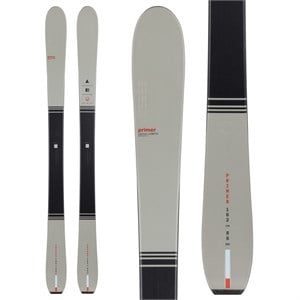
- Terrain: All-Mountain
- Rocker Type: Entry Rocker / Directional Camber / Exit Rocker
- Core: Poplar Wood Core
- Shape: Mild Taper, Narrow Waist Widths
The Season Primer is deliberately easy — it teaches good technique without fighting you. The twin-tip outline and forgiving poplar core make turn initiation buttery and predictable, which is ideal for riders moving from groomers into playful freestyle. The dual-progressive sidecut rewards low-angle carving while still relaxing into longer arcs when you pick up speed, so progressions in edge control feel natural rather than forced. Short, snappy radii make quick pivots effortless and the mild taper gives clean turn exits without snagging.
Park-friendly pop and a forgiving flex combine with all-mountain manners to create a genuinely versatile ski. Float is better than you’d expect thanks to wider tip and tail, and the recommended brake-width guidance keeps binding setup straightforward. If you want one ski to practice spins, press boxes, carve groomers and dab into soft snow, the Season Primer is a clear, affordable choice that helps riders build confidence while still offering playful performance when you’re ready to push it.
- Pros: Playful poplar core; forgiving for progression; excellent edge-to-edge quickness.
- Cons: Not aimed at hard-charging experts; limited dampening at high speed.
2. Blizzard Black Pearl 88 – Women’s
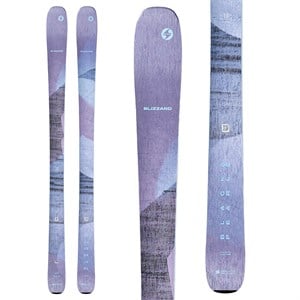
- Terrain: Carving / All-Mountain
- Rocker Type: Rocker Camber Rocker
- Core/Laminates: TrueBlend W.S.D. Beech & Poplar + Two-piece Titanal
- Base: Sintered Graphite
The Black Pearl 88 keeps the approachable personality that made it legendary while adding modern construction that broadens its appeal. The women-specific TrueBlend core mixes beech and poplar in tailored stringers for a balanced flex profile that’s both lively and confidence-inspiring. The two-piece W.S.D. Titanal laminate adds targeted dampening and edge grip without turning the ski into a heavy, overbuilt charger. At 88 mm underfoot it carves crisply on groomers yet remains light enough to arc through varied terrain.
Rocker at tip and tail with camber underfoot produces reliable edge bite on firm snow plus improved flotation in softer conditions. Skiers who like an energetic feel with secure, planted turns will appreciate how the Black Pearl 88 forgives small mistakes while encouraging clean technique. It’s an excellent choice for intermediates stepping up and advanced skiers who want a nimble, versatile tool for resort laps and mixed-day conditions.
- Pros: Balanced W.S.D. construction; strong edge grip; versatile 88 mm waist.
- Cons: Not the best for very deep powder; some may prefer a stiffer.
See the Blizzard Black Pearl 88
3. Season Nexus
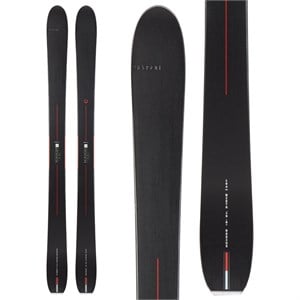
- Rocker Profile: Entry Rocker / Directional Camber / Exit Rocker
- Core: Karuba Wood Core
- Construction: Quadraxial Fiberglass with Nylon Topsheet
- Base: Sintered 7500 Base
The Season Nexus Skis are built to be a true daily driver for skiers who want one ski that can confidently handle changing mountain conditions. A directional shape paired with a medium flex gives the Nexus a predictable, stable feel on groomers while still remaining lively enough for trees, bumps, and soft snow. The Karuba wood core keeps weight reasonable while maintaining a smooth flex pattern that feels approachable for intermediate riders and supportive enough for advanced skiers pushing their limits.
On snow, the Nexus stands out for its balance. The rocker-camber-rocker profile delivers reliable edge hold on firmer snow, while the early rise at the tip and tail helps with turn initiation and float when conditions get softer. Quadraxial fiberglass adds torsional strength for confident carving without making the ski feel demanding. Durability is also a highlight, with a tough sintered base and 360-degree ABS sidewalls that damp vibrations and keep the ride quiet. Add Season’s Lifetime Season Pass with free waxes and annual tunes, and the Nexus becomes a long-term investment for all-mountain skiers.
- Pros: Excellent all-mountain versatility, stable and predictable feel, durable construction, lifetime tuning benefits
- Cons: Not the most playful option for park-focused riders, directional shape may limit switch skiing
4. Völkl Mantra 88
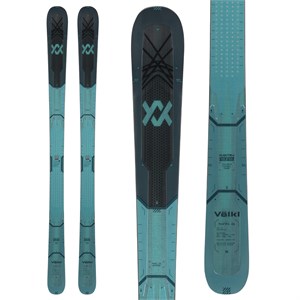
- Terrain: Carving / All-Mountain
- Rocker Type: Tip & Tail Rocker
- Core/Laminates: Multilayer Woodcore + Tailored Titanal Frame
- Sidecut: 3D Radius Sidecut
The Völkl Mantra 88 is a precision instrument dialed for skiers who like to drive turns and vary line choice on the same run. Refinements to the carbon tip behavior and a tailored titanal frame yield a controlled, powerful feel without unnecessary harshness. The 3D Radius sidecut gives a unique mix of long, smooth arcs at speed and short, snappy pivots when the terrain tightens up — a rare combination that rewards dynamic skiing and technical edge work.
Underfoot stiffness and full sidewalls translate skier input directly into the snow, producing consistent edgehold and stability when you accelerate. The tailored carbon tips smooth tip-to-turn engagement, reducing chatter and making high-speed straight-line performance more confidence-inspiring. For a strong intermediate or advanced skier wanting a nimble but powerful all-mountain carve ski, the Mantra 88 is a smart, responsive pick.
- Pros: Precise edge transmission; versatile 3D radius; stable at speed.
- Cons: Requires solid technique to unlock potential.
See the Völkl Mantra 88 See the Women’s Mantra 88
5. Atomic Bent 90
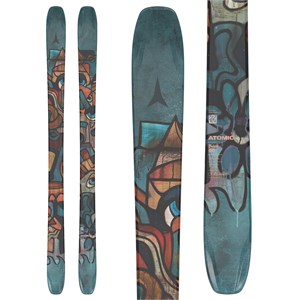
- Terrain: Park & Pipe / All-Mountain
- Rocker Type: All Mountain Rocker (20/70/10)
- Core: Light Poplar Woodcore
- Features: HRZN 3D Bent Tip & Tail, Dura Cap Sidewall
The Atomic Bent 90 blends park playfulness with all-mountain capability in a lively, approachable package. HRZN 3D tips and tails give extra forgiveness on presses and butters while reducing hooky behavior on landings. The lightweight poplar core keeps swing weight low and pop accessible, making the Bent 90 a joyful option for skiers who split their time between jibs, jumps and groomers. Dura Cap sidewalls add durability without killing the playful flex.
Despite its freestyle roots, the Bent 90 tracks well on varied snow and handles moderate speeds with composure — in part thanks to Atomic’s high-density base and reinforced edges. It’s a great quiver-of-one choice for intermediate to advanced riders who want to session the park but still demand usable all-mountain performance on laps between features.
- Pros: Extremely playful; light and poppy core; durable park-ready edges.
- Cons: Not as damp at very high speeds; narrower underfoot for deep powder days.
See the Atomic Bent 90 See the Bent 100 See the Bent 110
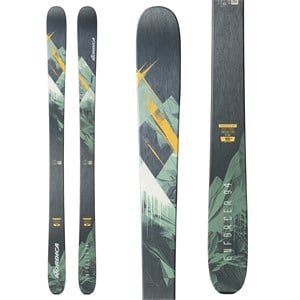
6. Nordica Enforcer 94
- Terrain: All-Mountain
- Rocker Type: All Mountain Rocker
- Core/Laminates: Energy 2 Ti Pulse Core (Wood + Elastomer + Titanal)
- Turning Radius: Medium
The Nordica Enforcer 94 is a do-it-all performer that blends stability and agility into one confident package. Twin sheets of titanal and Nordica’s Pulse elastomer deliver a composed, damped ride that eats chatter and makes hard-pack carving feel planted. At 94 mm underfoot it provides the sweet spot between quick edge-to-edge response and the flotation needed for leftover snow. Charge groomers, thread the trees, or push into variable conditions — the Enforcer 94 stays balanced and predictable.
Powerful yet forgiving, this ski suits advanced skiers who want one reliable tool for most mountain situations. The construction soaks up bumps and holds edges under load without feeling dead, and the moderate turning radius encourages dynamic line choices. If you want an all-mountain workhorse that leans toward carving but won’t shy away from softer snow or mixed lines, the Enforcer 94 is hard to beat.
- Pros: Superb stability and dampening; versatile waist width.
- Cons: Heavier than park-focused skis; overkill for beginners.
See the Nordica Enforcer 94 See the Women’s Santa Ana 92
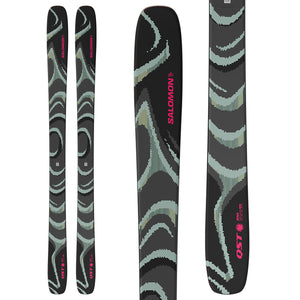
7. Salomon QST 100
- Profile: 21% Tip Rocker / Camber / 17% Tail Rocker
- Core Material: Full Poplar Woodcore
- Dampening: Cork Damplifier (Tip/Tail)
- Construction: Full Sandwich Sidewalls
The Salomon QST 100 delivers an exceptional all-mountain freeride experience by balancing high-speed stability with playful maneuverability. Built with a full poplar woodcore and an innovative basalt and fiberglass matrix, this ski provides unparalleled flex and reliable edge grip across diverse snow conditions.
The standout feature is the Cork Damplifier technology in the rockered tip and tail, which effectively filters out harsh vibrations. Skiers will appreciate how smoothly it tracks through crud while maintaining a lively, responsive feel that inspires confidence all over the mountain.
- Pros: Excellent vibration dampening, reliable edge grip, lively yet stable core
- Cons: Rocker profile reduces effective edge on hardpack, requires careful binding brake matching
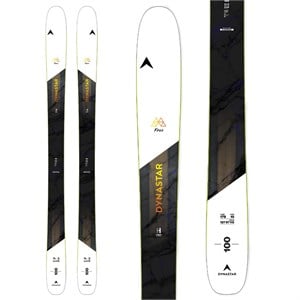
8. Dynastar M-Free 100
- Rocker Profile: Progressive Rocker
- Sidecut: Adaptiv Sidecut
- Core: Hybrid Core 2.0 (Wood and PU)
- Base: Sintered HD Base
The Dynastar M-Free 100 Skis are designed for skiers who want a playful yet confidence-inspiring freeride ski that works as an everyday option. With a 100mm waist, they sit squarely in the sweet spot for all-mountain versatility, offering enough width for soft snow without sacrificing edge control on groomers. The Hybrid Core 2.0 blends wood and polyurethane to deliver a smooth, damp ride that feels stable at speed but never sluggish.
Dynastar’s Progressive Rocker and Adaptiv Sidecut give the M-Free 100 a loose, surfy feel when conditions allow, while still maintaining solid grip through the turn. The ski transitions smoothly from initiation to finish, making it equally comfortable in wide-open bowls and tighter tree lines. A fiberglass torsion box adds structure and reliability when pushing harder, and the full sidewall construction enhances precision on firmer snow. The sintered HD base keeps glide fast in all conditions, making this ski a dependable choice for skiers who want one setup to handle everything from morning corduroy to afternoon chop.
- Pros: Smooth and damp ride, versatile 100mm waist, playful yet stable, eco-conscious core design
- Cons: Less directional stability for very aggressive chargers, not as floaty as wider freeride skis
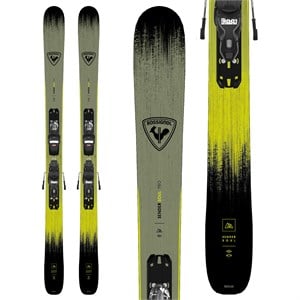
9. Rossignol Sender Soul Pro Skis + Xpress 10 Bindings
- Rocker Profile: Twin Rocker
- Core: Poplar Wood Core
- Construction: Cap Sidewalls with V-A-S
- Bindings: Xpress 10 GW (DIN 3–10)
The Rossignol Sender Soul Pro Skis with Xpress 10 bindings are an approachable all-mountain package aimed at progressing freeriders. Designed to inspire confidence, these skis feel light underfoot and easy to control, making them ideal for younger or lighter skiers stepping into more varied terrain. The twin rocker profile allows for easy steering and speed control, whether cruising groomers or venturing into softer snow.
The Poplar wood core provides a balanced flex that blends stability with playfulness, while Rossignol’s Progressive Sidecut encourages smooth, fluid turns. V-A-S technology helps reduce vibration, creating a calmer ride in variable conditions. Cap sidewall construction keeps the ski lightweight and forgiving, while also improving durability against edge chipping. The included Xpress 10 bindings make this a convenient, ready-to-ride setup, though professional mounting is recommended. Overall, the Sender Soul Pro is a well-rounded choice for intermediate skiers who want a forgiving ski that can grow with their skills across the entire mountain.
- Pros: Lightweight and easy to maneuver, forgiving flex, complete ski and binding package, confidence-inspiring ride
- Cons: Limited top-end stability for aggressive skiers, flat tail limits freestyle versatility
See the Rossignol Sender Soul Pro
10. Völkl M7 Mantra
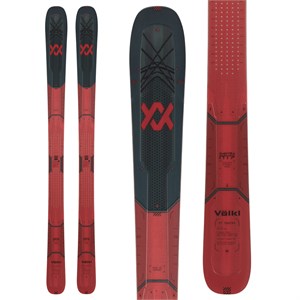
- Shape: 4 Radius Drive Sidecut
- Core: Multilayer Beech/Poplar Woodcore
- Laminates: Tailored Carbon Tips & Tailored Titanal Frame
- Sidewalls: Full Sidewall Construction
The Völkl M7 Mantra is built for strong skiers who value precision, stability, and powerful performance. With the advanced 4 Radius Drive, this ski transitions smoothly between short, medium, and long turns, offering a dynamic feel across all speeds. The multilayer woodcore brings a robust, damp ride, while the tailored carbon tips enhance responsiveness and reduce weight where it matters most.
The tailored Titanal frame scales stiffness based on ski length, making the Mantra adaptable for different skier sizes and power levels. On snow, it feels planted and confident, especially on steep or fast lines. While not designed for beginners or low-speed cruising, it rewards skilled riders who appreciate strong edge engagement and high-speed stability. If you enjoy charging hard and demanding accuracy, the M7 Mantra delivers a serious performance punch.
- Pros: Extremely stable; precise edge hold; powerful feel; advanced construction.
- Cons: Not beginner-friendly; requires strong technique.
See the Völkl M7 Mantra See the Women’s M7 Mantra
11. Line Skis Pandora 92
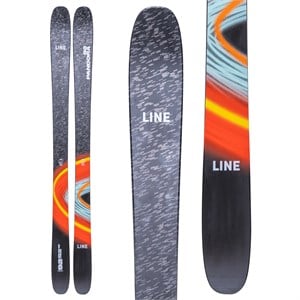
- Rocker Type: Rocker/Camber/Rocker (10mm Tip / 2mm Camber / 9mm Tail)
- Core: Aspen Veneer Core
- Laminates: Bio-Resin Bonding
- Sidewalls: Thick-Cut Sidewalls
The Line Pandora 92 delivers a light, playful feel that appeals to skiers who enjoy versatility without added bulk. Its aspen veneer core keeps the ski energetic and responsive, while the bio-resin laminate improves durability and bonding strength. The rocker-camber-rocker profile makes turn initiation smooth and intuitive, especially when navigating varied resort terrain. Thick-cut sidewalls add strength and edge precision, helping it hold confidently on firmer snow.
This ski excels as a nimble, all-mountain companion for intermediate and advanced riders who want something lively and easy to maneuver. It performs well on groomers and light off-piste conditions, offering a forgiving but engaging ride. Although it isn’t built for deep powder or top-speed charging, its lightweight construction and versatile shape make it a great choice for skiers seeking a playful, do-it-all option.
- Pros: Lightweight and nimble; playful flex; strong edge control; versatile shape.
- Cons: Limited stability at very high speeds; not ideal for deep powder.
12. Armada ARV 88
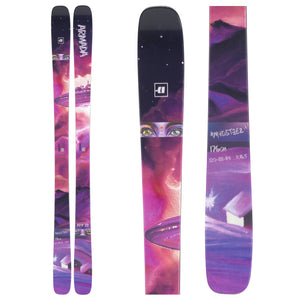
- Rocker Type: AR Freestyle Rocker
- Core: Poplar Wood Core
- Edges: 2.5 Impact Edge
- Sidewalls: w3Dgewall Construction
The Armada ARV 88 excels in the park while remaining capable on hardpack, making it a top choice for skiers who ride creatively across the whole mountain. The AR Freestyle Rocker provides a mix of easy pivoting, strong edge hold, and reliable pop for jumps and transitions. The poplar wood core keeps the ski smooth yet lively, giving riders predictable performance whether carving groomers or hitting rails and features in the park.
The w3Dgewall construction adds serious durability and improved power transfer, allowing the ski to withstand heavy use without feeling sluggish. Along with the reinforced 2.5 Impact Edge, the ARV 88 is built to take a beating while still delivering performance. While it’s not the best option for deep snow or skiers who prefer a wider platform, it’s a fantastic choice for freestyle-oriented riders who want precision and stability on hardpack.
- Pros: Durable build; excellent for park; lively and responsive; strong edge grip.
- Cons: Not ideal for powder; narrower width limits soft-snow performance.
13. Season Lolo Pass
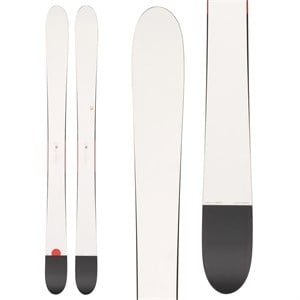
- Rocker Profile: Entry Rocker / Directional Camber / Exit Rocker
- Core: Paulownia Wood Core
- Laminates: Carbon Fiber Reinforced Fiberglass
- Base: Sintered 7500 Base
The Season Lolo Pass Skis are built for freeriders who split their time between the resort and the backcountry. Lightweight materials and a thoughtful shape make them efficient on the uphill, while still delivering the strength and stability needed for confident descents. The Paulownia wood core keeps swing weight low, helping with long tours and quick direction changes in technical terrain.
On the descent, the Lolo Pass feels surprisingly powerful for its weight. Carbon-reinforced fiberglass adds backbone and energy, making the ski responsive when driving through variable snow. The rocker-camber-rocker profile balances float and edge control, allowing the ski to handle powder, chopped snow, and firmer alpine conditions with ease. A sintered base ensures reliable glide, and 360-degree ABS sidewalls help damp vibrations for a smoother ride. Like other Season skis, it comes with the Lifetime Season Pass, adding long-term value for skiers who log serious days in the mountains.
- Pros: Lightweight for touring, strong downhill performance, versatile freeride shape, lifetime tuning benefits
- Cons: Advanced-focused design may feel demanding, not ideal for purely resort-based skiing
How to Choose Skis for Older Skiers: A Complete Guide
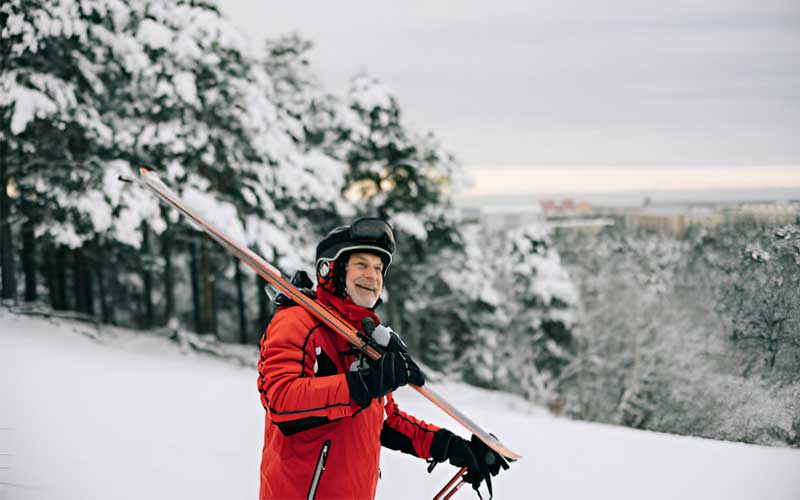
Skiing is a sport for all ages, and many older adults continue to enjoy the slopes well into their 60s, 70s, and beyond. With improved gear, better resort accessibility, and more knowledge about staying fit and active, skiing can remain a safe and rewarding hobby for seniors. However, choosing the right skis becomes increasingly important with age. As balance, strength, and agility shift, the gear you use should adapt to support a more comfortable and confident experience on the mountain. In this article, we’ll explore how older skiers can choose the best skis for their needs — focusing on comfort, control, and stability.
1. Know Your Ability Level
Older skiers vary in ability. Some are returning after years away from the sport, while others have never stopped skiing. Your first step is to honestly assess your current skill level:
- Beginner: You’re just learning to link turns or may not have skied in a long time.
- Intermediate: You feel comfortable on blue runs and can manage some steeper terrain.
- Advanced: You ski confidently on all groomed terrain and occasionally venture off-piste.
Knowing your level helps narrow down the type of skis best suited for your needs. Many senior skiers will benefit from forgiving, easy-turning skis, especially if they’re skiing at slower speeds or favor groomed runs.
2. Look for Lightweight Construction
Skiing can be physically demanding, and heavier skis require more effort to turn, lift, and carry. Lightweight skis reduce fatigue and are easier to maneuver, which becomes more important as strength and endurance naturally decline with age.
Look for skis made with:
- Poplar or Paulownia wood cores for a good strength-to-weight ratio
- Carbon or fiberglass reinforcements instead of metal layers for added stability without heaviness
- Cap construction or hybrid sidewalls for reduced weight and easier control
Lightweight skis don’t have to sacrifice performance — many modern materials allow for both agility and strength.
3. Prioritize Stability and Edge Hold
Stability and edge grip are essential for safety and confidence. Skis with a solid camber underfoot and moderate sidecut offer the best of both worlds: strong hold on hardpack and reliable performance through variable conditions.
For older skiers, this means:
- Less chatter on icy slopes
- More predictable turn initiation
- Better control at lower speeds
Avoid skis that are too soft or too flexible, as they may feel unstable at speed or in variable snow.
4. Choose the Right Ski Length
Ski length can significantly affect how a ski performs. For aged people, shorter skis are often better because they’re easier to maneuver and less tiring to control.
General guidelines:
- Choose a ski that stands between your chin and nose.
- Go shorter if you’re skiing slower or mostly on groomers.
- Go longer only if you’re an advanced skier or plan to ski in powder often.
Remember that shorter skis with a generous sidecut turn more easily, making them ideal for controlled, low-impact skiing.
5. Flex Matters: Go Medium-Soft
Ski flex refers to how stiff or soft a ski is. Stiffer skis are more stable at high speeds but require more power to control. Softer skis are easier to turn but may feel unstable in certain conditions.
For older skiers:
- Medium-soft flex is ideal. It allows easy turn initiation without feeling wobbly.
- Avoid ultra-stiff race skis or aggressive all-mountain chargers unless you’re still skiing hard and fast.
A balanced flex will help maintain control without exhausting your legs by midday.
6. Consider Rocker/Camber Profiles
Ski profile — the shape of the ski from tip to tail — greatly impacts how the ski feels underfoot.
For older skiers, a rocker/camber/rocker profile is ideal:
- Rocker in the tip helps the ski float and initiate turns more easily.
- Camber underfoot provides grip and stability on groomers.
- Mild tail rocker can add forgiveness at the end of turns, making them smoother.
This profile gives versatility while enhancing ease-of-use, especially on mixed terrain or softer snow.
7. Opt for Skis Designed for Groomed Terrain
Most older folks tend to favor groomed runs, where the snow is smoother and more predictable. As a result, skis designed specifically for frontside or all-mountain groomer performance are a great fit.
These skis typically:
- Have narrower waist widths (75–90 mm), which are quicker edge-to-edge
- Offer strong edge grip
- Turn easily with less effort
Avoid skis that are too wide (100 mm+) unless you frequently ski in deep powder. Wider skis can be harder to roll onto edge and feel sluggish on firm snow.
8. Look for Vibration Dampening Features
As we age, joints can become more sensitive to impact and chatter. Skis with dampening technology absorb vibration and create a smoother, more comfortable ride.
Features to look for:
- Cork or rubber inserts in the tips and tails
- Carbon or elastomer layers for smoother flex
- Metal plates underfoot (only if you’re okay with a bit of added weight)
These technologies reduce fatigue and minimize the jarring feeling from icy or bumpy terrain.
9. Avoid “Expert-Only” Skis Unless Necessary
It can be tempting to go for a high-end model, especially if you used to ski aggressively. But many modern expert skis are stiffer, heavier, and less forgiving — not the best match for someone who skis less aggressively now.
Instead, choose skis aimed at:
- Intermediate to advanced skiers
- Recreational all-mountain or carving styles
- Comfort and control over sheer performance
These models often give you everything you need — just with more ease and less strain.
10. Don’t Forget the Bindings and Boots
Ski choice is only one part of the gear equation. Make sure your bindings and boots also suit your needs as an older skier:
- Choose bindings with a lower DIN range if you’re lighter or ski at slower speeds.
- Prioritize boots with a flex index between 80–100 for better comfort and less fatigue.
- Make sure everything is properly fitted and professionally adjusted to avoid injury.
Final Thoughts
Skiing in your later years can be just as enjoyable — and even more fulfilling — than in your youth. The key is to choose skis that match your body’s current needs and your skiing goals. Prioritize ease, comfort, and control over speed and aggression. Lightweight, moderately flexible skis with a stable edge and smooth turning characteristics will help keep you confident and safe on the slopes.
With the right setup, there’s no reason you can’t keep skiing for many years to come. So go ahead — pick the right skis, enjoy the mountain, and keep carving with joy.