Best Ski Boots for Beginners of 2025
Starting out in skiing is exciting, but finding the right gear is important. One of the most important items is ski boots. The right beginner ski boots make learning easier and more fun. They give support, keep your feet warm, and help you stay balanced. But choosing the right pair can be confusing. There are many options, and not all are good for beginners. In this article, we’ll help you find the best ski boots for beginners. We’ll look at comfort, fit, and ease of use. Whether you’re renting or buying, this guide will help you. Let’s find the perfect pair to start your skiing journey with confidence and comfort.
1. Tecnica Mach Sport HV 80

-
Flex Index: 80
-
Forefoot Width: 103 mm
-
Liner Type: Semi-Custom
-
Boot Sole Type: Alpine DIN (ISO 5355)
The Tecnica Mach Sport HV 80 is designed for new skiers who prioritize comfort, warmth, and ease of use. Built on a roomy 103mm last, the boot offers a forgiving fit that suits wider feet and reduces pressure points. It also comes with a smooth, easy flex that won’t overpower beginners, yet still gives enough feedback to improve control and confidence on the slopes. The aluminum buckles and plush liner enhance the feel of quality and comfort, making this a reliable upgrade from rental boots. The shell is also bootfitter-friendly, allowing for some customization if needed.
What sets this boot apart is its smart balance between accessibility and performance. It’s built by a trusted brand with solid craftsmanship and practical features for first-timers. However, while its wide fit is great for many users, it may feel too roomy for those with narrow feet. Also, skiers who advance quickly may find themselves wanting a stiffer option for more responsiveness, though stiffer flex versions of the same boot are available. Still, for those just starting out, the Mach Sport HV 80 delivers a dependable and comfortable ride.
Pros
- Comfortable, wide fit reduces pressure points
- Smooth flex is great for beginners
- Customizable shell for better fit
- High-quality components throughout
Cons
- Not ideal for narrow feet
- May lack stiffness for fast learners
See the Tecnica Mach Sport HV 80 See the Women’s Mach Sport HV 75
2. Rossignol Alltrack 90 HV

-
Flex Index: 90
-
Forefoot Width: 102 mm (HV)
-
Liner Type: Thermo-Moldable
-
Boot Sole Type: Alpine DIN (ISO 5355)
The Rossignol Alltrack 90 HV is a versatile ski boot built to help beginner and intermediate skiers improve quickly. With its 90 flex rating and progressive flex profile, it offers a forgiving but responsive ride that grows with you. The boot initiates turns easily and becomes stiffer as you push into it, giving you better control without overwhelming you. The 102mm last and cushioned liner provide a relaxed fit, especially for wider feet. Features like micro-adjustable buckles and a thermo-moldable liner allow for fine-tuning the fit, and the built-in walk mode is a welcome bonus when moving around the base area.
While it’s not warmest in cold conditions, the Alltrack 90 HV still earns high marks for comfort and usability. Testers loved how it accommodated various foot shapes and appreciated the smooth flex. That said, advanced skiers or those progressing very quickly might outgrow the flex fairly soon, and there’s limited consistency in flex and width options within the Alltrack line. But for the beginner to intermediate crowd, especially those with wider feet or looking for added walkability, this boot hits the sweet spot between support and comfort.
Pros
- Comfortable and roomy fit
- Progressive flex helps build confidence
- Thermo-moldable liner for a tailored feel
- Includes a walk mode for off-slope comfort
Cons
- Not warm in very cold temperatures
- Too soft for advanced skiers
See the Rossignol Alltrack 90 HV See the Women’s Alltrack Pro 80
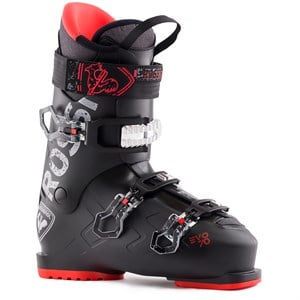
3. Rossignol Evo 70
-
Flex Index: 70
-
Forefoot Width: 104 mm
-
Liner Type: Semi-Custom (Custom T4)
-
Boot Sole Type: Alpine DIN (ISO 5355)
The Rossignol Evo 70 is a beginner-friendly boot made to provide maximum comfort and ease of use right out of the box. Its generous 104mm last gives wide-footed skiers room to breathe, while the 70 flex offers a soft, forgiving platform ideal for learning. Entry and exit are painless thanks to a softer plastic insert over the instep, which helps the boot open wider. The Custom T4 liner delivers a snug, sock-like fit that wraps the foot well and adds to the overall comfort. Combined with three micro-adjust buckles and a wide power strap, this boot makes getting started on the slopes easier and less stressful.
What really stands out about the Evo 70 is how approachable it feels. It’s light, cozy, and doesn’t overwhelm new skiers with unnecessary stiffness or pressure. The shell also includes Rossignol’s Sensor Matrix design, which reduces bulk while still offering decent support. However, there are a couple of small drawbacks. The toe buckle can be difficult to open, which is a strange design oversight and can be frustrating during transitions. Warmth is good, but not outstanding. Still, if you’re ditching rental boots and want a dependable, comfort-first model to learn in, the Evo 70 is a solid place to start.
Pros
- Wide 104mm fit suits broader feet
- Very soft and beginner-friendly flex
- Easy step-in thanks to soft instep insert
- Comfortable, well-wrapped liner
Cons
- Toe buckle is awkward and hard to release
- Warmth is only average
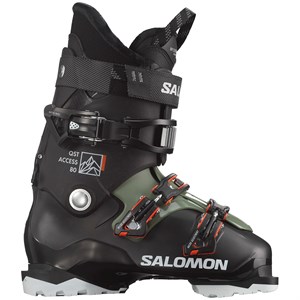
4. Salomon QST Access 80
-
Flex Index: 80
-
Forefoot Width: 104 mm
-
Liner Type: Semi-Custom (My CustomFit Comfort)
-
Boot Sole Type: GripWalk (ISO 23223)
The Salomon QST Access 80 is a soft-flexing, wide-fitting boot made for comfort-focused beginner and intermediate skiers. Built on a roomy 104mm last, it’s especially welcoming for those with wider feet or high volume insteps. A lightweight polyolefin shell and cuff reduce bulk and fatigue, while the walk mode adds convenience when navigating the base lodge or parking lot. The ratcheting top strap makes buckling up easy, and the liner offers plush cushioning to keep feet cozy all day long.
This boot shines in making skiing feel easier and more accessible. Reviewers have praised its ease of entry and comfortable fit, especially compared to older, stiffer models. The flex is smooth and predictable, perfect for those learning to link turns without battling overly aggressive gear. It doesn’t offer the same precise control as stiffer, more advanced boots, but that’s not the goal here. Instead, the QST Access 80 is about building confidence and reducing discomfort—something it does very well. It’s a great option for older skiers returning to the sport or beginners who prioritize fit and comfort over all-out performance.
Pros
- Excellent comfort for wide feet and high arches
- Lightweight shell reduces fatigue
- Walk mode adds off-slope convenience
- Easy to buckle and adjust
Cons
- Lacks the control of stiffer boots
- Not ideal for aggressive skiing
See the Salomon QST Access 80 See the Women’s QST Access 70
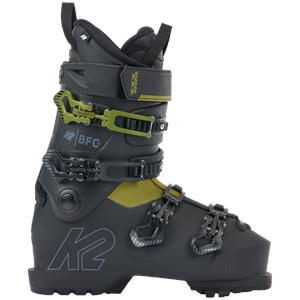
5. K2 BFC 90
-
Flex Index: 90
-
Forefoot Width: 103 mm
-
Liner Type: Semi-Custom (CushFit Plus)
-
Boot Sole Type: GripWalk (ISO 23223)
The K2 BFC 90 is a go-to option for intermediate skiers who value comfort above all else. With a roomy 103mm last and a soft shell design, this boot accommodates wide and high-volume feet right out of the box. The FastFIT instep and heat-moldable shell make entry and exit smooth, while the CushFit Plus liner offers great padding and support for long days on the hill. The boot’s 90 flex strikes a nice balance—stiff enough for progression, yet forgiving enough to stay friendly for newer skiers.
Performance-wise, the BFC 90 leans heavily into the comfort category, but still offers decent support for casual skiing. The traditional 4-buckle design, along with the Velcro power strap, ensures a secure and adjustable fit. While it’s not built for aggressive skiing or precision carving, it’s ideal for riders looking to build skills in a forgiving package. Reviewers loved the no-fuss fit and hassle-free online ordering experience. For anyone tired of painful rental boots or struggling to find something wide enough, the BFC 90 makes skiing fun and pain-free again.
Pros
- Comfortable fit for wide, high-volume feet
- Cushioned liner keeps feet happy all day
- Easy to get on and off
- Fully heat-moldable shell and liner
Cons
- Lacks edge-to-edge precision for advanced skiers
- Not ideal for narrow feet
See the K2 BFC 90 See the Women’s BFC 85
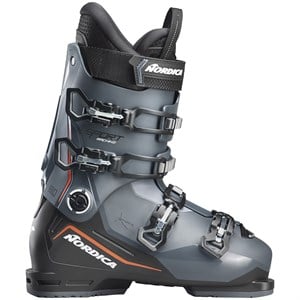
6. Nordica Sportmachine 3 80
-
Flex Index: 80
-
Forefoot Width: 102 mm
-
Liner Type: Semi-Custom (3D Cork Fit Primaloft)
-
Boot Sole Type: Alpine DIN (ISO 5355)
The Nordica Sportmachine 3 80 is a comfortable, high-volume boot designed for beginners and intermediates looking to ditch rentals for good. With a 102mm last, it offers a snug but roomy fit that suits wider feet without feeling sloppy. The soft 80 flex makes for an easy, forgiving ride, while Nordica’s customizable Tri-Fit shell and cork liner add a touch of premium adjustability. The adjustable cuff profile allows skiers with larger calves to tweak the upper boot for a more personalized fit, enhancing both comfort and control.
One of the standout features of the Sportmachine 3 80 is its attention to entry-level skiers with fit challenges. Whether it’s high insteps, wider forefeet, or larger calves, this boot has solutions baked in. Reviewers noted how easy it was to step into and out of, and how plush it felt even after a full day on the slopes. While advanced skiers may want more power and response, this boot serves its target audience very well. If you’ve struggled with the limited options in rental shops, this is a smart investment in comfort and fit.
Pros
- Great fit for wide feet and larger calves
- Smooth and easy flex ideal for new skiers
- Adjustable cuff profile for added versatility
- Cork liner molds well for long-term comfort
Cons
- Not suited for aggressive or fast skiing
- Might feel too soft for rapid progression
See the Nordica Sportmachine 3 80 See the Women’s Sportmachine 3 85
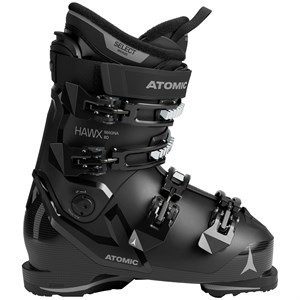
7. Atomic Hawx Magna 80
-
Flex Index: 80
-
Forefoot Width: 102 mm
-
Liner Type: Semi-Custom (3D Stretch Toe Box)
-
Boot Sole Type: Alpine DIN (ISO 5355)
The Atomic Hawx Magna 80 is built for beginner skiers with wider or high-volume feet who want comfort from the first chair to the last. With a roomy 102mm last and an adaptive cuff system, it caters to skiers with larger calves and high arches. The soft 80 flex offers enough support for learning while keeping things relaxed and forgiving. The 3D Stretch Toe Box adds comfort up front by allowing a bit of extra length where needed, making it “big toe friendly” and improving the fit for all-day wear.
Atomic has packed a lot of thoughtful design into this entry-level boot. The Prolite shell keeps the weight down while reinforcing key areas like the spine for improved stability. The Adaptive Fit Cuff lets skiers fine-tune the calf space without tools—just remove the spoiler for more room. Reviewers with high-volume or high-arch feet especially praised how accommodating the fit felt. While some noted minor foot fatigue later in the day, the boot remained comfortable enough for a full session. It’s a dependable choice for beginner and casual skiers looking for something warm, roomy, and ready to go out of the box.
Pros
- Excellent for high-volume and wide feet
- Adaptive cuff offers great calf adjustability
- Lightweight shell with added reinforcements
- Comfortable toe box with extra stretch
Cons
- Not ideal for narrow feet or low arches
- Some foot fatigue during long days
How to Choose Ski Boots for Beginners?
Choosing your first pair of ski boots can feel overwhelming. There are so many options, sizes, flex ratings, and brands—it’s hard to know where to begin. But don’t worry. With the right information, you can make a smart choice that keeps you comfortable, helps you learn quickly, and makes skiing more fun.
This guide will break it all down in simple terms, so you know exactly what to look for when shopping for beginner ski boots.
1. Why the Right Ski Boots Matter
Ski boots are the most important part of your ski gear. More than skis or poles, boots control how you move, turn, and stop. If your boots are too loose, too tight, or too stiff, you’ll struggle on the slopes and risk injury. The right pair of beginner boots will help you feel secure and in control while you learn.
2. Know Your Skiing Level
If you’re a true beginner, meaning you’re just starting out and learning how to stop, turn, and control your speed, you’ll need soft and forgiving boots. These boots help you build confidence without feeling too stiff or demanding. Even if you’re athletic, it’s better to start with beginner-friendly gear until your technique improves.
3. Understand Flex Ratings
The “flex” of a ski boot is a number that tells you how stiff the boot is. For beginners, a softer flex (usually between 60–80) is best. These boots are more comfortable and easier to control. If the boot is too stiff (like a flex of 100 or higher), it will be harder to move, especially at slower speeds.
Here’s a quick breakdown:
-
60–70 flex: True beginners, lighter skiers, or those who want maximum comfort.
-
70–80 flex: Athletic beginners or those planning to ski often.
-
85–90 flex and up: Intermediate skiers or fast learners.
4. Choose the Right Fit
Ski boots should feel snug but not painful. Your toes should gently touch the front of the liner when standing upright but pull back slightly when you flex your knees. You want your heel to stay locked in place when turning or stopping. If your foot moves around too much, the boot is too big.
There are three basic fit categories based on last width (the width of the boot at the forefoot):
-
Narrow (97–99 mm): For slim feet.
-
Medium (100–102 mm): For average feet.
-
Wide (103 mm and above): For wide feet or those who like extra room.
Many beginner boots are built with medium to wide lasts to prioritize comfort over precision.
5. Check Liner Quality
Most beginner boots come with pre-shaped liners that offer decent comfort out of the box. Some liners are heat-moldable, which means they can be warmed up and shaped to your foot by a bootfitter. This helps eliminate pressure points and improves performance. While not essential, heat-moldable liners can make a big difference if you plan to ski often.
6. Buckles and Straps
Beginner ski boots typically have three or four buckles. More buckles usually mean a more secure fit, but comfort is key when you’re starting out. Look for micro-adjustable buckles, which let you fine-tune the fit. Also, a power strap at the top of the boot helps give extra support to your shin.
7. Consider Walk Modes and Grip Soles
Some beginner boots include walk modes, which let the upper part of the boot flex backward for easier walking when off the slopes. These are great if you spend time walking around the resort or standing in lift lines. GripWalk soles or rubberized soles can also make walking on snow or icy paths safer and more comfortable.
8. Get the Right Size
Ski boot sizing uses mondopoint, which is the length of your foot in centimeters. For example, if your foot measures 26.5 cm, you’ll likely wear a 26.5 ski boot. But don’t just go by the number—try boots on with ski socks, and flex forward in them. The correct size should feel tight at first but not painful. Boots tend to loosen slightly after a few days of skiing.
Tip: Don’t size up for comfort. A loose boot will make skiing harder and less safe.
9. Think About Future Progression
While you want a soft boot as a beginner, if you’re athletic or plan to ski a lot, consider a boot with a slightly stiffer flex or customizable features. Some brands offer multiple flex options within the same boot model, so you can size up as your skills improve without switching to a completely different boot.
10. Don’t Forget About Bootfitting
If you can, visit a ski shop that offers professional bootfitting services. A bootfitter can measure your foot precisely, identify pressure points, and even stretch or mold parts of the boot shell for a better fit. This service is especially useful if you have high arches, wide calves, or unusual foot shapes.
11. Rent vs. Buy
If you’re just trying out skiing and don’t want to commit right away, renting boots might make sense. But if you ski more than a few times a season, buying your own boots is a smart move. Rental boots are often worn out, uncomfortable, and less sanitary. A good beginner boot, properly fitted, will help you improve faster and enjoy skiing more.
12. Top Features to Look For
Here’s a quick checklist of what to look for in beginner ski boots:
-
Soft flex (60–80)
-
Medium to wide last (100–104 mm)
-
Heat-moldable liner (optional but helpful)
-
Easy entry and exit
-
Lightweight shell
-
Micro-adjust buckles and power strap
-
Walk mode (optional but convenient)
Final Thoughts
Your ski boots are the most important investment you’ll make in your skiing journey. A good pair of beginner boots can make the difference between frustration and fun. Prioritize comfort, fit, and flex, and don’t be afraid to ask for help from ski shop staff or a bootfitter. With the right boots on your feet, you’ll feel more in control and more excited to learn every time you hit the slopes.