Best Snowboards for Intermediate Riders of 2026
If you’ve moved past the beginner stage and are ready to take your snowboarding skills to the next level, finding the right snowboard is key. Intermediate riders need a board that offers more control, better response, and enough flexibility to try new tricks or explore tougher terrain. The best boards in this category give you the freedom to grow without being too hard to handle. Whether you like carving down groomers, playing in the park, or hitting powder, there’s a snowboard out there that fits your style. In this guide, we’ll share the best snowboards for intermediate riders to help you choose the perfect one for your next ride.
1. Season Nexus
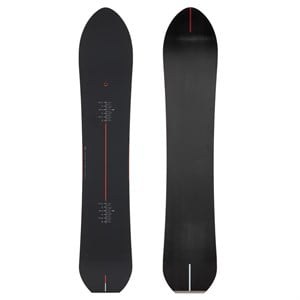
- Terrain: All-Mountain, Freeride
- Rocker Type: Rocker/Camber/Rocker
- Flex Rating: Medium-Stiff
- Core: Poplar and Paulownia Wood
The Season Nexus is engineered as a versatile daily driver capable of handling any mountain condition. Its directional profile and medium-stiff flex provide a stable platform for carving groomers or exploring deep powder. The lively poplar core ensures a responsive feel that balances playfulness with high-speed control for all types of riders.
Built with sustainability in mind, this board features bio-resin epoxy and basalt stringers for added strength. The inclusion of a lifetime service pass for free waxes and tunes makes it a reliable long-term investment. It is a true all-terrain weapon that excels in versatility and durability across the entire resort.
Pros: Versatile all-mountain performance, lifetime maintenance pass, eco-friendly construction.
Cons: Stiffer flex might be aggressive for beginners, directional shape limits switch riding.
2. Salomon Oh Yeah – Women’s
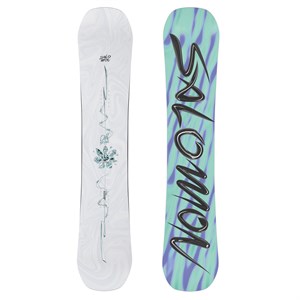
- Terrain: Freestyle, All-Mountain
- Rocker Type: Rock Out Camber
- Flex Rating: Soft (2/5)
- Shape: True Twin
The Salomon Oh Yeah is a freestyle-oriented board designed to bring fun and progression to every session. Featuring the Rock Out Camber, it provides a flat stable base between the feet with camber near the inserts for pop and rocker at the tips for easy pressing. This combination makes it perfect for park hits and slushy laps.
Equipped with an Aspen Strong Core and Royal Rubber Pads, this board dampens vibrations and resists impacts during heavy landings. The EQ Rad sidecut balances agility with a forgiving feel, allowing intermediate riders to gain confidence. It is a lightweight, lively choice for women who prioritize playfulness and freestyle expression on the slopes.
Pros: Forgiving soft flex, great dampening from rubber pads, excellent for park progression.
Cons: Lacks stability at extreme high speeds, not ideal for deep powder days.
See the Salomon Oh Yeah – Women’s
3. Burton Counterbalance
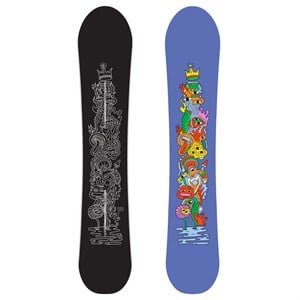
- Terrain: All-Mountain
- Rocker Type: Directional Camber
- Flex Rating: Medium
- Mounting: The Channel
The Burton Counterbalance is a sophisticated quiver killer that finds the sweet spot between freestyle creativity and powder performance. Its directional camber provides stability and power underfoot while the rockered nose ensures effortless float in deep snow. The 8mm taper allows for easy turning without sacrificing the ability to ride it like a twin.
This board features the high-tech Super Fly II 700G core and 45-degree carbon highlights for a snappy, aggressive ride. With Infinite Ride technology, the board maintains its flex and pop season after season. It is a gender-neutral option designed for riders who want total mountain harmony and high-performance technical specs in one package.
Pros: Exceptional float in powder, highly adjustable Channel mounting, long-lasting pop durability.
Cons: Requires Channel-compatible bindings, higher price point than entry-level boards.
4. K2 Commonwealth
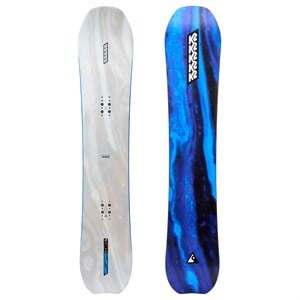
- Terrain: Freeride
- Rocker Type: Traditional Camber
- Flex Rating: Stiff (7/10)
- Core: A1 Core (Bamboo/Aspen/Paulownia)
The K2 Commonwealth is a dedicated freeride machine built for precision and powerful edge-hold in technical terrain. Utilizing traditional camber and K2’s patented Spectral Braid technology, this board offers variable torsional flex that feels energetic and composed. The stiff flex rating ensures that it remains stable when charging through fresh powder or steep faces.
The A1 Core integrates bamboo to supercharge response, while the SnoPhobic topsheet prevents heavy snow buildup during deep days. A wax-infused sintered base provides a long-lasting glide that stays fast even as conditions change. This board is an ideal daily driver for intermediate to advanced riders looking to elevate their big-mountain freeriding game.
Pros: Precision edge control, lightweight swing weight, minimizes snow buildup on top.
Cons: Very stiff flex is less forgiving, requires strong leg power to drive.
5. Lib Tech Terrain Wrecker C2X
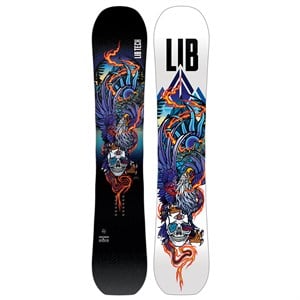
- Terrain: All-Mountain
- Rocker Type: Hybrid C2x (Camber/Rocker/Camber)
- Edge Tech: Magne-Traction
- Shape: Directional Twin
The Lib Tech Terrain Wrecker C2X is a versatile all-mountain weapon that excels in turning the entire resort into a playground. The C2X hybrid profile places rocker between the feet for float and ease, while camber sections at the tips provide power and pop. The directional twin shape allows for switch landings while maintaining powder performance.
Equipped with Magne-Traction serrated edges, this board provides unreal grip on icy terrain, effectively turning hardpack into powder. Hand-built in Washington with eco-friendly processes, it features a fast TNT base and durable birch sidewalls. It is the perfect choice for riders who want a poppy, lively board that can handle everything from park laps to backcountry stashes.
Pros: Incredible edge hold on ice, excellent float in soft snow, eco-friendly manufacturing.
Cons: Hybrid profile can feel “loose” to camber purists, base requires regular maintenance for speed.
See the Lib Tech Terrain Wrecker C2X
6. Arbor El Camino
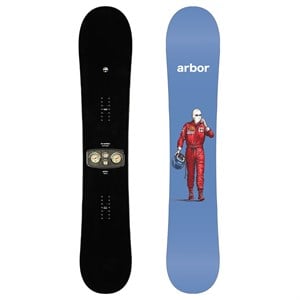
- Terrain: Freestyle, All-Mountain, Freeride
- Rocker Type: Parabolic Camber
- Flex Rating: Stiff (8-9)
- Core: Highland III Core
The Arbor El Camino is a high-performance pro model built for aggressive riders who demand power and stability. Featuring double carbon stringers and a lightweight Paulownia/Poplar blend, it delivers explosive snap for big air missions. The Parabolic Camber profile ensures a smooth engagement of the edges while maintaining the traditional power of a cambered board.
Arbor’s Grip Tech adds extra contact points under the feet for ergonomic control on critical lines. Sustainability is at the forefront with a bio-plastic topsheet, recycled steel edges, and bio-resin construction. This is a fearless freeride board designed to stomp heavy landings and charge through steep, technical terrain with absolute confidence and style.
Pros: Extremely powerful pop, sustainable high-end materials, superior grip on firm snow.
Cons: Very aggressive flex not suitable for beginners, 5mm taper affects switch feel.
7. Public Snowboards Outreach
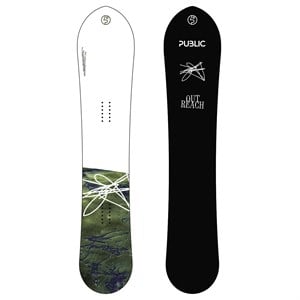
- Terrain: All-Mountain
- Rocker Type: Flat Camber
- Flex Rating: Soft (4/10)
- Sidewalls: Urethane Sidewalls
The Public Snowboards Outreach is an accessible “quiver killer” that prioritizes a surfy and loose feel across the mountain. Its flat profile provides a stable platform for hitting park features while remaining nimble enough for tight tree runs. The slight setback in the directional shape adds just enough versatility to handle unexpected powder or spring slush.
With urethane sidewalls and a 100% FSC-certified poplar core, this board is built to withstand impacts on rails and rocks. The sintered base ensures high wax absorption for consistent speed, making it much more than a budget board. It is a fantastic option for intermediate riders seeking a predictable, durable, and fun board for all-mountain exploration.
Pros: Durable urethane sidewalls, surfy and easy-to-ride feel, affordable price point.
Cons: Flat profile lacks the “spring” of traditional camber, limited high-speed stability.
See the Public Snowboards Outreach
8. CAPiTA Dark Horse
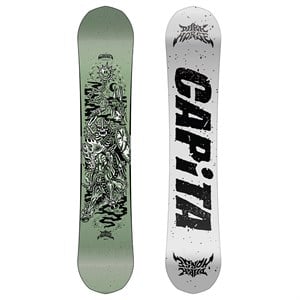
- Terrain: Freestyle, All-Mountain
- Rocker Type: Park V1 Camber
- Flex Rating: Medium (6/10)
- Base: Superdrive ADV Sintruded
The CAPiTA Dark Horse is a freestyle powerhouse that offers high-end park performance at a budget-friendly price. Borrowing tech from more expensive models, it features carbon aramid boosters for incredible snap and a dual core for lightweight durability. The Park V1 profile uses traditional camber with small zero-camber sections for a controlled yet powerful ride.
The Superdrive ADV base provides the speed of a sintered base with the low-maintenance benefits of an extruded material. Combined with eco-friendly Magic Bean Resin, this board is both powerful and responsibly manufactured. It is the perfect choice for park-focused riders who want to progress their freestyle game without compromising on technical quality or board speed.
Pros: Excellent snap from carbon boosters, fast and low-maintenance base, great value for money.
Cons: Park-specific design may feel twitchy in deep powder, medium flex can be unforgiving for beginners.
9. Burton Cultivator
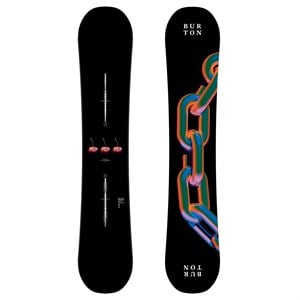
- Terrain: Freestyle, All-Mountain
- Rocker Type: Flat Top with Easy Bevel
- Shape: True Twin
- Flex Rating: Soft-Medium
The Burton Cultivator is the ultimate progression machine designed to remove the fear from learning new tricks. The Flat Top bend provides stability between the feet, while the Easy Bevel lifts the edges to make it virtually impossible to catch an edge. Its perfectly symmetrical twin shape makes riding switch feel as natural as riding regular.
Featuring a Fly 900G core and Biax fiberglass, the board offers a forgiving, torsionally soft flex that is perfect for buttering and park laps. The Extruded base is durable and fast enough to pass friends without needing constant waxing. This board is an excellent choice for developing riders who want a reliable partner to help them build confidence all over the mountain.
Pros: Extremely catch-free edges, lightweight swing weight, easy to ride switch.
Cons: Extruded base is slower than sintered alternatives, not suited for aggressive carving.
10. Arbor Kuro Neko – Women’s
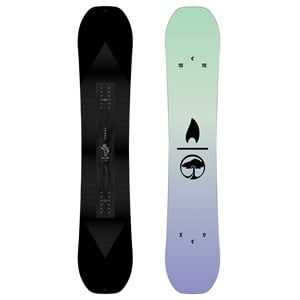
- Terrain: Freestyle
- Rocker Type: Traditional Camber
- Flex Rating: Medium (5-6)
- Shape: True Twin
The Arbor Kuro Neko is a high-performance freestyle board that focuses on the fundamentals of park riding. Its traditional camber profile and true twin shape offer a classic, responsive feel that park veterans and aspiring pros will appreciate. The Highland II core provides a lightweight and snappy experience that is perfect for boosting off jumps and locking into rails.
Arbor has equipped this board with 360-degree fully wrapped sidewalls for maximum durability and life. Sustainability features include recycled steel edges and a bio-plastic topsheet, ensuring the board is as kind to the environment as it is fun to ride. Named “Black Cat” for its agility, this board is built to land on its feet through every trick and side hit.
Pros: Classic camber pop, highly durable sidewalls, beautiful real wood inlay aesthetic.
Cons: Camber can be catchy for beginners, strictly freestyle focus limits deep snow performance.
How to Choose Snowboards for Intermediate Riders?

As an intermediate snowboarder, you’ve moved past the beginner stage and are now ready to tackle more challenging runs, explore new terrain, and even try tricks or park laps. This is an exciting point in your snowboarding journey—your board should match your growing confidence and skills. Choosing the right snowboard can make a huge difference in how fast you progress and how much fun you have on the mountain.
In this guide, we’ll break down everything you need to know about picking the perfect snowboard for intermediate riders. We’ll cover board types, shapes, flex, camber profiles, and other key features so you can feel confident in your next purchase.
1. Know Your Riding Style
Before you start looking at specs, think about how you ride. Are you someone who likes cruising down groomed runs, hitting jumps and rails in the park, floating through powder, or a mix of everything? Your riding style will help you decide what kind of board works best for you.
- All-Mountain: These boards are the most versatile. They’re great for riders who want to explore everything—groomers, trees, and even park.
- Freestyle: Designed for tricks, jumps, rails, and riding switch. Freestyle boards are lighter, more playful, and often softer in flex.
- Freeride: Built for off-piste terrain, steeps, and powder. These boards tend to be stiffer and more directional.
- Powder: Specifically made for deep snow. These boards are usually wider and have a setback stance or rocker profile for better float.
For most intermediate riders, an all-mountain or freestyle board is the best place to start, as it allows you to try different terrain and find your preferences.
2. Choose the Right Board Shape
The shape of your snowboard affects how it rides. Here are the most common options:
- Directional: Designed to be ridden primarily in one direction. Great for carving and freeride.
- True Twin: Identical nose and tail, perfect for riding switch (both directions). A good choice for freestyle and park riders.
- Directional Twin: A blend of both. These boards are almost symmetrical but have a slightly longer nose for better performance in powder or varied terrain. Ideal for all-mountain use.
For intermediate riders, directional twin boards are a great balance between versatility and performance.
3. Pick the Right Flex Rating
Flex refers to how stiff or soft the board is. It’s usually rated from 1 (very soft) to 10 (very stiff).
- Soft (1–4): Easier to control and forgiving. Great for beginners and park riders who want to press and butter.
- Medium (5–7): Offers a good mix of control, response, and forgiveness. Perfect for most intermediate riders.
- Stiff (8–10): More stable at high speeds and responsive, but harder to maneuver. Best for aggressive or expert riders.
As an intermediate rider, look for a medium flex. It’ll give you stability when you’re carving while still being playful enough to try new tricks.
4. Understand Camber Profiles
The camber profile affects how the board contacts the snow and how it feels when turning, jumping, or riding powder. Here are the most popular types:
- Camber: Traditional profile with a slight arch in the middle. Offers great edge hold and pop. Best for carving and aggressive riders.
- Rocker (Reverse Camber): Curves upward from the middle, making it easier to turn and more forgiving. Great for beginners and powder.
- Flat: A flat section between the feet for stability with less catch than camber. Good for cruising and learning tricks.
- Hybrid (e.g., Rocker/Camber/Rocker): Combines camber and rocker for the best of both worlds—pop, control, and float. Ideal for all-mountain riders.
For most intermediate riders, a hybrid camber is the sweet spot. It offers stability and edge hold but is more forgiving than traditional camber.
5. Match the Right Board Length and Width
Length is generally based on your height and weight, but your riding style matters too:
- Shorter boards are easier to turn and better for freestyle.
- Longer boards are more stable and float better in powder.
Check each brand’s size chart, as they vary slightly.
Width depends on your boot size. If you have size 11 (US) or larger, consider a wide board to avoid toe and heel drag. Many intermediate boards come in both regular and wide options.
6. Consider Board Construction
The materials used in the board affect how it feels and performs. For example:
- Wood Cores: Most boards have poplar or paulownia cores for strength and light weight.
- Carbon or Kevlar Reinforcements: Add pop and stiffness for better response.
- Fiberglass Layers: Affects torsional flex. Biaxial is more forgiving; triaxial adds stiffness.
As an intermediate rider, look for boards with poplar or blended wood cores and biaxial fiberglass for a balance of playfulness and control.
7. Base Types
The base of your board affects speed and maintenance:
- Extruded Base: Slower but durable and easy to repair. Requires less waxing.
- Sintered Base: Faster and more premium. Holds wax better but needs more upkeep.
Intermediate riders can do fine with either, but if you want more speed and are willing to maintain it, go for sintered.
8. Don’t Forget Binding Compatibility
Most snowboards use a 2×4 or 4×4 insert pattern, which works with most bindings. However, some brands like Burton use The Channel system, which requires compatible bindings or adapter discs. Always double-check before buying bindings to make sure they’ll fit your board.
9. Price and Value
Intermediate snowboards usually range from $350 to $550, depending on features and brand. You don’t need the most expensive board, but avoid ultra-budget options—they may not offer the responsiveness or durability you need at this stage. Look for boards that balance quality construction, versatility, and proven performance.
10. When in Doubt, Try Before You Buy
If possible, demo a few boards before you commit. Resorts and local shops often offer demo days where you can test multiple models. This gives you a feel for different shapes, flex levels, and profiles—helping you find what suits your riding style best.
Final Thoughts
Choosing a snowboard as an intermediate rider is all about finding a board that helps you progress while still having fun. Focus on a medium flex, a versatile shape like a directional twin, and a hybrid camber profile for a balance of control and forgiveness. Whether you’re cruising groomers, learning to ride switch, or starting to explore the park, the right snowboard can take your riding to the next level.
Take your time, know what you want from your board, and don’t be afraid to ask questions at your local shop or resort. With the right gear under your feet, you’ll be carving, popping, and progressing with confidence all season long.