
Best Budget Ski Gloves of 2026
Winter sports can be expensive, but your hands shouldn’t have to pay the price. You don’t need to break the bank to find a reliable pair of ski gloves that keep you warm and dry on the slopes. We have sorted through the options to find the best budget-friendly gloves that offer great value. This guide highlights top picks that balance cost with quality, ensuring your fingers stay happy without emptying your wallet.
1. REI Co-op Powderbound

- Waterproofing: 2-layer HydroWall waterproof/breathable insert
- Palm Material: Synthetic leather (85% polyester/15% polyurethane)
- Insulation: Lofted polyester, synthetic type
- Lining: Polyester fleece
The REI Co-op Powderbound Gloves are built for skiers who want dependable warmth without bulk. The slim cuff profile tucks neatly under a jacket sleeve, and the fleece lining adds a soft, cozy layer against the skin. The HydroWall insert does a solid job keeping moisture out during wet, heavy snow days on the mountain.
For casual to intermediate riders, these gloves strike a nice balance between price and performance. The synthetic leather palm holds up reasonably well to pole grips and lift bars, and the built-in goggle wipe is a thoughtful touch for quick lens cleanups between runs.
Pros:
- Slim, low-bulk cuff fits under jackets
- Reliable waterproof breathable insert
- Warm fleece lining
- Built-in goggle wipe
Cons:
- Not the warmest option for extreme cold
- No removable liner
See the REI Co-op Powderbound See the Women’s Powderbound
2. Carhartt Knit Cuff Gloves
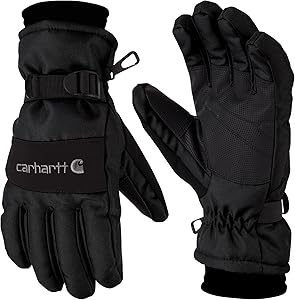
- Shell: 100% polyester with softshell construction
- Waterproofing: Waterproof polyurethane insert
- Lining: FastDry moisture-wicking polyester
- Grip: Digital-grip palm with stick-grip fingers
Carhartt’s Knit Cuff Gloves are designed with rugged jobsite use in mind, but they translate well to cold-weather outdoor work too. The synthetic palm and reinforced fingers grip tools and equipment securely, while the waterproof insert and synthetic insulation keep hands protected from wet, snowy conditions throughout the day.
The fleece cuff with an adjustable wrist strap seals out drafts and stray snow effectively. FastDry lining technology wicks sweat away, so hands stay comfortable even during long stretches of physical activity. These gloves prioritize durability and function over ski-specific dexterity.
Pros:
- Excellent grip and durability
- Effective moisture-wicking lining
- Secure adjustable wrist closure
- Affordable price point
Cons:
- Less refined fit for skiing
- Bulkier than dedicated ski gloves
See the Carhartt Knit Cuff Gloves
3. Gordini Storm Gloves

- Shell: Durable 10k polyester, bluesign approved
- Waterproofing: GORE-TEX waterproof/windproof insert
- Insulation: Megaloft synthetic with moisture-wicking lining
- Extras: Zippered handwarmer pocket, leash, nosewipe
The Gordini Storm Gloves pack a lot of thoughtful features into a mid-range price point. The GORE-TEX insert reliably blocks wind and moisture, and the Megaloft insulation keeps hands warm on chairlifts and long descents alike. The textured palm and fingers add extra confidence when gripping poles.
A gauntlet cuff with drawcord closure and wrist strap locks out snow effectively during deep powder days. The zippered handwarmer pocket is a nice bonus for storing heat packets, and the built-in nosewipe adds everyday convenience most riders will appreciate on the hill.
Pros:
- Trusted GORE-TEX waterproofing
- Handwarmer pocket for extra heat
- Secure gauntlet closure
- Good grip texture
Cons:
- Runs slightly bulky
- No removable liner
See the Gordini Storm Gloves See the Women’s Storm Gloves
4. BLACK DIAMOND Guide

- Palm Material: Tough goat leather with nylon shell
- Waterproofing: GORE-TEX insert with Plus Warm technology
- Insulation: 170g PrimaLoft Gold, 133g PrimaLoft Gold Eco palm
- Liner: Removable wool-lined liner
The Black Diamond Guide is engineered for serious alpine use, and it shows. Goat leather on the palm and fingers stands up to ropes, ice tools, and rough terrain, while the reinforced nylon shell adds long-term durability. GORE-TEX Plus Warm technology keeps hands dry even in prolonged storms.
PrimaLoft Gold insulation delivers exceptional warmth for multi-day mountaineering trips, and the wool lining retains heat even when damp. A padded knuckle patch and articulated fit protect hands during technical work, making this glove a top choice for backcountry professionals and serious enthusiasts.
Pros:
- Exceptional warmth for extreme cold
- Durable leather construction
- Removable liner for versatility
- Knuckle protection built in
Cons:
- Premium price point
- Overkill for casual resort skiing
5. REI Co-op Switchback GTX

- Waterproofing: GORE-TEX insert made without PFAS
- Palm Material: Synthetic leather
- Insulation: Polyester fibers with removable fleece liner
- Extras: Touch-screen compatible, goggle wipe
The REI Co-op Switchback GTX gloves are made for backcountry travelers who need warmth and dexterity in equal measure. The GORE-TEX insert reliably blocks moisture without added PFAS, and the removable fleece liner allows riders to fine-tune warmth depending on conditions and effort level on the skin track.
Touch-screen compatibility means no need to remove gloves for a quick phone check, and the built-in goggle wipe adds convenience mid-run. The gauntlet cuff seals well against snow, making this a versatile glove for both resort days and longer backcountry missions alike.
Pros:
- Removable liner adds flexibility
- PFAS-free waterproofing
- Touch-screen compatible
- Good all-around dexterity
Cons:
- Liner can shift inside shell
- Pricier than basic ski gloves
See the REI Co-op Switchback GTX See the Women’s Switchback GTX
6. Burton GORE-TEX
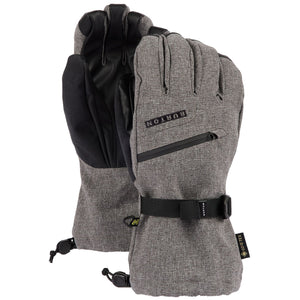
- Shell: DRYRIDE 2-Layer breathable fabric
- Waterproofing: GORE-TEX membrane with GORE Plus Warm tech
- Insulation: Thermacore Eco Insulation
- Palm: Screen Grab Toughgrip PU synthetic leather
Burton’s GORE-TEX gloves combine premium materials with rider-focused design. The DRYRIDE shell paired with a GORE-TEX membrane keeps hands warm, dry, and windproof in nearly any condition, while Thermacore insulation delivers strong warmth-to-weight performance without restricting hand movement or grip on the mountain.
The Screen Grab Toughgrip palm allows full touchscreen control across all fingers, a genuinely useful feature for snowboarders checking maps or cameras. An extended gauntlet, hidden heater pocket, and removable liner round out a glove built for serious riders who want premium features and long-term durability.
Pros:
- Full touchscreen palm functionality
- Excellent warmth-to-weight ratio
- Hidden heater/vent pocket
- Removable liner included
Cons:
- Higher price tag
- Gauntlet may feel bulky for some
See the Burton GORE-TEX See the Women’s Burton GORE-TEX
7. Dakine Titan Gore-Tex

- Material: Polyester construction
- Special Feature: Breathable and thermal design
- Touchscreen: Touch screen support included
- Fit: Ambidextrous hand orientation
The Dakine Titan Gore-Tex gloves offer a straightforward, dependable option for skiers and snowboarders who want solid performance without unnecessary complexity. The polyester build stays breathable during high-output days, while the thermal design keeps hands comfortable through cold lift rides and long runs on the slopes.
Touch screen support adds day-to-day convenience, letting riders check phones without exposing bare hands to the cold. The ambidextrous fit makes sizing and shopping simple, and overall these gloves serve as a reliable, no-frills choice for casual to intermediate riders on a budget.
Pros:
- Breathable and thermal comfort
- Touch screen compatible
- Simple, reliable design
- Budget-friendly pricing
Cons:
- Limited technical detail available
- Not suited for extreme cold
8. Flylow Ridge

- Material: Pigskin leather, PFAS-free DWR
- Insulation: 180/100g recycled Greenloft insulation
- Cuff: Ribbed nylon cuff for a snug fit
- Lining: Polyester lining throughout
The Flylow Ridge is a classic hardware-style ski glove built for durability and everyday resort use. Pigskin leather provides long-lasting toughness along with PFAS-free water resistance, while the mapped recycled insulation puts more warmth on the back of the hand and less bulk in the palm for better dexterity.
The ribbed nylon cuff slides neatly under a jacket sleeve for a clean, low-profile look on the hill. This glove suits riders who value traditional leather construction and sustainable materials over flashy tech features, offering solid performance for full days at the resort.
Pros:
- Durable pigskin leather build
- PFAS-free water resistance
- Recycled insulation materials
- Slim cuff fits under jackets
Cons:
- Leather needs occasional care
- No removable liner
9. Black Diamond Glissade
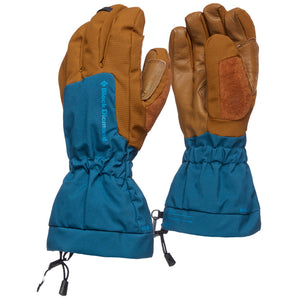
- Shell: Pertex Shield with four-way stretch
- Waterproofing: 100% waterproof BD.dry insert
- Insulation: 100g Thinsulate with fixed fleece lining
- Palm: Goat leather with Kevlar stitching
The Black Diamond Glissade balances lightweight comfort with technical waterproofing for everyday mountain use. The stretchy Pertex Shield shell moves naturally with the hand, while the BD.dry insert keeps moisture out reliably across wet spring conditions and heavier winter snowfall alike, all without adding noticeable bulk.
Goat leather on the palm, reinforced with Kevlar stitching, holds up well to pole straps and rope handling over repeated use. Thinsulate insulation and a fixed fleece lining provide solid, consistent warmth, making this a versatile pick for both resort skiing and moderate backcountry days.
Pros:
- Stretchy, comfortable shell fit
- Reliable BD.dry waterproofing
- Durable Kevlar-stitched palm
- Lightweight for all-day wear
Cons:
- Less warmth than heavily insulated models
- Fixed lining limits adjustability
See the Black Diamond Glissade
10. 686 Primer
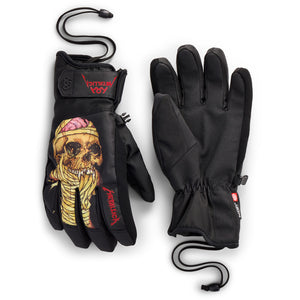
- Shell: 2-layer Dense Oxford infiDRY 10K fabric
- Insulation: infiLOFT 100g plus foam palm insulation
- Palm: Everwear Grip Stone PU material
- Features: Soundtouch touchscreen technology, wrist leash
The 686 Primer gloves offer strong value with a well-rounded feature set for everyday riders. The infiDRY 10K shell handles wet snow effectively, and the combination of infiLOFT insulation with extra foam palm padding keeps hands warm while cushioning impacts from falls or hard landings on the mountain.
The Movement Fit design curves naturally with the hand for a more ergonomic, less fatiguing grip throughout the day. Soundtouch touchscreen technology and a Velcro adjustable cuff add practical convenience, making the Primer a dependable, budget-conscious choice for snowboarders and skiers alike.
Pros:
- Comfortable ergonomic fit
- Reliable 10K waterproof rating
- Touchscreen compatible
- Good value for features offered
Cons:
- No removable liner
- Warmth is moderate, not extreme
How to Choose Budget Ski Gloves – A complete guide

Buying ski gloves on a budget does not mean you have to settle for cold, wet hands. With the right knowledge, you can find a pair that keeps you warm, offers good grip, and lasts a few seasons – all without spending a fortune. This guide walks you through every important feature, from insulation to fit, so you can make a smart choice. We also highlight common mistakes and give you a clear checklist to take to the shop or use while browsing online. Whether you are a beginner or a casual skier, these tips will help you stretch your money and enjoy the slopes comfortably.
Why budget ski gloves can be a great choice
Many skiers think that only expensive gloves provide real protection. That is not true. Budget gloves have improved a lot in recent years. Brands now use affordable synthetic materials that work almost as well as high‑end leather or goose down. The key is knowing which features matter most for your typical ski day. If you ski a few times each winter, budget gloves are often a smarter buy than premium models. You save money for lift tickets or gear rentals, and you can replace them more easily when they wear out.
Essential features to look for in budget ski gloves
When you are on a budget, you cannot have everything. But you can focus on the features that give you the biggest return. Here is a breakdown of the most important elements.
Insulation – staying warm without the bulk
Insulation traps heat and keeps your fingers from going numb. Budget gloves usually use synthetic fills like polyester or Thinsulate. These materials are light, dry quickly, and perform well even when damp. Look for a glove with at least 100g to 200g of insulation. Anything less is fine for spring skiing, but too thin for cold winter days. Avoid gloves that feel puffy but have no fill weight listed – they often use cheap fiber that packs down after a few uses. Also, consider whether you run cold or hot. If your hands chill easily, choose a glove with 200g or more, even if it means sacrificing a bit of dexterity.
Waterproofing and breathability
Wet hands are cold hands. Waterproofing is a must. Budget gloves often use a waterproof insert or a durable water‑repellent (DWR) coating on the outer shell. An insert is better because it creates a physical barrier. Look for terms like “waterproof membrane” or “HIPORA” – these are common in affordable gloves. Breathability matters too. If moisture from sweat cannot escape, your gloves become damp inside. A breathable glove lets vapor out while keeping snow and rain out. Many budget gloves have a breathability rating, but even if they do not, a simple vent on the back of the hand can make a big difference on warmer days.
Outer shell material – durability on a budget
The outer shell protects against abrasion, wind, and snow. Nylon and polyester are the most common materials in budget gloves. They are tough, lightweight, and easy to clean. Some gloves add a leather patch on the palm for better grip and durability. Full leather gloves are usually pricey, but a leather palm is a nice bonus in a budget model. Avoid shells that feel flimsy or like a thin windbreaker – they will tear quickly if you grab ski edges or poles. Double‑stitched seams and reinforced fingertips are signs of better construction, even in cheaper gloves.
Fit and dexterity
Gloves that are too tight restrict blood flow and make your hands colder. Gloves that are too loose let heat escape and make it hard to grip poles. A good budget glove should fit snugly around your fingers with a little room to wiggle them. You should be able to make a fist without feeling tightness. Also, check the cuff – it should close securely around your wrist to keep snow out. Some budget gloves offer an adjustable strap or elastic cuff, which helps seal in warmth. Remember that fit is personal, so if possible, try them on with the thin liner gloves you plan to wear underneath.
Key differences between budget and premium gloves
Premium gloves use higher‑grade leather, more advanced membranes (like Gore‑Tex), and premium insulation (like PrimaLoft). They also have better stitching and longer warranties. But for most recreational skiers, these extras are not essential. Budget gloves may lack the premium feel, but they can still offer 80% of the performance at a fraction of the cost. The main trade‑offs are long‑term durability and extreme‑cold performance. If you ski only a few weeks each season, budget gloves are more than enough.
What to avoid when buying cheap ski gloves
- No insulation weight listed: If the product page does not say how much insulation is used, the glove is likely underfilled.
- Single‑layer shell: Gloves with just one thin layer of fabric offer no wind protection and tear easily.
- No waterproof claim: If water resistance is not mentioned, the gloves will soak through in wet snow.
- Poorly designed cuffs: Short cuffs that do not tighten let snow inside, making your hands wet and cold.
- Stiff, bulky construction: Very cheap gloves often use low‑quality foam that makes them hard to move in – avoid those.
How to test budget gloves before you buy
If you can visit a store, do these simple tests. First, put the glove on and clench your fist – you should feel comfortable, not strained. Second, rub the palm against a rough surface (like a backpack strap) to check abrasion resistance. Third, blow into the glove from the cuff – if air escapes through the fabric easily, it is not very windproof. Fourth, bend the fingers several times – stiff gloves will not be comfortable for long ski days. Lastly, check the stitching inside – loose threads or uneven seams are red flags.
Comparison table – budget vs premium vs ultra‑cheap
| Feature | Budget (good value) | Premium (high‑end) | Ultra‑cheap (avoid) |
|---|---|---|---|
| Insulation | 100–200g synthetic | 200–400g + down mix | Under 80g, unlabelled |
| Waterproof membrane | Yes (HIPORA, etc.) | Gore‑Tex or similar | None or DWR only |
| Outer shell | Nylon/polyester with leather palm | Full leather / advanced synthetics | Thin nylon, no reinforcement |
| Breathability | Moderate, sometimes vented | High, with moisture control | Poor, no venting |
| Wrist cuff | Adjustable or elastic | Multi‑adjustable, gauntlet style | Fixed, too short |
| Price range (USD) | $25 – $50 | $80 – $200+ | Under $15 |
| Best for | Recreational skiers, occasional use | Backcountry, extreme cold, frequent use | Nothing – avoid |
Seasonal considerations – matching gloves to your climate
Not all budget gloves are created equal for all conditions. If you ski in the Rockies where temperatures drop below -10°C, choose gloves with 200g insulation and a waterproof insert. For milder European resorts near 0°C, 100g gloves with a DWR coating are fine. For spring skiing or wet snow, prioritize waterproofing over insulation – you can always add a thin liner for extra warmth. Also think about wind – high‑wind areas require a shell that blocks gusts. Many budget gloves have a windproof layer, so check the label.
Care tips to extend the life of your budget gloves
- Let them dry naturally after each use – never put them on a radiator.
- Wash them only when necessary, using a gentle detergent for synthetics.
- Re‑apply a DWR spray to the outer shell once a season to maintain water repellency.
- Store them loosely, not crushed, to keep the insulation fluffy.
- Check seams regularly and repair small tears with fabric glue before they get bigger.
Final checklist – your quick guide to choosing budget ski gloves
- Set a realistic budget (around $30–$50 is the sweet spot).
- Decide on insulation weight based on your typical ski temperatures.
- Choose a glove with a waterproof insert, not just a coating.
- Prefer a shell with a leather palm for better grip and durability.
- Ensure the cuff closes snugly around your wrist.
- Try them on – they should feel snug but not tight.
- Read reviews – real skiers often reveal hidden flaws.
- Avoid ultra‑cheap gloves – they cost more in the long run.
Conclusion – smart spending for warm hands
Choosing budget ski gloves is about balancing cost with the features that matter most for your ski style. Insulation, waterproofing, and fit are the big three – get these right and you will have a reliable pair for many ski trips. Use the checklist and table above to compare options quickly. Remember, expensive does not always mean better. With careful selection, you can keep your hands happy, your budget intact, and your focus on the beautiful mountain views ahead. Happy skiing!