
Best Snowboards for Groomers of 2027
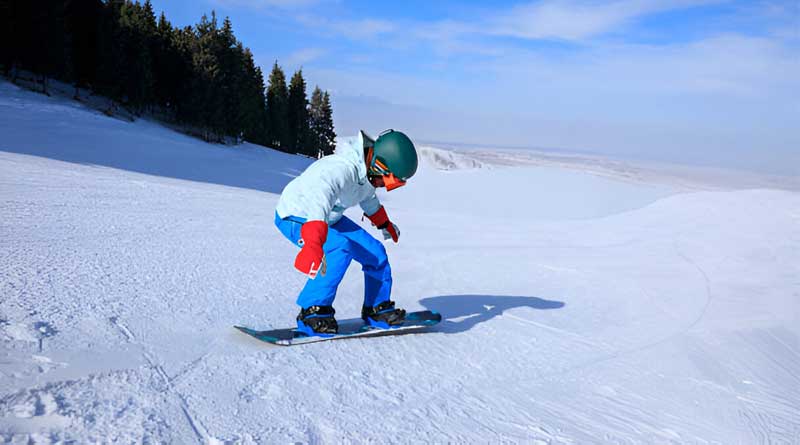
Riding groomers is all about smooth turns, fast runs, and carving up perfect corduroy. Whether you’re a beginner or a seasoned rider, having the right snowboard can make a big difference on hard-packed trails. Some boards are made to grip better, turn quicker, and stay stable when you’re flying down the mountain. In this guide, we’ll show you the best snowboards for groomers — boards that are fun, reliable, and built for speed and control. From all-mountain options to carving machines, these boards will help you get the most out of every lap. If groomers are your favorite, these are the boards you’ll want under your feet.
1. CAPiTA Defenders Of Awesome
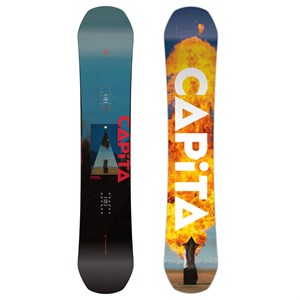
- Rocker Type: Resort V1 Profile (Camber with slight rocker/zero camber)
- Flex Rating: 5.5/10 (Medium)
- Shape: True Twin with Blended Radial Sidecut
- Core: FSC Certified P2 Superlight Core (Poplar and Paulownia)
The CAPiTA Defenders of Awesome (DOA) is a true twin snowboard made for riders who want performance with a side of style. It shines in all-mountain and freestyle settings thanks to its poppy camber profile, balanced flex, and ultra-lightweight core. Whether you’re boosting off side hits, carving groomers, or lapping the park, the DOA delivers snappy response and edge control with a forgiving feel. Its carbon fiber boosters and Magic Bean resin give it extra liveliness without adding bulk, making it feel playful yet powerful underfoot.
While it’s built with freestyle roots, the board is no slouch in powder. With the right stance and setup, it floats surprisingly well, especially in trees and glades. It presses nicely for jibs and handles mid-sized kickers with confidence. Edge hold is reliable, though it’s not the most stable at very high speeds—something to consider for aggressive freeriders. But for intermediate to advanced riders who want a versatile, poppy deck that thrives in the park and beyond, the DOA remains a legendary choice.
Pros:
- Great pop and lightweight feel
- Versatile across park, groomers, and powder
- Excellent edge hold and control
- Eco-friendly materials with solid durability
Cons:
- Slightly unstable at high speeds
- Not ideal for beginners or ultra-aggressive freeride
2. Burton Custom
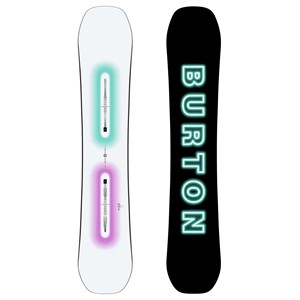
- Rocker Type: Traditional Camber
- Flex Rating: 4–7 (Medium)
- Shape: Directional Twin
- Core: Super Fly II™ 700G Core with Squeezebox and Carbon Highlights
The Burton Custom is a true all-mountain icon, trusted by riders since 1996 for its do-it-all performance and timeless feel. With traditional camber and a responsive directional twin shape, it thrives in nearly every condition—groomers, side hits, powder stashes, and natural terrain. Its core construction uses lighter woods in strategic zones for added pop and reduced weight, while carbon fiber laminates increase strength and torsional control without sacrificing responsiveness.
The board feels snappy and smooth, offering excellent edge control for carving and power for launching off natural features. It’s forgiving enough for intermediate riders yet precise enough to satisfy seasoned shredders. Add in tech like Frostbite Edges for added grip and a sintered WFO base that holds wax like a champ, and you get a board that’s reliable, fast, and incredibly fun across the whole mountain. If you’re after a classic ride that still competes with modern tech, the Custom delivers year after year.
Pros:
- Timeless camber performance with tons of pop
- Strong edge hold and carving power
- Lightweight, durable, and versatile
- Compatible with all major bindings via The Channel™
Cons:
- Lacks rocker for easy float in deep powder
- Not ideal for beginner riders due to its stiffness and camber
3. Salomon Assassin
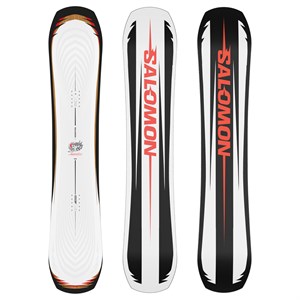
- Rocker Type: Rock Out Camber (Flat between feet, camber near inserts, rocker at tips)
- Flex Rating: 4/5 (Stiff)
- Shape: Directional Twin with Quadrilizer Sidecut
- Core: Aspen SLCT with Popster Eco Booster (Bamboo + Carbon)
The Salomon Assassin is a versatile directional twin designed to conquer everything from rails to big mountain lines. It blends freestyle playfulness with freeride stability, making it a one-board quiver for intermediate to advanced riders. The Rock Out Camber profile provides a stable platform underfoot for carving and control, while the rocker tips make pressing and buttering easy. Salomon’s Quadrilizer sidecut helps the board carve aggressively, even in tighter terrain or technical features.
Pop and dampening are where the Assassin shines. Its bamboo-carbon stringers deliver incredible energy return without sacrificing board feel, and the Royal Rubber Rails keep your ride smooth over chunder and landings. Whether you’re boosting off natural hits, floating through trees, or ripping a groomer, the Assassin stays composed and confident. It’s also built sustainably, with bio-based resin and wood veneers replacing plastics. Ideal for riders who want park-level creativity with freeride guts.
Pros:
- Balanced flex for park and freeride
- Excellent pop and vibration dampening
- Eco-conscious materials and smooth ride feel
- Handles well in all snow conditions
Cons:
- May be too stiff for jib-heavy park laps
- Not ideal for true beginners due to responsiveness
4. Lib Tech T. Rice Orca
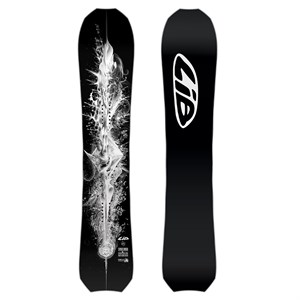
- Rocker Type: C2X Hybrid (Camber/Rocker/Camber)
- Flex Rating: Medium
- Shape: Directional with Volume Shift (ride 3–6 cm shorter)
- Core: Horsepower Construction (60% Aspen / 40% Paulownia)
The Lib Tech T. Rice Orca is not your average directional snowboard — it’s a powder-devouring, all-terrain beast. Built for Travis Rice, this board excels in everything from deep snow to hardpack, thanks to its hybrid C2X profile and powerful tail. The wider nose and volume-shifted shape enhance float without compromising edge-to-edge responsiveness. Whether you’re carving trenches, sending cliffs, or slashing powder, the Orca blends aggression with buttery control.
Its Magne-Traction edges provide ridiculous grip, even on icy groomers, while the basalt-infused layup delivers a smooth, damp ride without deadening board feel. The Orca is surprisingly nimble for a wide board, and the short-radius carving ability makes it feel like a surfboard in deep snow. Ideal for advanced riders looking for a quiver killer, this board holds its own in the park but truly excels in freeride scenarios where control, float, and stability are key.
Pros:
- Exceptional float in powder with short, nimble control
- Magne-Traction offers unreal grip on icy terrain
- Smooth and stable ride with poppy energy
- Built sustainably in the USA
Cons:
- Pricey compared to average all-mountain boards
- Not ideal for true switch riding or beginners
View at REI View at Backcountry
5. Jones Stratos
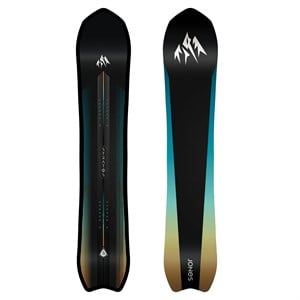
- Rocker Type: Directional Rocker with Camber (Rocker/Camber/Rocker)
- Flex Rating: 3/5 (Stiff)
- Shape: Directional with 10mm taper and Blunt Nose
- Base: Sintered 8000 with 3D Contour Base 3.0
The Jones Stratos is a freeride board that thinks it’s a surfboard — and we mean that in the best way. It’s fast, responsive, and built to slash, carve, and float through deep snow. The directional shape, mild taper, and rocker in the nose give it excellent powder performance, while camber underfoot keeps the board locked in during aggressive turns. Add in the 3D Contour Base and this board becomes incredibly smooth edge-to-edge, reducing drag and helping it flow effortlessly through variable terrain.
Despite its freeride focus, the Stratos has a playful side. The carbon/flax stringers give it pop and dampening, while the lightweight core and Forever Flex construction ensure long-lasting performance. Whether you’re carving groomers, dodging trees, or floating over a pillow line, the board remains agile and stable. It’s best suited for advanced to expert riders who want a versatile freeride experience without sacrificing maneuverability.
Pros:
- Floats effortlessly in powder with minimal effort
- Quick edge-to-edge and carves smoothly
- Durable and eco-friendly construction
- Excellent versatility for a freeride board
Cons:
- Too stiff and aggressive for beginners
- Not ideal for park laps or riding switch
6. Lib Tech EJack Knife C3
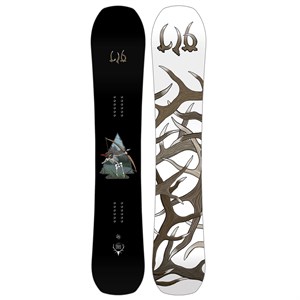
- Rocker Type: C3 Hybrid Camber (Camber/Rocker/Camber)
- Flex Rating: Medium
- Shape: Directional
- Core: 60% Aspen / 40% Paulownia with Basalt-Infused Fiberglass
The Lib Tech EJack Knife C3 is built for steep lines, deep pow, and big mountain freestyle. Co-designed by Eric Jackson, it combines aggressive camber zones with a subtle rocker center for powerful carving, confident edge hold, and float when the snow gets deep. This board excels in the backcountry but holds its own across the whole mountain, thanks to its responsive construction and surfy directional shape. Whether you’re dropping cliffs or charging through crud, it stays stable and agile.
Its basalt-infused triax/biax fiberglass adds dampening without deadening board feel, and the Magne-Traction edges grip like claws on icy faces. The EJack Knife is for intermediate to advanced riders who love to ride fast, go big, and demand control in variable terrain. While not the best board for switch or park laps, it’s an ideal tool for anyone hunting for a rugged, high-performance freeride weapon with a freestyle soul.
Pros:
- Excellent edge grip with Magne-Traction
- Powerful and stable on steeps and hardpack
- Floats well in powder without sacrificing pop
- Eco-friendly construction with premium materials
Cons:
- Directional shape limits switch performance
- Too aggressive for beginners or casual cruising
7. Yes. Standard
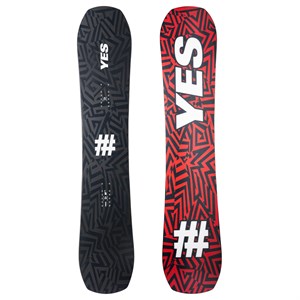
- Rocker Type: CamRock (Camber between feet, Rocker at tip and tail)
- Flex Rating: 6/10 (Medium-Stiff)
- Shape: Directional Volume Twin with MidBite
- Core: Torrent Core (80% Paulownia / 20% Poplar)
The Yes. Standard is a do-it-all freestyle board that handles freeride conditions like a champ. Thanks to its Directional Volume Twin shape, it gives you the float of a directional deck with the balanced feel of a twin. The CamRock profile brings pop, precision, and forgiveness all in one ride, making it ideal for riders who like to mix freestyle creativity with steep lines and powder stashes. MidBite sidecuts tighten up the waist for quicker response while keeping the tips wide enough for better float and landings.
What makes the Standard stand out is how confident it feels in almost every condition. From side hits and resort laps to tree lines and natural jumps, this board feels intuitive, solid, and snappy. The carbon L-shape reinforcements add power and stability without making it too rigid, and the sintered base keeps you gliding fast all day. This is a great choice for advanced riders who want one board that can truly rule the whole mountain with style and control.
Pros:
- Floaty yet freestyle-friendly directional twin shape
- MidBite edges improve edge hold and quick response
- Lightweight and poppy without losing durability
- Great versatility across terrain types
Cons:
- Might feel too stiff for beginners
- Not a true twin, so limited for switch-only riding
How to Choose Snowboards for Groomers?
Riding groomers is one of the most fun and rewarding experiences in snowboarding. Groomers are the wide, smooth trails that ski resorts maintain daily by packing down snow—ideal for cruising, carving, and building confidence. But to truly enjoy groomers, you need the right snowboard. Whether you’re just starting out or an experienced carver, choosing a board that matches your style and skill level makes all the difference.
In this guide, we’ll break down what to look for in a snowboard that’s perfect for groomed runs, including shape, camber, flex, and other features to help you carve with control and style.
1. Camber Profiles Matter Most on Groomers
When it comes to groomed trails, camber is one of the most important factors. Camber refers to the arc of the board when it’s laid flat.
-
Traditional Camber is best for groomers. It curves upward in the middle and presses down at the tip and tail, giving you great edge control and precision. This profile grips hardpack and icy snow well, making carving clean and powerful.
-
Camber-Dominant Hybrids (like camber with a bit of rocker at the tips) offer a slightly more forgiving ride while still delivering solid edge hold and energy. These are great for intermediate riders who want control without feeling too locked in.
Avoid full rocker boards—they’re playful in powder but can feel loose and unstable on groomers.
2. Choose the Right Flex for Your Style
Flex refers to how stiff or soft your board feels. For groomers, it’s all about balance.
-
Medium to Stiff Flex (5–8/10) is ideal. A stiffer board gives better energy transfer and stability at high speeds. This helps you stay in control while carving or bombing down runs.
-
Softer Flex (2–4/10) boards are easier to turn and better for beginners but can feel squirrely at speed. If you’re just starting, a medium-soft flex can still be great until you’re confident linking turns.
Ultimately, if you like smooth, fast carving, go stiffer. If you’re more casual and like slower cruising, medium flex is perfect.
3. Look for a Directional or Directional Twin Shape
Board shape affects how the snowboard rides, especially in how it turns and handles at speed.
-
Directional boards are designed to be ridden mostly one way (nose forward). They usually have a longer nose and a slightly shorter, stiffer tail. This setup provides better stability and carving power.
-
Directional Twin boards are symmetrical in shape but have a slightly setback stance. They offer versatility for riding both ways, but still carve nicely and are great for all-mountain riders who love groomers.
True twin boards are mostly for freestyle or park use, and they don’t offer as much carving performance as directional shapes.
4. Consider the Sidecut Radius
The sidecut is the curved shape of the edge from nose to tail, and its radius determines how tight your turns will be.
-
Smaller radius (tight sidecut) = quick, sharp turns, good for narrow or crowded trails.
-
Larger radius (shallow sidecut) = long, smooth carves, great for open runs and high speed.
Many groomer-focused boards have a progressive or multi-radius sidecut, which blends tight and wide turns, giving you more control and versatility.
5. Base Type Affects Speed
Groomers are often hardpacked, which means you want a fast base to glide efficiently.
-
Sintered bases are faster and more durable. They hold wax better and work best for riders who want speed.
-
Extruded bases are easier to maintain but slower. They’re fine for beginners or casual riders.
If you’re serious about carving groomers, aim for a sintered base. Just remember: it needs regular waxing.
6. Edge Tech Can Improve Grip
Some boards come with special edge tech to help bite into icy or firm snow. This is especially useful on groomers that get slick later in the day.
-
Look for things like Magne-Traction (Lib Tech/GNU), Frostbite Edges (Burton), or Grip Tech (Arbor).
-
These features add multiple contact points along the edge, giving you better hold and control in hard conditions.
If you often ride in colder areas or early mornings when trails are icy, this is worth considering.
7. Length and Width: Don’t Overdo It
For groomers, you don’t need a super short or wide board.
-
Length: Go with a standard length based on your height and weight. Slightly longer boards give better stability at speed.
-
Width: Make sure the board isn’t too wide unless you have large feet (US men’s 11+). Too much width can make it hard to get on edge and carve cleanly.
A properly sized board will respond faster and feel more natural underfoot.
8. Lightweight and Responsive Materials Help
Many premium groomer boards use lightweight wood cores and carbon reinforcements to boost responsiveness.
-
Carbon stringers add snap and edge-to-edge control.
-
Poplar or Aspen cores keep the board light and strong.
-
Dampening tech (like rubber or urethane inserts) helps reduce chatter at speed.
These materials make a real difference in how smooth your ride feels when carving hard.
9. Choose Based on Your Skill Level
Here’s a quick guide by rider level:
-
Beginner: Look for medium-soft flex, hybrid camber, extruded base, and a directional twin shape. Example: Burton Instigator or Salomon Sight.
-
Intermediate: Go with medium flex, camber-dominant profiles, directional twin or directional shapes, and sintered bases. Example: Yes. Standard or Jones Frontier.
-
Advanced: Aim for stiff flex, full camber, directional boards with carbon reinforcements and fast sintered bases. Example: Burton Custom or Lib Tech EJack Knife.
10. Bonus: Boots and Bindings Matter Too
Your board isn’t everything—stiff boots and responsive bindings help you transfer energy better into the edge. For groomers, skip soft freestyle gear and go with medium-stiff boots and bindings that give you control when carving.
Final Thoughts
Riding groomers is all about control, edge hold, and fun. Choosing the right snowboard means matching your riding style, experience, and goals. Focus on camber-dominant profiles, medium to stiff flex, and directional shapes for the best performance. Add a sintered base and edge tech, and you’ll be carving with confidence all season long.
The good news? Groomers are where most boards perform best, so there are plenty of great options out there. Just keep your priorities clear—and enjoy the ride.