Best Snowboard Boots for Intermediate Riders of 2026
If you’ve mastered the basics and are ready to hit harder runs, your boots matter more than ever. The right pair gives you better control, comfort, and confidence on every ride. But with so many options, choosing can feel overwhelming. In this article, we’ll show you the best snowboard boots for intermediate riders. We’ll cover key features to look for and top picks that balance performance and price, helping you ride better without breaking the bank.
1. DC Phase Boa

- Closure: BOA Fit System with H4 Coiler
- Outsole: Foundation UniLite EVA
- Flex Rating: 4/10
- Water Resistance: Waterproof
The DC Phase Boa is a comfortable snowboard boot designed for riders who want a straightforward fit with quick adjustment. Its BOA Fit System with H4 Coiler makes tightening the boot fast and convenient, allowing riders to make adjustments without dealing with traditional laces. The medium-soft 4/10 flex provides a balanced feel that works well for casual riding, learning, and riders who prefer easier movement. Its Foundation UniLite outsole also helps keep the boot lightweight while providing useful grip and board feel.
Inside, the Response Liner I works with the IMPACT ALG insole to provide cushioning and support during long sessions. The waterproof construction is useful when riding through wet snow and changing winter conditions. The synthetic outer material is practical for regular use, while the mid-calf height provides the coverage expected from a snowboard boot. Overall, the Phase Boa offers a simple combination of comfort, adjustability, flexibility, and weather protection for everyday snowboarding.
Pros:
- Quick and convenient BOA adjustment
- Lightweight UniLite outsole
- Waterproof construction
- Comfortable 4/10 flex
Cons:
- Single BOA system offers less zone adjustment
- Soft flex may not suit aggressive riders
2. DC Women’s Phase BOA

- Closure: BOA Fit System with H4 Coiler and lace-up
- Outsole: Foundation UniLite
- Flex Rating: 4/10
- Water Resistance: Waterproof
The DC Women’s Phase BOA is built for riders who want a comfortable snowboard boot with quick and practical fit adjustment. Its BOA Fit System with H4 Coiler allows the boot to be tightened easily, while the lace-up design gives riders another way to secure the fit. With a 4/10 flex rating, this boot provides a relatively soft and forgiving feel that can make turning and movement easier. The Foundation UniLite outsole also helps reduce unnecessary weight while maintaining useful grip and board feel.
The Response Liner I provides cushioning around the foot, while the IMPACT-ALG insole adds support for regular riding. Its waterproof construction is helpful when snow and moisture are common throughout the day. The synthetic outer material is designed for everyday durability, and the textile lining adds comfort inside the boot. With its mid-calf construction, balanced flex, and convenient closure system, the Women’s Phase BOA is suited to riders looking for comfort and easy adjustability during recreational snowboarding sessions.
Pros:
- Easy BOA adjustment
- Lace-up option provides additional fit control
- Waterproof construction
- Lightweight UniLite outsole
Cons:
- 4/10 flex may feel too soft for aggressive riding
- Less responsive than stiffer snowboard boots
3. System APX
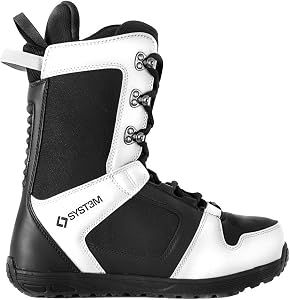
- Closure: Traditional lacing with twist system
- Liner: Thermofit heat-moldable liner
- Outsole: Rubber
- Water Resistance: Water resistant
The System APX snowboard boot focuses on customizable fit and long-lasting comfort. Its traditional lacing system allows riders to tighten different sections of the boot independently, helping create a more personalized fit around the foot and ankle. Smoothed metal hooks help keep the laces secure while reducing abrasion, and the metal lace loops add durability for regular use. The boot also features a low-profile design, which helps maintain a streamlined feel without adding unnecessary bulk.
One of the main features of the APX is its Thermofit heat-moldable liner. The liner can adapt to the shape of the rider’s foot, helping reduce pressure points and improve comfort during extended riding. An EVA insole provides cushioning, while the rubber outsole offers dependable traction. The polyurethane outer material provides a sturdy exterior, although the boot is rated water resistant rather than fully waterproof. Overall, the APX combines traditional lace control, customizable liner fit, durability, and a practical low-profile construction.
Pros:
- Heat-moldable liner allows a customized fit
- Traditional lacing offers detailed adjustment
- Durable metal lace hardware
- Low-profile construction
Cons:
- Traditional lacing takes longer to adjust
- Water resistant rather than fully waterproof
4. Burton Moto BOA

- Closure: Single-Zone BOA Fit System
- Outsole: DynoLITE
- Liner: Imprint 1+ heat-moldable liner
- Water Resistance: Waterproof
The Burton Moto BOA is designed around comfort, easy adjustment, and warmth for regular snowboard sessions. Its Single-Zone BOA Fit System uses an internal spool to tighten the laces quickly and create a snug fit. The 1:1 soft flex PowerUp tongue helps provide a comfortable connection between the boot and foot, while the Total Comfort Construction gives the boot a broken-in feel from the start. A snow-proof internal gusset also helps seal the lower section against snow entering the boot.
The Imprint 1+ heat-moldable liner provides additional comfort and can adapt to the shape of the rider’s foot. Its integrated lacing improves foot wrap, while Sleeping Bag reflective foil beneath the foot helps retain warmth during cold sessions. The DynoLITE outsole keeps the boot relatively lightweight, and the durable polyurethane backstay adds structural support. The waterproof construction makes the Moto BOA suitable for snowy conditions. Overall, it combines convenient BOA adjustment with warmth, cushioning, and a soft, comfortable riding feel.
Pros:
- Quick Single-Zone BOA adjustment
- Heat-moldable liner improves fit
- Waterproof construction
- Warm reflective foil underfoot
Cons:
- Single-zone BOA provides limited independent adjustment
- Soft flex may lack support for aggressive riding
5. DC Lotus BOA – Women’s

- Closure: Dual-Zone BOA with H4 Coiler dials
- Outsole: UniLite
- Flex Rating: 4/10
- Water Resistance: Waterproof
The DC Lotus BOA is a women’s snowboard boot designed to balance flexibility, support, and easy fit adjustment. Its Dual-Zone BOA Fit System with H4 Coiler dials allows riders to make precise adjustments in different areas of the boot. This makes it easier to create a secure fit without spending time working with traditional laces. The 4/10 flex rating provides a medium-soft feel, while the articulated construction allows natural movement and helps support comfortable riding throughout the day.
The Response Liner II uses a multi-layer construction, 360-degree power strap, and latex J-bars to provide stability and support. A molded IMPACT-ALG insole adds arch support and a heel cup for additional foot stability. The UniLite outsole keeps the boot lightweight while providing grip and board feel. Its waterproof construction is useful in snowy and wet conditions, while the fabric-and-synthetic outer material provides a practical combination of flexibility and durability. Overall, the Lotus BOA is focused on adjustable fit, comfort, lightweight performance, and everyday control.
Pros:
- Precise Dual-Zone BOA adjustment
- Lightweight UniLite outsole
- Supportive Response Liner II
- Waterproof construction
Cons:
- 4/10 flex may not provide enough stiffness for aggressive riders
- Bungee closure design may not appeal to traditional lace users
See the DC Lotus BOA – Women’s
6. thirtytwo Shifty BOA

- Closure: Quick tension lace system
- Liner: Heat-moldable warm liner
- Outsole: Tuned board-feel outsole
- Water Resistance: Water resistant
The thirtytwo Shifty BOA is designed for riders who want a secure fit, responsive handling, and comfortable support throughout long days on the mountain. Its snowboard-specific last works with an articulated spine and reinforced heel counter to help keep the foot locked in place while transferring energy to the board. The balanced flex pattern is designed to support quick turn initiation while maintaining stability during landings. The boot also uses a tuned outsole that aims to provide useful board feel without sacrificing walkability.
Inside, the anatomical liner features heat-moldable foam that can adapt to the rider’s foot for a more personalized fit. The warm liner adds comfort during cold sessions, while the waterproof shell helps protect against snow and moisture. Its lace system is designed to provide quick and even tension across the boot. The combination of supportive construction, responsive flex, warm liner, and snowboard-specific design makes the Shifty BOA suitable for all-mountain riding and regular mountain use.
Pros:
- Heat-moldable liner provides customizable fit
- Reinforced heel counter improves support
- Balanced flex supports responsive riding
- Waterproof shell helps keep feet dry
Cons:
- Water resistance rating is listed as water resistant
- Traditional-style tension system may take practice
7. K2 Raider BOA
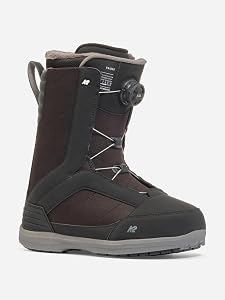
- Closure: H4 Coiler BOA Fit System
- Lacing: TX3 BOA rope lacing
- Liner: Intuition Comfort Foam 3D
- Water Resistance: Water resistant
The K2 Raider BOA is built for riders who want straightforward fit adjustment with supportive construction and a comfortable liner. Its H4 Coiler BOA Fit System provides quick tightening, while TX3 BOA rope lacing helps distribute tension across the boot. The combination is designed to keep the foot secure without requiring traditional laces. A Flex Zone upper cuff allows the boot to move naturally during turns while maintaining support around the lower leg.
The Intuition Comfort Foam 3D Liner adds cushioning and can provide a comfortable fit around the foot. Internal J Bars help support the heel and ankle, which can reduce unwanted movement inside the boot. The EVA sole and insole provide lightweight cushioning for riding and walking. Its polyurethane outer material adds structure, while the water-resistant construction provides protection from snow and moisture. Overall, the Raider BOA offers a practical combination of convenient adjustment, flexible movement, cushioning, and ankle support for resort and all-mountain riding.
Pros:
- Convenient H4 Coiler BOA adjustment
- Comfortable Intuition 3D liner
- Internal J Bars support the heel
- Flex Zone cuff allows natural movement
Cons:
- Water resistant rather than waterproof
- May not provide enough stiffness for riders wanting a very firm boot
8. K2 Market BOA

- Closure: H4 BOA Fit System
- Liner: Comfort EVA Foam Liner
- Footbed: Die-Cut EVA
- Water Resistance: Water repellent
The K2 Market BOA is designed for resort riders who want a forgiving boot with convenient fit adjustment and an easy out-of-the-box feel. Its H4 BOA Fit System uses a durable dial that can eject during severe impact and be reinserted afterward. The articulating cuff allows the upper section of the boot to move independently, helping provide a more natural flex while riding. This construction is useful for riders who value freedom of movement and a comfortable feel rather than an extremely rigid setup.
The Comfort EVA Foam Liner provides soft cushioning and warmth, while the zonal construction supports a forgiving flex. Fast-In liner lacing keeps the liner secure and helps maintain support during extended resort sessions. Underfoot, the rigid EVA footbed provides cushioning and stability while keeping the boot lightweight. The water-repellent construction offers some protection against snow and moisture. Overall, the Market BOA focuses on comfort, simple adjustment, flexible movement, and dependable cushioning for everyday resort snowboarding.
Pros:
- Durable H4 BOA dial
- Comfortable EVA foam liner
- Articulating cuff supports natural flex
- Lightweight EVA footbed provides cushioning
Cons:
- Water repellent rather than waterproof
- Forgiving flex may feel less responsive for aggressive riding
9. 5th Element Snowboard Boots

- Closure: ATOP Dial and lace-up
- Outsole: EVA and rubber
- Insole: EVA
- Water Resistance: Waterproof
The 5th Element Snowboard Boots are designed to provide a secure fit with a convenient ATOP Dial lacing system. Riders can turn the dial to tighten the boot around the foot, helping create even support without spending as much time adjusting traditional laces. The system can also be released by turning the dial in the opposite direction, making it easier to remove the boot after a long day. The combination of ATOP adjustment and lace-up construction provides a practical approach to securing the boot.
The boots use an EVA insole for lightweight cushioning, while the EVA and rubber sole provides a combination of comfort and traction. Their synthetic outer material offers a practical exterior, and the synthetic fabric or fleece lining provides warmth around the foot. The mid-calf design gives the coverage expected from snowboard boots, while the waterproof rating is useful in snowy and wet conditions. Overall, the 5th Element boots are focused on convenient fit adjustment, warmth, cushioning, and weather protection for riders who want a straightforward snowboard boot.
Pros:
- Convenient ATOP Dial adjustment
- Waterproof construction
- Warm fabric or fleece lining
- EVA insole provides lightweight cushioning
Cons:
- Limited technical information about the liner construction
- Combined dial and lace system may require adjustment to get the preferred fit
See the 5th Element Snowboard Boots
10. K2 Haven BOA – Women’s

- Closure: H4 Coiler BOA Fit System
- Liner: Intuition Comfort Foam 3D
- Harness: 3-Point Harness liner lacing
- Water Resistance: Water resistant
The K2 Haven BOA is a women’s snowboard boot designed to combine convenient fit adjustment with supportive and comfortable construction. Its H4 Coiler BOA Fit System allows riders to tighten the boot quickly, while the 3-Point Harness liner lacing helps secure the liner around the foot. This combination is intended to provide a snug and stable fit during turns and longer riding sessions. The Flex Zone upper cuff also allows the boot to articulate naturally, helping riders maintain comfortable movement without giving up lower-leg support.
The Intuition Comfort Foam 3D Liner provides cushioning around the foot, while internal J Bars help support the heel and ankle. The EVA sole and insole contribute lightweight cushioning underfoot. Its synthetic and nylon outer material provides a practical exterior for regular mountain use, while the water-resistant construction helps protect against snow and moisture. Overall, the Haven BOA offers a balanced combination of fit control, cushioning, ankle support, and flexible movement for women looking for a comfortable boot for resort riding.
Pros:
- Quick H4 Coiler BOA adjustment
- Comfortable Intuition 3D liner
- Internal J Bars improve heel support
- Flex Zone cuff supports natural movement
Cons:
- Water resistant rather than waterproof
- Single BOA system offers less zonal adjustment than dual BOA designs
See the K2 Haven BOA – Women’s
11. K2 Kinsley Double BOA – Women’s

- Closure: H4 Coiler/M+2 Zonal BOA
- Lacing: TX3 BOA rope lacing
- Liner: Intuition Control Foam 3D
- Water Resistance: Water resistant
The K2 Kinsley Double BOA is a women’s snowboard boot built around precise zonal fit adjustment and responsive support. Its H4 Coiler/M+2 Zonal BOA Fit System allows riders to adjust different areas of the boot independently, making it easier to fine-tune the fit around the foot and lower leg. TX3 BOA rope lacing works with the closure system to help distribute tension. The Flex Zone upper cuff provides additional freedom of movement while maintaining support during turns and transitions.
The Intuition Control Foam 3D Liner is designed to provide a supportive and comfortable fit around the foot. Its HDR Premium Synthetics provide a durable outer construction suitable for repeated mountain use. The water-resistant exterior offers protection from snow and moisture, while the EVA sole provides lightweight cushioning and support. The combination of zonal BOA adjustment, articulated flex, supportive liner, and durable synthetic construction makes the Kinsley Double BOA a practical option for riders who want more precise control over boot fit throughout a full day of snowboarding.
Pros:
- Dual-zone BOA allows precise fit adjustment
- Supportive Intuition Control Foam 3D liner
- Flex Zone upper cuff improves mobility
- Durable HDR Premium Synthetics
Cons:
- Water resistant rather than waterproof
- More complex closure system may take time to dial in
See the K2 Kinsley Double BOA – Women’s
12. Alpine Swiss Snowboard Boots

- Closure: Traditional lacing with double lace hooks
- Liner: Removable heat-moldable EVA foam
- Outsole: Rubber with ice spikes
- Water Resistance: Waterproof
The Alpine Swiss Snowboard Boots are designed with a medium flex that makes them suitable for a range of all-mountain riding styles. Their traditional lacing system uses double-posted lace hooks to help maintain a secure fit, while rear carrying straps make the boots easier to handle. The rubber outsoles include ice spikes for added grip, which can be useful when walking across icy or packed surfaces. The synthetic leather and nylon exterior also includes reinforced stitching, support panels, and a support spine for added durability.
Inside, the removable liner uses moldable EVA foam that can adapt to the shape of the foot using body heat. Internal 3D J-bars provide additional ankle support, while the removable 5mm EVA footbed adds cushioning and stability. A quick-pull liner lacing system can be adjusted while wearing gloves, and the EVA material with faux-fur collar adds insulation. The waterproof exterior helps keep feet dry, making these boots suitable for snowy conditions. Their medium-width design is intended to provide a snug fit that becomes more personalized as the liner molds.
Pros:
- Heat-moldable removable liner
- Waterproof exterior
- Rubber outsole includes ice spikes
- Quick-pull liner lacing works with gloves
Cons:
- Traditional outer lacing takes longer to adjust
- Medium-width fit may not suit very wide or narrow feet
See the Alpine Swiss Snowboard Boots
How to Choose Snowboard Boots for Intermediate Riders
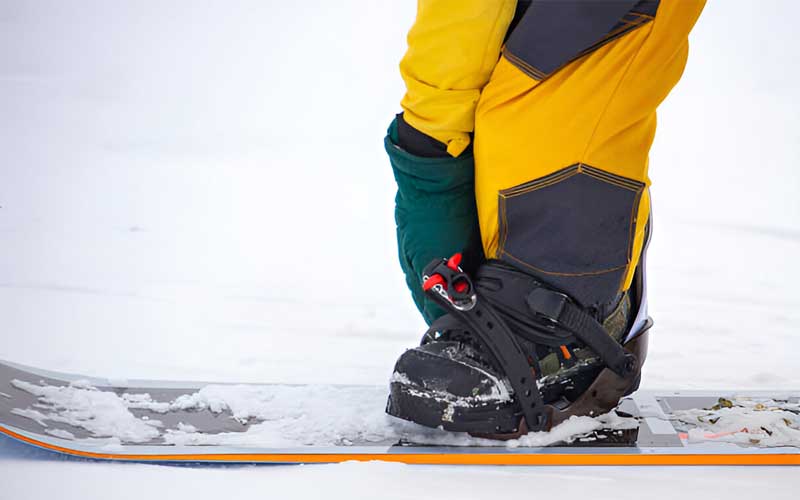
So you’ve moved past the beginner stage. You can link turns, stop confidently, and maybe even hit a small jump or two. Now you’re ready to upgrade your gear, and boots are the most important piece of equipment you’ll buy. Intermediate riders need boots that offer a balance of comfort, support, and response—without the harsh stiffness of expert-level models or the soft, forgiving flex of beginner boots. This guide will walk you through everything you need to know to pick the right pair for your riding style and foot shape.
Why Boots Matter More Than You Think
Your boots are the direct connection between your body and your snowboard. Unlike bindings or the board itself, boots affect every movement you make. If they’re too soft, you’ll struggle to control your edges at speed. If they’re too stiff, your feet will ache and you’ll lose the playful feel that makes snowboarding fun. For intermediate riders, the goal is a boot that supports your progression while keeping you comfortable all day. A good pair will improve your turning, reduce fatigue, and help you ride with more confidence on steeper terrain and in variable snow.
Key Factors to Consider
1. Flex Rating
Flex is the most important spec to understand. It describes how stiff the boot is, usually on a scale from 1 (very soft) to 10 (very stiff). Intermediate riders should look for a flex between 4 and 7. This range gives you enough support for carving and powder without being unforgiving.
- Soft (1–3): Best for beginners and park riders who want a playful, forgiving feel. Not ideal for high-speed carving.
- Medium (4–7): The sweet spot for intermediate riders. Offers a balance of response and comfort. Great for all-mountain riding.
- Stiff (8–10): For advanced and expert riders who charge hard, carve aggressively, or ride steep, technical terrain. Can be uncomfortable for intermediate riders.
Keep in mind that flex can vary between brands. A medium flex from one company might feel stiffer than a medium from another. Always try boots on if you can, or read reviews from riders with similar experience levels.
2. Lacing System
How you tighten your boots matters for fit, convenience, and performance. There are three main systems to choose from.
| Lacing System | Pros | Cons | Best For |
|---|---|---|---|
| Traditional Laces | Cheap, reliable, easy to replace, allows fine-tuned fit | Slow to tighten, can loosen while riding, no quick adjust | Riders on a budget or those who prefer a classic feel |
| Boa System | Fast, easy to adjust with one hand, even tension, no loose laces | More expensive, harder to repair if a cable breaks, can pressure points | Riders who want convenience and quick on-the-fly adjustments |
| Speed Lace / Hybrid | Quick to tighten, good hold, usually cheaper than Boa | Laces can still freeze or loosen, less micro-adjustment than Boa | Intermediate riders who want speed and value |
For most intermediate riders, a Boa or speed lace system offers the best mix of convenience and performance. But if you’re on a tight budget, traditional laces work perfectly fine—they just take a bit more effort.
3. Fit and Comfort
No matter how great a boot looks on paper, it’s useless if it doesn’t fit your foot. Snowboard boots should fit snugly but not painfully. Your toes should lightly touch the front, and your heel should stay locked down when you flex forward. A good fit prevents blisters, numbness, and loss of control.
- Measure your feet: Use a Brannock device or trace your foot on paper. Measure both feet—they’re often different sizes. Always go with the larger foot.
- Try boots on in the afternoon: Your feet swell during the day. Fitting in the morning can lead to boots that feel too tight later.
- Wear thin snowboard socks: Thick socks can change the fit and reduce circulation. Bring the socks you plan to ride in.
- Check heel hold: Stand and flex your knees. If your heel lifts more than a few millimeters, the boot is too big or the wrong shape for your foot.
- Consider custom insoles: Many intermediate riders benefit from aftermarket insoles. They improve arch support, reduce foot fatigue, and can fix minor fit issues.
Remember that boots will pack out slightly after a few days of riding. They should feel snug—not tight—when new. If they feel perfect in the shop, they might become too loose later.
4. Boot Construction and Materials
Intermediate riders should look for boots with durable materials and quality construction. Cheaper boots often use lower-grade liners and soles that break down quickly. Here’s what to look for:
- Liner: A heat-moldable liner is a big plus. It customizes to your foot shape for better comfort and heel hold. Many intermediate boots come with them.
- Outsole: Rubber soles offer better grip when walking on snow or ice. Look for a sole with a good tread pattern if you hike or walk a lot.
- Shell: Synthetic materials like nylon and polyurethane are common. They should be flexible but supportive. Avoid boots with thin, flimsy shells.
- Flex Zones: Some boots have specific flex zones that make it easier to flex forward for turns while staying stiff side-to-side for edge control.
Brands like Burton, K2, Salomon, Vans, and ThirtyTwo are known for making quality intermediate boots. Read reviews and check warranty policies before buying.
5. Riding Style and Terrain
Your boot choice should match how and where you ride. An intermediate rider who spends most time in the park has different needs than one who loves carving groomers or exploring powder.
- All-Mountain: Look for medium flex (5–7), good support, and a comfortable fit. This is the most versatile choice.
- Park and Freestyle: Softer flex (4–6) allows for tweaks and presses. Prioritize light weight and a flexible shell.
- Carving and Speed: Stiffer flex (6–8) gives better edge response and stability at high speeds. Look for a stiffer shell and strong heel hold.
- Powder and Backcountry: Medium to stiff flex with a rugged outsole for hiking. Waterproof materials are essential.
If you’re not sure, go with an all-mountain boot. It will handle almost everything you throw at it while you figure out your favorite style.
How to Try Boots On (The Right Way)
Many shops allow returns, but it’s still best to try boots on properly before buying. Here’s a simple process:
- Put on your riding socks.
- Loosen the laces or Boa completely and slide your foot in.
- Push your heel to the back of the boot. Your toes should lightly touch the front.
- Tighten the laces or Boa starting from the bottom. You want even pressure across the whole foot.
- Stand up and flex your knees. Your heel should stay down. If it lifts, try a smaller size or a different model.
- Walk around the shop for a few minutes. Check for pressure points, numbness, or slipping.
- If possible, wear them for 10–15 minutes. Good boots should feel comfortable right away—not something you have to “break in” painfully.
If you’re buying online, order from a retailer with free returns. Try multiple sizes and models, and send back what doesn’t work. It’s worth the effort to get the right fit.
Budget vs. Value
Intermediate boots typically cost between $150 and $350. You can find decent boots under $200, but they may lack heat-moldable liners or durable soles. Spending a bit more often pays off in comfort and longevity.
| Price Range | What to Expect | Recommendation |
|---|---|---|
| $100–$180 | Basic materials, traditional laces, less durable, softer flex | Okay for light riding, but upgrade soon if you progress fast |
| $180–$280 | Heat-moldable liners, Boa or speed laces, medium flex, good support | Best value for most intermediate riders |
| $280–$400+ | Premium materials, advanced flex zones, stiffer flex, top-tier liners | Worth it if you ride 20+ days per season or want top performance |
Don’t forget to factor in the cost of insoles if you need them. A $40 insole can make a $200 boot feel like a $400 boot.
Common Mistakes to Avoid
- Buying boots too big: A common mistake. Big boots cause heel lift, poor control, and blisters.
- Choosing flex based on looks: A cool-looking boot that’s too stiff or too soft will ruin your day.
- Ignoring your foot shape: Some brands fit narrow feet, others wide. Know your foot shape and read fit reviews.
- Skipping insoles: Stock insoles are often flat and cheap. Aftermarket insoles improve comfort and performance.
- Not breaking them in gradually: Even good boots need a few days to mold to your feet. Start with shorter sessions.
Top Features to Look For in 2026
Boot technology keeps improving. Here are some features that are especially useful for intermediate riders today:
- Heat-moldable liners: Custom fit for better comfort and heel hold.
- Boa H4 Coiler: Faster, more durable, and easier to adjust than older Boa systems.
- Articulated cuff: Allows natural ankle flex without shell deformation.
- Rubber toe caps: Added durability for park riders and those who walk a lot.
- Eco-friendly materials: Some brands now use recycled plastics and sustainable foams.
You don’t need every feature, but a heat-moldable liner and a reliable lacing system are worth prioritizing.
Final Checklist Before You Buy
Use this simple checklist to make sure you’ve covered all the bases:
- ✅ Flex rating between 4 and 7 (unless you have a specific style).
- ✅ Lacing system you’re comfortable using (Boa, speed, or traditional).
- ✅ Snug fit with no heel lift and no pressure points.
- ✅ Heat-moldable liner (highly recommended).
- ✅ Durable outsole with good grip.
- ✅ Matches your riding style and terrain.
- ✅ Fits your budget, including insoles if needed.
- ✅ Purchased from a retailer with a good return policy.
Choosing the right snowboard boots as an intermediate rider doesn’t have to be complicated. Focus on fit first, then flex, then lacing and features. Take your time, try on multiple pairs, and don’t settle for “good enough.” Your boots are the foundation of your riding—when they’re right, everything else feels easier and more fun. With the right pair, you’ll ride longer, progress faster, and enjoy every turn down the mountain.