
Best Ski Helmets with Visors of 2026
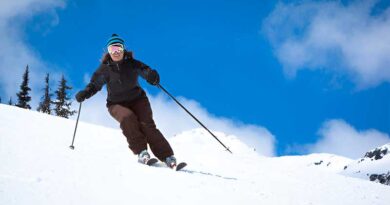
Hitting the slopes is awesome, but no one wants cold wind blasting their face all day. That’s why ski helmets with visors are becoming so popular. They combine safety with built-in goggles, offering a seamless view and perfect fit without any annoying gaps. If you’re tired of foggy goggles or losing them on the chairlift, we’ve found the best options to keep you comfortable and protected on your next adventure.
1. Smith Survey MIPS
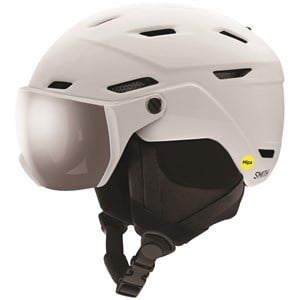
- Protection: Zonal Koroyd® for energy absorption
- Visor Tech: Integrated ChromaPop™ contrast-enhancing lens
- Airflow: AirEvac™ system with 14 vents
- Audio: Compatible with Aleck™ audio systems
The Smith Survey MIPS stands out for its use of zonal Koroyd, a material consisting of crumple-zone cylinders that manage energy more efficiently than traditional foam. This tech, combined with the MIPS brain protection system, makes it one of the most advanced helmets for impact safety. The integrated ChromaPop visor provides a massive field of view with clarity that rivals standalone goggles.
A major benefit of this design is its Over-The-Glasses compatibility, making it a favorite for prescription eyewear users. The Regulator climate control slider allows you to open or close vents even while wearing gloves. It is a tidy, all-in-one package that eliminates the common frustrations of twisted goggle straps and foggy lenses during your mountain sessions.
Pros: Lightweight Koroyd protection, OTG friendly, crisp ChromaPop optics.
Cons: Full shell feel can be bulky, visor seal varies by face shape.
View at REI View at Backcountry View at Amazon
2. OutdoorMaster Helmet
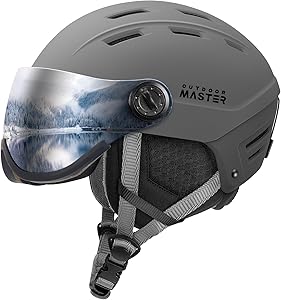
- Shell Material: Reinforced ABS outer shell with EPS foam
- Ventilation: 14 integrated air vent holes
- Interior: Detachable fleece lining and earmuffs
- Sizing: Adjustable dial for custom head circumference
The OutdoorMaster Kelvin II is designed for versatility across various winter sports, including skiing, snowboarding, and skating. It features a robust ABS shell paired with high-quality EPS foam to ensure reliable impact protection. The 14-hole ventilation system is strategically placed to balance airflow, keeping you cool during intense runs while blocking out freezing gusts.
This helmet focuses heavily on user comfort through its lightweight design and customizable fit. The removable inner lining and ear pads make it easy to clean and maintain hygiene throughout the season. For those seeking a reliable, entry-level helmet that pairs perfectly with standard goggles, this model offers a great balance of safety and functional simplicity.
Pros: Very affordable, lightweight design, highly breathable ventilation.
Cons: Basic safety features, lacks MIPS technology.
3. Salomon Driver Pro Sigma
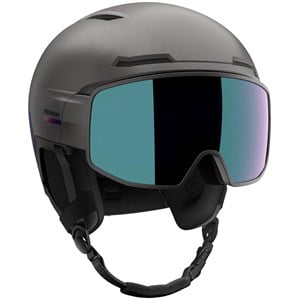
- Construction: Hybrid ABS upper and in-mold lower shell
- Safety Tech: MIPS and EPS 4D impact absorption
- Lens System: SIGMA magnetic visor for high contrast
- Fit System: BOA® 360-degree dial adjustment
The Salomon Driver Pro Sigma is a masterclass in integration, blending a high-performance helmet with a sleek magnetic visor. By utilizing SIGMA technology, the lens amplifies color contrast on the snow, allowing you to read terrain changes instantly. The hybrid construction ensures the helmet remains lightweight while providing the durability of a hard shell where it matters most.
Safety is a primary focus here, featuring both MIPS for rotational energy and EPS 4D for superior vertical shock absorption. The MaxFit ear pads and BOA system provide an immediate, snug fit that feels customized. It is an ideal choice for skiers who prioritize convenience and optical clarity without the bulk of traditional goggle straps.
Pros: Excellent color contrast, easy magnetic lens swaps, superior MIPS safety.
Cons: Heavier than non-visor models, premium price point.
See the Salomon Driver Pro Sigma See the Driver Pro Sigma Photo
4. Odoland Ski Helmet

- Design: 2-in-1 helmet with integrated visor goggles
- Airflow: 14 vents with Flow-Tech venting design
- Safety: Shock-absorbing EPS core and ABS shell
- Extras: Includes a protective helmet carry bag
The Odoland Ski Helmet is a comprehensive set that prioritizes all-around protection and value. Built with a tough ABS outer shell and a penetration-resistant EPS core, it meets essential safety standards for serious snow sports. The integrated visor utilizes a Flow-Tech design to promote air circulation, which significantly reduces the risk of fogging during high-output activity.
Comfort is managed through a flexible adjustment system that includes a rear dial, removable earmuffs, and a warm chin strap. This makes the helmet highly adaptable for different weather conditions or personal preferences. It is an excellent choice for adults looking for a stylish, lightweight, and coordinated gear set that performs consistently across different terrain and temperatures.
Pros: Complete 2-in-1 value, effective anti-fog visor, includes carry bag.
Cons: Visor is not magnetic, sizing can run slightly small.
5. Salomon Driver Prime Sigma MIPS
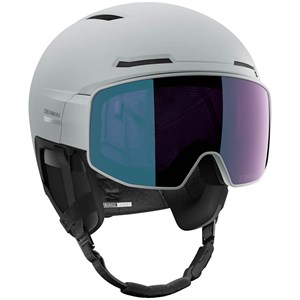
- Lens: Photochromic SIGMA magnetic visor
- Buckle: Fidlock® magnetic fastening system
- Liner: Breathable Merino wool interior
- Safety: Smart Safety 360 with EPP and EPS4D
The Salomon Driver Prime Sigma MIPS represents the pinnacle of visor helmet technology. This “Prime” edition upgrades the standard experience with a photochromic SIGMA lens that automatically adjusts its tint based on light conditions. Combined with the premium Merino wool liner and a Fidlock magnetic buckle, this helmet provides a luxury feel that is unmatched in the category.
Safety is equally high-end, utilizing the Smart Safety 360 concept which mixes EPS4D and all-round EPP for maximum head protection. The Motion Shield Advanced system allows the visor to move smoothly, mimicking the fit of traditional goggles while maintaining the convenience of a visor. It is the ultimate choice for those who want every premium feature available in a single unit.
Pros: Auto-adjusting photochromic lens, ultra-soft Merino liner, easy Fidlock buckle.
Cons: Highest price point, slightly heavier than the Pro version.
See the Salomon Driver Prime Sigma MIPS See the Driver Prime Sigma MIPS Photo
6. Oakley MOD 7
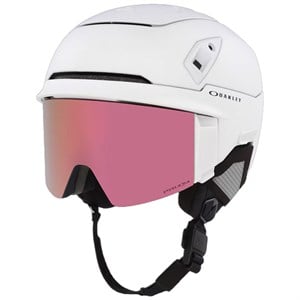
- Shell: Duramatter Mix hybrid shell construction
- Lens: Integrated Prizm™ Lens Technology
- Integration: Secure-Connect magnetic attachment
- Adjustment: Lens-Seal side button for custom sealing
The Oakley MOD 7 is a futuristic all-mountain helmet that redefines how optics and headwear interact. Featuring the proprietary Secure-Connect system, the visor magnetically connects and mechanically secures to the helmet in both active and stowed positions. This ensures that the visor stays put during high-speed runs while offering a Lens Landing Zone for easy storage.
Equipped with Prizm Lens Tech, the MOD 7 offers industry-leading contrast for spotting obstacles and snow textures. A unique Lens-Seal adjustment button allows you to pull the visor closer to your face, creating a personalized seal against wind and moisture. The Duramatter Mix shell provides a balanced, durable design that protects without adding unnecessary weight to your ride.
Pros: Industry-leading Prizm optics, unique adjustable face seal, futuristic aesthetic.
Cons: No MIPS on this specific spec, non-removable ear pads.
View at Backcountry View at Amazon
7. uvex Wanted

- Protection: Robust outer shell with EPS inner core
- Lens Category: Filter category 2 (19-43% transmission)
- Adjustment: uvex IAS and FAS webbing systems
- Ventilation: Closable climate regulation system
The uvex Wanted Visor helmet is a sleek, German-engineered option that focuses on durability and precise fitting. It features an impact-resistant outer shell and a shock-absorbing EPS interior to provide a high level of safety. The IAS system allows for exact adaptation to your head circumference, while the FAS webbing ensures the straps stay comfortably in place regardless of your head shape.
This helmet is particularly well-suited for mixed light conditions, as its category 2 lens provides a balanced light transmission. The closable ventilation system is a standout feature, allowing the rider to manually regulate the internal temperature depending on the intensity of the run or the external weather. It offers a clean, modern look for both men and women.
Pros: Precision adjustment system, closable vents for warmth, high-quality build.
Cons: Limited lens versatility, visor isn’t as wide as competitors.
8. SNOWER Ski Helmet with Goggles
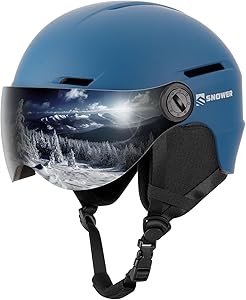
- Components: 2-in-1 helmet with detachable goggles
- Ventilation: 10 strategically placed airflow vents
- Fit: 3-way precision adjustment system
- Material: ABS outer shell and high-density EPS liner
The SNOWER Ski Helmet offers a practical 2-in-1 solution for winter sports enthusiasts of all skill levels. By integrating detachable goggles with an impact-resistant ABS shell, it provides a stable and secure setup that won’t shift during sharp turns. The high-density EPS foam liner is designed to effectively absorb shock from unexpected collisions on the slopes or the ice rink.
This helmet excels in usability, featuring a rear adjustment dial that is easy to manipulate even while wearing thick gloves. The interior is lined with soft fleece and includes windproof edging to keep the cold at bay. With 10 vents and an anti-fog coating on the goggles, it maintains a clear view and a comfortable head temperature throughout the day.
Pros: Very user-friendly adjustment, soft fleece lining, great for beginners.
Cons: Fewer vents than premium models, visor seal is basic.
See the SNOWER Ski Helmet with Goggles
How to Choose Ski Helmets with Visors
Ski helmets with integrated visors combine head protection and eye coverage in one tidy package. They are comfortable with glasses, quick to flip up on lifts, and great for travelers who prefer fewer pieces of gear. Choosing the right one comes down to getting the fit, safety, and lens features dialed. This guide walks you through everything that matters so you can buy with confidence and ski in comfort.
Why pick a visor helmet?
- Convenience: no separate goggles to manage or fog up in your pocket.
- Better glasses compatibility: many models are OTG-friendly, leaving more space and less pressure on frames.
- Wide field of view: large shields create a panoramic window with fewer blind spots.
- Travel simplicity: one item to pack, fewer straps and cases.
Safety first: standards and impact technology
Start by checking the safety certification on the label. In North America you’ll commonly see ASTM F2040; in Europe, EN 1077. Some helmets carry both. These standards indicate the helmet has passed impact tests appropriate for snow sports.
Rotational impact systems
Beyond the baseline standard, look for technology designed to manage rotational forces from angled impacts. Many brands offer systems that allow the liner to move slightly relative to the head, reducing transmitted rotational energy. It adds a little weight and cost but is well worth considering, especially if you ski faster terrain or crowded pistes.
Shell construction and liners
In-mold vs. hybrid
- In-mold: a lightweight polycarbonate shell fused to an EPS foam liner. Best for gram-counters and all-day comfort.
- Hybrid or ABS: a tougher, sometimes heavier construction with enhanced durability for frequent travelers and hard use.
Liner comfort
Focus on moisture-wicking fabrics, removable ear pads, and a plush—but not spongy—contact feel. A high-quality liner should hug without creating hot spots, and it should be removable for washing to keep odors at bay.
Getting the fit right
Measure and match
- Wrap a soft tape measure level around your head just above the eyebrows and ears.
- Note the circumference in centimeters and compare to the brand’s size chart.
- Aim for snug: the helmet should not wobble when you shake your head gently.
Adjustability
Most visor helmets include a dial-fit system. Turn the dial to micro-adjust tension so the helmet stays put without pressure points. Try the strap & buckle with gloves to make sure it’s easy to manage on the hill.
With glasses
If you wear prescription eyewear, bring your frames to the shop. Look for OTG design notes, enough visor clearance at the bridge, and cushioned foam that seals without crushing the frames.
The visor: lens types, tints, and coatings
The visor is the make-or-break feature. Consider your typical weather and light conditions, and whether you prefer one do-it-all lens or swapping shields.
Lens categories and VLT
Visible Light Transmission (VLT) describes how much light passes through the visor. Lower VLT (10–20%) suits bright sun; higher VLT (35–60%) is better for flat light and storms. Some brands label visors by category from low-light to sunny. If you ride varied conditions, a medium VLT around 20–30% balances versatility.
Tints and mirrors
- Sunny days: darker greys, browns, or green tints with a mirror finish to cut glare.
- Flat light: rose, amber, or yellow tints that boost contrast and help read terrain.
- All-around: copper or rose-brown tints that handle mixed clouds and sun.
Photochromic and polarized
Photochromic visors automatically adjust to ambient light, making them excellent for changeable mountain weather and tree runs. Polarized options reduce glare off ice, but can sometimes make it harder to read icy sheen or interfere with viewing certain LCD screens (like some lift gates); try before you buy.
Anti-fog and anti-scratch
Look for dual-pane or coated visors that manage condensation. Anti-fog coatings are helpful, but ventilation and your layering choices matter just as much. An anti-scratch hard coat protects the shield during travel and on chairlifts.
Ventilation and temperature control
Warm heads sweat, and sweat causes fog. A well-ventilated helmet reduces both.
Vent types
- Fixed vents: lighter and simpler, less to break.
- Adjustable vents: sliders you can open on spring days and close in a blizzard.
Airflow path
Check that intake vents at the front and exhaust ports at the rear line up with channels through the liner. When you flip the visor down, air should still move across the inside surface to limit fogging.
Comfort details that matter
Weight and balance
Visor helmets weigh a touch more than goggle setups. Try a few, and wear them for a few minutes each. A well-balanced helmet won’t feel front-heavy, even with a large shield.
Acoustics and hearing
Good ear pads keep you warm while letting you hear approaching skiers. Some pads accept audio chips; if you ride with tunes, check compatibility and cable routing or Bluetooth pockets.
Chin strap and microfleece
Look for a padded chin strap with a glove-friendly buckle and a soft liner against your jaw. Small comforts add up on long, cold days.
Swapping visors and spares
Some helmets ship with multiple visors or offer quick-release mechanisms. If you ski in very bright sun and occasional storms, owning a dark visor plus a high-VLT storm visor is ideal. Make sure the hardware feels sturdy, the hinge is smooth, and the seal sits flush to prevent spindrift sneaking in.
Compatibility and field of view
A key advantage of visor helmets is the wide, uninterrupted field. Still, not all visors are equal. Put the helmet on and scan left, right, and down toward your tips. Ensure the lower rim doesn’t block your view when tucking or traversing. If you ever plan to use standard goggles as a backup, check that the helmet’s brim plays nicely with goggle straps and shapes.
Travel and durability
Hard-shell or hybrid models handle baggage stress better, though they weigh more. Always pack the visor in a soft cover or use the included protective bag to prevent scratches. If you take frequent trips, a dedicated helmet case with molded sides is worth it. Remember: after any significant impact, retire the helmet even if it looks fine; its protective foam may be compromised.
Budget and value
Entry level
Expect reliable certification, fixed vents, a single all-around visor, and simple liners. Great for casual resort days and value hunters.
Mid-range
Upgrades include adjustable ventilation, rotational impact systems, better acoustics, and improved anti-fog coatings. Often the sweet spot for most skiers.
Premium
Lightweight hybrids, photochromic or polarized visors, magnetic buckles, dialed fit systems, and plush washable liners. Ideal for frequent skiers and gear minimalists who want the most convenient setup.
Care and maintenance
- Dry thoroughly after skiing: open vents and lift the visor; avoid direct heat sources.
- Clean the visor with lukewarm water and a microfiber cloth; avoid harsh chemicals.
- Store in a cool, dry place with the visor covered to prevent scratches.
- Inspect hinges, seals, and screws at the start of each trip.
Quick fitting checklist
Helmet fit
- No pressure points on temples, forehead, or the top of the ears.
- Dial cinches snugly; helmet does not rock when you shake your head.
- Chin strap contacts skin when you yawn, but does not dig in.
Visor interface
- Seal sits comfortably on the nose and cheeks without gaps or pinching.
- Frames fit inside if you wear glasses, with no contact on the lens.
- Flip-up action is smooth and glove-friendly.
Vision and fog control
- Appropriate VLT for your home mountain’s typical light.
- Anti-fog measures plus effective ventilation.
- Peripheral vision remains wide open.
Who benefits most from visor helmets?
Beginner and intermediate resort skiers love the simplicity. Parents appreciate fewer moving parts for kids who lose goggles. Glasses wearers often find the fit more comfortable and fog-free. If you tour or sweat heavily on the skintrack, traditional helmets with separate goggles may ventilate better; for lift-served laps, a visor helmet’s convenience is hard to beat.
Final tips before you buy
Try in ski clothing
Wear your usual beanie or balaclava when fitting. A thin skull cap can change how the liner feels and how the visor seals on your cheeks.
Match to local weather
Bright, high-altitude resorts reward darker or photochromic visors. Cloudy, coastal, or forested areas call for contrast-boosting tints with higher VLT.
Think long-term
If you plan to ski more seasons, investing in rotational impact protection, better ventilation, and at least one spare visor will pay off in comfort and confidence.
Bottom line
A great ski helmet with a visor blends certified protection, a precise fit, clear vision across changing light, and easy temperature control. Prioritize safety standards and impact technology, make the fit perfect with a dial system, choose a visor tint or photochromic option that matches your weather, and ensure ventilation works with your layering. Do that, and you’ll spend more time carving turns—and less time fussing with fog, straps, and scratched lenses.