Best All-Mountain Ski Boots of 2025
Finding the right all-mountain ski boots can make a huge difference in how much fun you have on the slopes. These boots are built to handle a bit of everything, from groomed runs to fresh powder, giving you comfort, control, and versatility in one package. Whether you’re carving turns, exploring off-piste, or just cruising, the right pair of boots will keep you stable and confident. In this guide, we’ll share the best all-mountain ski boots to help you pick the perfect fit.
1. Tecnica Mach1 MV 120
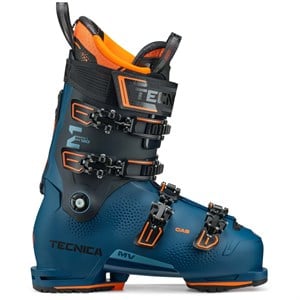
- Flex: 120, stiff for expert skiers
- Last: 100mm, medium volume fit
- Liner: C.A.S. Performance Liner with Celliant insulation
- Sole: GripWalk ISO 23223 Soles
The Tecnica Mach1 MV 120 is a boot built for skiers who demand both performance and comfort. Its C.A.S. Shell and liner offer a custom fit that works well right from the start but can also be fine-tuned by a bootfitter. The T-Drive rear spine provides a smooth, progressive flex that helps deliver power and precision to your skis. This balance of stiffness and comfort makes the Mach1 MV 120 a great option for advanced riders looking to push their limits without sacrificing fit.
Beyond performance, the boot comes with practical features that enhance usability. The Lift Lock buckles stay open when you are taking the boots on and off, saving time and effort, while the Quick Instep design uses softer plastic to make entry and exit easier. These touches, combined with a supportive liner and stiff flex, make the Mach1 MV 120 a reliable choice for skiers who spend long days carving hard. It is an ideal boot for aggressive skiers who want comfort that lasts all day.
Pros & Cons
- Pros: Powerful performance, customizable fit, easy entry and exit
- Cons: Too stiff for lighter or less aggressive skiers
See the Tecnica Mach1 MV 120 See the Women’s Mach1 MV 105
2. Lange Shadow 130 LV GW
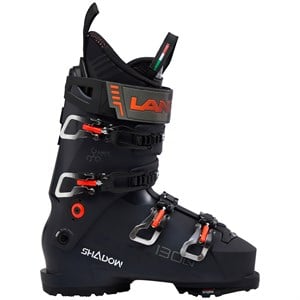
- Flex: 130, very stiff for advanced skiers
- Last: 97mm, narrow fit for low-volume feet
- Shell: Dual Core with Suspension Blade Dual Pivot
- Liner: Auxetic Technology liner
The Lange Shadow 130 LV GW is designed for skiers who want maximum precision and control. With Dual Core Technology, it combines stiff plastics where strength is needed and softer materials for better comfort. This results in a boot that offers a smooth, progressive feel on the snow and responds quickly to every movement. The Suspension Blade Dual Pivot enhances power transfer, giving you more control with less effort on steep, demanding runs.
Fit is another strength of this boot, with its 97mm last providing a snug hold for narrow, low-volume feet. The Auxetic liner adapts naturally to foot shape, ensuring even pressure and strong support. With its 130 flex rating, the Shadow 130 LV GW is built for aggressive skiers who want a boot that feels like an extension of their body. For expert-level skiers seeking power and a precise fit, it is an outstanding choice.
Pros & Cons
- Pros: Strong power transfer, snug fit, highly responsive design
- Cons: Not suitable for wide feet
See the Lange Shadow 130 LV GW See the Women’s Shadow 115 LV GW
3. Atomic Hawx Ultra XTD 120 BOA GW
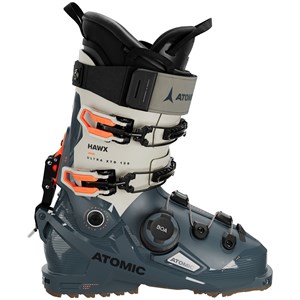
- Flex: 120 — stiff, performance-focused flex.
- Last: 98mm — narrow, low-volume fit.
- Closure: BOA lower system — micro-adjustable, even pressure.
- Walk Mode: Free/Lock 4.5 with 54° ROM — excellent touring mobility.
The Atomic Hawx Ultra XTD 120 BOA GW is a true do-it-all alpine-touring boot that balances downhill authority with uphill efficiency. On the descent it feels precise and powerful for its weight class — the 120 flex and Energy Backbone give confident edge hold and lively response. The narrow 98mm last locks your heel in and translates skier input to the ski cleanly, while Memory Fit lets a shop or at-home heat-mold tailor shell and cuff to iron out pressure points. The BOA lower closure is a genuine comfort and performance upgrade; it tensions evenly across the forefoot so you get support without hot spots.
For touring, the Free/Lock 4.5 mechanism and Frictionless Pivot deliver a natural stride and a generous range of motion, making skin-track kilometers feel less taxing. The Mimic Platinum liner is warm and moldable, with 3M Thinsulate adding insulation on cold days. The trade-off is the narrow last — many riders will want professional shell work if their feet aren’t already low-volume. If you want one boot that can chase pow, earn laps, and still hike comfortably, the Hawx Ultra XTD 120 BOA GW is one of the most convincing hybrids available.
Pros & Cons
- Pros: Versatile for resort and backcountry, precise fit, excellent BOA closure, reliable in cold temps.
- Cons: Narrow last may need customization for many feet.
See the Atomic Hawx Ultra XTD 120 See the Women’s Hawx Ultra XTD 115
4. Nordica Sportmachine 3 100
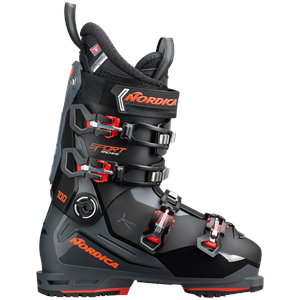
- Flex: 100 — medium, progressive flex for all-mountain use.
- Last: 102mm — medium-wide, comfort-oriented fit.
- Fit: Tri-Fit Technology with ACP — shell, cuff, and liner adjustability.
- Liner: 3D Black Cork Fit Primaloft — heat-moldable, insulating liner.
The Nordica Sportmachine 3 100 is built around comfort without sacrificing usable performance. Its roomy 102mm last welcomes wider feet and higher-volume calves, and the Tri-Fit approach makes customization straightforward: tweak shell, cuff, and liner independently to dial out pressure points. The 3D cork liner molds nicely and holds warmth well thanks to Primaloft, so long days on groomers stay comfortable. The 100 flex is forgiving but competent — it encourages progression and is stable when you pick up speed.
Construction-wise the Sportmachine blends a supportive spine with a softer foot wrap, which smooths power transfer and keeps the ride predictable. Easy Entry Instep makes boots simple to don when cold hands aren’t excited to wrestle with buckles, and the heat-moldable components let a shop refine the fit further. It’s not a race-boot — aggressive experts will want more stiffness — but for anyone prioritizing comfort and confidence across the whole mountain, the Sportmachine 3 100 is a smart, all-day option.
Pros & Cons
- Pros: Spacious, immediately comfortable fit; good customization; easy entry.
- Cons: Lacks the stiffness needed for very aggressive skiers.
See the Nordica Sportmachine 3 100 See the Women’s Sportmachine 3 85
5. Tecnica Cochise 120 DYN
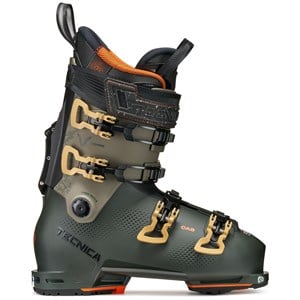
- Flex: 120 — stiff, downhill-capable flex.
- Last: 99mm — performance-average fit.
- Walk Mode: T-RIDE Walk Mechanism — roomy range for efficient touring.
- Fit: C.A.S. shell + Performance C.A.S. liner — strong customization potential.
The Tecnica Cochise 120 DYN nails the hybrid brief: uphill-friendly without feeling compromised on the descent. Carbon-reinforced rear spine and the T-RIDE walk mechanism provide a stable, powerful platform when locked in, yet open up to a highly efficient stride for long tours. The 99mm last strikes a reliable balance — snug enough for precise turns but not unforgiving. C.A.S. shell and liner customization let you sculpt the fit and remove pressure points for long days.
On the mountain the Cochise feels more like an alpine boot than a touring compromise — power transmission is immediate and consistent. Compatibility with Dynafit® tech fittings and GripWalk soles makes it versatile for mixed-use setups. Lightweight magnesium buckles and an inverted toe buckle add convenience and reliability. For advanced skiers who want a single boot to scrape powder, punch steep lines, and still hike efficiently, the Cochise 120 DYN is a refined, no-nonsense choice.
Pros & Cons
- Pros: Strong downhill performance for a touring-capable boot, excellent walk mode, deep customization options.
- Cons: Hybrid design won’t match the absolute stiffness of a dedicated alpine race boot.
See the Tecnica Cochise 120 DYN See the Women’s Cochise 105 DYN
6. K2 BFC 90
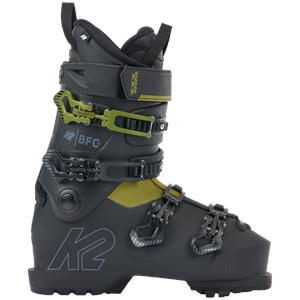
- Flex: 90 — forgiving, user-friendly flex for learners and cruisers.
- Last: 103mm — very wide, high-volume fit.
- Entry: FastFIT Instep — easier on/off with softer TPU instep.
- Liner: CushFit Plus — comfortable foam blend for daily comfort.
The K2 BFC 90 is unapologetically about comfort. Its 103mm last and CushFit Plus liner deliver immediate relief for skiers who have struggled with narrow, punishing boots. The FastFIT instep makes gearing up painless, which matters when you’re juggling kids, gloves, and lift lines. Despite the friendly focus, the BFC 90 still gives a predictable feel on the snow; the 90 flex is progressive enough for riders improving their technique without creating instability at moderate speeds.
Heat-moldable shell and cuff keep the option to refine the fit, so even wide-footed skiers can approach a more locked-in feel if desired. GripWalk outsoles improve walking traction off the snow. This is not a boot for high-speed charging or expert-level precision, but for recreational skiers who value comfort, warmth, and ease of use, the BFC 90 is a sensible, confidence-building choice that keeps feet happy all day.
Pros & Cons
- Pros: Extremely comfortable wide fit, easy entry, good for progression and long days.
- Cons: Too soft for advanced skiers seeking firm response.
See the K2 BFC 90 See the Women’s BFC 85
7. Lange XT3 Free 120 MV GW
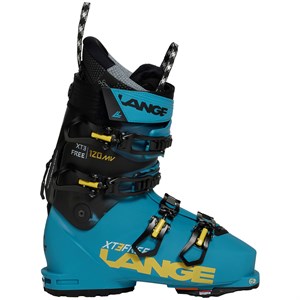
- Flex: 120 — stiff, downhill-oriented flex for expert skiers.
- Last: 100mm — medium-volume, precision-focused fit.
- Walk Mode: Active Power V-Lock — 53° ROM for efficient touring.
- Shell: Dual Core Technology — targeted stiffness with comfort around the foot.
The Lange XT3 Free 120 MV GW blends Lange’s downhill DNA with thoughtful touring features. Dual Core shell tech concentrates stiffness where it matters — spine and heel — while softer zones around the foot keep comfort without deadening feedback. The result is a boot that drives skis with Lange’s characteristic precision but still allows long skin tracks thanks to the Active Power V-Lock and a generous 53 degrees of hinge motion. The 100mm last is an approachable compromise for many advanced skiers.
Customization is thorough: the Dual 3D Full Liner and thermo-moldable shell let shops dial in micro-fit adjustments so the boot feels snug and performance-ready. Natural Stance and a slightly lower ramp angle reduce quad fatigue on long days and improve balance. With GripWalk soles and Dynafit tech compatibility, the XT3 Free is set up for mixed-mountain use. It’s a top pick for experts who won’t accept downhill compromises but still value uphill freedom.
Pros & Cons
- Pros: Excellent downhill power, efficient walk mode, highly customizable fit.
- Cons: Stiff flex may be unforgiving for intermediate skiers.
See the Lange XT3 Free 120 See the Women’s XT3 Free 115
8. Salomon Shift Pro 120
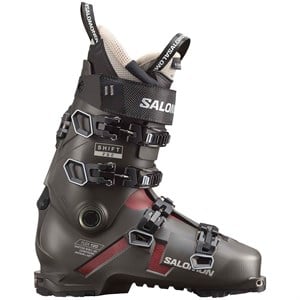
- Flex: 120 — powerful, freeride-capable flex.
- Last: 100mm — medium last expandable with Custom Shell HD.
- Walk Mode: Surelock Ski Walk Mechanism — smooth transitions with 53° ROM.
- Liner: My Custom Fit 4D — seamless, heat-moldable comfort.
The Salomon Shift Pro 120 is built to erase the compromise between alpine performance and touring capability. It locks into a downhill-ready platform with Core-Frame construction that concentrates stiffness where you need it for pop and precision. The Custom Shell HD system makes it straightforward to expand or refine the 100mm last, while the My Custom Fit 4D liner gives a seamless, pressure-free feel once molded. For freeriders who also want to hike, the Shift Pro offers a rare combination of responsiveness and uphill practicality.
On the skin track the Surelock mechanism and hiking hooks provide a roomy, natural stride, and integrated tech inserts make it compatible with modern AT setups. GripWalk and Midgrip soles help with traction on mixed approaches. The learning curve for the walk mechanism is minor compared to the gains: once you’re used to it, transitions are slick. If you want a single boot to stomp big lines, tour when desired, and still perform like a true freeride boot, the Shift Pro 120 is one of the most convincing choices.
Pros & Cons
- Pros: Outstanding versatility, customizable fit, strong downhill performance with touring features.
- Cons: Walk mechanism may feel complex at first for some users.
See the Salomon Shift Pro 120 See the Women’s Shift Pro 110
How to Choose All-Mountain Ski Boots
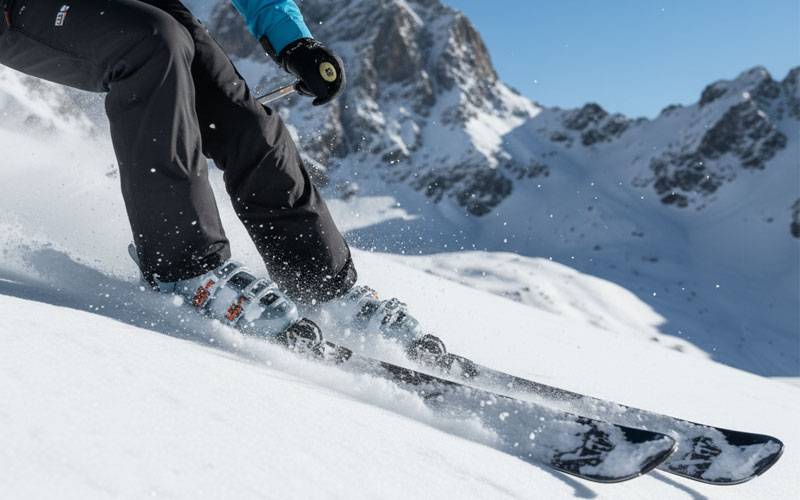
Choosing the right pair of ski boots is arguably the most critical decision you’ll make for your skiing experience. While skis get all the glory, your boots are the direct connection between your body and the ski. A great pair of boots can transform your day on the mountain, providing comfort, control, and confidence. A poor pair can lead to pain, cold feet, and a frustrating lack of performance. This guide will walk you through the essential factors to consider when selecting All-Mountain ski boots, the versatile workhorses designed to handle a wide range of conditions and terrain. From fit and flex to features and brands, we’ll help you find the perfect match for your skiing style and foot shape.
Understanding All-Mountain Ski Boots
All-Mountain ski boots are the jack-of-all-trades in the ski boot world. They are designed to be comfortable and perform well on groomed runs, in moguls, through trees, and in off-piste powder. This versatility makes them the ideal choice for most recreational skiers who don’t specialize in a single discipline like racing or park skiing. These boots typically balance a moderate flex with a comfortable, forgiving fit. They often include features that make them suitable for both on- and off-piste adventures, such as walk modes for easier hiking or a slightly softer flex for absorbing variable snow conditions.
The Anatomy of a Ski Boot
To choose the right boots, it’s helpful to understand their key components:
- Shell: The hard plastic exterior of the boot that provides the structure and support. The fit of the shell is paramount.
- Liner: The soft, inner boot that provides cushioning, insulation, and comfort. Many modern liners are heat-moldable for a custom fit.
- Buckles: Typically four buckles that secure the shell around your foot and lower leg.
- Power Strap: A strap, usually located at the top of the boot cuff, that provides additional support and control.
- Sole: The bottom of the boot that interfaces with the ski binding. It can be a standard alpine sole or a rockered GripWalk sole for easier walking.
Finding the Right Fit
Fit is everything when it comes to ski boots. A good fit means a balance between comfort and performance. The boot should feel snug, not painful. A boot that is too loose will cause your foot to move around, leading to blisters, loss of control, and cold feet. A boot that is too tight will be incredibly painful and restrict blood flow. Here’s how to assess the fit:
Shell Fit
The first step in a proper boot fitting is a “shell fit.” To do this, remove the liner from the shell and put your foot in the empty shell. Slide your foot forward until your toes lightly touch the front. You should have about 1.5 to 2 centimeters of space between your heel and the back of the shell. This space is known as the “heel gap.” This is a crucial step that many skiers skip, but it is the most accurate way to determine if the shell is the correct size for your foot.
Liner Fit
Once you’ve confirmed the shell size, put the liner back in and try on the complete boot. Buckle the boots loosely and stand up. Your toes should lightly touch the front of the liner. When you flex forward into a ski stance, your heel should lock into place, and your toes should pull back slightly from the front. The boot should feel snug around your heel, ankle, and instep. Your foot should not slide or lift within the boot when you flex.
Understanding Boot Sizing
Ski boots are sized using the “Mondo Point” system, which corresponds to the length of your foot in centimeters. For example, a size 26.5 boot is designed for a foot that is 26.5 cm long. While this is a good starting point, it’s not the full story. The width, or “last,” of the boot is just as important. Lasts typically range from narrow (97-98mm) to medium (100mm) to wide (102mm+). Your foot shape will dictate which last is best for you.
Choosing the Right Flex
The “flex index” of a ski boot refers to the stiffness of the shell. A higher number indicates a stiffer boot, while a lower number indicates a softer boot. A stiffer boot provides more power transmission and control, while a softer boot is more forgiving and comfortable. Choosing the right flex depends on your skill level, weight, and skiing style.
- Beginner to Intermediate: A flex rating between 60 and 90 is a good starting point. These boots are comfortable and forgiving, allowing you to learn and progress without being overly aggressive.
- Intermediate to Advanced: A flex rating between 90 and 120 is suitable for most advanced recreational skiers. These boots offer a great balance of comfort and performance, providing enough power to handle varied terrain at higher speeds.
- Advanced to Expert: A flex rating of 120 and up is reserved for expert skiers who ski fast and aggressively. These boots provide maximum control and power transmission but are less comfortable for casual skiing.
Keep in mind that flex ratings are not standardized across brands, so a 100 flex from one company might feel different from a 100 flex from another. It’s crucial to try on boots from different brands to find the one that feels right for you.
Key Features to Consider
- Walk Mode: Many All-Mountain boots now feature a walk mode, which unhinges the cuff from the shell for a more natural walking motion. This is a game-changer for walking to and from the lift or for short hikes.
- GripWalk Soles: These soles are designed with a rocker shape and a high-traction rubber tread, making it much easier and safer to walk on snow, ice, and pavement. Be sure your bindings are compatible with GripWalk soles.
- Heat-Moldable Liners: Many boots come with liners that can be heated and molded to the shape of your foot, providing a customized fit and enhanced comfort. This is a great feature to look for, especially if you have unique foot contours.
- Customization Options: Look for boots that allow for micro-adjustments on the buckles and have a customizable power strap. Some boots also have adjustable canting, which allows you to align the cuff to your leg angle.
The Importance of Professional Boot Fitting
While this guide provides a solid foundation, nothing beats the expertise of a professional boot fitter. They have the knowledge and tools to measure your feet accurately and identify any unique characteristics, such as high arches or bunions. A good boot fitter will work with you, listening to your needs and goals, to find the perfect boot. They can also perform crucial modifications, such as stretching the shell, grinding the plastic, or adding custom footbeds, to ensure a perfect fit. Investing in a professional boot fitting is one of the best things you can do for your skiing. It ensures that your boots are not only the right size but also perfectly tailored to your unique anatomy, providing a level of comfort and performance that off-the-shelf boots simply can’t match.