Best Ski Goggles for Beginners of 2026
Starting out on the slopes is exciting, but having the right gear makes a big difference in your skiing experience. For beginners, ski goggles are one of the most important items to keep your vision clear and your eyes protected. Good goggles shield you from wind, snow, and bright sunlight while helping you see changes in the terrain. In this guide, we’ll share the best ski goggles for beginners that are easy to use, comfortable to wear, and reliable in all kinds of weather.
1. OutdoorMaster OTG Ski Goggles

- Design: Over-The-Glasses (OTG) fit for adults and youth
- Lens: Dual-layer anti-fog coated inner lens
- Protection: Soft TPU frame with 100% UV400 protection
- Strap: Extra long elastic strap for helmet compatibility
The OutdoorMaster OTG Ski Goggles are built with glasses wearers in mind, offering a spacious frame that comfortably accommodates prescription eyewear without pinching or fogging up. The dual-layer lens system does a solid job keeping condensation at bay, even during high-exertion runs, while the soft TPU frame molds gently to the face for a snug, irritation-free fit across long days on the mountain.
Beyond fog control, the 100% UV400 protection shields eyes from harsh glare on bright snow days, and the extended elastic strap stretches easily over any helmet without slipping. For the price point, the build quality feels surprisingly durable, and the included carrying pouch is a nice touch for storage and lens protection between trips.
- Pros: Fits comfortably over glasses, effective anti-fog performance, affordable price
- Cons: Limited lens color options, frame feels basic compared to premium brands
See the OutdoorMaster OTG Ski Goggles
2. goodr Peak G

- UV Protection: 100 percent
- Lens Shape: Cylindrical
- Helmet Compatible: Yes, with swappable strap
- Interchangeable Lenses: Yes, includes 1 additional lens
The goodr Peak G goggles bring the brand’s signature playful design to the slopes without sacrificing performance. The included S1 yellow lens is a genuinely useful addition for low-light or flat-light conditions, letting riders adapt quickly as weather shifts throughout the day. The cylindrical lens shape offers a solid field of view, and the standard bridge fit works well for a medium-sized face.
The swappable strap system is straightforward, making lens and strap changes quick even with gloves on. Full UV protection ensures eyes stay safe on bright bluebird days, while the medium frame size strikes a good balance between coverage and a low-profile look. It’s a versatile pick for skiers who want reliable performance paired with goodr’s fun, colorful aesthetic.
- Pros: Easy lens swaps, includes extra low-light lens, comfortable medium fit
- Cons: Not polarized, light transmission specs not listed
3. Smith I/O MAG ChromaPop

- Lens Technology: ChromaPop for enhanced color and contrast
- Lens Shape: Spherical, standard bridge fit
- UV Protection: 100 percent
- Interchangeable Lenses: Yes, includes 1 additional lens plus lens protector
The Smith I/O MAG ChromaPop goggles deliver noticeably sharper detail and contrast on the slopes thanks to ChromaPop lens technology, making it easier to spot moguls, ice patches, and terrain changes at speed. The spherical lens shape provides a wide, distortion-free field of view, while the magnetic lens system allows for fast swaps between light conditions without fiddling with clips or levers.
Build quality feels premium throughout, with a standard bridge fit that suits medium-sized faces well and full helmet compatibility for seamless integration with most snowsports helmets. The variety of lens tint options, from storm yellow flash to everyday mirror finishes, means riders can fine-tune visibility for nearly any weather scenario, making this a strong all-around choice for frequent skiers.
- Pros: Fast magnetic lens swaps, excellent color contrast, premium build quality
- Cons: Higher price point, not polarized or photochromic
See the Smith I/O MAG See the Smith I/O MAG S See the Smith I/O MAG XL
4. Smith 4D MAG ChromaPop

- Field of View: Wide, spherical lens design
- Lens Technology: ChromaPop for sharp, defined optics
- UV Protection: 100 percent
- Interchangeable Lenses: Yes, includes 1 additional lens plus lens protector
The Smith 4D MAG ChromaPop goggles are aimed at riders who want maximum peripheral awareness while carving their line. The expanded frame geometry pushes the field of view further than many competitors, which is especially useful in tree runs or terrain parks where spotting obstacles early matters. ChromaPop lens tech keeps colors vivid and edges crisp, helping reduce eye strain over long days.
With an extensive range of lens tint pairings available, from platinum mirror to violet chromapop, riders can match lenses precisely to conditions ranging from bright sun to flat light. The magnetic lens system makes swaps quick, and the standard bridge fit combined with medium frame size suits most adult faces comfortably under a helmet.
- Pros: Exceptionally wide field of view, sharp ChromaPop optics, quick magnetic lens changes
- Cons: Premium pricing, bulkier frame than minimalist alternatives
See the Smith 4D MAG See the Smith 4D MAG S See the Smith 4D MAG XL
5. OutdoorMaster PRO

- Design: Frameless, large spherical lens
- Lens System: Interchangeable, compatible with 20+ lens options
- Fit: OTG design for wearing over glasses
- Protection: Anti-fog coating with 100% UV400 protection
The OutdoorMaster PRO stands out with its frameless, large spherical lens that delivers an unobstructed, panoramic view of the terrain ahead. This design choice pays off on fast descents where peripheral awareness matters, and the anti-fog coating on every lens keeps visibility clear through variable temperatures. The OTG fit accommodates most eyeglass frames without excessive pressure on the temples.
What really sets this model apart is the interchangeable lens ecosystem, with over 20 lens options sold separately, letting riders build a setup tailored to sunny days, overcast skies, or night skiing. The included protective case and carrying pouch help keep spare lenses scratch-free, and the long elastic strap stretches comfortably over any helmet for a secure, all-day fit.
- Pros: Frameless wide view, huge lens customization options, comes with protective case
- Cons: Extra lenses sold separately, frameless design may feel less rigid
6. findway Ski Goggles OTG
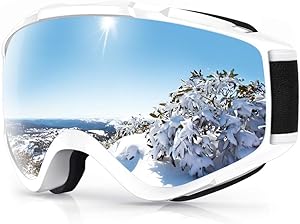
- Ventilation: Professional airflow system to reduce fogging
- Lens: Double lens with anti-scratch, anti-fog, revo mirror coating
- Fit: Oversized OTG design for glasses wearers
- Strap: Silicone-backed, extra long jacquard strap for helmet compatibility
The findway Ski Goggles OTG take a practical approach to fog control with a dedicated ventilation system that keeps fresh air circulating while pushing moisture out. Combined with the Italian-made anti-fog inner lens, this pairing works well even during intense, sweaty runs. The frameless spherical lens gives a wide, high-definition view of the slopes, and the mirror coating adds a sleek finished look.</p
Built with a premium TPU frame and triple-layer foam padding, these goggles stay comfortable over long sessions while blocking 100% of UV rays. The oversized OTG design fits most glasses easily, though the brand notes they aren’t intended for kids under 12. Backed by a one-year guarantee and responsive customer service, they represent solid value for the features included.
- Pros: Strong ventilation reduces fogging, comfortable triple-layer foam, one-year guarantee included
- Cons: Not suitable for children under 12, mirror coating can show smudges easily
See the findway Ski Goggles OTG
7. SMITH Squad

- Design: Semi-rimless frame with oversized cylindrical lens
- Lens Technology: ChromaPop for enhanced definition and contrast
- Coating: Smudge- and moisture-resistant for easy cleaning
- Strap: Dual-slide, ultra-wide silicone-backed strap
The SMITH Squad goggles are built around a semi-rimless frame and oversized cylindrical lens that together create an impressively wide field of view. ChromaPop lens technology enhances color and contrast, making details like icy patches or shaded tree wells easier to pick out in changing light. The smudge- and moisture-resistant coating keeps the lens cleaner for longer, cutting down on mid-run wipe-downs.
Designed to pair seamlessly with Smith snowsports helmets, the Squad goggles integrate well for maximum venting and a fog-free experience even when paired with non-Smith helmets. The dual-slide strap system makes sizing simple, and the ultra-wide silicone-backed strap stays firmly in place during aggressive runs. Overall fit and comfort are excellent for riders seeking an all-day, secure fit.
- Pros: Wide field of view, easy-clean lens coating, integrates well with helmets
- Cons: Best venting realized with Smith-branded helmets, limited color options
8. EXP VISION Over-Glasses Ski Goggles

- Frame: Detachable sponge lining for easy cleaning
- Lens: Panoramic cylinder design with anti-fog coating
- Protection: 100% UV400 blocking UVA and UVB rays
- Fit: OTG friendly with adjustable helmet-compatible strap
The EXP VISION Over-Glasses Ski Goggles bring a thoughtful hygiene-focused feature to the table with a detachable sponge frame that can be removed and cleaned, helping eliminate sweat odor buildup over a season of use. The panoramic cylinder lens minimizes visual interference while riding, and strategically placed top and bottom vents work alongside the anti-fog coating to keep the lens clear during demanding runs.
Full UV400 protection blocks harmful rays effectively, reducing eye fatigue during long days on reflective snow. The lightweight frame construction keeps pressure off the face and nose, making these comfortable for extended wear from the first lift to the last run. The spacious OTG design accommodates most prescription glasses, and the adjustable strap fits securely over a wide range of helmets.
- Pros: Removable washable sponge lining, lightweight all-day comfort, strong anti-fog venting
- Cons: Limited lens tint variety, build feels less premium than name-brand options
See the EXP VISION Over-Glasses Ski Goggles
Choosing Ski Goggles for Beginners?

Choosing the right ski goggles can feel like a daunting task, especially for beginners. The market is flooded with options, and the technical jargon can be confusing. However, a good pair of goggles is one of the most crucial pieces of equipment you’ll buy. They protect your eyes from snow, wind, and harmful UV rays, and they enhance your vision on the mountain. This guide will walk you through everything you need to know to make an informed decision, ensuring your first few days on the slopes are safe and enjoyable.
1. The Importance of Ski Goggles
Before diving into the specifics of what to look for, it’s essential to understand why goggles are so important. They are not just an accessory; they are a vital piece of safety equipment. Goggles provide a barrier against the elements. On a windy day, they prevent your eyes from tearing up, allowing you to see clearly. They also protect against snow and ice particles that can be kicked up by other skiers or snowboarders. More importantly, they offer protection from the sun’s powerful UV rays. The sun’s reflection off the snow can be intense, and prolonged exposure can lead to a condition known as “snow blindness,” a painful inflammation of the cornea. A good pair of goggles with proper UV protection is your best defense against this.
2. Key Features to Consider
When you start shopping, you’ll encounter a variety of features and technical terms. Don’t be intimidated. We’ll break down the most important ones so you know exactly what to look for.
a. Lens Tint and VLT (Visible Light Transmission)
The lens color and its VLT are arguably the most critical factors in choosing goggles. VLT is a measurement of how much light the lens allows to pass through to your eyes. It is expressed as a percentage. The lower the VLT, the darker the lens. Different lens tints are designed for different weather conditions.
- Low VLT (0-20%): Dark tints like black, gray, or dark brown are ideal for bright, sunny days. They reduce glare and protect your eyes from intense sunlight.
- Medium VLT (20-60%): Tints like orange, amber, or rose are versatile and work well on partly cloudy to overcast days. They enhance contrast and depth perception, helping you see bumps and dips in the snow.
- High VLT (60-100%): Clear or light yellow lenses are best for low-light conditions, such as stormy weather, fog, or night skiing. They let in the maximum amount of light to improve visibility.
For a beginner, a goggle with a medium-VLT lens (20-40%) is a great starting point, as it provides a good balance for most conditions. Many modern goggles come with interchangeable lenses, which is a fantastic feature. This allows you to swap out a dark lens for a low-light one, giving you versatility on the mountain. Some even have a magnetic system that makes swapping lenses incredibly easy.
b. Frame Size and Fit
The fit of your goggles is crucial for comfort and performance. They need to fit snugly against your face without being too tight or leaving gaps. A proper fit ensures they stay in place and keep snow and wind out.
- Helmet Compatibility: Always try on goggles with your ski helmet. They should fit together seamlessly, without a large gap (often called “gaper gap”) between the helmet and the top of the goggles. This gap can let in cold air and snow. The helmet and goggles should be a cohesive unit.
- Sizing: Goggles come in different sizes: small (for kids or people with small faces), medium, and large. Most adults will fit a medium-sized frame, but it’s best to try them on.
- Straps: Ensure the strap is adjustable and has a non-slip feature, like a silicone strip on the inside, to keep it from sliding on your helmet.
c. Anti-Fog Technology
One of the most frustrating things on the slopes is fogged-up goggles. This is caused by the temperature difference between your face and the outside air. Look for goggles with effective anti-fog features.
- Dual-Pane Lenses: This is the most common and effective anti-fog technology. The two layers of the lens, separated by a thermal barrier, prevent the inside lens from getting cold enough to condense moisture.
- Anti-Fog Coating: A hydrophilic coating on the inside of the lens helps to disperse water molecules, preventing them from clumping together and forming fog.
- Venting: Vents around the frame allow air to circulate, helping to equalize temperature and moisture.
d. UV Protection
Make sure any goggles you buy offer 100% UV protection. This is non-negotiable. It protects your eyes from harmful UVA, UVB, and UVC rays, which are especially potent at higher altitudes.
3. Choosing Your First Pair
For your first pair of goggles, don’t feel pressured to buy the most expensive model with every bells and whistle. A solid, reliable pair will serve you well. Here’s a simple checklist to follow:
- Try them on: Go to a sports or ski shop and try on several pairs with your helmet. Ensure they are comfortable and fit well.
- Prioritize fit over fashion: While style is nice, comfort and function are more important. A well-fitting pair of goggles will make your day on the mountain much better than a stylish but uncomfortable one.
- Look for a versatile lens: A medium-VLT lens (orange, amber, or rose) is a great starting point for a beginner who will likely be skiing in varied conditions.
- Check for anti-fog features: Make sure the goggles have dual-pane lenses and good venting.
- Ensure 100% UV protection: This should be a standard feature on all reputable goggles.
Remember, your first pair of goggles is an investment in your safety and comfort. By understanding these key features and following this guide, you can confidently choose a pair that will protect your eyes and enhance your experience on the slopes. Happy skiing!