Best Small Ski Backpacks of 2026
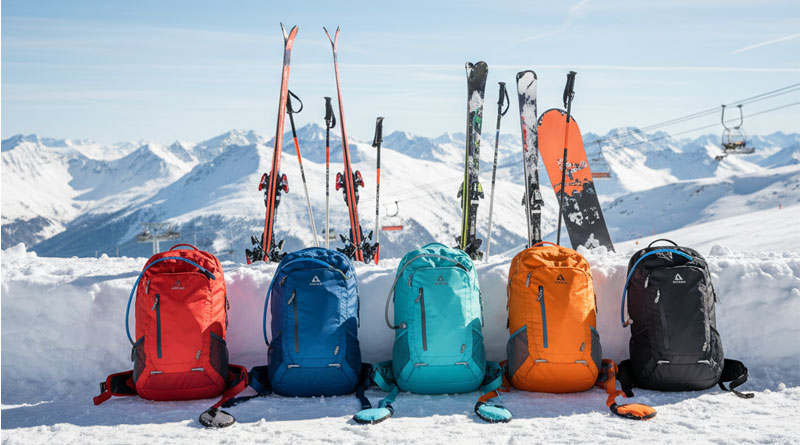
When you’re skiing, carrying the right backpack makes a big difference. A small ski backpack is perfect if you only need the basics like water, snacks, or an extra layer. Unlike large packs, these are light, compact, and easy to wear on the slopes without feeling bulky. They also fit well on lifts and won’t throw off your balance while skiing. In this guide, we’ll look at the best small ski backpacks that combine comfort, smart storage, and durability for your day on the mountain.
1. Osprey Glade 20L

- Capacity: 20 liters (1,220 cubic inches)
- Weight: 2 lbs. 1.6 oz.
- Material: 420-denier NanoTough nylon
- Dimensions: 18.7 x 10.24 x 7.3 inches
The Osprey Glade 20L is a versatile ski backpack designed for winter adventures, from lift-accessed resort laps to snowshoeing and exploring fresh powder. Its 20-liter capacity provides practical space for essential equipment, extra layers, snacks, and other mountain necessities without creating unnecessary bulk. The frameless construction helps maintain a streamlined profile, while the top-loading design offers straightforward access to the main compartment. A hipbelt provides additional stability when moving across snowy terrain.
Built with bluepass-certified recycled ocean-sourced nylon and a carbonate coating, this pack combines durable construction with a more environmentally conscious material choice. Its adjustable torso fit accommodates lengths from 17 to 22 inches, while the waist and hips range from 24 to 50 inches. The hydration-compatible features highlighted in its intended use make it a practical companion for active days outdoors. Although its storage capacity suits day trips rather than extended expeditions, the Glade 20L offers a balanced combination of comfort, utility, and dependable everyday mountain performance.
Pros:
- Versatile 20-liter capacity for day trips and resort skiing.
- Recycled nylon construction with a protective coating.
- Adjustable torso fit and supportive hipbelt.
Cons:
- Limited capacity for extended backcountry adventures.
- Only one exterior pocket besides the main compartment.
- Frameless design offers less structural support for heavier loads.
2. SEMSTY 12L Ski Backpack

- Capacity: 12 liters
- Dimensions: 12.2 x 3.15 x 20.9 inches
- Material: Highly water-resistant nylon
- Storage: Multiple options
The SEMSTY 12L Ski Backpack is designed for skiers and snowboarders who prefer a compact, lightweight pack for active days on the mountain. Its specialized storage includes snow tool sleeves, external shovel blade carry, a fleece-lined goggle pocket, and a quick-stash exterior pocket. The internal compartment can accommodate a laptop up to 14 inches, adding versatility for travel and everyday use. A hydration system is supported, although the water bladder is not included.
Multiple equipment-carrying options allow users to secure a snowboard vertically or horizontally, or carry skis diagonally using adjustable buckles. The water-resistant nylon helps protect gear from snow and winter conditions, while the S-shaped shoulder straps and ventilated PE foam back panel support comfortable movement. An adjustable hipbelt and sternum strap improve stability, and the integrated whistle adds a useful safety feature. Its compact 12-liter capacity works best for essential equipment rather than bulky clothing or extended trips, making it a practical option for resort skiing, snowboarding, and short winter outings.
Pros:
- Multiple ski and snowboard carrying configurations.
- Fleece-lined goggle pocket helps prevent scratches.
- Water-resistant fabric and ergonomic shoulder straps.
- Integrated safety whistle and adjustable support straps.
Cons:
- Limited 12-liter capacity for larger loads.
- Hydration bladder is not included.
- Water resistance does not guarantee complete waterproofing.
3. Black Diamond Dawn Patrol 15L

- Capacity: 15 liters (915.36 cubic inches)
- Weight: 2 lbs. 1.4 oz.
- Material: 100% recycled polyester
- Dimensions: 22.05 x 12.6 x 2.8 inches
The Black Diamond Dawn Patrol 15L is a compact snow backpack built for skiers who want to travel light while keeping essential equipment close at hand. Its 15-liter capacity is suitable for short mountain outings, resort laps, and backcountry sessions where carrying only the necessities is a priority. The frameless construction keeps the pack relatively streamlined, while panel access allows convenient entry into the main compartment. Its minimalist profile is particularly appealing to skiers who value freedom of movement over extensive storage.
Recycled polyester makes up the body and liner, while additional polyester-spandex and EVA foam components contribute to the pack’s construction. Available torso sizing accommodates different users, with S/M fitting 16–19 inches and M/L fitting 18.5–21.5 inches. The corresponding waist and hip ranges provide further fit flexibility. However, this model does not include a raincover and is not reservoir-compatible according to the supplied specifications. With one exterior pocket plus the main compartment, organization remains simple, making it best suited to shorter adventures with carefully selected essentials.
Pros:
- Compact 15-liter design for streamlined mountain travel.
- Recycled polyester construction.
- Panel access simplifies access to stored gear.
- Two torso sizing options for a more tailored fit.
Cons:
- No included raincover.
- Not reservoir-compatible according to the specifications.
- Limited exterior storage for organizing smaller accessories.
4. DAKINE Poacher 14L

- Capacity: 14 liters (854 cubic inches)
- Weight: 1 lb. 12.2 oz.
- Material: 100% recycled polyester
- Dimensions: 19.69 x 9.84 inches
The DAKINE Poacher 14L is a minimalist snow backpack designed for skiers who need to carry essential equipment without the bulk of a larger pack. As the smallest offering in the Poacher collection, it is intended for short backcountry laps and general lift-served skiing. Its 14-liter capacity provides room for important mountain necessities, making it a suitable option for those who prefer a compact setup. The frameless construction helps maintain a simple profile, while panel access makes reaching the main compartment convenient.
Made entirely from recycled polyester, the Poacher 14L offers a practical material choice for environmentally conscious outdoor enthusiasts. Its hipbelt adds stability when navigating slopes and uneven terrain, while two exterior pockets provide additional organization beyond the main compartment. The pack accommodates a stated torso length of 20 inches and a waist or hip measurement of 48 inches. However, it does not include a raincover, so additional protection may be useful during wet snowfall. Its limited capacity is best suited to shorter outings rather than full-day excursions requiring extensive layers, food, or extra equipment.
Pros:
- Lightweight construction at 1 lb. 12.2 oz.
- Compact design for resort skiing and short backcountry laps.
- Two exterior pockets for convenient organization.
- Made from 100% recycled polyester.
Cons:
- Limited 14-liter storage capacity.
- No raincover included.
- Limited fit information compared with packs offering multiple torso sizes.
5. DAKINE Heli 2.0 12L

- Capacity: 12 liters (732 cubic inches)
- Weight: 2 lbs. 3.56 oz.
- Material: 100% recycled 600-denier polyester
- Dimensions: 18 x 13.8 x 2 inches
The DAKINE Heli 2.0 12L is a compact ski backpack designed for skiers and snowboarders who need essential equipment close at hand in challenging winter conditions. Its 12-liter capacity is suitable for carrying avalanche safety gear, snacks, extra accessories, and other necessities for short backcountry outings. The frameless construction keeps the design streamlined, while the top and panel access options provide convenient ways to reach stored equipment. Two exterior pockets supplement the main compartment for practical organization.
Made with recycled 600-denier polyester diamond ripstop and coated polyester, this backpack is designed to withstand demanding mountain use. Its ski and snowboard carrying options offer flexibility when transitioning between different terrain and activities. The hipbelt helps stabilize the pack during movement, and the adjustable fit accommodates torso lengths from 15 to 18 inches and waist or hip measurements from 26 to 42 inches. Although the capacity is limited for longer expeditions, the Heli 2.0 is a practical choice for short ski tours and lift-accessed adventures where a compact, functional pack is preferred.
Pros:
- Compact size for short backcountry trips and resort skiing.
- Durable recycled polyester construction.
- Top and panel access for convenient gear retrieval.
- Versatile ski and snowboard carrying options.
Cons:
- Limited 12-liter storage capacity.
- No raincover included.
- Relatively heavy for its compact size.
6. Gregory Verte 12L

- Capacity: 12 liters (732 cubic inches)
- Weight: 1 lb. 6.7 oz.
- Material: Blended recycled nylon
- Dimensions: 17.25 x 9.25 x 5.5 inches
The Gregory Verte 12L is a lightweight snow backpack designed for skiers who want a clean, streamlined fit on the mountain. Its minimalist construction avoids unnecessary loops and webbing that could catch on chairlifts, making it particularly convenient for resort skiing. With 12 liters of storage, it provides room for essential accessories, snacks, extra layers, and other small items needed during a day on the slopes. The frameless design keeps the pack simple, while panel access makes it easier to reach the main compartment.
Constructed from blended recycled nylon, the Verte 12L combines a practical material choice with a lightweight design. Its hipbelt offers additional stability, and the adjustable fit accommodates torso lengths from 15 to 21 inches and waist or hip measurements from 25 to 48 inches. Three exterior pockets provide useful organization for items that need to remain accessible without opening the main compartment. Although its compact capacity is not ideal for carrying extensive backcountry equipment, this backpack is a strong option for lift-served skiing and short mountain outings where comfort, mobility, and a snag-free profile matter most.
Pros:
- Lightweight design at just 1 lb. 6.7 oz.
- Streamlined construction reduces snagging on chairlifts.
- Three exterior pockets for convenient organization.
- Adjustable fit accommodates a range of torso and waist sizes.
Cons:
- Limited 12-liter capacity for larger loads.
- Frameless construction provides limited structural support.
- Minimalist design may not suit extended backcountry expeditions.
7. Osprey Firn 18L

- Capacity: 18 liters
- Weight: 2.2 lbs.
- Dimensions: 19.3 x 11.4 x 9.4 inches
- Key Features: Feature rich
The Osprey Firn 18L is designed for backcountry skiers who need quick access to essential equipment while moving through alpine terrain. Its vest-style harness sits close to the body and incorporates organizational pockets for food, a soft flask, a headlamp, and small electronic devices. This arrangement keeps frequently used items within reach and reduces the need to remove the pack during demanding outings. The 18-liter capacity provides space for essential touring gear, while the front avalanche tool pocket offers dedicated storage for important safety equipment.
A standout feature is the ambidextrous ski lasso system, which allows users to secure skis without taking off the backpack. The system can also be removed or tucked away when unnecessary. A flexible, stable backpanel helps shed snow, and a dedicated crampon pocket offers convenient one-handed access. The top compression strap doubles as an ice axe stabilizer, adding versatility for alpine travel. Although the pack is specialized for mountain activities rather than everyday use, its thoughtful access features and close-fitting design make it appealing for efficient backcountry touring.
Pros:
- Vest-style harness provides convenient access to essentials.
- Ski lasso system allows skis to be attached without removing the pack.
- Dedicated avalanche tool and crampon storage.
- Ice axe stabilization and snow-shedding backpanel.
Cons:
- Specialized design may be excessive for casual resort skiing.
- 18-liter capacity may be insufficient for longer expeditions.
- Vest-style harness may require adjustment to achieve a comfortable fit.
8. Unigear 22L Ski Backpack

- Capacity: 22 liters
- Dimensions: 21.26 x 10.24 x 6.3 inches
- Material: 900D polyester shell
- Hydration Compatibility: Up to 3 liters
The Unigear 22L Ski Backpack is a versatile option for skiers, snowboarders, hikers, and mountaineers who need extra storage for day trips. Its 22-liter capacity and individual compartments help organize clothing, gloves, phones, shovels, and ice axes. A velvet-lined goggle pocket helps protect eyewear from scratches, while the internal compartment accommodates a laptop up to 14 inches. Side stretch-mesh pockets provide space for water bottles or trekking poles, making the pack useful beyond skiing.
Built with a 900D polyester shell, PU-coated side panels, and a reinforced bottom, the backpack is designed to resist abrasion and everyday contact with rough equipment. Its water-repellent construction helps protect gear in snowy conditions. Adjustable straps support vertical snowboard carry, while dual loops accommodate ice axes or ski poles. S-shaped shoulder straps, a ventilated PE foam backpanel, and adjustable waist and sternum straps help improve carrying comfort. Reflective detailing and an integrated whistle add useful safety features. Although its larger capacity offers versatility, the multiple compartments may feel excessive for skiers who prefer an ultralight minimalist setup.
Pros:
- Spacious 22-liter capacity for day touring and mountain activities.
- Abrasion-resistant materials and reinforced bottom.
- Velvet-lined goggle pocket and multiple equipment compartments.
- Hydration compatibility and versatile snowboard-carry system.
- Reflective strip and integrated safety whistle.
Cons:
- Larger design may feel bulky for minimalist resort skiing.
- Water-repellent construction is not a guarantee of complete waterproofing.
- Multiple compartments may require some organization to use efficiently.
9. DAKINE Heli 2.0 Pro 18L

- Capacity: 18 liters (1,098 cubic inches)
- Weight: 2 lbs. 9.59 oz.
- Material: 100% recycled 600-denier polyester
- Dimensions: 19.7 x 13.8 x 2 inches
The DAKINE Heli 2.0 Pro 18L is a versatile ski backpack designed for winter sports enthusiasts who need reliable storage for essential equipment in demanding mountain conditions. Its 18-liter capacity provides room for extra layers, accessories, snacks, and backcountry necessities without the bulk of a larger expedition pack. The frameless construction keeps the design streamlined, while top and panel access options make it convenient to retrieve stored gear. Two exterior pockets provide additional organization alongside the main compartment.
Constructed from recycled 600-denier polyester diamond ripstop and coated polyester, this backpack is built for durability during regular mountain use. Its versatile ski and snowboard carrying options make it suitable for resort riding and short backcountry adventures. The included hipbelt helps stabilize the load, and the adjustable fit accommodates torso lengths from 16 to 19 inches and waist or hip measurements from 28 to 44 inches. Although the pack does not include a raincover, its practical storage and durable materials make it a strong option for skiers who value efficient organization and dependable performance on the snow.
Pros:
- Versatile ski and snowboard carrying options.
- Durable recycled polyester construction.
- Top and panel access for convenient gear retrieval.
- Hipbelt improves stability during movement.
Cons:
- No raincover included.
- Limited capacity for extended expeditions.
- Relatively heavy compared with some smaller ski packs.
10. Gregory Verte 18L

- Capacity: 16 liters (S/M) or 18 liters (M/L)
- Weight: 1 lb. 12.5 oz. (S/M) or 2 lbs. 2.2 oz. (M/L)
- Material: Blended recycled nylon
- Storage: Four exterior pockets plus the main compartment
The Gregory Verte 18L is a thoughtfully designed snow backpack for skiers who want practical storage and freedom of movement on the mountain. Its streamlined construction makes transitioning from chairlifts to snowy slopes convenient, while the Freeride hipbelt moves with the body to support mobility during active skiing. Available in S/M and M/L sizes, the pack offers 16 or 18 liters of capacity depending on the selected fit. The panel-access design makes it easier to reach essential equipment, while four exterior pockets help keep accessories organized and accessible.
Made from blended recycled nylon, the Verte 18L combines practical construction with a material-conscious design. Its single stay adds some structure while maintaining a relatively lightweight feel. The S/M version accommodates torso lengths from 15 to 19 inches, while the M/L version fits 16 to 21 inches. Both sizes support waist or hip measurements from 25 to 48 inches. Although the pack offers useful organization for resort skiing and shorter mountain outings, its moderate capacity may limit the amount of equipment carried on extended backcountry trips. Overall, it is a strong choice for skiers prioritizing comfort, convenient access, and a responsive fit.
Pros:
- Freeride hipbelt supports natural movement.
- Two sizes accommodate different torso lengths.
- Four exterior pockets provide convenient organization.
- Recycled nylon construction.
Cons:
- Capacity varies depending on the selected size.
- May not provide enough storage for extended expeditions.
- No raincover information is provided in the supplied specifications.
How to Choose Small Ski Backpacks
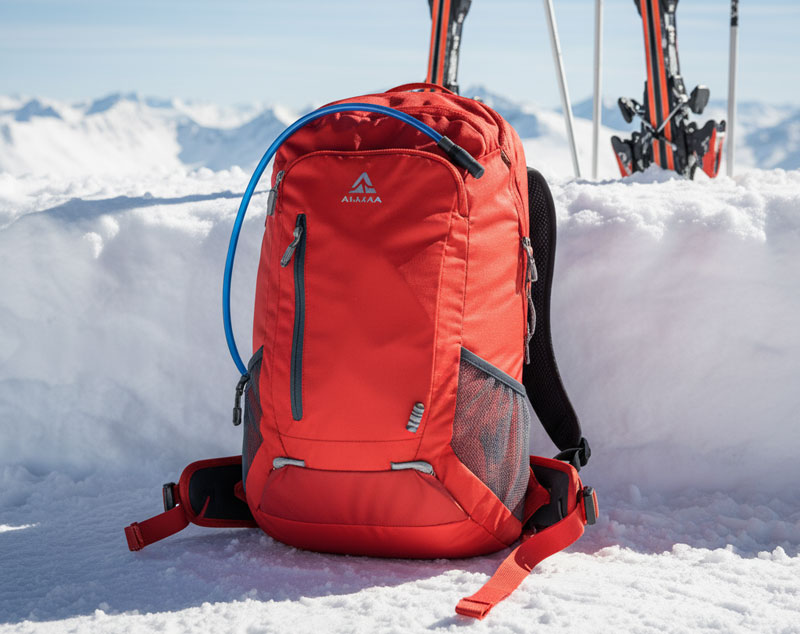
Choosing the right small ski backpack can make or break a day on the slopes. Whether you are a resort skier, a sidecountry explorer, or a backcountry enthusiast, a well-chosen pack keeps your essentials secure, accessible, and comfortable. Small ski backpacks—typically ranging from 10 to 30 liters—are designed for short tours, lift-accessed sidecountry laps, or minimal gear carry. But not all small packs are created equal. This guide walks you through every critical factor, from volume and fit to safety features and materials, so you can make an informed decision.
Why a Small Ski Backpack Matters
Large expedition packs are overkill for most day trips. A small ski backpack offers a streamlined profile that won’t throw off your balance on a chairlift or while skinning. It reduces fatigue, keeps your avalanche gear organized, and allows for quick transitions. The key is to match the pack to your specific skiing style and the terrain you frequent.
Determine Your Skiing Style and Needs
Resort and Lift-Accessed Skiing
If you mostly ski in-bounds but want to carry a water bottle, snacks, an extra layer, and maybe a camera, a 10–15 liter pack is ideal. Look for a low-profile design that fits comfortably on a chairlift and has a dedicated goggle or helmet carry option.
Sidecountry and Short Backcountry Tours
For quick laps outside the resort boundary, you need room for avalanche safety gear (shovel, probe, beacon), a skin, a spare layer, and water. A 20–30 liter pack is appropriate. Prioritize a dedicated avalanche tool pocket and a diagonal or A-frame ski carry system.
Snowshoeing and Winter Hiking
While not strictly skiing, many small ski backpacks work for snowshoeing. Focus on a stable hip belt, breathable back panel, and attachment points for snowshoes or trekking poles.
Key Factors to Consider
Volume and Weight
Volume is measured in liters. As a rule of thumb:
- 10–15L: Minimalist resort days, short hikes, or as a secondary pack.
- 16–22L: Day tours with avalanche gear and a spare layer.
- 23–30L: Longer sidecountry missions, guided tours, or winter overnight hut trips.
Weight matters too. A pack under 1.5 kg (3.3 lbs) is ideal for small volumes. Every extra ounce counts when you are climbing.
Fit and Suspension
A poorly fitting pack will bounce, chafe, or restrict movement. Look for:
- Torso length: Adjustable or sized to your back length (measure from C7 vertebra to iliac crest).
- Hip belt: Padded and load-bearing, even on small packs. It should wrap your hips, not your waist.
- Shoulder straps: Contoured and breathable, with a sternum strap for stability.
- Back panel: Ventilated or snow-shedding to prevent ice buildup.
Carry Systems for Skis and Gear
How you carry your skis matters. Small ski backpacks typically offer:
- Diagonal carry: Fast and secure, good for steep terrain.
- A-frame carry: Stable and classic, but wider profile.
- Vertical carry: Less common, best for narrow chutes.
Also check for ice axe loops, pole straps, helmet carry, and a goggle pocket.
Avalanche Safety Pocket
If you venture into avalanche terrain, a dedicated avalanche tool pocket is non-negotiable. It should be separate from the main compartment, easily accessible with gloves on, and large enough for a shovel blade, handle, and probe. Some packs have a bright-colored interior to make finding gear easier.
Hydration Compatibility
Skiing is dehydrating. Look for an internal sleeve for a hydration reservoir and a insulated tube route to prevent freezing. Some packs include a insulated shoulder strap sleeve.
Materials and Durability
Small ski backpacks take abuse. Choose:
- Fabric: 210D–420D nylon or polyester with a DWR (durable water repellent) finish. Ripstop weaves resist tears.
- Zippers: YKK or similar, with glove-friendly pulls. Avoid coil zippers that can freeze.
- Buckles: Durable plastic or metal, easy to operate with gloves.
- Water resistance: Not fully waterproof, but snow-shedding. Some packs include a rain cover.
Comfort and Ventilation
A sweaty back is miserable. Look for:
- Channels or mesh for airflow.
- Moisture-wicking padding.
- Snow-shedding coating on the back panel.
Accessibility and Organization
You don’t want to remove your pack to get a snack. Look for:
- Hip belt pockets for snacks, phone, or lip balm.
- Top lid or front pocket for quick access.
- Internal organization for small items (keys, sunscreen).
- External attachment points for wet gloves or a helmet.
Comparison Table: Small Ski Backpack Features
| Feature | Resort (10–15L) | Sidecountry (16–22L) | Backcountry (23–30L) |
|---|---|---|---|
| Avalanche pocket | Optional | Required | Required |
| Ski carry | Minimal or none | Diagonal or A-frame | Diagonal, A-frame, or vertical |
| Hydration sleeve | Yes | Yes | Yes |
| Helmet carry | Often | Yes | Yes |
| Hip belt pockets | 1–2 | 2 | 2+ |
| Weight | 0.5–1.0 kg | 0.9–1.4 kg | 1.2–1.8 kg |
How to Test a Small Ski Backpack
Before buying, if possible, test the pack with weight. Many retailers allow returns, but a proper fitting session helps.
- Load it up: Add a shovel, probe, water bottle, and extra layer.
- Wear it for 15 minutes: Walk around, simulate skiing motions.
- Check pressure points: Shoulders, hips, and lower back.
- Try on with gloves: Can you operate buckles and zippers?
- Adjust all straps: Ensure the pack stays close to your back.
Top Brands and Models to Consider
Resort / Minimalist
- Dakine Heli Pack 12L: Light, with a dedicated goggle pocket.
- Osprey Glade 12: Excellent ventilation and fit.
- Black Diamond Dawn Patrol 15: Clean design, ski carry options.
Sidecountry / Day Tours
- Mammut Nirvana 18: Dedicated avalanche pocket, diagonal carry.
- Deuter Freerider 20: Comfortable suspension, helmet carry.
- BCA Float 22: Avalanche airbag compatible (if you want that safety feature).
Backcountry / Larger Small Packs
- Ortovox Haute Route 30: Ultralight, full-featured for long tours.
- Arc’teryx Khamski 28: Durable, excellent ski carry.
- Gregory Targhee 26: Great organization and fit.
Budget Considerations
Small ski backpacks range from $60 to $250. Budget packs often lack durability or refined fit. Mid-range ($100–$180) offers the best value. Premium packs ($180+) offer lighter materials, better suspension, and advanced safety features like airbag compatibility. Decide what matters most: a dedicated avalanche pocket is worth the investment if you ski in avalanche terrain.
Additional Features to Look For
- Insulated hydration tube: Prevents freezing.
- Fleece-lined goggle pocket: Protects lenses.
- Emergency whistle: Often integrated into the sternum strap buckle.
- Reflective accents: For low-light visibility.
- Compression straps: Keep the load stable when partially full.
- Ice axe loop: For steep couloirs.
- Snow-shedding back panel: Prevents snow buildup.
Common Mistakes to Avoid
- Buying too big: A 30L pack for resort days will sag and feel bulky.
- Ignoring torso length: A pack that doesn’t fit your back will never be comfortable.
- Skimping on avalanche pocket: If you need it, you need it accessible.
- Overlooking glove compatibility: Zippers and buckles must work with gloves.
- Forgetting hydration: A frozen tube ruins a day.
- Not testing with weight: A pack feels different empty.
Final Checklist Before You Buy
- Does the volume match your typical ski day?
- Is there a dedicated avalanche tool pocket (if needed)?
- Can you carry skis diagonally or A-frame?
- Is the hip belt comfortable and load-bearing?
- Are the zippers and buckles glove-friendly?
- Does it have a hydration sleeve and insulated tube route?
- Is the back panel ventilated and snow-shedding?
- Does it fit your torso length?
- Are there hip belt pockets for quick access?
- Is the material durable and water-resistant?
Conclusion
Choosing a small ski backpack is a balance of volume, fit, features, and budget. Start by defining your skiing style—resort, sidecountry, or backcountry. Prioritize safety features like an avalanche pocket if you travel in avalanche terrain. Test the pack with weight and gloves. A well-chosen small ski backpack will disappear on your back, keeping your gear secure and accessible so you can focus on the descent. Remember: the best pack is the one you forget you’re wearing.