
Best Smith Goggles for Snowboarding of 2026
Choosing the right goggles can make a big difference in how much you enjoy your time on the slopes. Smith goggles are known for their clear vision, comfort, and stylish designs made for all kinds of riders. Whether you’re snowboarding on sunny days or tackling foggy, snowy conditions, the right pair can help you see better and ride safer. In this guide, we’ll look at the best Smith goggles for snowboarding to help you find the perfect match for your needs and budget.
1. Squad
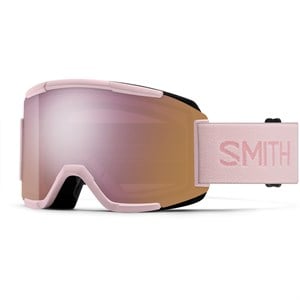
- Frame Size: Medium
- Fit System: Responsive Fit™ Frame
- Lens Tech: ChromaPop™ / Fog-X / TLT
- Lens Type: Cylindrical Carbonic-X
Smith’s Squad balances a streamlined, semi-rimless look with dependable optics and everyday performance. The Responsive Fit frame flexes to your face, keeping the goggle low-profile without feeling flimsy. ChromaPop lenses sharpen contrasts and color while Fog-X on the inner lens fights moisture in a way that won’t wear off, so visibility stays steady when you pick up the pace or the weather turns. The cylindrical Carbonic-X lens gives strong impact resistance and clear sightlines for most riders.
If you want a versatile goggle that looks good with a wide range of helmets and doesn’t demand fuss, the Squad is a safe bet. It’s not the largest field of view you can buy, but the balance of price, fit, and optical tech makes it a solid all-mountain choice. Lens interchangeability and the included microfiber bag with replacement sleeve keep things practical for changing conditions. In short: stylish, robust, and reliable for everyday shredding.
Pros: Comfortable medium fit; excellent color/contrast; durable impact-resistant lens; long-lasting anti-fog.
Cons: Field of view is modest compared to larger spherical options; not ideal for riders wanting max peripheral vision.
2. I/O MAG
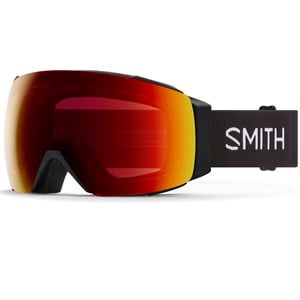
- Frame Size: Medium
- Lens System: Smith MAG™ magnetic change
- Lens Tech: Spherical Carbonic-X with TLT
- Anti-Fog: 5X™ inner lens treatment
The I/O MAG is Smith’s dependable, mid-size workhorse for riders who want fast lens swaps and top-tier optics. The MAG system uses magnetic contacts plus mechanical locks, so lens changes are secure yet lightning quick when clouds roll in. The spherical Carbonic-X lens delivers a clean, distortion-free view with the clarity boost of TLT and ChromaPop, sharpening edges and color so terrain reads easier at speed. The 5X anti-fog treatment gives genuine confidence on warmer days or heavy exertion.
Fit and helmet compatibility are excellent: the Responsive Fit frame molds subtly around the face while the QuickFit strap makes adjustments painless. Two performance tints included mean you’re ready for bright and flat light right out of the box. If you want near-professional level optics in a mid-sized package that pairs seamlessly with helmets, the I/O MAG is hard to beat for its class and price point.
Pros: Fast, secure MAG lens changes; exceptional optical clarity; strong anti-fog; helmet-friendly integration.
Cons: Mid-volume fit may feel small to riders who prefer XL views; premium features add cost.
3. 4D MAG
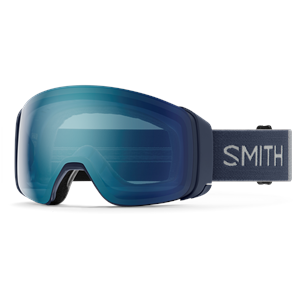
- Frame Size: Medium
- Field of View: BirdsEye Vision™ (≈25% larger vs I/O MAG)
- Lens System: Smith MAG™ interchangeable
- Anti-Fog: 5X™ inner lens + AirEvac™ venting
The 4D MAG pushes peripheral vision forward with BirdsEye Vision, noticeably widening your sightlines compared with Smith’s standard I/O shape. That expanded view helps when scanning lines, watching other riders, or tracking park features. Optical performance is top drawer thanks to spherical Carbonic-X lenses, ChromaPop color enhancement, and TLT correction that combine to reduce distortion and make terrain features pop. Lens swapping is still the MAG system you trust—fast and locked in.
Ventilation and fog management are improved too: AirEvac integration funnels warm air away through compatible Smith helmets, and the 5X anti-fog inner lens holds up in wet or high-output days. This goggle suits advanced riders or anyone who values maximal situational awareness without sacrificing optical fidelity. It’s a premium pick for riders who want the clearest, widest view on busy mountains.
Pros: Very wide field of view; excellent optical clarity; robust fog control; secure MAG system.
Cons: Higher price tier; slightly larger volume may not suit low-profile preferences.
4. Squad MAG
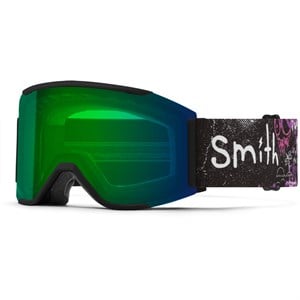
- Frame Size: Medium / Large
- Lens System: Smith MAG™ cylindrical swap
- Lens Tech: ChromaPop™ / TLT / Carbonic
- Ventilation: AirEvac™ integration
The Squad MAG takes the approachable Squad silhouette and adds Smith’s fast MAG interchange system, so you get a neat cylindrical look with the convenience of magnetic lens changes. ChromaPop tuning improves color contrast while TLT maintains optical accuracy across the lens. For riders who like the cylindrical aesthetic but want modern convenience, this is a tidy compromise: less volume than big spherical models but easier lens swaps than traditional cylindrical designs.
Comfort and helmet integration are solid—Responsive Fit keeps the frame forgiving across faces, and AirEvac ventilation helps manage fog when used with compatible helmets. Included bright and low light lenses cover most daily conditions, and the 5X inner lens treatment helps stave off condensation. This goggle is a great mid-to-upper level choice for riders who prefer the Squadron look but need MAG flexibility for quick changes.
Pros: MAG lens convenience; stylish semi-rimless look; good helmet integration; versatile lens kit.
Cons: Cylindrical optics give slightly less peripheral depth than spherical lenses; not the widest view available.
5. I/O MAG S – Women’s
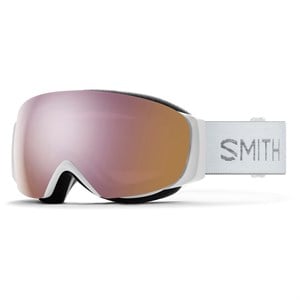
- Frame Size: Small
- Fit System: Responsive Fit™ (low-bridge options)
- Lens System: Smith MAG™ spherical
- Anti-Fog: 5X™ inner lens; 3-layer DriWix foam
The I/O MAG S delivers the I/O MAG’s top optics and MAG convenience in a smaller package tailored for narrower faces or those who prefer less goggle volume. Spherical Carbonic-X lenses with ChromaPop and TLT provide the same distortion-free clarity as the full-size I/O, while the compact frame sits comfortably without engulfing your features. The low-bridge fit option improves seal and comfort for many women and smaller-boned riders.
Lens swaps remain fast and reliable thanks to the MAG system, and the included lens protector plus microfiber sleeve keep your spares safe. If you want the performance of Smith’s flagship optics without a bulky profile, the I/O MAG S is an excellent, well-engineered choice that works great with helmets designed for lower bridge fits.
Pros: Smaller, secure fit; same high-end optics; quick MAG lens changes; includes lens protector.
Cons: Reduced internal volume may feel claustrophobic to some; fewer color/strap style options in some markets.
6. Squad XL
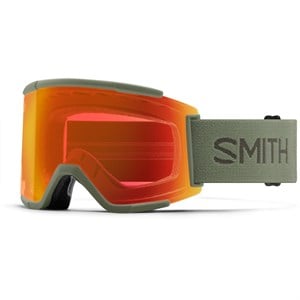
- Frame Size: Large
- Fit System: Responsive Fit™ (semi-rimless)
- Lens Tech: ChromaPop™ / Fog-X / TLT
- Lens Type: Cylindrical Carbonic-X, 5X™ inner lens
The Squad XL keeps the Squad’s minimal styling but expands the field of view to suit larger faces or riders seeking more peripheral vision. You get the same ChromaPop color pop and Fog-X inner lens durability, but with more visual real estate to read the mountain. The larger frame still manages a clean profile and pairs well with many helmets while giving riders who prefer a fuller view the coverage they want.
It’s a pragmatic option for those who liked the Squad but needed extra room. Fog control and impact resistance remain strong, and included interchangeable lenses make adapting to changing light straightforward. If you often feel squeezed by standard goggle sizes or just want a more open view, the Squad XL is a sensible, comfortable upgrade.
Pros: Larger viewing area; strong anti-fog and impact protection; comfortable for larger faces.
Cons: Larger frame can look bulky on smaller faces; still cylindrical, so not as deep as spherical alternatives.
7. I/O MAG XL
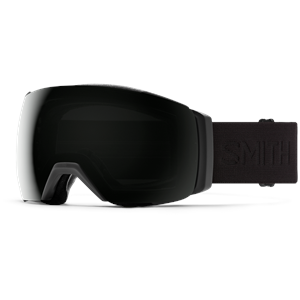
- Frame Size: Large (Low Bridge Fit available)
- Lens System: Smith MAG™ spherical Carbonic-X
- Field of View: Increased volume for broad sightlines
- Ventilation: AirEvac™ + 5X™ anti-fog
The I/O MAG XL scales up Smith’s renowned I/O MAG platform for riders who want an expanded view and roomy internal volume. Spherical Carbonic-X lenses with ChromaPop and TLT deliver outstanding clarity across the entire lens, while the MAG system gives effortless, secure lens swaps. AirEvac ventilation and 5X anti-fog treatment keep the optics clear even during heavy exertion or variable temperatures.
Low Bridge Fit options mean the XL can also be tuned for riders with lower nose bridges while maintaining the larger sightlines. It’s a premium choice for big-face riders or anyone who prioritizes visibility and quick adaptability. Expect top-tier optical performance, great helmet pairing, and reliable fog management for long days on the slopes.
Pros: Excellent peripheral vision; premium spherical optics; secure MAG locking; strong fog and helmet integration.
Cons: Larger size may not suit narrow faces; higher price compared to mid-volume models.
How to Choose Smith Goggles for Snowboarding

Choosing the right pair of Smith goggles for snowboarding is about more than looks. Fit, lens technology, field of view, ventilation, and helmet compatibility all affect your comfort, visibility, and safety on the mountain. Smith makes a wide range of models, from budget-friendly options to high-end designs with interchangeable spherical lenses and advanced anti-fog coatings. This guide walks you through the factors that matter most so you can pick Smith goggles that match your riding style and the conditions you expect to face.
1. Understand the Different Lens Shapes
Smith offers goggles with several lens shapes, but two primary categories matter for performance: spherical and cylindrical. Spherical lenses curve both horizontally and vertically, which reduces distortion and improves peripheral vision. Cylindrical lenses curve only horizontally and are often lighter and less expensive. If you want the best clarity and a wide field of view for fast, technical riding, lean toward Smith’s spherical-lens models. If budget or a slimmer profile is more important, cylindrical lenses are still a strong choice.
Why lens shape matters
Spherical lenses typically offer less optical distortion and better peripheral clarity — useful for high-speed runs and park riding where seeing hazards at angles matters. Cylindrical lenses can be lighter and sometimes cheaper, but they may introduce slight visual distortion along the vertical plane.
2. Match Lens VLT to Conditions
Visible Light Transmission (VLT) indicates how much light a lens allows through. Low VLT (5–20%) is ideal for bright, sunny days; high VLT (40–80%+) is best for cloudy, flat-light, or night riding. Smith sells lenses with varying VLT ratings and often includes interchangeable lens systems so you can swap lenses for different conditions. If you ride a lot in mixed weather, consider a Smith goggle that supports quick lens changes and pack a low-VLT and a high-VLT option.
Practical tip
For all-mountain riders who want one lens to do most jobs, choose a medium VLT lens (around 15–40%) but be prepared to carry a spare high-VLT lens for whiteouts or a spare low-VLT lens for bright alpine days.
3. Lens Technology: Clarity and Color Enhancement
One of Smith’s best-known features is their color-enhancing lens tech. These lenses boost contrast so terrain features like bumps and icy patches are easier to spot. Look for Smith’s color-contrast technologies when you want crisp detail in variable light. Paired with high-quality anti-fog coatings and a good ventilation system, these lenses keep vision reliable.
Color vs true color
Contrast-enhancing lenses change color perception slightly to make edges and texture pop. That’s useful for spotting details in flat light, but if you also want subtle color fidelity for photography or aesthetics, balance that preference against contrast gains.
4. Anti-Fog, Venting, and Frame Design
Fogging ruins a run, so inspect Smith’s anti-fog systems. Look for multi-layer anti-fog coatings on the inner lens and a frame design that promotes airflow. Many Smith models combine inner anti-fog coatings with foam layers and vent channels to move warm air away from the lens. Proper helmet ventilation and correct goggle fit also significantly reduce fogging — a well-matched helmet and goggle will seal without blocking vents.
Foam and comfort
Smith uses different face foams across models, from single-layer foam up to triple-layer facial foam with moisture-wicking fleece. More layers usually mean a better seal, more comfort, and improved sweat management.
5. Helmet Compatibility
Because many riders wear helmets, choose a Smith goggle that fits your helmet’s shape and strap system. Smith designs many goggles with a low-profile upper frame that pairs well with modern helmets. Test the goggle with your helmet if possible — look for a snug fit around the forehead and no large gaps that could let cold air in or break the airflow alignment that prevents fog.
Strap and buckle considerations
Check that the strap length and silicone-backed strap keep the goggle stable on the helmet. Some Smith models also include clip systems or distortion-free strap anchors for better alignment with certain helmet brands.
6. Interchange Systems and Convenience
If you want the flexibility to swap lenses quickly, Smith’s quick-change systems are worth considering. Models with magnetic or tool-free lens changes let you react to weather quickly without fumbling on the lift. If you travel a lot or ride varied climates, prioritize models with robust and user-friendly interchange systems and carry a protective case for spare lenses.
What to look for in an interchange system
Look for secure retention so the lens won’t pop out during a crash, and a mechanism that is easy to use with gloves on. Also check if replacement lenses are sold separately for the model you choose.
7. Fit and Face Shape
Fit is the single most important factor. Smith makes goggles in a range of sizes — smaller frames for narrower faces and larger frames for wider faces or riders who prefer more peripheral view. Try goggles on and move your head around. A good fit hugs the face without pressure points and leaves room for eyelashes to avoid contact with the lens. If you wear prescription glasses, consider Smith’s goggle models that are OTG (over-the-glasses) compatible or plan for prescription inserts if needed.
Children and smaller faces
Kids and smaller adults should use appropriately sized frames to maintain proper ventilation and a comfortable foam seal. Don’t force a large goggle onto a small face — it compromises performance and comfort.
8. Durability and Build Quality
Smith goggles vary from entry-level to premium. If you’re rough on equipment or ride in icy, rocky fall zones, choose a model with tougher frames, scratch-resistant hardcoats, and high-quality lens materials. Premium lenses usually resist scratches better and maintain optical clarity longer. Consider whether the model includes a durable carrying case or microfiber bag for lens protection between uses.
9. Budget and Value
Smith offers options across price points. Higher-end models add spherical lenses, advanced coatings, and premium foam. If budget is tight, prioritize lens clarity and anti-fog performance over extra features like decorative frames or nonessential accessories. For many riders, a mid-range Smith goggle with good lens tech and a reliable interchange system strikes a strong balance.
10. Care and Maintenance
To prolong lens life, avoid wiping the inner anti-fog layer with a dry cloth — instead, blot moisture with a microfiber cloth or let it air-dry. Store lenses in a protective pouch, rinse grit out of foam with lukewarm water after heavy use, and replace lenses that are deeply scratched or whose coatings have degraded. Proper storage and care keep your Smith goggles performing season after season.
Final checklist before you buy
- Choose the lens shape (spherical for best clarity; cylindrical for profile/budget).
- Match VLT to your usual conditions and consider carrying a spare lens.
- Prioritize anti-fog coatings and ventilation, and test with your helmet for compatibility.
- Confirm fit for your face shape and whether OTG or prescription options are needed.
- Decide on how important quick-change systems and premium coatings are for your riding style.
- Factor in durability and whether replacement lenses are easy to obtain for the model.
Choosing Smith goggles means balancing optics, ventilation, fit, and price. Try them on with your helmet, think about the light and weather where you ride most, and pick a model that supports quick lens swaps if you encounter changing conditions. With the right pair, your confidence and visibility on the slopes will improve — and that makes every run more enjoyable.