
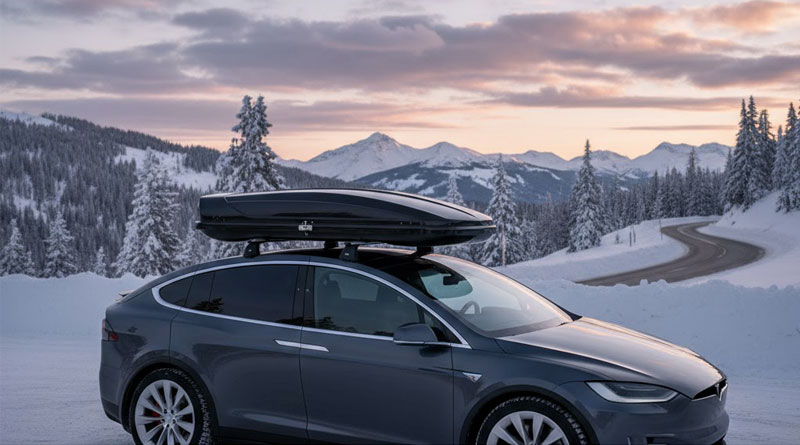
Best Roof Box for Skis of 2026
If you love skiing, a good roof box can make your trips much easier. It gives you extra space to safely carry your skis, poles, and gear without cramming everything inside your car. The best roof boxes are strong, weatherproof, and easy to fit on most vehicles. They keep your equipment secure and dry, even in heavy snow. In this guide, we’ll look at the best roof boxes for skis to help you find the right one for your next winter adventure.
1. Yakima SkyBox 16 Carbonite

- Box Opening: Dual Side
- Capacity: 453 L (27,648 cu in)
- Length: 6 ft. 9 in.
- Weight: 47 lbs
The Yakima SkyBox 16 Carbonite is a smart all-rounder for skiers and campers who want quiet, efficient transport for their gear. Its dimple-textured carbonite lid reduces drag and road noise, which you’ll notice on longer drives. The box fits up to six skis or eight snowboards under 185 cm, and the dual-side opening makes loading quick whether you’re parked on the driver or passenger side. Built-in SuperLatch security and included SKS lock cores give confidence that equipment stays put, while the quick-release mounting hardware works with round, square and factory bars for easy swaps between vehicles.
It’s made from recycled ABS with internal lid stiffeners for rigidity, so the shell is durable without being heavy. The tapered rear improves hatch clearance on many cars, and the depth/flat-bottom interior is versatile for different cargo. If you want a balance of aerodynamic performance, solid build quality and hassle-free mounting, the SkyBox 16 Carbonite earns its place.
Pros: Quiet, aerodynamic; dual-side access; secure locking; recycled material.
Cons: Slightly heavy; premium price compared to basic boxes.
See the Yakima SkyBox 16 Carbonite
2. SportRack Horizon

- Capacity: 311 L (11 cu ft)
- Fits: 3–6 pairs of skis up to 210 cm
- Dimensions: 88.75″ x 21″ x 15.75″
- Max Load: 110 lbs (50 kg)
The SportRack Horizon is a practical value box for ski days and longer trips when you need a narrow, long profile that leaves roof space for other gear. Its ABS construction is impact resistant, and the passenger-side opening makes loading safer on busy roads. The Horizon comfortably holds several pairs of skis up to 210 cm, or a couple of snowboards, and the slim footprint is ideal for cars with limited roof width. The quick-release attachment kit keeps installation straightforward and removal painless when you don’t need the box.
It’s not the fanciest or quietest box, but it gives excellent utility for the price: solid capacity, good bar compatibility and a shape optimized for skis. If you want a no-nonsense cargo box that lets you keep other rooftop accessories mounted, the SportRack Horizon is a dependable choice.
Pros: Budget-friendly; slim ski-optimized shape; easy install.
Cons: Passenger-side only; fewer premium features.
3. Thule Pulse L

- Box Opening: Passenger Side
- Capacity: 453 L (27,648 cu in)
- Length: 6 ft. 4 in.
- Weight: 36 lbs
The Thule Pulse L is a rugged, well-rounded roof box built for year-round use and offers a great balance of capacity and weight. At roughly 453 liters it handles six to eight pairs of skis or multiple snowboards, yet stays relatively light at 36 pounds for easier mounting. The passenger-side opening provides safe curbside access and the Pulse includes internal straps to secure your gear during transit. Thule’s fit-and-finish stands out: reliable opening, secure latches and clean lines that reduce drag.
If you want a Thule box that’s straightforward to use and dependable across seasons, the Pulse L is a solid pick. It performs quietly on the highway, mounts securely to a wide range of crossbars, and internal straps plus one-handed opening make loading and stopping simple. For those who prioritize durability, functionality and brand-backed reliability, the Pulse L delivers.
Pros: Lightweight for size; strong build; internal straps; easy operation.
Cons: Passenger-side only; fewer advanced features than top Thule models.
4. INNO Wedge 660

- Box Opening: Dual Side
- Capacity: 300 L (19,000 cu in)
- Length: 6 ft. 8 in.
- Weight: 42 lbs
The INNO Wedge 660 stands out with an aerodynamic, low-profile shape designed to cut wind noise and improve fuel efficiency. Built with a solid polymer membrane injection process, the shell has a uniform thickness that’s impressively strong yet retains a slim height of 11 inches—ideal for cars with low rooflines or tight garage clearances. The dual-side opening and one-time setup mounting make it user-friendly for ski trips and long drives, and its internal straps help secure gear on rough roads.
Made in Japan and focused on efficient design, the Wedge 660 is great when aerodynamic performance and build quality matter. It carries six to eight pairs of skis or multiple snowboards while staying quieter and more efficient than bulkier boxes. If you want a premium-feeling, low-drag option that still packs good capacity, the INNO Wedge 660 is worth considering.
Pros: Very aerodynamic; strong uniform shell; dual-side access.
Cons: Moderate capacity vs larger XL boxes; pricier manufacturing pedigree.
5. Yakima SkyBox NX XL

- Box Opening: Dual Side
- Capacity: 509 L (31,104 cu in)
- Length: 7 ft.
- Weight: 50 lbs 8 oz
The Yakima SkyBox NX XL brings generous volume and versatile access for families and multi-day trips. With roughly 18 cubic feet of space it fits skis and snowboards up to 195 cm and can handle gear for several campers. The flat-bottom interior helps maximize usable space for bulky items, and integrated tie-down points make securing contents easy. Dual-sided opening with full metal handles and included SKS locks combine convenience with dependable security.
Installation is straightforward thanks to adaptable mounting hardware and a removable torque-limiting knob that prevents over-tightening. The NX nano-texture finish looks clean and resists scuffs while optimized hatch clearance helps fit on a wide variety of vehicles. If you need a larger-capacity box that stays user-friendly and secure, the SkyBox NX XL is an excellent choice.
Pros: Very large capacity; flat bottom interior; secure locks; vehicle-friendly hatch clearance.
Cons: Heavier; takes more storage space when not in use.
6. Yakima SkyBox 18 Carbonite

- Box Opening: Dual Side
- Capacity: 510 L (31,104 cu in)
- Length: 7 ft. 8 in.
- Weight: 52 lbs
The Yakima SkyBox 18 Carbonite is built for maximum hauling with an aerodynamic dimpled lid that lowers drag and reduces wind noise. With 18 cubic feet of space it accommodates skis and snowboards up to 215 cm—great for long boards and extended family gear. Constructed from up to 80% recycled ABS and reinforced with internal lid stiffeners, the box balances eco-friendly materials with robust structure. SuperLatch security and SKS lock cores come standard for peace of mind on the road.
Its dual-side opening and tapered rear for hatch clearance make everyday use simple, while quick-release mounting hardware fits a wide range of crossbars. This model suits buyers who want near-maximum capacity without stepping up to an aftermarket cargo trailer: it stores a lot, mounts securely, and performs well on highway stretches thanks to its aerodynamic lid.
Pros: Huge capacity; aerodynamic lid; recycled materials; secure locks.
Cons: Heavy; requires storage space when not mounted.
See the Yakima SkyBox 18 Carbonite
7. Thule Motion 3 (XL)

- Box Opening: Dual Side
- Capacity: 500 L (30,512 cu in)
- Length: 7 ft. 1.1 in.
- Weight: 51 lbs
The Thule Motion 3 XL is a refined, spacious roof box designed for those who want style, capacity and convenience in one package. Its wing-shaped profile and forward-leaning nose reduce drag, while the PowerClick quick-mount system with torque indicator makes fitting fast and reliable. The SlideLock system separates locking from opening and confirms when the lid is closed securely—simple features that add up to a smoother user experience on long trips. Internal straps and compatibility with useful accessories like a box liner or interior light enhance usability.
Full trunk access with minimal contact risk and a sturdy lid design that opens easily with one hand make the Motion 3 XL ideal for family trips and heavy loads. If you want a high-end, well-engineered roof box with excellent ergonomics and a large usable interior, the Thule Motion 3 is hard to beat.
Pros: Excellent ergonomics; large capacity; PowerClick mount; secure SlideLock.
Cons: Premium price; heavier than compact boxes.
8. Yakima RocketBox Pro 14

- Box Opening: Dual Side
- Capacity: 396 L (24,192 cu in)
- Length: 6 ft. 2 in.
- Weight: 38 lbs
The Yakima RocketBox Pro 14 is a versatile mid-size box that offers easy handling, aerodynamic shaping and a user-friendly central locking system. It holds about six pairs of skis or multiple snowboards and the articulated lever arms make the side-opening lid pop up with minimal effort. Made from up to 80% recycled ABS, the RocketBox blends eco-aware materials with a flat-bottom interior that works with various crossbar spreads. Rapid-fire assembly without tools and Same Key System lock cores are practical touches for frequent users.
This box is great for people who want a balance of size and manageability—large enough for most ski trips but light and compact enough to install solo. The aerodynamic profile reduces drag compared with bulkier models, and compatibility with Yakima and most factory racks gives flexibility across vehicles.
Pros: Easy assembly; flat-bottom versatility; lightweight; dual-side access.
Cons: Not as large as XL options; fewer premium features.
See the Yakima RocketBox Pro 14
How to Choose a Roof Box for Skis
Choosing the right roof box for carrying skis can turn a stressful trip into a smooth, organized ride. With different shapes, sizes, and mounting systems on the market, it helps to know exactly what matters: the length and number of skis, your car’s roof bars, ease of loading, aerodynamics, security, and how often you’ll use the box. This guide walks you through the practical points so you can pick a roof box that fits your gear and your lifestyle.
Decide What You Need to Carry
Start by listing the equipment you’ll regularly transport. Are you carrying a single pair of long alpine skis, several pairs for family trips, or touring gear with poles and boots? Roof boxes come in different internal lengths and volumes — some are shallow and short, intended for city skis or a single pair, while others are long and roomy to hold multiple pairs plus accessories. Be realistic: buying a box sized for the occasional oversized item is fine, but overspending for capacity you rarely use is unnecessary.
Measure Your Skis
Measure the longest skis you plan to transport. Roof box internal length is the limiting factor — even if the external length is advertised, internal usable space can be several centimeters shorter due to walls and hardware. If your skis are long (for example, 190 cm or more), you’ll need a correspondingly long box or consider mounting them diagonally in a wide box that supports diagonal placement.
Consider Number of Sets
Think about how many pairs should fit comfortably. A 300–350 liter box often takes 2–3 pairs of average-length skis. A 400–500 liter model is better for 3–4 pairs and some extra gear. Always check manufacturer guidance on recommended contents.
Match the Roof Box to Your Car
Not every roof box fits every car. Check compatibility with your roof bars and roof type (raised rails, flush rails, fixed points, or a roof without rails). Most boxes attach to crossbars using U-bolts, T-track clamps, or quick-mount systems. Verify the clamp range and the crossbar spacing required.
Crossbar Strength and Spacing
Your vehicle’s roof bars must be rated to carry the combined weight of the box plus its load (roof load). Roof load limits vary by vehicle — consult the car manual. If you routinely carry heavy gear, use robust crossbars and avoid overloading. Also confirm the minimum and maximum distance between bars the box requires; some boxes need a certain spacing to mount securely.
Roof Type and Aerodynamics
Cars with integrated short rails or very aerodynamic factory bars may present mounting challenges. Low-profile, aerodynamic boxes often pair better with low, streamlined crossbars, reducing wind noise and fuel penalty. If you frequently drive long distances at highway speeds, prioritize a box with a slim profile and aerodynamic shape.
Capacity, Size and Internal Layout
Volume (liters) is a useful starting metric, but internal layout matters more for skis. Look for boxes with a flat, long floor and minimal protruding ribs. Some boxes include adjustable internal dividers or straps to secure skis and prevent shifting. If you plan to store boots or other bulkier items, ensure the box is deep enough to accommodate them without pressuring the lid.
Diagonal vs. Parallel Loading
Some roof boxes are designed so skis can be placed diagonally, allowing longer skis to fit inside a shorter external box. Others require skis to lie parallel. Diagonal loading can be a clever workaround for long skis on smaller vehicles, but check how easy it is to load and whether the shape affects sealing.
Mounting, Access and Ease of Use
Loading skis onto a roof is easier with user-friendly mounting and lid designs. Dual-side opening is a huge plus — it allows you to load from either side of the car, useful in tight parking situations. Quick-mount systems that clamp to bars without tools save time, but ensure they lock tightly. Look for boxes with clear indicators that show the clamps are secure.
Lift and Handling
Roof boxes can be heavy when empty. Consider how you’ll get the box on and off the car. Flip-up gas struts on the lid make opening easier when it’s mounted. If you’re short or often alone, a lighter box material (abs/plastic rather than heavy composite) or a smaller size might be more practical.
Security and Weather Protection
Locks are non-negotiable. Choose a roof box with a robust lock system and preferably one that locks the lid to the mounting hardware so it can’t be lifted off while mounted. For weather protection, check the box’s seal quality — good boxes have continuous rubber seals and low seam gaps. Read user reviews about water ingress and dust sealing for the model you’re considering.
Build Materials and Durability
Common shell materials include ABS plastic and polypropylene — both are lightweight and weather resistant. High-end boxes may use reinforced plastics for extra stiffness. Pay attention to hinge design and lid support; these are common wear points. If you commute in salty winter conditions, pick materials and finishes that resist corrosion.
Noise, Fuel Economy and Shape
Aerodynamic boxes reduce wind noise and fuel consumption. Sleek, tapered profiles disturb airflow less than tall, boxy designs. If your priorities include lower noise on long highway drives, aim for a streamlined box marketed as low-drag. Remember, any roof box will increase drag somewhat, so balance size needs with aerodynamic efficiency.
Price, Warranty and Reviews
Price often correlates with build quality, mounting convenience, and brand reputation. Set a budget, but don’t skimp on safety-critical features like secure mounts and reliable locks. Look for a solid warranty (2–5 years is common) and read owner reviews about real-world fit, installation quirks, and long-term durability. Reviews often reveal whether the internal length is truly as advertised and how the box performs in winter conditions.
Final Checklist Before You Buy
- Measure your longest skis and compare to internal length.
- Confirm the number of pairs you want to carry comfortably.
- Check compatibility with your crossbars and roof type.
- Decide if you need dual-side opening and quick-mount clamps.
- Prioritize a locking system and good weather seals.
- Consider aerodynamics if you do long highway miles.
- Read user reviews and check the warranty terms.
Conclusion
Picking the right roof box for skis is a balance between size, car compatibility, convenience, and budget. Focus first on length and capacity for your skis, then ensure the box mounts securely to your roof bars. Look for features that make life easier — dual-side opening, trustworthy locks, and a shape that minimizes noise. With the right choice you’ll travel safer, stay more organized, and spend more time skiing and less time wrestling with gear.
If you’re uncertain between two models, choose the one that prioritizes fit and secure mounting. A slightly smaller, well-fitting, low-drag box is often more useful than a large, awkward box that’s hard to load and noisy on the road.