Best Powder Snowboards of 2026
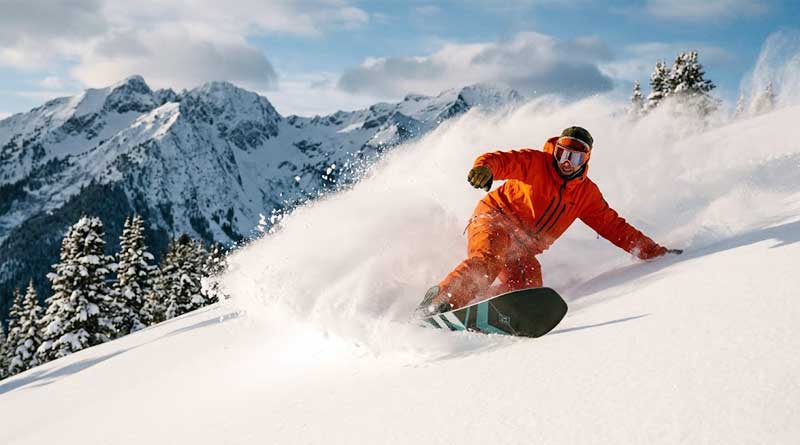
Riding deep powder is the ultimate snowboarding experience, offering a weightless sensation like floating through cloud-like terrain. Standard all-mountain boards often force riders to lean heavily on their back foot to prevent the nose from sinking, leading to fast fatigue. Dedicated powder snowboards are specifically engineered with directional shapes, wider noses, tapered tails, and specialized camber profiles to deliver effortless float. Whether navigating tight tree lines, open alpine bowls, or steep backcountry couloirs, choosing the right powder deck transforms your winter sessions dramatically.
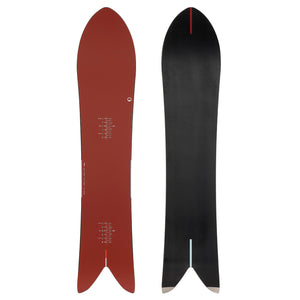
1. Season Forma
- Terrain: Freeride, Powder
- Ability Level: Advanced-Expert
- Rocker Type: Rocker/Camber/Rocker
- Flex Rating: Stiff
The Season Forma is a high-performance directional powder board designed alongside pro rider Austin Smith. Built with a classic wood core and a stiff flex, this deck excels at charging through deep snow and holding power on hardpack.
Its Rocker/Camber/Rocker profile gives you the ultimate balance between float in deep conditions and precision edge control when carving back to the lift line. Backed by a limited lifetime warranty, it is built to endure seasons of heavy freeride abuse.
- Pros: High stability, excellent float in deep snow, lifetime warranty protection.
- Cons: Stiff flex requires strong rider input and experience.
2. Rome Ravine Pro
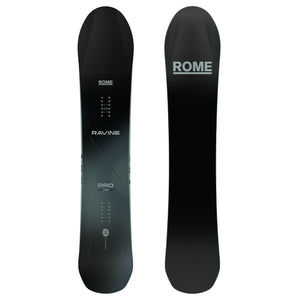
- Terrain: All-Mountain, Freeride, Powder
- Ability Level: Advanced-Expert
- Rocker Type: Rocker/Camber
- Flex Rating: Stiff (8/10)
The Rome Ravine Pro features specialized Free-The-Ride Camber paired with a Directional Diamond 3D nose. The 3D nose shape lifts through deep powder effortlessly while preventing edge catches on firm snow pack.
Equipped with Carbon Omega Hotrods and Flax Impact Plates, this stiff deck delivers immense pop, power, and dampening for aggressive riding. The SinterSpeed base ensures maximum velocity down steep pitches without hesitation.
- Pros: Superior 3D float, carbon-boosted pop, fast sintered base.
- Cons: Demanding flex profile for lower skill levels.
3. Salomon Dancehaul
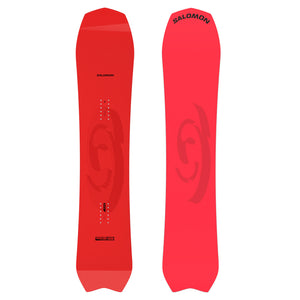
- Terrain: All-Mountain, Freeride, Powder
- Ability Level: Intermediate-Advanced
- Rocker Type: Rocker/Camber/Rocker
- Flex Rating: Medium
The Salomon Dancehaul is a nimble, volume-shifted directional deck that packs plenty of float into a versatile design. Its extra width lets you size down slightly without losing surface area in deep conditions.
Constructed with a wood core reinforced with basalt, it provides a damp yet lively ride. The medium flex pattern makes it approachable for intermediate riders who want a playful board that still blasts through powder off-piste.
- Pros: Highly maneuverable, versatile all-mountain capability, approachable medium flex.
- Cons: Lacks high-speed stability for heavy expert riders.
4. Arbor A-Frame
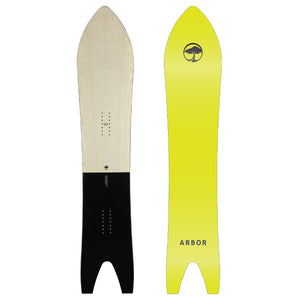
- Terrain: All-Mountain, Powder
- Ability Level: Advanced-Expert
- Rocker Type: Camber
- Flex Rating: Stiff
Designed for high-speed freeride charging, the Arbor A-Frame is a full camber directional powerhouse endorsed by Mark Carter. The stiff composite carbon and wood core provides maximum drive and powerful turn initiation.
A generous stance setback and wide tip design allow this aggressive board to float through powder while keeping rock-solid stability on icy groomers and steep variable snow conditions.
- Pros: Incredible power and edge hold, solid high-speed stability, strong build.
- Cons: Full camber requires constant precision to avoid catching edges.
5. GNU Something GNU C2
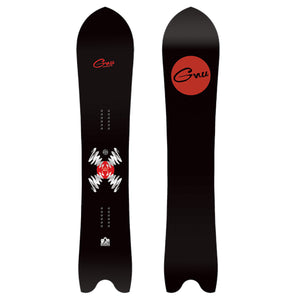
- Terrain: Freeride, Powder
- Ability Level: Advanced-Expert
- Rocker Type: Roc/Cam/Roc/Cam/Roc
- Flex Rating: Stiff
Handcrafted in the USA, the GNU Something GNU C2 combines hybrid rocker technology with Magne-Traction edge technology. The unique rocker profile provides exceptional float in deep powder with seamless pivot capability.
Its serrated Magne-Traction edges bite firmly into hardpack or ice on your way to the secret stash. The stiff directional flex allows riders to charge steep faces and chop with total confidence.
- Pros: Supreme float from C2 geometry, outstanding edge grip on firm snow.
- Cons: Unique hybrid rocker feel may take adjustment for camber traditionalists.
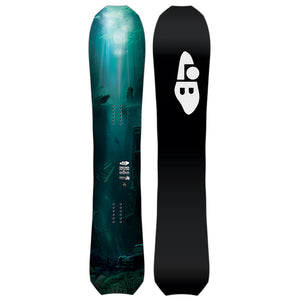
6. Lib Tech T. Rice Orca
- Terrain: Freeride, Powder
- Ability Level: Advanced-Expert
- Rocker Type: Camber/Rocker/Camber
- Flex Rating: Medium
The iconic Lib Tech T. Rice Orca is Travis Rice’s signature volume-shifted powder machine. Built to be ridden short and wide, it floats effortlessly through tight trees and pillows with nimble handling.
Featuring C2 contouring and Magne-Traction edges, it provides instant buoyancy in deep snow alongside incredible edge hold on hardpack. It remains a gold standard for all-around backcountry performance.
- Pros: Exceptional agility in tight spaces, high float-to-length ratio, proven edge hold.
- Cons: Short running edge can feel loose at ultra-high straight-line speeds.
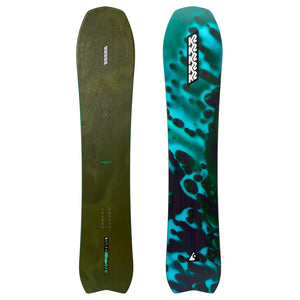
7. K2 Excavator
- Terrain: All-Mountain, Freeride, Powder
- Ability Level: Intermediate-Advanced
- Rocker Type: Rocker/Camber
- Flex Rating: Stiff
Part of K2’s Landscape Collection, the Excavator features a wider profile designed to trench deep gouges on groomers and float over untracked powder effortlessly without toe dragging.
Constructed with a bamboo, carbon, and wood core matrix, this stiff directional deck offers quick response and incredible energy transmission across all types of freeride terrain.
- Pros: Zero toe drag on deep carves, excellent power transmission, 5-year warranty.
- Cons: Requires active riding technique to maximize performance.
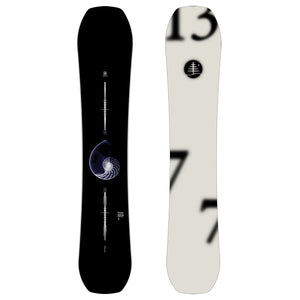
8. Burton Family Tree Hometown Hero
- Terrain: Freeride, Powder
- Ability Level: Intermediate-Advanced
- Rocker Type: Rocker/Camber/Rocker
- Flex Rating: Medium
The Burton Family Tree Hometown Hero uses Directional Camber and 12mm of taper to offer superior float and snappy control in steep backcountry environments and tight glades alike.
Its Balanced Freeride Geometry centers your stance over the sidecut, giving it a playful, centered feel on flat base while maintaining the massive nose float of a pure directional snowboard.
- Pros: Highly versatile ride feel, smooth energy transfer, flexible Channel mounting system.
- Cons: Requires Channel-compatible bindings or proper adapter plates.
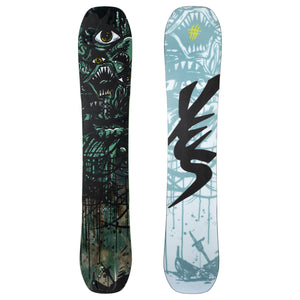
9. Yes. Pick Your Line XTRM
- Terrain: All-Mountain, Freeride, Powder
- Ability Level: Advanced-Expert
- Rocker Type: Rocker/Camber/Rocker
- Flex Rating: Stiff
The Yes. Pick Your Line XTRM is engineered for high-octane freeriding where failure is not an option. Featuring a stiff flex and Rocker/Camber/Rocker profile, it grips icy transitions and floats over deep powder instantly.
Designed for expert riders who demand high-speed stability and instant response, this board navigates technical lines, big drop-offs, and deep powder bowls with extreme confidence.
- Pros: Exceptional high-speed stability, precise response, durable lifetime coverage.
- Cons: Extremely stiff profile is unforgiving for casual or lighter riders.
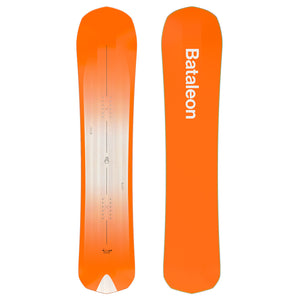
10. Bataleon Party Wave
- Terrain: All-Mountain, Powder
- Ability Level: Intermediate-Advanced
- Rocker Type: Rocker/Camber/Rocker
- Flex Rating: Medium
The Bataleon Party Wave brings surf-inspired performance to the mountain. Utilizing 3D base technology with elevated contact points, it glides through soft snow without ever digging in its edges.
Featuring a short, wide layout paired with a forgiving medium flex, this board turns mundane resort powder days into high-speed, slashable surf sessions through trees and side-country hits.
- Pros: Catch-free 3D base design, extremely fun and surfy, effortless powder float.
- Cons: Slower edge-to-edge transitions on firm groomed snow.
How to Choose the Best Powder Snowboard
Selecting the right powder snowboard can transform an exhausting day of leg burn into an effortless session of gliding across deep snow. When shopping for a dedicated powder board, you must look beyond basic aesthetic designs and evaluate board geometry, profile dynamics, sizing, and material composition. Understanding these technical components ensures you select a deck tailored specifically to your riding style and local snow conditions.
Understanding Board Shapes and Geometries
The physical outline of a snowboard dictates how it distributes weight across soft snow. Standard twin boards require balanced weight distribution, which causes the nose to plunge in untracked powder unless you lean back heavily. Dedicated powder boards use strategic geometric designs to create natural buoyancy without compromising maneuverability.
Directional Shapes
Directional boards are built to be ridden exclusively in one direction. They feature a longer, wider nose combined with a shorter, narrower tail. This uneven balance shifts your center of gravity toward the back automatically, allowing the nose to stay lifted while your back leg stays fresh.
Taper
Taper refers to the difference in width between the nose and the tail of the snowboard. A board with a tapered tail is narrower at the back end than at the front. In soft snow, the narrower tail sinks deeper into the powder, which dynamically raises the wide nose above the snowpack without extra effort.
Swallowtails and Cut-Out Tails
Swallowtail designs remove surface area from the center of the tail. By removing this section, the rear of the board drops naturally into deep snow while reducing overall swing weight for tighter, faster turns through thick tree lines.
Rocker and Camber Profiles
The profile of a board—how it bends when resting on a flat surface—determines its float, stability, and edge engagement. Modern powder boards combine various camber and rocker elements to achieve distinct riding characteristics.
| Profile Type | Float Capability | Edge Grip | Riding Style |
|---|---|---|---|
| Full Rocker | Maximum | Low | Surfy, loose, powder-focused |
| Directional Camber | High | Very High | Aggressive, stable, high-speed freeride |
| Hybrid Rocker/Camber | High | Moderate to High | Versatile, playful, multi-condition |
| 3D Base Profiles | Extreme | Smooth Transitions | Catch-free, surfy, powder-specific |
Directional Camber
Directional camber profiles feature positive camber under the back foot or between the feet, transitioning into a pronounced rocker section in the nose. Camber delivers stability, pop, and edge hold on hardpack, while the rockered nose provides immediate lift when entering un-groomed terrain.
3D Base Technology
Advanced base shaping, such as Bataleon’s 3D base or Rome’s Diamond 3D, uplifts the contact points near the nose like the hull of a boat. This design displaces snow smoothly to the sides, creating a fluid, surfy feeling while virtually eliminating edge catches in variable snow.
Sizing and Volume Displacement
Traditionally, snowboarders chose board length based on their height and weight. However, powder board designs fall into two distinct sizing categories: traditional length powder decks and volume-shifted snowboards.
Traditional Powder Board Sizing
Traditional powder snowboards rely on extra length to increase surface area. A longer board provides maximum high-speed stability and flotation across wide open bowls, but it requires more effort to swing around in tight spaces.
Volume-Shifted Snowboards
Volume-shifted boards (such as the Lib Tech T. Rice Orca or Salomon Dancehaul) re-engineer board dimensions by adding width across the waist while shortening the overall length. This added width maintains the surface area necessary for float while drastically reducing swing weight. Riders can downsize 3 to 6 centimeters from their standard board length for maximum agility in tight trees.
Flex and Core Construction
A snowboard’s stiffness determines how it responds to terrain and rider inputs. Matching board flex to your skill level and terrain preferences is essential for optimal performance.
- Medium Flex (5-6/10): Offers a forgiving, playful feel. Ideal for intermediate riders, low-speed maneuvers, and tight tree runs where quick turns are required.
- Stiff Flex (7-10/10): Provides high-speed stability, dampening through rough snow, and powerful edge hold. Recommended for advanced riders charging steep lines and big backcountry terrain.
- Advanced Core Laminates: Premium powder boards integrate carbon stringers, basalt, or flax fibers alongside lightweight wood cores. Carbon increases torsional stiffness and snap, while flax or basalt damps vibrations when riding through chopped-up snow.
Edge Tech and Mounting Systems
Riding powder often requires traveling across icy ridge lines or hardpack groomers to access soft snow stashes. Specialized edge profiles and binding interfaces can improve edge grip and stance adjustability.
Edge Tech (Magne-Traction)
Serrated edge geometries feature multiple contact points along the sidecut. These subtle bumps bite into icy surfaces like a steak knife, providing reliable traction when navigating treacherous entry points or firm access trails.
Binding Mount Patterns
Most boards use standard 2×4 insert packs, offering precise stance width adjustments. Systems like Burton’s Channel allow micro-adjustability to fine-tune your stance setback and angles down to the millimeter for ultimate personalization on powder days.