Best Stiff Snowboard Bindings of 2026
Stiff snowboard bindings are built for riders who want maximum energy transfer, precision, and support when carrying speed through hardpack, chop, or steep freeride terrain. Unlike softer flexing bindings designed for buttering and jibbing, stiff bindings lock your boots down tight and translate every leg movement directly to your board’s edges. They are favored by advanced and expert riders who value stability over playfulness. In this guide, we review eight of the best stiff snowboard bindings on the market and break down exactly how to pick the right pair for your riding style.
1. Union Force
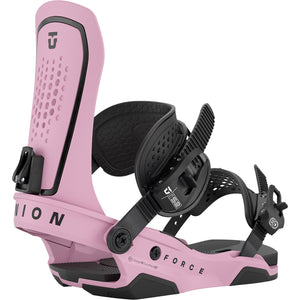
- Mount Pattern: 2×4, 4×4, Channel
- Ability Level: Intermediate-Advanced
- Binding Style: Strap
- Warranty: Limited Lifetime
The Union Force has long been a benchmark for stiff, all mountain performance, and the latest version keeps that reputation intact. Built with a duraflex composite highback and reinforced baseplate, it delivers precise power transfer without feeling harsh underfoot, making it a favorite among riders who charge groomers and venture into variable terrain.
Team riders Miles Fallon and Benny Milam helped fine tune the response for aggressive riding, and it shows in how confidently the binding holds an edge at speed. It pairs well with directional and all mountain boards, offering a supportive ride that rewards committed turns.
Pros: durable construction, strong edge control, versatile mounting options.
Cons: less forgiving for beginners, straps can feel firm when new.
2. Burton Lexa – Women’s
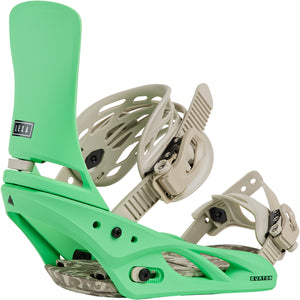
- Mount Pattern: Channel, 4×4, 2×4
- Ability Level: Advanced-Expert
- Binding Style: Strap
- Warranty: 1 Year
The Burton Lexa is designed specifically for women who want a stiffer, more locked in feel without sacrificing comfort. Its shaped highback and supportive straps give confident riders the control needed for fast descents, aggressive carving, and technical freeride lines, all while maintaining Burton’s signature fit quality.
The chassis flexes predictably underfoot, offering a responsive connection between boot and board that advanced riders will appreciate. It works especially well with directional twin boards suited to varied mountain conditions, giving a stable, planted platform run after run.
Pros: excellent female specific fit, strong responsiveness, reliable strap security.
Cons: shorter one year warranty, may feel stiff for casual riders.
3. Burton Step On Cartel X EST
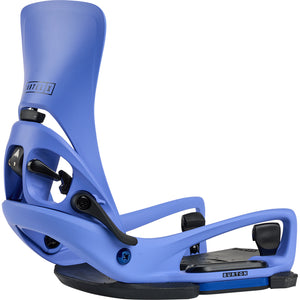
- Binding Style: Step-On, All Quick Entry
- Ability Level: Advanced-Expert
- Mount Pattern: Channel
- Warranty: 3 Years
The Cartel X EST reimagines the step on system with a stiffer chassis built for expert riders who refuse to compromise power for convenience. Three contact points click into compatible boots instantly, removing straps entirely while still delivering a locked in, high performance connection to the board.
Riders get an incredibly direct energy transfer, ideal for aggressive carving and technical freeride terrain, without the fumbling of traditional strap systems. The three year warranty reflects Burton’s confidence in the durability of this premium Channel mounted design.
Pros: fast entry and exit, excellent power transfer, longest warranty on this list.
Cons: requires compatible Step On boots, premium price point.
4. Nidecker Fuse Fusion
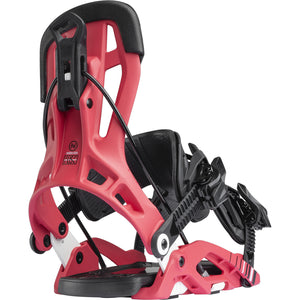
- Binding Style: All Quick Entry
- Ability Level: Intermediate-Advanced
- Mount Pattern: Channel, 2×4, 4×4
- Warranty: 1 Year
The Fuse Fusion combines quick entry convenience with a stiff, supportive chassis, giving intermediate to advanced riders a fast setup without losing performance. A rear entry highback swings down for easy boot access, then locks into a firm, responsive platform once secured.
This design suits riders progressing toward more demanding terrain who still want the reliability of a stiffer flex. The wide mounting compatibility means it fits comfortably on most modern boards, making it a practical option for riders upgrading their setup.
Pros: quick entry convenience, solid support, flexible mount compatibility.
Cons: rear entry mechanism needs periodic maintenance, standard one year warranty.
5. Bent Metal Lightning Supermatic
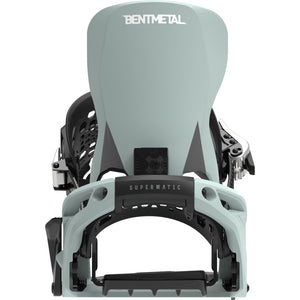
- Binding Style: Supermatic, All Quick Entry, Strap
- Ability Level: Intermediate-Advanced
- Mount Pattern: 2×4, 4×4, Channel
- Warranty: 1 Year
The Lightning Supermatic offers a clever hybrid, functioning as a rear entry quick strap binding that still delivers the stiff, aggressive feel riders expect from Bent Metal. The single ratchet strap system speeds up entry while keeping boot lockdown firm and secure for hard charging days.
Its metal reinforced chassis provides excellent energy transfer for carving and freeride use, appealing to intermediate riders pushing into advanced terrain. The design strikes a strong balance between convenience and raw performance on the mountain.
Pros: fast single strap entry, stiff responsive feel, versatile mounting.
Cons: single strap may feel unfamiliar at first, one year warranty.
6. Union Force Classic
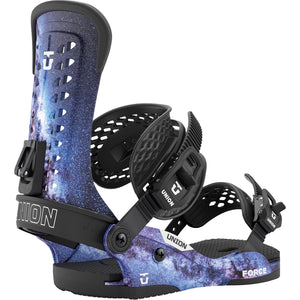
- Mount Pattern: 4×4, Channel, 2×4
- Ability Level: Intermediate-Advanced
- Binding Style: Strap
- Warranty: Lifetime
The Force Classic strips the original Force design back to its essentials, keeping the stiff, responsive chassis while trimming unnecessary bulk. Backed by athlete Chris Grenier, it is built for riders who want dependable power transfer for carving and all mountain riding at a more accessible price.
Despite the simplified build, it retains a supportive highback and secure straps that hold up through demanding days. Its lightweight construction at 860 grams makes it a great option for riders wanting stiffness without added weight.
Pros: lightweight build, proven Force performance, lifetime baseplate warranty.
Cons: fewer premium materials than the standard Force, firm feel for beginners.
7. Burton Cartel X
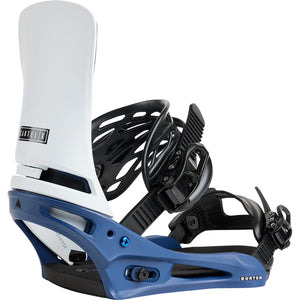
- Mount Pattern: 4×4, Channel, 2×4
- Ability Level: Advanced-Expert
- Binding Style: Strap
- Warranty: 1 Year
The Cartel X is Burton’s flagship strap binding for expert riders who demand maximum precision. A stiff, powerful chassis paired with a supportive highback gives instant response when driving through turns, making it a top choice for freeride and aggressive all mountain riding.
Its dialed strap system locks the boot down evenly, minimizing pressure points during long days on firm snow. Compatible with a wide range of mount patterns, the Cartel X adapts easily to different board setups without compromising on performance.
Pros: exceptional power transfer, premium build quality, versatile compatibility.
Cons: demanding flex for less experienced riders, standard one year warranty.
8. Union Atlas
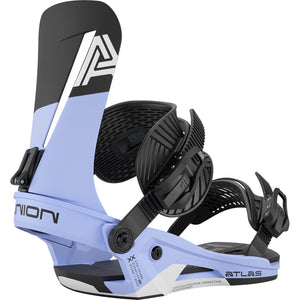
- Mount Pattern: 4×4, Channel, 2×4
- Ability Level: Intermediate-Advanced
- Binding Style: Strap
- Warranty: Lifetime
The Union Atlas sits just below the Force in stiffness while still offering a firm, supportive ride ideal for progressing freeriders. Developed with input from athlete Kevin Backstrom, it delivers dependable edge control and a durable build suited to demanding mountain conditions.
At 920 grams, it strikes a solid balance between weight and stiffness, giving riders confidence on steep terrain without excessive bulk. The straps distribute pressure evenly, keeping the boot secure through long descents and variable snow.
Pros: strong edge hold, durable lifetime baseplate coverage, athlete tested design.
Cons: slightly less refined than the Force, firm for casual riders.
How To Choose The Best Stiff Snowboard Bindings
Choosing the right stiff snowboard binding comes down to matching the binding’s characteristics to your riding style, ability level, boot compatibility, and board setup. Stiff bindings are engineered for riders who want maximum responsiveness and control, but that same stiffness can feel punishing if it does not suit your body weight, terrain preference, or experience level. Below is a detailed breakdown of the factors that matter most when narrowing down your choice.
Understand Your Riding Style First
Before comparing specs, think honestly about how you actually ride. Stiff bindings are not one size fits all, and different riding styles benefit from different degrees of stiffness within the stiff category itself.
Freeride and Big Mountain
Riders who spend most of their time in ungroomed terrain, steep chutes, and variable snow need bindings that transfer energy instantly and hold an edge with confidence. Look for stiff bindings with reinforced highbacks and firm baseplates, since these features reduce lag between your movements and the board’s response.
All Mountain Carving
If you spend most days on groomers pushing speed and clean carves, a stiff binding gives you the power and precision needed to drive the board through each turn without flex robbing your energy. Bindings like the Union Force or Burton Cartel X shine in this category.
Park and Freestyle
Stiff bindings are generally not recommended for park riders who want playful, forgiving flex for jumps, presses, and jibbing. If freestyle is your priority, a medium flex binding will usually serve you better, even though this guide focuses on stiff options for aggressive terrain riding.
Match Binding Style To Your Priorities
Snowboard bindings generally come in three main styles, and each affects convenience, setup time, and performance differently.
| Binding Style | Best For | Trade Off |
|---|---|---|
| Strap | Maximum adjustability and precise fit | Slower to put on and take off |
| Step On | Fast entry and exit, convenience | Requires compatible boots |
| All Quick Entry | Balance of speed and support | May need occasional maintenance |
Traditional strap bindings remain the most popular for stiff, high performance riding because they allow fine tuned adjustment across the toe and ankle straps. Step on and quick entry systems have improved significantly and now offer comparable stiffness, but they lock you into using boots from the same brand or compatible system.
Check Ability Level Recommendations
Every binding on this list is labeled with an ability level, ranging from intermediate advanced to advanced expert. This rating is not just marketing, it reflects how demanding the flex pattern is and how much rider input is needed to get the most out of the binding.
- Intermediate to advanced bindings offer stiffness with slightly more forgiveness, easing the transition from softer setups.
- Advanced to expert bindings are built for riders who already know how to use aggressive input and want zero hesitation in response.
- Choosing a binding above your current skill level can lead to fatigue and reduced control, while choosing below it can leave power on the table.
Confirm Mount Pattern Compatibility
Mount pattern compatibility is one of the most overlooked factors when buying new bindings. Most stiff bindings today support multiple patterns including 2×4, 4×4, and Channel systems, which makes them compatible with a wide range of board brands. Still, it is worth double checking your board’s insert pattern before purchasing, especially if you already own a board from a specific brand with a proprietary mounting system.
Universal Disc Systems
Bindings featuring a universal disc that supports 2×4, 4×4, and Channel patterns, like the Union Force, Burton Cartel X, and Union Atlas, offer the most flexibility if you plan to switch boards in the future or are unsure which pattern your current board uses.
Channel Only Systems
Some bindings, such as the Burton Step On Cartel X EST, are built specifically for Channel mounting. This offers stepless adjustment along the length of the binding but limits compatibility with boards that use only traditional disc patterns.
Consider Weight And Durability
Weight can influence how a binding feels underfoot, particularly for riders who spend long days touring or hiking for backcountry lines. Lighter stiff bindings, such as the Union Force Classic at 860 grams, reduce fatigue without sacrificing the firm response that defines stiff bindings. Heavier options often use more reinforced materials, which can add durability for riders who prioritize longevity over minimal weight.
Warranty length is another useful signal of durability. Bindings backed by longer warranties, such as the three year coverage on the Burton Step On Cartel X EST, suggest the manufacturer has strong confidence in the components holding up over repeated seasons of aggressive use.
Think About Boot Compatibility
Stiff bindings perform best when paired with boots of similar or complementary stiffness. Pairing a very stiff binding with an extremely soft boot can create an unbalanced feel, reducing the precision benefits you are trying to gain. Riders using step on systems need to confirm their boots are specifically compatible with that binding’s entry mechanism, since these systems are not universally interchangeable across brands.
Set A Realistic Budget
Stiff, performance oriented bindings typically sit at the mid to premium price range due to the reinforced materials and engineering involved. When budgeting, consider not just the upfront price but also the expected lifespan based on warranty coverage and construction quality. Spending slightly more on a binding with a longer warranty or proven athlete tested design can pay off over multiple seasons of hard riding.
Final Tips For Choosing
- Match the binding’s ability level to your actual skill, not your aspirational skill.
- Confirm mount pattern compatibility with your specific board before buying.
- Choose binding style based on how much you value speed of entry versus fine tuned adjustability.
- Factor in weight if you plan to hike or tour in the backcountry.
- Prioritize boot and binding compatibility, especially with step on systems.
By weighing riding style, ability level, mount compatibility, weight, and budget together, you can confidently choose a stiff snowboard binding that matches how and where you actually ride, rather than simply picking the most popular option on the shelf.