Best High-Volume Ski Boots of 2026
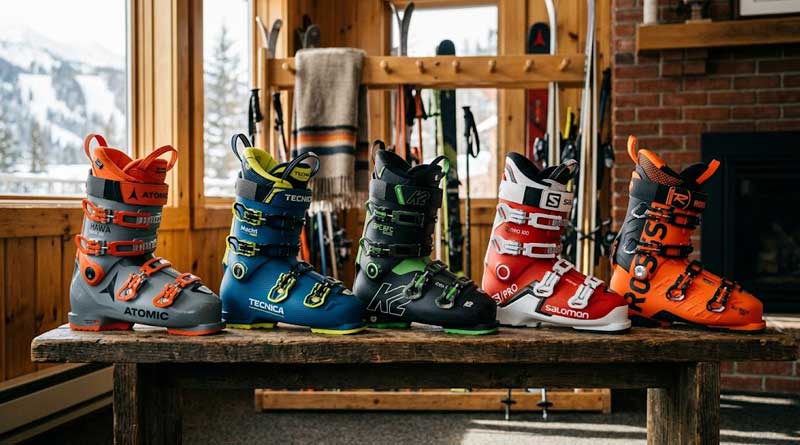
If you have wide feet or a high instep, standard ski boots can feel painfully tight. The best high-volume ski boots solve this problem by offering more room in the forefoot and instep. This means you can ski all day in comfort without numb toes or pressure points. In this article, we will look at the top high-volume ski boots. We will help you find the perfect pair for a warm, happy, and pain-free day on the slopes.
1. Tecnica Mach BOA HV 100

- Skill Level: Intermediate
- Flex Index: 100
- Last Width: 103 millimeters
- Boot Sole Type: GripWalk (ISO 23223)
The Tecnica Mach BOA HV 100 is designed for intermediate skiers who want a comfortable boot that performs all day without constant adjustment. The BOA Fit System lets you dial in a precise fit with a simple turn, while the plush N.F.S. Comfort Ecodesign liner with Celliant keeps your feet warm and supported. With a 103 mm last, this boot accommodates wider feet well, making it a great choice for skiers who prioritize comfort but still want reliable downhill control.
These boots are built to be put on and forgotten. The medium 100 flex offers a balanced blend of forgiveness and responsiveness, suitable for cruising groomers and exploring moderate terrain. The thermoformable liner can be molded for a personalized fit, and cant adjustment lets you fine-tune your stance. While they lack walk mode, the GripWalk soles make walking to and from the lifts easier. Overall, the Mach BOA HV 100 is a solid option for intermediate skiers seeking hassle-free comfort and dependable performance.
- Pros: Easy BOA closure, wide comfortable fit, warm liner, good value for intermediates
- Cons: No walk mode, only two buckles, not ideal for aggressive expert skiing
See the Tecnica Mach BOA HV 100
2. Rossignol Alltrack 80 – Women’s

- Skill Level: Intermediate
- Flex Index: 80
- Last Width: 102 millimeters
- Boot Sole Type: GripWalk (ISO 23223)
The Rossignol Alltrack 80 women’s ski boot is built for intermediate skiers who want comfort and versatility across varied terrain. STEP IN technology and BOA dials make entry and exit incredibly easy, so you can start skiing sooner. The insulated thermoformable liner provides warmth and can be customized for a snug fit. With a 102 mm last and medium 80 flex, this boot suits a range of foot shapes and offers a forgiving yet responsive ride for all-mountain exploration.
Walk mode and cant adjustment add to the boot’s adaptability, letting you hike or traverse without sacrificing downhill performance. The four-buckle design plus BOA provides secure closure and fine-tuned fit. GripWalk soles improve traction when walking on snow or icy surfaces. While the 80 flex may feel soft for advanced skiers, it is ideal for intermediates seeking a balance of comfort and control. The Alltrack 80 is a reliable companion for women who want to enjoy the whole mountain with ease.
- Pros: Easy entry with STEP IN and BOA, walk mode, insulated liner, women’s specific fit
- Cons: Soft flex for advanced skiers, four buckles plus BOA may feel busy, not for aggressive experts
See the Rossignol Alltrack 80 – Women’s
3. Tecnica Cochise HV 120

- Skill Level: Advanced
- Flex Index: 120
- Last Width: 102 millimeters
- Boot Sole Type: GripWalk (ISO 23223) with Tech Inserts
The Tecnica Cochise HV 120 is a high-performance boot for advanced skiers who want to access more terrain without giving up power on descents. It smoothly transitions from uphill to downhill thanks to walk mode and tech inserts, making it compatible with alpine touring bindings. The 120 flex is stiff and responsive, while the 102 mm high-volume last accommodates wider feet. The Performance C.A.S. liner with Celliant, floating tongue, and fiberglass collar delivers a precise, customizable fit that enhances control and comfort.
Custom moldable liners allow you to personalize the fit for all-day comfort, and cant adjustment lets you dial in your stance. Four buckles provide secure closure, and GripWalk soles ensure sure footing when walking. This boot is built for advanced riders who demand downhill performance but occasionally earn their turns. While it is heavier than dedicated touring boots, the Cochise HV 120 excels as a versatile freeride boot that can handle resort laps and backcountry adventures alike.
- Pros: Walk mode with tech inserts, stiff 120 flex, customizable liner, high-volume fit
- Cons: Heavy for long tours, stiff flex may overwhelm lighter skiers, premium price
See the Tecnica Cochise HV 120
4. Nordica HF 85 – Women’s

- Skill Level: Intermediate
- Flex Index: 85
- Last Width: 102 millimeters
- Boot Sole Type: GripWalk (ISO 23223)
The Nordica HF 85 women’s ski boot places an emphasis on comfort from the moment you slip it on to the moment you call it a day. With a medium 85 flex and a 102 mm last, it offers a smooth, flowing ride that suits intermediate skiers. The 3D Cork Fit W PrimaLoft liner is custom moldable, providing warmth and a personalized fit. A single buckle closure makes getting in and out incredibly simple, which is ideal for skiers who value convenience and ease.
Although it lacks walk mode, the HF 85 makes up for it with a plush, comfortable feel and reliable downhill performance. Cuff adjustment allows you to fine-tune the fit, and GripWalk soles improve walking traction. This boot is perfect for women who want a no-fuss, comfortable boot that performs well on groomed runs and moderate terrain. The soft flex is forgiving and confidence-inspiring, making it a great choice for those who prioritize comfort over aggressive performance.
- Pros: Single buckle convenience, very comfortable liner, warm PrimaLoft insulation, easy on/off
- Cons: No walk mode, soft flex for advanced skiers, single buckle may not suit everyone
See the Nordica HF 85 – Women’s
5. K2 BFC 95 – Women’s

- Skill Level: Intermediate, Advanced
- Flex Index: 95
- Last Width: 103 millimeters
- Boot Sole Type: GripWalk (ISO 23223)
The K2 BFC 95 women’s ski boot delivers out-of-the-box comfort without sacrificing on-snow performance. With a 103 mm last, it accommodates a wide variety of feet, making it a great choice for skiers who struggle with narrower boots. The BOA Fit System offers a precise, micro-adjustable fit, while the thermal-formable foam liner can be molded for personalized comfort. A medium 95 flex suits intermediate to advanced skiers who want support and responsiveness without feeling overly stiff.
Walk mode, cant adjustment, and cuff adjustment add versatility, allowing you to fine-tune the boot for different conditions and terrain. Two buckles plus the BOA dial keep things simple and secure. GripWalk soles make walking easier and safer. Whether you are cruising groomers or exploring off-piste, the BFC 95 provides a comfortable, supportive ride. It is an excellent option for women seeking a wide-fit boot that performs well across the mountain.
- Pros: Wide 103 mm last, BOA fit system, walk mode, customizable liner, versatile for intermediates and advanced
- Cons: Only two buckles, may be too wide for narrow feet, not a race-level boot
6. Nordica Sportmachine 3 100

- Skill Level: Intermediate
- Flex Index: 100
- Last Width: 102 millimeters
- Boot Sole Type: GripWalk (ISO 23223)
The Nordica Sportmachine 3 100 is designed for intermediate skiers who want to explore the entire mountain with confidence. The BOA Fit System is integrated into the Tri Force shells to enhance performance, precision, and comfort. With a medium 100 flex and a 102 mm last, this boot offers a balanced blend of support and forgiveness. The Precision Fit PrimaLoft liner is custom moldable, providing warmth and a personalized fit that keeps your feet comfortable all day.
Cant adjustment and cuff adjustment allow you to fine-tune your stance and alignment, while two buckles plus the BOA dial keep closure simple and secure. GripWalk soles improve traction when walking on snow or ice. While it lacks walk mode, the Sportmachine 3 100 excels on groomed runs and moderate off-piste terrain. It is a reliable, comfortable choice for intermediate men who want a versatile boot that performs well without demanding expert-level skills.
- Pros: BOA fit system, customizable PrimaLoft liner, cant and cuff adjustment, comfortable medium flex
- Cons: No walk mode, only two buckles, may be too soft for aggressive advanced skiers
See the Nordica Sportmachine 3 100
7. Atomic Hawx Magna 110 S

- Skill Level: Intermediate
- Flex Index: 110
- Last Width: 102 millimeters
- Boot Sole Type: GripWalk (ISO 23223)
The Atomic Hawx Magna 110 S is a medium-flex, wide-fit boot built for intermediate skiers with high-volume feet. The 110 flex and 102 mm last provide a supportive yet comfortable platform, while the BOA Fit System improves shell wrapping on the lower part of the boot for a precise fit. The Mimic Silver liner is custom moldable, allowing you to personalize the fit for enhanced comfort and performance. This boot is ideal for skiers who want a balance of power and plushness.
Flex adjustment, cant adjustment, and cuff adjustment give you multiple ways to fine-tune the boot to your skiing style and stance. Two buckles plus the BOA dial keep the closure system streamlined and secure. GripWalk soles make walking to and from the lifts easier. While it lacks walk mode, the Hawx Magna 110 S performs well on groomers and moderate terrain. It is a great choice for intermediate men seeking a wide, comfortable boot with enough stiffness for confident skiing.
- Pros: BOA fit system, wide 102 mm last, customizable Mimic liner, multiple adjustments
- Cons: No walk mode, only two buckles, 110 flex may be too stiff for beginners
See the Atomic Hawx Magna 110 S
8. K2 BFC 120

- Skill Level: Advanced
- Flex Index: 120
- Last Width: 103 millimeters
- Boot Sole Type: GripWalk (ISO 23223)
The K2 BFC 120 is a high-performance ski boot that combines convenience with uncompromising downhill capability. With a 103 mm last and a stiff 120 flex, it delivers great comfort for wider feet while providing the power and precision advanced skiers demand. The BOA Fit System offers a precise, micro-adjustable fit, and the thermal-formable foam liner can be molded for personalized comfort. This boot is designed for advanced skiers who want a wide-fit boot that does not sacrifice performance.
Walk mode, cant adjustment, and cuff adjustment add versatility, making it suitable for everything from resort laps to light touring. Two buckles plus the BOA dial keep the closure system simple and secure. GripWalk soles improve walking traction and safety. Whether you are charging groomers or exploring off-piste, the BFC 120 delivers a responsive, comfortable ride. It is an excellent choice for advanced men seeking a stiff, wide-fit boot that can handle aggressive skiing without causing foot pain.
- Pros: Stiff 120 flex, wide 103 mm last, BOA fit system, walk mode, customizable liner
- Cons: Only two buckles, may be too stiff for intermediates, heavier than dedicated touring boots
How to Choose High-Volume Ski Boots
Finding the right ski boot is the single most important equipment decision you will make as a skier. A boot that fits poorly will ruin your day, no matter how good your skis are. For skiers with wider feet, high insteps, or simply a preference for more room in the forefoot, high-volume (HV) ski boots are the answer. But choosing the right pair involves more than just looking for the letters “HV” on a box. This guide will walk you through everything you need to know about selecting high-volume ski boots that deliver both comfort and performance.
What Does “High Volume” Actually Mean?
Before diving into the selection process, it is essential to understand what high-volume means in the context of ski boots. The term refers to the internal dimensions of the boot shell, specifically the width across the forefoot (known as the “last”) and the overall space inside the boot.
Last widths typically range from about 96 millimeters to 106 millimeters. A narrower last is considered low-volume, while boots with a wider last are high-volume. The conventional starting point for this measurement is a size 26.5 shell, and the width scales up or down by roughly 2 to 2.5 millimeters for every full size change.
However, width is only one dimension of a three-dimensional space. High-volume boots also tend to offer more height over the instep, which is the top of your foot, and more room around the ankle. This is why two boots that both measure 102 millimeters can feel completely different depending on the shape of your foot.
Step 1: Measure Your Feet Correctly
The foundation of any good boot fit is accurate measurement. You cannot choose the right boot without knowing your actual foot dimensions, and relying on your street shoe size is a recipe for disaster. Most skiers wear boots that are one to two sizes too large.
Measuring Length (Mondopoint)
Mondopoint is the international standard for ski boot sizing, based on the length of your foot in centimeters. To measure your Mondopoint size at home, follow these steps:
- Wear a thin pair of ski socks.
- Place a blank sheet of paper against a wall.
- Stand with your heel touching the wall and your weight evenly distributed.
- Draw a line at the tip of your longest toe.
- Measure the distance from the wall to that line in centimeters.
- Repeat for both feet and use the larger measurement.
If your foot measures 27 centimeters, you might consider a 27.5 boot for a comfort fit, or a 26.5 boot for a more performance-oriented fit. Beginners and intermediate skiers generally benefit from a slightly roomier fit, while advanced skiers often prefer a tighter, more precise feel.
Measuring Width and Instep
Width is measured across the widest part of your foot, which is at the ball of the foot. Instep height is the measurement over the top of your foot, from the heel to the top of the instep. Both measurements matter enormously when selecting a high-volume boot.
As a general guideline, if your foot width measures over 104 millimeters, or if you wear an E width or wider in street shoes, you are almost certainly a candidate for high-volume boots.
Step 2: Understand Flex and How It Relates to Volume
Flex and volume are two entirely separate specifications, but they are often confused. Flex refers to how stiff the boot is—how much force it takes to bend the boot forward at the ankle. Volume refers to the internal space and shape of the shell.
Flex is rated on a scale that generally runs from 60 to 150 for adult alpine boots. Higher numbers mean stiffer boots. The right flex for you depends on your ability level, weight, and skiing style.
| Skier Ability | Men’s Flex Range | Women’s Flex Range |
|---|---|---|
| Beginner | 70–90 | 60–70 |
| Intermediate | 90–110 | 70–90 |
| Advanced | 110–130 | 90–110 |
| Expert | 130+ | 110+ |
Your weight also plays a significant role. A heavier skier will exert more force on the boot and may need a stiffer flex to get the same performance as a lighter skier. If you are between two flex ratings, it is generally safer to choose the softer option. A boot that is too stiff will be difficult to flex, preventing you from getting forward on your skis and making it exhausting to ski.
Step 3: Consider Closure Systems
Traditional ski boots use two to four buckles to secure the foot. High-volume boots frequently use two buckles, sometimes combined with a power strap. More recently, the BOA Fit System has become increasingly popular in high-volume boots.
The BOA system uses a dial and a thin, incredibly strong lace to wrap the shell around your foot. It offers several advantages over traditional buckles:
- Micro-adjustability: You can tighten or loosen the boot in tiny increments with a simple twist.
- Uniform pressure distribution: The cable wraps the foot evenly, reducing pressure points on the top of the foot.
- Secure heel hold: The system locks the heel into the heel pocket more effectively than buckles in many cases.
- Easy on and off: Some systems include a releasable guide that opens the shell for effortless entry.
BOA-powered boots have been shown to improve power transfer from boot to ski by up to 6 percent and improve stability and control during turns by up to 10 percent. For skiers with high-volume feet, the uniform wrap of a BOA system can be particularly beneficial because it conforms to the shape of the foot without creating isolated pressure points.
Step 4: Evaluate the Liner and Its Customizability
The liner is the soft, padded interior of the boot that holds your foot and fills the space between your foot and the shell. Stock liners are built for an average foot in that size, but high-volume feet are not average. Fortunately, many high-volume boots come with thermoformable or custom moldable liners.
A thermoformable liner can be heated and then molded to the exact contours of your foot. This creates a personalized fit that dramatically improves comfort and heel retention. Some liners also include heat-reflective materials or insulation to keep your feet warm.
If you have significant fit challenges, an aftermarket custom liner is another option. These liners are injected with foam or filled with materials like cork and silicone that mold precisely to your foot. A custom liner can transform a boot that fits reasonably well into one that fits perfectly, though it is an additional investment.
Step 5: Perform the Shell Fit Test
Before you commit to a boot, perform the shell fit test with the liner removed. This test tells you whether the shell length is correct, which is a separate issue from width.
- Remove the liner from the boot shell.
- Wear your ski socks and slide your foot into the empty shell.
- Press your toes gently against the front of the shell.
- Slide two fingers behind your heel.
For a performance fit, two fingers should fit snugly behind your heel. If you can only fit one finger, the boot is too small. If you can fit three or more, the boot is too large. This test ensures that your foot will not slide forward and jam your toes when you flex the boot.
Step 6: Look for Adjustability Features
High-volume boots often include features that allow further customization:
- Cant adjustment: Allows you to adjust the lateral angle of the boot to match your natural stance.
- Cuff adjustment: Lets you fine-tune the fit around your lower leg.
- Flex adjustment: Some boots allow you to stiffen or soften the flex by adding or removing a bolt.
- Walk mode: Releases the cuff for easier walking and hiking, useful for freeride and touring boots.
These features are not essential for every skier, but they add value and versatility to a high-volume boot.
Common Mistakes to Avoid
Even skiers who understand the theory often make mistakes when choosing high-volume boots. Here are the most common pitfalls:
- Choosing based on street shoe size: Ski boots fit much more precisely than street shoes. Always measure your foot.
- Confusing flex with width: A stiff boot is not necessarily narrow, and a wide boot is not necessarily soft.
- Prioritizing comfort over performance entirely: A boot that is too roomy will allow your foot to move, reducing control and potentially causing blisters.
- Ignoring the instep: A boot can be wide enough across the forefoot and still press painfully on a high instep.
- Skipping the shell fit test: This simple check prevents the most common sizing errors.
Final Thoughts
Choosing high-volume ski boots is a process of matching three-dimensional measurements to a three-dimensional product. Width, instep height, and overall volume all matter, and the letters “HV” on a box are only a starting point. Measure your feet, understand your flex needs, consider the closure system and liner, and always perform a shell fit test before committing.
If possible, visit a professional bootfitter. They have the tools, experience, and inventory to match you with the right boot and can make adjustments that turn a good fit into a perfect one. A well-chosen high-volume boot will keep your feet comfortable, warm, and in control all day on the mountain, allowing you to focus on what matters: skiing.