
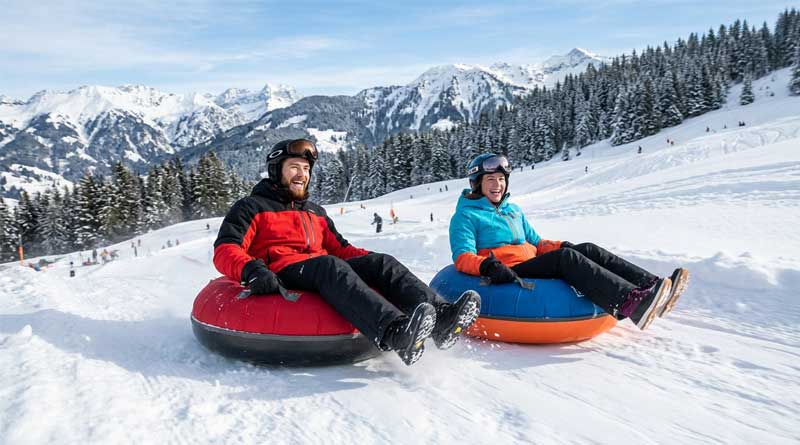
Best Heavy-Duty Snow Tubes of 2027
Winter is better when the hill is covered in snow and you have the right ride waiting. Snow tubes give families a simple, thrilling way to enjoy cold days, whether you are heading to a neighborhood slope or a resort run. With so many options, choosing can feel confusing. We reviewed eight popular heavy-duty snow tubes, comparing materials, size, weight capacity, and ease of use. Read on to find the best match for your riders, budget and your winter plans.
1. Raxurt Snow Tube

- Size: 48 inches deflated
- Capacity: 500 pounds
- Cover: 600D canvas over PVC
- Bottom: 0.6mm thickness
The Raxurt tube is built like a commercial product. Its tear-resistant PVC bladder sits inside a 600D canvas cover, and the 0.6mm bottom is thicker than the 0.45mm found on many rivals. A special coating helps it glide quickly over snow, and the cold rating reaches -25 degrees.
Safety and storage are well considered. Two sturdy grips leave room for gloved hands, and the wide seat keeps riders balanced. The 3-in-1 valve inflates and deflates quickly, and the tube folds to about the size of a book. A tow rope helps adults haul it uphill by hand. You will need to buy a pump separately.
Pros:
- Thick, slick bottom
- 500 pound capacity
- Folds small for storage
Cons:
- Pump not included
- Needs a large hill for two riders
2. Bradley Snow Tube

- Diameter: 50 or 60 inches
- Bottom: 1100D vinyl with RapidGlide
- Handles: 2 sewn-in handles
- Origin: Made in the USA
Bradley focuses on American craftsmanship. The set includes a thick rubber inner tube, a commercial-grade cover, and a six-foot tow leash. The 1100D slick vinyl bottom uses RapidGlide anti-friction technology, and the air cushion gives a smooth ride. The size suits most adults up to 200 pounds.
Two sewn-in handles provide a firm grip, while a patented tow loop system keeps the tube and cover secure under high torque. A valve stem tool hidden in the cap makes releasing air for storage easy. Several colors let each family member pick a favorite. It is not meant for towing behind motorized vehicles, so keep it on hand-pulled hills.
Pros:
- Made in the USA
- Rubber inner tube included
- Many color choices
Cons:
- Best for riders up to 200 pounds
- Not for vehicle towing
3. Flexible Flyer Tube

- Size: 40 x 40 x 11 inches
- Weight: 13 pounds
- Base: Hard shell polyethylene
- Cover: 1,000D Cordura nylon
Flexible Flyer blends tube comfort with sled speed. Originally designed for commercial tubing parks, it pairs a hard polyethylene base with a thick rubber inner tube and a 1,000 denier Cordura nylon top. The plastic bottom resists punctures on rough terrain, and a light coat of wax makes runs even faster.
A separate inner support tube nests inside the main tube, adding cushioning and bump absorption for a smoother ride than a plain plastic slider. It is designed for kids age 6 and up, includes a built-in tow strap, and inflates with a standard Schrader valve using any tire pump or compressor. At 13 pounds, it is heavier to carry but sturdy on the slope.
Pros:
- Fast hard-shell base
- Extra bump cushioning
- Easy Schrader valve
Cons:
- Heavy at 13 pounds
- Smaller 40-inch size
4. ZMLM Tube Set

- Size: 36 inches each
- Pack: Set of 2 tubes
- Material: Thickened PVC
- Extras: Two repair patches
ZMLM offers a value pack of two snow tubes, each 36 inches across and decorated with snowflake patterns. The thickened PVC is double stitched to help prevent cracking, and two repair patches are included for punctures. A 3-in-1 air locking valve fills in under a minute with a manual or electric pump.
Embossed handles add strength and help prevent tears and seam separation during fast slides, while a pull rope lets adults assist children uphill. Deeper seat cushions keep young riders comfortable, and the tubes fold compactly for cars or backpacks. The small size suits kids and toddlers best, so larger riders may want a bigger model. Never tow with vehicles.
Pros:
- Two tubes in one pack
- Repair patches included
- Folds compactly
Cons:
- Small 36-inch size
- Better for children than adults
5. CAMPLAND Tube

- Diameter: 47 inches
- Capacity: 500 pounds
- Cover: 600D Oxford fabric
- Cold rating: -30C / -22F
CAMPLAND wraps a dual-layer PVC bladder in a 600D Oxford fabric cover, so ice, rocks, and twigs hit fabric instead of bare vinyl. A 0.48mm thickened bottom shield adds protection, and the cold-resistant materials stay soft and airtight down to -30C, which keeps January hill days in play.
The 47-inch deck is rated to 500 pounds, so a parent and child can share one tube. Its 55 cm recessed seat sits lower than flat-seat designs and resists tip-overs, and two non-slip grips work with thick gloves. A wide-mouth valve inflates in about a minute using a pump or shop blower, and the extended tow strap makes the climb easier. A pump is not included.
Pros:
- Excellent cold rating
- Stable recessed seat
- Quick inflation
Cons:
- Pump not included
- Thinner bottom than Raxurt
6. Eterfun Snow Tube

- Size: 48 inches
- Capacity: 450 pounds
- Cold rating: -25 degrees Celsius
- Cover: Double-stitched canvas
Eterfun combines a commercial-grade rubber inner tube with a double-stitched canvas cover for strong abrasion and tear resistance. The smooth, reinforced bottom is designed for faster runs, and special insulating materials keep the tube flexible down to -25 degrees Celsius so it will not turn brittle and crack.
Dual reinforced handles give a stable grip at speed, and the tow rope with handles helps with uphill pulls and carrying. The 48-inch design fits two riders up to 450 pounds, making it suitable for adults, teens, and families. The upgraded 3-in-1 valve core speeds up inflation and deflation, and the cover can be removed in summer for floating on rivers and lakes.
Pros:
- Roomy enough for two
- Strong cold resistance
- Useful in summer too
Cons:
- 450 pound limit
- Rubber tube packs bulkier than PVC
7. ZANGEROI Tube

- Brand: ZANGEROI
- Style: Compact
- Material: Polyvinyl chloride (PVC)
- Weight: 5.01 kg, blue cover
ZANGEROI offers a compact snow tube with a blue cover, built from polyvinyl chloride. The listing shares fewer details than other products here, so buyers should check size, weight limit, and valve design before ordering. At 5.01 kg, it carries noticeable weight, so plan for that when hauling it to the hill.
PVC is a common choice for inflatable snow tubes because it resists water and wipes clean after a snowy day. The compact style should suit smaller sledding spots and easier storage. Because the listing omits handle, bottom thickness, and capacity details, we recommend confirming those points on the product page. It may appeal to shoppers who want a simple blue tube and are comfortable researching the specifics.
Pros:
- Compact style
- Water-resistant PVC build
- Clean blue look
Cons:
- Limited listing details
- Capacity not stated
8. Yukon Charlie’s Tube

- Size: 46 inches deflated, 40 inflated
- Capacity: 170 pounds
- Cover: 400D polyester
- Bladder: Butyl rubber
Yukon Charlie’s offers a camo-patterned 46-inch tube with a durable butyl rubber bladder and a 400D polyester cover. The reinforced PVC bottom provides a slick, puncture-resistant surface for speedy runs on snowy hills. It measures 40 inches when inflated, which suits kids and smaller riders.
Wide, padded, foam-filled handles give a firm, glove-friendly hold, and a strong pull handle helps bring the tube back up the slope. The 170 pound limit and the recommendation for ages 7 and older make it better for kids and lighter teens than for two adults. Families seeking a single-rider tube with a bold camo look will find it a fun choice.
Pros:
- Padded, glove-friendly handles
- Butyl rubber bladder
- Fun camo design
Cons:
- Low 170 pound capacity
- Not suited to two adults
How to Choose Heavy-Duty Snow Tubes
Snow tubing has become one of the most accessible and enjoyable winter activities for families, thrill-seekers, and outdoor enthusiasts alike. Unlike skiing or snowboarding, tubing requires almost no skill or learning curve—you simply sit, hold on, and slide. However, not all snow tubes are created equal. A cheap, lightweight tube designed for occasional backyard use can quickly fail on a steep, groomed hill or a busy commercial tubing park. That is why choosing a heavy-duty snow tube is essential for safety, durability, and performance. This article will walk you through everything you need to know to select the right heavy-duty snow tube for your needs.
Why Heavy-Duty Matters
Before diving into the specifics, it is important to understand why heavy-duty construction matters. Standard snow tubes are often made from thin PVC or vinyl that can puncture easily, lose air quickly, and degrade under UV exposure. Heavy-duty tubes, by contrast, use thicker materials, reinforced seams, and superior valves. The result is a product that can withstand repeated use on rough terrain, resist punctures from ice and debris, and maintain air pressure in freezing temperatures. If you plan to tube frequently, ride on steep or unpredictable hills, or share the tube with adults, investing in a heavy-duty model is a wise decision.
Key Factors to Consider
Material Quality and Thickness
The material is the single most important factor in determining a snow tube’s durability. Most snow tubes are made from PVC, vinyl, or nylon. Heavy-duty models typically use thick, multi-layer PVC or reinforced vinyl with a denier rating of at least 500D to 1000D. Some high-end tubes feature ripstop nylon covers over an inflatable bladder, which offers excellent puncture resistance and glide performance.
When evaluating material, look for the following:
- Thickness: Measured in millimeters (mm) or gauge. Heavy-duty tubes usually have a material thickness of 0.6 mm or more.
- Denier rating: For fabric-covered tubes, a higher denier (e.g., 1000D) indicates a thicker, more abrasion-resistant fabric.
- Reinforced seams: Heat-welded or double-stitched seams are far more durable than glued seams.
- UV resistance: Tubes left outside in sunlight can degrade quickly. Look for UV-treated materials.
Tube Design and Shape
Snow tubes come in several designs, each suited to different uses. Understanding the differences will help you choose the right one.
Round Tubes
Round tubes are the classic design, offering a simple inflatable ring that you sit inside. They are versatile and work well on gentle to moderate slopes. Heavy-duty round tubes often feature a reinforced bottom and handles for stability. However, they can spin unpredictably on steep hills.
Steerable Tubes
Steerable tubes are shaped more like a boat or a sled, with a defined front and back. They often include molded handles and a contoured bottom that helps you track straight down the hill. These are ideal for commercial tubing parks and steeper slopes where control is important.
Towable Tubes
Towable tubes are designed to be pulled behind a snowmobile or ATV. They are typically larger, have reinforced tow points, and are built with heavy-duty materials to withstand high speeds and rough terrain. If you plan to tow, make sure the tube is explicitly rated for tow use.
Weight Capacity and Size
Always check the manufacturer’s weight capacity before purchasing a snow tube. Heavy-duty tubes generally support higher weights, often ranging from 250 to 500 pounds or more. Exceeding the weight limit can cause the tube to bottom out, reducing speed and increasing the risk of damage or injury.
Size also matters. Larger tubes provide more stability and comfort, but they can be harder to carry and store. Consider the following:
- Child-sized tubes: Typically 30–36 inches in diameter, with lower weight limits.
- Adult-sized tubes: Usually 40–48 inches or more, with higher weight capacities.
- Two-person tubes: Larger and heavier, designed for shared rides.
Valve Quality and Inflation
A high-quality valve is critical for maintaining air pressure and ease of use. Heavy-duty snow tubes often feature Boston valves or large-capacity quick-inflate valves. These allow for fast inflation and deflation and provide a secure seal that resists leaking in cold temperatures.
Look for valves with:
- Double-lock design: Prevents air loss during inflation.
- Wide openings: Makes inflation with a pump or compressor faster.
- Durable caps: Tethered or screw-on caps that won’t get lost in the snow.
Handles and Safety Features
Safety should never be an afterthought. Heavy-duty snow tubes should include sturdy, reinforced handles that are easy to grip with gloves. Look for handles that are sewn or welded into the tube’s structure rather than glued on, as glued handles can rip off under stress.
Other safety features to consider:
- Reinforced bottom: Provides extra protection against punctures and abrasion.
- Leash or tow strap: Useful for pulling the tube back up the hill.
- Reflective accents: Improves visibility in low-light conditions.
- Safety valves: Some tubes include pressure-release valves to prevent over-inflation.
Comparison Table: Types of Heavy-Duty Snow Tubes
| Feature | Round Tube | Steerable Tube | Towable Tube |
|---|---|---|---|
| Best For | Gentle slopes, casual use | Steep slopes, tubing parks | Snowmobile/ATV towing |
| Material Thickness | 0.6–0.8 mm PVC | 0.7–1.0 mm PVC or nylon cover | 1.0 mm+ reinforced PVC |
| Weight Capacity | 250–350 lbs | 300–400 lbs | 400–500+ lbs |
| Handles | 2–4 reinforced handles | Molded or reinforced handles | Heavy-duty tow points |
| Steering | Limited | Good | N/A (towed) |
| Price Range | $30–$80 | $50–$150 | $80–$250+ |
Brand Reputation and Reviews
Not all heavy-duty snow tubes are created equal, even if their specifications look similar. Research brands that have a strong reputation for quality and customer service. Look for tubes with numerous positive reviews, especially those that mention durability over multiple seasons.
When reading reviews, pay attention to:
- Durability over time: Do reviewers report leaks or seam failures after one or two uses?
- Cold-weather performance: Does the material crack or become brittle in freezing temperatures?
- Customer service: Does the manufacturer stand behind their product with warranties or replacements?
- Real-world weight capacity: Do heavier users report success or failure?
Price vs. Value
Heavy-duty snow tubes cost more than basic models, but the investment pays off in safety and longevity. A $20 tube that pops after two trips is far more expensive in the long run than a $100 tube that lasts five seasons. Set a budget that reflects how often you plan to tube and the conditions you will encounter.
Consider the following price tiers:
- Budget ($20–$40): Basic tubes, often thin PVC, suitable for occasional backyard use.
- Mid-range ($40–$100): Thicker materials, better valves, and reinforced handles. Good for regular family use.
- Premium ($100–$250+): Commercial-grade materials, advanced safety features, and superior construction. Ideal for frequent use or towing.
Maintenance and Storage
Even the most durable snow tube will fail prematurely if not properly maintained. After each use, wipe down the tube to remove snow, ice, and debris. Store it deflated or partially deflated in a cool, dry place away from direct sunlight. Avoid storing the tube near sharp objects or chemicals that could degrade the material.
During the off-season, inspect the tube for signs of wear, such as cracks, fading, or loose seams. Apply a vinyl or PVC conditioner if recommended by the manufacturer to keep the material supple and UV-resistant.
Conclusion
Choosing a heavy-duty snow tube is about more than just finding the biggest or most expensive option. It requires understanding your intended use, evaluating material quality, checking weight capacities, and prioritizing safety features. By focusing on thick, reinforced materials, sturdy handles, high-quality valves, and reputable brands, you can select a snow tube that will provide years of safe, exhilarating winter fun. Whether you are cruising down a neighborhood hill or tackling a steep mountain run, the right heavy-duty snow tube will make every ride smoother, safer, and more enjoyable.