Best Two-Way Radios for Skiing of 2027
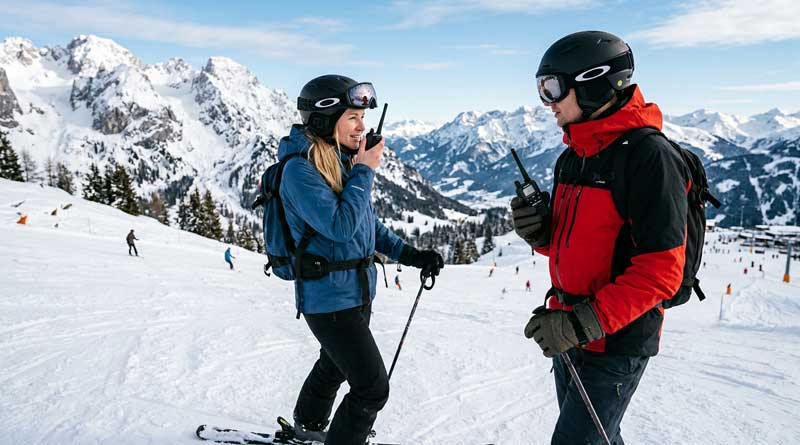
Skiing is thrilling, but staying in touch on a crowded mountain is harder than it looks. Phones lose signal, gloves make touchscreens useless, and groups easily get separated between lifts. A good two-way radio solves these problems with instant voice contact, no cell service required. We compared eight popular walkie talkies for cold-weather durability, battery life, ease of use, and range. Whether you ski with family, friends, or a backcountry crew, this guide helps you pick the right radio for your slopes.
1. Retevis RT22

- Channels: 22 FRS
- Charging: USB-C, about 10 hours of use
- Antenna: Short, thumb-length
- Pack: 4 radios with separate clips
The Retevis RT22 is a tiny radio that suits skiers who dislike bulky gear. Its short antenna and rounded angle reduce the chance of snagging or poking you during a fall, which matters on busy slopes. It slips easily into a jacket pocket, and the detachable clip lets you pull it out without unclipping.
USB-C charging is a big convenience, since you can top it up from a power bank or car port between runs. The speaker is modest at 300 mW, but the squelch function helps keep audio clear. A four-pack makes it ideal for large family trips, though no waterproof rating is listed, so keep it inside your jacket.
Pros
- Pocket-friendly size
- USB-C charging
- Four radios included
Cons
- Modest 300 mW speaker
- No waterproof rating
2. Motorola T475

- Channels: 22 with 121 privacy codes
- Protection: IPx4 weather resistant
- Power: Dual power
- Extras: NOAA alerts and flashlight
The Motorola Talkabout T475 Extreme is a rugged choice built for snow and wind. Its IPx4 weather resistance handles splashes and flurries, while the yellow and black body is easy to spot if dropped in powder. The built-in flashlight is useful on early morning lifts or when finishing the last run at dusk.
With 22 channels and 121 privacy codes, you get 2,662 combinations, so finding a clear channel at a busy resort is easy. NOAA weather alerts add safety when storms roll in. Dual power lets you use the rechargeable pack or swap in batteries, which is handy on long trips away from an outlet.
Pros
- Weather resistant body
- 2,662 channel combinations
- NOAA weather alerts
Cons
- Only two radios included
- IPx4 is not fully waterproof
3. pxton 16-Channel

- Channels: 16 preset, 165 privacy codes
- Battery: 1500 mAh lithium-ion
- Features: VOX, scan, flashlight
- Pack: 4 radios with earpieces
The pxton set is a complete pack that includes four radios, chargers, belt clips, hand straps, and earpieces. That last accessory is a real bonus on the slopes, since an earpiece keeps audio audible over wind and lets you hear messages while wearing a helmet. Each radio has a simple rotary knob for changing channels.
VOX voice control provides hands-free talking, which helps when your poles occupy both hands. The 1500 mAh battery gives up to 12 hours of continuous use, and the shell is rainproof and drop-proof. Range depends on terrain, so expect less around trees and ridges. It suits groups that want a full kit in one purchase.
Pros
- Earpieces included
- VOX hands-free talking
- Complete four-pack kit
Cons
- Rainproof, not snow-rated
- Range limited by obstacles
4. Mountain Radio

- Power: 2-watt FRS output
- Battery: Over 4 days, lithium-ion
- Rating: IP56 waterproof
- Mount: Climbing-rated carabiner
Mountain Radio is purpose-built for outdoor athletes, and it shows. The radio uses the maximum 2-watt FRS power, with a claimed range above 35 miles in ideal conditions, though one to five miles is more realistic in mountain terrain. That is still excellent for spread-out ski groups and backcountry tours.
Durability stands out. A shatterproof LED screen, thermoplastic covering, and IP56 rating handle snow and splashes, and the lithium-ion battery lasts over four days even in cold. A climbing-rated carabiner attaches it securely to your pack or harness. Setup is simple, with only five buttons, so it is ready to use out of the box.
Pros
- Excellent cold-weather battery
- Rugged and IP56 rated
- Secure carabiner mount
Cons
- Only two radios included
- Few advanced features
5. Midland T51VP3

- Channels: 22 FRS
- Privacy: 38 CTCSS codes
- Weather: NOAA scan and alert
- Hands-free: eVOX, 3 sensitivity levels
The Midland T51VP3 X-Talker is a straightforward, compact radio that fits easily into a ski jacket pocket or clips to a belt. The bright orange color is a real advantage on snow, making it easier to find if it drops. With 22 channels and 38 privacy codes, it offers up to 836 channel options to avoid chatter.
NOAA Weather Scan and Alert is valuable on mountain days, automatically locking onto the strongest weather channel and sounding an alarm for severe conditions. The eVOX feature has three sensitivity levels for hands-free use, though wind noise may trigger it. It is a dependable pick for beginners who want simple operation and useful safety features.
Pros
- Bright orange body
- NOAA weather alerts
- Easy operation
Cons
- No waterproof rating listed
- Wind may trigger eVOX
6. Midland T10

- Channels: 22 scannable
- Privacy: 38 CTCSS codes
- Weather: NOAA scan and alert
- Includes: Two belt clips
The Midland T10 X-Talker shares much of its feature set with the T51VP3 but comes in classic black. It delivers clear point-to-point communication, and its 22 scannable channels help you find a quiet frequency at crowded resorts. Midland markets it for longer range in open areas, which suits wide ski bowls and open runs.
The 38 privacy codes limit unwanted chatter, and NOAA Weather Alert provides early warnings if a storm approaches. eVOX allows hands-free transmitting while you ski with poles in hand. Two belt clips are included in the box. This radio is a simple entry for casual skiers, though it is less rugged than waterproof models.
Pros
- Clear audio
- Weather alerts
- Easy to use
Cons
- No waterproof rating listed
- Black body is harder to spot in snow
7. Baofeng 16-Channel

- Channels: 16 fixed
- Range: Up to 2 miles in open areas
- Battery: 8 to 96 hours of use
- Extras: VOX, scan, flashlight
The Baofeng walkie talkie set comes with four radios, battery packs, chargers, belt clips, hand straps, and earpieces, making it a complete package for a group. Channels are selected using a simple rotary knob, and the built-in flashlight is handy during twilight runs. Range reaches up to two miles in open areas, which is plenty for most resort days.
Battery performance varies from 8 to 96 hours depending on use, with a full charge taking about three to four hours. The rain-resistant, drop-proof shell offers reasonable protection against bumps. VOX control is useful when your hands are busy. Baofeng also provides a 30-day return guarantee, giving added confidence. Expect shorter range around trees or buildings.
Pros
- Complete four-pack
- Earpieces included
- 30-day return guarantee
Cons
- Two-mile range limit
- Shell is only rain-resistant
8. Cobra RX180

- Range: Up to 18 miles claimed
- Channels: 22 preset
- Weather: 10 NOAA channels
- Extras: VOX, LED flashlight with SOS
The Cobra RX180 is a lightweight pair with a claimed 18-mile range and 22 preset channels. It is easy to carry on the slopes, and a battery-saving circuit extends life when you are not transmitting or receiving. The LED flashlight includes an SOS mode, a useful safety feature if you get delayed on the mountain.
Access to ten NOAA weather channels helps you watch for storms, while VOX provides hands-free communication. Ten selectable call tones help you identify who is calling in a group, and channel scan finds incoming transmissions. Cobra has over 50 years of experience, which adds trust. Real-world range will be far less than the maximum in mountainous terrain.
Pros
- SOS flashlight
- Selectable call tones
- NOAA weather channels
Cons
- No waterproof rating listed
- Only two radios included
How to Choose Ski Radios
Picking the right two-way radio for skiing is about matching features to the way you ride. A radio that works perfectly for a family at a groomed resort may not suit a guide leading a backcountry tour. The sections below explain which features matter most and how the radios reviewed above compare.
Match the Radio to Your Style
Resort Skiing
Resort skiers usually stay within a few miles, so range is less important than convenience. Look for a compact radio that fits in a jacket pocket, a clear speaker, and an easy channel selector. Models like the Retevis RT22 and Midland T51VP3 fit this style well, especially for families.
Backcountry Touring
Backcountry groups face rugged terrain, colder temperatures, and no rescue patrol nearby. Here, battery endurance, durability, and secure mounting matter most. The Mountain Radio stands out because of its high power output, IP56 rating, and carabiner attachment. A weather alert function is also valuable when conditions change quickly.
Understand Range Claims
Manufacturers often advertise maximum ranges measured in flat, open areas. Mountains, trees, and ridgelines block signals, so real range is far shorter. FRS radios are limited to two watts at most, and many consumer models transmit with less power. Treat advertised miles as a ceiling, not a promise.
| Environment | Typical Range | Notes |
|---|---|---|
| Open bowl or wide run | 1 to 2 miles | Few obstructions |
| Forested runs | 0.5 to 1 mile | Trees absorb signal |
| Deep valleys or ridgelines | Under 0.5 mile | Line of sight blocked |
| Backcountry with a 2-watt radio | 1 to 5 miles | Typical for rugged terrain |
Check Battery Performance
Cold weather drains batteries quickly, so battery performance deserves close attention. Lithium-ion packs generally handle cold better than alkaline cells. Keep the radio in an inner pocket to stay warm, and charge it fully the night before. USB-C charging, as found on the Retevis RT22, lets you recharge from a power bank. For multi-day trips, the four-day battery life of the Mountain Radio is a major advantage.
- Carry a spare battery or power bank
- Keep radios close to your body
- Turn the radio off between runs
- Charge fully before each trip
Look for Weather Resistance
Snow, sleet, and condensation can quickly damage electronics. Ratings help you compare protection levels. IPx4 means the radio resists splashes, while IP56 offers stronger protection against dust and powerful water jets. Radios without a listed rating should stay zipped inside your jacket. A rugged shell also helps survive drops from chairlifts and falls.
Channels and Privacy Codes
Busy resorts have many radios operating at once. A radio with more channels and privacy codes helps you avoid interference. Privacy codes do not make your conversation secret, but they filter out other users on the same channel. The Motorola T475 offers 2,662 combinations, while the Midland models offer up to 836 options. Choose a less common channel and agree on it before the first run.
Hands-Free and Accessories
Skiing with gloves and poles makes pressing small buttons difficult. Voice-activated transmission lets you talk without pushing a button, though wind noise can cause false triggers. Earpieces, like those in the pxton and Baofeng kits, help you hear clearly in noisy conditions. Check that accessories fit comfortably under a helmet.
Useful Extras
- Built-in flashlight for dusk runs
- NOAA weather alerts for storms
- Belt clip or carabiner for secure carrying
- Call tones to identify group members
Size, Weight, and Color
A heavy radio swings around on your chest and becomes tiresome after hours of skiing. Compact designs are easier to carry and less likely to hurt during a fall. Bright colors, like the orange Midland T51VP3 and the yellow Motorola T475, are far easier to find if you drop them in deep snow.
Pack Size and Value
Think about how many people are in your group. Four-packs from Retevis, pxton, and Baofeng suit families or large friend groups, while two-packs from Mountain Radio, Midland, and Cobra suit pairs. Buying extra radios later is possible, but matching models make setup easier. Higher-priced radios often justify the cost through durability and battery life.
| Radio | Best For | Pack Size | Standout Feature |
|---|---|---|---|
| Retevis RT22 | Families | 4 | USB-C charging |
| Motorola T475 | Harsh weather | 2 | IPx4, 2,662 combinations |
| pxton | Groups | 4 | Earpieces included |
| Mountain Radio | Backcountry | 2 | 4-day battery, IP56 |
| Midland T51VP3 | Beginners | 2 | Orange body, NOAA alerts |
| Midland T10 | Casual skiing | 2 | 22 scannable channels |
| Baofeng | Larger groups | 4 | 30-day return guarantee |
| Cobra RX180 | Safety-minded skiers | 2 | SOS flashlight |
Test Before You Go
Never wait until you are on the chairlift to find out whether your radios work. Test them at home or in the parking lot, confirm everyone uses the same channel and privacy code, and check the battery level. Practice pressing the talk button with gloves on. A few minutes of preparation prevents frustration once the group spreads out on the mountain.
Quick Buying Checklist
- Choose a size that fits comfortably in your jacket
- Check the weather resistance rating
- Confirm cold-weather battery performance
- Look for enough channels and privacy codes
- Decide whether you need VOX or earpieces
- Match the pack size to your group
Safety and Etiquette
Radios are shared airwaves, so keep conversations short and clear. Agree on simple call signs, and set a meeting point in case anyone loses signal. Never rely on a radio as your only safety tool, especially in avalanche terrain. Carry proper rescue gear, check conditions before heading out, and tell someone your route. A radio is a helpful companion, but good planning always comes first.
Final Thoughts
The best ski radio depends on your group and terrain. Families will appreciate the compact Retevis RT22 or the complete pxton kit, while backcountry skiers should consider the Mountain Radio for its battery life and durability. Motorola, Midland, and Cobra offer dependable weather alerts and useful extras. Match features to your needs, test your radios before the trip, and you will stay connected from the first chairlift to the final run.