
Best Alpine Touring Ski Bindings of 2026
Alpine touring ski bindings let you climb uphill and ski down with the same setup, giving backcountry lovers freedom and safety. These bindings attach to special touring boots and allow your heel to lift while walking, then lock down for solid downhill control. When choosing bindings, think about weight, ease of use, release settings, and compatibility with your skis and boots. Lighter bindings make uphill travel easier, while sturdier models offer better power on steep descents.
1. ATK HY 13 Free
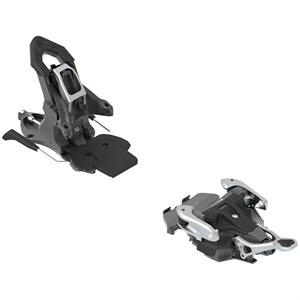
- Weight: 675g per binding
- DIN Range: 6 – 13
- Elastic Travel: 18mm (Toe) / 7mm (Heel)
- Walking Modes: -18mm, +10mm, +34mm
The ATK HY 13 Free is a game-changer for backcountry enthusiasts who refuse to compromise on downhill power. Weighing in at a remarkably light 675g, this binding bridge the gap between minimalist touring gear and heavy freeride setups. Its standout feature is the unique negative walk mode, which drops the heel slightly below the toe to improve stride efficiency on flat approaches.
Engineered with precision in Italy, the system features an adjustable AFD to ensure safe release with various boot soles. In ski mode, the boot sits flat on the ski, providing an authentic alpine feel and direct power transfer. It is a meticulously designed tool for experts who demand reliability from the peak to the parking lot.
Pros: Incredible weight-to-performance ratio; innovative negative walk mode; flat-to-ski ramp angle.
Cons: High price point; requires spacer adjustments for different boot soles.
2. Armada Shift² 13 MN
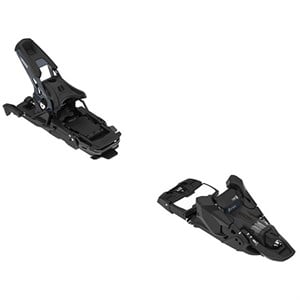
- Type: Hybrid (Tech/Alpine)
- DIN Range: 6 – 13
- Stand Height: 24.2 mm
- Certification: Multi Norm Certified (MN)
The second generation of the revolutionary Shift binding brings meaningful durability upgrades to a proven platform. The headline improvement is the new Power Block AFD, featuring an aluminum insert that boosts lateral power transfer by 30% while eliminating slippage. Armada has also reinforced the toe wings and locking lever, addressing the wear-and-tear concerns of aggressive freeriders.
Transitioning remains a breeze with the Hike and Ride switch, allowing you to use tech pins for the climb and a full alpine toe for the descent. It remains one of the few bindings that offers genuine DIN-certified safety across almost all boot types. If you want one binding for both the resort and the deep backcountry, this is a top-tier contender.
Pros: Superior power transfer; compatible with almost all adult boot norms; improved brake locking mechanism.
Cons: Heavier than pure tech bindings; requires boots with full toe and heel lugs.
3. Marker Cruise 12
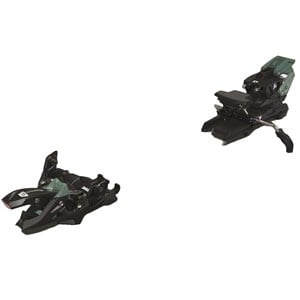
- Type: Tech
- DIN Range: 6 – 12
- Materials: Recycled and Bio-based plastics
- Adjustment: Independent Vertical and Horizontal release
The Marker Cruise 12 is designed for the environmentally conscious skier looking for a simple, reliable touring experience. It utilizes the proven Alpinist toe piece but pairs it with an entirely new heel constructed from recycled and bio-based materials. This makes it a greener alternative in the market without sacrificing the safety of independent release adjustments.
The “Intuitive Step In” (ISI) toe piece includes a rubber stop pad that makes clicking into the pins significantly easier, even for intermediate skiers. With 180-degree rotation for fast mode switching and an automatic brake lock, it focuses on ease of use. It is a fantastic choice for those who want a functional, mid-weight binding for classic ski touring missions.
Pros: Eco-friendly construction; easy step-in toe; independent release values.
Cons: Slightly heavier than the minimalist Alpinist; limited to tech-insert boots only.
4. Salomon MTN Pure
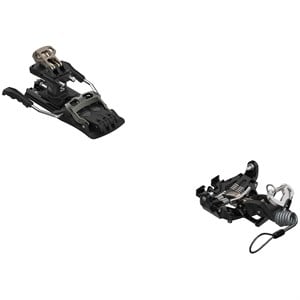
- Type: Tech
- Heel Adjustment: 30mm
- Climbing Levels: 3 (Flat, Medium, High)
- Construction: Aluminum Alloy
Designed for high-alpine objectives where every gram counts, the Salomon MTN Pure is a masterpiece of minimalist engineering. The sturdy aluminum frame provides a rigid connection for reliable power transfer during technical descents. A patented step-in aid simplifies the often-fiddly process of engaging tech pins, making transitions smoother in wind-blown or steep terrain.
The binding offers versatility through swappable springs, allowing users to choose between “Women,” “Men,” or “Expert” release levels. While it lacks a traditional DIN dial, its simplicity translates to incredible durability in the field. This is the ideal tool for human-powered missions where uphill efficiency is just as vital as downhill confidence.
Pros: Very lightweight and durable; simple climbing lifters; generous heel adjustment range.
Cons: Fixed release values require spring swaps; no lateral release adjustment in the toe.
5. Dynafit ST Rotation 10
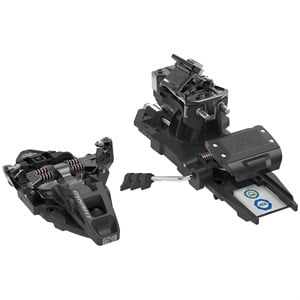
- Type: Tech
- DIN Range: 4 – 10
- Forward Pressure: 10mm
- Certification: TÜV Certified
The Dynafit ST Rotation 10 stands out for its unique rotating toe piece, which significantly reduces the risk of unintended pre-releases caused by sudden impacts. This feature, combined with 10mm of forward pressure, allows the binding to absorb chatter and maintain a consistent release even when the ski is deeply flexed. It provides a smoother, more “alpine-like” snow feel than most standard pin bindings.
Step-in is easier than ever thanks to the self-centering Hub Mechanism and integrated side towers. Safety-conscious tourers will appreciate the TÜV certification and the Bayonet Lock on the heel, which prevents the binding from accidentally rotating into ski mode while climbing. It is a reliable, user-friendly choice for advanced skiers who prioritize security.
Pros: Rotating toe prevents pre-release; excellent vibration damping; certified safety standards.
Cons: Slightly heavier than minimalist tech bindings; rotating toe can feel different during step-in.
See the Dynafit ST Rotation 10
6. Marker F10 Tour Small
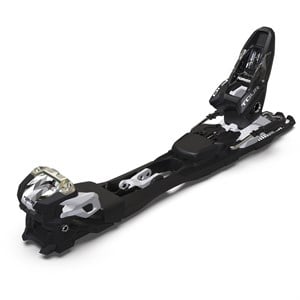
- Type: Frame
- DIN Range: 3 – 10
- Stand Height: 36 mm
- Compatibility: Alpine, Touring, and GripWalk soles
The Marker F10 Tour is the perfect entry point for resort skiers looking to explore the backcountry without investing in a completely new set of boots. As a frame binding, it allows you to use your standard alpine boots for touring. It skis exactly like a traditional downhill binding, providing the familiar power transmission and safety release that intermediate skiers rely on for confidence.
While heavier than tech bindings, the F10 Tour utilizes a fiber-reinforced hollow construction to keep weight manageable. The climbing aids are easily adjusted with a pole, offering 7 and 13-degree positions. This binding is a reliable, “do-it-all” solution for those who split their time between the lifts and occasional short tours beyond the ropes.
Pros: Compatible with standard alpine boots; familiar downhill performance; more affordable than hybrid tech setups.
Cons: Heavy for long tours; high stand height affects center of gravity.
7. Tyrolia Ambition 12
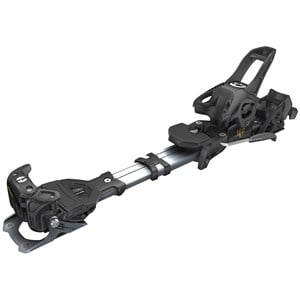
- Type: Frame
- DIN Range: 4 – 12
- Adjustment Range: 260mm – 350mm (Telescopic)
- Stand Height: 38 mm
The Tyrolia Ambition 12 is a versatile frame binding that focuses on natural ski flex and broad compatibility. Its unique telescopic tube allows the binding to be adjusted to almost any adult boot sole length without needing to remount. The integrated Freeflex system is a standout, allowing the ski to bend naturally under the binding for better edge grip and smoother downhill performance.
For the ascent, the Ambition offers four different climbing heights that are easy to engage. The AT toe is designed to work seamlessly with Alpine, Touring, and GripWalk soles, making it a highly adaptable choice. It is an excellent option for skiers who want the durability of a frame binding with improved “natural” skiing dynamics.
Pros: Massive adjustment range for different boots; Freeflex technology improves ski feel; easy to operate.
Cons: Frame design is bulky for skinning; high stand height may feel less stable on wide skis.
8. Salomon S/LAB Shift² MN 13
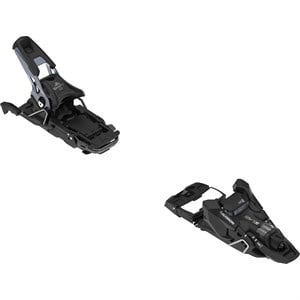
- Type: Hybrid (Tech/Alpine)
- DIN Range: 6 – 13
- Elastic Travel: High lateral elasticity
- Weight: Approx. 885g per binding
The S/LAB Shift² MN 13 represents the pinnacle of hybrid binding technology, updated for even greater reliability. This version introduces the aluminum Power Block AFD, which provides a significant increase in lateral stiffness and power transmission. It solves the “one binding” dilemma by offering a tech toe for uphill efficiency and a genuine alpine toe and heel for the descent.
Salomon has reinforced the critical components, including the toe wings and the brake locking mechanism, to ensure it stands up to high-intensity freeriding. It is Multi Norm Certified, meaning it is compatible with virtually every adult boot on the market. For the hard-charging skier who needs full DIN protection and touring capability, this remains the industry standard.
Pros: True alpine downhill performance; Multi Norm compatibility; improved power transfer over the original.
Cons: Heavier than pure pin bindings; transition process has more steps than simple tech bindings.
See the Salomon S/LAB Shift² MN 13
9. ATK Freeraider 15 Evo
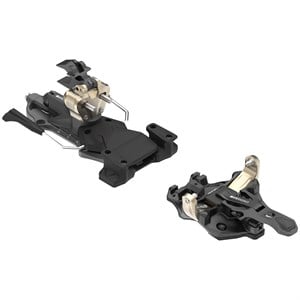
- Type: Tech
- DIN Range: 7 – 15
- Adjustment Range: 25mm
- Travel: 14mm Elastic Response System
The ATK Freeraider 15 Evo is a powerhouse in a lightweight package, designed for those who push the limits of backcountry freeriding. This Evo version features the new U.H.V. system, allowing the skier to adjust the clamping hardness of the toe piece to compensate for boot wear or user weight. It also introduces an automatic brake system that activates simply by rotating the heel piece.
With a massive DIN range up to 15, this binding is built for aggressive lines and big drops. The Elastic Response System allows for 14mm of heel travel, ensuring the ski maintains its natural flex and the binding releases reliably during heavy impacts. It is a premium, meticulously crafted binding for experts who want maximum performance with minimum weight.
Pros: Extremely high DIN for a tech binding; incredible build quality; lightweight for its power.
Cons: Very expensive; high minimum DIN may not suit lighter skiers.
10. Marker Duke PT 16
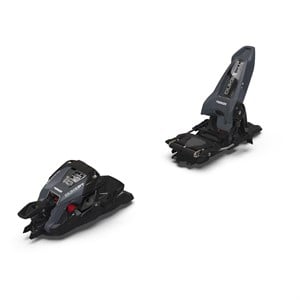
- Type: Hybrid (Convertible)
- DIN Range: 6 – 16
- Uphill Weight: 1050g (Toe removed)
- Downhill Weight: 1350g
The Marker Duke PT 16 is the ultimate “hucker” binding, offering the highest DIN setting in its class for those who ski at the absolute limit. It features an ingenious convertible toe piece: for the climb, you pull back the cover to reveal tech pins; for the descent, the cover snaps down to create a burly alpine toe with Quad Lock technology for four-point security.
To save weight on the uptrack, the alpine toe housing can be removed and stowed in your pack, shedding 300g per binding. The Inter Pivot 3 heel provides world-class power transmission and energy absorption, making it feel indistinguishable from a high-end resort binding. This is the definitive choice for professionals and heavy-hitting freeriders.
Pros: Unrivaled downhill security; convertible toe saves weight on the climb; very high DIN ceiling.
Cons: Heaviest option in the lineup; transition requires removing and storing parts.
11. Marker Kingpin M-Werks
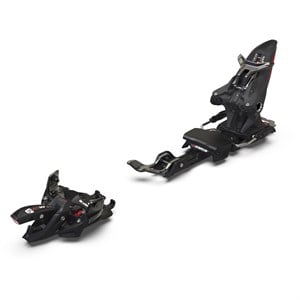
- Type: Tech (Hybrid Heel)
- DIN Range: 5 – 12
- Materials: Carbon reinforced construction
- Stand Height: 21.5 mm
The Marker Kingpin M-Werks takes the legendary performance of the Kingpin and optimizes it for the gram-counting explorer. By incorporating carbon fiber into the heel and utilizing lightweight materials, Marker has created a binding that tours exceptionally well while retaining the “lossless” power transfer of an alpine-style heel. It is the “Pro” version of an already iconic binding.
The new ISI toe piece makes stepping in intuitive, while the XXL Power Transmitters in the heel ensure every movement is translated directly to the ski. It offers both vertical and lateral adjustable release in the heel, providing a safer experience than traditional U-spring pin bindings. It is the perfect middle ground for long tours and aggressive skiing.
Pros: Significant weight savings over standard Kingpin; excellent power transfer; improved tech toe entry.
Cons: More expensive than the standard version; carbon parts require careful handling.
See the Marker Kingpin M-Werks
12. Marker Kingpin 13
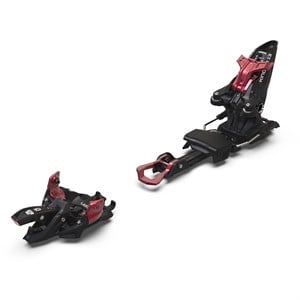
- Type: Tech (Hybrid Heel)
- DIN Range: 6 – 13
- Climbing Aids: 0°, 7°, 13°
- Stand Height: 21.5 mm
The Marker Kingpin 13 remains a benchmark for backcountry freeriders who want a tech toe’s uphill ease combined with an alpine heel’s downhill security. This year’s version features the updated ISI toe piece, which includes a rubber stop pad for easier alignment during step-in, even in difficult snow. It has long been the go-to choice for those who want a predictable, powerful skiing experience.
The wide contact points in the heel offer direct power transmission that simply cannot be matched by standard dual-pin tech bindings. With two easily accessible climbing aids and an integrated elastomer to dampen the “clack” while hiking, it is as comfortable on the way up as it is confident on the way down. A true classic of the genre.
Pros: Proven reliability; excellent heel hold and power; easier step-in than previous years.
Cons: Heavier than pure tech bindings; requires tech-toe boots with a standard heel lug.
How to Choose Alpine Touring Ski Bindings?
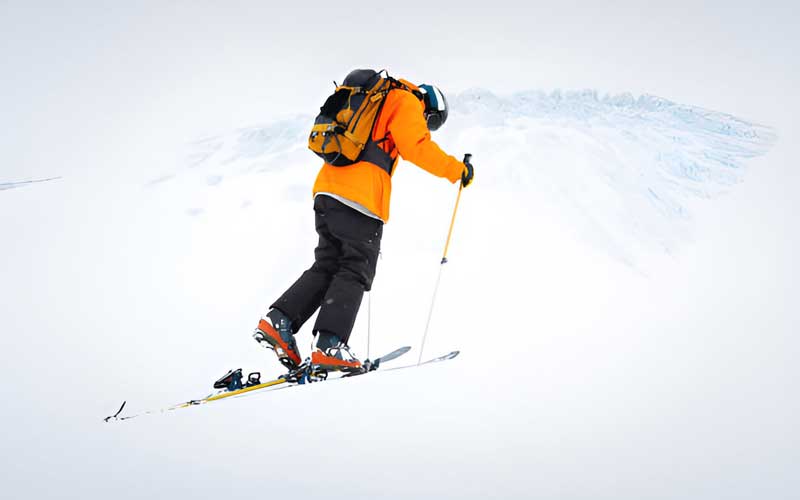
Understanding Alpine Touring Ski Bindings
Alpine touring (AT) ski bindings are specially designed to allow you to switch between two modes: “touring mode” for uphill travel with a free heel, and “ski mode” for downhill skiing with a locked heel. This dual functionality lets you climb efficiently using skins attached to your skis and then enjoy controlled descents with the stability of alpine bindings. There are several types of AT bindings, including tech bindings, frame bindings, and hybrid bindings, each with unique features and trade-offs.
1. Types of Alpine Touring Bindings
Tech Bindings: Also known as pin bindings, these are lightweight and use pins that connect to inserts on the toe of specialized tech-compatible boots. They offer excellent uphill efficiency due to their minimal weight and flexible heel movement. Popular examples include the Dynafit Radical and Marker Kingpin series. However, they often require tech-specific boots and may have less downhill power transfer compared to alpine bindings.
Frame Bindings: These bindings resemble traditional alpine bindings with a frame that attaches the boot heel to the ski, allowing for a free heel when touring and locking it down for skiing downhill. They tend to be heavier but compatible with almost all alpine boots. Frame bindings are a good choice for beginners or those who want to use their regular alpine boots for touring.
Hybrid Bindings: Hybrid or “tech-alpine” bindings aim to combine the lightweight benefits of tech bindings with the downhill performance of alpine bindings. Models like the Salomon Shift and Atomic Shift allow skiers to use alpine boots with tech toe fittings, offering a versatile option for mixed use.
2. Weight Considerations
One of the most important factors in choosing touring ski bindings is weight. Since backcountry skiing involves long ascents, every gram counts. Tech bindings are generally the lightest, often weighing between 300-600 grams per binding, while frame bindings can weigh up to 1,500 grams or more. Hybrid bindings fall somewhere in the middle.
If you prioritize uphill efficiency and plan long tours with steep climbs, a lighter tech binding is usually preferable. However, if you mostly ski resort runs or mixed terrain and value downhill performance, a slightly heavier frame or hybrid binding might be worth the trade-off.
3. DIN Release Settings and Safety
DIN settings indicate the force required for the binding to release your boot during a fall, preventing injury. It’s crucial to select bindings with an appropriate DIN range for your weight, skiing style, and ability. Backcountry skiers often prefer bindings with adjustable DIN settings that cover their specific needs.
Tech bindings sometimes have limited DIN ranges or use pins instead of traditional DIN adjustment, so check if the binding’s release values suit your skiing aggressiveness and body weight. For example, the Marker Kingpin 10 has a DIN range up to 10, suitable for lighter or less aggressive skiers, while the ATK Freeraider 15 Evo offers DIN settings up to 15 for more advanced users.
4. Boot Compatibility
Compatibility between your boots and bindings is essential. Tech bindings require boots with specific tech inserts on the toe and heel to connect with the pins. Frame bindings are more versatile, usually compatible with standard alpine boots.
Hybrid bindings like the Salomon Shift and Atomic Shift are designed for Multi-Norm Certified (MNC) boots, which include alpine soles, GripWalk, and Walk-To-Ride (WTR) standards. Before purchasing, verify your boots’ sole type matches the binding’s compatibility to avoid costly mismatches.
5. Touring Features and Adjustability
Bindings vary in features that impact comfort and performance on the uphill:
- Climbing Aids / Heel Risers: Many bindings offer adjustable heel lifts or climbing aids to reduce calf strain during steep ascents. Look for bindings with multiple heel riser heights or ergonomic designs for better comfort.
- Tour Mode Mechanism: Check how easy it is to switch between tour and ski mode. Some bindings have a simple lever, while others require more complex steps. Ease of transition can make a big difference in the backcountry.
- Elastic Travel: Some bindings include elastic travel mechanisms to absorb shocks and reduce the risk of pre-release during dynamic skiing.
6. Brake Width and Ski Compatibility
Ensure the binding’s brake width matches your ski width. Ideally, the brake should be equal to or up to 15 mm wider than your ski waist. Using brakes that are too narrow won’t stop your skis effectively, while overly wide brakes add unnecessary weight and bulk.
7. Durability and Build Quality
Backcountry skiing is demanding on equipment, so durable construction matters. Look for bindings made with high-quality materials like aluminum or carbon-infused components for a strong yet lightweight build. Some bindings also feature reinforced toe pieces and improved locking mechanisms for added reliability.
8. Price and Budget
Alpine ski bindings range widely in price from budget-friendly frame bindings to premium hybrid and tech models. Consider how often you’ll ski, your skill level, and the terrain to decide how much to invest. While cheaper bindings might be tempting, investing in quality gear pays off in safety and enjoyment.
9. Additional Features
Some bindings come with extras like crampon compatibility for glacier travel, compatibility with specific ski crampons, or ergonomic levers designed for use with gloves. Depending on your intended terrain, these features might be worth considering.
Final Thoughts
Choosing alpine touring bindings involves balancing weight, performance, compatibility, and safety. If you’re new to touring, frame bindings offer versatility and ease of use with your existing boots. More experienced backcountry skiers often prefer tech or hybrid bindings for their lightweight and precise performance.
Before making a purchase, assess your skiing style, preferred terrain, and boot compatibility. Check that the DIN range and climbing features meet your needs. Don’t hesitate to seek advice from professionals or demo bindings if possible.