
Best Epoxy for Ski Repair of 2026
When your skis get scratched, cracked, or start to delaminate, a good epoxy can save the day. The right epoxy helps fix chips, fill gaps, and bond layers together, making your skis strong and ready for the slopes again. But not all epoxies work the same — some are better for quick fixes, while others offer long-lasting strength. In this guide, we’ll look at the best epoxies for ski repair, what makes them effective, and how to choose the right one for your needs.
1. Gorilla 2 Part Epoxy

- Set time: 5 minute working set for quick repositioning
- Finish: Dries clear for an invisible repair
- Gap filling: Fills voids and bonds uneven surfaces
- Water resistance: Withstands moderate water exposure
For on-the-go ski base dings and small edge delaminations, Gorilla 2 Part Epoxy is a straightforward, user-friendly option. The dual-syringe dispenser makes a 1:1 mix nearly foolproof and the five-minute set gives just enough time to align a damaged piece of base or press a crushed grommet back into place. Dries clear so repairs on light-colored bases are less visible, and the gap-filling capability helps when bonding over gouges or irregular surfaces common after rock strikes. The included caps mean you can save leftover epoxy for a second quick fix.
Worked into ski repair kits, it’s a low-fuss solution: apply, clamp or press, then clean off any squeeze-out before cure. It’s not formulated specifically for continuous high-temperature base work like professional P-Tex welding, but for household-style quick fixes and emergency repairs on the mountain it’s reliable. Water resistance is decent for wet-snow conditions once fully cured. Overall, ideal for recreational skiers who want a fast, clear, and simple epoxy to keep skis serviceable between bench jobs.
- Pros: Fast setting, clear finish, easy syringe dispensing, good gap fill
- Cons: Not a substitute for professional base welding; moderate water resistance only
2. J-B Weld 6 Minute Set Epoxy

- Set time: 6 minute set, 4–6 hour cure
- Tensile strength: 3127 PSI for heavy-duty bonds
- Applications: Bonds metal, plastic, wood, concrete, ceramic, fiberglass
- Packaging: Syringe with resealable cap for multiple uses
J-B Weld KwikWeld brings heavy-duty strength to quick ski repairs. The dark-grey cured color is more visible on light bases, so it’s best used where strength matters more than aesthetics — for instance reattaching metal inserts, repairing bindings, or rebuilding edge mounts. The 6 minute set time and high tensile rating mean you can rely on the repair to hold up under torsion and heavy use. The included tray and stir stick help achieve a consistent mix and the syringe storage cap is handy between uses.
For ski technicians and serious DIYers, KwikWeld is a practical choice when dealing with metal or structure-related fixes rather than cosmetic base fills. It bonds well to metals used in bindings and hardware, and it tolerates a range of materials you might encounter on ski components. Expect a strong, durable repair after full cure; however, the color and slightly more rigid cured state make it less ideal for invisible base patches. Use where structural integrity is the priority.
- Pros: Extremely strong bond, versatile on many materials, handy syringe, resealable
- Cons: Dark-grey finish visible on light bases, not optimized for cosmetic base blending
See the J-B Weld 6 Minute Set Epoxy
3. Gorilla Epoxy Ultimate

- Strength: 4250 PSI — Gorilla’s strongest formula
- Set time: 10 minute set for precise alignment
- Waterproof: Forms a permanent, waterproof bond
- Cure color: Cures black — visible on light surfaces
Gorilla Epoxy Ultimate is built for maximum holding power and durability, making it a go-to when structural strength is needed in ski repairs. The exceptionally high PSI rating makes it suitable for reinforcing binding mounts, repairing metal inserts, or rebuilding worn mounting areas. The 10 minute working time is comfortable for precision alignment on parts that need correct positioning before cure. Waterproof properties make it resilient in wet-snow conditions once fully set.
Because it cures black, it’s not aimed at invisible base repairs; instead, consider it part of a toolkit for load-bearing fixes where performance matters more than appearance. The epoxy dispenses cleanly and bonds to a wide range of substrates used in ski constructions. If you want a long-lasting, heavy-duty repair that withstands mechanical stress and moisture, Gorilla Ultimate delivers — just pair it with cosmetic touch-ups if visual blending is important.
- Pros: Extremely strong, waterproof, comfortable working time, bonds many materials
- Cons: Black cure color, heavier-duty than needed for small cosmetic fixes
See the Gorilla Epoxy Ultimate
4. PC Products PC-Woody Wood Repair Epoxy

- Type: Two-part epoxy paste for replacing missing or rotted wood
- Durability: Resistant to dry rot, UV, fresh & salt water
- Temp range: Application 35–115°F; service -20–200°F
- Workability: High tack paste reduces drips and sags
PC-Woody is a specialty paste designed to rebuild and replace wood — in ski contexts it’s most useful for wooden core repairs, damaged inserts set into wood, or restoring delaminated areas on wood-cored skis and snowboards. The high-tack paste stays where you put it, making vertical or overhead repairs easier without sagging. Its resistance to rot and UV adds longevity for cores that have been exposed by damage.
Mixing requires care — equal volumes and the included tool — and small teaspoon mixes are discouraged to avoid ratio errors, so plan repairs accordingly. It’s not a cosmetic epoxy for base gouges, but when you need to reconstruct a core or fill substantial voids in wood components before sanding and refinishing, PC-Woody is a dependable choice. Ideal for workshop repairs where material restoration is the goal.
- Pros: Excellent for core reconstruction, high tack, durable against elements, wide service temp
- Cons: Not for tiny precision base patches; requires careful mixing and larger batches
See the PC Products PC-Woody Wood Repair Epoxy
5. Instant Install 29 Complete
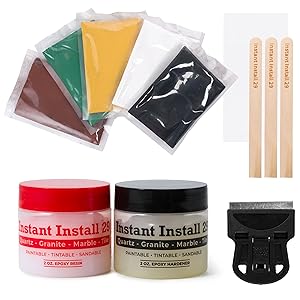
- Cure time: Dry in 29 minutes — no sanding required
- Applications: Works on ceramic, stone, quartz, tile, wood and more
- Tintable: EZ-Tint pigments for color-matching repairs
- Finish: Will not stick to polished surfaces; sustainable color
Instant Install 29 Complete is tailored to fast, visible repairs where color match and speed matter. For topsheet or decorative chip repairs on skis or boards, its 29-minute dry time and tintable formula let you create near-invisible patches quickly. It’s especially useful for cosmetic restorations where you want a blended look without long wait times or sanding; the product is designed to resist yellowing so tinted repairs remain stable over time.
While primarily formulated for countertops and stone, its no-wait convenience and tintability translate well to cosmetic ski fixes on topsheets and sidewalls. It’s not optimized for base structural repairs or deep gouges in the running surface, but for small visible chips and edge-area touchups where matching pattern and color is important, Instant Install is a strong candidate. Use it when speed and appearance are the priorities.
- Pros: Very fast dry, tintable for color match, no sanding, resists yellowing
- Cons: Not designed for heavy structural base repairs; formulated for surface fixes
See the Instant Install 29 Complete
6. FixMaster Multi Purpose 2-Part Pure Epoxy
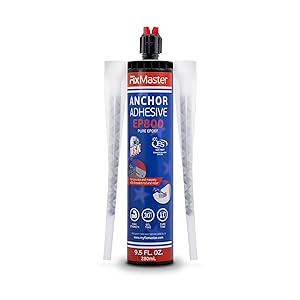
- Compliance: ICC approved; meets ASTM C881 Type IV
- Working time: ~30 minutes at 59–67°F; full cure ~10 hours
- Temp & service: Cartridge 41–104°F; service -20–115°F
- Use: Ideal for anchoring bolts, crack repair, concrete & masonry
FixMaster is a structural-grade epoxy built for anchoring and heavy-duty repairs. For ski shops dealing with mounting plates, metal inserts, or fixing structural components attached to concrete or heavy fixtures (workbench anchors, lift-stand mounts), this epoxy offers certified load-bearing performance. It tolerates damp environments and cures to a waterproof, hard finish capable of handling expansion and contraction without losing bond.
Its longer working window and robust standards compliance make it overkill for small base gouges, but excellent where mechanical strength and code-compliant anchoring are required in a workshop setting supporting ski maintenance. The included extra nozzle is a practical touch for reuse. Choose FixMaster when you need a proven structural adhesive for anchoring or major repairs in your shop rather than for field cosmetic fixes.
- Pros: Code-compliant structural strength, waterproof, good working time, high load values
- Cons: Not formulated for fine cosmetic base work; intended for concrete/structural use
See the FixMaster Multi Purpose 2-Part Pure Epoxy
7. Bob Smith Industries BSI-205 Slow-Cure

- Working time: 30-minute extended working window
- Strength: Maximum toughness and impact resistance when cured
- Adhesion: Bonds wood, fiberglass, metal, glass, ceramics, many plastics
- Gap filling: Thicker formula designed to fill voids and uneven surfaces
BSI-205 Slow-Cure is a specialist epoxy for projects that need careful alignment and maximum final strength. For ski repairs involving structural rebuilds — core reconstruction, bonding large fiberglass patches, or fixing complex delaminations — the generous 30-minute working time is invaluable. You can position laminates, clamps, and reinforcements without rushing, and the cured bond is tough and impact-resistant, suitable for load-bearing areas on skis and boards.
The thicker, gap-filling consistency helps when surfaces are uneven or porous, and its broad material compatibility makes it a true workshop staple. Expect longer cure times but superior durability compared with fast-setting alternatives. Use BSI-205 when you’re doing planned, robust repairs where strength and precision matter more than speed — ideal for serious restorations or professional shop use.
- Pros: Long working time for precision, very strong cured bond, excellent gap fill, multi-surface
- Cons: Slow cure — not for quick field fixes; requires planning
See the Bob Smith Industries BSI-205 Slow-Cure
8. J-B Weld ClearWeld 5 Minute Epoxy

- Set & cure: 5 minute set, 1 hour cure for quick fixes
- Strength: 3900 PSI tensile strength
- Finish: Cures clear for less-visible repairs
- Applications: Metal, most plastics, PVC, wood, ceramic, glass
J-B Weld ClearWeld combines speed and strength with a clear finish, making it a top pick for quick, less-visible ski repairs. The one-hour cure and five-minute set let you get back to tuning or use with minimal downtime; the clear cured color is a big advantage for light bases and topsheet chips where appearance matters. With 3900 PSI strength, it’s also robust enough for many structural touchups around bindings and hardware.
Dispensed from a convenient syringe with a resealable cap, ClearWeld is easy to measure and store between jobs. It adheres to a wide range of materials you’d encounter on skis and boards, and the clear finish keeps repairs discreet. For field repairs, on-mountain touchups, or quick shop patches where both speed and an invisible appearance matter, ClearWeld is an excellent all-around choice.
- Pros: Fast cure, high strength, clear finish, versatile adhesion
- Cons: Short working time — hurry alignment; not for large core rebuilds
See the J-B Weld ClearWeld 5 Minute Epoxy
How to Choose Epoxy for Ski Repair
Whether you’re patching a core shot, fixing a delaminated edge, or reattaching a binding insert, the right epoxy can make all the difference between a long-lasting repair and one that fails after a few runs. Epoxy is a crucial part of any skier’s repair kit, but with so many types on the market, it’s easy to get overwhelmed. The key lies in understanding what each formula does, how it performs in cold conditions, and which applications it’s best suited for. Here’s a complete guide to help you choose the best epoxy for ski repair.
Understanding Epoxy Basics
Epoxy is a two-part adhesive made of a resin and a hardener. When mixed together, they create a strong, durable bond that can adhere to a variety of materials — perfect for skis that combine wood, metal, fiberglass, and plastic layers. Most ski repairs require either clear-setting epoxies for cosmetic fixes or heavy-duty structural epoxies for load-bearing repairs.
The key attributes to focus on when choosing an epoxy for ski repair are set time, strength, cure color, water resistance, and temperature tolerance. Different products emphasize different features, and the best choice depends on the type of repair you need to make.
Types of Epoxy for Ski Repairs
1. Quick-Setting Epoxies
Quick-setting epoxies are ideal for on-the-go or emergency repairs. These typically set within five to ten minutes and cure fully in about an hour. Products like Gorilla 2 Part Epoxy and J-B Weld ClearWeld are excellent examples. They’re great for filling small gouges, sealing delaminations, and performing temporary fixes when you’re short on time.
The downside of quick-setting formulas is that they don’t offer much working time, so precise alignment is tricky. They’re also generally less flexible once cured, which can make them unsuitable for large structural repairs that experience stress and flexing.
2. Slow-Cure and High-Strength Epoxies
For more durable and professional repairs, slow-curing epoxies like Bob Smith Industries BSI-205 or Gorilla Epoxy Ultimate are the better choice. These offer longer working times — sometimes up to 30 minutes — allowing for careful positioning and penetration into the ski’s layers. They cure with exceptional strength, often exceeding 4000 PSI, making them ideal for reinforcing delaminations or restoring core structure.
Slow-cure formulas are also less prone to brittleness, meaning they flex slightly under load — a key property for skis that bend and twist with each turn. They’re not as convenient for quick mountain fixes but provide the most reliable results in a workshop environment.
3. Specialized Wood Repair Epoxies
Skis with wooden cores sometimes suffer from rot or core exposure, particularly near edges or screw mounts. Products like PC-Woody are specifically designed to rebuild missing or damaged wood. They come in paste form, stay in place on vertical surfaces, and can handle wide temperature ranges. Once cured, they can be sanded and drilled, restoring the integrity of the core before sealing it again.
However, these epoxies are usually opaque and not suitable for cosmetic surface repairs. They should be reserved for structural restoration where wood is involved.
4. Tintable and Color-Match Epoxies
If appearance is a priority, consider a tintable epoxy like Instant Install 29 Complete. These allow you to mix pigments to match your ski’s topsheet or base color, resulting in nearly invisible repairs. They also dry quickly and resist yellowing over time. For visible chips or scratches, this type of epoxy provides both function and a clean finish without the need for sanding or polishing.
While they look great, these epoxies are typically not as strong as industrial or structural-grade options, so use them for cosmetic touch-ups rather than load-bearing fixes.
Key Factors to Consider
1. Set and Cure Time
Set time determines how long you can work with the epoxy before it begins to harden. Quick-setting types are convenient but allow little margin for adjustment. Slow-cure epoxies offer flexibility and deeper penetration for a stronger final bond. For precision repairs or delaminations, a longer working time is usually preferable.
2. Strength and Flexibility
The strength of epoxy is measured in PSI (pounds per square inch). Look for formulas rated at 3000 PSI or higher for structural repairs. However, strength alone isn’t everything — skis flex under stress, so an epoxy that remains slightly flexible after curing is better suited for ski construction materials. Some fast-drying epoxies may become too brittle, causing cracks in cold temperatures.
3. Color and Finish
For base repairs or visible areas, clear-drying epoxies like Gorilla 2 Part Epoxy or J-B Weld ClearWeld are ideal since they blend seamlessly with most surfaces. For dark skis or core work, color isn’t as important. Some high-strength formulas cure black or grey, which can be a drawback for cosmetic repairs but are great for reinforcing bindings and metal inserts.
4. Temperature Resistance
Skis experience extreme temperature variations — from warm wax benches to freezing snow. Choose an epoxy that performs well across these conditions. Look for service temperature ranges from -20°F to at least 150°F. This ensures the epoxy won’t crack in the cold or soften in heat.
5. Water Resistance
Moisture can compromise a repair over time, especially on skis used in wet snow or slush. A water-resistant or waterproof epoxy, such as Gorilla Epoxy Ultimate, provides an added layer of security. This feature prevents delamination and protects the repair even after repeated exposure to melting snow.
6. Ease of Use and Application
Many modern epoxies come in dual-syringe applicators that automatically dispense equal parts resin and hardener. This simplifies mixing and minimizes waste. Reusable caps allow for multiple uses, which is handy if you only need a small amount for each fix. For thicker pastes, a small mixing board and stir stick are usually necessary.
Common Ski Repair Applications
1. Base and Edge Repairs
For minor base gouges and edge separations, clear, gap-filling epoxies work best. A 5–10 minute set time gives you just enough flexibility to align and press materials together. Make sure the area is clean and dry before applying epoxy. Clamp or weight the repair to maintain pressure while it cures.
2. Core and Delamination Fixes
When the ski’s layers start separating, a slow-curing epoxy is required to penetrate deeply and restore structural integrity. Apply the epoxy with a syringe or small brush, then clamp the ski until fully cured. Ensure even pressure to avoid bubbles or gaps that could weaken the bond.
3. Binding and Insert Reinforcement
If screw holes become stripped or loose, inject a strong structural epoxy like J-B Weld KwikWeld or Gorilla Ultimate before reinstalling the screw. This strengthens the bond between the core and the binding hardware. For wooden cores, a bit of chopped fiberglass mixed into the epoxy adds reinforcement.
Practical Tips for Using Epoxy on Skis
- Always clean the damaged area with isopropyl alcohol before applying epoxy.
- Use painter’s tape to keep excess epoxy off the surrounding base.
- Warm the epoxy slightly in cold conditions to improve flow and penetration.
- Clamp repairs firmly but don’t over-tighten — excess pressure can squeeze out too much adhesive.
- Allow full cure time before skiing, even if the surface feels dry to the touch.
Conclusion
Choosing the right epoxy for ski repair depends on your needs — speed, strength, appearance, or flexibility. Quick-set clear epoxies are perfect for small base fixes and cosmetic work, while slow-curing structural formulas are best for deep delaminations or core rebuilds. Waterproof, tintable, or high-strength types each have their place in a complete repair kit. Investing in the right epoxy not only extends the life of your skis but also ensures every repair stands up to snow, stress, and time on the mountain. With the right approach, a well-executed epoxy repair can make your skis nearly as strong as new.