Best Downhill Skis of 2026
Downhill skiing is all about speed, control, and excitement, and having the right skis makes a big difference. The best downhill skis are built to handle steep slopes, icy patches, and high speeds while keeping you stable and confident. Whether you’re an experienced skier chasing thrills or someone improving their skills, choosing the right pair can take your performance to the next level. In this guide, we’ll look at the best downhill skis available today to help you find the perfect match for your style.
1. Nordica Enforcer 94
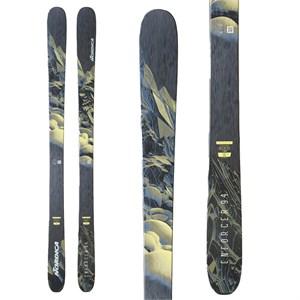
- Rocker Type: All Mountain Rocker
- Core/Laminates: Energy 2 Ti Pulse Core
- Ability Level: Advanced-Expert
- Tail Type: Partial Twin Tip
The Nordica Enforcer 94 Skis return with subtle updates that keep them at the top of the all-mountain category. Their new wood core, reinforced by an elastomer Pulse Core and dual Titanal layers, delivers energy and power while remaining approachable. This setup inspires confidence at high speeds on groomers but also adapts well to mixed snow. A redesigned shape frees up the tail, making quick pivots and tight turns in bumps or trees more intuitive, a welcome improvement for such a strong carving ski.
It’s still the perfect tool for aggressive riders who like to charge hard on frontside terrain, but the additional tail rocker now adds forgiveness and a touch of play. This makes turn exits smoother and offers more versatility across different conditions. The Enforcer 94 remains a fantastic one-ski quiver for advanced skiers who prioritize stability and speed yet want a ski that’s nimble enough to explore off-piste terrain with ease.
Pros
- Stable and confidence-inspiring at speed
- Lighter and easier to pivot than older models
- Adaptable for varied terrain
Cons
- Still requires strength from less aggressive skiers
See the Nordica Enforcer 94 See the Women’s Santa Ana 92
2. Rossignol Experience 78 CA Skis + XP 11 Bindings
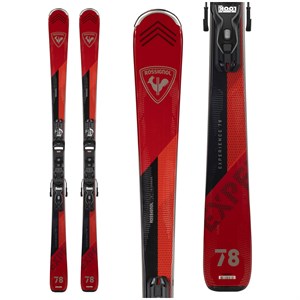
- Ability Level: Beginner-Intermediate
- Core: Poplar Wood Core
- Sidecut: All Trail Sidecut
- Rocker Type: Rocker/Camber
The Rossignol Experience 78 CA is crafted to build confidence for newer skiers moving from beginner slopes to green and blue runs. Its poplar wood core blends stability with lightness, creating a forgiving yet responsive ride that supports skill development. The All Trail sidecut and rocker/camber profile make starting turns smooth and predictable, while also reducing chatter for a steady experience in changing conditions. This allows you to focus more on technique and less on fighting your skis.
Unlike many entry-level models, the Experience 78 CA has the performance to carry you past the beginner phase. It’s easy to handle for first-timers but doesn’t feel limiting as you start carving with more precision. The included Xpress 10 GW bindings add value and convenience, making this package ideal for anyone ready to buy their first setup. It’s a fun, confidence-boosting ski that helps you progress quickly without overwhelming you.
Pros
- Beginner-friendly and very forgiving
- Great value with bindings included
- Stable enough for skill growth
Cons
- Rapid learners may move on from it quickly
See the Rossignol Experience 78 CA See the Women’s Experience W 78
3. Atomic Bent 100
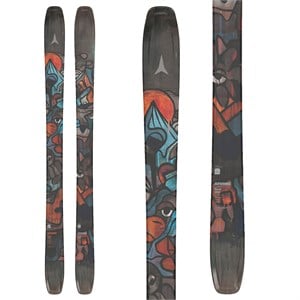
- Ability Level: Intermediate-Advanced
- Core: Light Woodcore
- Tail Type: Partial Twin Tip
- Rocker Type: All Mountain Rocker
The Atomic Bent 100 has become known as a fun-loving all-mountain ski, and the latest version keeps that reputation alive with smart upgrades. With eco-conscious materials and Bent-specific HRZN 3D tips and tails, the ski feels even more versatile and playful in mixed terrain. The lightweight wood core delivers an ideal mix of damping and stability, giving riders confidence in changing snow conditions. The HRZN 3D design especially boosts its freestyle side, letting you butter, smear, and slash your way down the mountain with ease.
Despite being so lively, the Bent 100 can hold its own at higher speeds, surprising many with its versatility. That said, in rougher or firmer snow it can feel a touch bouncy compared to damper skis, but that’s part of its energetic character. For skiers who want a ski that thrives on creativity while still handling most conditions, this one delivers. It’s perfect for intermediate to advanced riders looking for a responsive, playful ski that doesn’t take itself too seriously yet performs everywhere.
Pros
- Incredibly playful and lively
- Great in soft and variable snow
- Lightweight and maneuverable
Cons
- Less composed in heavy chop
4. Völkl M7 Mantra
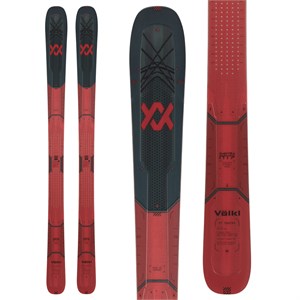
- Ability Level: Intermediate-Advanced
- Core: Multilayer Woodcore
- Laminates: Tailored Carbon Tips and Tailored Titanal Frame
- Sidecut: 4 Radius Drive
The Völkl M7 Mantra stands out as a true all-mountain charger, now reimagined to be more approachable while keeping its powerful DNA. Its standout feature is the 4 Radius Drive sidecut, blending different radii at the tip, underfoot, and tail. This design improves turn initiation, makes the ski less demanding at slow speeds, and provides a smoother flow in tricky conditions. Still, the M7 retains its signature stability and strength for those who like to push hard on groomed runs.
It’s a top pick for advanced skiers after one ski that can rip fast groomers while also exploring varied terrain. The Tailored Titanal Frame and Carbon Tips are tuned by ski length, so each size rides optimally. The result is a ski that’s silky smooth, precise, and agile, offering both power and play in one package. If you’re the type who loves to carve across the whole mountain and still have energy left for more, the M7 Mantra won’t disappoint.
Pros
- Super stable at speed
- More playful and nimble than earlier models
- Turns feel smooth and easy
Cons
- Might be too aggressive for less assertive skiers
See the Völkl M7 Mantra See the Women’s M7 Mantra
5. Salomon QST 106
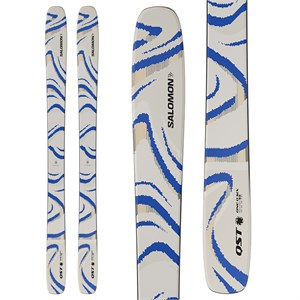
- Ability Level: Intermediate-Advanced
- Core: Full Poplar Woodcore
- Laminates: Basalt & Fiberglass Fiber
- Additional Features: Cork Damplifier Inserts
The Salomon QST 106 has built a reputation as a do-it-all ski, and the newest version leans into a more playful ride. With its full poplar wood core, basalt/fiberglass layers, and Cork Damplifier inserts in the tips and tails, the ski is both lively and smooth. The cork helps absorb vibrations, keeping things quiet and stable, while the new construction emphasizes fun and responsiveness. It remains an excellent choice for powder lovers who also want versatility across mixed terrain.
However, the added playfulness does reduce stability somewhat for heavier or very aggressive skiers. Some users report chatter on firm groomers and less confidence in off-piste than with earlier models. That said, for lighter riders or those who prefer forgiveness over raw power, the updates are a welcome change. It’s a ski that makes life easier for intermediates but still holds up on deep snow days. For skiers who enjoy a fun, nimble feel over stiffness, the QST 106 is still a great pick.
Pros
- More playful design than before
- Excellent dampening with Cork inserts
- Wide enough for powder versatility
Cons
- Lost some stability compared to older models
- Can chatter under aggressive skiers
6. Blizzard Rustler 10
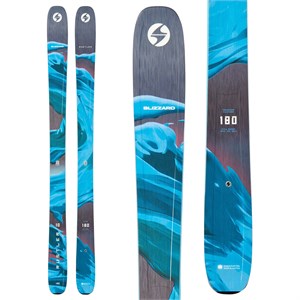
- Ability Level: Intermediate-Advanced
- Core: TrueBlend Freeride Core
- Laminates: FluxForm Titanal
- Terrain: All-Mountain
The Blizzard Rustler 10 is a favorite among expert skiers and shop testers, thanks to its balance of versatility and performance. With a waist of 102mm (104mm in longer lengths), it blends groomer capability with off-piste power. The TrueBlend Freeride Core, combining Beech, Poplar, and Paulownia, gives a well-tuned flex—stiff underfoot for control and softer at the tips and tails for play. This makes it responsive, stable, and fun no matter where you ski.
The FluxForm Titanal construction is another highlight, with metal strips along the ski plus an underfoot plate for grip and damping. This keeps edge hold precise while allowing smooth flex in variable snow. Add to that its ability to ski switch with ease, and you’ve got a true all-arounder. The Rustler 10 is perfect as a daily driver for advanced skiers, carving groomers in the morning and slashing powder stashes in the afternoon without missing a beat.
Pros
- Performs well in most snow types
- Stable for carving and speed
- Still playful in soft snow
Cons
- Not wide enough for deep-powder purists
See the Blizzard Rustler 10 See the Women’s Sheeva 10
7. Line Skis Pandora 106
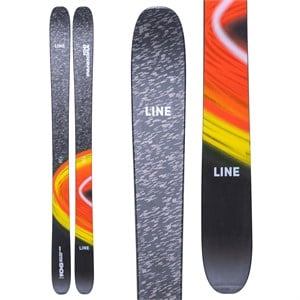
- Ability Level: Intermediate-Advanced
- Core: Aspen Veneer Core
- Sidewalls: Thick-Cut Sidewalls
- Terrain: All-Mountain, Big Mountain, Powder
The Line Skis Pandora 106 has been refined to deliver an even more versatile freeride experience. With a slightly wider platform than before, this model includes an Aspen Maple core, bio-based resin layup, and beefed-up sidewalls. These upgrades enhance edge hold and energy transfer, making the Pandora 106 a dependable choice for riders in snowy regions. It thrives in all conditions, equally at home carving corduroy or floating through powder, offering a balanced mix of precision and play that makes it a reliable daily ski for adventurous riders.
One of the standout traits of the Pandora 106 is how smoothly it initiates turns. It rolls on edge effortlessly, creating a fun and confident ride on groomed terrain. While it’s clearly built for softer snow, it remains surprisingly competent in bumps and harder surfaces. The combination of responsiveness and stability gives it a unique character. For skiers seeking an all-around option that’s playful but capable, the Pandora 106 is an excellent choice that brings confidence across any mountain conditions.
Pros
- Quick and easy turn initiation
- Strong mix of stability and fun
- Handles everything from powder to groomers
Cons
- A touch wide for skiers who prefer narrower skis
8. Blizzard Rustler 11
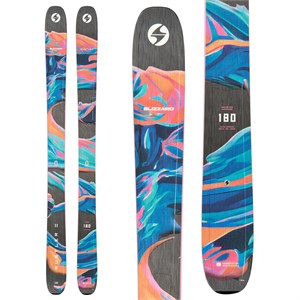
- Ability Level: Intermediate-Advanced
- Core: TrueBlend Freeride Core
- Laminates: FluxForm Titanal
- Terrain: All-Mountain
The redesigned Blizzard Rustler 11 merges the aggressive power of the original with a more versatile personality. Blizzard shifted Titanal laminates to the ski’s outer edges while freeing up the midsection, creating a platform that’s rock-solid at speed yet smoother in variable terrain. Its TrueBlend Freeride core, made from Beech, Poplar, and Paulownia, balances stiffness underfoot with softer tips and tails, giving the ski strength where it’s needed most and flexibility where it counts. The result is a freeride ski that can charge hard but doesn’t feel overwhelming.
Despite its 114mm waist, the Rustler 11 carves remarkably well on groomers, holding stable arcs with ease. Off-piste, it’s lively and controlled, plowing through crud with confidence and dancing through technical sections when the terrain tightens up. This model feels planted yet still playful, offering a more forgiving ride than you’d expect from such a powerful ski. For skiers who want a freeride tool that can be pushed hard but also feels manageable, the Rustler 11 proves to be both dependable and exciting.
Pros
- High-speed stability and smooth ride
- Strong in mixed and chopped-up snow
- More agile and forgiving than older versions
Cons
- Width may be excessive for hardpack-only skiers
See the Blizzard Rustler 11 See the Women’s Sheeva 11
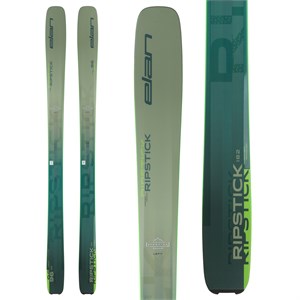
9. Elan Ripstick 96
- Ability Level: Intermediate-Advanced
- Core: Tubelite Wood Core
- Rocker Type: Amphibio Profile (Asymmetrical Design)
- Laminates: UD Carbon and Flax Fiber
The Elan Ripstick 96 has built its reputation on being both lightweight and powerful, and the new edition pushes that balance even further. It retains Elan’s Amphibio design, where each ski is tailored for the left and right foot, blending camber for grip and rocker for maneuverability. This unique profile ensures excellent edge hold while staying forgiving and easy to control. With the addition of UD Carbon and Flax Fiber laminates, the ski feels smoother and more composed on firm, choppy snow.
Despite its featherlight feel, the Ripstick 96 grips firmly, making carving sharp turns a real joy. The TubeLite Wood Core, reinforced with carbon tubes, boosts torsional stability while providing snappy rebound out of turns. Its 96mm waist allows for decent float in soft snow, positioning it as a legitimate all-around ski for mixed conditions. For most riders, it delivers both precision and play, though heavier or very aggressive skiers might prefer the stiffer black edition for more support.
Pros
- Strong edge grip for its weight
- Responsive and energetic performance
- Capable as a true one-ski quiver
Cons
- Might feel too soft for heavier or hard-charging skiers
See the Elan Ripstick 96 See the Women’s Ripstick 94
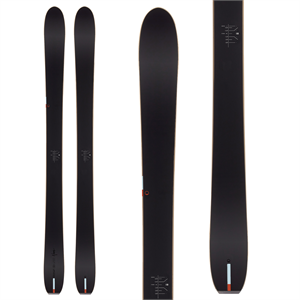
10. Season Nexus
- Ability Level: Intermediate-Advanced
- Core: Karuba Wood Core
- Terrain: All-Mountain
- Tail Type: Full Twin Tip
The Season Nexus was designed as a dependable companion no matter what the day brings. With a waist in the low 100s and rocker in both the tip and tail, it adapts to everything from deep powder days to messy afternoon chop. Even with its wider profile, the Nexus is quick edge-to-edge and maintains great tracking on groomed snow. For skiers in snowy climates, it offers the versatility to enjoy consistent performance whether it’s fresh or firm underfoot.
The multi-radius sidecut and progressive shape provide a natural, easygoing ride. Though it’s not built with beginners in mind, many find it forgiving and confidence-inspiring. The Karuba wood core combined with fiberglass construction gives it a light, reactive feel, helping skiers progress while keeping things fun. Playful yet capable, the Nexus is a great pick for anyone after a wide ski that handles mixed conditions and varied terrain without feeling unwieldy.
Pros
- Performs well in a wide range of snow conditions
- Fast and agile despite its width
- Approachable and easy to control
Cons
- A little too wide for skiers who mostly stick to groomers
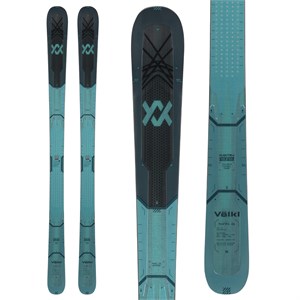
11. Völkl Mantra 88
- Ability Level: Intermediate-Advanced
- Core: Multlayer Woodcore
- Laminates: Tailored Titanal Frame and Carbon Tips
- Sidecut: 3D Radius Sidecut
The Völkl Mantra 88 has been updated to deliver even more precision and power across the mountain. Subtle changes to the Titanal frame and carbon tips have improved both stability and agility. The refined tip design enhances turn entry, while the tuned Titanal frame increases torsional stiffness underfoot but lightens up toward the ends. This gives the ski a commanding feel on edge without sacrificing maneuverability, making it an elite option for advanced riders who want absolute confidence in their skis.
Reviewers note its “super damp” ride quality, smoothing out chatter and absorbing uneven snow with ease. The Mantra 88’s strong sidewall construction and Titanal reinforcement keep it incredibly stable, allowing aggressive carving on firm terrain. The 3D Radius Sidecut makes it versatile, shifting seamlessly between big sweeping turns and shorter arcs. While not the most playful ski, it’s built for skiers who demand stability, edge grip, and power when carving and exploring variable snow.
Pros
- Remarkably damp and stable ride
- Exceptional edge hold on hardpack
- Confident in bumpy or icy conditions
Cons
- Less forgiving than more playful all-mountain skis
See the Völkl Mantra 88 See the Women’s Mantra 88
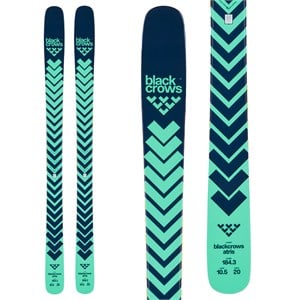
12. Black Crows Atris
- Ability Level: Intermediate-Advanced
- Waist Width: 105mm
- Rocker Type: Double Rocker
- Flex: Progressive Flex
The Black Crows Atris has become a benchmark freeride ski thanks to its mix of stability and play. At 105mm underfoot, it balances powder float with hardpack edge hold. Its double rocker profile makes it nimble, easy to pivot, and fun in tight terrain such as trees or moguls. For skiers who treat the whole mountain like a freestyle park, the Atris encourages creativity while still being strong enough to charge when needed.
Though playful, the Atris doesn’t shy away from speed. It requires commitment to drive, but once on edge it blasts through chopped-up snow with composure. The progressive flex provides a stable base underfoot while leaving the tips and tails more forgiving. This ski isn’t particularly poppy but prioritizes smoothness and speed across varied conditions. For confident intermediates and advanced skiers seeking a freeride ski that feels dependable yet fun, the Atris is a proven choice.
Pros
- Stable and trustworthy at speed
- Adaptable across terrain and snow types
- Balances power with playfulness
Cons
- Needs energy and commitment to drive
- Not the most playful for freestyle tricks
See the Black Crows Atris See the Women’s Atris Birdie
How to Choose Downhill Skis
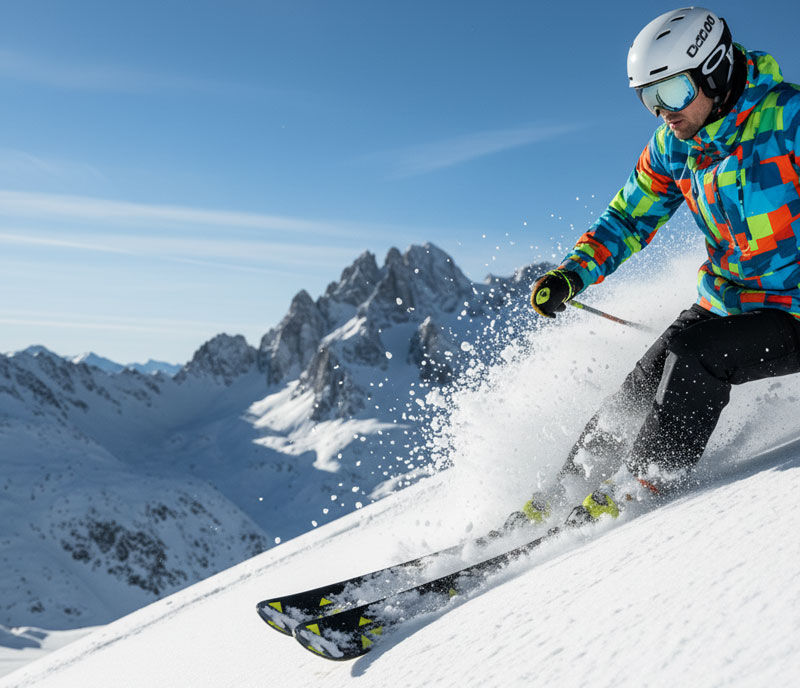
Choosing the right pair of downhill skis can feel like a daunting task, especially with the vast array of options available today. The market is saturated with different brands, models, and specialized skis designed for various conditions and skier types. However, making an informed decision is crucial for maximizing your performance, safety, and overall enjoyment on the slopes. This comprehensive guide will walk you through the key factors to consider when selecting your next pair of skis, ensuring you find the perfect match for your skiing style and ability.
Understanding Ski Types
Before you even think about length or width, you need to understand the different categories of downhill skis. Each type is engineered for a specific purpose and terrain.
All-Mountain Skis
The most versatile and popular category, all-mountain skis are designed to perform well in a variety of conditions, from groomed runs to fresh powder and everything in between. They are a fantastic choice for the majority of skiers who spend their time on diverse terrain. They typically have a medium waist width (85-100mm) and a balanced rocker-camber profile, making them adaptable and user-friendly.
Carving Skis
Also known as on-piste skis, carving skis are built for speed and precision on groomed snow. They have a narrow waist (under 85mm) and a stiff, traditional camber profile. This design allows them to hold a strong edge and make quick, clean turns on hard-packed snow and icy conditions. Carving skis are ideal for skiers who love to spend their time on groomed trails and prioritize carving turns.
Freeride & Powder Skis
These skis are built for off-piste adventures and deep snow. Freeride skis are a broader category that includes powder skis, but also models designed for mixed off-piste terrain. Powder skis are characterized by a very wide waist (over 100mm) and significant rocker in the tip and tail. This design provides maximum floatation in deep snow, making them feel like you’re surfing on top of the powder. They are not suitable for groomed runs but are essential for powder hounds.
Freestyle & Park Skis
For those who love hitting jumps, rails, and halfpipes, freestyle skis are the way to go. These are twin-tipped, meaning both the tip and the tail are curved upwards, allowing for easy switch (backwards) skiing and landings. They are typically lighter and more flexible than other ski types, designed to absorb impact and be playful. They are not ideal for high-speed carving.
Matching Skis to Your Ability Level
Your skill level is one of the most important factors in choosing the right skis. A ski that is too advanced for you will be difficult to control, while one that is too beginner-friendly will limit your growth.
Beginner Skis
Beginner skis are typically soft, flexible, and forgiving. They have a shorter turn radius, making it easier to initiate turns. They often feature a rocker profile in the tip to prevent catching an edge. These skis are designed to help you build confidence and master the basics of turning and stopping.
Intermediate Skis
As you progress, you’ll need a ski that offers more stability and responsiveness. Intermediate skis are a step up in stiffness and can handle higher speeds. They often have a blend of rocker and camber, providing a good balance of forgiveness and performance. This category is vast, with options ranging from easy-to-manage all-mountain skis to more performance-oriented carving skis.
Advanced & Expert Skis
For seasoned skiers, advanced and expert skis are built for high performance. They are stiffer, more responsive, and designed to hold an edge at high speeds. They require more effort to turn but provide unmatched power and stability. These skis are tailored to specific conditions and skiing styles, whether it’s aggressive carving, big mountain freeriding, or navigating technical terrain.
Ski Length: The Golden Rule
Ski length is a critical decision that directly impacts performance. A general rule of thumb is to choose a ski that reaches somewhere between your chin and the top of your head. However, this is just a starting point. Your ideal length depends on a few other factors:
- Ability Level: Beginners should opt for a shorter ski, as it is easier to control and turn. Advanced skiers can choose a longer ski for more stability at high speeds.
- Ski Type: Freeride and powder skis are often ridden longer to provide more float, while carving skis can be ridden a bit shorter for quick, nimble turns.
- Body Weight & Height: Taller or heavier skiers should consider a longer ski for better support and stability.
- Terrain: If you’ll be skiing tight trees or moguls, a shorter ski is more maneuverable. For open, high-speed runs, a longer ski is better.
Waist Width: The Key to Versatility
The width of the ski underfoot, known as the waist width, is a defining characteristic of a ski’s performance. It’s measured in millimeters and is a key indicator of what the ski is designed for.
- < 85mm: Narrow waist skis are designed for carving on groomed runs. They are quick from edge to edge and provide excellent grip on hard snow.
- 85mm – 100mm: This is the sweet spot for all-mountain versatility. Skis in this range perform well both on and off-piste, offering a balance of edge hold and float.
- 100mm – 115mm: Wider waist skis are ideal for soft snow and mixed conditions. They provide good float in powder while still being manageable on groomed runs.
- > 115mm: These are dedicated powder skis. The wide waist provides maximum floatation in deep snow but makes them sluggish on hard-packed terrain.
Camber vs. Rocker: Understanding the Profile
The profile of the ski, or how it looks from the side when unweighted, is a major factor in its performance.
- Camber: This is the traditional ski profile. When the ski is laid flat, the middle of the ski rises off the ground. When you apply pressure, the ski flattens out, distributing pressure evenly along the edge for maximum grip and a powerful turn.
- Rocker (or Reverse-Camber): Rocker is the opposite of camber. The tips and/or tails of the ski rise off the ground earlier than a traditional ski. This makes the ski more maneuverable and provides better float in soft snow. It also helps prevent the tip from diving in powder.
- Rocker-Camber-Rocker: Most modern all-mountain skis use this hybrid profile. They have camber underfoot for edge hold on groomed snow and rocker in the tip and tail for float in powder and easy turn initiation.
Other Important Factors
Turn Radius
The turn radius indicates how tight a ski is naturally inclined to turn. A shorter radius (under 16m) means the ski is designed for quick, short turns, while a longer radius (over 18m) favors longer, sweeping turns and stability at high speeds.
Ski Flexibility (Flex)
The flex of a ski refers to its stiffness. Stiffer skis are more stable and responsive at high speeds but require more effort and strength to control. Softer skis are more forgiving and easier to turn, making them great for beginners or for playful skiing.
Summary: Your Action Plan
Choosing the perfect ski is a balance of all these factors. Here’s a quick action plan:
- Assess Your Ability: Be honest about your skill level. Are you a beginner, intermediate, or advanced skier?
- Identify Your Terrain: Where do you spend most of your time on the mountain? Groomed runs, powder, or a mix of both?
- Choose Your Ski Type: Based on your ability and terrain, select the most appropriate ski category (e.g., All-Mountain, Carving, Powder).
- Determine Length and Waist Width: Use the guidelines above to find the right length and waist width for your chosen ski type.
- Read Reviews & Demo: Once you have a few models in mind, read expert reviews and, if possible, demo the skis before you buy. Nothing beats getting on the snow to feel how a ski performs.
By carefully considering these factors, you’ll be well on your way to finding the perfect pair of downhill skis that will enhance your experience on the slopes for years to come.