Best Freeride Snowboard Boots of 2025
Finding the right freeride snowboard boots can make a huge difference to your time on the mountain. Freeride snowboarding is all about power, control, and exploring off-piste terrain, so you need boots that offer strong support, durability, and comfort for long days in deep snow. Unlike freestyle or all-mountain boots, freeride boots are usually stiffer, giving you the stability you need for steep descents and technical lines. The best freeride boots balance responsiveness with comfort, helping you ride with confidence in any condition. In this guide, we’ll look at the top freeride snowboard boots to help you choose the perfect pair.
1. Burton Driver X
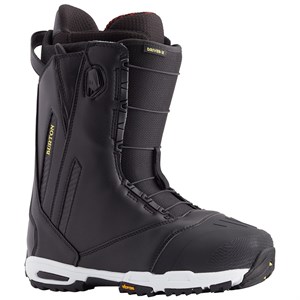
- Flex: 10 (out of 10) for maximum responsiveness.
- Liner: Imprint™ 3 with DryRide Heat Cycle™ lining for warmth and moisture-wicking.
- Lacing: Speed Zone™ lacing for customizable upper and lower fit.
- Outsole: Vibram® EcoStep™ made with 30% recycled materials.
The Burton Driver X is a powerhouse built for riders who demand ultimate control on the gnarliest terrain. These boots are incredibly stiff and responsive, giving you the feel of a race car on the snow. They lock your feet in place, allowing you to drive hard through every turn and blast through chunder without a second thought. The Imprint™ 3 liner molds to your foot for a custom fit, while the DryRide Heat Cycle™ lining keeps you warm and dry, no matter how hard you’re working. With the Driver X, you get a boot that’s all about performance and power, designed to handle the most aggressive riding styles with ease.
One of the best features is the Speed Zone™ lacing system, which lets you dial in the perfect fit for both the upper and lower sections of the boot in seconds. This ensures you have a secure feel with no heel lift. The Vibram® EcoStep™ outsole provides reliable grip, so you can hike to your lines with confidence. Plus, the Total Comfort Construction means these boots feel broken-in right out of the box, so you can skip the painful break-in period and get straight to riding. For advanced to expert riders, the Burton Driver X is a top-tier choice that delivers precision and support when it matters most.
Pros and Cons
Pros:
- Extremely stiff and responsive for aggressive riding.
- Customizable fit with Speed Zone™ lacing.
- Out-of-the-box comfort with Total Comfort Construction.
Cons:
- The stiff flex may be too rigid for beginner or intermediate riders.
- High price point due to premium materials and technology.
2. Ride Cadence – Women’s
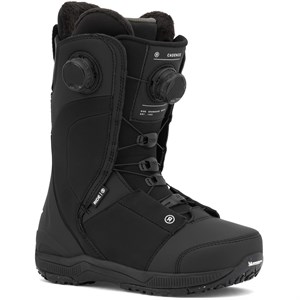
- Flex: 8 (out of 10) for a stiff, responsive feel.
- Lacing: Dual-zone Boa® Fit System for a precise fit.
- Liner: Intuition™ Dream Liner with Black Gold™ mesh for warmth and odor control.
- Outsole: Michelin® Hybrid Traverse Sole for excellent grip.
The Ride Cadence is engineered for hard-charging women who need a boot that can keep up with their all-mountain ambitions. These boots feature a stiff flex that provides incredible response and support, allowing you to power through turns and land big jumps with confidence. The dual-zone Boa® Fit System is a standout feature, giving you a quick and easy way to dial in the perfect fit. You can adjust the upper and lower sections independently to get that custom, locked-in feel without any pressure points. Paired with the Transition Wrap Harness, the system provides a secure fit and eliminates heel lift.
Comfort is a key priority with the Cadence. The Intuition™ Dream Liner molds to your foot for a plush, personalized feel, while the Black Gold™ liner mesh uses bamboo charcoal to naturally manage moisture and odors. The Calf Adjustment Technology (C.A.T.) is a thoughtful design element that allows for a custom fit in the calf area, ensuring all-day comfort. The Michelin® Hybrid Traverse Sole offers superior traction, so you can confidently navigate icy parking lots or tricky boot packs. The Cadence is a high-performance boot that combines technical features with a women-specific design, making it an ideal choice for advanced to expert riders who demand the best.
Pros and Cons
Pros:
- Excellent heel hold and precise fit with Boa® Zonal Fit System.
- Women’s-specific design with Calf Adjustment Technology.
- Durable and grippy Michelin® outsole.
Cons:
- The stiff flex may be too aggressive for less experienced riders.
- Premium features come with a higher price tag.
See the Ride Cadence – Women’s
3. Vans Verse
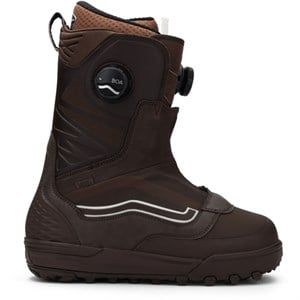
- Flex: Customizable from 6-9 with Flex Control System.
- Lacing: Hybrid Plus Boa® Fit System for a precise and secure fit.
- Liner: V3 UltraCush with FlashDry™ for comfort and moisture wicking.
- Outsole: V3 Superenduro Waffle Outsole with All-Trac™ rubber.
The Vans Verse is a versatile freeride boot designed for riders who explore everything from backcountry lines to resort groomers. With its Hybrid Plus Boa® Fit System, you get the quick convenience of Boa® combined with a traditional lace for a truly customized fit. This system, along with the Vans Custom Slide Guide, ensures exceptional heel hold and a snug feel throughout the boot. One of the most innovative features is the Vans Flex Control System, which includes removable tongue stiffeners, allowing you to easily adjust the flex from medium to stiff. This means you can tune your boots for different conditions or terrain, making the Verse a truly adaptable option for any day on the mountain.
Inside the boot, the V3 UltraCush liner with FlashDry™ is a game-changer for all-day comfort, providing superior cushioning and wicking away moisture to keep your feet dry and warm. The V3 PopCush footbed offers excellent arch support and impact absorption, which is essential for big landings and long days. The V3 Superenduro Waffle Outsole with All-Trac™ rubber provides serious traction for hiking and side-hilling. With a waterproof zipper shroud and Adaptive Range Mode, the Vans Verse is built to handle the demands of backcountry riders while providing the style and performance you expect from Vans. This boot is for the rider who wants a single, high-performance solution for all their snowboarding needs.
Pros and Cons
Pros:
- Customizable flex with removable tongue stiffeners.
- Versatile design for all-terrain and backcountry riding.
- Excellent comfort and support with V3 UltraCush and PopCush.
Cons:
- The Hybrid Plus Boa® system can be more complex than a standard Boa®.
- A high-performance boot that may be overkill for casual riders.
4. Ride Insano
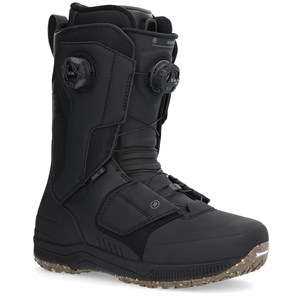
- Flex: 10 (out of 10) for an extremely stiff and responsive feel.
- Lacing: H4 Boa® Focus Fit System with dual-zone closure.
- Liner: Intuition™ Dream Liner with Black Gold™ mesh.
- Outsole: Michelin® Hybrid Traverse Sole for exceptional grip.
As its name suggests, the Ride Insano is a boot for riders who live on the edge and push their limits with every run. This is one of the stiffest boots on the market, built to provide a level of support and response that can handle the highest speeds and most technical lines. The H4 Boa® Focus Fit System lets you independently tighten the upper and lower sections, giving you an unparalleled, custom fit and ensuring there’s no heel lift, no matter how hard you’re charging. The Tallboy Harness liner lacing adds an extra layer of support and responsiveness, locking your foot firmly in place for maximum control.
Durability is a huge selling point for the Insano, with features like the Fiber Reinforced Flex Slime Tongue™ and HDR Premium Synthetics™ that resist breakdown and wear, ensuring the boot maintains its aggressive flex season after season. Comfort is also surprisingly good for such a stiff boot, thanks to the heat-moldable Intuition™ Dream Liner and Impacto™ Elite Insole, which provide excellent cushioning for harsh landings. The Michelin® Hybrid Traverse Sole delivers reliable traction for hiking and provides a solid platform for riding. The Insano is for the seasoned expert who needs a boot that is as aggressive and uncompromising as they are on the mountain.
Pros and Cons
Pros:
- Incredibly stiff and responsive for high-speed riding.
- Durable construction built to withstand heavy use.
- Precise fit with dual Boa® system and Tallboy Harness.
Cons:
- The extreme stiffness can be uncomfortable for some riders.
- Not suitable for beginners or riders who prefer a softer, more forgiving flex.
5. Nidecker Kita
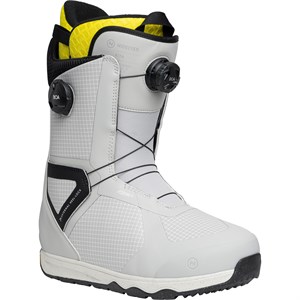
- Flex: 9 (out of 10) for a very stiff all-mountain feel.
- Lacing: Dual Zone Boa® with External Heel-Lock.
- Liner: Gold-Level ASYM Thermo Heat Moldable liner for a custom fit.
- Outsole: B.F.T. Vibram® Approach Outsole with OC-KUSH cushioning.
The Nidecker Kita is an all-new freeride boot engineered for all-mountain dominance. With a very stiff flex rating of 9, this boot delivers incredible power transfer and support, making it perfect for aggressive riders who want to charge hard. The Exo-Spine technology provides a reinforced link between the boot’s parts, ensuring an immediate and responsive feel from heel to toe. The Armor-Tech waterproof shell adds an extra layer of durability and weather protection, so you can ride in any condition, from deep powder to rainy spring days. Nidecker has paid close attention to anatomical design, with a 3D-molded toe box and tongue that eliminates pressure points and provides a more natural, comfortable fit.
One of the most impressive features of the Kita is its customizability. The Gold-Level ASYM Thermo Heat Moldable liner wraps around your foot, and its unique Ripper-lacing closure harness allows you to tighten the upper and lower parts of the liner separately for a truly locked-in feel. Paired with the Asym 3F Boa® system, which is designed to reduce pressure points on the foot, this boot offers a superior, dialed-in fit. The B.F.T. Vibram® Approach Outsole provides serious grip and traction, while the OC-KUSH cushioning absorbs shock from big landings and bumpy terrain. The Nidecker Kita is a highly technical, feature-rich boot designed for the advanced rider seeking peak performance and a personalized fit.
Pros and Cons
Pros:
- High-performance, stiff flex for power and control.
- Highly customizable fit with heat-moldable liner and Asym Boa® system.
- Extremely durable and weatherproof with Armor-Tech shell.
Cons:
- The very stiff flex is not suitable for freestyle or casual riding.
- The price and complexity of the boot may not be for every rider.
How to Choose Freeride Snowboard Boots?
Choosing the right snowboard boots is one of the most critical decisions you’ll make as a rider, and for those who gravitate towards freeriding, this choice is paramount. Freeriding—the art of exploring off-piste terrain, charging down steep faces, and navigating variable conditions—demands a specific kind of gear. Your boots are the direct link between your body and your board, transmitting every subtle movement and commanding your ride. A poorly matched boot can lead to fatigue, lack of control, and a miserable day on the mountain. On the other hand, the right pair can elevate your performance, enhance your comfort, and give you the confidence to tackle any line. So, what should you look for when selecting snowboard boots?
This guide will walk you through the key factors to consider, from flex and fit to lacing systems and liners, ensuring you find the perfect boots to conquer the backcountry and beyond.
Understanding Flex: The Core of Freeride Performance
The single most important characteristic of a freeride snowboard boot is its flex rating. Unlike a freestyle rider who might prefer a soft, forgiving boot for park features and jibs, a freerider needs a boot that is stiff, supportive, and responsive. Flex is typically rated on a scale from 1 to 10, with 1 being the softest and 10 being the stiffest.
Why Stiffer is Better for Freeriding
- Control at Speed: When you’re bombing down a steep, technical line, you need instant and precise edge control. A stiff boot minimizes energy loss and translates your every movement directly to the board, allowing for powerful, confident turns at high speeds.
- Support for Variable Terrain: Freeriding isn’t always smooth. You’ll encounter deep powder, icy patches, crusty snow, and chunder. A stiff boot provides the lateral and forward support needed to absorb these impacts and maintain stability.
- Reduced Fatigue: While a stiff boot requires more effort to flex, it provides a solid platform that prevents your foot and ankle from overworking. This reduces muscle fatigue during long descents and demanding conditions, allowing you to ride harder for longer.
- Heel-to-Toe Response: A stiff boot ensures a quick, powerful response. This is crucial when navigating tight trees, dropping cliffs, or making quick adjustments to avoid obstacles.
For freeriding, you should be looking for boots with a flex rating of 7 or higher. Advanced to expert riders often prefer a rating of 8, 9, or even 10 for maximum performance. Remember that a boot’s flex will soften over time, so starting with a stiffer boot is a good long-term investment.
The Importance of Fit: Your Direct Connection
A perfect fit is non-negotiable. An ill-fitting boot can cause pain, cramping, and most importantly, a loss of control. Here’s what to focus on when trying on boots:
Key Fit Considerations
- Heel Hold: This is the most crucial aspect of boot fit. Your heel should be locked firmly in place with minimal to no lift when you rise up on your toes. Heel lift is a major cause of lack of control and can lead to blistering.
- Sizing: Your toes should be able to lightly touch the end of the boot when you’re standing up straight. When you flex forward into a riding stance, your toes should pull back slightly, so they are no longer touching the end. Never size up to accommodate thick socks; modern boot liners are designed for warmth, and extra socks will only cut off circulation.
- Pressure Points: Pay attention to any pressure points, especially on the top of your foot or around your ankle bones. These will only get worse on the mountain. Many boots feature heat-moldable liners that can alleviate minor pressure points, but a painful spot right out of the box is a red flag.
- Ankle and Calf Comfort: Freeride boots often have a robust ankle support system. Ensure that the boot’s cuff fits comfortably around your calf without digging in. Women’s-specific boots often feature a lower cuff and special lacing systems to accommodate the female calf muscle.
A proper fit ensures that every movement you make is efficiently transferred to your board, giving you the precision needed for technical terrain.
Lacing Systems: Quick, Secure, and Customizable
The lacing system is how you secure the boot to your foot. While traditional laces are a classic, most modern freeride boots feature quick-pull or Boa® systems.
Types of Lacing Systems
- Boa® Fit System: The Boa® system uses a cable and a dial to tighten the boot. It is incredibly fast and allows for micro-adjustments, making it a favorite for many riders. For freeriding, look for a dual-zone Boa® system, which allows you to independently adjust the tightness of the upper and lower sections of the boot. This is vital for achieving a custom, secure fit with strong heel hold.
- Quick-Pull Lacing: This system uses a series of handles and a locking mechanism to tighten the boots. It’s fast and effective, but it may not offer the same level of zone-specific customization as a dual-Boa® system.
- Traditional Laces: While less common in high-end freeride boots, traditional laces offer a classic feel and allow for full customization of the tightness. However, they can be slow to adjust and may loosen throughout the day.
For freeriding, a dual-zone Boa® or a quick-pull system with a separate internal harness is highly recommended for its speed and ability to provide a precise, secure fit.
Liners and Outsoles: The Details That Matter
Beyond flex and fit, the components inside and on the bottom of the boot play a significant role in performance and comfort.
Liner Technology
The liner is the inner boot that holds your foot. Most high-end freeride boots feature heat-moldable liners, which use your body heat or a boot fitter’s oven to conform to the unique shape of your foot. Look for liners with features like J-bars, which are pads around the ankle that improve heel hold, and materials that wick moisture and control odor, such as charcoal-infused mesh.
Outsole and Cushioning
The outsole is the boot’s sole. A good freeride boot should have a rugged, grippy outsole for traction on icy or rocky terrain when you’re hiking. Vibram® and Michelin® are well-known brands that produce durable, high-traction outsoles. Additionally, look for cushioning or gel inserts in the heel and toe to absorb impact from big landings and to dampen vibrations on rough snow.
Final Considerations and the Try-On Process
Don’t be afraid to take your time in the store. Try on several pairs, wear them for at least 20 minutes, and flex into a snowboarding stance. Pay attention to how the boots feel, and don’t let a salesperson rush you. If possible, bring your own socks and bindings to get a more realistic feel. Investing in a quality pair of freeride boots is an investment in your safety, performance, and enjoyment on the mountain. By prioritizing a stiff flex, a precise fit, and a reliable lacing system, you’ll be well on your way to finding the perfect boots for your freeride adventures.