Best Ski Goggles with Interchangeable Lenses of 2026
Choosing the right ski goggles can make a big difference on the slopes, especially when weather and light conditions change quickly. Ski goggles with interchangeable lenses give you the flexibility to swap lenses for bright sun, low light, or snowy days. This means better visibility, improved safety, and more comfort while skiing or snowboarding. Whether you are a beginner or an experienced skier, having the right lens at the right time helps you see clearly and enjoy your day on the mountain without distractions or eye strain.
1. OutdoorMaster PRO

- Lens Design: Large spherical frameless lens
- Interchangeable Lens: Yes, 20+ options sold separately
- OTG Design: Yes, wear glasses underneath
- UV Protection: 100% UV400
The OutdoorMaster PRO ski goggles are built for skiers and snowboarders who want a wide, clear view of the mountain without frame distractions. The large spherical frameless lens delivers an unobstructed field of vision, while the anti-fog coating and 100% UV400 protection keep your eyes safe and comfortable on long runs. The OTG design is a standout feature for anyone who wears prescription glasses, allowing them to fit comfortably underneath without pinching.
The interchangeable lens system lets you adapt to changing light and weather by swapping among 20+ available lenses, though extra lenses are sold separately. The extra-long elastic strap ensures compatibility with virtually any helmet, making these suitable for adults and teens alike. The package includes a protective case and carrying pouch. While the frameless design looks sleek and modern, some users may find the lack of a lower frame reduces durability in heavy falls. Overall, the PRO offers excellent performance and versatility at a competitive price point.
- Pros: Wide unobstructed view, OTG compatible, easy lens swapping, great helmet fit
- Cons: Extra lenses cost extra, frameless design less durable in hard crashes
2. goodr Peak G

- Lens Shape: Cylindrical
- UV Protection: 100 percent
- Interchangeable Lenses: Yes, 1 additional included
- Helmet Compatible: Yes
The goodr Peak G snow goggles are designed for riders who want a reliable, no-nonsense option for groomers and powder days. The cylindrical lens offers a classic look and solid peripheral vision, while the included S1 yellow lens is specifically tuned for low-light conditions, making it easy to adapt when clouds roll in. The swappable strap is a nice touch for matching your setup or replacing a worn band without buying a whole new goggle.
With 100 percent UV protection and a medium frame size, these goggles fit a wide range of adults and teens. The standard bridge fit works well for most face shapes, and helmet compatibility is confirmed. However, the Peak G lacks polarized or photochromic options, and light transmission specs are unavailable, which may leave advanced riders wanting more precise data. The single additional lens included is helpful, but the limited lens ecosystem means fewer choices for extreme brightness or deep storm days. Overall, a solid mid-range choice for casual to intermediate skiers.
- Pros: Includes low-light yellow lens, swappable strap, good value, helmet compatible
- Cons: No polarized or photochromic options, limited lens selection, specs incomplete
3. Smith I/O MAG ChromaPop

- Lens Shape: Spherical
- UV Protection: 100 percent
- Interchangeable Lenses: Yes, 1 additional included
- Light Transmission: Varies by lens, 12–25 percent / 50–67 percent
The Smith I/O MAG ChromaPop snow goggles are a top-tier choice for skiers who demand sharp optics and quick lens swaps. ChromaPop technology boosts color and contrast, making terrain features like wind lips and tree glades easier to read in flat light. The MAG system uses magnets for fast, secure lens changes, and the spherical lens shape provides excellent peripheral vision. With 100 percent UV protection and a medium frame size, these goggles suit a wide range of adults.
The goggle comes with one additional lens included, and the available light transmission ranges cover everything from bright sun to stormy conditions. Helmet compatibility is excellent, and the standard bridge fit works for most faces. However, the high price tag may deter budget-conscious buyers, and the magnetic system requires careful handling to avoid scratching lenses during swaps. Polarized and photochromic options are not available. For dedicated riders who prioritize optical clarity and fast adaptation to changing light, the I/O MAG ChromaPop is a worthy investment.
- Pros: Exceptional clarity, fast magnetic lens swaps, wide light transmission range, great helmet fit
- Cons: Expensive, magnets need careful handling, no polarized or photochromic versions
See the Smith I/O MAG See the Smith I/O MAG S See the Smith I/O MAG XL
4. Smith 4D MAG ChromaPop

- Lens Shape: Spherical
- UV Protection: 100 percent
- Interchangeable Lenses: Yes, 1 additional included
- Light Transmission: Varies by lens, 9–25 percent / 50–67 percent
The Smith 4D MAG ChromaPop snow goggles take the proven MAG system and add an even wider field of view. The 4D lens design curves around the face more aggressively, reducing tunnel vision and letting you spot your line with confidence. ChromaPop optics enhance contrast and color, making everything from icy groomers to fresh powder more readable. The goggles offer 100 percent UV protection and a medium frame size with standard bridge fit.
With one additional lens included and a broad range of light transmission options, these goggles adapt to nearly any condition. Helmet compatibility is excellent, and the magnetic lens swap is fast and secure. The main drawbacks are the premium price and the fact that the 4D shape may not fit every face perfectly, especially smaller faces. Polarized and photochromic versions are not offered. For advanced skiers and riders who want the widest possible view and top-shelf optics, the 4D MAG ChromaPop is a standout choice.
- Pros: Widest field of view, excellent contrast, fast magnetic swaps, great helmet fit
- Cons: Very expensive, may not suit smaller faces, no polarized or photochromic options
See the Smith 4D MAG See the Smith 4D MAG S See the Smith 4D MAG XL
5. Oakley Flight Deck L

- Lens Shape: Rimless spherical
- UV Protection: 100 percent UVA, UVB, UVC
- Interchangeable Lenses: Yes, lens sub-frame attachment
- Fit: Medium to large
The Oakley Flight Deck L goggles are engineered for riders who want an anatomical fit and uncompromising optical performance. The rimless lens design maximizes peripheral vision, while discreet frame notches at the temples make them compatible with most prescription eyewear. Oakley’s HDO lens technology delivers razor-sharp clarity at all angles, and Plutonite lens material blocks 100 percent of UVA, UVB, UVC, and harmful blue light. The triple-layer polar fleece foam wicks moisture and provides all-day comfort.
Helmet compatibility is excellent thanks to outrigger mounts and a silicone-backed strap that stays put even on slippery surfaces. The lens sub-frame attachment makes changing lenses fast and easy. Select colorways feature Prizm lens technology, which blocks strategic wavelengths to maximize contrast. Dual vented lenses with F3 anti-fog coating keep vision clear. The main downsides are the high price and the fact that not all colorways include Prizm technology. The medium-to-large fit may be too roomy for smaller faces. Overall, a premium goggle for serious skiers.
- Pros: Excellent peripheral vision, HDO clarity, Prizm options, great helmet and glasses compatibility
- Cons: Expensive, Prizm not on all colorways, medium-to-large fit only
6. findway Ski Goggles OTG

- Lens Change: Magnetic, under 60 seconds
- Lens Type: Dual-layer spherical
- UV Protection: 100 percent
- OTG Design: Yes, fits glasses underneath
The findway Ski Goggles OTG are designed for riders who want quick lens changes and reliable performance without breaking the bank. The magnetic system uses six N45 rare earth magnets, allowing you to swap lenses in under 60 seconds. An integrated side-clip locking system keeps the lens secure even during crashes, jumps, and spins. The dual-layer spherical lens creates a thermal barrier that significantly reduces fogging compared to single-layer goggles, and the anti-fog and anti-scratch coatings keep your view clear.
The OTG design provides enough space for prescription glasses, and the triple-layer foam padding with a soft flannel inner layer ensures comfort for various face shapes. The durable thermoplastic urethane frame resists damage, and the two-way venting system exhausts heat to prevent fog buildup. Extra lenses are sold separately, which is a drawback if you want multiple tints right away. The panoramic spherical lens offers a wide, undistorted view. Overall, an excellent value for glasses wearers and riders who prioritize fast lens swaps.
- Pros: Fast magnetic lens changes, secure locking system, OTG compatible, comfortable foam
- Cons: Extra lenses sold separately, magnetic system may attract metal debris
See the findway Ski Goggles OTG
7. SMITH Squad

- Lens Shape: Cylindrical
- UV Protection: 100 percent
- Interchangeable Lenses: Yes, 1 additional included
- Light Transmission: Varies by lens, 9–25 percent / 55–89 percent
The Smith Squad snow goggles offer an oversize ChromaPop lens that enhances color and contrast, making it easier to read the terrain from first chair to last run. The cylindrical lens shape provides a classic look with solid peripheral vision, and the medium frame size with standard bridge fit suits most adults. With 100 percent UV protection and one additional lens included, these goggles are ready for changing conditions right out of the box.
The light transmission range covers bright sun to very low light, thanks to options like the Everyday Violet Mirror with Clear lens at 89 percent VLT. Helmet compatibility is confirmed, and the interchangeable lens system is straightforward. However, the cylindrical shape offers slightly less peripheral vision than spherical designs, and the goggles are not polarized or photochromic. The ChromaPop lens is excellent, but some users may find the frame size too medium for larger faces. Overall, a versatile and stylish choice for intermediate to advanced riders.
- Pros: ChromaPop contrast, wide VLT range, includes extra lens, helmet compatible
- Cons: Cylindrical lens less wide than spherical, no polarized or photochromic options
8. Snowalva Ski Goggles
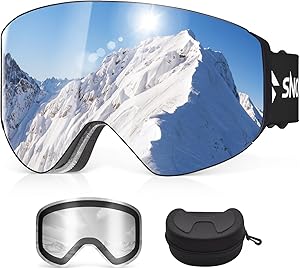
- Frame Type: Rimless
- Lens Coating: Anti-fog
- UV Protection: Yes
- Visible Light Transmission: 9 percent
The Snowalva Ski Goggles are a straightforward option for skiers and snowboarders who want reliable vision on the slopes without overcomplicating things. The traditional cylindrical lens design helps you avoid misjudgments and stay on point whether you are shredding powder or nailing a groomer run. The rimless frame reduces glare from frame edges and gives a clean, modern look. The anti-fog coating keeps your vision clear during active runs, and the 9 percent VLT makes these best suited for bright, sunny days.
With UV protection and a slim fit, these goggles work well for skiing, snowboarding, and even snowmobiling. The buckle closure is secure, and the fit sentiment is positive for most users. However, the slim fit may not accommodate all face shapes or prescription glasses, as there is no explicit OTG design. The single 9 percent VLT lens is not ideal for low-light conditions, and no additional lenses are included or mentioned. Overall, a budget-friendly choice for fair-weather riders who want a no-frills goggle.
- Pros: Affordable, anti-fog coating, rimless design reduces glare, versatile for snow sports
- Cons: Only 9 percent VLT for bright light, slim fit may not suit all, no OTG or extra lenses
9. OutdoorMaster Heron

- Lens Design: Frameless toric
- Lens System: MagKlick magnetic interchangeable
- UV Protection: 100% UV400
- OTG Design: Yes, triple foam
The OutdoorMaster Heron ski goggles feature a frameless toric lens that provides an exceptionally wide field of view with a heightened sense of depth and clarity. The dual-layer OVP lens technology with anti-fog coating delivers a fog-free experience and crystal-clear vision, while 100% UV400 protection keeps your eyes safe from harmful rays. The MagKlick magnetic interchangeable lens system comes with a replacement yellow lens at 87% VLT, making it easy to adapt to varying light conditions without fumbling.
The OTG design and triple foam allow you to wear prescription glasses underneath comfortably, and the extra-long elastic strap ensures compatibility with all helmets. The package includes the goggles, a replacement lens, a box, and a carrying pouch. The magnetic system is secure and fast, but as with any magnetic goggle, care is needed to avoid scratching lenses during swaps. The toric lens shape offers excellent peripheral vision. Overall, the Heron is a versatile, feature-rich goggle at a reasonable price point for riders who want adaptability and comfort.
- Pros: Wide toric view, magnetic lens swap, includes yellow lens, OTG and helmet compatible
- Cons: Magnetic system needs careful handling, only one replacement lens included
10. Odoland Magnetic Ski Goggles

- Lens System: Magnetic interchangeable, 2 spherical lenses included
- UV Protection: UV400
- Field of View: 164-degree frameless
- OTG Design: Yes, glasses-friendly chamber
The Odoland Magnetic Ski Goggles are built for riders who want to ski from morning to night with one pair. The strong magnetic locking system lets you swap lenses in seconds without tools, and the set includes two spherical lenses: a dark lens for bright sunny days and a VLT 80% yellow lens for low-light, cloudy, or evening conditions. The dual-layer lens technology with an anti-fog inner lens and top-and-bottom ventilation channels maintains consistent airflow and fog-free vision during long runs.
The frameless spherical lens provides an ultra-wide 164-degree field of view, eliminating tunnel vision and blind spots so you can spot terrain changes and other skiers earlier. The OTG design features a glasses-friendly chamber that fits most prescription frames without pinched temples or mashed nose pads. The extra-long adjustable strap and optimized frame geometry work with most helmets, and the multi-layered foam padding distributes pressure evenly. The main drawback is that the magnetic system may attract metal debris, and the included lenses cover most but not all extreme light conditions. Overall, a great value for glasses wearers and riders who want wide vision.
- Pros: Two lenses included, ultra-wide 164-degree view, OTG friendly, helmet compatible
- Cons: Magnets may attract metal debris, no polarized or photochromic options
See the Odoland Magnetic Ski Goggles
How to Choose Ski Goggles with Interchangeable Lenses
Interchangeable lens goggles have become the standard for serious skiers and snowboarders. The ability to adapt your vision to changing light conditions without carrying a second pair of goggles is a genuine game-changer on the mountain. But with dozens of options on the market—ranging from budget-friendly magnetic systems to premium optical technologies—choosing the right pair requires understanding what actually matters. This guide breaks down the essential factors, from lens shape and VLT ratings to swap mechanisms and helmet compatibility.
Why Interchangeable Lenses Matter
Mountain weather changes fast. A bluebird morning can turn into a flat-light afternoon, and a storm can roll in within an hour. A single lens cannot perform optimally across all these conditions. A dark, mirrored lens that cuts glare on a sunny day becomes dangerously opaque when clouds descend. Conversely, a high-VLT yellow lens that enhances contrast in flat light lets in too much brightness when the sun breaks through.
Interchangeable lens systems solve this problem. Rather than owning multiple goggles or struggling with compromised vision, you carry a spare lens in your jacket and swap it when conditions shift. Most modern systems include two lenses in the box—typically one for bright conditions and one for low light—giving you immediate versatility from day one.
Understanding Lens Shape and Optics
The shape of your goggle lens affects peripheral vision, distortion, and glare. There are three primary shapes to consider.
Cylindrical Lenses
Cylindrical lenses curve horizontally across your face but remain flat vertically. They are generally more affordable and work well for casual skiers. However, the flat vertical surface can cause slightly more glare and marginally reduces peripheral vision compared to curved alternatives.
Spherical Lenses
Spherical lenses curve both horizontally and vertically, mimicking the shape of the human eye. This design delivers better peripheral vision, less distortion, and reduced glare. Spherical lenses are the preferred choice for advanced riders who demand optical clarity, though they typically cost more than cylindrical options.
Toric Lenses
Toric lenses are a newer innovation that blend elements of both cylindrical and spherical designs. They curve in both directions but with a subtler vertical curve than spherical lenses. This provides improved optical clarity and a wide field of view at a potentially lower cost than premium spherical options.
The Critical Role of VLT
Visible Light Transmission (VLT) is the single most important specification for matching a lens to conditions. It measures the percentage of visible light that passes through the lens to your eyes.
| VLT Range | Best Conditions | Category |
|---|---|---|
| 3–8% | Very strong light, glacier, bluebird days | S4 |
| 9–18% | Strong light, sunny with some clouds | S3 |
| 19–43% | Moderate light, cloudy, changing conditions | S2 |
| 44–80% | Low light, flat light, snowfall | S1 |
| 81–100% | Very low light, snowfall, artificial light | S0 |
A single all-rounder lens typically sits around 30% VLT, offering reasonable performance across mixed conditions without excelling in extremes. For true versatility, however, carrying two lenses—one in the 10–20% range for sun and one in the 50–70% range for storms—covers nearly every scenario you will encounter.
Lens Swap Systems Compared
Not all interchangeable systems are created equal. The swap mechanism affects how quickly and easily you can change lenses, how secure the connection remains during crashes, and whether the system introduces fogging risks.
Magnetic Systems
Magnetic systems use rare-earth magnets embedded in the lens and frame to hold the lens in place. They are the fastest and most convenient option—some systems allow lens changes without removing your gloves. Premium magnetic systems also include mechanical clips or locking tabs as secondary retention, ensuring the lens stays put during impacts. The primary drawback is that magnets can attract metal debris, and poorly designed magnetic systems may be more prone to fogging because magnet placement can obstruct optimal ventilation paths.
Traditional Clip Systems
Traditional interchangeable lenses use small tabs or teeth around the lens edge that pop into corresponding slots in the frame. These systems are generally secure and reliable, but swapping requires more finesse and alignment, which can be cumbersome with cold hands or on a windy chairlift. Practice at home before relying on a mid-mountain swap.
Hybrid Systems
Many modern goggles combine magnets with mechanical retention—typically small clips or tabs that engage after the magnets align the lens. This hybrid approach offers the speed of magnetic alignment with the security of a physical lock, making it the best of both worlds for most riders.
Fit, Helmet Compatibility, and OTG
Even the best lens system is useless if the goggles do not fit properly. Goggle fit is determined by face shape, helmet compatibility, and whether you wear prescription glasses.
Helmet Compatibility
Goggles and helmets must work together. A goggle that leaves a gap between the helmet brim and the goggle frame exposes your forehead to cold and allows snow to enter. Look for goggles with extended straps and frames designed to sit flush against helmet brims. The best approach is to bring your helmet when trying on goggles, or verify compatibility through manufacturer guides.
OTG Design
Over-The-Glasses (OTG) goggles are engineered with additional interior volume and temple cutouts to accommodate prescription eyewear. Not all goggles are OTG-compatible. If you wear glasses, look specifically for OTG labeling. Keep in mind that wearing glasses under goggles increases fogging risk, so prioritize goggles with excellent ventilation and consider using an anti-fog spray on your glasses.
Fit Size
Goggles come in small, medium, and large fits. A proper fit means the goggle sits comfortably against your face without excessive pressure, and the foam seals completely around your eyes and nose. Too-small goggles may not seal properly; too-large goggles can be heavy and prone to shifting. Medium fits suit most adults, but face shape matters more than nominal sizing.
Anti-Fog and Ventilation
Fogging is the most common frustration with any goggle, and interchangeable systems can be more susceptible if the swap mechanism compromises ventilation. Dual-layer lenses with an anti-fog coating on the inner surface are standard on quality goggles. Ventilation channels at the top and bottom of the frame allow warm, moist air to escape and cooler, drier air to enter.
To maximize anti-fog performance:
- Never wipe the inner lens—this destroys the anti-fog coating. Blot gently with a microfiber cloth if necessary.
- Keep vents clear of snow, scarves, and helmet brims.
- Avoid resting goggles on your forehead, where they collect moisture and oils from your skin.
- Keep moving—airflow through the vents is what keeps fog at bay.
Practical Recommendations
For most riders, a two-lens setup covers nearly all conditions. Choose a primary lens in the 15–25% VLT range for everyday brightness and a secondary lens in the 50–70% VLT range for storms and flat light. If you want a single all-rounder, target approximately 30% VLT.
Magnetic or hybrid swap systems offer the best convenience-to-security balance. Spherical or toric lens shapes provide superior optics and peripheral vision. Prioritize fit and helmet compatibility above all else—no amount of lens technology compensates for a goggle that does not seal properly against your face.
Finally, verify that replacement lenses are readily available for your chosen model. Coatings wear over time, and being able to replace a scratched lens without buying new goggles extends the life of your investment significantly.