Best Heated Ski Socks of 2025
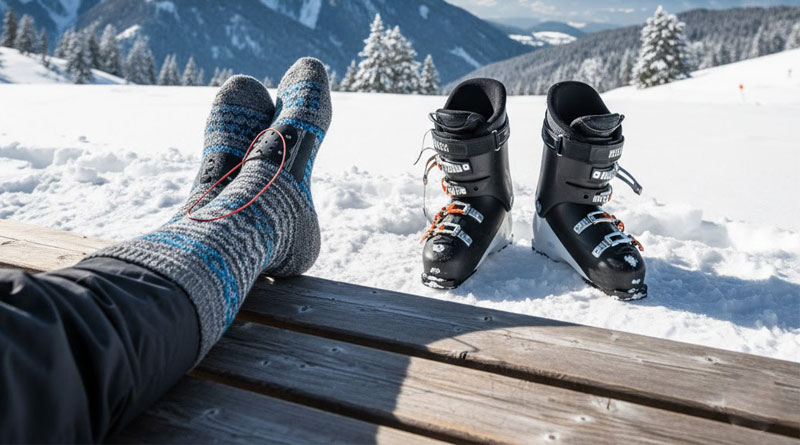
Keeping your feet warm on the slopes can make or break your ski day. That’s where heated ski socks come in. These clever socks use built-in heating elements to keep your toes cozy, even in freezing conditions. They’re perfect for skiers who struggle with cold feet or spend long days outdoors. In this guide, we’ve rounded up the best heated ski socks that combine comfort, warmth, and performance, so you can enjoy every run without worrying about numb toes or frozen feet.
1. Lenz Heat 4.1
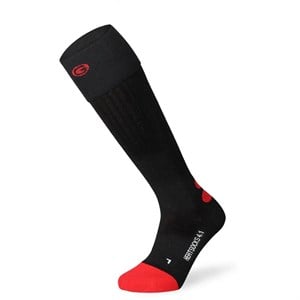
- Material: 50% Polyester / 33% Polyamide / 10% Merino Wool / 7% Elastane
- Heating: Toe Cap® element heats toes from above and below
- Cushion: Padded sole with toe & heel reinforcement
- Battery: Works with Body Heat System lithium packs (sold separately)
Lenz Heat 4.1 delivers targeted warmth with considered construction. The fabric blends and reinforcements balance insulation with breathability so your feet stay dry during active days on the mountain. Heating elements are positioned to warm toes and the sole evenly, and the sock’s ergonomic knit gives a secure, non-slip fit inside ski boots. On technical outings the padded sole and reinforced zones reduce pressure and increase comfort for long lifts or backcountry hikes.
Battery life and controls are where this model stands out: runtime is long enough for a full day of cold-weather use at lower settings, and the app or on-sock controls make adjustments simple without stopping. Careful design choices such as flat heating wires, washable construction after removing the battery, and sized options that avoid bunching mean these socks are practical as well as warm. For anyone who hates numb toes, they are a reliable tool — just follow care instructions and avoid continuous maximum heat for safety. These socks strike a smart balance between performance and everyday usability.
Pros:
- Fast, consistent toe and sole heating
- Long battery life at lower settings
- Comfortable padding and reinforced areas
- Washable after removing batteries (where applicable)
Cons:
- Batteries may be sold separately for some models
- Continuous high heat can feel intense
- App connectivity varies between brands
2. Therm-ic Heat Fusion

- Fabric: 49% acrylic / 27% polyamide / 12% polypropylene / 10% merino / 2% elastane
- Batteries: Includes 2 × S-Pack 700B lithium-ion (Bluetooth)
- Runtime: Up to 8 hrs at lowest setting
- Features: Micro-channel wicking, heel & toe reinforcements
Therm-ic Heat Fusion pairs technical fabric with thoughtful heating to keep toes warm without making feet clammy. The micro-channel knit moves moisture away from skin while the snug, knee-high fit prevents heat from escaping into boots. Reinforced heel and toe zones reduce wear and provide light cushioning so these socks handle repeated use on groomers and in the resort. They feel engineered for active skiers who want heat and breathability in one package.
The S-Pack 700B batteries add convenience and long runtime, with Bluetooth control that lets you tweak warmth from your phone when needed. Heat diffusion technology warms the toes and forefoot evenly, and snaps on the socks simplify battery attachment. If you value a tight fit, reliable moisture management, and smart battery tech, these strike a solid balance—just bring a spare battery for full days in very cold conditions.
Pros:
- Fast, consistent toe and sole heating
- Long battery life at lower settings
- Comfortable padding and reinforced areas
- Washable after removing batteries (where applicable)
Cons:
- Batteries may be sold separately for some models
- Continuous high heat can feel intense
- App connectivity varies between brands
3. SNOW DEER Heated Socks
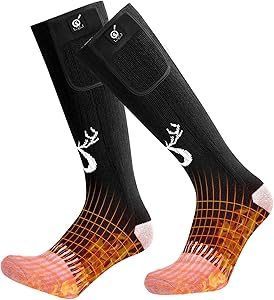
- Material: 55% CoolMax / 25% Elastic / 20% Spandex
- Heating: Far infrared elements cover toes, top & bottom
- Battery: 7.4V 2200mAh rechargeable battery
- Sizes: Available S–XL (see size chart)
SNOW DEER heated socks aim for full toe protection by wrapping heating elements around the top and underside of the forefoot. The CoolMax blend is engineered to dry quickly and move moisture away, which helps prevent cold from returning during lift rides or short breaks outside. The result is a sock focused on keeping vulnerable toes warm while remaining comfortable inside heavier winter boots.
The upgraded one-touch controller with a power indicator simplifies on-the-fly adjustments, and the higher-voltage 7.4V battery offers a steadier, longer heating profile than some smaller packs. These socks are a practical pick for people working in cold conditions or spending long hours outdoors, though sizing should be checked closely to avoid bunching. If whole-toe coverage and a robust battery matter most, these deliver convincing value.
Pros:
- Fast, consistent toe and sole heating
- Long battery life at lower settings
- Comfortable padding and reinforced areas
- Washable after removing batteries (where applicable)
Cons:
- Batteries may be sold separately for some models
- Continuous high heat can feel intense
- App connectivity varies between brands
See the SNOW DEER Heated Socks
4. WELUK Heated Socks
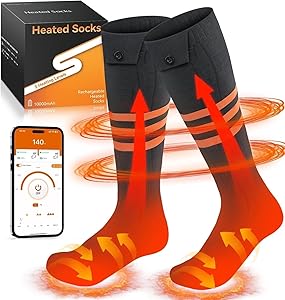
- Heat Settings: 4 levels with 0–120 min timer
- Battery: 10000mAh (2×5000mAh) for extended runtime
- Coverage: 360° heat wrap with cushioned heel
- Controls: App control and one-click temperature
WELUK Heated Socks emphasize convenience with app control, a large battery, and a full-wrap heating design. The 360° coverage helps deliver even warmth across the foot, while the cushioned heel and ergonomically designed collar reduce slippage and friction inside boots. Rapid warm-up claims mean these socks can be relied on when stepping out into especially cold conditions.
With multiple heat levels and a timer you can tailor warmth to activity—hiking, skiing, or lounging—without fiddling with layers. The big battery gives long runtime but adds weight, so if packability matters consider that trade-off. Overall, WELUK is a strong choice for users who prioritize extended runtime and smartphone control for quick adjustments on the go.
Pros:
- Fast, consistent toe and sole heating
- Long battery life at lower settings
- Comfortable padding and reinforced areas
- Washable after removing batteries (where applicable)
Cons:
- Batteries may be sold separately for some models
- Continuous high heat can feel intense
- App connectivity varies between brands
5. LVTFTAD Heated Socks

- App: 2025 APP control with scheduled function & battery display
- Battery: 6000mAh for up to 10 hours on low
- Heating: Oversized element wraps fully around feet
- Washable: Machine washable after removing batteries
LVTFTAD combines modern app features with practical heating coverage to create a user-friendly heated sock. The oversized heating element wraps around the foot for consistent warmth while the app shows remaining charge and allows scheduled heating—handy for waking to a warm pair or preheating before an outing. Elastic materials help maintain fit without uncomfortable bunching.
Battery capacity and quick-heat claims make these a sensible pick for long cold days, and the washable design keeps them low-maintenance as long as you remove batteries first. They’re versatile for skiing, ice fishing, or everyday winter commutes, although those who prefer minimalist gear may notice the added bulk from larger batteries and heating elements.
Pros:
- Fast, consistent toe and sole heating
- Long battery life at lower settings
- Comfortable padding and reinforced areas
- Washable after removing batteries (where applicable)
Cons:
- Batteries may be sold separately for some models
- Continuous high heat can feel intense
- App connectivity varies between brands
6. Waestcia Heated Socks

- Control: Bluetooth app with timed temperature control
- Battery: 10000mAh (2×5000mAh) for up to 10 hrs
- Heat Levels: 4-level heat with 0–120 min timer
- Design: 360° wrapped design with pleated collar
Waestcia’s heated socks aim for a premium feature set: app control, a large-capacity battery, and a wrapped heating layout that reduces cold spots. The pleated collar helps keep the socks in place and prevents slipping while the cushioned heel reduces friction during extended use. These design choices make the socks feel thoughtful for multi-day outings.
While the big battery supports long runtimes, it increases weight and bulk compared with smaller packs—something to consider for minimalist skiers. App-driven controls are convenient but depend on stable Bluetooth connectivity. For those who want long-lasting warmth and configurable timers via their phone, these strike an appealing compromise of comfort and control.
Pros:
- Fast, consistent toe and sole heating
- Long battery life at lower settings
- Comfortable padding and reinforced areas
- Washable after removing batteries (where applicable)
Cons:
- Batteries may be sold separately for some models
- Continuous high heat can feel intense
- App connectivity varies between brands
7. FREEHILL Merino Wool Socks
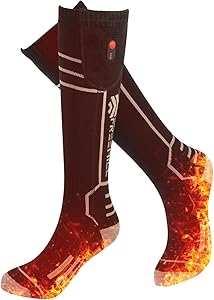
- Material: Merino wool blend for warmth and breathability
- Heating: Full sole and toe coverage with flat heating wire
- Battery: Two 5V 5000mAh batteries — up to 11 hrs low
- Fit: Knee-high sizes: M, L, XL
FREEHILL’s Merino wool blend brings natural warmth and moisture control to a heated sock platform. Flat heating wires reduce the feeling of foreign objects beneath the foot and lower the risk of pinching, while full-coverage heating increases the effective warm area. The looped fabric in high-wear areas adds cushioning for active use and helps the sock stand up to repeated wear.
Long runtime on the low setting makes these attractive for long outings, and the three heat levels are simple to manage without needing an app. While no heated sock is weightless, the balance of wool comfort and electrical warmth here works well for skiers who want natural fibers plus reliable heat. Follow the safety guidance about continuous maximum use to avoid discomfort.
Pros:
- Fast, consistent toe and sole heating
- Long battery life at lower settings
- Comfortable padding and reinforced areas
- Washable after removing batteries (where applicable)
Cons:
- Batteries may be sold separately for some models
- Continuous high heat can feel intense
- App connectivity varies between brands
See the FREEHILL Merino Wool Heated Socks
8. EIHBIEA Ski Socks
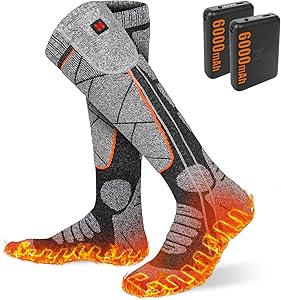
- Heating: Carbon fiber elements for fast, even heat
- Battery: 5V 6000mAh rechargeable batteries — ~9 hrs low
- Temps: 3 temperature levels: 40°C / 50°C / 65°C
- Material: Soft, breathable polyester with thermal insulation
EIHBIEA focuses on speed and evenness of heating with carbon fiber elements that distribute warmth across the sole and toes. The polyester blend is breathable yet insulating, making these socks suitable for damp or cold conditions where locking in heat and shedding moisture both matter. Three heat levels provide straightforward control for varied conditions.
Battery size offers a respectable runtime on lower settings, and user-friendly controls make it simple to dial in a comfortable temperature. These are solid, no-nonsense heated socks for anyone wanting dependable warmth without an overcomplicated feature set. They work well for skiing, hiking, and general winter wear when toe warmth is the priority.
Pros:
- Fast, consistent toe and sole heating
- Long battery life at lower settings
- Comfortable padding and reinforced areas
- Washable after removing batteries (where applicable)
Cons:
- Batteries may be sold separately for some models
- Continuous high heat can feel intense
- App connectivity varies between brands
How to Choose Heated Ski Socks
When temperatures drop and the slopes call, keeping your feet warm can make or break your ski day. Heated ski socks have become a must-have for skiers and snowboarders who spend long hours in cold environments. They combine traditional insulation with built-in heating elements to maintain consistent warmth, even in sub-zero conditions. But with so many options available, knowing what to look for can be tricky. This guide explains everything you need to know about choosing the right heated ski socks for your needs.
Understand How They Work
Heated ski socks use integrated heating elements, usually positioned around the toes and under the soles, to deliver gentle, controlled warmth. These elements are powered by rechargeable batteries that connect through small cables or ports, often hidden within the fabric. Most modern designs allow you to adjust the heat level using on-sock buttons or smartphone apps via Bluetooth.
Unlike disposable warmers, these socks provide consistent heat without bulky inserts. The best models distribute warmth evenly across the foot and maintain it for several hours, even in extreme cold. Understanding these basics helps you identify which features suit your activity level and conditions.
Material and Fabric Composition
Choose Breathable and Insulating Materials
The fabric blend of heated ski socks directly affects comfort, durability, and moisture control. Look for a mix of synthetic fibers like polyester and polyamide combined with natural materials such as merino wool. Merino wool is highly valued for its natural insulation, odor resistance, and moisture-wicking ability. Synthetics, on the other hand, add durability and stretch.
A good heated sock should feel snug but not restrictive. The interior should wick sweat away from your skin, preventing clamminess and blisters. Avoid cotton, as it traps moisture and loses insulation when wet.
Reinforcement and Cushioning
Since skiing involves constant pressure from boots, reinforced heels, toes, and shins are essential. These areas face the most friction and impact, so extra padding improves comfort and longevity. Some heated socks also use zoned knitting that adjusts compression in key areas for better blood flow and fit.
Battery Type and Performance
Battery Capacity and Runtime
The battery determines how long your socks can provide heat. Most models feature rechargeable lithium-ion batteries ranging from 2,000mAh to 10,000mAh. Higher capacity means longer heating times, typically between 4 and 10 hours depending on the setting. If you ski all day, look for a model with at least 7 hours of runtime on medium heat.
Check how the batteries attach — usually via a small pocket near the cuff or top of the sock. They should be lightweight and unobtrusive, ensuring they don’t interfere with boot fit or movement.
Charging and Replacement
Heated socks generally come with a dual USB charger, allowing you to charge both batteries simultaneously. Charging usually takes around 3 to 4 hours. Make sure replacement batteries are available for your model, especially if you plan multi-day trips without easy access to power outlets.
Heating Coverage and Temperature Control
Different brands offer varying heating coverage. Some focus warmth around the toes, while others include the entire sole or foot top. Toe heating is ideal for skiers prone to cold extremities, while full-foot coverage provides comprehensive comfort for prolonged exposure.
Temperature settings typically range from low to high, allowing you to balance warmth and battery life. Basic models feature button controls, whereas premium ones connect to smartphone apps for fine adjustments. Choose based on how much control and convenience you want on the mountain.
Fit and Sizing
A proper fit ensures efficient heat transfer and avoids hotspots. Heated ski socks should fit snugly without folding or bunching inside your boots. Most manufacturers offer size charts that match your shoe size, so check carefully before buying. If you fall between sizes, go smaller for a tighter, more responsive fit.
Remember that heated socks are typically thicker than standard ski socks. Make sure your ski boots have enough room to accommodate them without compromising circulation. Tight boots can reduce blood flow, counteracting the warmth you’re trying to achieve.
Control Features and Connectivity
Advanced heated socks now include Bluetooth connectivity that links to mobile apps. These apps allow you to set precise temperature levels, monitor battery life, and even control both socks independently. If you prefer simplicity, manual control buttons on the sock cuffs work just as well. The key is finding an interface that suits your skiing style and tech comfort level.
Ease of Maintenance and Durability
Washing Instructions
Heated socks need careful handling. Most are machine washable once you remove the batteries, but always follow the manufacturer’s care instructions. Use gentle cycles and air dry them — never tumble dry or wring them out. Avoid bleach or harsh detergents that could damage the heating elements.
Longevity and Construction
Durability is crucial for socks designed for harsh winter environments. Look for double-stitched seams and high-quality connectors. Waterproofing around electronic components ensures longevity even in damp conditions. Investing in a reputable brand often means better material quality and longer performance over multiple seasons.
Safety Considerations
Heated socks are generally safe when used correctly. Most models have built-in temperature regulators to prevent overheating. However, avoid using them continuously on maximum heat for long periods. Always inspect cables and connectors before use, and never wear damaged socks. If you have circulation issues or medical conditions like diabetes, consult your doctor before prolonged use of heated footwear.
Price and Value
Heated ski socks vary widely in price — from budget-friendly options around £60 to premium models exceeding £250. Higher-end socks often include better battery life, smartphone control, and more even heat distribution. However, mid-range models can deliver excellent warmth and comfort for most recreational skiers. Consider your usage frequency and conditions before investing in a top-tier pair.
Popular Brands to Consider
Some trusted names in heated ski socks include Lenz, Therm-ic, SNOW DEER, and Freehill. Lenz offers precision heating and app connectivity, while Therm-ic is known for durable construction and reliable batteries. SNOW DEER provides excellent value with broad heating coverage, and Freehill stands out for its merino wool comfort and long runtime.
Final Tips for Buying Heated Ski Socks
Before purchasing, read user reviews to understand real-world battery life and comfort. Consider buying an extra pair of batteries if you ski multiple days in a row. Ensure the socks fit your boots properly, and test the heat levels at home before hitting the slopes. Lastly, pack your charger and store the socks flat to prevent cable wear during travel.
Conclusion
Choosing the right heated ski socks involves balancing warmth, comfort, and technology. Focus on high-quality materials, reliable battery performance, and effective heat distribution. Whether you’re skiing in deep powder or riding icy lifts, the right heated socks can transform your cold-weather experience, keeping your feet toasty and your focus on the adventure ahead. A well-chosen pair will serve you for many winters, making them one of the smartest gear investments you can make.